DHAHRAN — Seven OPEC+ members voted on July 5 to add 188,000 barrels per day to August production targets — the fifth consecutive monthly increase since April — raising Saudi Arabia’s quota to 10.35 million bpd. The barrels exist on paper. The route to deliver most of them does not.
Saudi actual production stood at roughly 7.76 million bpd in March, already 2.5 million below quota. The East-West Petroline — Riyadh’s only Hormuz bypass — reached its physical maximum of 7 million bpd on March 11 and cannot move an additional barrel. After domestic refineries absorb their share, Yanbu’s terminals can load approximately 4 to 5 million bpd for export. The delivery gap between stated quota and physical export ceiling is 5.35 to 6.35 million bpd. The July 5 vote widened it by another 62,000.
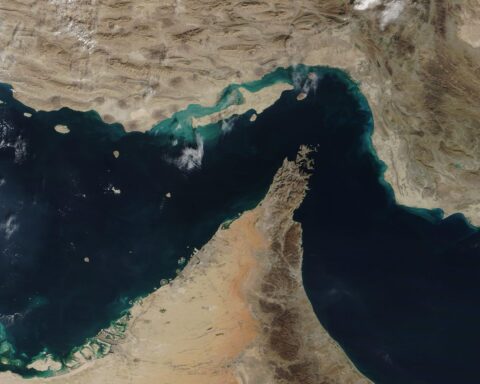
On the same day, Bloomberg tracked at least eight vessels turning back at the Musandam Peninsula rather than transit the Strait of Hormuz. The vote was a political signal — aimed at Russia, Iraq, and the UAE — and the physical evidence contradicted it before the virtual meeting ended.
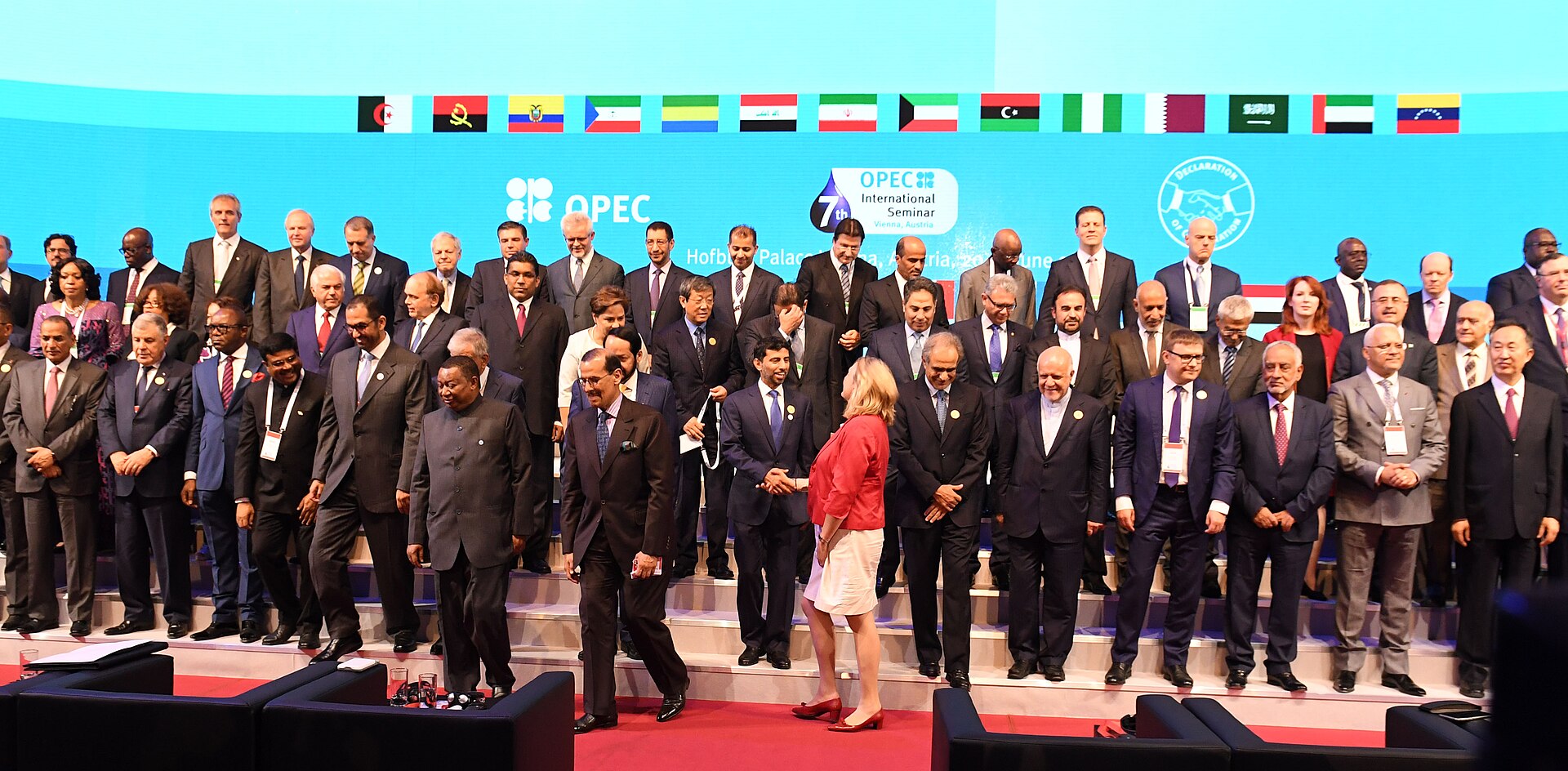
Table of Contents
- The Fifth Hike in Five Months
- How Wide Is the Delivery Gap?
- The Yanbu Ceiling
- Who Is the Political Audience for the Vote?
- What Happens When Tankers Turn Back at Musandam?
- The Buyer Who Stopped Buying
- Can Saudi Arabia Afford a Quota It Cannot Fill?
- The 1986 Precedent, Inverted
- Iran’s Counter-Revenue
- Frequently Asked Questions
The Fifth Hike in Five Months
The July 5 virtual meeting brought together seven core OPEC+ members — Saudi Arabia, Russia, Iraq, Kuwait, Kazakhstan, Algeria, and Oman — for what has become a monthly exercise in quota arithmetic. The group approved 188,000 bpd in additional production for August, matching the increment applied in each of the four preceding months. Cumulative additions since the hike cycle began in April now total approximately 940,000 bpd.
Saudi Arabia and Russia each received the largest individual shares: 62,000 bpd apiece. The Saudi allocation moved to 10.35 million bpd; Russia’s to 9.82 million. The formula has remained consistent across all five rounds, preserving the Saudi-Russian parity that has anchored OPEC+ coordination since their first cooperation agreement in 2016.
The hikes have occurred against a market the International Energy Agency projects will be oversupplied by 3.84 million bpd in 2026 — a figure calculated on the assumption that every quota barrel reaches a buyer. Jorge Leon, head of geopolitical analysis at Rystad Energy and a former OPEC official, has drawn the distinction plainly:
The Middle East briefing 3,000+ readers start their day with.
One email. Every weekday morning. Free.
“With the Strait of Hormuz closed, the issue is not whether OPEC+ raises paper quotas, but whether additional barrels can actually reach the market.”
Leon has also warned of what happens on the other end: “When the Strait of Hormuz reopens, the market could move very quickly from fear of shortage to fear of surplus.” The Strait has not reopened. The quotas keep rising.
Al Jazeera covered the first post-Hormuz-closure hike in April as explicitly “symbolic.” Five months and 940,000 cumulative barrels later, the symbolism has calcified into routine. Each monthly meeting follows the same pattern: the seven members convene virtually, approve the same 188,000-bpd increment, distribute shares according to the same formula, and issue a statement that makes no reference to the physical transit conditions that determine whether the barrels can be delivered. The April vote was a gesture. By July, the gesture had been repeated four times with no change in format, increment, or formula.
How Wide Is the Delivery Gap?
The arithmetic is not complicated. Saudi Arabia’s post-July-5 quota stands at 10.35 million bpd. Actual production in March 2026 — the most recent reliable figure, per Rystad Energy — was approximately 7.76 million bpd, already 2.5 million below the pre-hike ceiling. But production is not the binding constraint. Export capacity is.
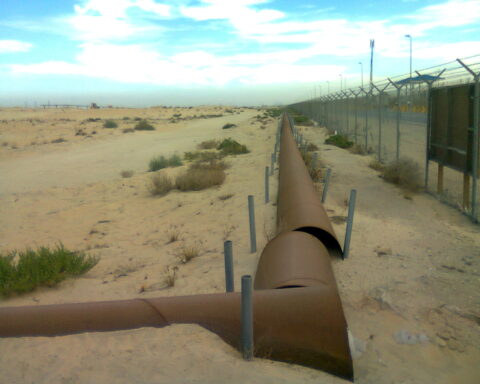
The East-West Petroline, Saudi Arabia’s sole crude pipeline bypassing the Strait of Hormuz, reached its absolute physical maximum of 7 million bpd on March 11 — the first time in the pipeline’s history it operated at design ceiling. At the Red Sea terminus, Yanbu’s two terminal complexes have a combined nominal loading capacity of approximately 4.5 million bpd, according to Argus Media. Wartime operational throughput is lower: Vortexa estimates roughly 3 million bpd under current conditions. Saudi domestic refineries absorb approximately 2 million bpd of the pipeline’s flow before any crude reaches a loading arm.
The net export ceiling — the volume that can physically leave Saudi Arabia on a tanker — sits between 4 and 5 million bpd. The gap between stated quota and that ceiling is 5.35 to 6.35 million bpd.
| Metric | Volume (bpd) | Source |
|---|---|---|
| OPEC+ quota (post-July 5) | 10,350,000 | Reuters |
| Actual production (March 2026) | 7,760,000 | Rystad Energy |
| East-West Petroline capacity (maximum) | 7,000,000 | Fortune / ENR |
| Yanbu terminal capacity (nominal) | 4,500,000 | Argus Media |
| Yanbu terminal capacity (wartime effective) | 3,000,000 | Vortexa |
| Domestic refinery absorption | ~2,000,000 | Industry estimates |
| Net export ceiling (Yanbu route) | 4,000,000–5,000,000 | Argus / Vortexa net |
| Delivery gap | 5,350,000–6,350,000 | Calculated |
Helima Croft, managing director and global head of commodity strategy at RBC Capital Markets, has drawn the distinction the quota allocation ignores: effective spare capacity is “largely concentrated in Saudi Arabia and the UAE,” but the gap between production capacity and deliverable supply has never been wider. Every 62,000-barrel increment Saudi Arabia adds to its quota without a functional Hormuz transit route is an increment that exists in an OPEC+ spreadsheet and nowhere else.
The Yanbu Ceiling
The East-West Crude Oil Pipeline was built for precisely this contingency — a Hormuz disruption that forced Saudi crude onto an alternative export route through the Red Sea. The pipeline runs approximately 1,200 kilometers from Abqaiq in the Eastern Province to Yanbu on the Red Sea coast. Its design capacity has been expanded over decades, but March 11, 2026, was the day Aramco discovered the upper boundary: 7 million bpd, per Fortune’s reporting. That number is the hard ceiling. No further physical capacity exists without new pump-station construction and possible looping along the route.
Yanbu’s two loading complexes — North and South — were sized for a supplementary role, not as Saudi Arabia’s primary crude outlet. Pre-war, Ras Tanura and Ju’aymah on the Arabian Gulf coast handled the bulk of Saudi exports, loading 5 to 6 million bpd combined. Those terminals now sit behind a Strait that permits 43 vessel transits per day instead of 84. Yanbu was never engineered to absorb the difference.

The structural gap predates the July 5 vote. Before the Hormuz crisis, 7 to 7.5 million bpd of Saudi crude flowed through the Strait. The Yanbu route, even at absolute maximum throughput, replaces only a fraction. After domestic refineries take their approximately 2 million bpd, the permanent shortfall — crude that was routed through Hormuz and cannot be rerouted — is 3 to 3.5 million bpd. That shortfall is infrastructure, not policy. No OPEC+ vote changes the diameter of a pipe.
There is also the question of what Yanbu’s terminals can handle at the berth. Loading crude onto a very large crude carrier takes 24 to 36 hours per vessel, depending on grade and terminal operations. At 4 to 5 million bpd, Yanbu is scheduling tankers at close to its berth-rotation maximum — a constraint that does not appear in pipeline-capacity figures but determines how many barrels per day actually leave the kingdom on a hull. Red Sea routing adds its own complications. Yanbu-to-Asia voyages around the Cape of Good Hope are roughly twice the sailing distance of Arabian Gulf-to-Asia via Hormuz — doubling voyage time, halving fleet effective capacity, and adding JWC surcharges and war-risk premiums to every hull.
ENR captured the structural problem in a headline: “Hormuz Bypass Infrastructure Was Sized for a Short Disruption. This Is Not That.”
Who Is the Political Audience for the Vote?
The July 5 vote was not an oil-market decision — not in any operational sense. It was a political signal transmitted through the OPEC+ mechanism to three audiences: Russia, where quota parity reinforces cooperation; Iraq, where additional barrels reduce the incentive to exit OPEC; and the UAE, whose absence from the table the remaining seven members needed to paper over.
Russia received the same increment as Saudi Arabia, maintaining the allocation symmetry that has defined the Saudi-Russian OPEC+ relationship since 2016. Moscow’s compliance with its own quotas has been inconsistent — a recurring source of tension in ministerial calls — and the symmetrical allocation serves as both incentive and reminder. Russia can point to a 9.82-million-bpd quota whether or not it produces at that level.
Iraq posed the more immediate threat. Baghdad threatened to leave OPEC in recent weeks, a move that — combined with the UAE’s departure — would strip 29 percent of OPEC production capacity from the cartel. The quota hike gives Iraq additional barrels at a moment when its government needs the revenue signal domestically. Whether Iraq can deliver those barrels is a separate question; Baghdad’s chronic overproduction relative to previous, lower quotas suggests its infrastructure is already operating at or near capacity. Iraq’s posture has shifted from exit threat to quota demand — a pivot that suits Riyadh, which would rather overpay in paper barrels than preside over a second member departure in as many months.
The UAE — the third audience — has already departed. Its empty chair at the July 5 virtual meeting was itself a statement, and the hike served as the remaining members’ counter-statement: OPEC+ functions without Abu Dhabi. Whether markets believe that is a pricing question the seven remaining members cannot answer by themselves.
Running beneath all three signals is a fourth, quieter one. By voting to raise quotas, OPEC+ treats the Strait of Hormuz as open enough for production planning purposes. Eight vessels turning back at Musandam on the same day filed the rebuttal.
What Happens When Tankers Turn Back at Musandam?
Bloomberg’s vessel-tracking data from July 3–4 documented at least eight ships reversing course near the Musandam Peninsula — the narrow tip of Omani territory that juts into the Strait of Hormuz at its tightest point. The vessels included crude tankers, products tankers, bulk carriers, and vehicle carriers. Some reached the Musandam tip before turning back. One crude tanker, two products tankers, and one bulk carrier subsequently sailed northward onto the transit corridor designated by Iran’s IRGC Navy.
The IRGC’s position, broadcast via PressTV in late May, is unambiguous: “All ships, commercial vessels, and oil tankers are exclusively required to transit through designated routes and obtain permission from the Islamic Revolution Guards Corps Navy.” The permission regime is operational, not theoretical. Vessels that do not contact the IRGC on the designated channel before entering the Strait face the choice of compliance, reversal, or confrontation.
PortWatch data from the IMF maps the aggregate effect. On July 1, total daily transits through Hormuz numbered 43 — 24 inbound, 19 outbound — against a pre-war baseline of 84 per day. That is 51 percent of normal traffic. June 28 recorded only 27 transits. The highest single post-MOU day was June 24, at 54 transits, still 36 percent below baseline. Crude oil flows through the Strait remain close to zero on a seven-day moving average.
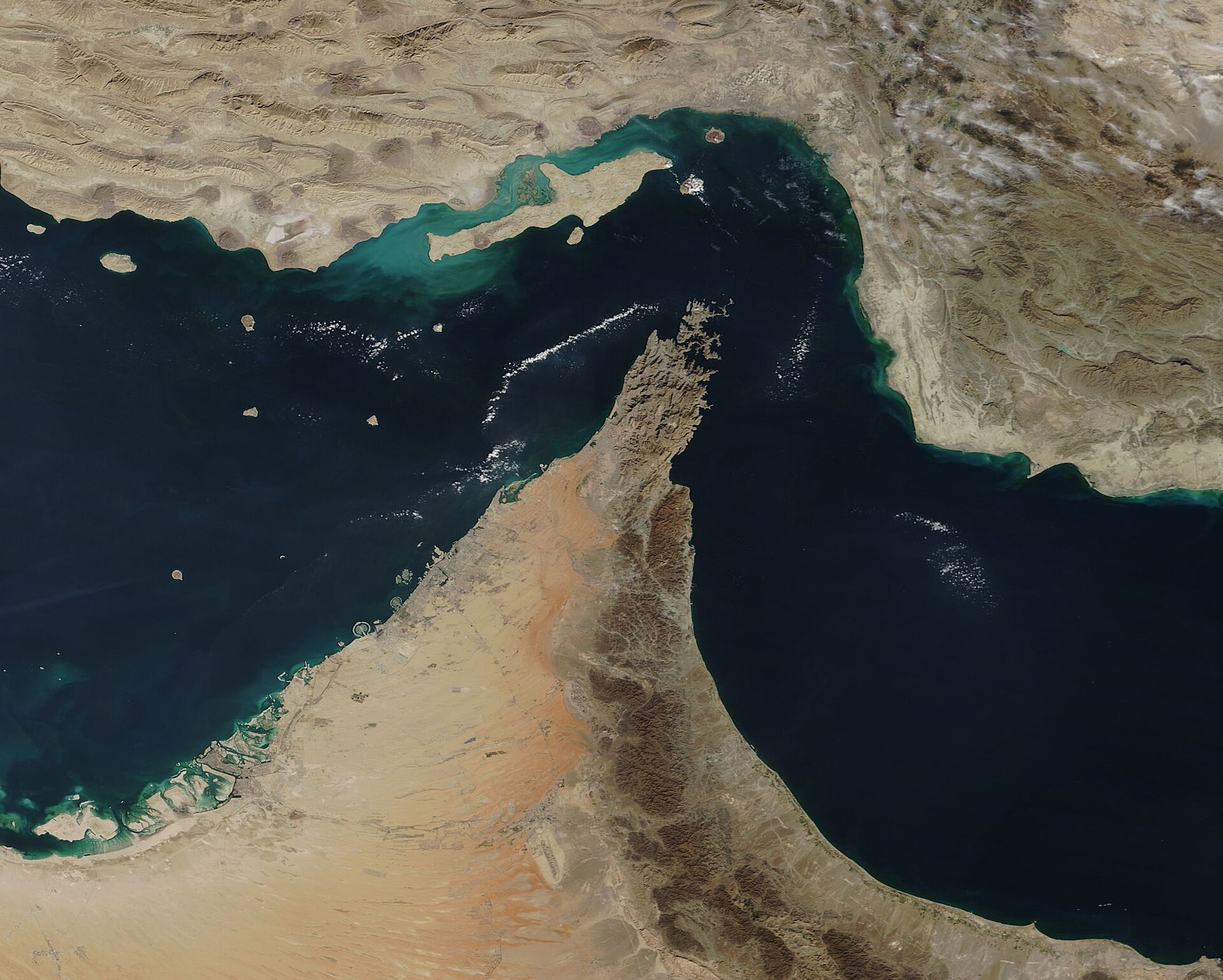
Before the crisis, the Strait carried approximately 20 million bpd — a quarter of all seaborne oil trade globally. The cost of attempting the passage has spiked: TD3C freight rates for the Oman-corridor route have jumped from $3 per barrel to $11, a 267 percent increase. War-risk insurance premiums have reached 2 percent of hull value — an 8x multiple over pre-crisis rates — pricing independent commercial operators out of Hormuz entirely, with state-backed fleets and AIS-dark tankers carrying the oil that official export figures show moving. The Joint War Committee’s designation of the entire Arabian Gulf as a Listed Area, imposed in March 2026, has historically taken years to unwind, according to Lloyd’s. P&I insurance for vessels in the area remains subject to 72-hour cancellation clauses that can be triggered at any moment by the 13 IG clubs that underwrite global maritime liability.
The eight U-turns on July 4 were not unusual. They were the daily operational texture of a Strait that OPEC+ just voted to treat as open.
The Buyer Who Stopped Buying
Sinopec, China’s largest refiner and historically one of Saudi Arabia’s most reliable crude customers, purchased zero Saudi barrels for July delivery. It is the second consecutive month of zero purchases. The reason is price, not politics. The ESPO spread — the discount differential between Russia’s Pacific-route crude and Saudi Arab Light — breached the S&P Global switching threshold of $5 to $7 per barrel in April 2026, reaching $5.50 per barrel in ESPO’s favor. At that differential, Chinese refineries began recalibrating their feedstock slates toward Russian crude.
Refinery process recalibration is not a toggle. Adjusting distillation and cracking units for a different crude grade involves operational downtime, catalyst changes, and yield reoptimization across the barrel. Once a major refiner switches feedstock, reversal within a single pricing cycle is impractical. Sinopec’s zero is not a one-month anomaly. It is a structural shift that will persist until Aramco’s pricing makes Arab Light competitive against ESPO on a delivered-cost basis — a condition that requires both a narrower spread and a viable shipping route.
Aramco has moved aggressively on price. The July Official Selling Price for Arab Light to Asia fell to a $9.50 premium over the Oman/Dubai benchmark — down from $15.50 in June and an all-time high of $19.50 in May. A $10-per-barrel collapse in two months, at a notional volume of 5 million bpd, translates to approximately $900 million per month in forgone revenue. Aramco’s free cash flow already covers only 85 percent of its dividend obligation — $18.6 billion in FCF against $21.89 billion in annual payouts. The August cycle carried the compression further: Aramco set its August Arab Light OSP at a $1.50 discount to benchmark — the first negative print since the 2020 price war — extending the eleven-week, $21-per-barrel collapse into sub-zero territory.
The discount strategy assumes a buyer at the loading arm. With Sinopec absent, the ESPO spread favoring Russian crude, and Hormuz blocking the direct route to Asia’s other major refiners, the barrels Aramco is discounting are competing for a shrinking pool of customers who can be reached from Yanbu.
Can Saudi Arabia Afford a Quota It Cannot Fill?
Saudi Arabia’s first-quarter 2026 fiscal deficit reached SAR 125.7 billion ($33.5 billion) — the largest quarterly shortfall in the kingdom’s modern fiscal record. Goldman Sachs estimates the full-year 2026 deficit at 6 to 6.6 percent of GDP, or approximately $80 to $90 billion.
The gap between revenue and expenditure is driven by oil prices that fall well below fiscal breakeven. The IMF’s 2026 Article IV consultation places Saudi Arabia’s on-budget breakeven at $86 to $96 per barrel. Bloomberg Economics, incorporating off-budget commitments to the Public Investment Fund and giga-project spending, estimates the true breakeven at $108 to $111 per barrel. Brent crude closed July 2 at approximately $70.57 — between $15 and $40 per barrel below the range required to balance the books.
Each additional quota barrel that cannot be exported does not merely fail to generate revenue. It widens the perception gap between Saudi Arabia’s stated production capacity and its actual fiscal position. The deficit is calculated against barrels sold, not barrels allocated on a quota schedule published in Vienna.
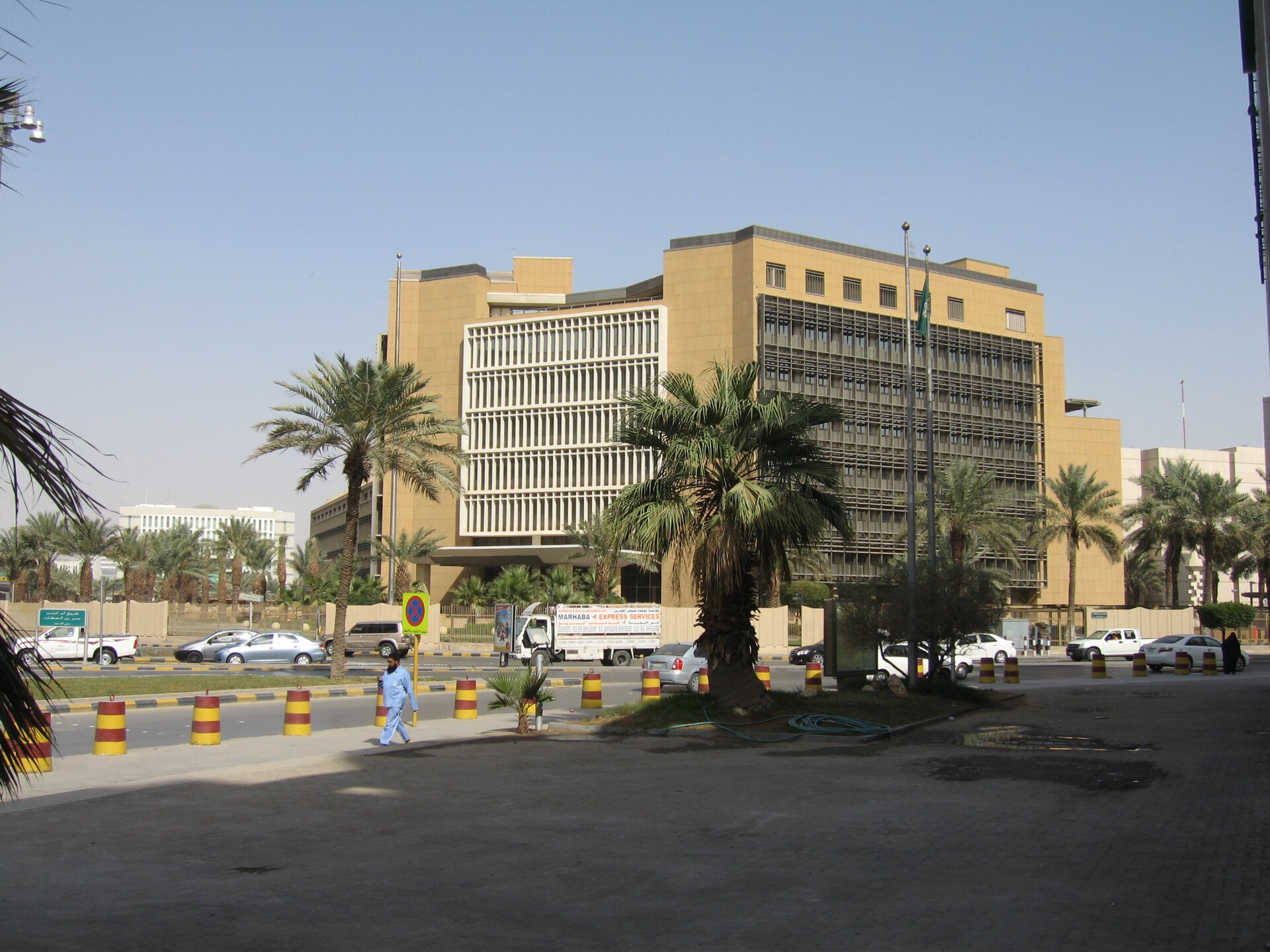
The dividend pressure is immediate. Aramco’s annual payout anchors Saudi Arabia’s fiscal transfer mechanism and funds the kingdom’s sovereign wealth operations. That payout requires free cash flow that discounted OSPs, restricted Yanbu throughput, and absent Chinese buyers are eroding quarter by quarter. Aramco is already distributing more than it earns.
The 1986 Precedent, Inverted
Saudi Arabia has tried a volume-over-price strategy before. In September 1985, Oil Minister Ahmed Zaki Yamani ended the kingdom’s swing-producer role after Riyadh had cut production from 10 million bpd in 1980–81 to 2.3 million bpd by August 1985 — a sacrifice made while other OPEC members cheated on their quotas without consequence. Yamani introduced netback pricing, which tied crude prices to refined-product values and guaranteed refinery margins, incentivizing maximum offtake. Total OPEC output climbed from 14.1 million bpd in June 1985 to 21.8 million bpd by August 1986. Brent crashed from $28 to $8.55 per barrel.
The strategy worked because Saudi Arabia could survive $8.55 oil. Fiscal breakeven in the mid-1980s was roughly $15 to $20 per barrel. The kingdom carried minimal sovereign debt, limited social spending obligations, and a population approximately one-fifth its current size. Vision 2030 did not exist. NEOM did not exist. The Public Investment Fund’s $925 billion target portfolio did not exist. Yamani was fired before the end of 1986, but the objective was achieved: market share was recaptured, cheating members were disciplined, and OPEC survived.
In 2026, every element of the 1985–86 playbook has inverted. Fiscal breakeven runs between $86 and $111 per barrel. Brent sits at $70.57. The kingdom is posting record quarterly deficits. A volume strategy requires three things: a buyer willing to take the barrels, a route to deliver them, and the fiscal capacity to absorb whatever price drop the additional supply creates. Yamani had all three in 1985.
Subsequent Brent price data showed the war premium fully erased: Brent fell to $70.82 on July 2, slipping below the pre-war level of February 27 and confirming that the premium the 1986 comparison depended on has vanished entirely.
The 2026 hike cycle also faces a constraint Yamani never did: physical delivery failure. In 1985–86, the barrels Yamani released onto the market could reach any refinery with a tanker berth — Hormuz was open, the Red Sea was open, loading terminals operated at full capacity. Saudi Arabia’s 2026 quota additions confront a Strait running at half throughput, a bypass pipeline already at maximum, and a terminal system designed for 4.5 million bpd absorbing the full weight of a 10.35-million-bpd allocation. Yamani flooded the market by choice. The July 5 vote attempts to flood a market that Saudi infrastructure cannot reach.
Iran’s Counter-Revenue
While OPEC+ votes to add barrels to a market it cannot physically reach, Iran has built a revenue stream from the disruption itself. Thirty-nine tankers have transited the Strait of Hormuz with IRGC permission since the MOU was signed, according to Lloyd’s List and UANI shipping data. The IRGC Navy collects fees for each approved passage — a structure Iran frames as a service charge under UNCLOS Article 26(2), not a toll or a blockade. Estimated total revenue to the IRGC from these transits exceeds $4 billion, according to UANI’s transit-fee modeling.
Iran’s own oil exports have not suffered in proportion to Saudi Arabia’s. President Ghalibaf told CNBC in late June that Iran has exported more than 40 million barrels since the Hormuz blockade began, at a 20 percent premium to pre-crisis prices. The premium reflects scarcity mechanics: with fewer tankers willing to transit, buyers who do receive Iranian crude pay more for guaranteed access. Tehran is not merely surviving the disruption. It is extracting rent from it.
The framing matters diplomatically. Iran presents the IRGC permission regime as a “safe shipping corridor” — an organized, predictable transit system for approved and paid-for vessels. Secretary of State Rubio dismissed the distinction at the second Doha round as a “game of semantics” that “will never be acceptable.” But the Doha rounds have produced no resolution on the fee structure, and the PGSA fee suspension expires August 18. If no agreement is reached by then, vessels will face dual-layer costs — IRGC transit charges and any reactivated Persian Gulf Service Arrangement fees — adding further friction to a route already running at half capacity.
Ghalibaf’s July 3 warning — “If US and Zionist regime fail to fulfil commitments, Iran will resume proportionate actions” — keeps the MOU’s fragile architecture under explicit threat. The 39 permitted transits demonstrate that Hormuz is open on Iran’s terms, at Iran’s price, through Iran’s corridor. The July 5 OPEC+ vote assigned Saudi Arabia another 62,000 bpd it cannot move through any of them.
Frequently Asked Questions
Does OPEC+ have a mechanism to adjust quotas for physical delivery constraints?
No. OPEC+ sets production ceilings based on member capacity and market-share allocations negotiated among producers. The quota system contains no provision for transit disruptions, export-route failures, or force majeure at maritime choke points. A member’s allocation is determined by its notional production capacity, not by the volume it can ship. No proposal to create such a mechanism was raised at the July 5 meeting or at any of the four preceding sessions.
How long would it take Saudi Arabia to build additional Hormuz bypass capacity?
New pipeline infrastructure from the Eastern Province to the Red Sea requires a minimum of three to five years for design, environmental permitting, and construction, based on historical timelines for comparable large-diameter crude pipelines in the Gulf region. Expanding the existing Petroline beyond its current 7-million-bpd ceiling would require additional pump stations and possible looping along portions of the 1,200-kilometer route. As of July 2026, Aramco has not publicly announced any new bypass construction project or Petroline expansion.
Could Saudi Arabia reroute crude through other countries’ pipeline networks?
Iraq’s IPSA pipeline, which formerly offered an alternative crude route to the Red Sea via Saudi territory, has been non-operational for over a decade. The UAE’s Habshan-Fujairah pipeline bypasses the Strait but terminates at Fujairah on the Gulf of Oman — outside the IRGC’s designated corridor but within the JWC Listed Area. Bahrain and Kuwait have no cross-border pipeline infrastructure capable of handling Saudi export volumes. The Yanbu route remains the only operational bypass under Saudi sovereign control.
What happens to the IEA’s surplus projection if Hormuz fully reopens?
The IEA’s 3.84-million-bpd surplus estimate for 2026 assumes current demand trajectories and OPEC+ production at stated levels. If Hormuz fully reopens and all members produce at quota — including the cumulative 940,000 bpd added across five hike cycles — the physical delivery of those barrels into an already oversupplied market would intensify downward price pressure. Rystad Energy’s Hormuz reopening models suggest the price transition could be abrupt: a market pricing scarcity risk one week may price surplus the next, before physical inventory adjustments have had time to catch up. Brent, already $15 to $40 below Saudi fiscal breakeven, would face the additional headwind of supply that OPEC+ has been accumulating on paper each month since April.
The escalation reached its logical endpoint on July 10, when Lloyd’s List confirmed zero AIS-visible transits on July 9 — an effective halt that made the quota figure even more abstract: OPEC+ is raising output through a strait that has stopped moving ships.