
RIYADH — Saudi Arabia’s coalition announced on October 15 that air defences intercepted and destroyed a cruise missile over the Madinah region. No casualties or damage were reported. The Houthis denied any involvement; their military spokesman Yahya Saree called the Saudi claim “a shameless and brazen lie.” The coalition’s statement named no origin, no trajectory, and no intended target.
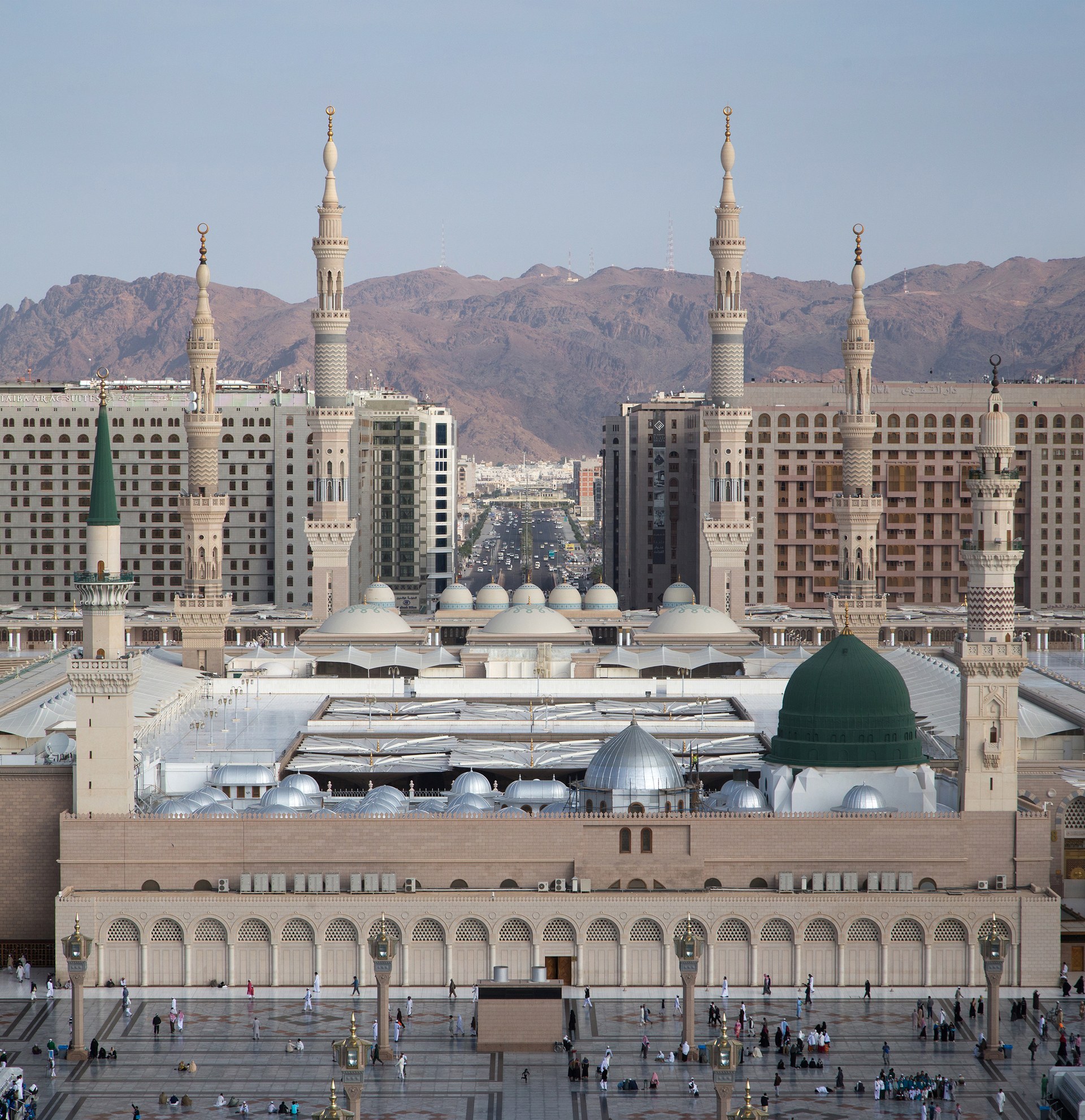
Madinah is the burial place of the Prophet Muhammad and the site of Masjid an-Nabawi, Islam’s second holiest mosque. Saudi Arabia’s king holds the title Custodian of the Two Holy Mosques — the foundational claim to the kingdom’s leadership of the Islamic world. For nine years, Riyadh has framed the Yemen campaign as, above all else, a defence of the holy places. A cruise missile in Madinah’s airspace — regardless of who sent it — tests that frame in a way no attack on an airport or oil facility has.
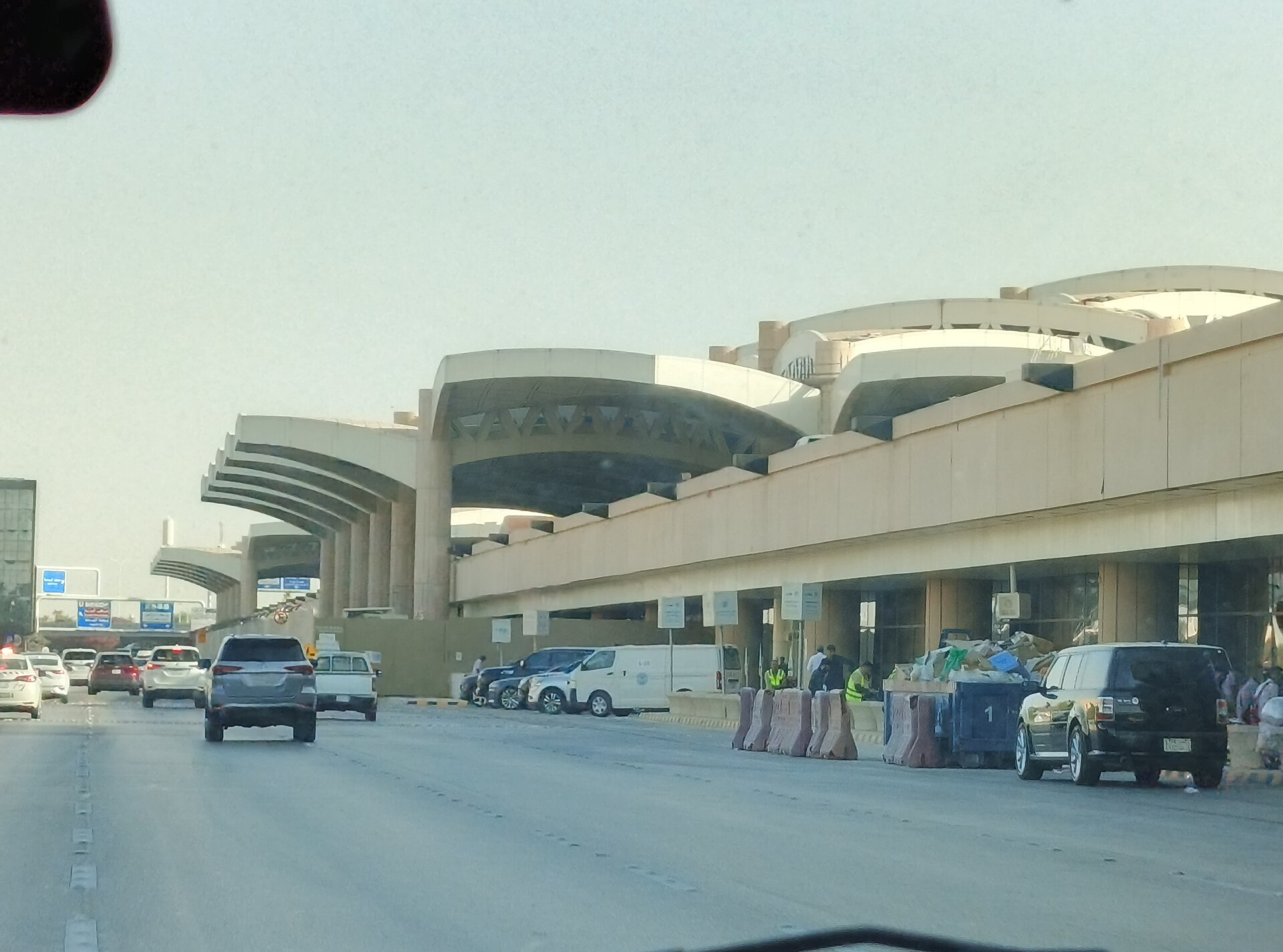
Hours after the announcement, the EU-GCC summit scheduled for Riyadh on October 24 was postponed indefinitely. GCC Secretary-General Jasem Mohamed Albudaiwi cited the need “to ensure the safety of participating delegations amid continued threats.” King Khalid International Airport remains closed. As of October 16, neither King Salman nor Crown Prince Mohammed bin Salman has spoken publicly about the intercept.
Table of Contents
- What the Coalition Confirmed
- Who Fired the Missile?
- What Makes Madinah Different from Dhahran?
- The Pattern Before October 15
- Why Has the Royal Court Said Nothing?
- Does the Mecca Pact Cover This?
- A Calendar Built for Peace, Tested by War
- The Back-Channel That Cannot Reach Madinah
- Frequently Asked Questions
What the Coalition Confirmed
Maj. Gen. Turki al-Maliki, the coalition’s spokesman, posted the announcement on X on October 15: “Interception and destruction of a cruise missile in the Medina region.” It was the entirety of what the coalition disclosed. No military press conference followed. No supplementary detail was released.
The statement left open the missile’s origin, its flight path, its intended target, and the interceptor system that destroyed it. One outlet, Daily Qudrat, reported that “coalition air defence systems intercepted the missile mid-air,” but no official source specified the platform. Saudi Civil Defence reinforced the interior ministry’s standing ban on filming, publishing, or sharing information about impact sites of intercepted projectiles.
Separately, the coalition reported a drone intercepted over the Eastern Province the same day. Saudi Gazette placed both events within a broader tally of 14 missiles and drones intercepted in recent days — the most violent stretch of the conflict since it resumed. Attacks on King Khalid International Airport between October 6 and 15 killed 20 people, including a US citizen, and wounded over 300. The Madinah cruise missile caused no damage and no injuries.
The Middle East briefing 3,000+ readers start their day with.
One email. Every weekday morning. Free.
The contrast between how the coalition handled the airport strikes and how it handled the Madinah intercept is itself a data point. After the October 10 strike on KKIA, GACA released casualty figures. The BBC and Al Jazeera published tolls within hours — 12 killed, 308 or 309 wounded. After October 14, when missiles struck an Aramco administrative building in Dhahran, the Saudi Ministry of Energy confirmed a “limited fire” and the coalition named the Houthis. After Madinah, the coalition issued six words, named no attacker, and the government released no imagery, no damage report, and no casualty update — because there were no casualties to report and no damage to show.
Who Fired the Missile?
No party has claimed responsibility for the cruise missile intercepted over Madinah on October 15. The Saudi-led coalition did not attribute the launch. The Houthis denied involvement categorically. No independent body has confirmed the missile’s origin or type.
Saree’s denial, posted to Telegram, was specific: “The Yemeni armed forces confirm that they have not carried out any operation today targeting Saudi territory.” Iran’s Mehr News Agency ran the denial under the headline “Yemeni armed forces reject Saudi claim of attack on Medina.” No Iranian or Houthi-affiliated outlet accepted the Saudi account.
The Yemeni armed forces confirm that they have not carried out any operation today targeting Saudi territory… [a] shameless and brazen lie.
Yahya Saree, Houthi military spokesman, Telegram, October 15, 2026
The denial matters beyond the immediate news cycle because of what preceded it. The Houthis have previously pledged not to attack the Muslim holy cities of Mecca and Medina. Saree, on the same day, promised continued strikes on Saudi oil facilities and airports — targets he named explicitly, pointedly excluding the holy cities.
For the Houthis, the denial serves a specific function. Their pledge to spare the holy cities is one of the few restraints they have publicly accepted. Being proved responsible for a cruise missile aimed at Madinah — or even its airspace — would cost them standing among the constituencies they court: Zaydi communities, Sunni tribal allies in northern Yemen, and the broader Muslim audience that the group’s media operation increasingly addresses. The denial is not just diplomatic cover. It is brand protection for a movement that styles itself as a defender of Islam.
For Riyadh, the attribution vacuum creates a different bind. Naming the Houthis would mean accusing a group that denied it, without presenting evidence, and would transform the incident from a military event into a religious confrontation — one the Houthis have pre-emptively framed as a Saudi fabrication. Dr. Rayed Krimly, the deputy minister for public diplomacy, told reporters on October 15 that “Iran continues to arm, train and support the Houthi militia in violation of UN security council resolutions” and that the escalation “is encouraged by Iran.” But that language addressed the broader campaign. No Saudi official has publicly named the Madinah missile’s source.
What Makes Madinah Different from Dhahran?
Madinah is the burial place of the Prophet Muhammad, the site of Masjid an-Nabawi — Islam’s second holiest mosque — and a city whose name is invoked in Friday sermons across the Muslim world. King Salman’s title, Custodian of the Two Holy Mosques, is not ceremonial. It is the claim on which Saudi Arabia’s leadership of the Organisation of Islamic Cooperation rests, the premise behind the kingdom’s authority over the Hajj, and the reason fifty-seven Muslim-majority states defer to Riyadh on matters of holy-site governance.
When a missile strikes an oil facility or an airport, Riyadh responds through military and diplomatic channels. The coalition issues a statement. The foreign ministry files a complaint. Saudi Arabia asks the UN Security Council to act, as it did on October 9 after the airport strikes. The vocabulary exists. The bureaucracy knows the steps.
Madinah has no such protocol. On October 14, a missile struck an Aramco administrative building in Dhahran; four people were wounded, a fire broke out, and the Ministry of Energy confirmed the damage within hours. The incident was serious but legible — an oil-facility attack, handled by the energy ministry and the military. Madinah offers no such clarity. A missile over the Prophet’s Mosque cannot be filed alongside a missile over a refinery. The religious weight of the target — even if the missile was intercepted, even if no one was hurt, even if the launcher is unknown — places it in a category where military language fails and religious language carries risks a government that has spent decades keeping warfare and theology in separate registers is not prepared to accept.
[Any] threat to the sanctity of [Mecca and Medina] is a red line that must never be crossed.
Pakistan Prime Minister Shehbaz Sharif, UN General Assembly, September 25, 2026
Pakistan’s Prime Minister Shehbaz Sharif understood this when he told the General Assembly that any “threat to the sanctity” of the two holy cities is “a red line that must never be crossed.” He called recent Houthi attacks on Saudi Arabia “deplorable.” Sharif was speaking to the capitals that share the expectation that the Custodian will respond when the holy places are threatened. As of October 16, the Custodian has not.
The Pattern Before October 15
The cruise missile over Madinah did not arrive without precedent. Saudi Arabia has stated that the Houthis attempted to target Mecca and Medina at least three times over the nine years before 2026. The most widely documented was the July 2017 interception over Taif province, roughly 65 kilometres from Mecca, when a missile was downed that the Houthis said was aimed at Jeddah’s airport, not the holy city.
In the current escalation, the tempo has changed. On September 16, the coalition reported that it had downed a drone heading for Makkah. The Houthis denied that, too. King Salman, chairing the cabinet, condemned what he called the “terrorist militia’s” attempt to repeat its targeting of Makkah. On October 1, a drone knocked out a transformer at a Medina power station that serves the Prophet’s Mosque — cutting electrical supply to one of Islam’s most visited sites. No royal statement followed that attack. The response was routed through the Organisation of Islamic Cooperation.
Then, on October 15, a cruise missile — a more capable and harder-to-intercept weapon than a drone — was stopped over the Madinah region. No prior intercept of a cruise missile over Madinah had been reported in this phase of the conflict.
| Date | Location | Incident | Houthi response | Saudi royal response |
|---|---|---|---|---|
| July 2017 | Taif province (~65 km from Mecca) | Missile intercepted | Denied targeting Mecca; said Jeddah airport was the aim | Coalition statement |
| 16 Sept 2026 | En route to Makkah | Drone intercepted | Denied | King Salman condemned via cabinet |
| 1 Oct 2026 | Medina | Drone hit power station transformer serving Prophet’s Mosque | No denial reported | No royal statement; OIC issued condemnation |
| 15 Oct 2026 | Madinah region | Cruise missile intercepted | Denied; called claim “a shameless and brazen lie” | No royal statement as of Oct 16 |
The trajectory shows an escalation in weapon capability — from missile to drone to cruise missile — matched by a diminishing official response from the Royal Court. The September drone toward Makkah drew a royal condemnation through the cabinet. The October 1 transformer strike drew an OIC statement. The October 15 cruise missile has drawn, so far, a six-word coalition announcement on X.
Why Has the Royal Court Said Nothing?
As of October 16, neither King Salman nor Crown Prince Mohammed bin Salman has issued a statement on the cruise missile intercepted over Madinah. No address was delivered. No cabinet session was reported. The Saudi Press Agency carried the coalition’s announcement and nothing more.
The silence is not total. Krimly addressed the broader conflict on October 15, telling reporters that Riyadh still has “direct communications with Iran” but that Tehran has not yet offered “the necessary concessions for a solution.” He disclosed that the last proposed direct contact with the Houthis — talks in Muscat — was rejected “a few weeks ago.” These are substantive diplomatic disclosures. They were delivered by a deputy minister for public diplomacy, not by the king or the crown prince.
The distinction matters because of the title. Khadim al-Haramayn al-Sharifayn — Custodian of the Two Holy Mosques — is a personal designation held by the king. It is not a cabinet responsibility or a coalition function. When a missile enters the airspace above the Prophet’s tomb, the expectation from Muslim capitals — from Islamabad, from Istanbul, from Jakarta — is that the Custodian himself responds. A deputy minister’s press briefing on Iran’s role in the broader campaign does not meet that expectation.
What Riyadh confronts is a problem of register. A military response treats the intercept as an extension of the war — more airstrikes on Sanaa, more coalition statements. A religious response — a royal address invoking the Custodian title, a condemnation from the mosque pulpits — risks elevating the conflict into a dimension the kingdom has worked for nine years to keep contained. In September, Grand Mufti Saleh al-Fawzan issued a rare call for citizens to defend the kingdom. If the Royal Court were to respond to Madinah in religious terms, it would lend institutional weight to a mobilisation that has so far been led by a single cleric acting without an official prompt.
The OIC’s fifty-seven member states have not issued a collective response to the October 15 intercept. The organisation’s most recent statement addressing Madinah was dated September 30, covering the power station drone strike. For the capitals that signed the Mecca pact — and for every Muslim-majority government that defers to Saudi custodianship — the silence from Riyadh creates its own permission to stay quiet. If the Custodian does not speak, no one else is required to.
Does the Mecca Pact Cover This?
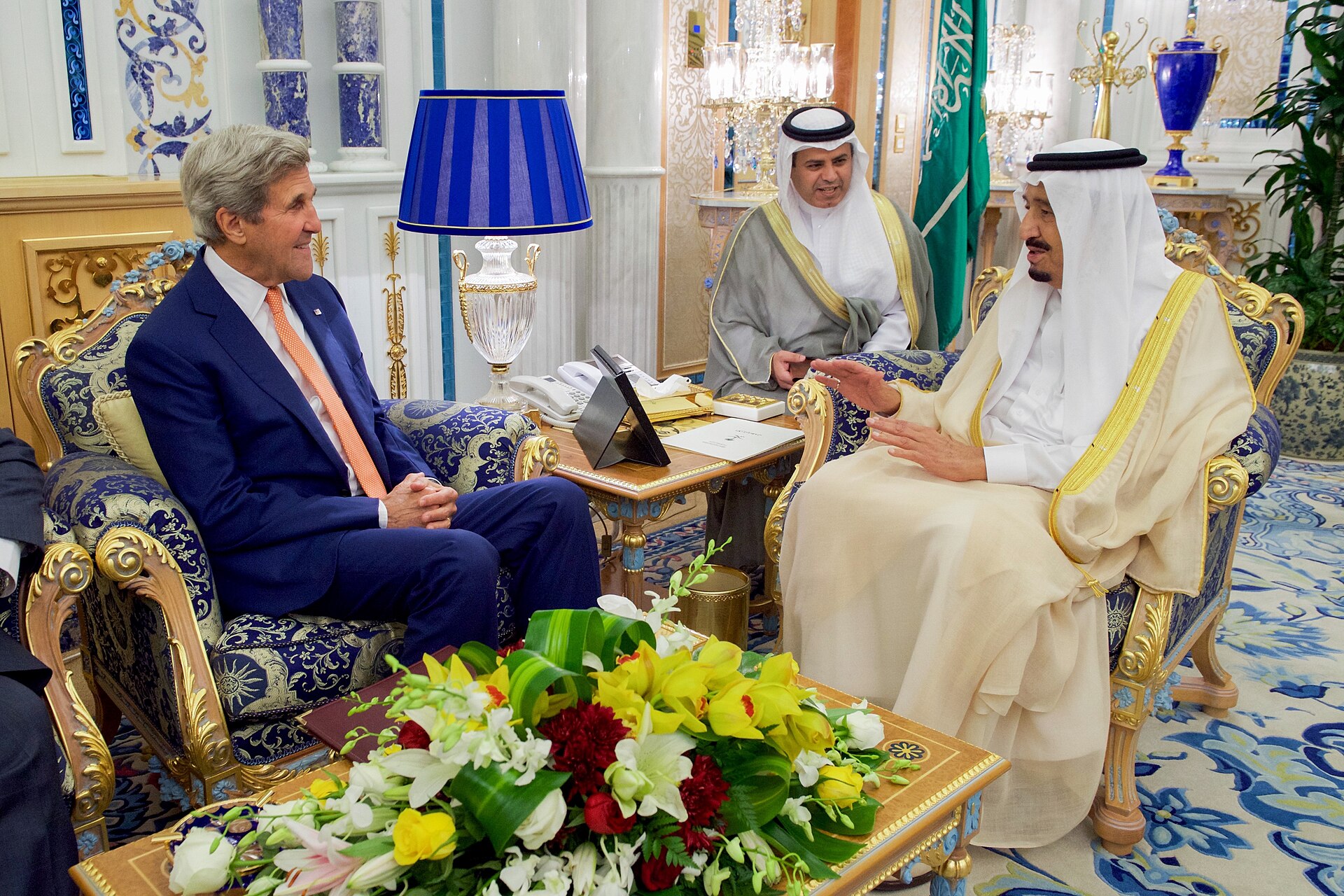
The Mecca Joint Defence Agreement, signed in August 2026, was explicitly framed as a defensive pact for the holy places. Turkish officials described its mandate as “purely defensive.” Prince Khalid bin Salman announced on October 6 that the pact committee had agreed to “activate collective deterrence measures… in response to the attacks and all those responsible for them.” Pakistani, Turkish, and Saudi military chiefs met in Riyadh in late September to coordinate the deployment.
The Madinah intercept is the pact’s first test against a missile that reached — or at least approached — a holy city. The missile was stopped. On those narrow terms, the shield held. But the pact was built to answer the question of who defends the holy places when Washington cannot or will not. It was not built to address what happens after a defence succeeds and nobody claims or is accused of the attack.
The forces pledged under the pact remain partly assembled. Turkey’s parliament has not ratified the agreement. The scale and timeline of Pakistani and Turkish deployments have not been disclosed. Reuters previously reported about 8,000 Pakistani military personnel in Saudi Arabia — a number that predates the Mecca pact and whose relationship to the new commitment is unclear. Pakistan’s defence minister said on October 6 that combat in Yemen “is practically being conducted by Saudi Arabia’s own forces,” a statement that raised questions about whether Pakistan’s role under the pact is advisory, defensive, or something Islamabad has not yet defined.
The Western contributions sit outside the pact’s framework entirely. Washington approved a potential $24.3 billion sale of 48 F-35As to Saudi Arabia in September, but congressional review is not complete. More than 100 US military advisers now operate under a joint intelligence-sharing command, CNN reported on October 11. France confirmed troops, radars, and air defences for Yanbu. Britain sent an RAF Voyager tanker. These are bilateral arrangements — not Mecca pact deployments. The pact promised a collective Islamic shield for the holy cities; the Madinah intercept was carried out by coalition air defences whose composition the government has not disclosed.
A Calendar Built for Peace, Tested by War
The EU-GCC summit was set for Riyadh on October 24, co-chaired by European Council President Antonio Costa and Crown Prince Mohammed bin Salman. European Commission data showed fuel accounts for more than 75 per cent of EU imports from the GCC. Its postponement, announced on October 15 with no new date, removed the most consequential diplomatic event on Saudi Arabia’s autumn calendar.
The summit was not the only fixture at risk. Riyadh Season, the entertainment and cultural festival that has become a centrepiece of the kingdom’s post-oil identity, was due to open on October 21. The Future Investment Initiative conference is scheduled for October 26 to 29. Neither has been officially postponed, but King Khalid International Airport remains closed under a NOTAM running to 21:00 UTC on October 17, with no confirmed reopening date from GACA. Etihad has cancelled flights to Riyadh until October 19.
The World Petroleum Congress opened in Riyadh on October 11, two days after the strike that killed 12 people at KKIA; how many delegates attended is unclear. A capital that cannot receive commercial flights cannot easily host an international summit, an investor conference, or a music festival.
The economic context makes the calendar more than a scheduling problem. The pre-budget statement in September projected a 2026 deficit of 245 billion riyals — revised upward from a budgeted 165 billion — and real GDP falling 3.6 per cent, driven by a 21.8 per cent drop in oil activities. Revenue is under pressure from multiple directions: Aramco cut its November Arab Light price to Asia by three dollars, to five dollars below the Oman/Dubai benchmark — the widest discount since June 2020. The Hormuz blockade, the East-West pipeline disruptions, and now the airport closures have strained every export channel the kingdom depends on. FII and Riyadh Season are not entertainment. They are the public-facing proof that Saudi Arabia’s post-oil economy can function under wartime conditions. If neither can be held as scheduled, the pre-budget statement’s 12.8 per cent GDP rebound forecast for 2027 loses the underpinning of investor confidence it was designed to sustain.
The Back-Channel That Cannot Reach Madinah
Krimly’s disclosure on October 15 that Riyadh maintains “direct communications with Iran” confirmed what the 2023 China-mediated normalisation deal had established: a diplomatic line exists between Riyadh and Tehran. The deal, which restored ambassadors and reopened embassies, was built on the premise that Riyadh and Tehran could manage regional tensions through direct engagement rather than proxy warfare. That premise is now under pressure from the very proxy warfare it was supposed to contain. What the back-channel has not produced is a line to the people firing the missiles.
Krimly said the last proposed direct contact with the Houthis — talks in Muscat — was rejected “a few weeks ago.” A separate report, unconfirmed by Riyadh, said Saudi Arabia had offered the Houthis a two-week ceasefire through Omani intermediaries in September. The channel, if it existed, produced nothing.
Iran’s foreign minister, Abbas Araghchi, offered on October 11 “to facilitate dialogue between Saudi Arabia and Yemen,” a phrase that positions Tehran as mediator rather than party to the strikes. The offer came six days after President Trump said the United States “will not be attacking Iran at any time prior to the midterm elections” on November 3. The Wall Street Journal reported that Trump expects renewed bombing after the vote.
The diplomatic architecture, as it exists, contains no mechanism for addressing a cruise missile over a holy city. The Muscat channel is defunct. The Iran back-channel addresses bilateral issues, not Houthi targeting decisions. The UN Security Council request filed by Riyadh after the October airport strikes has produced no resolution.
Washington’s posture compounds the gap. Trump ruled out strikes on Iran before the November 3 midterms. CNN reported that MBS had appealed to Trump twice in September for US strikes on the Houthis; both were declined. After the October 10 airport attack, Trump said “We may. We’re going to look at it” and “They’re able to defend. The Saudis are good fighters.” The 100-plus US military advisers, the proposed $24.3 billion arms sale, and Rubio’s pledge that Washington “intend[s] to live by” the bilateral defence agreement are structured around the broader campaign — intelligence sharing, procurement, strategic reassurance. None of those instruments answers the question the Madinah intercept has posed: who responds, and on what authority, when a cruise missile reaches the airspace above the Prophet’s Mosque and no one claims it.
Frequently Asked Questions
What air defence system intercepted the cruise missile?
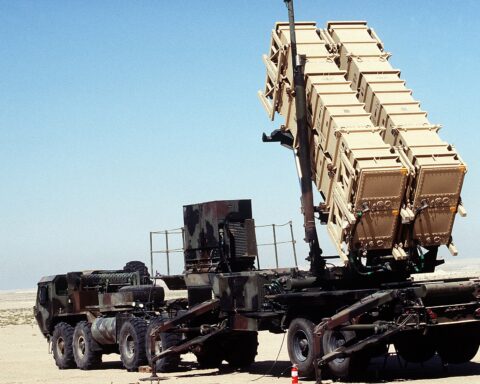
The coalition did not name the interceptor platform. Saudi Arabia’s military inventory includes US-supplied air defence systems from a decades-long procurement relationship with Washington — but which system engaged the Madinah cruise missile has not been disclosed. No imagery of the intercept, the missile debris, or the engagement has been released, and the interior ministry’s ban on publishing information about impact sites makes independent analysis of the intercept unlikely.
Has Iran addressed the Madinah intercept directly?
Iran’s Mehr News Agency ran the Houthi denial on October 15, framing the event as a contested claim rather than a confirmed attack. No Iranian government statement addressed the Madinah missile directly. Araghchi’s October 11 offer to “facilitate dialogue between Saudi Arabia and Yemen” predated the intercept by four days and has not been publicly updated since.
Has Riyadh Season been postponed?
Not officially. The entertainment festival was due to open on October 21. National Day celebrations — fireworks and drone shows — were postponed indefinitely in September, before the current airport strikes began. Riyadh Season’s own status has not been publicly revised. With KKIA closed and international flights to Riyadh suspended, the logistical basis for an event that draws foreign performers and visitors is in question, but GACA has not linked the airport closure to any specific reopening date.
Did the cruise missile reach Madinah’s city limits?
The coalition’s statement said a cruise missile was intercepted “in the Medina region.” That phrasing leaves open whether the missile was over the city itself, its outskirts, or the broader administrative province. The Madinah administrative region extends well beyond the city itself. A cruise missile intercepted over the province’s periphery carries a different weight from one stopped above the city centre and the mosque complex. No debris location, flight path, altitude, or intercept coordinates have been disclosed by the coalition or any other source. The distinction between “the city” and “the region” has not been addressed in any official statement, and the interior ministry’s ban on sharing information about impact sites makes independent verification unlikely.