RIYADH — Saudi Arabia activated the Makkah Joint Defence Agreement on October 5, bringing Pakistani and Turkish forces under alliance command for the first time — on the same day US Secretary of State Marco Rubio reaffirmed Washington’s own defence commitment to the kingdom. The simultaneous moves confirmed what months of war had made plain: Riyadh now operates two parallel security architectures because it does not trust either guarantor enough to rely on one alone.
An emergency meeting of the Strategic Political and Defence Committee in Riyadh authorised “rapid deployment” of agreed forces, appointed a Pakistani retired lieutenant general as the alliance’s first secretary-general, and condemned Houthi attacks on Makkah and Madinah. The pact was signed sixty days ago without a standing force, a permanent command, or a trigger mechanism. All three gaps are being filled at once — while the Houthis continue to strike Saudi cities and the Americans continue to affirm commitments they have not yet been required to enforce.
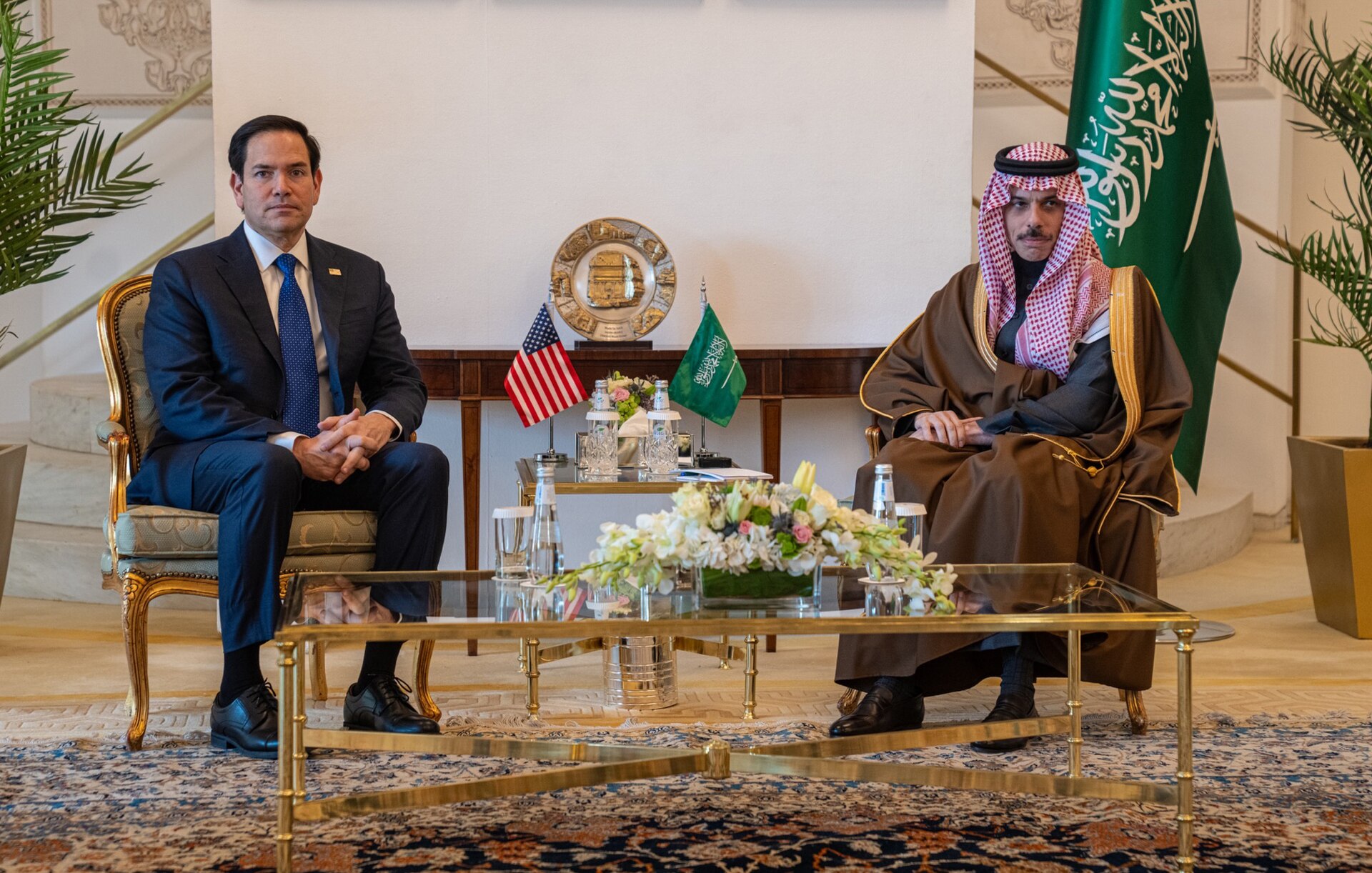
Table of Contents
- What Did the SPDC Emergency Meeting Decide?
- Two Shields on the Same Day
- How Large Is the Force Pakistan Has Pre-Positioned?
- A Secretary-General Before a Secretariat
- Why Did Riyadh Invoke the Pact Sixty Days After Signing?
- What Has Washington Offered — and What Has It Withheld?
- Tehran’s Calculated Silence
- The Pact the Region Has Seen Before
- Frequently Asked Questions
What Did the SPDC Emergency Meeting Decide?
The emergency SPDC meeting on October 5 in Riyadh produced three outcomes: immediate practical implementation of collective defence commitments with rapid deployment of agreed forces and capabilities to Saudi Arabia; the appointment of Lieutenant General (Retd.) Nauman Mahmood of Pakistan as the alliance’s first secretary-general for a three-year term; and formal condemnation of Houthi attacks on the holy cities of Makkah and Madinah.
Pakistan’s delegation was led by Field Marshal Asim Munir — the Chief of Defence Forces and Chief of Army Staff — alongside Deputy Prime Minister and Foreign Minister Ishaq Dar and Defence Minister Khawaja Asif. The joint communiqué, released through the Saudi Press Agency and Pakistan’s Ministry of Foreign Affairs, committed the three states to “take the necessary measures to provide the agreed military forces and capabilities and ensure their rapid deployment in the Kingdom, in accordance with the approved arrangements and the national legislation of the parties.”
The caveat — “national legislation of the parties” — is not ornamental. Turkish overseas military deployments require parliamentary authorisation under the Turkish constitution. Pakistani deployments abroad require cabinet approval. The language preserved each government’s domestic exit while projecting alliance unity to an audience of Houthi commanders and their Iranian sponsors.
“[This meeting] affirms the solidarity and unified stance of our countries in confronting the sinful aggressions that targeted the Kingdom and the Holy Sanctuaries, activating collective deterrence against these aggressions, and against all those standing behind them.”
The HOS Daily BriefThe Middle East briefing 3,000+ readers start their day with.
One email. Every weekday morning. Free.
— Prince Khalid bin Salman, Saudi Defence Minister, October 5, 2026
Pakistan’s defence minister subsequently confirmed that Turkish and Pakistani forces would play “supportive roles” at present, with Pakistan involved in reconnaissance while Saudi forces handle combat operations. The distinction matters: the alliance activated collective defence commitments without collective combat. When the Makkah pact was signed in August, the commitment to “indivisible Gulf security” had no joint command beneath it. Now it has a command — but the command’s operational mandate remains labelled “supportive.”
Two Shields on the Same Day
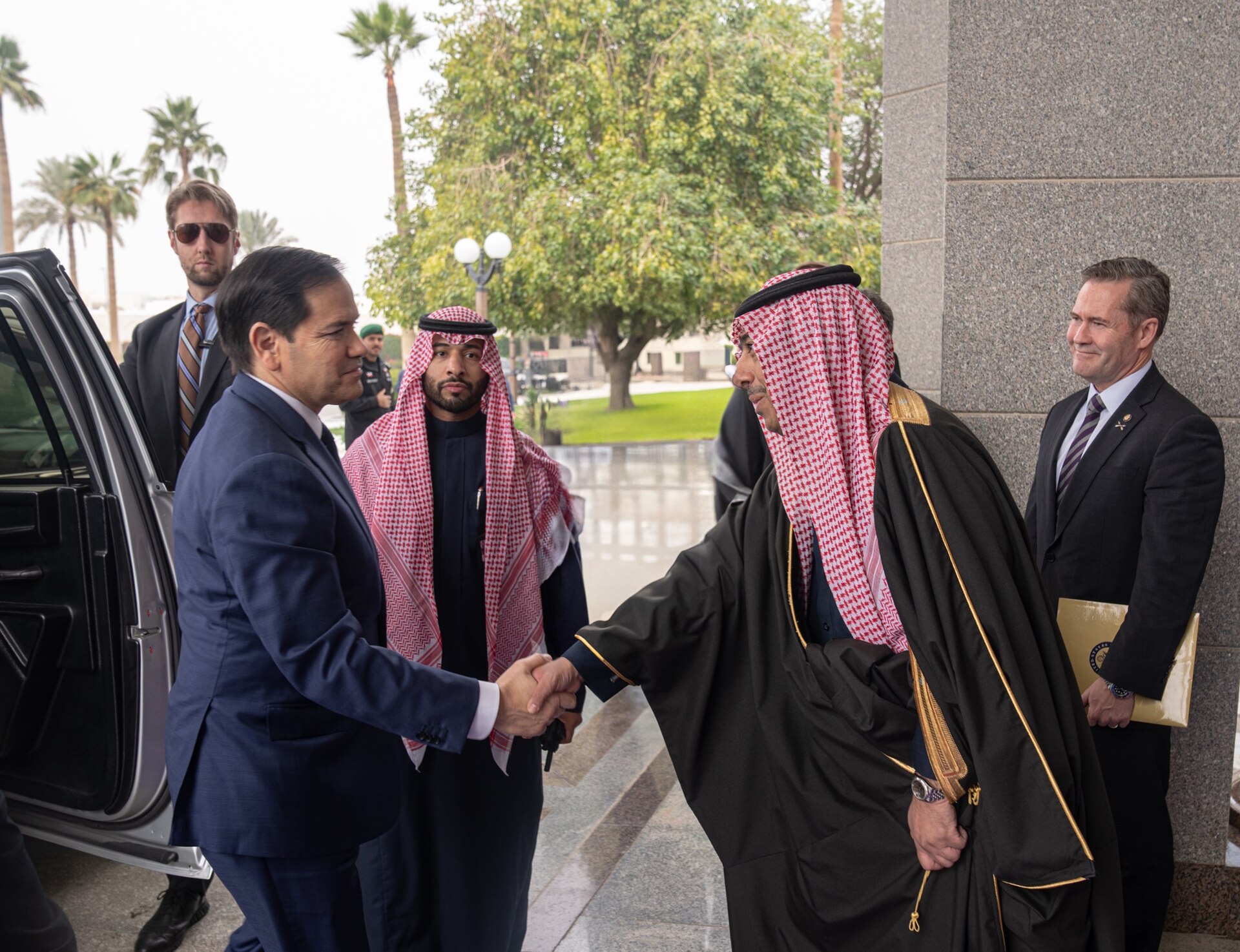
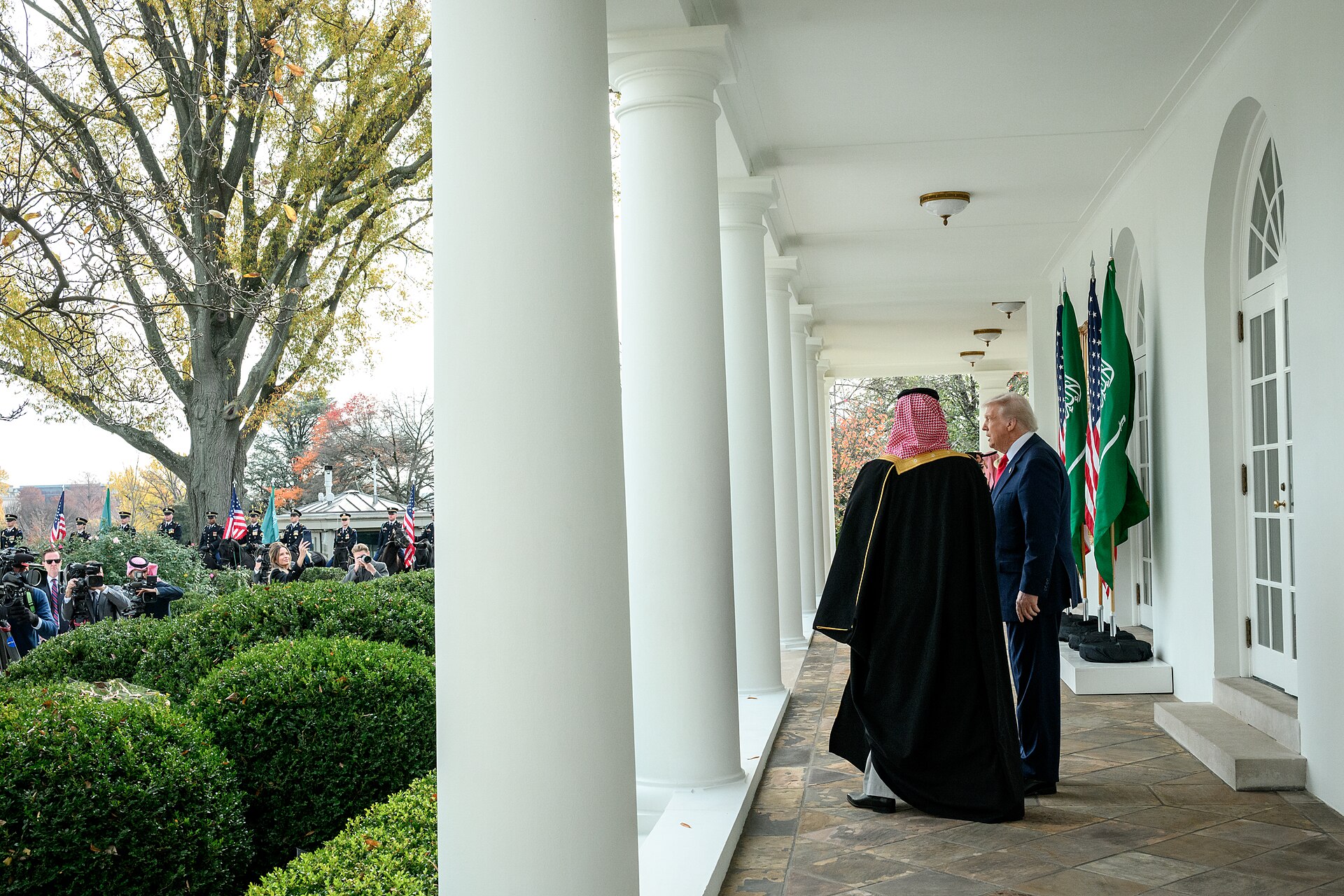
The sequencing of October 5 carries the argument that no single statement can. Hours before the SPDC met in Riyadh, Rubio stood before cameras in Washington and said: “The United States has a defense and security agreement with Saudi Arabia, and we intend to live by it.” He affirmed Saudi Arabia’s “right to defend itself” against Houthi attacks. He then boarded a plane for Iceland, Greece, and Portugal.
The statement was a reaffirmation, not an escalation. Rubio did not commit to direct US participation in airstrikes or ground operations supporting the Saudi campaign. When asked specifically about operational details — whether US forces would join Saudi operations against the Houthis — he said he would not discuss them further than acknowledging the agreement existed, according to The National News. The words carried the authority of the office and the caution of a secretary of state choosing his commitments carefully before a European tour.
In Riyadh, on the same day, Khalid bin Salman and three allied delegations activated a parallel framework. The two announcements — Rubio’s verbal reaffirmation and the SPDC’s operational activation — were made within hours of each other. If Rubio’s words were read in Riyadh as an ironclad operational commitment, there would have been no reason to invoke the Makkah pact that same afternoon.
The pattern behind October 5 is legible in a series of prior episodes. The Abqaiq-Khurais attack of September 2019 — the most consequential strike on oil infrastructure in decades — drew no US military response. PAC-3 interceptor supplies were withheld for months during the 2026 Iran war, with US pressure applied through the coercive sequencing of ammunition deliveries that left Saudi air defences at approximately 400 of an estimated 2,800 interceptor rounds at their lowest documented point. The 43-warplane grounding under Operation Project Freedom severed US air assets from Saudi basing arrangements without any formal termination of the bilateral defence relationship. Each time, the question of who closes the kill chain when the Americans say no went unanswered.
Each episode followed the same grammar: Washington affirmed the relationship and restricted the substance. Riyadh cited the defence agreement, and each time the agreement proved incapable of compelling the response its language promised. Neither Washington nor Riyadh publicly acknowledged the other’s October 5 statement.
How Large Is the Force Pakistan Has Pre-Positioned?
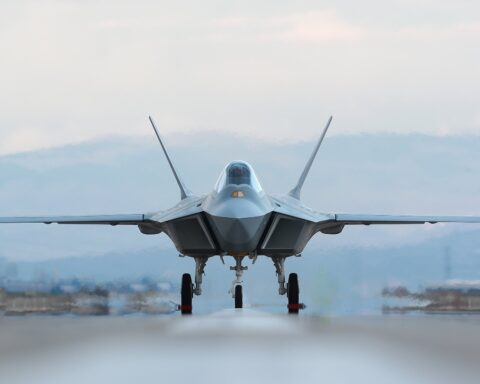
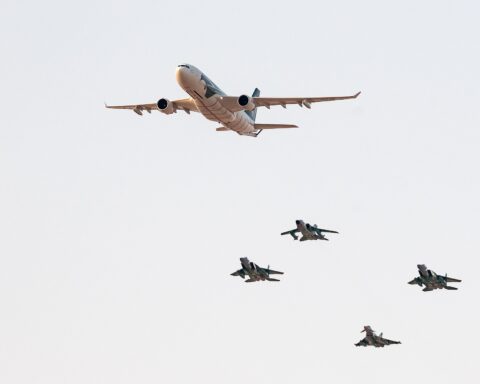
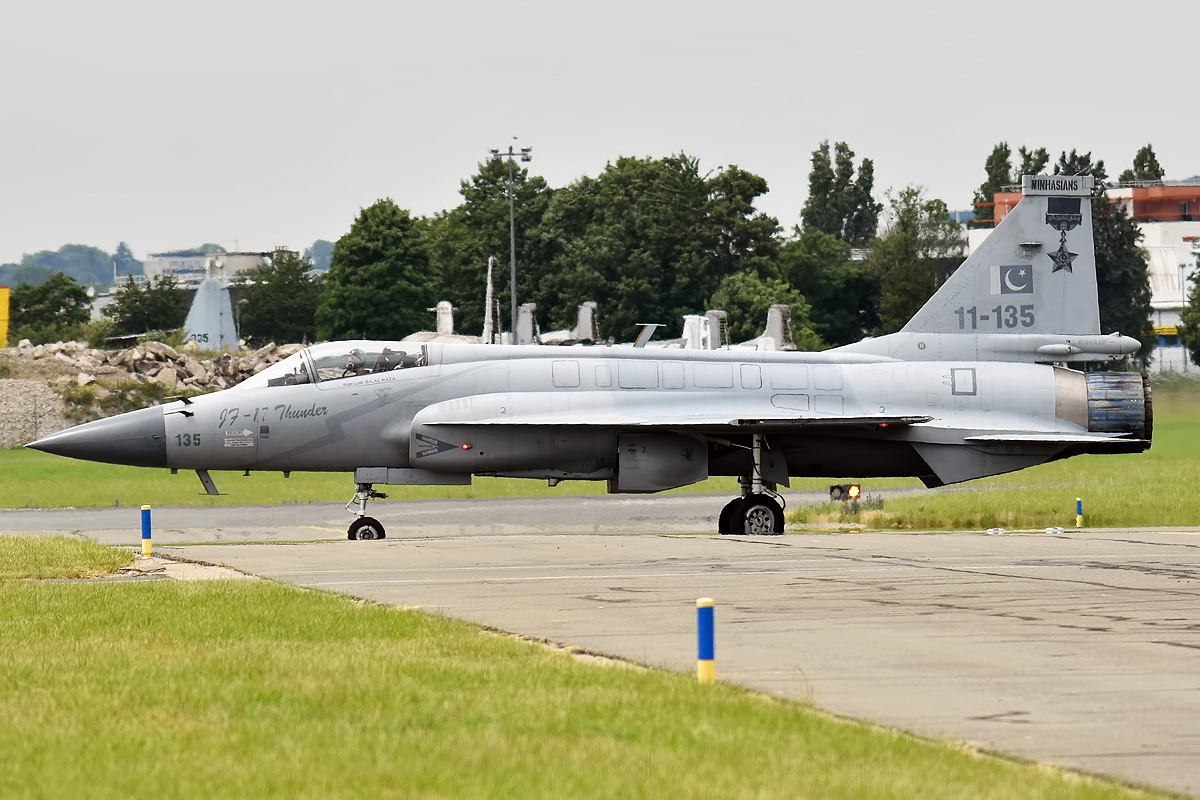
Pakistan deployed approximately 8,000 troops, sixteen JF-17 Thunder fighter aircraft, two squadrons of drones, and a Chinese-made HQ-9 air defence battery to Saudi Arabia in early April 2026, according to Reuters and Bloomberg. The equipment is operated by Pakistani personnel and financed by Saudi Arabia. The October 5 activation brought these pre-positioned assets under formal alliance command for the first time.
| Asset | Quantity | Deployment | Status (Oct 6) |
|---|---|---|---|
| Ground troops | ~8,000 | April 2026 | In-country; now under MJDA command |
| JF-17 Thunder fighters | ~16 | April 2026 | Operational |
| Drone squadrons | 2 | April 2026 | Reconnaissance role confirmed |
| HQ-9 air defence battery | 1 | April 2026 | Operational |
The deployment had been made under the bilateral Strategic Mutual Defence Agreement between Pakistan and Saudi Arabia, signed on September 17, 2025, at Al-Yamama Palace in Riyadh — the Makkah pact’s bilateral precursor. Turkey’s inclusion in August 2026 upgraded the framework to a trilateral arrangement with an Article 5-equivalent clause: “Any armed attack against any one of the three states shall be regarded as an attack against them all,” according to Al Jazeera’s analysis of the signing.
The combined alliance draws on substantial conventional depth. The 2026 Global Firepower Index credits the three signatories with approximately 1.4 million active military personnel, 3,400 aircraft, 6,000 tanks, and more than 340 naval assets. These are aggregate figures — they do not represent forces committed to the alliance — but they frame the conventional capacity available to a pact whose activation, until October 5, had remained hypothetical.
That hypothetical status had drawn public skepticism. EU Reporter headlined a September 17 analysis: “The Makkah Alliance Faces Its First Test: Will Pakistan Fight for Saudi Arabia?” When France deployed troops to Yanbu while the Mecca pact sent nothing, the credibility gap between signing ceremonies and operational reality was visible across the region. The October 5 activation narrows that gap. With Pakistani forces assigned to reconnaissance and Saudi forces handling combat, it does not close it.
A Secretary-General Before a Secretariat
The appointment of Lieutenant General (Retd.) Nauman Mahmood as the Makkah Alliance’s first secretary-general reveals the institutional reality behind the pact. The role is new. The bureaucracy beneath it does not yet exist.
Mahmood is a career Pakistan Army officer who served as the 35th president of Pakistan’s National Defence University from November 2021 to April 2023. Before that, he commanded an infantry division in North Waziristan and served as Director General of ISI (Analysis) as a two-star general. He was commissioned in 1987 and retired in 2023. His appointment is for a three-year term — announced at the same SPDC meeting that activated the pact for the first time.
The profile is instructive. Mahmood is an institutional administrator and intelligence analyst, not a warfighting commander. His NDU tenure and ISI analytical background suggest the secretary-general’s initial mandate is to stand up the alliance’s administrative and intelligence-sharing architecture rather than direct operations. The appointment of a Pakistani national to the top institutional role also reflects the bilateral foundation beneath the trilateral pact: Pakistan’s 8,000 troops were already in Saudi Arabia when Turkey joined in August, and Pakistan’s bilateral agreement with Riyadh predated the trilateral arrangement by nearly eleven months.
The pact had no permanent secretariat, no standing headquarters, and no joint operations centre when it was signed in August. As of October 6, it still does not — the SPDC authorised deployment before any of these structures existed.
The three-year term beginning October 5 means Mahmood’s tenure runs through approximately October 2029 — a period that may encompass the entirety of the current Houthi campaign and whatever political settlement follows it. His immediate mandate, based on the SPDC communiqué, includes coordinating the deployment of agreed forces and establishing the communication protocols that the alliance lacked at signing. Pakistani media outlet Shafaqna reported that Mahmood “took charge” immediately following the appointment.
In mature alliances, the institutional architecture precedes the first operational invocation. NATO built its standing command structures during peacetime, across years of negotiation and integration exercises. The Makkah Alliance is assembling its institutional skeleton during its first operational deployment — a sequence forced by the tempo of the Houthi campaign rather than chosen by the planners.
Why Did Riyadh Invoke the Pact Sixty Days After Signing?
The Makkah Alliance was signed on August 7, 2026. Riyadh activated it on October 5 — sixty days later. The trigger was a series of Houthi strikes that escalated from military and economic targets to the holy cities of Makkah and Madinah.
On September 16, Saudi air defences shot down a Houthi drone near Makkah — the first time in nearly a decade that the Houthis had targeted the holy city, according to the Saudi-led coalition. The kingdom declared Makkah a “red line.” CNN reported Saudi officials described the incident as an attack on Islam’s holiest site. The Houthis denied the accusation; their leader Abdel-Malik al-Houthi called it “a heinous lie.”
Two weeks later, on approximately September 29, a Houthi drone struck the Taiba power distribution station in Madinah at 5:11 a.m. local time. The station supplies electricity to the Prophet’s Mosque. Coalition spokesman Major General Turki al-Maliki confirmed one transformer was put out of service, though the broader electricity grid was not affected. An investigation of drone wreckage confirmed Houthi involvement, al-Maliki said. The UAE Ministry of Foreign Affairs condemned the attack as “a flagrant violation of the sovereignty of Saudi Arabia.”
King Salman addressed the matter during his UN General Assembly speech on September 22, condemning the “heinous targeting of Mecca by terrorist Houthis.” The SPDC communiqué echoed the framing, “condemn[ing] in the strongest terms the attempted targeting of Makkah and Madinah, as well as the continuing attacks targeting cities and civilian and economic facilities in the Kingdom.” The communiqué’s language prioritised the holy sites over the military and economic targets that had preceded them — giving the activation a register that threats to bases or pipelines alone could not have provided.
Saudi Arabia reported three Houthi attempts to target Makkah and Madinah over the past nine years, including two incidents in September alone, according to Pakistan’s Tribune. The concentration of holy-city targeting in September 2026 — after the Houthis announced a “maritime blockade” of the kingdom in July — created the political conditions for activation that the broader Houthi campaign, ongoing for months, had not.
Foreign Minister Ishaq Dar announced the emergency SPDC meeting around October 2, citing escalating Houthi attacks, according to Pakistan’s Daily Times. The meeting was held three days later. The three-day interval between announcement and activation suggests the political decision had already been taken in bilateral channels; the SPDC formalised it. The Aramco pricing decisions of October 4–5 — which cut Asia OSPs to a six-year low while Riyadh simultaneously launched a 100,000-troop ground offensive into Yemen — provided the economic and military context against which the alliance’s activation was announced.
What Has Washington Offered — and What Has It Withheld?
Rubio’s October 5 reaffirmation — “we intend to live by it” — was the most explicit US affirmation of the Saudi defence relationship in months. It came after a sustained period in which the American commitment had been tested by omission rather than repudiation.
The record since 2019 follows a consistent pattern. The Abqaiq-Khurais attack of September 14, 2019 — which temporarily halved Saudi crude output — drew public support from Washington but no military response. During the 2026 Iran war, PAC-3 interceptor supplies were withheld at intervals as described above, and the 43-warplane grounding under Operation Project Freedom decoupled US air assets from Saudi basing arrangements — each time without a formal break in the bilateral alliance.
Marwan Muasher, Vice President for Studies at the Carnegie Endowment for International Peace, described the Iran war as “exposing weaknesses in the old U.S.-Gulf relationship.” The Makkah pact is one response to that exposure — but the US relationship has not been discarded. Rubio’s reaffirmation and the SPDC activation occurred on the same calendar day, addressed the same audience, and were issued from capitals that did not coordinate the reassurances they offered.
The IISS, in an August 2026 analysis, characterised the Makkah Agreement as establishing “a new security mechanism based on the principle of collective deterrence,” building on the earlier bilateral pact. What distinguishes the Makkah arrangement from the US relationship is structural: the MJDA contains an Article 5-equivalent mutual defence clause. The US-Saudi defence relationship, despite decades of arms sales, joint exercises, and basing arrangements, does not. Rubio referenced “a defense and security agreement” without specifying which agreement or what obligations it imposed.
Tehran’s Calculated Silence
Iran’s response to the Makkah pact has been calibrated to deny it legitimacy without provoking it into cohesion. Iranian Foreign Ministry spokesman Esmaeil Baghaei, responding to the August signing, said Tehran had “no reason for concern.” He framed the pact not as an anti-Iranian alignment but as evidence that regional states had concluded “they cannot rely on America’s claim of providing security,” according to Pakistan’s Tribune.
The framing served Tehran on two levels. If the Makkah Alliance is a response to American unreliability rather than Iranian aggression, then Iran’s campaign of regional strikes did not cause the pact — Washington’s equivocation did. Baghaei’s statement claimed credit for the strategic conditions that made the alliance necessary while declining to treat it as a military threat.
Iranian parliamentary hardliners offered a complementary dismissal. Ebrahim Rezaei, a member of Iran’s national security committee, called the MJDA “a paper agreement with Turkey and Pakistan” that “would bring the Saudis no security, just as years of one-sided dependence on the United States had failed to do,” according to the Tribune. The statement dismissed both of Riyadh’s security architectures in a single sentence.
Iran was reportedly invited to join the pact before the August signing, according to the Jerusalem Post, citing Turkish-mediated discussions. Tehran declined. Whether Iran’s dismissive posture survives a Pakistani HQ-9 battery tracking Iranian-supplied drones over Saudi airspace has not been tested.
Foreign Minister Dar spoke by telephone with Iranian Foreign Minister Abbas Araghchi shortly after the August signing — an effort by Islamabad to prevent the trilateral arrangement from creating immediate friction with a neighbour with whom Pakistan shares a 909-kilometre border in Balochistan, according to the Tribune. Pakistan’s deployment to Saudi Arabia predated the formal Makkah Alliance, and Islamabad has simultaneously maintained its role as a diplomatic intermediary between Washington and Tehran throughout the 2026 conflict. The pact’s activation tests whether Islamabad can sustain both roles — military partner to Riyadh and interlocutor for Tehran — without one compromising the other.
The Pact the Region Has Seen Before
The Makkah Alliance is not the first Muslim-majority mutual defence arrangement in the Middle East. The Baghdad Pact of 1955 — which joined Turkey, Iraq, Iran, Pakistan, and the United Kingdom in a US-backed anti-Soviet alliance — carried similar aspirations: collective security, regional deterrence, great-power supplementation. It collapsed within four years. The 1958 Iraqi revolution withdrew Baghdad from its own pact. Regional political pressure — principally from Nasser’s Egypt — eroded the alliance’s legitimacy faster than its military structures could mature.
Middle East Eye drew the parallel directly in August 2026, writing that “the war on Iran cracked the US-led regional order” and that “the Mecca pact could deal the final blow.” The comparison carries weight in one direction: both alliances were formed during periods of upheaval by states seeking security guarantees their existing arrangements could not provide. The Baghdad Pact’s failure was political, not military — it never faced the conventional test the Makkah Alliance may now confront.
“The importance of the Mecca Agreement does not lie in its security guarantees, but rather reflects a change underway in the Middle East’s regional order — one that reduces the United States’ decades-long leadership role.”
— Steven A. Cook, Council on Foreign Relations, August 2026
Cook, the CFR’s Eni Enrico Mattei Senior Fellow for Middle East and Africa Studies, characterised the August signing as “a major change” in Middle East geopolitics and “the first institutional arrangement of its kind in the region.” His essay’s title stated the conclusion without qualification: “The U.S.-Led Middle East Order Is Over. The Mecca Agreement Proves It.” The assessment was published before the October activation converted the pact from a diplomatic event to an operational one — forces authorised, a commander appointed, deployment timelines specified.
Whether the Makkah pact follows the Baghdad Pact’s trajectory depends on variables the signatories cannot yet control: the duration of the Houthi campaign, the scope of Turkish parliamentary authorisation, the willingness of Pakistani forces to move from reconnaissance to combat, and whether a secretary-general’s office — appointed on the same day the pact was first invoked — can build an institutional base before the next crisis arrives. Saudi Arabia diversified its economy before the war on the premise that dependence on a single revenue source was a vulnerability. On October 5, two announcements from two capitals applied the same premise to the kingdom’s defence.
Frequently Asked Questions
Has Turkey committed specific military units to Saudi Arabia?
Turkey has not publicly specified which units or platforms will deploy under the Makkah Alliance activation. Turkish overseas military deployments require a renewable one-year parliamentary mandate from the Grand National Assembly, and as of October 6 no specific Saudi deployment authorisation has been voted on. Turkey currently maintains approximately 35,000 troops stationed abroad — in Syria, Iraq, Libya, Qatar, and Somalia — making it the NATO member with the largest non-alliance overseas deployment footprint, according to NATO comparative assessments. Any commitment to Saudi Arabia would add to an already extended force posture and require its own legislative authorisation.
Could other countries join the Makkah Alliance?
Al Jazeera reported on August 9 that the alliance’s framework allows for expansion by invitation, with Egypt, Jordan, and the UAE cited as potential candidates in regional diplomatic discussions. Each faces constraints: Egypt’s military relationship with the United States limits its flexibility to join a pact framed as supplementing American guarantees; Jordan’s border exposure to Iranian-backed groups makes formal alignment a risk to its own security posture; and the UAE has pursued an independent defence strategy since its 2019 withdrawal from the Yemen coalition. No formal invitations have been extended beyond the three founding members.
What is the legal basis for the Article 5-equivalent clause?
The full text of the Makkah Joint Defence Agreement has not been publicly released. The Article 5-equivalent language — “any armed attack against any one of the three states shall be regarded as an attack against them all” — is drawn from government summaries and media reporting, not from a published treaty text. NATO’s Article 5 uses the formulation “such action as it deems necessary,” which allows each member to determine its own response rather than mandating a specific military commitment. Whether the MJDA’s mutual defence clause is similarly permissive or more binding cannot be determined without the full text.
Does the Makkah pact reduce Saudi dependence on US weapons systems?
Not in the near term. Saudi Arabia’s front-line combat platforms remain overwhelmingly US-origin: F-15SA strike fighters, Patriot and THAAD air defence systems, M1A2 Abrams main battle tanks, and AH-64 Apache attack helicopters. The Pakistani HQ-9 battery deployed in April 2026 is the first non-US air defence system operating on Saudi soil, but it supplements rather than replaces the Patriot network. Pakistan’s JF-17 Thunder — a Sino-Pakistani platform — operates independently of US supply chains but lacks the range and payload capacity of the F-15SA. The pact diversifies security partnerships without diversifying the arms supply chain that sustains Saudi combat operations.