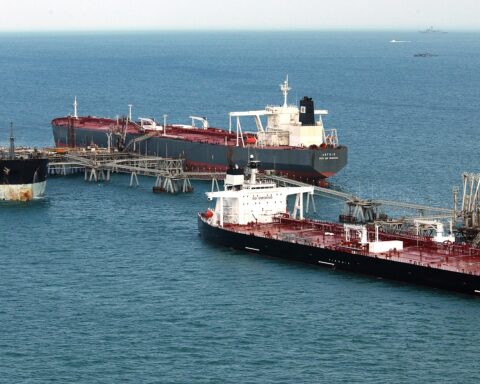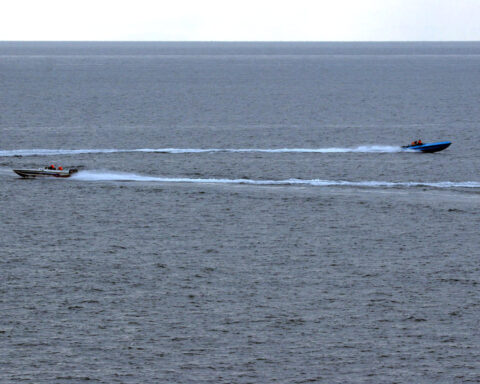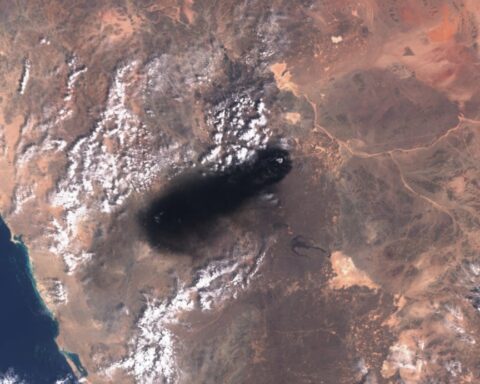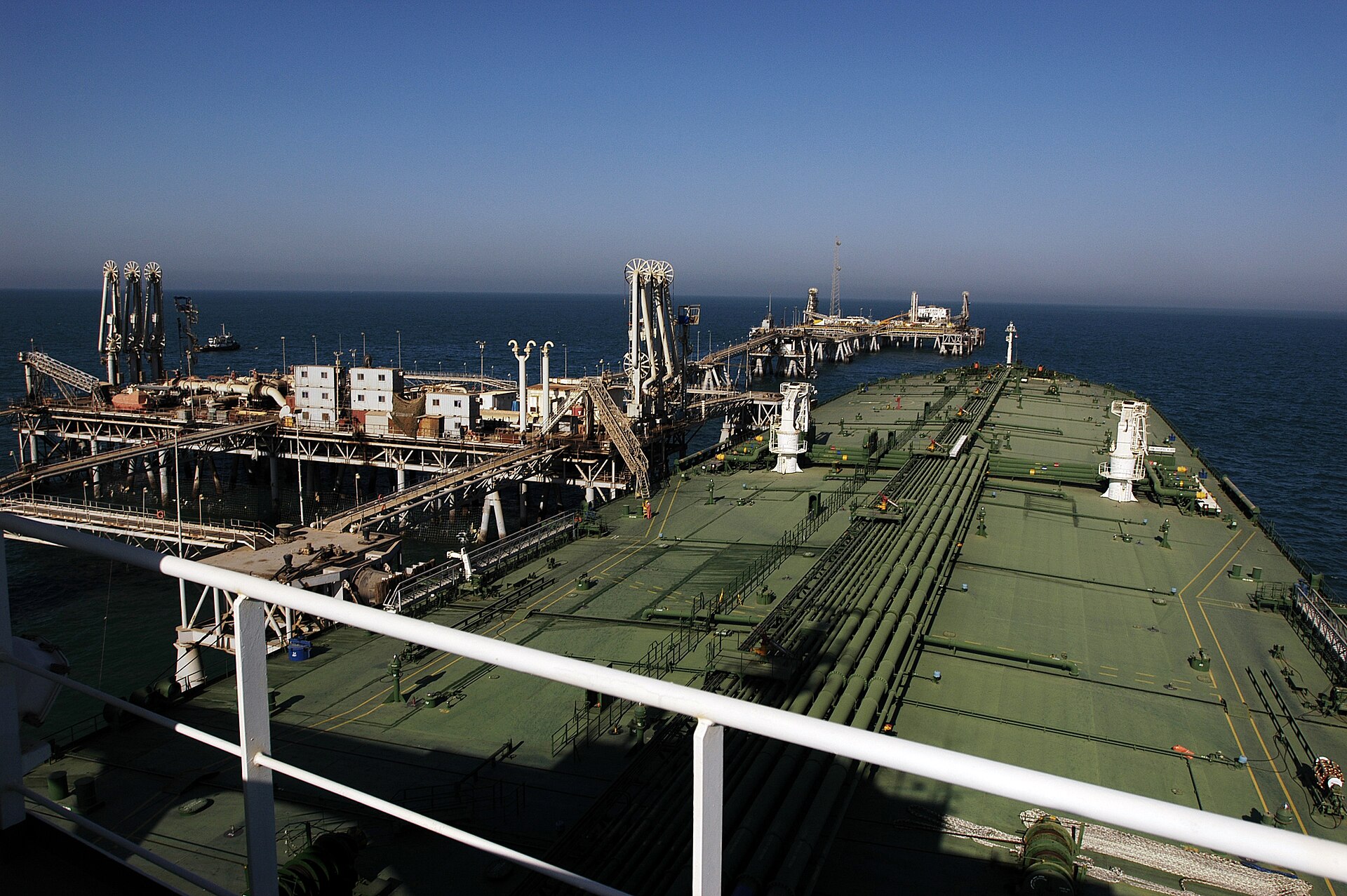

DUBAI — OPEC+ will convene on November 1 with Saudi Arabia’s production quota fixed at 10.478 million barrels per day, a number the kingdom cannot approach. Iran’s Islamic Revolutionary Guard Corps declared the Strait of Hormuz closed on October 26 after striking two tankers attempting unauthorized transit, according to Seatrade Maritime. The same day, Houthis claimed drone attacks on East-West pipeline pumping stations — the kingdom’s only alternative export route — according to Oilprice.com.
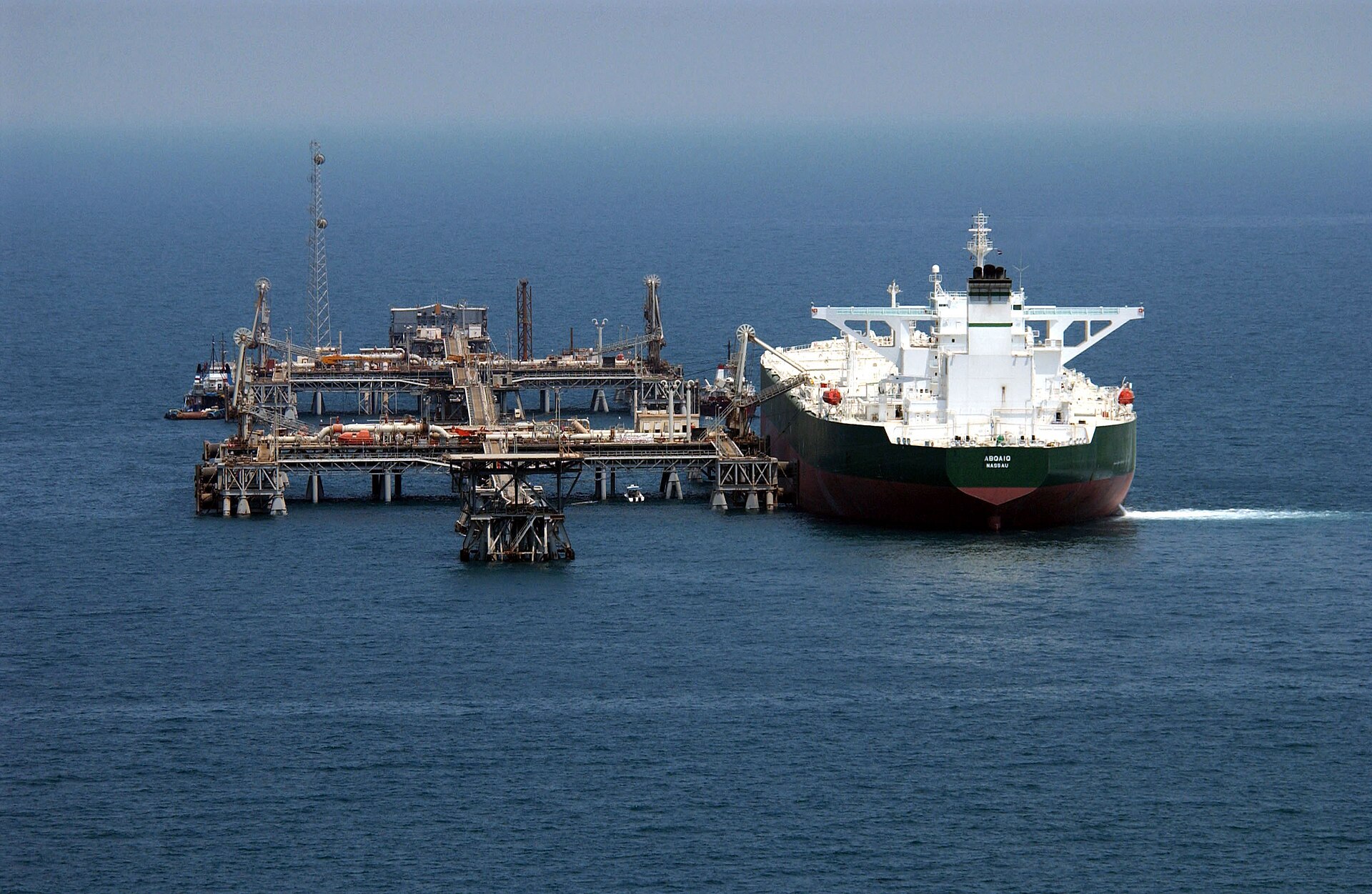
Saudi crude loadings fell to approximately 2.1 million barrels per day in the first half of September, per tanker-tracking data cited by BusinessToday. Hormuz transits dropped to four per day on October 18 from a pre-war baseline of 85, according to IMF PortWatch data reported by Straits.live. At 18:22 UTC on October 26, 159 AIS-visible vessels were holding position away from berth in the strait’s watch box, per Straits.live.
Table of Contents
The Quota Saudi Arabia Cannot Fill
OPEC+’s October 4 meeting kept November production targets unchanged, according to Enerdata. Saudi Arabia retained its 10.478 mb/d allocation. Russia held 9.9 mb/d, Iraq 4.4 mb/d, Kuwait 2.7 mb/d, Kazakhstan 1.6 mb/d, Algeria 1.0 mb/d, Oman 0.8 mb/d. Delegates told Reuters that changes to output levels were unlikely before 2027.
The House of Saud Daily Briefing
Saudi Arabia's news in 3 minutes, every morning. Free. See today's issue
Before the war, Saudi Arabia produced approximately 10.2 mb/d, per BusinessToday. Bloomberg reported August output at 6.24 mb/d. The IEA said Saudi production fell 2.6 mb/d that month, with crude shipments dropping to 6 mb/d, per Trend citing the IEA. By September, Al Rajhi Capital estimated production had recovered to approximately 8 million bpd, while OPEC’s own monthly report put the self-reported figure at 8.372 mb/d.
Production and exports have diverged. While output climbed toward 8 mb/d in September, crude loadings — the barrels that physically reach tankers — moved the other way. Loadings fell to approximately 2.3 mb/d in August and 2.1 mb/d in the first half of September, according to tanker-tracking data cited by BusinessToday. The gap reflects crude consumed by domestic refineries and, increasingly, crude with no route to a port.
| Period | Production (mb/d) | Crude Loadings (mb/d) | OPEC+ Quota (mb/d) |
|---|---|---|---|
| Pre-war | ~10.2 | — | 10.478 |
| August 2026 | 6.24 | ~2.3 | 10.478 |
| September 2026 | ~8.0 | ~2.1 | 10.478 |
The Yanbu terminal — the Red Sea port fed by the East-West pipeline — saw weekly exports plunge from 11 million barrels in the week of July 20 to 1.3 million by the week of August 3, according to Kpler data cited by BusinessToday.
Saudi Arabia notified European term buyers that they would receive no Saudi crude at all in October, Oilprice.com reported.
How Much Oil Can the East-West Pipeline Ship?
With Hormuz effectively shut, the East-West pipeline — design capacity 7 mb/d, per Saudi Gazette — is the kingdom’s sole route to a loading terminal. Saudi Arabia suspended the line on September 12, restarted it on September 22, and achieved flows of approximately 5.8 mb/d, according to AFP.
On October 4, a strike hit the Khurais pumping station, causing what AFP described as “big damage” and halting flows, per Türkiye Today. On October 26, Houthis claimed fresh drone attacks on pumping stations, though Saudi Arabia has not confirmed damage from these strikes, according to Oilprice.com. Earlier attacks targeted infrastructure at Rabigh along the same route.
Even at partial capacity, the pipeline cannot close the export gap. Rystad Energy analyst Rahul Choudhary estimated that at 40–60% capacity, the line would leave only 0.5 to 1 mb/d available for export, with the rest feeding Saudi domestic refineries. Yanbu exports would fall by 2.5 to 3 million bpd even after restart, Choudhary told Al Jazeera. His estimate assumed sustained operation at partial capacity — a condition the pipeline has not achieved since its September 22 restart.
Standard Chartered Research estimated that roughly two-thirds of the capacity the market assumes is available does not actually exist.
The terminal at Yanbu is itself under attack. Houthis have claimed strikes on Aramco facilities there. Gavekal Research analyst Louis Vincent-Gave told Al Jazeera that “the bombing of Yanbu” had placed “large question marks” on Saudi oil flowing through the Red Sea.
Asia-bound cargoes from Yanbu must now transit the Cape of Good Hope — approximately 13,140 nautical miles versus 3,370 through Hormuz, adding roughly one month to voyages, according to Al Jazeera.
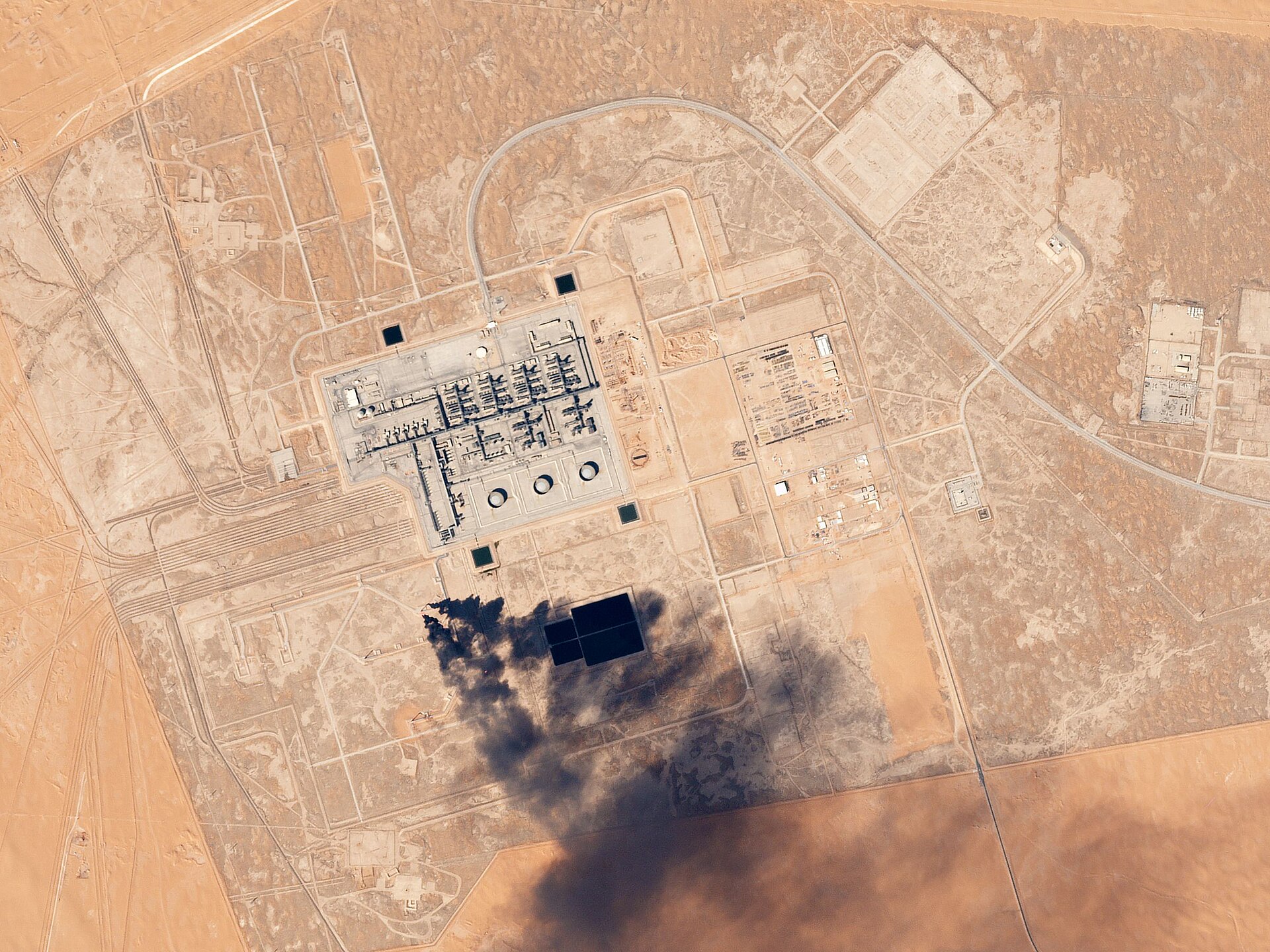
Gilbert Metcalf, a visiting professor at MIT Sloan and former US Treasury official, assessed Aramco’s plan to raise pipeline capacity to 10 mb/d for Fortune. The expansion would add roughly 2% to global supply, which “could lower prices ‘a bit,’ with considerable uncertainty,” Metcalf said. He questioned whether sufficient refinery capacity exists to process the additional crude and doubted a bigger pipeline “takes much pressure off” reopening the strait.
Aramco CEO Amin Nasser said earlier that disruptions typically last “days, not weeks or months,” per Saudi Gazette. That statement predates both the October 4 Khurais strike and the October 26 attacks.
Can Other OPEC+ Members Compensate?
The IEA’s September report put total OPEC+ spare capacity at 4.05 million barrels per day: Saudi Arabia at 2.43 mb/d, the UAE at 850,000 bpd, and Iraq at 320,000 bpd as the principal holders, per OilPrice.com citing the IEA.
Nearly all of it is unusable. The IEA separately estimated effective OPEC+ spare capacity — the volume that could actually reach tankers — at just 220,000 bpd in September, per the same report.
Reuters columnist Ron Bousso put Saudi Arabia’s usable spare at 600,000 to 1 mb/d given infrastructure constraints, per OilPrice.com. Jeff Currie of the Carlyle Group invoked Warren Buffett’s “swimming naked” analogy for OPEC+, arguing the cartel had no spare production capacity to show once the crisis exposed its constraints, per OilPrice.com.
| Measure | Volume (mb/d) |
|---|---|
| Headline spare capacity | 4.05 |
| Saudi Arabia (headline) | 2.43 |
| UAE (headline) | 0.85 |
| Iraq (headline) | 0.32 |
| Effective spare capacity (IEA) | 0.22 |
| Saudi usable spare (Reuters estimate) | 0.6–1.0 |
The UAE complicates the arithmetic. It left OPEC during the conflict and now produces approximately 3.9 mb/d outside the formal OPEC+ framework, per BusinessToday. Iraq sits at approximately 3.9 mb/d against its 4.4 mb/d quota, per the same report. The November 1 meeting has no mechanism to coordinate the UAE’s output.
What Does $116 Brent Tell the Market?
Brent crude settled at $116.72 on Friday, October 23, and was at $115.99 at 18:12 UTC on October 26 — down 0.63% over 24 hours — per Financefeeds.com and Straits.live. On October 9, Brent stood at $102.94, according to CNBC.
JPMorgan estimates Brent’s fundamental supply-demand value at approximately $94 per barrel, implying roughly $20 of geopolitical war premium, according to Financefeeds.com. Goldman Sachs warned that if Gulf production falls 4 mb/d below pre-war levels, Brent could surpass $120, per OilPrice.com.
OPEC has cut its own 2026 global oil demand growth forecast to 200,000 barrels per day — down from 1.4 mb/d at the start of the year — per its October 13 monthly report, reported by Xinhua and Reuters.
The November 1 meeting will take place with the IRGC maintaining that 124 tankers on its non-compliant list face “completely halted” movement, per Lloyd’s List Intelligence. On October 17, the IRGC and Iran’s Foreign Ministry issued simultaneous closure statements declaring passage of vessels “of all nationalities is prohibited,” according to IranWire citing IRNA. The IRGC struck two tankers on October 26 and warned that ships breaking transit rules “could be set on fire,” per Seatrade Maritime and Middle East Eye.
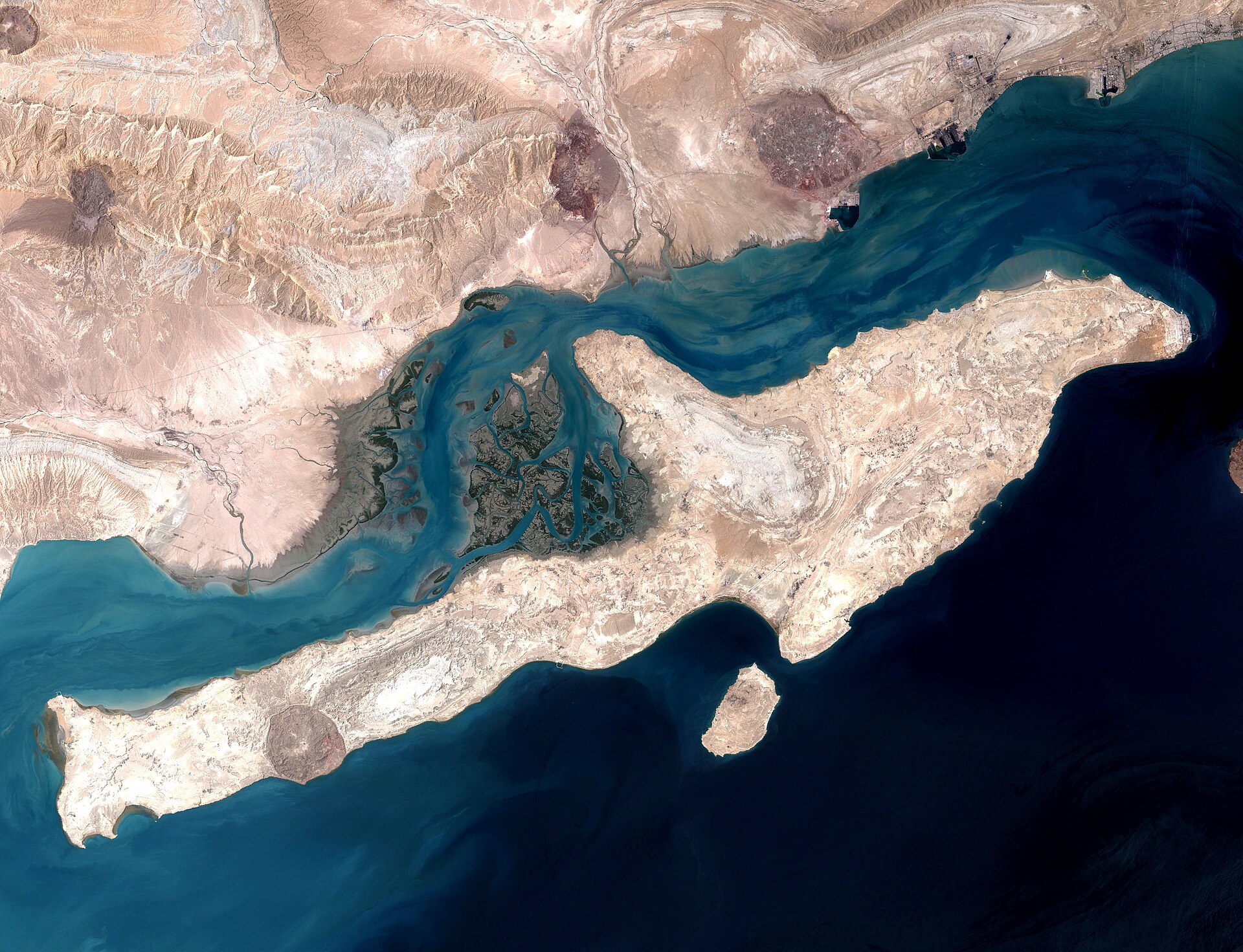
CENTCOM has contested the closure, stating the IRGC “has no authority to dictate vessel routing through the strait.” Iran has not issued a NAVTEX navigational notice formally declaring a blockade under international maritime law.
Aramco Prices for a Rerouted World
Aramco’s November official selling prices signal where the company expects its remaining barrels to go. The state producer cut Arab Light to Asia by $3 per barrel, to $5 below the Oman/Dubai benchmark — the widest discount since June 2020, according to Reuters. For northwest Europe, Aramco raised Arab Light by $3.
The split maps onto geography. Asia-bound cargoes from Yanbu face the Cape of Good Hope detour. European buyers face a shorter Red Sea voyage to Mediterranean refineries. Aramco set the November pricing in early October, per Reuters, before the IRGC’s October 26 closure declaration and the latest Houthi attacks on the pipeline.
Background
Saudi Arabia’s oil export infrastructure has been under sustained attack since the Iran-Saudi conflict escalated in mid-2026. Both of the kingdom’s crude export routes — the Strait of Hormuz and the East-West pipeline to the Red Sea port of Yanbu — have been repeatedly targeted. The pipeline was suspended on September 12, restarted September 22, and struck again at Khurais on October 4.
The Houthis had declared a maritime embargo on Saudi Arabia and seized Mocha, Dhubab, and Mayyun Island at the Bab el-Mandeb strait as of September, according to Al Jazeera, though the operational extent of their hold on those positions remained contested in October. OPEC+ has kept production targets unchanged through the entire war period, per Enerdata. The November 1 meeting will be the first since the IRGC’s October 26 closure declaration.
Frequently Asked Questions
Has Iran formally declared a maritime blockade of the Strait of Hormuz?
No. Iran has not issued a NAVTEX navigational notice — the standard mechanism under international maritime law for formally declaring a blockade — meaning the closure lacks formal legal standing under international maritime conventions. The distinction matters in practice: naval powers retain freedom-of-navigation justification for transit operations, and the absence of a formal declaration affects how insurers and flag states classify their obligations. CENTCOM has stated the IRGC “has no authority to dictate vessel routing through the strait.” Enforcement has been through direct action: striking two tankers on October 26, maintaining a non-compliant ship list of 124 vessels whose movement is “completely halted” per Lloyd’s List Intelligence, and warning that ships breaking transit rules “could be set on fire,” per Middle East Eye.
Do the Houthis control both chokepoints for Saudi oil exports?
Saudi crude faces obstruction at both exits from the region. The IRGC has declared Hormuz — the eastern route from the Persian Gulf — closed. At the southern end of the Red Sea, the Houthis had seized Mocha, Dhubab, and Mayyun Island at the Bab el-Mandeb strait as of September, per Al Jazeera — though the operational extent of that control remained contested in October — and have declared a maritime embargo on Saudi Arabia. Both blockages are in effect simultaneously as of October 26. Tankers loading at Yanbu can reach European refineries by heading north through the Suez Canal — the shorter run that partly explains Aramco’s $3 Arab Light premium increase to northwest Europe. For Asian buyers, the direct Gulf-Hormuz route and the southern Bab el-Mandeb route are both blocked, making the lengthy detour around the Cape of Good Hope effectively unavoidable and adding roughly one month to deliveries, per Al Jazeera.
Why did the UAE leave OPEC, and does it affect the supply picture?
The UAE departed OPEC during the conflict and now produces approximately 3.9 mb/d outside the formal OPEC+ framework, according to BusinessToday. The IEA’s September report still attributed 850,000 bpd of spare capacity to the UAE within its broader OPEC+ spare capacity figure of 4.05 mb/d, per OilPrice.com. The November 1 meeting has no mechanism to coordinate UAE output, placing those barrels outside the cartel’s allocation decisions.
What is the difference between OPEC+ headline and effective spare capacity?
The IEA tracks two measures. Headline spare capacity — 4.05 mb/d in September — counts all production capacity above current output, regardless of whether it can reach a port. Effective spare capacity — 220,000 bpd in September — counts only barrels that can be physically produced and exported within the IEA’s assessment window. The gap between the two reflects export route constraints, infrastructure damage, and the difference between what OPEC+ members could theoretically produce and what they can actually ship to buyers.
When could the East-West pipeline reach full capacity?
After the September 22 restart, a return to the pipeline’s 7 mb/d design capacity was expected to take six weeks or more, according to Baird Maritime citing Reuters. That timeline assumed uninterrupted operation. The October 4 Khurais strike halted flows, and the October 26 Houthi attacks on pumping stations have repeatedly interrupted the ramp-up. Aramco has announced plans to expand the line to 10 mb/d, but Gilbert Metcalf of MIT Sloan told Fortune he doubted even an expanded pipeline “takes much pressure off” reopening the Strait of Hormuz.
The drop in available export volume reflects disruption across all Saudi oil corridors. A full assessment of the expanding tanker attack zone beyond Hormuz details how the Gulf of Oman is now under active IRGC enforcement, compounding the Hormuz closure.
Saudi Arabia’s attempt to break the deadlock through direct Makkah pact diplomacy failed on the same day. The failed ceasefire talks in Tehran and US post-midterm strike planning explain why Saudi Arabia entered the November 1 OPEC+ meeting with no diplomatic resolution in sight.
The House of Saud Daily Briefing
Saudi Arabia's news in 3 minutes, every morning. Free. See today's issue