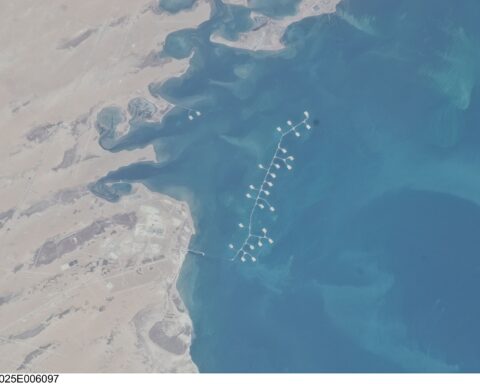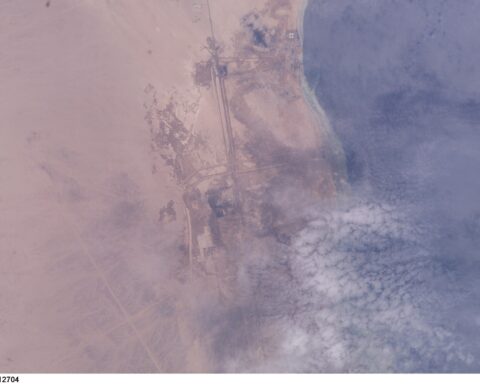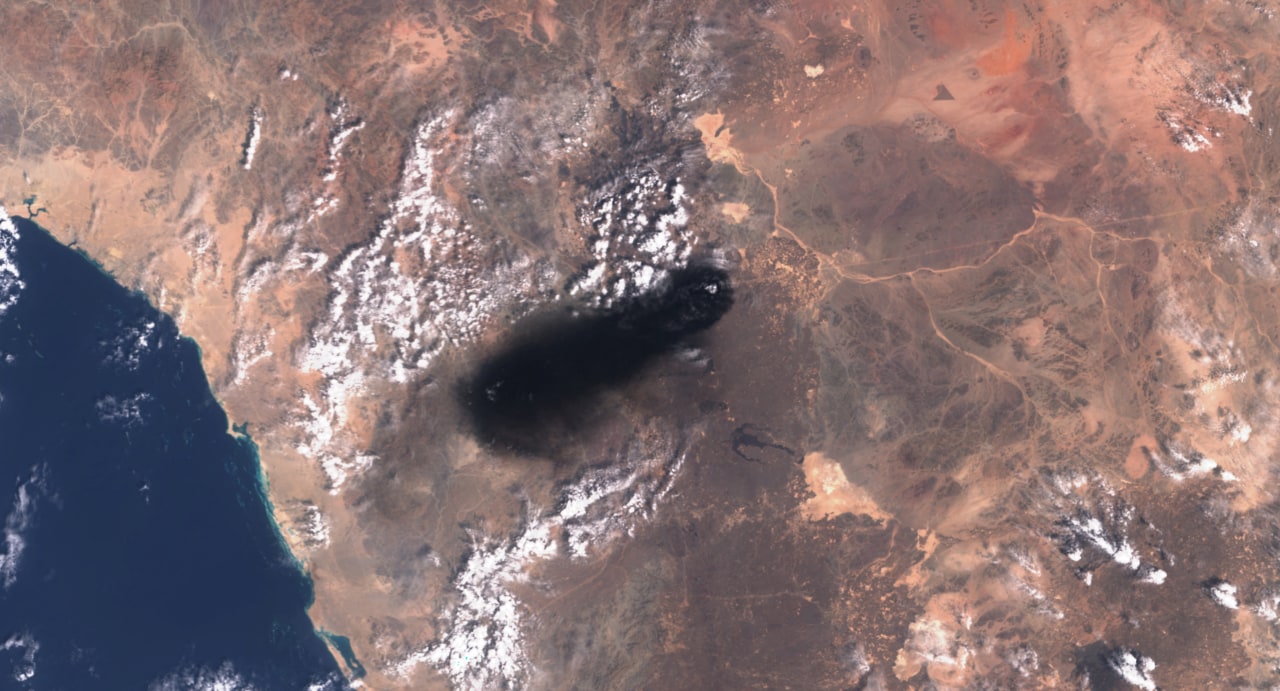

YANBU — Yemen’s Houthi forces claimed on November 12 that they struck a pumping station on Saudi Arabia’s East-West crude oil pipeline with a drone and hit oil facilities in the Red Sea port city of Yanbu with a ballistic missile, according to Reuters and Middle East Eye. Saudi Arabia did not respond to a request for comment, Reuters reported, and neither Aramco nor the Saudi Press Agency issued any statement on the claimed attacks.
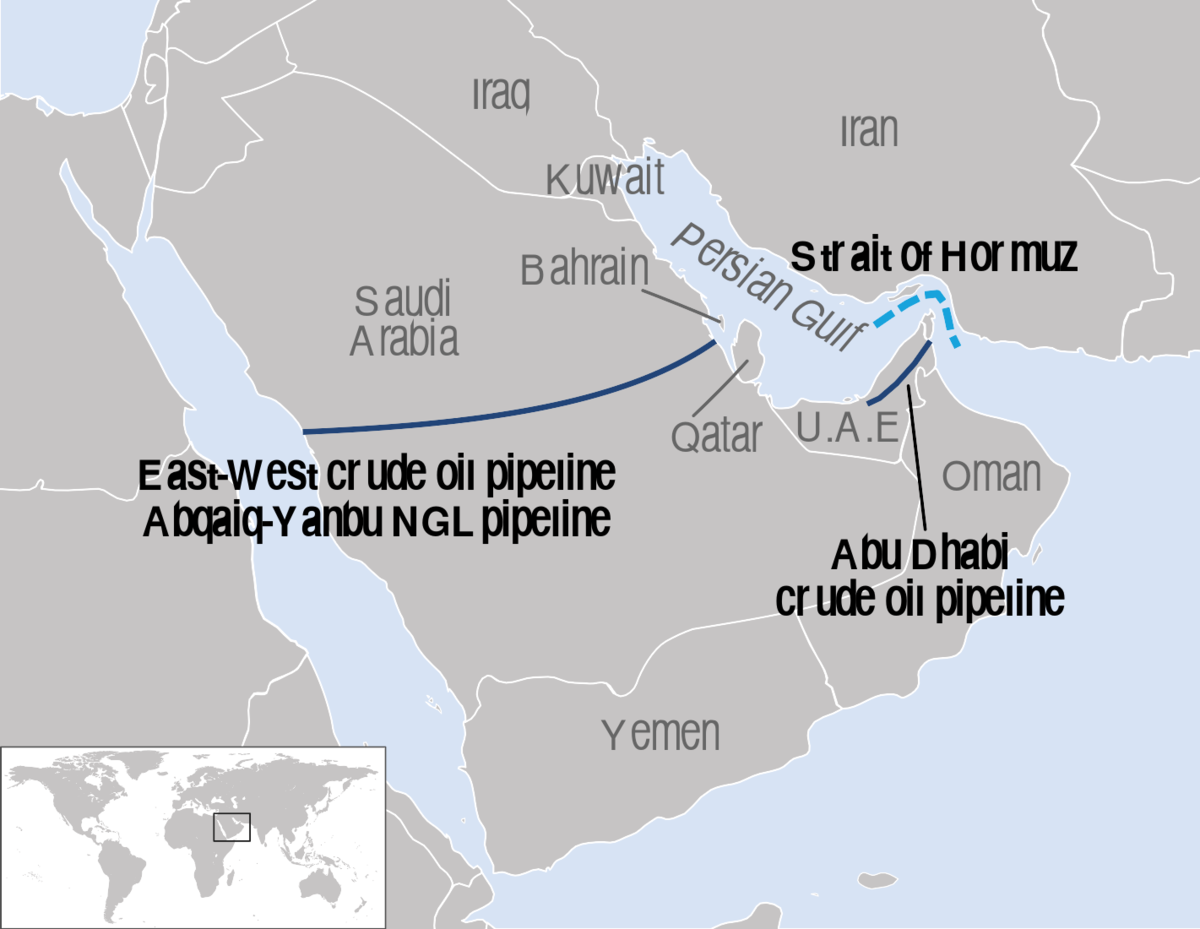
The pipeline and the Yanbu terminals together form Saudi Arabia’s only functioning alternative to the Strait of Hormuz. Iran declared the strait closed in October; mines and naval skirmishes have since cut tanker traffic to a fraction of its pre-war volume. If confirmed, the twin strikes would mark the second time in four days that Houthi weapons reached the pipeline corridor — the Saudi Energy Ministry acknowledged a hit on the pipeline on November 9, with satellite imagery pointing to Pumping Station No. 8 as the damaged station.
The House of Saud Daily Briefing
Saudi Arabia's news in 3 minutes, every morning. Free. See today's issue
Table of Contents
What Did the Houthis Claim on November 12?
Houthi military spokesman Yahya Saree announced two “successfully completed” operations on November 12, according to SBS Korea News citing Reuters. The first was a drone strike on Pumping Station No. 7 of the East-West Pipeline. The second was a ballistic missile strike on what Saree described as “oil facilities in Yanbu,” without naming the specific installation.
In statements logged by Middle East Eye’s live blog, Saree said forces “targeted Pumping Station No. 7 on the East-West Pipeline using a drone” in one operation, and “targeted the Yanbu oil facility using a ballistic missile” in the second.
The operations came as part of a wider salvo. Voice of Emirates reported that the Houthis simultaneously claimed to have fired 3 cruise missiles at King Khalid International Airport in Riyadh. The Saudi-led coalition confirmed intercepting 3 cruise missiles near Riyadh, a drone over Makkah Province, and a drone over southern Saudi Arabia on November 11–12, according to Au79 Macro Research. The coalition did not mention any intercept connected to Yanbu or the pipeline.
A discrepancy exists in the reporting. Shafaq News, in a report filed on November 11, identified the pipeline target as Pumping Station No. 11 rather than No. 7. Reuters and Middle East Eye both cited No. 7 in their November 12 coverage. Saree also used the claims to deny a separate coalition allegation, calling the assertion that Houthi forces launched a drone at Makkah a “blatant lie,” according to Sahi.com.
Why Has Saudi Arabia Not Responded?
As of the time of publication, no Saudi government body had addressed the Yanbu and pipeline claims. Reuters noted that Saudi Arabia “did not immediately respond to a request for comment.” The Saudi Press Agency carried no statement. Aramco, which operates both the pipeline and the Yanbu terminals, said nothing.
The silence follows a pattern. After Houthi claims of strikes on Yanbu and Shaybah in late October, anonymous sources cited by Argus told Newsquawk on October 21 that “Saudi Aramco facilities at Yanbu and at Shaybah are undamaged.” No official Aramco statement accompanied that assessment. When the Saudi Energy Ministry confirmed a strike on the pipeline on November 9, it said the attack caused a “limited fire” that was “quickly extinguished” and that operations were unaffected, according to The Maritime Executive. Satellite imagery obtained around the same time appeared to show damage at Pumping Station No. 8, though the Ministry did not identify the specific station in its statement.
The coalition’s spokesman, Maj. Gen. Turki al-Maliki, addressed the Riyadh intercepts on November 12 but made no reference to the pipeline or Yanbu. Whether that silence reflects a successful defense, a decision not to confirm targets, or simply the absence of an impact remains unknown. No satellite imagery or independent ground verification of damage from the November 12 events has emerged.
The East-West Pipeline as Saudi Arabia’s Last Major Export Route
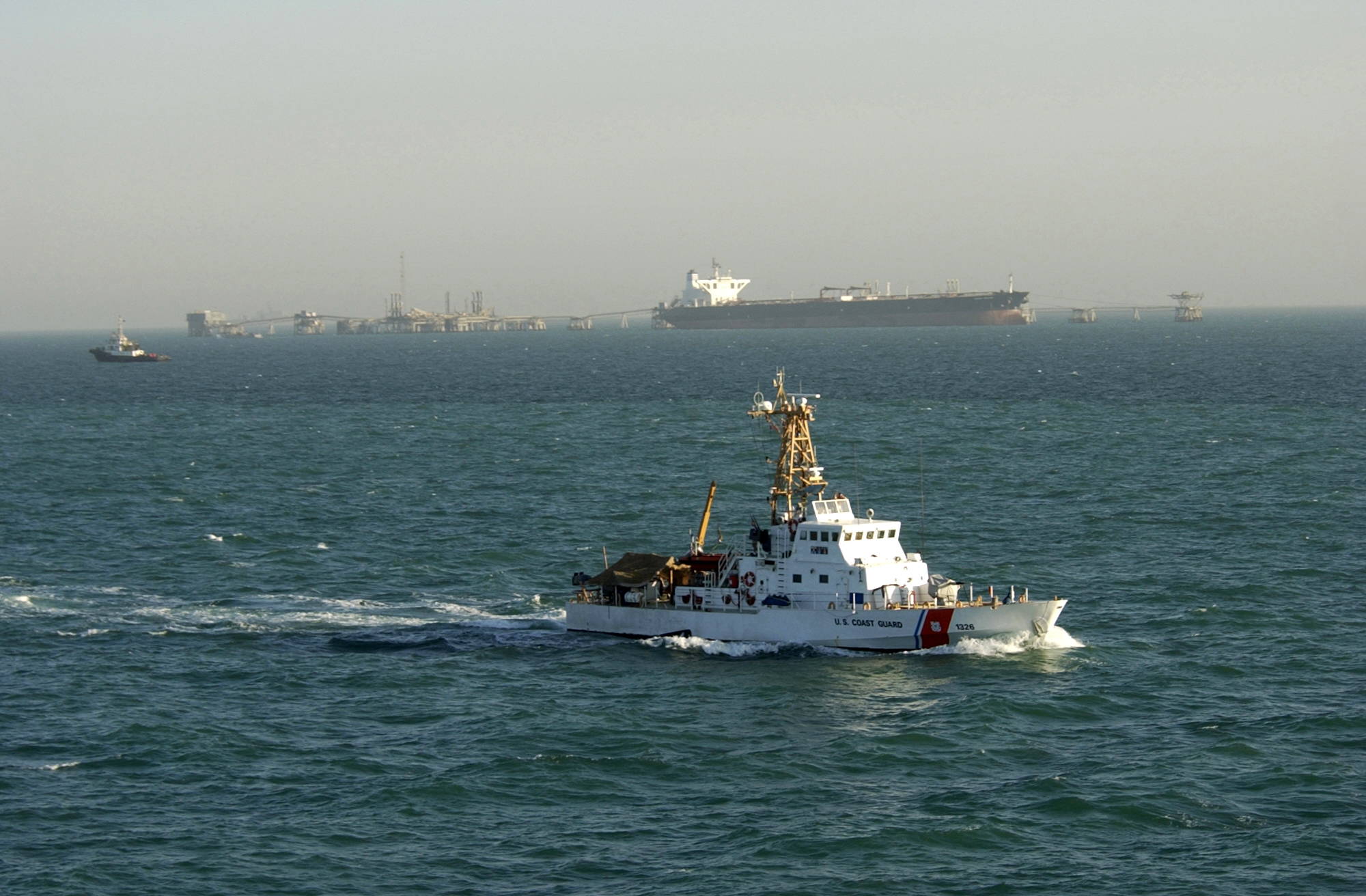
The East-West Crude Oil Pipeline — also known as the Petroline — runs 1,201 kilometres from Abqaiq in the Eastern Province to Yanbu on the Red Sea coast, passing through 11 pumping stations across the desert interior, according to its operational specifications. Built during the Iran-Iraq War in the 1980s as a contingency for a Hormuz closure, the line was expanded from its original 5 million barrels per day to 7 million bpd, according to Fortune.
Saudi Arabia activated the pipeline contingency “within hours” of the first US and Israeli strikes on Iran on February 28, 2026, Fortune reported in March. By the end of the first quarter, Aramco confirmed in its Q1 earnings that the line was running at its full 7 million bpd capacity. Yanbu crude exports surged to nearly 4 million bpd in the week starting March 16, up from roughly 770,000 bpd in January and February, Reuters reported via Kpler data.
The arithmetic is blunt. The Strait of Hormuz is contested: Iran declared it closed in October, and mines and naval engagements have reduced tanker traffic to a fraction of pre-war volume. That makes the pipeline and Yanbu terminals Saudi Arabia’s primary export route. Voice of Emirates reported on November 12 that approximately 4 million bpd was being rerouted through the East-West system. The Yanbu North and South terminals have a combined tested loading capacity of roughly 4 million bpd.
But the line has been hit repeatedly. A drone struck the SAMREF refinery at Yanbu on March 19, according to Marine Insight. An attack on a pumping station on April 9 cut flows by 700,000 bpd, a Saudi official told The New Arab. Saudi Arabia suspended pipeline operations entirely on September 11 as a precaution after multiple drone attacks from Iraq targeted its pumping stations. It restarted on September 22, but Reuters reported that full capacity could take six weeks or more. Rystad Energy estimated post-restart throughput at 40 to 60 percent of capacity — roughly 2.5 to 3 million bpd — Al Jazeera reported on September 17. Of that, only 500,000 to 1 million bpd was available for export after domestic refinery demand.
Why Did Brent Barely Move?
Brent crude traded between $92.26 and $94.58 on November 12 with no confirmed intraday spike tied to the Yanbu announcement, Au79 Macro Research reported. CoinCentral put the range narrower, at $91.79 to $92.42, with crude down 0.4 to 1.0 percent on the day. West Texas Intermediate sat between roughly $85.69 and $86.15.
The muted response stood in contrast to October 23, when Houthi claims of strikes on Yanbu and Shaybah pushed Brent to approximately $116.72 at the Sunday futures open, according to FinanceFeeds. That spike reflected a market caught off guard by the first credible threat to the Red Sea export corridor. Six weeks later, the threat is no longer novel.
Several factors weighed against a price reaction. Saudi Arabia told OPEC that output surged 26 percent to 10.563 million bpd in October, flooding the market with supply. OPEC-wide output rose 2 million bpd in the same month, with Brent already below $90 before the Yanbu claim. Aramco cut its November Arab Light price to Asia by $3 to $5 below Oman/Dubai — the widest discount since June 2020, according to Reuters via bdnews24 — signalling that the kingdom is competing aggressively on price to place barrels even as production infrastructure comes under fire.
When Argus sources said on October 21 that the Yanbu and Shaybah facilities were undamaged, the market filed the October claims away as unconfirmed. Each successive unverified claim erodes the price premium that markets attach to the next one. OilPrice.com noted on November 9 that Brent had crashed 7 percent on Iran peace hopes, despite a confirmed pipeline attack the same day — diplomatic signals were overpowering supply-disruption risk.
French Air Defenses at Yanbu
France announced in September that it would deploy soldiers, radar systems, and air defense equipment to protect the Yanbu oil terminal. President Emmanuel Macron, in a TF1/France 2 television interview on September 24–25, said: “We are going to send military assets, that is, soldiers, radar systems, and defense systems to protect this site,” according to RedState.
Macron stressed that the deployment did not amount to entering the conflict. “We are not getting involved in any conflict,” Militarnyi.com reported him as saying. LatinTimes confirmed the deployment was proceeding. The announcement coincided with a day on which the Saudi-led coalition intercepted 6 Houthi ballistic missiles aimed at Taif and Yanbu, Sahi.com reported on September 24.
Whether French systems were fully operational at Yanbu by November 12 is not confirmed in any source. No reporting indicates that French air defenses engaged any incoming weapon on that date. The gap between the announced deployment and the claimed attack — nearly seven weeks — would ordinarily be sufficient for radar and short-range air defense installation. But the French government has not disclosed an operational timeline, and the November 12 Saudi silence extends to any acknowledgement of allied defensive engagement at Yanbu.
GCC Agrees on Forward Military Command in Kuwait
In a parallel development, GCC defense ministers agreed on November 10 to establish a forward military command in Kuwait, according to the GCC Secretariat. The move signals a shift toward operational coordination that the steady escalation in Houthi operations — including 4 claimed operations on KKIA, Abqaiq, Riyadh Financial Centre and Lahj on November 10 alone — has made unavoidable.
The GCC Secretary-General, Jasem Albudaiwi, expressed the bloc’s position in September when he said: “GCC member states stand united alongside the Kingdom of Saudi Arabia, expressing unwavering support for all measures it undertakes to defend its sovereignty,” according to the GCC Secretariat.
The forward command represents a concrete step beyond statements of solidarity. Kuwait’s geography — north of the Gulf coast, removed from both the Hormuz chokepoint and the Red Sea theatre — makes it a logical staging ground. The Houthis have declared a maritime embargo on Saudi ports and control Bab al-Mandeb to the south, leaving only the northern Suez Canal route for Yanbu crude exports, Al Jazeera reported in September. A coordinated GCC defense architecture would need to protect both the maritime corridor and the overland pipeline simultaneously — precisely the dual vulnerability that the November 12 claims highlight.
Background
The East-West Pipeline has become the most strategically consequential piece of oil infrastructure in the world since the Strait of Hormuz crisis began in early 2026. Before the war, Hormuz carried roughly 15 million bpd of crude and condensate, Fortune reported. Yanbu’s 4 to 5 million bpd export capacity covers roughly one-third of that volume — enough to sustain Saudi Arabia’s dominant share but nowhere near enough to replace the full strait.
Saudi crude loadings fell to approximately 2.1 million bpd in early September 2026, Al Jazeera reported — a drop of more than 70 percent from the 7.5 million bpd that flowed in January and February. That collapse reflected the cumulative effect of pipeline disruptions, Houthi strikes on refineries and loading terminals, and the loss of the Hormuz route. Attacks on tankers in Hormuz have continued into November, with the IRGC claiming 2 supertankers carrying over 4 million barrels were ablaze on November 12.
The pipeline’s attack record since February — detailed above — demonstrates that no air defense architecture can fully protect dispersed pumping stations across open desert. The November 12 claims, if verified, would add to that established pattern of disruption. The confirmed November 9 pipeline hit — with satellite imagery indicating damage at Pumping Station No. 8 — established that the corridor remains actively targeted.
Qatar’s prime minister briefed G7 foreign ministers in Paris on November 10 that Doha has “at least two weeks” to broker an understanding between the United States and Iran, according to diplomatic sources cited by the Jerusalem Post and i24NEWS. A diplomatic resolution to the broader conflict remains the only path to securing both the Hormuz and Red Sea corridors permanently. Until then, the pipeline — and the port at its terminus — will continue to absorb fire.
Frequently Asked Questions
What weapons did the Houthis say they used on November 12?
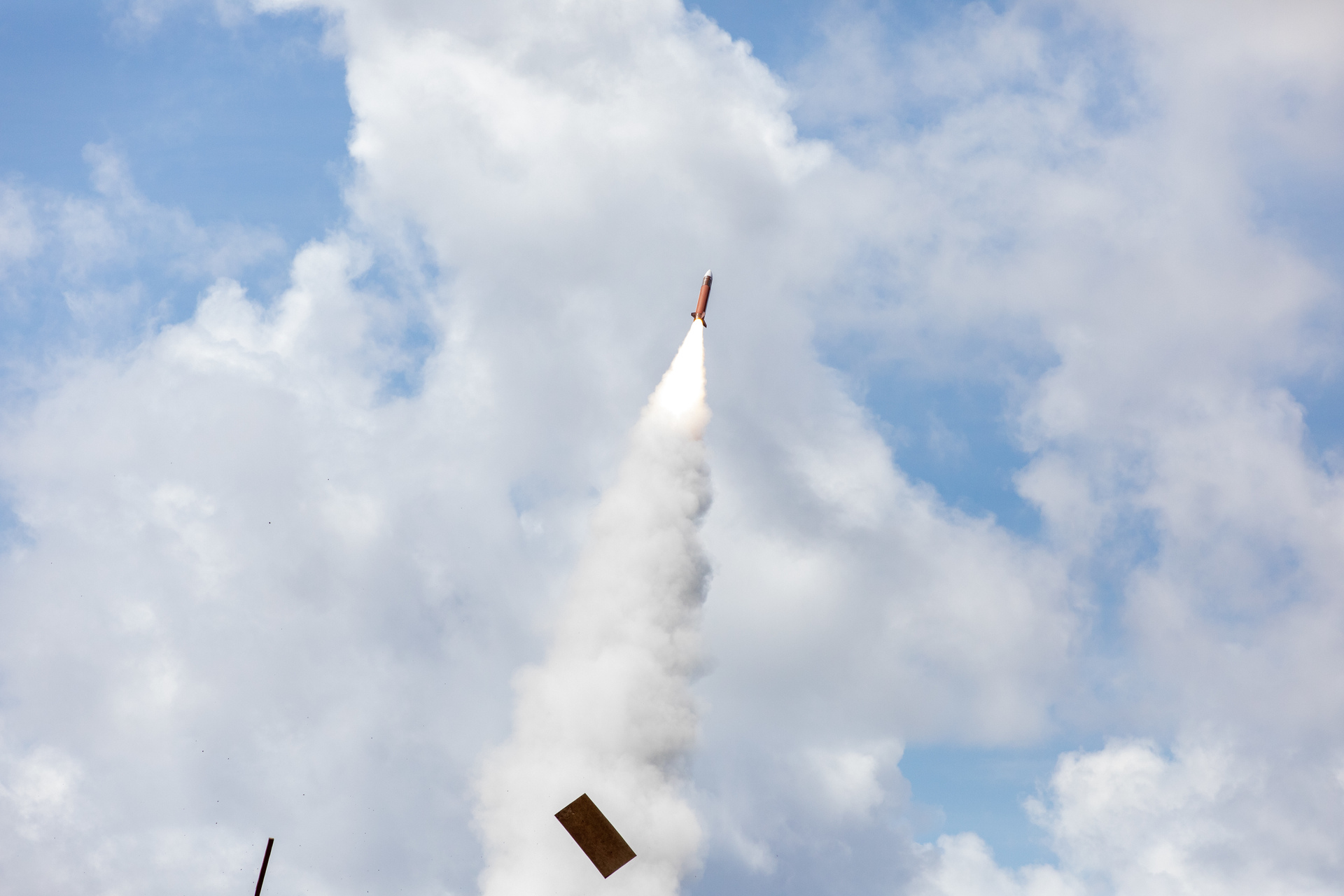
Yahya Saree specified a drone for the pipeline pumping station and a ballistic missile for the Yanbu oil facilities. The distinction matters operationally: drones fly low and slow, requiring point-defense systems at close range, while ballistic missiles follow a high-altitude arc that Patriot-class interceptors are designed to engage during their descent phase. The two weapon types effectively test different layers of Saudi and allied air defenses simultaneously.
Are French Air Defenses Covering the Entire Pipeline?
France’s announced defensive deployment covers the Yanbu terminal, not the inland pumping stations — the ones most exposed to drone attack. The inland stations are spaced across remote desert terrain, with no announced protective cordon. This creates a layered asymmetry: the terminal may gain air defense cover, while the pipeline’s most attack-prone sections — dispersed across more than 1,200 kilometres of open interior — remain exposed.
Has Saudi Arabia confirmed damage at Yanbu from previous Houthi claims?
Not publicly. Saudi Arabia draws a consistent distinction in what it confirms: pipeline infrastructure hits have received official acknowledgment — the November 9 pipeline strike was confirmed by the Ministry, with satellite imagery appearing to show damage at Pumping Station No. 8 — while claims involving the Yanbu terminal itself have drawn only unofficial source-level denials. That pattern suggests either that terminal attacks are genuinely repelled, or that Riyadh has a deliberate policy of not confirming terminal hits.
What is the Houthi maritime embargo and how does it affect Yanbu exports?
Yanbu crude now has only one viable export route: northward through the Suez Canal. The Houthis control Bab al-Mandeb and have declared a maritime embargo on Saudi ports, Al Jazeera reported, forcing tankers into the northern corridor. That concentrates the entire flow of Saudi Red Sea exports on a single chokepoint that Egypt controls — a dependency that adds geopolitical risk to every cargo beyond the immediate threat of Houthi attack.
What role does the Qatar diplomatic track play in pipeline security?
A US-Iran deal would not automatically end Houthi strikes on Saudi infrastructure. The Houthis have pursued military objectives independent of Tehran’s negotiations throughout the conflict — operations continued even during diplomatic engagement. A ceasefire framework explicitly covering Yemen would be needed. Qatar is currently mediating that broader track, but Yemen-specific terms are not publicly part of the discussions, according to Au79 Macro Research.
The House of Saud Daily Briefing
Saudi Arabia's news in 3 minutes, every morning. Free. See today's issue