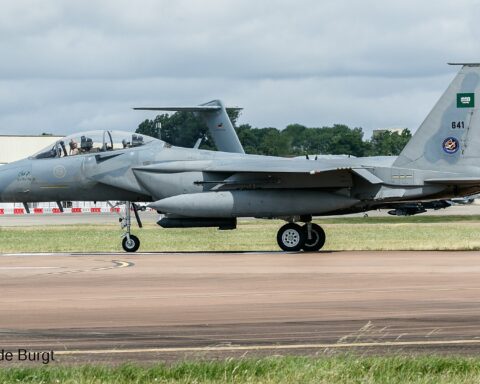
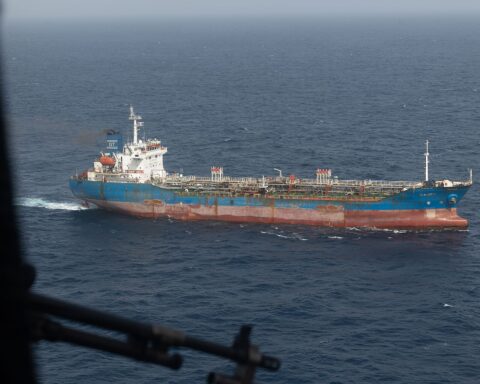
ADEN — Yemen’s Houthis claimed on Friday that they fired ballistic missiles at a “gathering of Saudi officers” at a military camp in Aden, an attack that could not be independently verified and that Saudi Arabia did not address. No casualties were confirmed by any source, and the Yemeni army condemned the strikes as targeting “civilians and civilian facilities” — a characterisation that made no mention of Saudi personnel at the site, according to Anadolu Agency.
The claim is the latest in a series of Houthi attacks claimed against Saudi-linked military installations in Aden since October 2026, each one framing embedded Saudi advisers not as rear-echelon support staff but as operational commanders directing combat across southern Yemen’s active fronts. Since the Southern Transitional Council dissolved in January and all Aden military infrastructure passed to Saudi-supervised command, the Houthis have treated every camp in the city as a legitimate Saudi target — and Riyadh, beyond a single denial issued after an October palace strike, has not said whether its officers are where the Houthis claim they are, even as the group simultaneously strikes targets inside Saudi territory itself.
The House of Saud Daily Briefing
Saudi Arabia's news in 3 minutes, every morning. Free. See today's issue
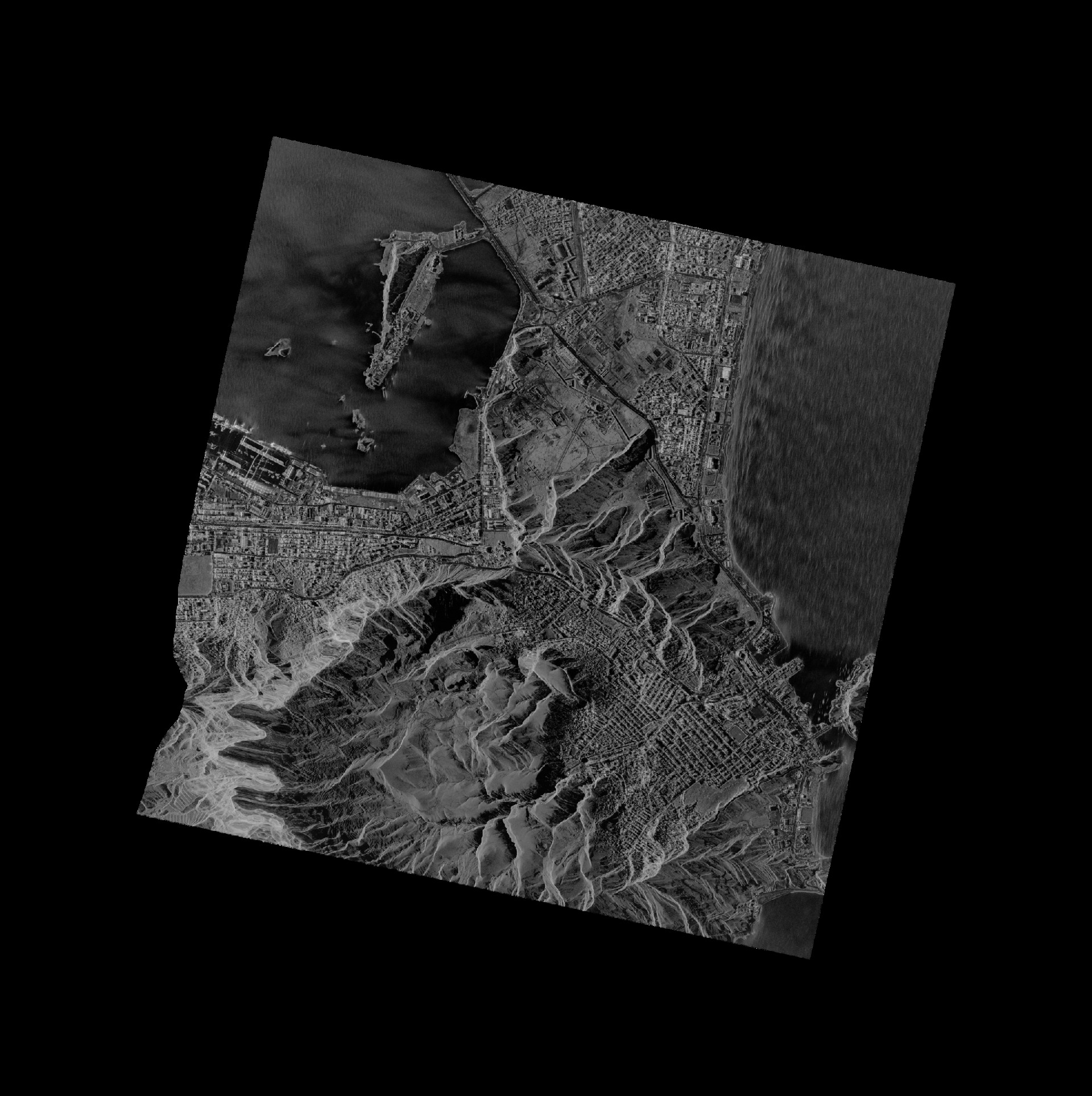
Table of Contents
What the Houthis Claimed on November 13
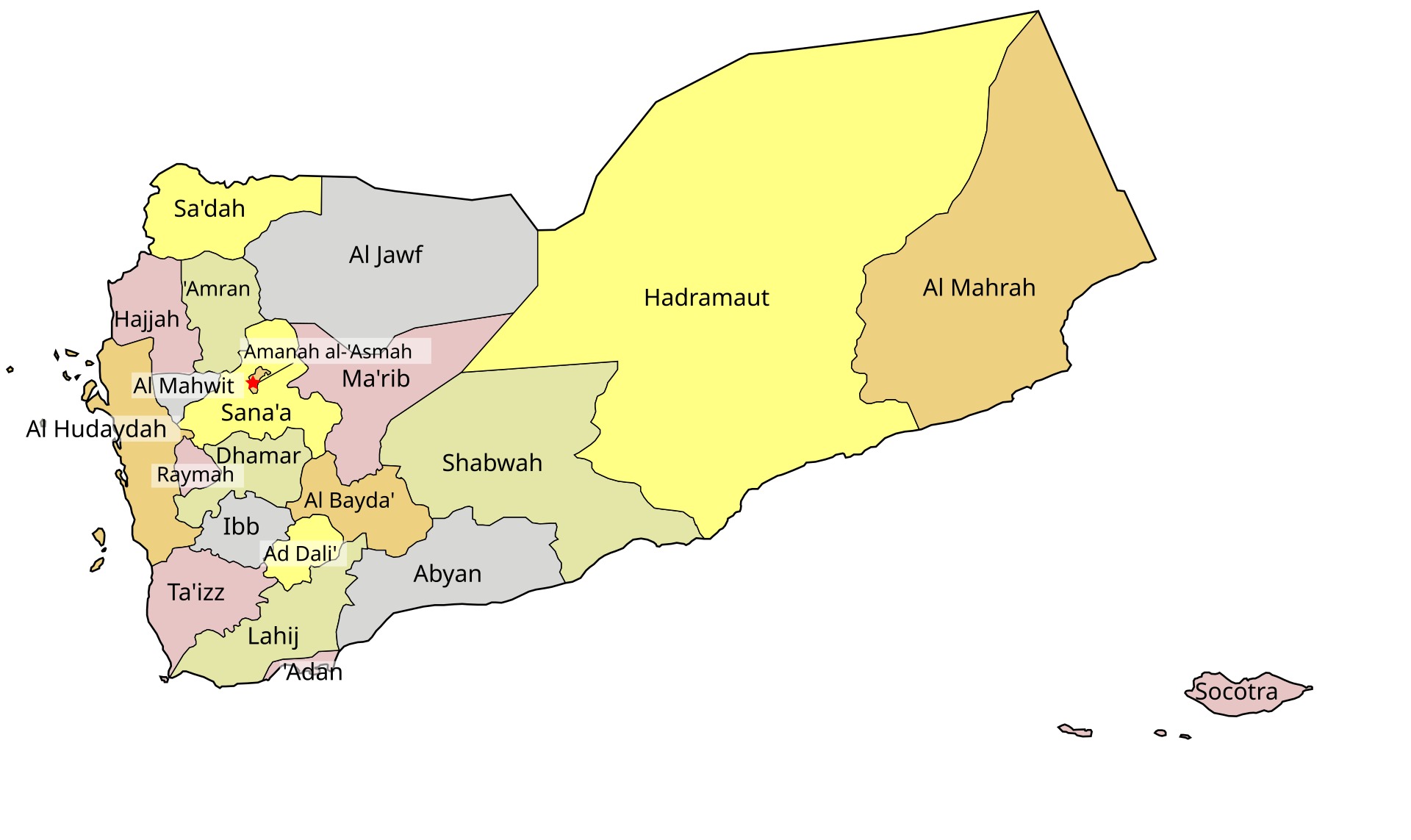
The Houthi-run Saba news agency, citing an unnamed military source, said on Friday that the group had fired ballistic missiles at a “gathering of Saudi officers” at the Jabal Hadid military camp in Aden, as reported by Anadolu Agency. Al-Masirah TV, the Houthis’ broadcast channel, carried the same claim. Neither outlet specified the missile type, named a casualty count, or described the outcome of the strike — an omission that stands in contrast to the group’s November 11-12 claim against a different Aden facility, when military spokesperson Yahya Saree offered specific details about the target’s alleged function.
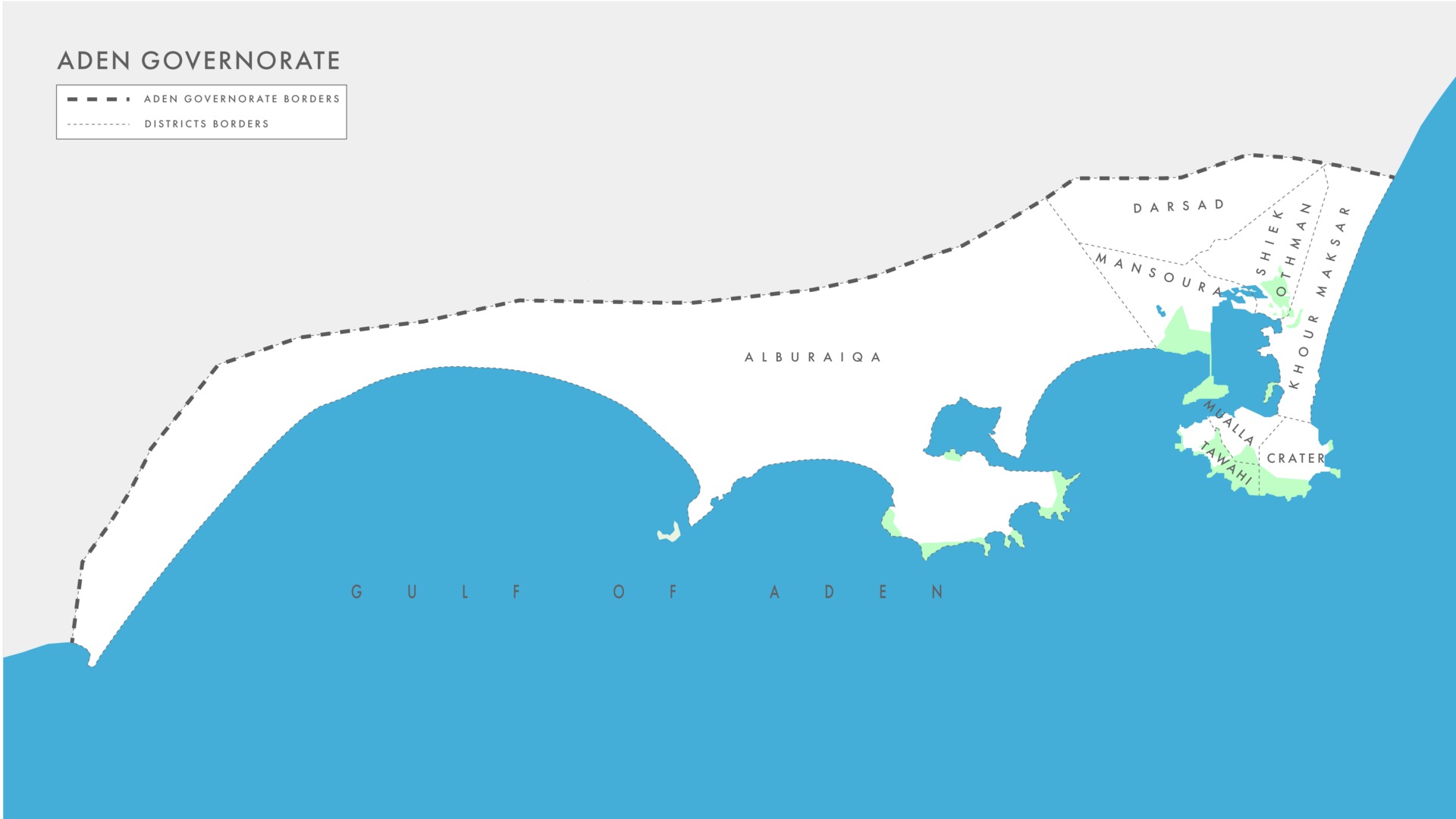
Separately, Yemeni security sources told al-Ekhbariya — as cited by Daily Beirut — that several ballistic missiles struck the Ras Abbas training camp in Aden’s Al-Burayqah district, west of the city. Daily Beirut reported no casualties for the November 13 attack. The two accounts — Saba’s “Jabal Hadid” and the security sources’ “Ras Abbas” — were the only independent reports of the day’s strikes, and neither reconciled the competing location identifiers.
Yemen’s army spokesman Col. Majed Abdullah al-Nuzaili responded with a statement that called the Houthi attack a “serious escalation” and a violation of international humanitarian law, according to a separate Anadolu Agency report. Al-Nuzaili said the Houthis had targeted “civilians and civilian facilities” in Aden but gave no specific camp names, no casualty figures, and no mention of Saudi officers at any of the sites. He vowed to continue Operation “Dawn of Yemen,” the government’s ground and air offensive launched in early October against Houthi positions across multiple fronts.
The gap between the Houthi version — Saudi officers gathered at a named military camp, targeted with ballistic missiles — and the army’s response — a broad condemnation of attacks on civilians, stripped of identifying detail — left the central factual question unresolved: was there a Saudi military presence at the site, and if so, was it hit? The answer depends in part on which site, exactly, was struck.
Jabal Hadid or Ras Abbas: Two Names, One Attack?
NOTE: Two distinct location identifiers appear in reporting of the November 13 attack. The Houthis named “Jabal Hadid” as the target; Yemeni security sources, via al-Ekhbariya as reported by Daily Beirut, identified the site struck as “Ras Abbas training camp” in Al-Burayqah district. No independent source has confirmed whether these names refer to the same facility, to adjacent sites within the same district, or to entirely separate locations struck in the same operation. Readers should treat both identifiers as unreconciled.
What is established is the geographic overlap: Al-Burayqah — also transliterated as al-Buraiqa or al-Buraiqeh — is the same western Aden district that Houthi military spokesperson Yahya Saree named two days earlier in his November 11-12 claim of a strike on a Saudi coalition command and control centre, according to Xinhua and Al Jazeera. Security sources who spoke to AFP placed those earlier strikes in western Aden as well, saying two missiles hit a Saudi-led coalition camp and a third projectile targeting a government forces camp in central Aden was intercepted, as reported by the Philippine Tribune. The repeated targeting of Al-Burayqah in consecutive Houthi claims — November 11-12 against the command centre, November 13 against Jabal Hadid or Ras Abbas — suggests the Houthis are concentrating fire on a cluster of military facilities in the district, but until an independent source maps “Jabal Hadid” to a specific location, the relationship between the Friday claim and the earlier al-Buraiqa strikes remains uncertain.
A Month of Strikes on Aden Military Sites
The November 13 claim fits into a campaign of Houthi targeting announcements against named Aden military installations that has been running since mid-October, and which has followed a consistent template: name the facility, assert Saudi command presence inside it, claim it has been struck with ballistic missiles. On October 15-16, the Houthis said Saudi officers were killed or wounded in a strike on a “military operations headquarters” at Aden’s al-Maashiq Presidential Palace compound — the seat of the internationally recognised government. A local security official told reporters that four soldiers were killed and several wounded; the Yemeni government put the death toll at five, according to Xinhua.
After that attack, Saudi Ministry of Justice undersecretary Faisal al-Majidi told MBN that no Saudi forces were present in the area — the only on-record Saudi denial across the entire series of Aden strikes, as reported by Alhurra. The denial was specific to the palace compound; it has not been repeated for any subsequent target. Five days later, on October 21, Saree claimed a ballistic missile had struck the Saudi “operational command room” at Badr Camp in Aden’s Khor Maksar district, adjacent to the international airport, according to Mereja.com citing Al Arabiya English. No casualties were reported, but departure operations were briefly halted.
The pace accelerated in November. On November 11-12, Saree said his forces “successfully targeted” a Saudi coalition command and control centre in Aden’s al-Buraiqa district with “several ballistic missiles,” asserting that the facility directed Saudi military reinforcements across active fronts in Lahij, al-Dhale, Taiz and other governorates, according to Xinhua and Al Jazeera. The Houthis claimed “dozens of casualties” from those strikes — a figure no other source confirmed, according to Xinhua. AFP security sources, as reported by the Philippine Tribune, confirmed that two missiles struck a Saudi-led coalition camp in western Aden and that a third projectile was intercepted over central Aden, but gave no casualty details.
The framing across all four episodes has been deliberate. The Houthis have not described these targets as Yemeni government barracks or logistics depots; they have named them as Saudi command rooms, Saudi officer gatherings, and Saudi reinforcement hubs — specific assertions of foreign military command presence that position the attacks as strikes against an occupying force rather than strikes in a civil war. Whether the missiles hit their declared targets, whether Saudi officers were present at any of the facilities, and whether anyone was killed remain, in every case, questions that the Houthis have answered and no other party has — making the claims useful as propaganda regardless of their accuracy on the ground.
Are Saudi Officers on the Ground in Yemen?
The question of Saudi ground presence in Yemen has produced two directly contradictory answers from allied capitals, and neither has been meaningfully clarified since. Pakistan’s defence minister said on October 6 that combat in Yemen “is practically being conducted by Saudi Arabia’s own forces,” according to Al Jazeera — a statement that, taken at face value, implies Saudi troops are not merely advising but fighting. CNN reported five days later, on October 11, that Riyadh had stopped “short of any major deployment of its own troops,” describing a far more limited role that casts the Saudi contribution as advisory and logistical rather than operational.
These statements cannot both be true in the same sense, and neither government has offered the kind of detailed accounting — troop numbers, unit types, locations, rules of engagement — that would resolve the contradiction. What is documented is the command architecture: after the Southern Transitional Council’s leader fled to the UAE in January 2026 and the council dissolved, Saudi-backed forces retook Aden and the presidential palace in Hadramout, and all military installations in Hadramout, al-Mahra and Aden were transferred to pro-government command “under direct Saudi oversight,” according to OPB.org, citing AP and Reuters. The phrase appears in reporting about the post-STC restructuring, not in any Saudi government statement, and its operational meaning — whether it denotes liaison officers in Riyadh or embedded commanders at the battalion level — remains undefined.
The Houthis have chosen to interpret “oversight” as active command, and they have built their Aden targeting campaign around that interpretation — naming command rooms and officer gatherings, not barracks or warehouses, as the specific objects of their fire. Saudi Arabia’s only public response, through Ministry of Justice undersecretary al-Majidi after the October 15-16 palace attack, was to deny that any Saudi forces were present at that specific site, as reported by Alhurra. That denial covered one building on one date. It has not been extended to the Badr Camp “operational command room” the Houthis claimed to hit on October 21, or to the al-Buraiqa command centre they said they struck on November 11-12, or to the Jabal Hadid “gathering” they targeted on November 13.
The Yemen Army’s Counter-Offensive
The November 13 Aden attack occurred on a day when the Yemen army was claiming its own offensive tempo. The army reported 943 strikes against Houthi positions on the same day, according to Anadolu Agency — a figure that reflects the sustained pace of Operation “Dawn of Yemen,” the government offensive launched in early October with coalition air support. Col. al-Nuzaili, in his condemnation of the Houthi Aden strikes, framed the government’s military operations as a direct response to attacks on civilian areas and vowed the offensive would continue.
The government’s choice to describe the Aden attack as targeting “civilians and civilian facilities” — rather than engaging with the Houthi claim of a Saudi officers’ gathering — is itself a communication decision with consequences for the public record. By declining to confirm or deny a Saudi military presence at the site, the army avoided either validating the Houthi narrative or issuing a denial that could be contradicted by future evidence. The result is a public record in which the Houthis’ version — Saudi officers, named camps, ballistic missiles — stands as the most detailed account of the attack, contested only in the broadest possible terms by a spokesman who said “civilians” and stopped there.
The Houthis, meanwhile, have not limited their fire to Aden. The group has maintained a simultaneous campaign against Saudi territory, with strikes on oil infrastructure, military and economic targets in Riyadh, and drone operations that have reached Saudi Arabia’s Eastern Province — a multi-front effort that has drawn coalition air defences into sustained attrition both inside Yemen’s south and across the Saudi border.
Humanitarian Cost and the Makkah Pact
The strikes on Aden — whether they hit their intended targets or not — are taking place against a humanitarian backdrop that the World Health Organisation has described in blunt numbers. As of November 8, the WHO reported 11,755 casualties across Yemen since the current phase of fighting escalated: 2,098 killed and 9,657 wounded, with more than 320,000 people displaced since August 1, according to Al Jazeera. These figures encompass all parties to the conflict and all theatres, not just the Aden camp strikes, but they frame the scale of the violence within which the Houthi targeting campaign operates.
The Makkah Pact — signed on August 7, 2026, and treating an attack on one signatory as an attack on all — adds a legal and political dimension to the Aden strikes’ potential consequences. Turkey ratified the pact on November 5 with a 279-119 parliamentary vote, according to Anadolu Agency, and Pakistan ratified it on October 23. If the Houthis are correct that Saudi officers were present at the camps they claim to have struck, the attacks could in principle trigger the pact’s mutual defence provision — though no signatory has publicly invoked it, and the pact’s practical enforcement mechanisms have not been tested in a case where the “attack” in question is an unverified Houthi claim.
For now, the Houthis’ Aden campaign operates in a space where claims outnumber confirmations, where the central factual question — are Saudi officers on the ground at these sites? — remains unanswered by the only party that could settle it, and where each new strike claim builds a propaganda narrative that serves Houthi interests whether the missiles land or miss. The next confirmed Saudi statement on its military presence in Aden — if it comes — will determine whether these are attacks on a phantom target the Houthis have invented for rhetorical effect, or on a command structure the kingdom has kept out of public view.
Frequently Asked Questions
What is Operation Dawn of Yemen?
Operation “Dawn of Yemen” is a government forces offensive launched on October 4-5, 2026, with coalition air support. The coalition said 100 fighter jets participated at dawn in the initial strikes against Houthi positions, according to the Oman Observer. The operation was framed as a Yemeni government-led effort, with Saudi and US advisory support forming part of the coalition’s command structure — the foreign-involvement questions that the Houthis have used to justify treating Aden’s military camps as legitimate targets throughout October and November 2026.
What happened to the Southern Transitional Council?
The STC, which had controlled parts of southern Yemen including Aden, dissolved in January 2026 after its leader Aidarous al-Zubaidi fled to the UAE rather than travel to Saudi Arabia for meetings. The Presidential Leadership Council charged him with treason, according to OPB.org. Saudi-backed forces retook Aden and the presidential palace in Hadramout, and all military installations in Aden, Hadramout and al-Mahra were transferred to pro-government command under direct Saudi oversight — the command arrangement that the Houthis now claim justifies treating every Aden military camp as a Saudi target.
Are US forces involved in the Yemen conflict?
CNN reported on October 11 that more than 100 US military advisers were sent to the coalition under a new joint command for intelligence support. No US combat role was described in the reporting. The advisers’ presence adds another foreign-force layer to the coalition’s Aden infrastructure, though the Houthis’ targeting claims have focused exclusively on Saudi officers, not American personnel — a distinction that may reflect the Houthis’ assessment of which foreign presence carries the most propaganda value, or the limits of their intelligence about who is at which facility.
What else did the Houthis claim about Saudi infrastructure in Aden?
Beyond naming command rooms and officer gatherings, the Houthis described “Saudi weapons depots” at the al-Maashiq Presidential Palace compound during their October 15-16 claim, according to Xinhua citing Al-Masirah TV — framing the attack as targeting a military logistics hub, not a government administrative site. In the November 11-12 claim, Saree went further, asserting that the al-Buraiqa facility directed Saudi military reinforcements across fronts in Lahij, al-Dhale, Taiz and other governorates — naming specific theatres of war and positioning the facility as a node in a Saudi command network rather than a standalone Yemeni installation. None of these specific assertions about Saudi infrastructure has been confirmed or denied by Riyadh, apart from the al-Maashiq denial.
The House of Saud Daily Briefing
Saudi Arabia's news in 3 minutes, every morning. Free. See today's issue