TEHRAN — Iran’s Revolutionary Guard Corps and its conventional army both reported oil tankers striking sea mines in the Strait of Hormuz on Friday night, November 13, bringing the total to three vessels claimed in a single evening across two separate military branches. Reuters timestamped the IRGC Navy’s initial two-tanker statement at 21:01 UTC.
The three incidents, all announced within hours of a separate gas carrier mine explosion the IRGC reported earlier the same day, represent an unusually dense concentration of mine claims in the months-long campaign over the waterway. No vessel names, flag states, cargoes, or casualty figures have been released for any of the three tankers, and no independent maritime authority has confirmed the strikes. The claims landed on the same night the Houthis said they had targeted Saudi Arabia’s East-West oil pipeline — the overland corridor Saudi Arabia has relied on to bypass Hormuz — placing both of Riyadh’s main crude export routes under simultaneous attack.
The House of Saud Daily Briefing
Saudi Arabia's news in 3 minutes, every morning. Free. See today's issue
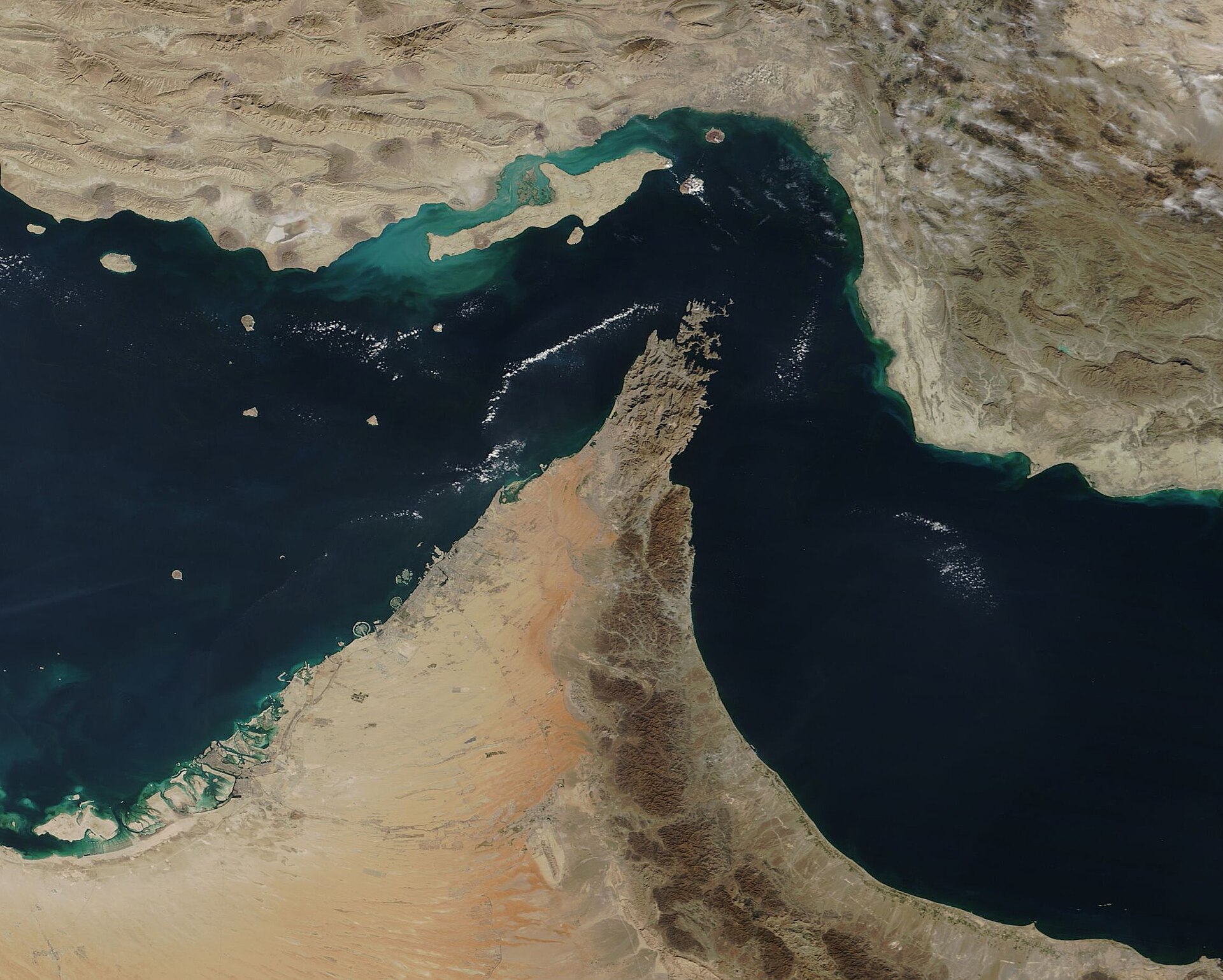
Table of Contents
What Did the IRGC Navy Report?
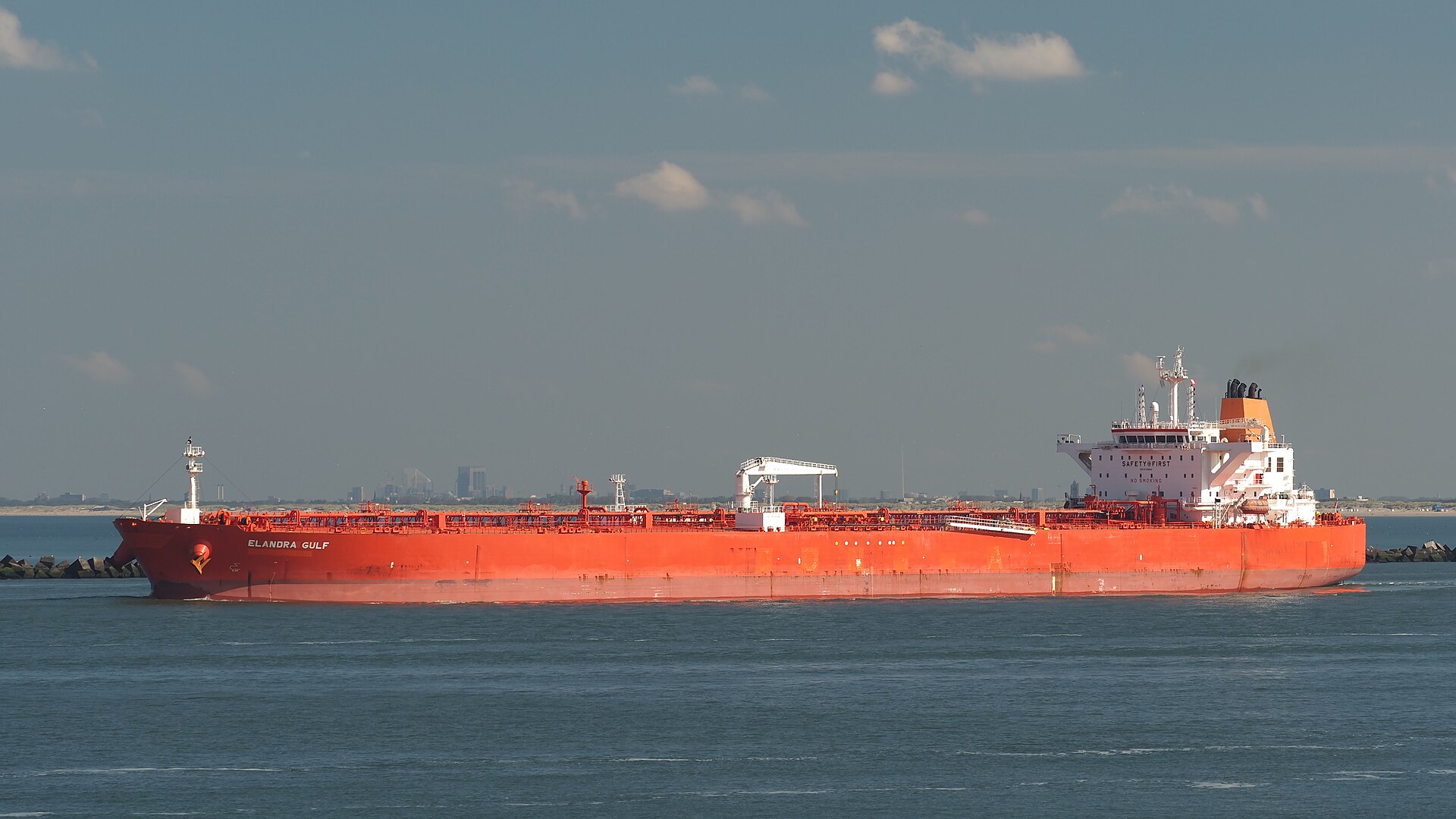
The IRGC Navy said two oil tankers exploded and caught fire after hitting naval mines in the southern Strait of Hormuz on Friday night, according to Reuters and Xinhua. One of the two was described as a supertanker, Xinhua reported on November 14, citing the IRGC’s Sepah News channel. No name, flag state, or operator was given for either vessel.
The IRGC said both tankers had “switched off their radar and positioning systems” and were attempting to cross via an “unauthorized and unsafe” route, according to Xinhua. Both, it said, had been warned. The statement carried a threat directed at other commercial operators: vessels crossing the strait without coordinating with the IRGC’s traffic-control centre “will meet the same fate,” Xinhua reported, quoting Sepah News.
Iran has maintained since its October 26 declaration that all vessels must coordinate passage through an IRGC-managed traffic-control system — a framework that neither the United States nor most maritime states recognize. The declaration built on an earlier closure: Iran originally shut the strait on April 18, then re-closed it on July 12 after a brief reopening. The US naval blockade, which operates on a separate timeline, was reinstated on July 14. The IRGC has accused the United States of “supporting the tankers’ attempts to use the routes,” according to Iran International’s reporting on a parallel November 6 incident.
Friday night’s claims follow a similar two-supertanker mine claim the IRGC issued just a day earlier — the latest in a series of multi-vessel mine announcements since early November. The pattern of such claims has been continuous since at least July 2026. The IRGC typically announces the incidents through Sepah News, often accompanied by footage of smoke or fire, and describes the vessels as violators of a restricted zone. CENTCOM has disputed most of these claims. But the frequency is accelerating: where earlier months produced isolated announcements days apart, November has brought near-daily claims, sometimes multiple incidents in a single statement.
A Third Claim From Iran’s Regular Army
Iran’s conventional army navy — the Artesh, a separate force from the Revolutionary Guards — issued its own statement on Friday night claiming a third tanker hit a mine in the “unsafe and prohibited zone east of the Strait of Hormuz,” according to AFP, as reported by Citizen Digital on November 14. The Artesh said the vessel had its AIS tracking and identification systems switched off before the incident. Like the IRGC’s claims, no vessel details were provided.
The AFP report confirmed the three oil-tanker incidents were distinct from the Friday-daytime gas carrier explosion. The IRGC had earlier released footage of smoke from what it described as a vessel carrying liquefied gas — a separate incident reported in the morning. Friday therefore saw four separate Iranian mine claims in a single day: one gas carrier and three oil tankers.
The Artesh’s involvement is notable. Iran’s regular armed forces operate under the Supreme Leader through the Armed Forces General Staff, on a chain of command separate from the IRGC. MODAFL, the ministry of defense, handles logistics and procurement but not operational command. The regular navy has generally left Hormuz enforcement messaging to the Revolutionary Guards since the strait’s closure. Its entry as a second claimant on the same night broadens the institutional footprint of Iran’s mine-enforcement campaign — though whether it reflects coordinated operational activity or parallel opportunism is unclear from the available statements.
The distinction matters for how the claims are read internationally. The IRGC is a sanctioned entity with an established pattern of Hormuz provocations. The Artesh is the nationally recognized conventional military, and its adoption of the same mine-enforcement language lends a different institutional register to the claims. Both branches appear to be asserting jurisdiction over different sectors of the strait — the IRGC in the south, the Artesh in the east — as though dividing enforcement responsibility between them.
Does Washington Accept Iran’s Mine Narrative?
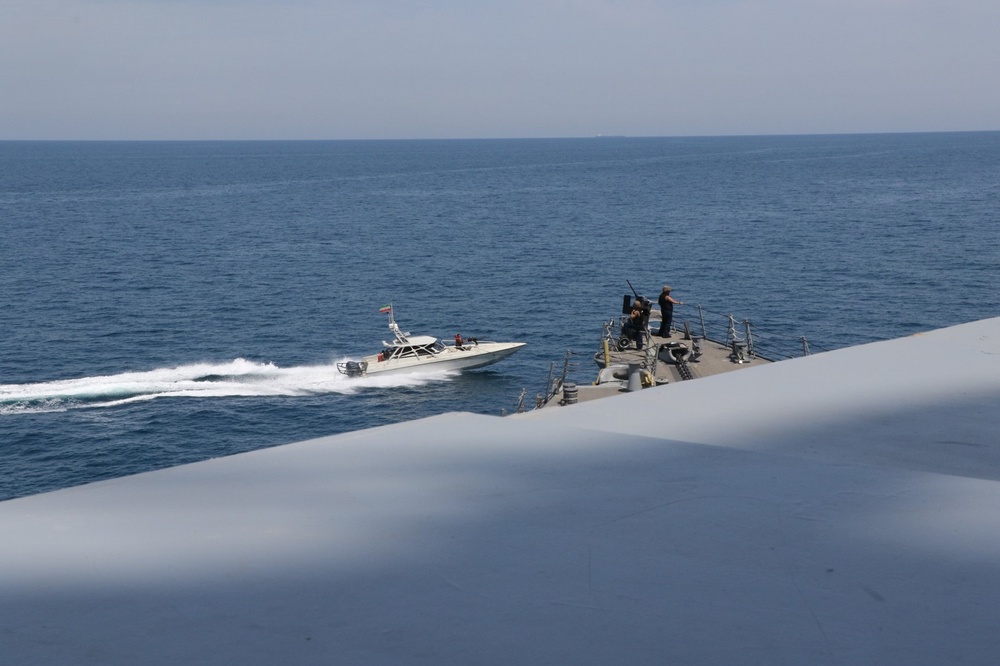
The United States has consistently rejected Iran’s mine claims. CENTCOM has called the IRGC’s assertions “false” and “yet another example of their lies and intimidation attempts,” according to gCaptain’s reporting in September 2026. In one documented case, CENTCOM said the Panama-flagged tanker El Gaia was struck by an Iranian missile and a drone — not by a mine — contradicting the IRGC’s version of that incident, gCaptain reported.
US forces say they have cleared the internationally recognized traffic separation scheme (TSS) through the strait of Iranian mines. Admiral Brad Cooper, the CENTCOM commander, said American forces had cleared the recognized shipping lanes, according to gCaptain. Reuters had reported in March 2026 that Iran laid approximately a dozen mines in the strait.
The Joint Maritime Information Centre (JMIC), which monitors Hormuz, keeps the strait at a SEVERE threat level and has warned of “attempted mining within and adjacent to the traffic separation scheme,” according to gCaptain’s October reporting. JMIC also noted in mid-October that it found “no substantiation” for specific IRGC mine claims from that period. The only vessel independently confirmed as lost in the campaign is the Singapore-flagged containership GFS Pride, which sank after an October 13 attack. CENTCOM attributed the sinking to an IRGC projectile, not a mine, gCaptain reported.
No CENTCOM statement specifically addressing the November 13 evening oil-tanker claims had been released as of Saturday morning.
“Limited minelaying alone — or even just the perception of it — could substantially deter commercial shipping.”
Richard Nephew, former US deputy special envoy for Iran and Bernstein Adjunct Fellow at the Washington Institute
The analytical question that quote raises — whether Iran needs to lay real mines, or whether claiming mines is enough — runs through the entire Hormuz enforcement campaign. CENTCOM says the mines are largely fictitious or cleared. Iran says the tankers burned. Shipowners, whose premiums have multiplied regardless, do not wait for the question to be resolved.
Saudi Export Routes Under Dual Pressure
Friday night’s mine claims arrived alongside a renewed Houthi assault on Saudi Arabia’s overland alternative. The Houthis claimed strikes on the East-West pipeline and the Yanbu terminal on November 13, according to HNGN. Four days earlier, on November 9, the pipeline suffered what the Saudi Energy Ministry described as a “limited fire” that it said did not disrupt operations, Al Jazeera reported.
The East-West pipeline — also known as the Petroline — has a design capacity of approximately 7 million barrels per day and can export roughly 5 million bpd from its Red Sea terminus at Yanbu, according to Saudi Gazette, citing Aramco data. Lauren Holtmeier of S&P Global Energy reported that Yanbu loaded up to 2 million barrels per day during the war, compared with approximately 800,000 bpd the previous month, according to an analysis published by the Washington Institute.
That loading surge shows how heavily the pipeline now carries Saudi Arabia’s export capacity. Before the conflict, the East-West line ran well below capacity; most Saudi crude left through the Gulf terminals at Ras Tanura and Ju’aymah, both of which depend on Hormuz access. The pipeline’s transition from backup route to primary export artery has made it a more attractive target — a vulnerability the Houthis appear to be testing with increasing regularity.
Iran’s escalatory warnings earlier that day over the Strait of Hormuz had already signalled a heightened posture before the evening mine claims materialized.
How Has the Mine Campaign Affected Hormuz Shipping?
Before the current conflict, approximately 130 to 140 vessels transited the Strait of Hormuz each day, according to Reuters. By the week ending October 14, gCaptain reported the count had fallen to roughly 254 transits that week — about 36 per day, approximately 70 percent below prewar levels. JMIC has since described Hormuz traffic as running at “single-digit to low-double-digit” transits per day, according to gCaptain.
The cost of traversing the waterway has changed as sharply as the traffic volume. War-risk insurance for a Hormuz transit has risen from roughly 0.25 percent of hull value before the conflict to approximately 3 to 10 percent per transit, according to Marsh.
“In the Strait of Hormuz, even a single tanker being hit while under escort could cause all shipowners to conclude that the transit is too risky even with military help,” Tomer Raanan, a maritime risk analyst at Lloyd’s List, told the Washington Institute. Three tanker claims in a single evening — whatever their veracity — test that threshold.
Matt Smith, lead oil analyst for the Americas at Kpler, told the Washington Institute that the United States can replace only about 2 of the roughly 15 million barrels per day that would be cut off by a full Hormuz closure. Approximately 90 percent of Middle East energy exports flow to Asia, with China receiving 45 percent of its oil from the region and India 50 percent, Smith said. The asymmetry is stark: the country enforcing the blockade absorbs little of the economic damage, while the countries most affected — China, India, Japan, South Korea — have little ability to influence the conditions Iran has set for reopening.
Those seven conditions remain unmet. With Iran’s regular army now publicly claiming mine enforcement alongside the IRGC, the institutional commitment to keeping the waterway contested appears to be widening rather than narrowing.
FAQ
Have any crew been reported killed or injured in the November 13 evening incidents?
No casualty figures have been released for the three oil tankers that Iran claims hit mines on Friday night. Neither the IRGC Navy nor the Artesh Navy disclosed crew nationalities, injuries, or deaths. Iran’s mine claims and attacks in Hormuz throughout November have been associated with crew casualties in earlier incidents — a reminder that the campaign, whether its mine claims are real or not, carries lethal risk for the seafarers involved.
How many mines has Iran placed in the Strait of Hormuz?
The publicly available figures diverge significantly. Reuters reported in March 2026 that Iran had laid approximately a dozen mines in the strait. By August 25, however, CENTCOM said it had cleared the recognised traffic separation scheme after identifying more than 100 suspected mines using underwater drones — far more than the initial Reuters count — according to gCaptain. The discrepancy suggests the US sweep captured objects beyond the originally reported batch. Whether Iran has laid additional mines since the August clearance is not publicly known.
Has any insurer suspended coverage for Hormuz transits?
No confirmed insurer suspension of Hormuz transit coverage was reported as of Saturday morning. War-risk insurance remains technically available, though at prohibitive cost: Marsh data, cited by the Washington Institute, puts premiums at 3 to 10 percent of hull value per transit, against under 1 percent before the conflict. Some operators have concluded the voyage is uneconomical at those rates even where coverage can be obtained.
The House of Saud Daily Briefing
Saudi Arabia's news in 3 minutes, every morning. Free. See today's issue