
RIYADH — Houthi military spokesman Brigadier General Yahya Saree claimed on the evening of November 15, 2026, that two ballistic missiles struck King Khalid International Airport and a financial center in Riyadh, declaring the operation “successfully achieved its objectives.” The Saudi-led Coalition has not publicly addressed the evening claim, having earlier announced it intercepted two ballistic missiles aimed at Riyadh before dawn the same day.
The gap between the two announcements — roughly 18 hours — and the Coalition’s silence on the later claim create a contested picture that cannot be resolved from available sourcing. No independent damage, casualty, or flight-disruption reports have emerged for the evening event. Yet the October record at KKIA, where Coalition interception claims repeatedly coexisted with confirmed airport casualties, makes dismissing the Houthi account on Coalition credibility alone an increasingly difficult position to sustain.
This analysis examines the competing claims, maps them against the established October credibility pattern, and assesses what even a single penetration of Riyadh’s layered air defence would signal for the interceptor-attrition crisis Saudi Arabia already faces.
The House of Saud Daily Briefing
Saudi Arabia's news in 3 minutes, every morning. Free. See today's issue
Contents
- What Did the Houthis Claim About KKIA on November 15?
- The Morning Interception and the 18-Hour Gap
- Why Has the Coalition Not Responded to the Evening KKIA Claim?
- How Reliable Are Coalition Interception Claims Based on the October Record?
- What Would a Missile Penetration Mean for Saudi Air Defence?
- The Interceptor Attrition Problem
- November 15 in Full — A Day of Contested Claims
- Frequently Asked Questions
What Did the Houthis Claim About KKIA on November 15?
Houthi military spokesman Brigadier General Yahya Saree said his forces fired two ballistic missiles that hit King Khalid International Airport and a financial center in Riyadh. He declared the operation “successfully achieved its objectives, thanks to God.” Iran International logged the claim at 22:27 UTC on November 15. Xinhua and ANI carried it the following day.
The language varies across wire services. Xinhua’s English-language wire reported Saree as saying his forces “successfully targeted” KKIA and the financial center. ANI, via the Tribune India, used the same phrasing. Iran International’s liveblog rendered the statement with Saree declaring the missiles had “struck” the airport. Reuters chose more guarded language in its wire: “Yemen’s Houthis say they targeted King Khalid International Airport and a financial centre in the Saudi capital Riyadh with two ballistic missiles. There was no immediate Saudi confirmation.”
“Our armed forces successfully targeted King Khalid International Airport and the financial center in the enemy Saudi capital, Riyadh, with two ballistic missiles. The operation achieved its objective, thanks to God.” — Brigadier General Yahya Saree, Houthi military spokesman (ANI via Tribune India, November 16; Xinhua, November 16)
Saree did not identify the financial center by name. The most likely candidate is the King Abdullah Financial District, where the Aramco tower sustained visible damage in a disputed November 8 attack. Saudi energy officials described it as an “attempted attack” with damage from falling debris. AFP-sourced witnesses said a missile struck the building, while a Reuters witness reported windows blown out across several floors of the tower (AFP; Reuters via NBC News, November 8). The cause remains unresolved by any authoritative source (Al Jazeera, Khaleej Times, Al-Monitor, November 8).
The missile type was also unspecified. The Houthis have increasingly deployed the Palestine-2, a manoeuvrable ballistic missile with an estimated range exceeding 2,000 kilometres that Western analysts say has complicated interception efforts (Open Magazine).
On the same broadcast, Saree made several additional claims: two drones struck oil pumping stations Nos. 5 and 6 on the East-West pipeline in the Riyadh region; six ballistic missiles hit Saudi troop concentrations at Qa’wa camp in Lahj province, causing “dozens of casualties”; and Houthi forces downed a coalition reconnaissance drone over al-Jawf — what Saree called their fifth since the escalation began (Xinhua, November 16; Iran International, November 15).
None of these additional claims have been independently verified. No damage, casualty, or flight-disruption reports from independent sources were found for the November 15 evening KKIA claim specifically. All damage assessments from this date remain either Coalition interception reports or unverified Houthi claims (Reuters; Yahoo News; Iran International; Al Jazeera, November 15).
The Morning Interception and the 18-Hour Gap
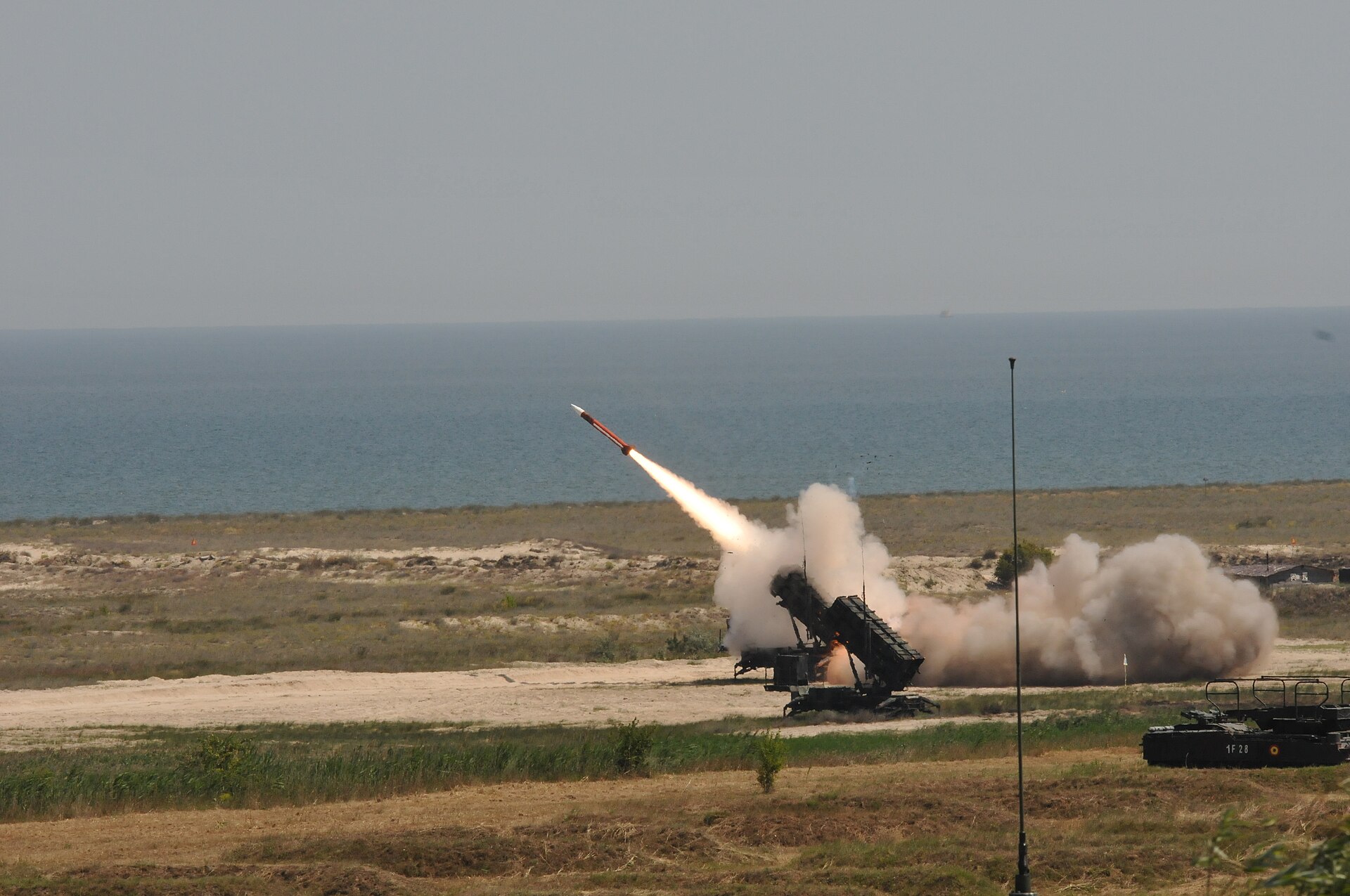
Coalition spokesman Turki al-Maliki announced early on November 15 that Saudi air defences had “intercepted and destroyed two ballistic missiles launched toward Riyadh” by the Houthi militia. The statement, carried by Anadolu Agency, Arab News, and Al Jazeera, gave no specific clock time beyond “early on Sunday.” A detailed account of the morning interception was published separately.
Saudi authorities sounded a civil defence alert at 04:08 AM Riyadh time, warning residents of an incoming aerial threat. Three loud explosions followed before an all-clear was issued (Anadolu Agency; Arab News, November 15). The morning event fits the established pattern of pre-dawn attacks that have characterised the Houthi campaign against Riyadh since September.
The critical ambiguity is whether the evening Houthi claim refers to the same salvo or a second, later attack.
No source found explicitly links the two announcements to the same missiles. The Coalition described an early-hours interception. Saree’s claim, logged at 22:27 UTC — which translates to 01:27 AM Riyadh time on November 16 — describes an attack on KKIA and a financial center. The roughly 18-hour gap between the Coalition’s morning statement and Saree’s evening declaration raises two possible readings.
The first: Saree claimed credit for the same missiles the Coalition says it intercepted, offering the Houthi version of an event whose outcome remains disputed. This would be consistent with past practice. The October record shows both sides routinely claiming opposing outcomes from the same salvos.
The second: the Houthis launched a separate evening salvo, and the Coalition has not yet responded. The timing supports this reading. An evening-hour claim for an event the Coalition described as happening “early on Sunday” would be unusual if both statements referred to the same attack.
The Coalition’s November 15 timeline is further complicated by the volume of engagements it reported. Beyond the morning ballistic missile interception, the Coalition claimed destruction of three drones aimed at Mecca and Medina and two more drones over the Eastern Province. If the Houthi evening claim represents a distinct attack, the Coalition’s air defence network processed at least four separate engagements across multiple regions in a single 24-hour period — a tempo that tests both defensive capacity and the speed of public communications.
Neither interpretation can be confirmed from available sourcing. The Coalition’s silence on the evening claim, as of the publication deadline, leaves both readings open.
Why Has the Coalition Not Responded to the Evening KKIA Claim?
As of 21:59 UTC on November 15, the Coalition had not issued a statement specifically addressing Saree’s evening claim that two missiles struck KKIA. The last confirmed Coalition communication that evening concerned the destruction of three drones over Mecca and Medina — a separate event unrelated to the airport claim.
The absence of a response is notable for what it does not prove. It does not confirm the Houthi account. Military spokesmen operate on institutional timelines, and a statement may have been issued after the publication deadline or through channels not captured in the English-language wire services.
But the silence breaks with the Coalition’s established November 15 pattern. Earlier the same day, the Coalition responded to Houthi attacks with specific counter-claims: two ballistic missiles intercepted over Riyadh before dawn, three drones destroyed over the holy cities. The GCC has been formally documenting Iranian and Houthi attacks in diplomatic submissions to the United Nations — a posture built on exhaustive counter-messaging. In that context, silence on a specific KKIA claim stands out.
The absence of flight-disruption reports adds another layer to the evidential gap. International airlines had already cancelled Saudi flights after earlier Houthi airport attacks (The Independent, October 13). A confirmed hit on KKIA would likely trigger immediate aviation consequences. The absence of such reports may suggest the missiles did not reach the airport — or it may reflect a lag in information from Saudi aviation authorities, who have not issued public statements about KKIA’s operational status on this date.
Saree himself added a rhetorical complication. He called the Coalition’s Mecca and Medina interception claims “a blatant lie and fabrication” (Middle East Eye, November 15) and stated: “Our operations target only its oil facilities and military bases” (Xinhua, November 16). That statement creates an internal tension with his own KKIA claim. King Khalid International Airport is a commercial facility serving civilian flights, not a military base. The inconsistency does not resolve whether missiles reached the airport, but it illustrates the contradictions embedded in Houthi communications.
How Reliable Are Coalition Interception Claims Based on the October Record?
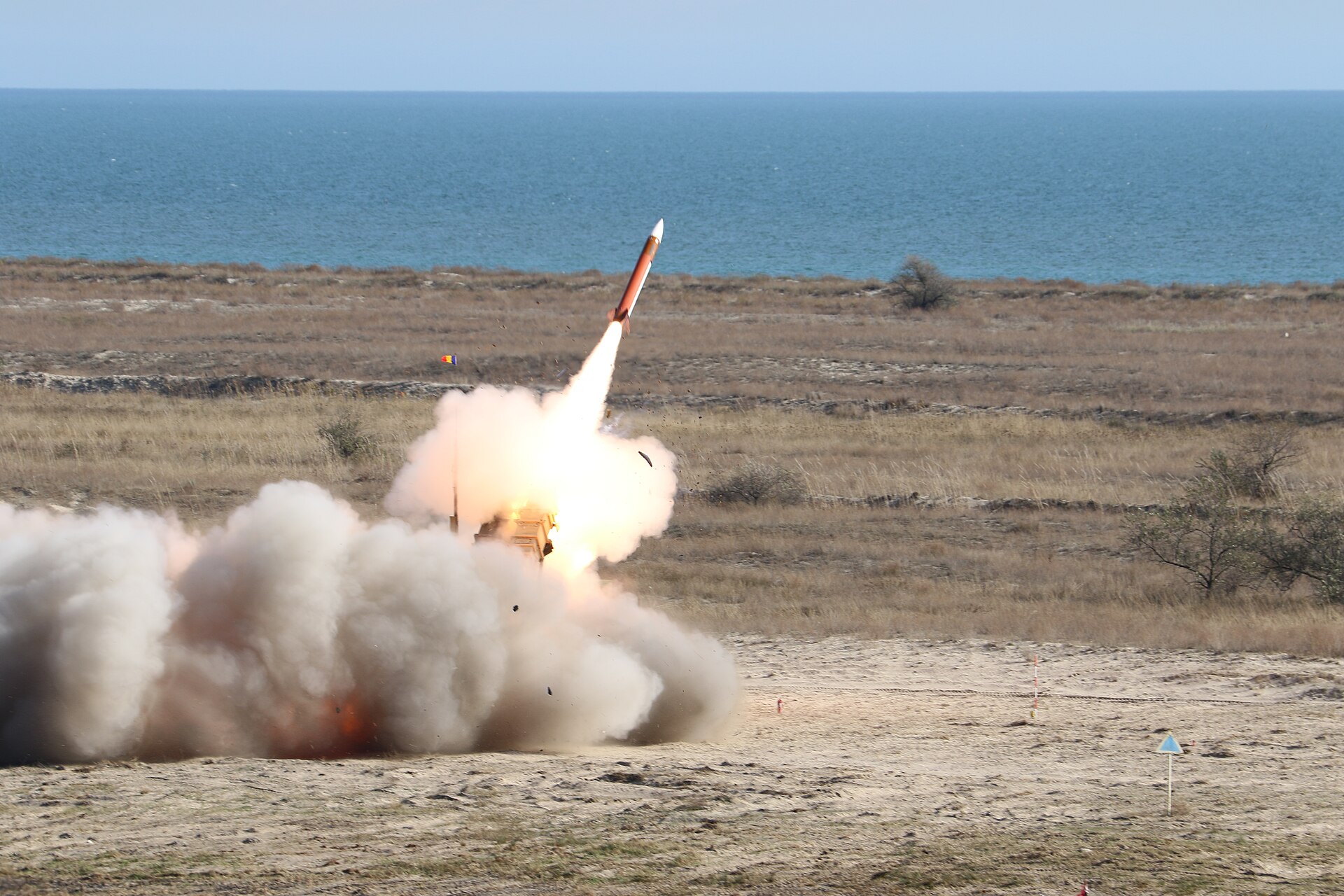
The October 2026 record at KKIA shows Coalition interception claims and confirmed airport casualties coexisting repeatedly. On October 8, the Coalition said it intercepted three ballistic missiles aimed at Riyadh. That same day, three Saudi citizens were killed at the airport, including Saudia Captain Hamoud Ali Al Kalthami (GDN; Al Jazeera, October 8-9). On October 10, a strike killed 13 and wounded between 308 and 309 people in the terminal complex (Al Jazeera, October 10; BBC, October 11).
The pattern merits day-by-day examination because it directly determines how much weight the November 15 morning interception claim can carry.
On October 6-7, the first KKIA attacks in the current escalation killed one person — a Sudanese national — and injured eight (Wikipedia, “2026 Houthi attacks on Saudi airports,” citing contemporaneous reporting).
On October 8, the airport was attacked twice. Three Saudi citizens died and a parked Saudia aircraft was damaged, along with two nearby planes (GDN; BBC; Al Jazeera, October 8-9). The Coalition claimed three ballistic missile interceptions. Both claims — interception and casualty — coexisted without resolution.
October 10 produced the deadliest single attack on Saudi infrastructure since the current conflict escalated. A strike on the terminal 3-4 complex killed 13 and wounded between 308 (The National) and 309 (Al Jazeera). The discrepancy in casualty figures illustrates the fog of wartime reporting, but both outlets confirmed mass casualties at an airport the Coalition had been actively defending.
On October 11, a projectile hit Terminal 4, killing a Pakistani resident and injuring 11 (Arab News; BNO News, October 11-12). The Coalition separately reported intercepting a cruise missile that day.
October 12 was the exception. The Coalition intercepted a ballistic missile aimed at KKIA with no reported casualties — the only confirmed KKIA interception in October that was not accompanied by ground-level damage (Wikipedia, “2026 Houthi attacks on Saudi airports”).
What does this pattern establish? Coalition interception claims are not false in every instance. October 12 proves the system works. But they are insufficient as blanket proof that no missiles reached their targets. “Intercepted and destroyed” can mean the entire salvo was stopped. It can also mean some missiles in a multi-round salvo were stopped while others were not. Or it can mean interception occurred but falling debris caused casualties and structural damage below.
The October 27 precedent reinforces the last possibility. Saudi Civil Defence confirmed that debris from intercepted Houthi ballistic missiles damaged a building, a construction project, and a vehicle in Riyadh — with no injuries (Gulf News, October 27). Even an interception that works exactly as designed can deliver structural impact to the city it is meant to protect.
Applied to November 15: the Coalition’s morning claim of intercepting two missiles does not, based on the October record, support a confident conclusion that nothing reached the airport. It may well have been a clean interception. The evidence simply does not exist to confirm either outcome — and the Coalition’s silence on the evening claim leaves a second possible engagement entirely unaddressed.
What Would a Missile Penetration Mean for Saudi Air Defence?
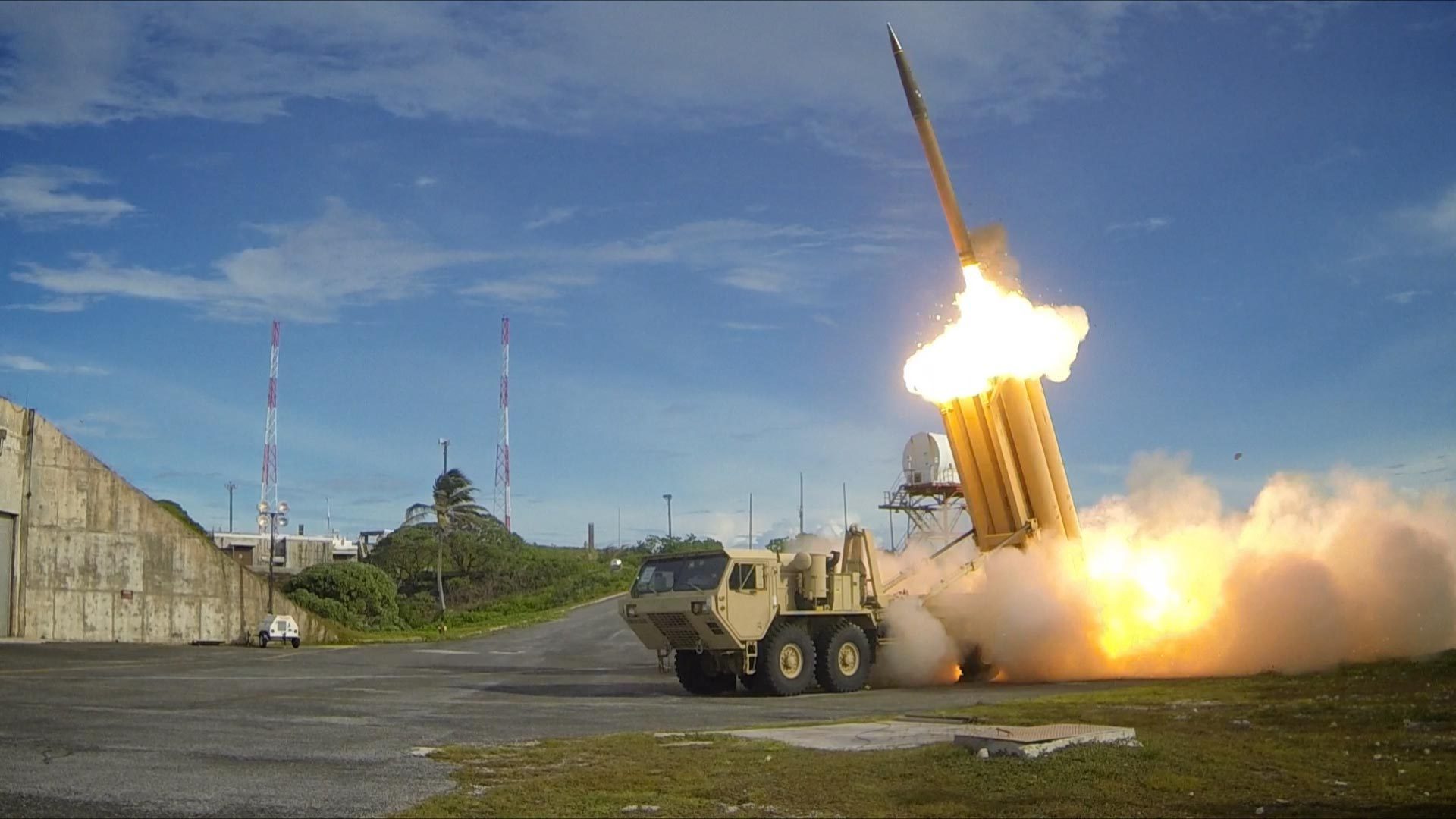
A confirmed penetration at KKIA on November 15 would mean Houthi ballistic missiles have overcome Saudi Arabia’s layered Patriot and THAAD architecture at least twice in two months. According to defence analysts, no existing system can prevent this outcome against repeated, simultaneous attacks. The implications extend from Saudi military doctrine to the global interceptor supply chain.
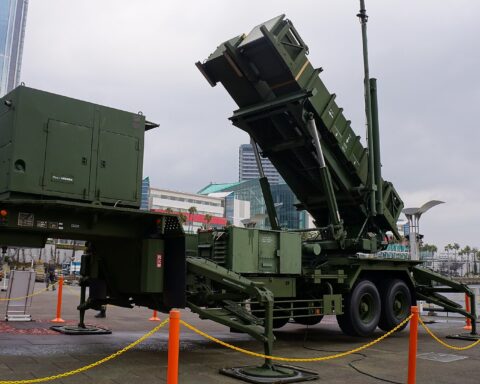
Nawaf Obaid of King’s College London’s Department of War Studies described Saudi Arabia as possessing “one of the world’s most sophisticated integrated air and missile defence architectures,” noting the kingdom “does not lack air defences” (The National, October 13). The system layers Patriot PAC-3 interceptors for terminal-phase defence with THAAD for high-altitude intercepts. UK-supplied Sky Sabre systems cover the medium range. Seven THAAD batteries are on order — the largest programme outside the United States — with four of the seven planned sites expected operational by the end of 2026 (Obaid via The National; Open Magazine).
The architecture is real. The question is whether it can hold against sustained volume.
An unnamed researcher at King’s College London warned that “no existing system … can guarantee the interception of repeated, simultaneous attacks” (The National, October 13). Dr Lynette Nusbacher, a former military intelligence officer, was more direct: “Thaad and Patriot are not available in quantity and we’re seeing leakage” (The National, October 13).
“Leakage” is the operative concept. It does not require systemic failure. It requires only that the volume of incoming threats occasionally exceeds the system’s capacity to intercept every warhead — a statistical inevitability when the attacker launches salvos faster than the defender replenishes interceptors.
Robert Tollast of the Royal United Services Institute warned of a related risk: “putting so much resource into interceptors around that facility that you leave other critical areas uncovered” (The National, October 13). A confirmed KKIA penetration would validate that concern. Either the airport’s defences were insufficient, or resources concentrated around Riyadh left other targets exposed.
The disputed KAFD damage on November 8 adds to the pattern. If that event represented an actual penetration — not merely debris from a successful interception, as Saudi officials suggested — then November 15 may mark a second potential breach of Riyadh’s defences in eight days rather than an isolated incident.
Since September 23, Houthi attacks have killed 26 people in Saudi Arabia, according to Al Jazeera’s running tally as of November 15. The toll remains low relative to a full-scale conventional conflict. But each confirmed penetration — or each plausible penetration that the Coalition cannot credibly deny — erodes the deterrence value of an air defence architecture that exists not just to stop missiles but to project a narrative of invulnerability.
The Interceptor Attrition Problem
Saudi Arabia held more than 1,800 Patriot interceptors before the current conflict, according to The National’s October 13 analysis. An estimated 2,000 THAAD and Patriot interceptors have been fired in 2026, meaning the kingdom has already expended its pre-war stock and drawn on additional reserves or new deliveries (The National, October 13).
Replenishing those stocks will not be fast. The National reported that restoring interceptor inventories could take up to 30 months, placing full replenishment no earlier than mid-2029 if production began immediately. The kingdom is burning through interceptors at a rate the global defence industry was not built to sustain.
The cost asymmetry compounds the problem. Francis Tusa, editor of Defence Eye, told The National that “the generals have told Trump that ‘we haven’t got the rounds left.'” Tusa identified British alternatives — Starstreak at 8-9 kilometre range, unjammable, at approximately £100,000 per shot, and Martlet at approximately £40,000 per shot — as options for close-in threats at a fraction of Patriot costs (The National, October 13).
“The generals have told Trump that ‘we haven’t got the rounds left.'” — Francis Tusa, editor of Defence Eye (The National, October 13)
November 15 encapsulates the daily equation. By the Coalition’s own account, the day required at least two ballistic missile interceptions before dawn, the destruction of three drones over Mecca and Medina, and the interception of two drones over the Eastern Province. Each engagement consumed interceptors from a finite stockpile. If the evening KKIA claim represents a second salvo — rather than a re-claim of the morning event — the daily expenditure was higher still.
The broader theatre multiplied the demand. The IRGC separately claimed six drones targeted the US helicopter base at Al-Rifaa in Bahrain on November 15; the US said all were intercepted. Each interception, wherever it occurs across the Gulf, draws from the same limited pool of advanced air defence systems and munitions shared among regional allies.
The industrial reality is stark. Patriot production lines operate on years-long order books. Saudi Arabia is not the only customer competing for new interceptors — allied nations across Europe, East Asia, and the Gulf all draw from the same pipeline. The current conflict has exposed a gap between the theoretical sophistication of the Saudi air defence architecture and the practical challenge of sustaining it against a determined, asymmetric threat over months or years.
November 15 in Full — A Day of Contested Claims
November 15, 2026, produced more competing military claims than almost any single day since the conflict escalated. A chronological table, drawing only on sourced reports, captures the scale and the gaps.
| Time (UTC est.) | Claimed event | Claimant | Source |
|---|---|---|---|
| ~01:08 | Civil defence alert in Riyadh; three explosions heard before all-clear | Saudi Civil Defence | Anadolu Agency; Arab News |
| Early morning | 2 ballistic missiles intercepted toward Riyadh | Coalition (al-Maliki) | Anadolu Agency; Arab News; Al Jazeera |
| Daytime | 3 drones destroyed over Mecca and Medina regions | Coalition | Al Jazeera |
| Daytime | 2 drones intercepted over Eastern Province | Coalition | Anadolu Agency |
| ~22:27 | 2 ballistic missiles struck KKIA and financial center (Houthi claim) | Houthis (Saree) | Iran International; Xinhua |
| ~22:27 | 2 drones struck pumping stations 5 and 6, East-West pipeline | Houthis (Saree) | Xinhua; Iran International |
| ~22:27 | 6 ballistic missiles hit Qa’wa camp, Lahj — “dozens of casualties” | Houthis (Saree) | Xinhua |
| ~22:27 | Coalition reconnaissance drone downed over al-Jawf (claimed 5th) | Houthis (Saree) | Xinhua |
| ~22:27 | Coalition drones-over-Mecca claim called “a lie and a fabrication” | Houthis (Saree) | Xinhua |
The table reveals the day’s information architecture. The Coalition issued specific, granular claims — citing numbers, locations, and outcomes — for each engagement. The Houthis responded with a consolidated evening statement claiming simultaneous successes across a wide geographic arc: Riyadh, the pipeline corridor, Lahj in Yemen, and al-Jawf airspace.
No independent verification exists for any of the Houthi claims on this date. All damage assessments remain either Coalition interception reports or unverified Houthi declarations (Reuters; Yahoo News; Iran International; Al Jazeera, November 15).
The broader theatre widened the day’s contested picture. Saudi Foreign Minister Prince Faisal bin Farhan was in Brussels seeking European naval escorts and diplomatic pressure on Iran. The US Embassy had issued a nationwide security alert the previous day citing the Houthi threat. November 15 was not an isolated incident but a node in a coordinated escalation running across Yemen, the Gulf, and diplomatic capitals.
For Riyadh, the day distilled the central challenge of this conflict into a single 24-hour cycle: the Coalition can document interceptions, the Houthis can claim penetrations, and no independent mechanism exists to arbitrate between them in real time. That information vacuum — not the missiles themselves — may be the most corrosive element in the Saudi defence narrative.
Frequently Asked Questions
What is KKIA’s operational status after the November 15 claim?
No General Authority of Civil Aviation statement was found confirming King Khalid International Airport’s operational status on November 15, 2026. The airport was closed following the deadly October attacks and Saudi authorities have not publicly clarified whether it has since resumed full, restricted, or suspended operations. No flight-disruption reports from airlines or aviation regulators surfaced in connection with the evening claim specifically. Passengers transiting Saudi Arabia should consult the House of Saud Saudi Arabia travel status page for the latest updates.
What type of ballistic missile did the Houthis use on November 15?
Saree did not identify the missile type in his November 15 statement. The Houthis have increasingly relied on the Palestine-2, a manoeuvrable ballistic missile with an estimated range exceeding 2,000 kilometres. Western analysts say the Palestine-2’s terminal-phase manoeuvrability is specifically designed to defeat Patriot fire-control radars, which are optimised for predictable ballistic arcs. Whether the November 15 missiles were Palestine-2s or an older, less manoeuvrable variant cannot be determined from available reporting.
How many people have been killed at KKIA in the current conflict?
Between October 6 and October 11, 2026, at least 18 people died in Houthi attacks at KKIA: one Sudanese national on October 6-7 (Wikipedia, “2026 Houthi attacks on Saudi airports”), three Saudi citizens on October 8 including Saudia Captain Hamoud Ali Al Kalthami (GDN, October 9), 13 on October 10 — initially reported as 12 before an Indian national’s death raised the toll (Al Jazeera, October 10; BBC, October 11) — and one Pakistani resident on October 11 (CNN, October 11). Two Bangladeshi nationals were among the October 10 dead (The Business Standard, October 13). No casualties from the November 15 evening claim have been reported by any source. A full guide to Saudi airports is available in the House of Saud travel section.
What countries supply air defence systems to Saudi Arabia?
The United States provides Patriot PAC-3 and THAAD systems — the backbone of Saudi air defence. The United Kingdom deployed Sky Sabre medium-range systems and assigned an RAF Voyager tanker to support coalition air operations (The National, September 22 and October 13). France confirmed troops, radars, and air defences to protect the Yanbu petroleum export terminal on the Red Sea coast (Al Jazeera, September 25). These multinational contributions supplement Saudi Arabia’s own assets but have not resolved the interceptor supply gap analysts have identified.
How many Saudi airports have been targeted by Houthis since September 2026?
Houthi attacks have targeted at least five Saudi airports since the current escalation: King Khalid International Airport in Riyadh and King Fahd International Airport in Dammam (CNN, October 11), plus Abha International Airport, military and civil facilities at Khamis Mushait, and Taif Regional Airport (Khaleej Times, September 14). KKIA has been the primary ballistic missile target since late September, when the Houthis expanded their campaign from the southern border region to the capital (Kathmandu Post/Reuters, September 20). Southern airports continue to face drone and cruise missile threats along the front.
The House of Saud Daily Briefing
Saudi Arabia's news in 3 minutes, every morning. Free. See today's issue