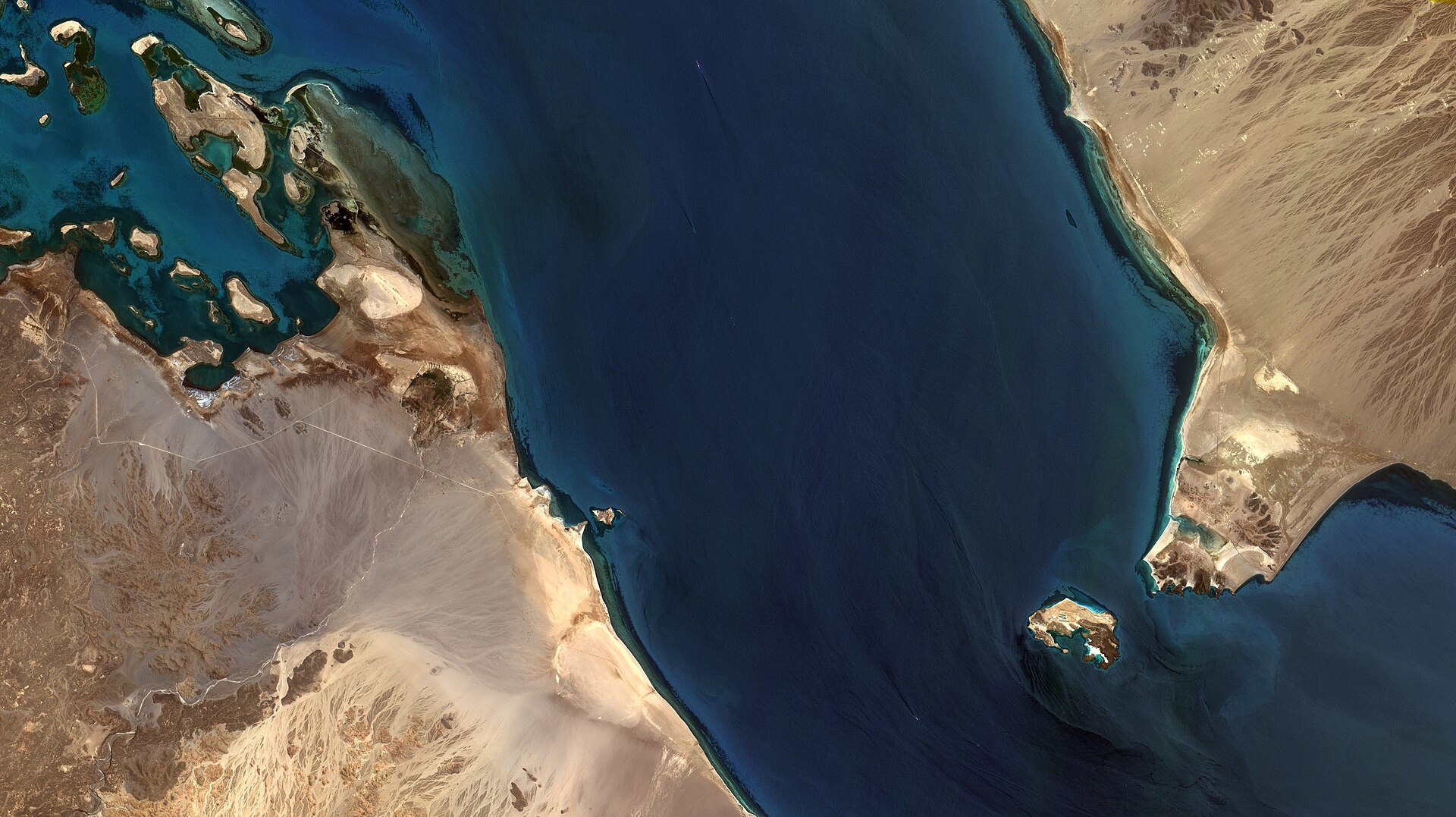

JEDDAH — Houthi forces now hold the Yemeni shore of Bab el-Mandeb after Saudi-backed southern troops pulled out of Dhubab Airport and the strait area on 15 November. Iran, meanwhile, says the Strait of Hormuz will not reopen until Washington meets its conditions. That leaves forces aligned with Tehran sitting on both sea gates Saudi crude has used to reach Asia this year.
The Southern Armed Forces called the move a redeployment driven by “the priority of securing the capital, Aden,” according to Al Jazeera and Reuters. The Houthis answered the same day with footage of what they called a “field tour” of the airport and the strait. They claimed to have “expelled” the government’s troops, the Long War Journal reported. The pullback itself is covered in HOS reporting on the southern forces’ exit from Dhubab, and its consequences for Saudi oil reach well beyond Yemen’s coast.
The House of Saud Daily Briefing
Saudi Arabia's news in 3 minutes, every morning. Free. See today's issue
The numbers explain why. Mahad D. Darar of Colorado State University wrote in The Conversation on 17 September that Saudi crude was moving through Bab el-Mandeb at roughly eight times the rate of a year earlier. The kingdom built its wartime export plan on the Red Sea, and the southern end of that sea is now watched from a coastline the Houthis control. The sections below trace how Riyadh came to depend on that route and what the Houthis now hold. They also show where the Suez escape hatch still runs, and why King Salman replaced his Yemen commander a day after the pullback.
Table of Contents
- What Happened at Bab el-Mandeb on 15 November?
- Why Does Bab el-Mandeb Matter to Saudi Oil?
- How Did Saudi Arabia Come to Depend on the Red Sea?
- The Dual-Chokepoint Problem for Riyadh
- Is Saudi Arabia Fully Boxed In?
- What the Houthis and Tehran Say They Want
- Riyadh Replaces Its Yemen Commander
- The Front Moves Toward Aden
- Frequently Asked Questions
What Happened at Bab el-Mandeb on 15 November?
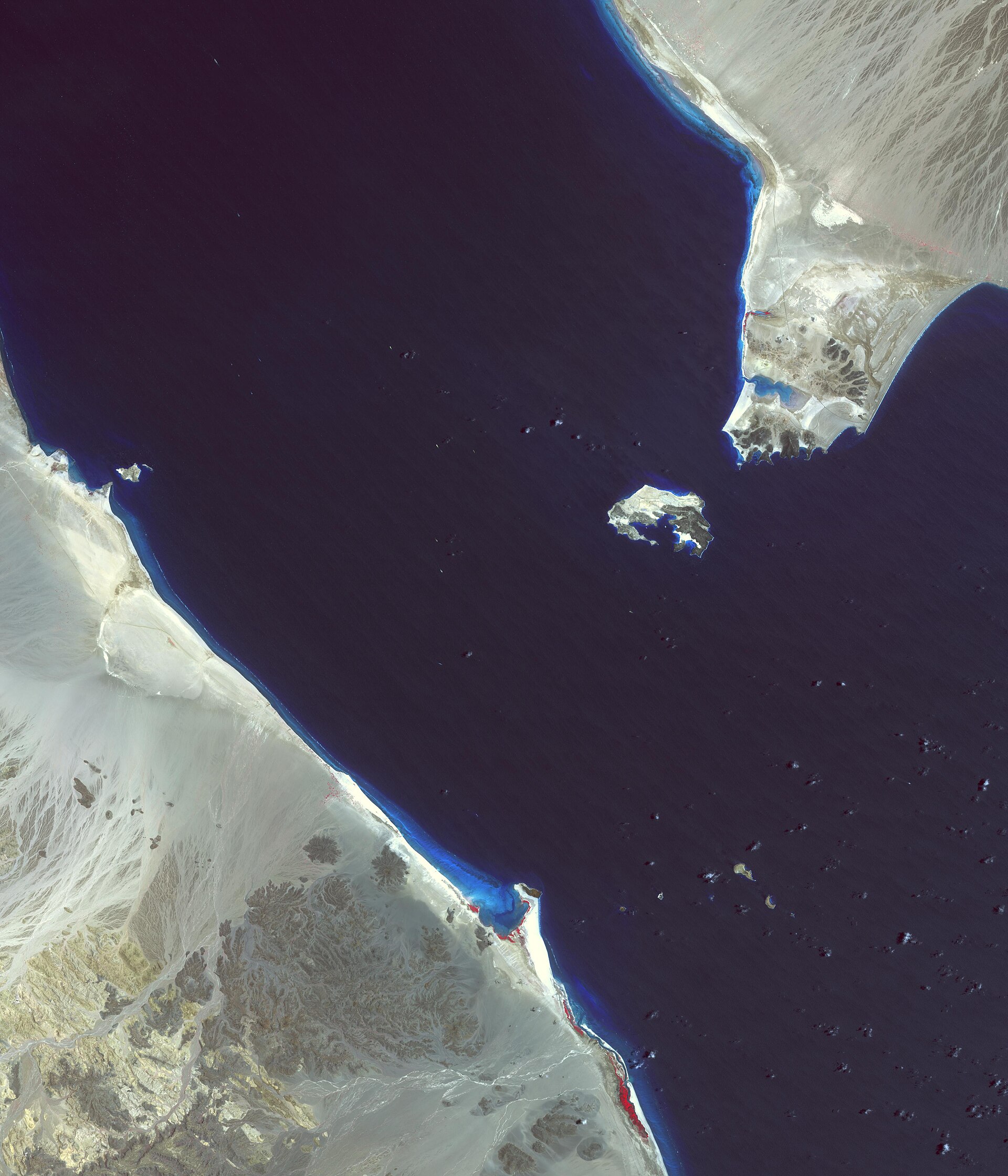
On 15 November, the Southern Armed Forces aligned with Yemen’s internationally recognised government announced they were repositioning from Dhubab Airport and the Bab al-Mandab area in western Taiz governorate. The Houthis moved into the vacated ground the same day and released footage claiming they had driven the government’s troops out of the airport and the strait.
The southern command’s statement, quoted by the Long War Journal, cited “the latest developments on the fronts, the military build-ups, and the threats targeting the capital Aden.” Majed al-Nuzaili, spokesperson for Yemen’s armed forces, cast the pullback as part of a wider tactical manoeuvre. He called on the international community to help restore government control over Bab al-Mandeb and the west coast, Al Jazeera and Reuters reported.
Not everyone accepted the language. Ali al-Dahab, a strategic affairs expert interviewed by Al Jazeera on 16 November, rejected the word redeployment outright. In his reading, the move left the Houthis holding the whole of Yemen’s western coastal sector.
“What happened is a retreat or a withdrawal with the same meaning, and not a redeployment, because the withdrawal left a vast vacuum filled by the Houthis. They now directly and completely control the western Yemeni coastal sector.”
Ali al-Dahab, strategic affairs expert, to Al Jazeera, 16 November 2026
This is ground the Houthis have taken before. They seized the Red Sea port of Mokha on 10 September, The National reported. The next day, a Yemeni government military source told Anadolu that Houthi fighters had taken Perim Island, also known as Mayyun, which sits in the middle of the strait. Government sources also told Reuters that Houthi fighters had reached Dhubab in the same push, according to Al Jazeera.
Those September gains rested on battlefield claims rather than a formal declaration. Al Jazeera’s Nabil al-Yousefi, reporting from Sanaa on 11 September, noted no official announcement by the Houthi government confirming control over Bab al-Mandeb. The Sanaa-based Yemen Press Agency reported the same day, citing field sources, that Houthi forces had seized the al-Omari camp overlooking the strait.
The government struck back in October. On 5 October, the Southern Giants Brigade and National Shield Forces reached Dhubab Airport in a counteroffensive to retake the west coast, according to the Long War Journal. Yemeni government forces said that day they had secured the strait, Dhubab and Mokha, The National reported. By mid-November the airport had changed hands again, and the Long War Journal’s headline put it plainly: the Houthis had retaken Bab al-Mandeb and were moving toward Aden.
Why Does Bab el-Mandeb Matter to Saudi Oil?
Bab el-Mandeb is the twenty-mile-wide strait at the southern mouth of the Red Sea, according to the Council on Foreign Relations. It is the direct route south for Saudi crude loaded at Yanbu and bound for Asia. Lesley Anne Warner of the Carnegie Endowment put the share of seaborne-traded oil using the strait at roughly 12 percent.
The wider trade stakes are larger still. The CFR says 12 to 15 percent of global maritime trade, worth more than $1 trillion a year, passes through the Red Sea. So does 30 percent of global container traffic, the same analysis says, and Saudi Arabia turned that sea into its main oil corridor after the Gulf route froze.
For Riyadh, the strait is not an abstraction on a shipping chart. Kpler’s analysts described Yanbu-loaded tankers in July as “moving south toward Asia” through Bab el-Mandeb. Edward Fishman of the CFR warned that the Houthis, “who are Iranian allies, could theoretically shut off the Bab el-Mandeb.” That, he said, would “basically make it so that Saudi Arabia doesn’t have any way to export oil.”
His CFR colleague Clara Gillispie framed the cost beyond the kingdom. Losing guaranteed safe passage, she said, “would place further strain on already fragile global energy markets.” The kingdom’s official line on the two waterways is set out in earlier HOS coverage of the Cabinet’s position on both straits.
How Did Saudi Arabia Come to Depend on the Red Sea?
Saudi Arabia leaned on the Red Sea because shipping through Hormuz was all but halted in March. The kingdom began cutting output and rerouting exports to Yanbu, WorldOil reported on 9 March. Kpler data reported by Reuters showed Yanbu exports rising from about 770,000 barrels a day in January and February to nearly 4 million in the week starting 16 March.
The ramp-up was fast and close to the limit. Bloomberg reported, via Reuters, that the East-West pipeline was running at its full capacity of 7 million barrels a day by late March. Yanbu crude exports reached about 5 million barrels a day, the same report said, and Aramco declined to comment.
Even that effort left a hole. Bloomberg’s Julian Lee wrote on 25 March that Yanbu exports at the 5 million target would still leave Saudi crude exports roughly 2 million barrels a day below pre-war levels. About 2 million barrels a day of the crude moving west, he added, was needed at home. It fed refineries in Riyadh, Yanbu and Jizan, along with power generation and desalination plants.
By June the Red Sea system was running close to its practical ceiling. A Kpler explainer by Emmanuel Belostrino put Yanbu’s sustainable crude loading at roughly 4.5 to 4.7 million barrels a day, including domestic deliveries. It counted 4.1 million barrels a day of June exports, of which about 3.3 million sailed to Asia through Bab el-Mandeb.
Then the Houthis turned the workaround into a target. The group announced a naval blockade of Saudi Arabia on 20 July, Reuters reported, and Kpler said the Saudi-linked tankers ENCELIA and LAYLA were struck on 22 July. Kpler’s series, in the table below, shows the Red Sea route shrinking from that day onward.
| Period | Measure | Figure | Source |
|---|---|---|---|
| 2023 | Oil flows through Bab el-Mandeb | 9.3 million bpd | CFR, citing EIA |
| 2024 | Oil flows through Bab el-Mandeb | 4.1 million bpd | CFR, citing EIA |
| First half 2025 | Oil flows through Bab el-Mandeb | 4.2 million bpd | CFR |
| June 2026 | Peak weekly Saudi crude flows through Bab el-Mandeb | 3.99 million bpd | Kpler via The National, 29 Sept |
| Weeks before 22 July 2026 | West Coast Saudi crude transiting Bab el-Mandeb | About 3 million bpd | Kpler |
| Six days after 22 July 2026 | Same measure | About 1.5 million bpd | Kpler |
| August 2026 | Saudi flows through Bab el-Mandeb | 0.45 million bpd | Kpler via The National |
| August 2026 | All oil flows through Bab el-Mandeb | 5.45 million bpd | Kpler via The National |
| September 2026 | All oil flows through Bab el-Mandeb | 2.56 million bpd | Kpler via The National |
| 10–11 September 2026 | Daily ship crossings of the strait | 30 falling to 15 | Kpler preliminary data via The National |
The August collapse in Saudi flows came after a missile strike on the cargo ship Tihamah, according to The National. A drone attack on the pipeline itself on 10 September halted Yanbu loadings from the following day. Three sources told Reuters on 22 September that operations had restarted but could take six weeks or more to reach full capacity.
The combined damage showed up in the national total. Al Jazeera reported on 17 September that total Saudi crude loadings had topped 7.5 million barrels a day in January and February. They fell to about 2.3 million in August and roughly 2.1 million in early September, a drop of more than 70 percent. “With the East-West pipeline offline, Saudi’s options are limited,” Rishi Rajanala of LSEG told Al Jazeera.
The fiscal exposure follows directly. Oil and petroleum sales make up more than half of Saudi government revenue, Al Jazeera reported. UBS projected a 2026 budget deficit of 5 percent of GDP against an original target of 3.3 percent. Brent closed the week of the September Houthi advance at $104.6 a barrel, The National reported.
Foreign governments read the same map. France confirmed on 25 September that it was sending soldiers, radars and defence systems to protect the Yanbu oil terminal, Al Jazeera reported. President Emmanuel Macron said the deployment would not involve France in the conflict. Aramco has continued to market Red Sea barrels; see HOS coverage of Aramco’s November supply to Europe via Yanbu.
The Dual-Chokepoint Problem for Riyadh
The clearest statement of the dual-chokepoint problem came in Darar’s September essay. He set it out in a single line that reads very differently after 15 November.
“Houthi control of that strait hands Iran a mirror-image choke point to the one it has over Hormuz.”
Mahad D. Darar, Ph.D. candidate in political science, Colorado State University, The Conversation, 17 September 2026
Tehran has said as much itself. Ali Akbar Velayati, adviser to Iran’s Supreme Leader on international affairs, wrote in April that Iran’s network of allied groups “views Bab el-Mandeb as it does Hormuz,” the CFR reported. On 25 March, an unnamed Iranian military source told the semi-official Tasnim agency that Iran could open a new front at Bab al-Mandab. The trigger, the source said, would be attacks on Iranian territory or its islands.
The Gulf end of the pincer remains shut by Iran’s own account. Mohsen Rezaei, secretary of Iran’s Supreme National Security Council, told Lebanon’s Al Mayadeen on 10 November that Hormuz would not reopen until the United States met Tehran’s seven conditions, Al Jazeera reported. Maritime monitoring services recorded dozens of attacks on vessels in and near Hormuz in October.
IRGC mine claims have kept coming; see HOS reporting on the IRGC’s tanker claims of 16 November. What changes this week is the southern end of the map. Arsenio Longo, founder of the tanker analytics firm Huax, told The National in September that “Dhubab and Perim matter more for shipping” than Mokha. Moving that far south, he said, brings the Houthis much closer to vessels entering and leaving the strait.
Andrew Leber of the Carnegie Endowment saw the diplomatic cost as early as 23 September. The Houthi advance, he wrote, complicated Arab Gulf efforts to “establish a common position for negotiating with Iran on reopening the Strait of Hormuz.” A government that needs Tehran’s cooperation in one strait now has to bargain while Tehran’s ally sits on the other.
Is Saudi Arabia Fully Boxed In?
No, but the remaining exits are slower or contested. Crude loaded at Yanbu can still sail north through the Suez Canal, a route that avoids both Hormuz and Bab el-Mandeb, Al Jazeera reported in July. Saudi Arabia also pushed more crude back through Hormuz in September, according to Kpler data.
The Suez route carries a heavy price for Asian buyers. Kpler calculated in July that sending a Yanbu cargo to South Korea north through Suez and around Africa would stretch the voyage from about 24 days to roughly 54. That more than doubles the time each tanker spends on a single Asian delivery.
Capacity on the northern route is the harder limit. Kpler’s Belostrino noted that the SUMED pipeline, at 2.5 million barrels a day, cannot carry a 4.2 million barrel-a-day Saudi export programme alone. The kingdom would need both SUMED and the canal, and the binding constraint, he wrote, “is the southbound return of empty replacement tankers.” Suez averaged about 1.1 southbound ballast transits a day in the first half of 2026. Every case Kpler modelled needed 3.9 to 5.1 a day, above the record of 3.3 set in 2022.
Hormuz, for all the mines, has not gone to zero for Saudi barrels. Saudi shipments through the Gulf strait rose to 2.58 million barrels a day in September from around 1 million in August, The National reported, citing Kpler. That was 43 percent of all Hormuz traffic. Combined flows through Hormuz, Bab el-Mandeb and Suez fell to 9.99 million barrels a day in September from 12.17 million in August, a level 61 percent below February.
Those Gulf barrels move under heavy risk. Some tankers switch off their AIS transponders in Omani waters, Al Jazeera reported in September. Richard Matthews of Gibson Shipbrokers said ships “will transit with transponders off and likely coordinate with the US Navy.” Dark transits still carry the risk of attack, the same report noted.
The Houthi grip on the strait has limits too. A 15 September policy brief from the Al Jazeera Centre for Studies noted that holding the eastern shore does not give the group the western side, near Djibouti and Eritrea. The brief also warned that holding the flat coastal plain with fixed positions leaves Houthi forces more exposed than in their mountain strongholds.
Europe-bound supply was already under strain before the latest pullback. Leber reported in September that the kingdom had “already begun canceling key oil shipments to Europe.” The encirclement is real but not airtight, and the cost of every escape route is rising at once.
What the Houthis and Tehran Say They Want
The Houthis have described the strait as theirs since September. A Houthi commander said on 10 September, the day Mokha fell, that Bab al-Mandeb “can be considered under the administration of our forces,” according to The National. The group’s November footage from Dhubab repeats that claim with pictures rather than words.
The war aim is framed as reciprocity with Riyadh. Al Jazeera reported on 16 November that the Houthis would continue operations under the formula “siege for siege, airport for airport, and escalation for escalation.” The language mirrors the blockade the group declared on Saudi shipping in July, turning a maritime threat into a stated policy of retaliation. On 15 November, the Houthis called a Saudi allegation that they had attacked Mecca “a blatant lie,” Al Jazeera reported.
Their military spokesman keeps the ledger in airstrikes. Yahya Saree accused Saudi Arabia of launching 88 airstrikes in six Yemeni governorates on 16 November, the Long War Journal reported. That brought the Saudi total since July to 5,183, according to the Houthis, and both figures are the group’s own. In September, Saree claimed the coast operation had expelled Saudi-backed forces from six districts, Al Jazeera reported. HOS has previously reported Houthi claims about firing ranges near Kahboub on the strait.
Who benefits is not much disputed among the analysts quoted. Al-Dahab told Al Jazeera that the Houthi gains at Bab al-Mandeb translate “in large part to the benefit of Iran.” Leber warned in September that the advance raised the possibility of “opening a second front in the current Gulf conflict.” Such a front, he wrote, “could target Saudi oil facilities and population centers.”
Riyadh Replaces Its Yemen Commander
Riyadh’s most visible response so far has been a change of commander rather than a statement on the strait. By royal decree on 16 November, King Salman removed Fahd bin Hamad bin Abdulaziz al-Salman as commander of the coalition backing Yemen’s government. He was appointed an adviser to the Minister of Defence, the Saudi Press Agency reported via Middle East Eye. Chief of the General Staff Fayyad al-Ruwaili was named to replace him.
No reason was given, according to Middle East Eye. Al Jazeera and Reuters noted that the decree came a day after coalition-backed forces withdrew from the strait, and France 24 placed it within the wider Houthi advance. The Long War Journal’s 16 November account of the fighting carries no Saudi government response to the loss of Dhubab.
Handing the coalition to the Chief of the General Staff ties a war that now touches Saudi export routes directly to the top of the armed forces. The detail is in HOS coverage of Al-Ruwaili’s appointment. The southern camp has been Riyadh’s to manage since January, when the Southern Transitional Council’s secretary-general announced in Riyadh that the group would be dissolved. Saudi-backed forces had regained Hadramout and the presidential palace in Aden by then, OPB and AP reported.
Washington’s part in the wider war is covered separately in HOS reporting on US advisers in Saudi Arabia and HOS reporting on US carrier deployments. None of it has yet put a government soldier back on the coast at Dhubab.

The Front Moves Toward Aden
The Houthis did not stop at the strait. Hassan Jouni, a retired Lebanese brigadier-general, told Al Jazeera that the group had reached Tor al-Baha, just 80km from Aden. He called the triangle linking Aden, Taiz and Bab al-Mandab “the strategic centre of gravity for the war in Yemen as a whole.”
Reports of how close they are differ, and the differences matter. Al Jazeera separately reported that the Houthis had advanced to an area 60 kilometres north of the city. Five Yemeni military personnel told Reuters, via France 24, that Houthi fighters had reached the coastal area of Khor Omairh, some 100km west of Aden. The Long War Journal put Houthi forces in the inland highlands around 40 miles from the interim capital.
Jouni was careful about the line. “We do not say they have approached Aden, but the defence of the city of Aden begins in this area,” he said. He added that “the basic combat direction now is in the vicinity of the besieged city of Taiz.”
The human toll is already measured in hundreds of thousands. More than 340,000 people have been displaced since the fighting began in August, two-thirds of them from Taiz, according to IOM figures cited by the Long War Journal. Jouni’s “basic combat direction” runs straight through that displaced population.
Diplomacy runs on a parallel track that has so far left Yemen out of view. Iran’s foreign minister, Abbas Araghchi, arrived in Muscat on 17 November from Islamabad for talks with Omani counterpart Badr bin Hamad Al Busaidi, Anadolu reported. The visit comes amid efforts to revive the Iran-US understanding brokered by Pakistan, and no outcome had been reported at the time of publication.
On the Gulf of Aden side, the Long War Journal reported that the Houthis had pushed about 50 miles east of the chokepoint along Yemen’s southern coast by 16 November. Aden lies just over 100 miles east of the strait. The airport the Houthis toured on camera on Sunday sits beside the strait, where that coastline begins.
Frequently Asked Questions
Can the Houthis hold Perim Island?
Perim, or Mayyun, “is a small island with limited resources and depends on continuous supplies through Dhubab,” the Al Jazeera Centre for Studies wrote in September. It warned that disruption between Mocha and Dhubab could isolate the island. With Dhubab back in Houthi hands, that supply route now runs through Houthi-held ground. The National noted that whoever controls Perim can track vessels entering or leaving the Red Sea.
Do tanker-tracking figures capture all strait traffic?
Not fully. Kpler’s data, as reported by The National, excludes tankers sailing with their transponders switched off, so real volumes may be higher than recorded. The September crossing counts were also preliminary. Of the 15 crossings Kpler recorded on 11 September, six were ships leaving the Red Sea and nine were entering it.
Are there ways to move Yanbu crude to Asia besides Bab el-Mandeb?
Yes, at a cost. Al Jazeera reported in July that operators could transfer part of a cargo through Egypt’s SUMED pipeline before reaching the Suez Canal. South Korea’s Hyundai Oilbank had sought a supertanker able to use both Suez and SUMED, the same report said. Kpler analyst Sumit Ritolia warned that “substitution is possible but would be limited.”
How far has traffic through Hormuz fallen?
Total oil flows through Hormuz in September were less than a third of February’s 20.64 million barrels a day, according to Kpler data reported by The National. Iran’s own shipments fell to 100,000 barrels a day from 2.5 million in February. Excluding Saudi Arabia, Hormuz flows dropped 29 percent in September to 3.44 million barrels a day.
The House of Saud Daily Briefing
Saudi Arabia's news in 3 minutes, every morning. Free. See today's issue