
TEHRAN — US forces struck multiple locations on Qeshm Island in the Strait of Hormuz on 17 November, Iranian officials and state-affiliated media reported, hours after the Islamic Revolutionary Guard Corps claimed a drone attack on a US radar system at Sheikh Isa Air Base in Bahrain. Ahmad Nafisi, Deputy Governor of Hormozgan Province, confirmed the strikes to IRNA but said they caused “no damage to residential, commercial, or infrastructural areas.”
The strikes landed on a day when the diplomatic and military tracks across the Gulf moved in opposite directions. Iran’s Foreign Minister Abbas Araghchi had left talks in Muscat with Oman’s Badr al-Busaidi that morning having reached no agreement on reopening the Strait of Hormuz. The US Central Command issued no statement on the strikes, consistent with what NBC News described on 3 November as a pattern in which recent US airstrikes in the area “had not been publicized.”
The House of Saud Daily Briefing
Saudi Arabia's news in 3 minutes, every morning. Free. See today's issue
Table of Contents
At Least 6 Strikes Hit Qeshm Island
Residents of Qeshm Island reported five to six explosions on 17 November, according to Iran International. IRGC-affiliated Pars Today put the total at “at least six strikes.” The primary target, according to OSINT613 citing Iran’s Tasnim News Agency, was an Iranian air defense missile launcher in the Nariman area of the island — a location consistent with the military infrastructure the US has targeted in previous operations on Qeshm.
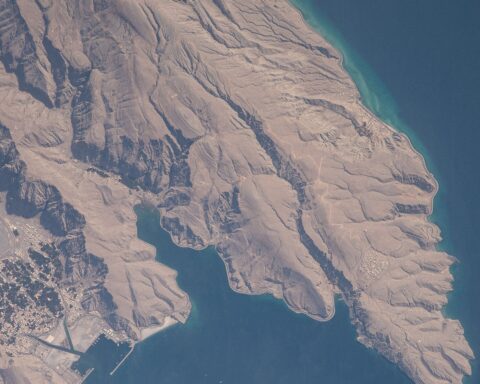
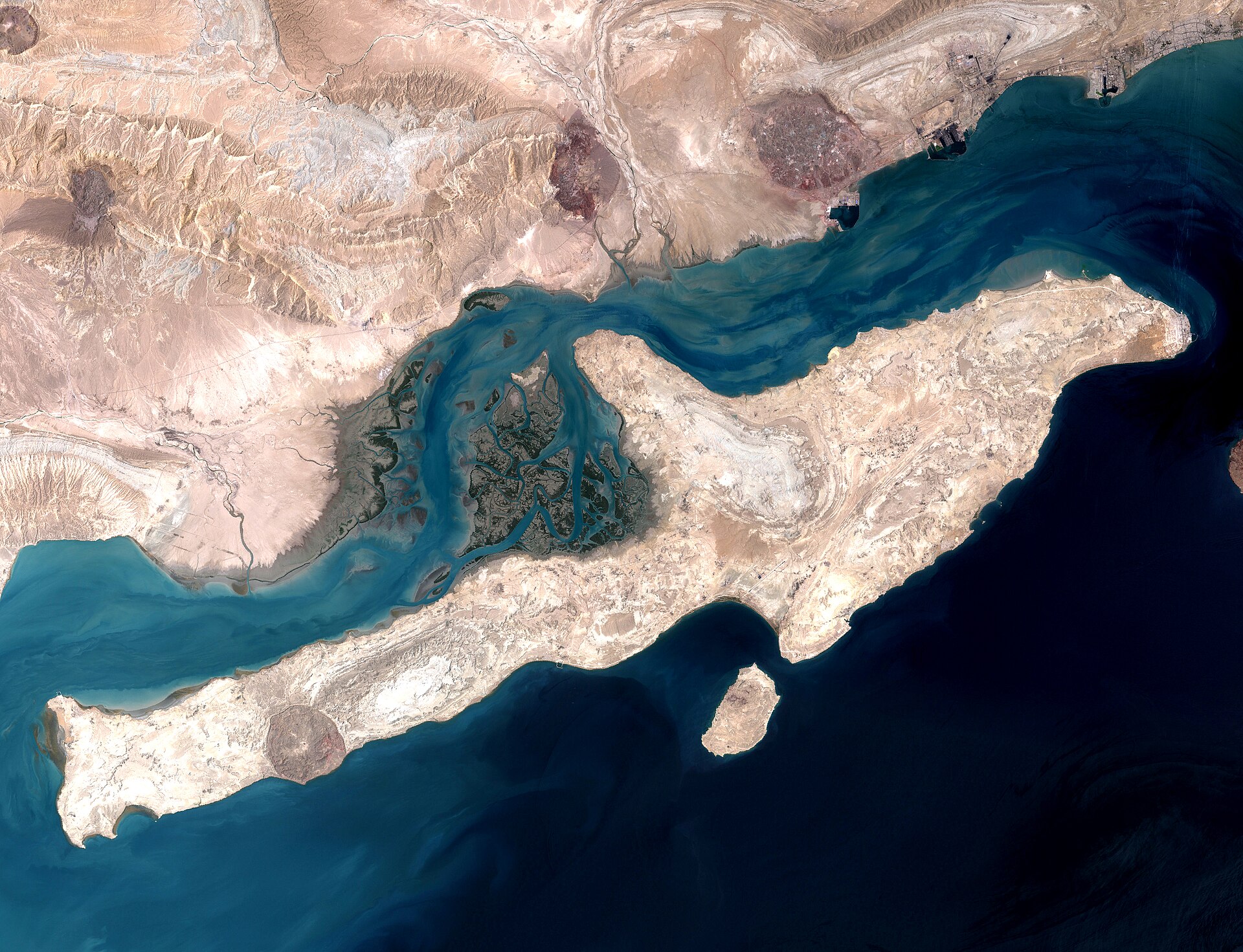
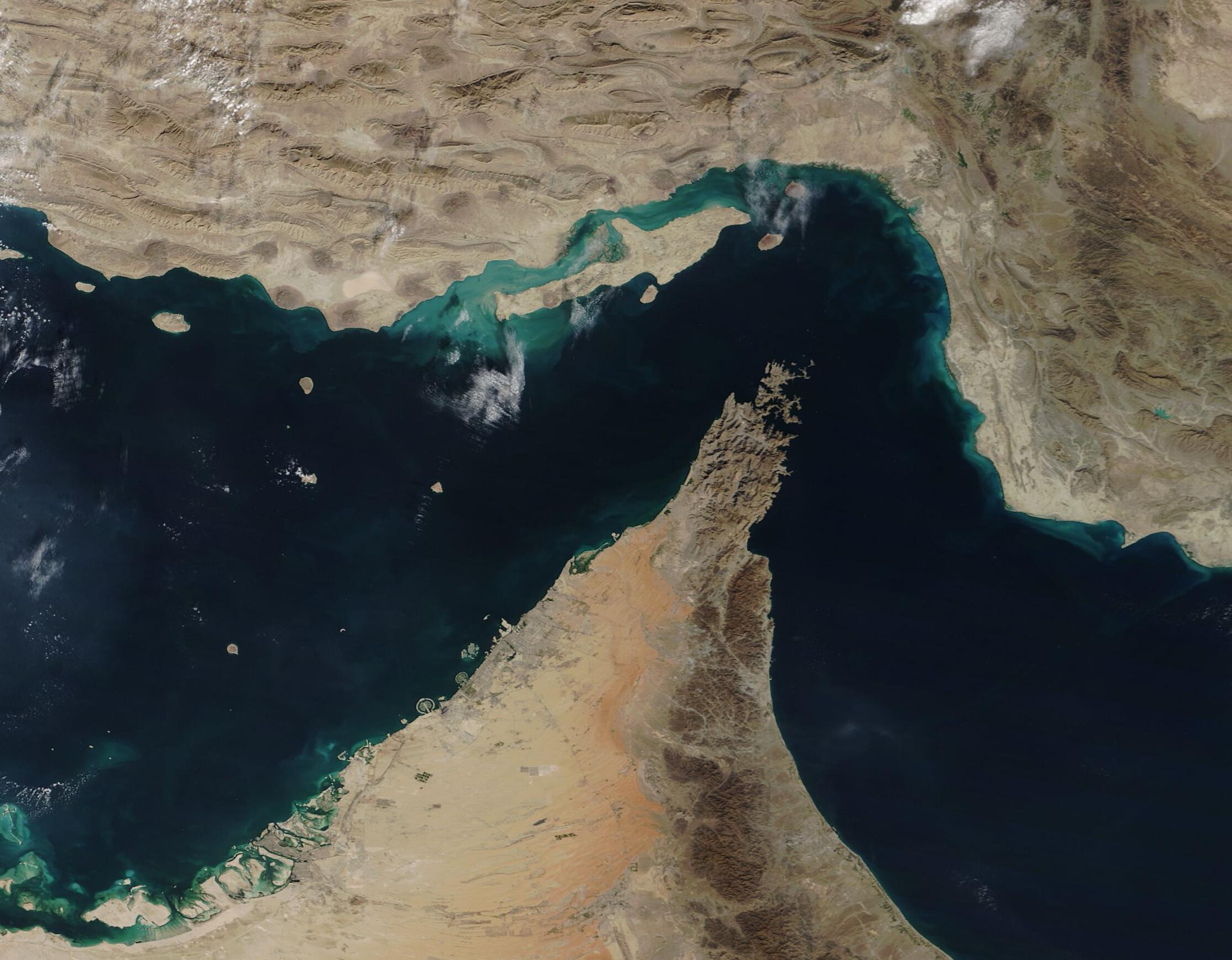
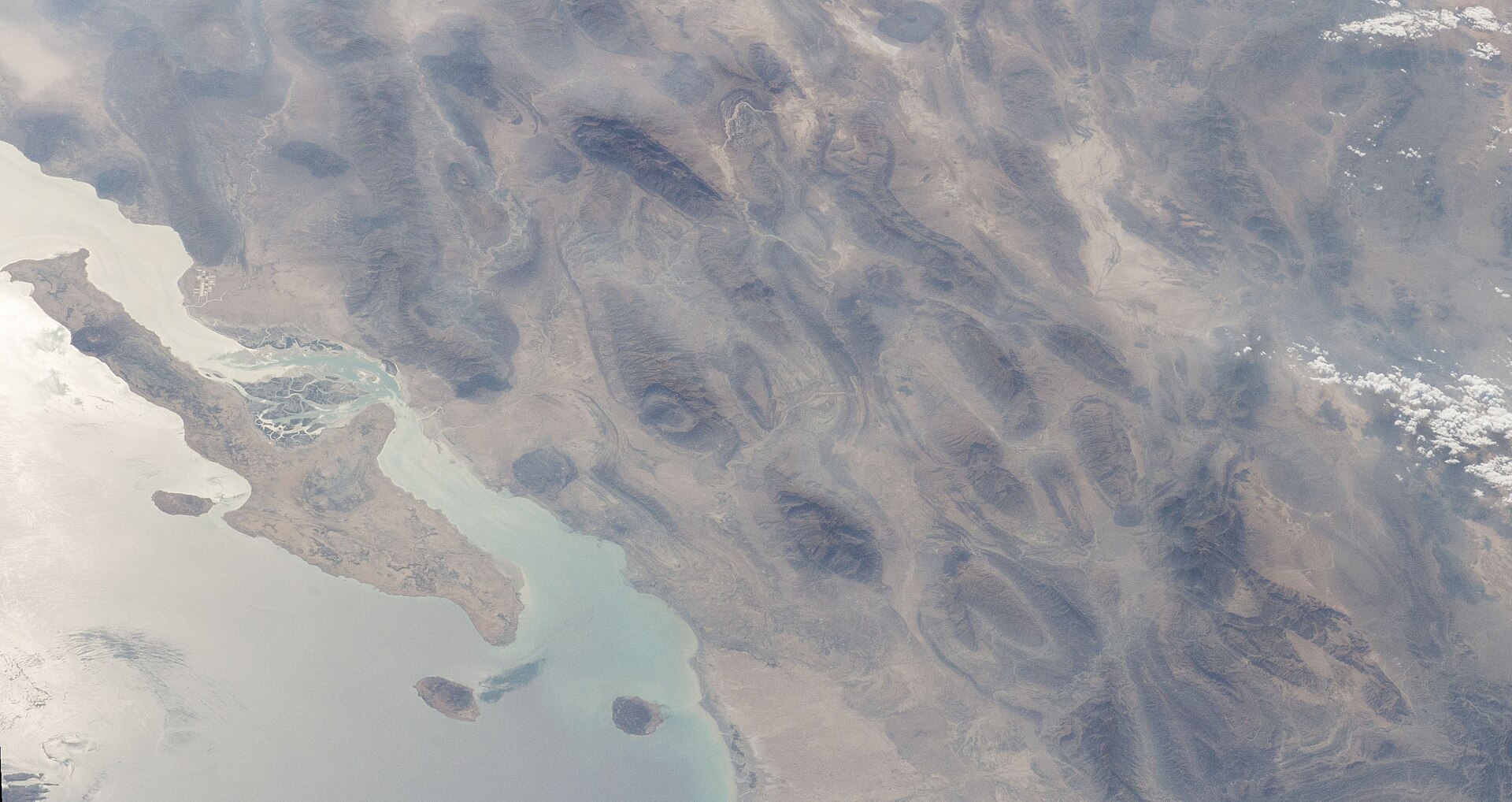
A second cluster of explosions struck northwest of Qeshm city, according to Fars News Agency, as cited by JFeed and the Times of Israel. The two target areas sit on Iran’s largest island, which commands the narrowest chokepoint of the Strait of Hormuz and has served as a base for IRGC naval and air defense operations throughout the conflict.
Separately, the IRGC claimed earlier that day that it had shot down a US MQ-1 drone south of Qeshm Island at approximately 13:45 local time, using what the Corps described as “a new, modern air defense system.” Tasnim, as reported by news.am, said the IRGC called it “the 18th US drone” it had downed. The claim has not been independently verified.
What Did Iranian Officials Say About Damage?
Nafisi issued three public statements in rapid succession. In the first, carried by IRNA, he said “the American attack on locations on Qeshm Island caused no damage to residential, commercial, or infrastructural areas.” In the second, broadcast on Iranian state television and cited by TASS, he went further.
“The enemy’s attack inflicted no harm on the island’s vital infrastructure or essential services.”Ahmad Nafisi, Deputy Governor of Hormozgan Province, via Iranian state broadcaster (TASS)
In his third statement, again via IRNA, Nafisi said “the situation on Qeshm Island is under control.” The speed and repetition of the denials — three official statements from a provincial governor within hours of the reported strikes — contrasted with separate reporting from the same media ecosystem. JFeed, citing unspecified Iranian sources, reported “dead and wounded” on the island but gave no numbers. Nafisi’s official statements directly contradicted the claim, and no independent corroboration of casualties has emerged.
The pattern echoed Iran’s response to previous Qeshm strikes. After the 2 November operation, Iranian state media similarly reported limited damage while providing no access or evidence to support the assertions. After the 7 November strikes, Iranian officials again issued rapid denials.
The Sheikh Isa Attack and CENTCOM’s Response
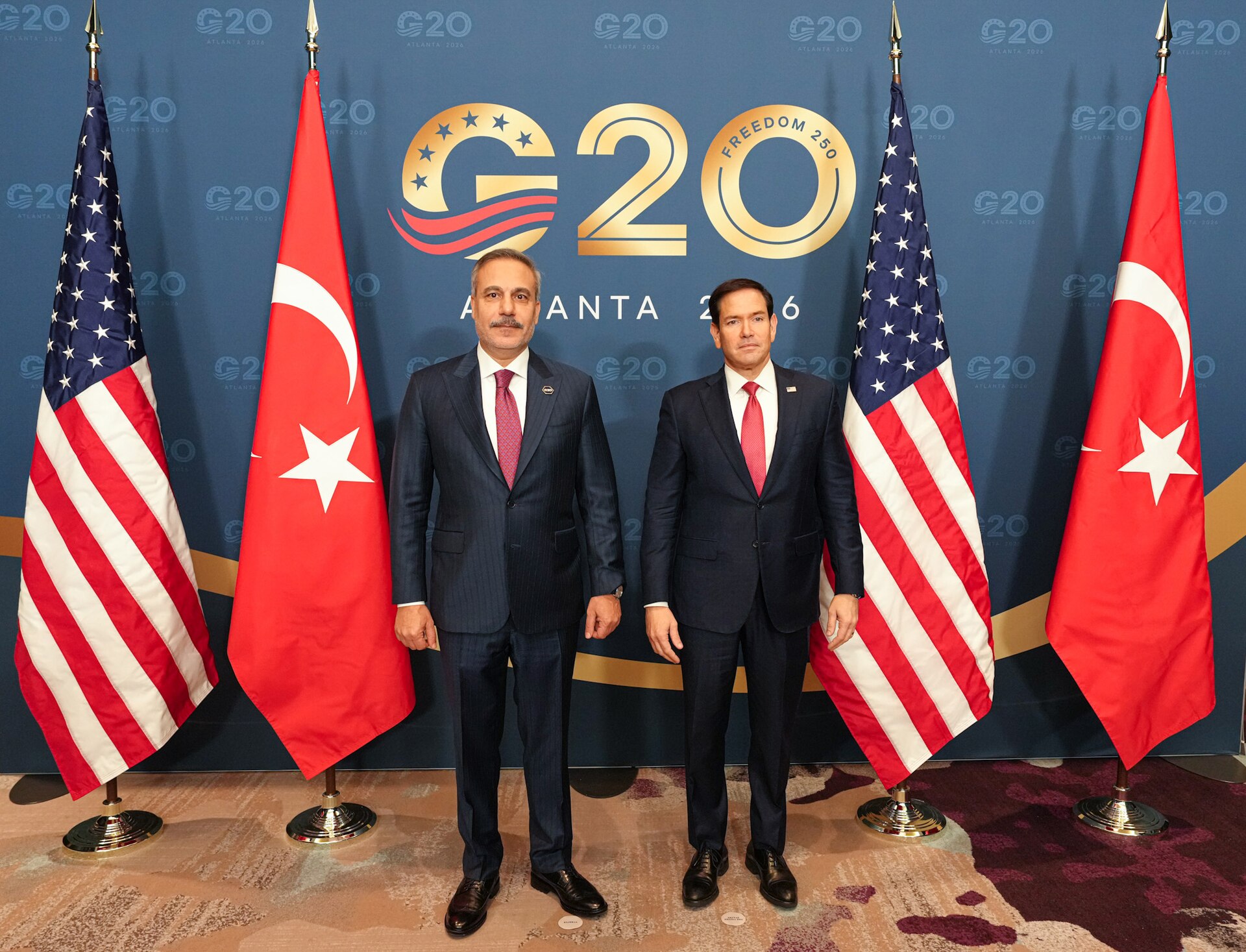
The Qeshm strikes followed a predawn IRGC operation against Bahrain. At approximately 03:49 UTC on 17 November, the IRGC claimed what it called a “precision operation” targeting a US radar system at Sheikh Isa Air Base. US Central Command responded with an unusually blunt rebuttal, calling the claim “FALSE” and stating that “multiple Iranian one-way attack drones launched by the IRGC toward Bahrain were intercepted without any damage to US equipment or injury to American personnel,” according to the CBS News live blog.
IRGC Spokesman Hossein Mohebbi escalated the rhetoric beyond the military exchange. He accused Bahrain of “cooperating in attacks on Iran” and of relying on a US “security bubble,” saying this “casts doubt on Bahrain’s survival in a new regional security order,” according to Iran International. The language marked a shift from targeting a US facility on Bahraini soil to questioning the viability of the Bahraini state itself. Saudi Arabia condemned the IRGC attacks on Bahrain the same day, calling them a violation of international law.
US Secretary of State Marco Rubio called Bahraini Foreign Minister Sheikh Abdullatif bin Rashid Al Zayani on 17 November, condemned the IRGC attacks, and reaffirmed the US commitment to Bahrain’s security, Iran International reported. A third US carrier strike group had arrived in the region the day before, joining what had already been the largest American naval deployment to the Middle East since the conflict began. Rubio made no public statement on the Qeshm strikes.
Did Washington Confirm the Qeshm Strikes?
No. As of publication, no US government entity — not the White House, not the Pentagon, not CENTCOM, not Secretary Rubio — had confirmed or denied the strikes on Qeshm Island.
The silence fits a documented pattern. ABC News reported on 2 November that “unlike previous strikes in response to such attacks, the US airstrikes in recent weeks had not been publicized.” On both 2 November and 7 November, the strikes were acknowledged not by CENTCOM but by President Donald Trump — the first on Fox & Friends, the second while speaking to reporters. CENTCOM declined to comment on both occasions.
Bloomberg, citing Mehr News Agency, described the 17 November event as “the latest exchange of strikes” between the US and Iran. The framing placed the Qeshm operation within the established sequence of strikes on the island, though Bloomberg did not cite any US source for confirmation. The attribution for the 17 November strikes rests entirely on Iranian officials and Iranian state-affiliated media: IRNA, Pars Today, Fars News Agency, and Tasnim News Agency.
The gap between what Iranian media report and what Washington confirms has become a defining feature of the Qeshm operations. Iranian state outlets describe the strikes in detail — locations, explosion counts, damage assessments — while the US side says nothing until, days later, Trump mentions it on morning television. Whether the same sequence will follow for 17 November is unknown.
Where Does Diplomacy Stand After Muscat?
Hours before the Qeshm explosions were reported, Araghchi met Oman’s Busaidi in Muscat in what had been framed as an effort to find terms for reopening the Strait of Hormuz. The meeting ended without agreement, the latest in a series of failed diplomatic contacts stretching back to Qatar’s 48-hour mediation proposal in early November.
“An extremely grave danger to reaching an agreement.”Majed Al Ansari, Qatar Foreign Ministry Spokesman, on the military escalation (CBS News)
Al Ansari’s warning, reported by the CBS News live blog, came before the Qeshm strikes were reported — a measure of how volatile the situation appeared even before the latest military action. The day’s events widened the gap between the diplomatic track and the military one. In addition to the Qeshm strikes and the Sheikh Isa attack, Iran’s Navy claimed a fourth tanker had been struck by mines in the Strait of Hormuz, with the United Kingdom Maritime Trade Operations confirming an attack near Khasab, Oman.
The collapse of the Muscat channel left no publicly known diplomatic track between Washington and Tehran on the Hormuz crisis. Iran has maintained conditions for any resumption of negotiations that the US has shown no sign of accepting. Shipping through the waterway, which the Joint Maritime Information Centre said once carried 138 vessels per day, has fallen to what JMIC describes as “single-digit to low-double-digit” daily transits.
The Pattern of Strikes on Qeshm Island
The 17 November strikes, as reported by Iranian media, followed a pattern of US operations on Qeshm throughout 2026 that have consistently targeted air defense and missile infrastructure on the island.
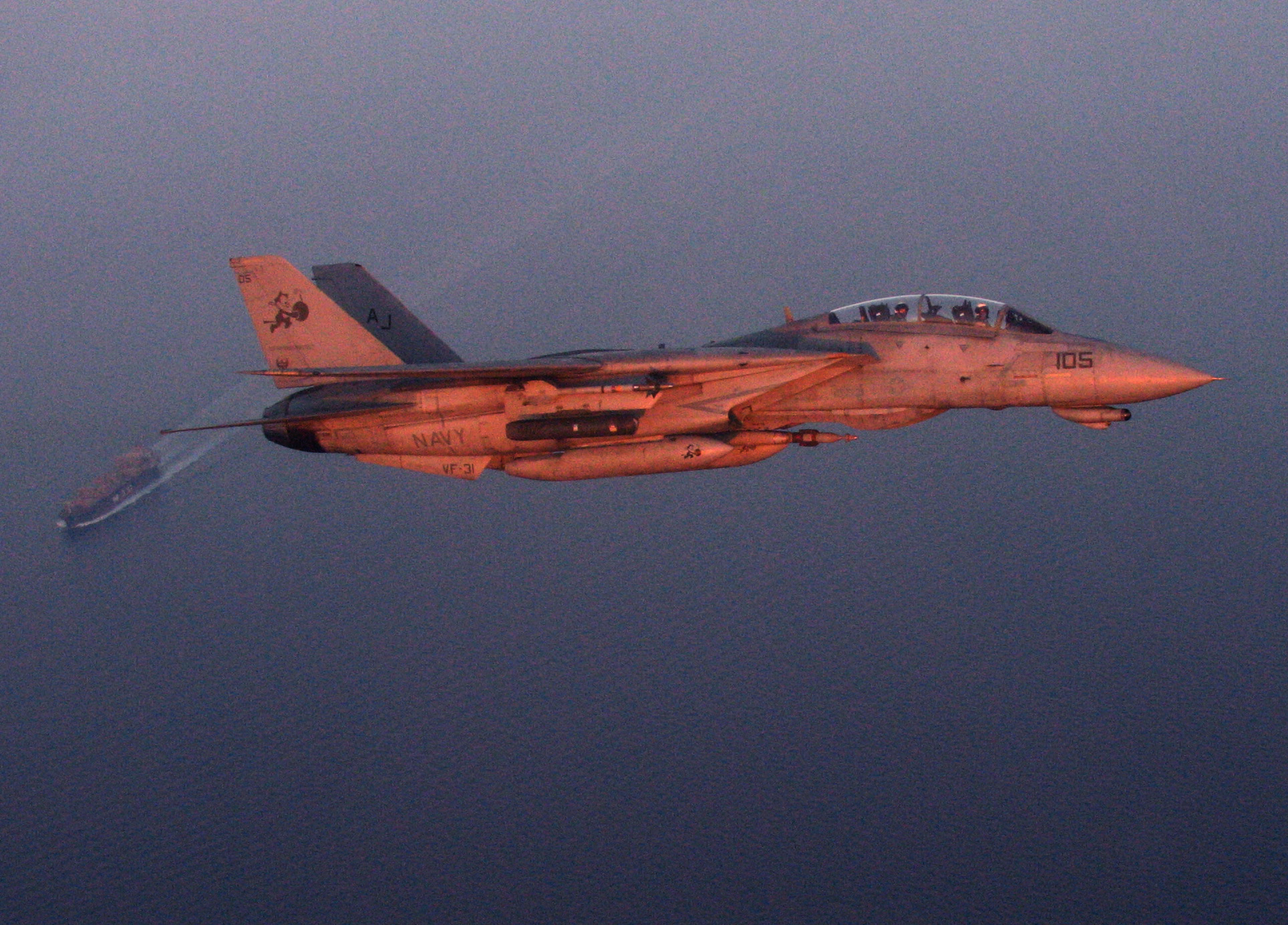
On 2 November, US forces conducted strikes that produced five explosions, according to Iranian state media. Two US officials told NBC News the operation was “defensive,” aimed at missile launchers used to target US aircraft. An anonymous US official told NBC the strikes were “a defensive measure for Iranians using surface-to-air missiles against US assets.” Trump confirmed the operation on Fox & Friends the following day: “just a minor attack.” He added that the US had “watched it get built” over approximately two months before striking it.
Five days later, Trump confirmed new strikes on Qeshm, speaking to reporters in West Palm Beach. CNBC reported that he described them as “minor strikes” on “a little bit of an anti-aircraft device.” CENTCOM declined to comment on both occasions.
Earlier in 2026, Qeshm was the site of a March strike on a desalination plant — which Iran attributed to the US — and a May operation that Trump referred to as a “love tap.” In June, CENTCOM confirmed it had struck a ground control station on the island, according to UPI.
The 17 November strikes, with OSINT613 citing Tasnim’s identification of the Nariman target as an air defense missile launcher, fit the same profile. Each confirmed or reported operation has targeted systems that Iran uses to contest US air operations over the Strait. The US has described them as defensive — removing threats to its own aircraft — while Iran has characterized them as aggression against its sovereign territory. Neither side has shown any inclination to break the cycle. Trump has called the strikes “minor.” Iran’s officials have called them “enemy attacks” on sovereign territory.
Frequently Asked Questions
Where is Qeshm Island and why is it strategically important?
Qeshm is Iran’s largest island in the Arabian Gulf, sitting directly at the narrowest point of the Strait of Hormuz — the waterway through which a major share of globally traded oil historically transited before the conflict disrupted shipping. The island hosts an underground missile facility and an IRGC naval base, according to JFeed, making it a focal point for both Iranian defensive preparations and US targeting operations. Its geographic position allows Iranian forces to monitor and threaten any vessel attempting to transit the Strait, which explains why the island has been the site of repeated military engagements throughout 2026.
What is the current status of the Strait of Hormuz?
Iran first closed the Strait on 18 April 2026. The US imposed a naval blockade beginning 13 April. Iran re-closed the waterway on 12 July, and the IRGC formally declared it closed on 26 October. The Joint Maritime Information Centre reported a pre-crisis baseline of 138 vessel transits per day; that figure has since dropped to what the JMIC describes as “single-digit to low-double-digit” daily transits. The collapse in traffic has forced Saudi Arabia to reroute crude exports through the Red Sea port of Yanbu and the East-West Pipeline system.
Has the US publicly acknowledged previous strikes on Qeshm?
CENTCOM has rarely confirmed individual strike operations on Qeshm Island. The exception was June 2026, when CENTCOM acknowledged a strike on a ground control station, according to UPI. Otherwise, confirmation has come from President Trump, who acknowledged the 2 November operation on Fox & Friends and the 7 November operation while speaking to reporters in West Palm Beach, both after the fact. ABC News reported on 2 November that recent US airstrikes near Hormuz “had not been publicized,” suggesting a deliberate policy of non-disclosure even as Iranian media report the strikes in detail.
What was the IRGC’s claim about a downed US drone on 17 November?
The IRGC claimed it shot down a US MQ-1 drone south of Qeshm Island at approximately 13:45 local time on 17 November, using what the Corps described as “a new, modern air defense system,” according to Tasnim as reported by news.am. The IRGC called it “the 18th US drone” it has downed. The US has not confirmed the loss. The drone platform attribution varies between Iranian sources — in a 7 November incident, the IRGC identified the aircraft as an MQ-1 (via Mehr and IRNA), while the Iranian Army (via IRIB) and NBC News said it was an MQ-9.
What role has Oman played in mediating the Hormuz crisis?
Oman, which shares sovereignty over the Strait of Hormuz with Iran, has traditionally served as an intermediary between Tehran and Western powers — a role it played during the negotiations that led to the 2015 nuclear deal. Foreign Minister Badr al-Busaidi hosted Araghchi in Muscat on 17 November, the latest in a series of Omani-facilitated contacts aimed at restoring shipping through the waterway. The failure of that meeting, combined with the military escalation on the same day, has effectively closed what had been one of the last active diplomatic channels on the Hormuz crisis.
The House of Saud Daily Briefing
Saudi Arabia's news in 3 minutes, every morning. Free. See today's issue