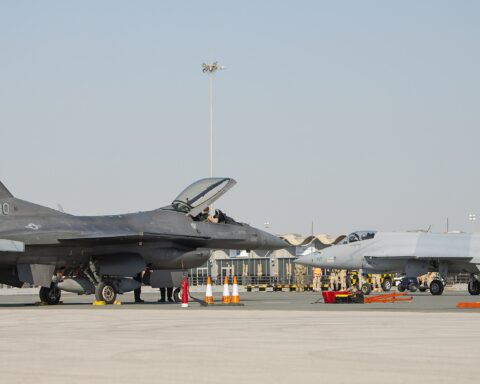
RIYADH — The GCC’s decision to open a forward military command in Kuwait is the first operational deployment under a unified defense framework that has existed, in one form or another, since 1982 — and yet has been activated only three times, each under extraordinary circumstances none of its architects expected to become routine. Whether this fourth activation produces a genuine collective defense posture or dissolves into the kind of institutional pageantry the Gulf has refined over four decades depends on answers that the November 10 announcement did not provide: how many troops, from which countries, under whose command authority, and with what rules of engagement.
The 23rd session of the GCC Joint Defense Council, meeting in Manama on November 10, approved “the opening of an Advanced Command for the Unified Military Command in the State of Kuwait and the allocation of appropriate forces to it,” according to the GCC Secretariat’s official statement. That language — “appropriate forces” — was the only specification offered. No troop numbers were provided. No contributing nations were named. No timeline for the facility to become operational was set. No location within Kuwait was identified.
The House of Saud Daily Briefing
Saudi Arabia's news in 3 minutes, every morning. Free. See today's issue
The question the decision raises is not whether the GCC needs collective defense. Iran’s army claimed it struck Ali Al-Salem Air Base in Kuwait eight days after the Manama session, targeting Patriot systems and UAV and missile launch platforms, as Kuwait’s General Staff said its air defenses intercepted hostile drones. The question is whether the GCC’s members — six states with divergent threat perceptions, competing hedging strategies, and a history of treating sovereignty as non-negotiable — can build something that works under fire, or whether the Kuwait forward command is another entry in a catalog of institutional commitments that look serious in communiqués and evaporate on contact with reality.
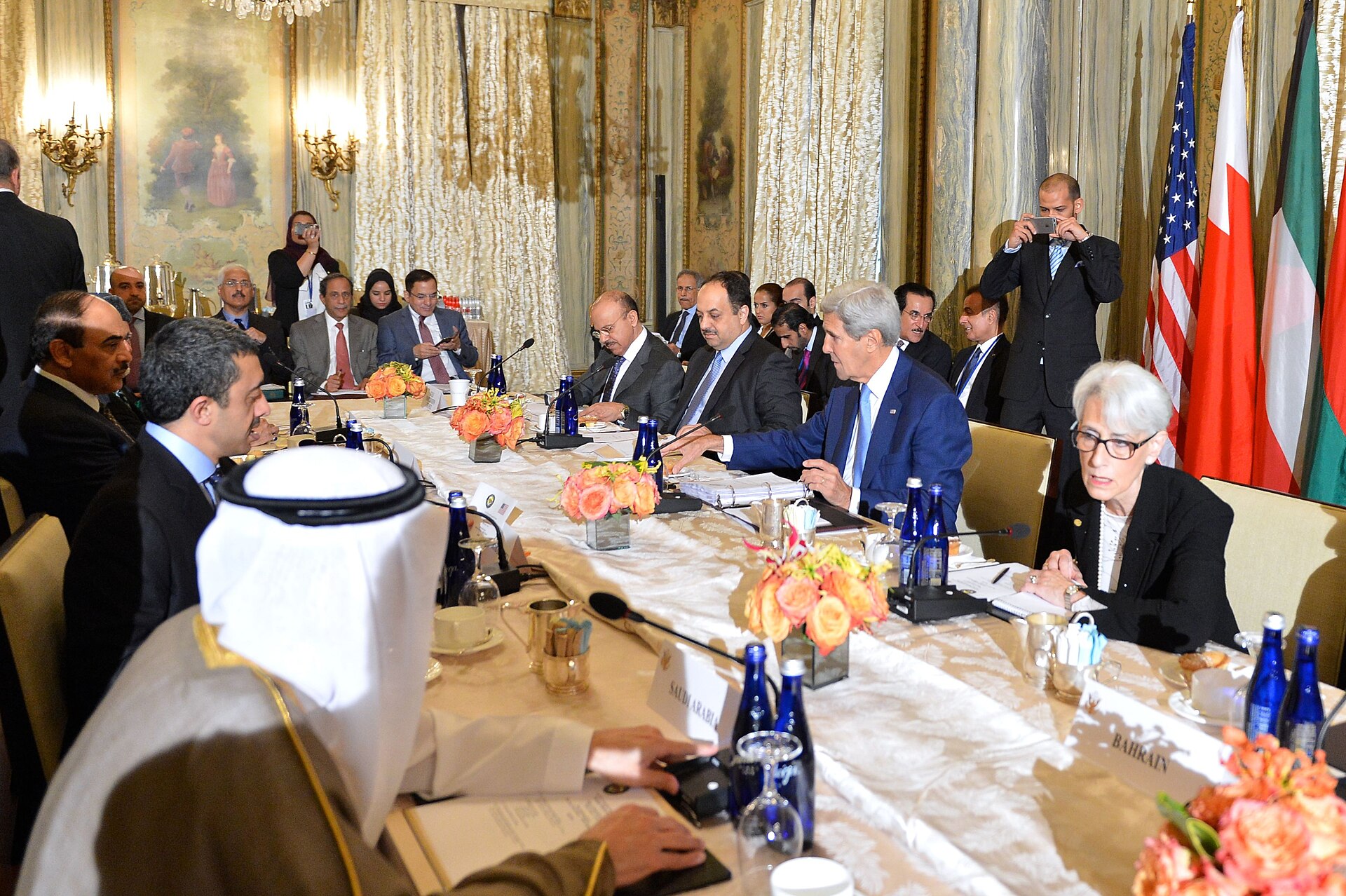
Table of Contents
- What the GCC Actually Decided
- From Peninsula Shield to Unified Military Command: A Force That Rarely Fights
- Why Kuwait, and Why Now?
- What Does a Forward Command Without Defined Forces Actually Do?
- The Makkah Pact and the Problem of Parallel Architectures
- Can the GCC Overcome Its Sovereignty Problem?
- Tehran’s Response — and Lack of One
- The Saudi Dilemma: Share the War or Own the Brand
- Frequently Asked Questions
What the GCC Actually Decided
The formal language was precise in its commitment and vague in its detail. The GCC Secretariat’s November 10 statement authorized “the opening of an Advanced Command for the Unified Military Command in the State of Kuwait and the allocation of appropriate forces to it.” The session was chaired by Bahrain’s Defense Minister Lt Gen Abdullah bin Hassan Al-Nuaimi in Manama. Saudi Defense Minister Prince Khalid bin Salman attended and announced that Saudi Arabia would host the next Joint Defense Council meeting.
GCC Secretary-General Jasem Mohamed Albudaiwi framed the decision as implementing directives from an extraordinary leaders’ summit in Jeddah in April 2026 — a summit convened as Iran’s attacks spread beyond Saudi Arabia to other Gulf states. Albudaiwi said cooperation between Gulf militaries demonstrated that “the security of member states was a shared responsibility.” He also condemned Iranian attacks on Saudi Arabia as “a flagrant violation of their sanctity.”
A GCC armed forces chiefs-of-staff meeting in Manama on October 29 preceded the November 10 ministerial session, suggesting the Kuwait decision had been worked through military channels before ministers formalized it. The April summit had called for stronger coordination and “accelerated” completion of a joint missile warning system.
What was absent from the announcement was as telling as what was present. Neither the GCC Secretariat, The National, nor Euronews — the outlets that covered the session most closely — could report how many troops would be assigned, what their rules of engagement might be, or when the command would begin operating. Al-Monitor’s Beatrice Farhat noted it remained unclear whether the Kuwait post would function “as an operational hub or as a facility to jointly monitor threats.” The difference between those two things is the difference between a war room and a conference room.
From Peninsula Shield to Unified Military Command: A Force That Rarely Fights
The force that the Kuwait forward command will serve was established in 1982, initially as the Peninsula Shield Force — roughly 5,000 troops, overwhelmingly Saudi, based at Hafar Al-Batin near the Iraqi border. It now fields approximately 40,000 personnel organized in two brigades. At the Al-Ula summit on January 5, 2021, it was renamed the Unified Military Command, and its headquarters opened in Riyadh that same year.
In 44 years, the force has been activated three times. Each activation was prompted by a crisis that left no room for ambiguity — an invasion, a pending invasion, an internal uprising that one member state decided it could not tolerate. The pattern is instructive: the GCC’s joint military instrument moves only when a single member with overwhelming capacity decides to use it.
| Year | Deployment | Context |
|---|---|---|
| 1991 | Kuwait liberation | Iraqi invasion; US-led coalition |
| 2003 | Pre-Iraq War Kuwait | Defensive positioning ahead of US invasion of Iraq |
| 2011 | Bahrain | Arab Spring protests; Saudi-led intervention |
The GCC’s joint military command was formally established in December 2013, two years after the Bahrain deployment. The 2021 rename and Riyadh headquarters were supposed to signal a new seriousness. No confirmed operational deployment has occurred since. A Chatham House assessment, referenced in Khaleej Times in September 2026, found the Peninsula Shield Force lacked “collective defence capability.”
Former Saudi officer Abdullatif Al Mulhem told Asharq Al-Awsat that the November decision’s real value “lies in the GCC states strengthening the organizational structure of joint military action through an advanced command.” That is a carefully hedged endorsement — it praises the structure, not the fighting capacity. Dr. Ayed Al-Manna, a political researcher also quoted by Asharq Al-Awsat, was blunter: “This step should have been taken a long time ago to bolster the security of all GCC states.”
Why Kuwait, and Why Now?
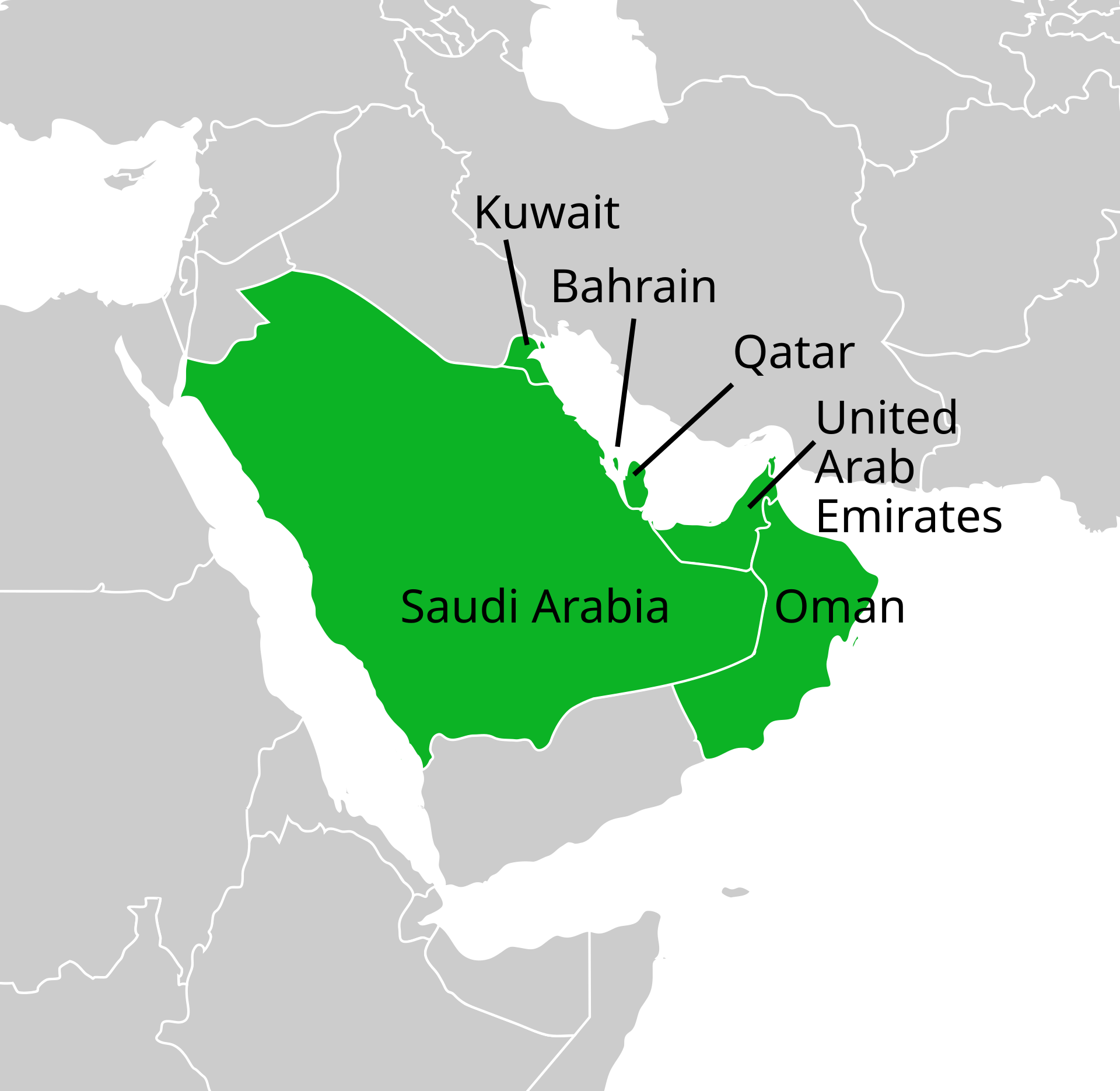
Kuwait was chosen because Iran’s attack campaign spread from Saudi Arabia to the entire Gulf littoral, hitting Kuwait’s desalination plants in July 2026 and placing US military installations at Ali Al-Salem in Iran’s crosshairs. Kuwait sits at the northern edge of the GCC, sharing a border with Iraq and lying within Iran’s operational range — the state most exposed after Saudi Arabia itself.
The timing is not abstract. Iran’s expansion of its target set beyond Saudi Arabia — to Kuwait, Bahrain, and periodically Qatar and the UAE — has made the war’s geography a GCC-wide problem in a way that the first months of the conflict, when Saudi Arabia absorbed most strikes, did not.
Kuwait’s vulnerability is specific and acute. Iran struck Kuwaiti power and desalination plants on July 17 and 18, 2026, injuring several firefighters and a worker. The attacks continued for a fourth straight day on the night of July 20. Approximately 90 percent of Kuwait’s drinking water comes from desalination plants. ACLED data covering February 28 through July 30 found that energy facilities accounted for 48 percent of Iran’s attacks on non-military infrastructure across GCC states, with Iraqi militia attacks concentrated in Kuwait.
On November 18 — eight days after the Manama decision — Iran’s army claimed it struck Ali Al-Salem Air Base, targeting “Patriot air defense systems and UAV and missile launch platforms.” Kuwait’s General Staff said its air defenses intercepted hostile drones. The base hosts US military assets — the attack’s framing by Tehran was explicitly about degrading American capacity, but the reality was Iranian ordnance falling on Kuwaiti territory.
Middle East Eye raised the practical question: placing a command center in a frontline state under sustained attack creates its own operational risks. Muhanad Seloom, a nonresident fellow at the Middle East Council on Global Affairs, offered a different reading: “It puts a unified command at the top of the Gulf, in Kuwait in particular. That means they are establishing a… permanent presence there.” He added that “having a unified command sends a message to Iran and also Iraq, and reassures GCC countries that they are ready for all possible scenarios.”
Kuwait itself has been unequivocal about where it stands. In October 2026, Kuwait said Saudi security is “an inseparable part of the security” of Kuwait and the GCC — language that tracked with the solidarity statements issued by Qatar and the UAE after the KKIA strikes but went further in binding Kuwait’s national interest to Saudi Arabia’s war.
What Does a Forward Command Without Defined Forces Actually Do?
Without specified troop contributions, rules of engagement, or an operational date, the command currently functions as an institutional statement rather than a deployable capability. What it does in practice depends on what forces member states actually assign — a question the November 10 announcement deliberately left open.
The gap between the announcement and anything resembling operational capacity is where this decision will either prove its worth or confirm the skeptics. The GCC Secretariat used the phrase “appropriate forces” — a phrase that commits every member state and no member state simultaneously. No country has named units, equipment, or personnel contributions. No opening date has been set. No base or facility within Kuwait has been identified.
The question of command authority is unresolved. The Unified Military Command is headquartered in Riyadh. The Kuwait post is explicitly a subordinate forward command, not a replacement. But no source defines whether the Kuwait forward commander takes operational orders from Riyadh or possesses autonomous rules of engagement — a distinction that matters enormously when incoming Iranian drones require a response measured in seconds, not in committee deliberations routed through a capital 800 kilometers away.
Rashid Al-Mohanadi, Vice President of the Center for International Policy Research, described the decision as “another step towards Gulf states taking greater collective responsibility for their security.” But he added a qualifier that deserves as much attention as the endorsement: “The Kuwait command’s value will depend on implementation and on how it connects with the region’s other security partnerships.” Al-Mohanadi also noted that “Gulf states themselves do not have identical interests.”
Albert Vidal, a Gulf analyst at the International Institute for Strategic Studies, suggested the decision aligns with American preferences: “In fact, I would argue that the US would like to see GCC countries work more closely and share more information with each other directly, which would ultimately strengthen their military effectiveness.” That framing — the forward command as a step toward the kind of burden-sharing Washington has pushed for — reframes the Kuwait decision less as a rupture from US dependence and more as a complement to it.
The Makkah Pact and the Problem of Parallel Architectures
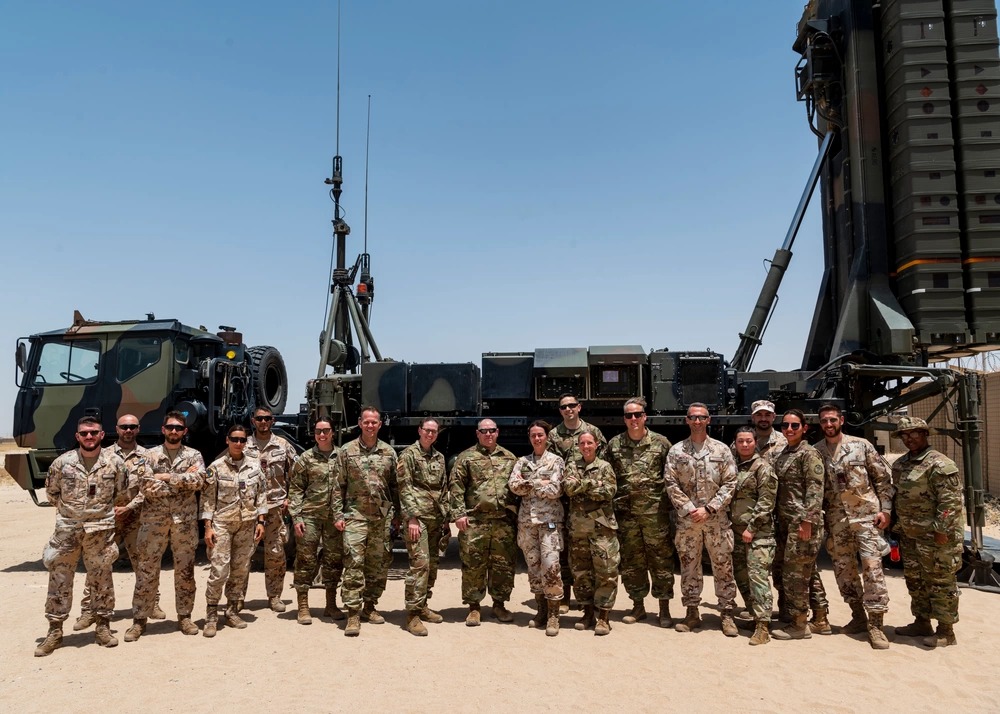
The Kuwait forward command does not exist in isolation. It sits alongside a growing number of overlapping security frameworks, each with different membership, different obligations, and different degrees of operational reality.
The Makkah Joint Defense Agreement — signed on August 7, 2026, by Saudi Arabia, Turkey, and Pakistan — treats an attack on any signatory as an attack on all. Turkey’s parliament ratified it on November 5; Pakistan ratified on October 23. The pact operates entirely outside the GCC structure — it includes a NATO member and a nuclear-armed South Asian state while excluding four of the six GCC members.
Saudi Arabia also launched a multinational maritime defense coalition for the Red Sea, Bab al-Mandab, and Gulf of Aden on July 30, 2026; 43 of 51 invited countries attended, and by mid-August 15 had signed the declaration and 13 had formally joined. The UAE and Oman did not sign. Meanwhile, the GCC states and Jordan issued a joint statement on July 23 condemning Iranian attacks since February 28, invoking UN Security Council Resolution 2817 and affirming self-defense under Article 51.
The proliferation of frameworks raises a question none of them answers: which one commands the response when Iranian drones cross into Kuwait? The Unified Military Command in Riyadh? The Makkah Pact’s as-yet-unestablished defense secretariat, whose secretary-general met Saudi FM Prince Faisal in Riyadh on November 21? The bilateral defense relationship Kuwait already maintains with the United States through facilities like Ali Al-Salem?
Seloom framed the GCC command as complementary rather than competitive: “I don’t see it as a response to US failure, but as a wake-up call for the GCC that they need to take matters into their own hands.” But the existence of four or five parallel defense commitments — GCC, Makkah Pact, Red Sea coalition, bilateral US basing, plus whatever Jordan’s engagement with the Makkah Alliance produces — creates an architecture problem that no single decision in Manama can resolve.
Can the GCC Overcome Its Sovereignty Problem?
Based on historical precedent, the answer is probably no — not for a standing multinational force. The Stimson Center labels Gulf security integration “a geopolitical mirage.” The more limited question is whether Kuwait-specific threat monitoring and intelligence sharing — a narrower ask than a deployable force — can survive the sovereignty reflexes that have defeated broader ambitions before.
The Stimson Center’s 2026 analysis — titled “The Sovereignty Paradox: Why GCC Security Integration Remains Elusive” — provides the most direct answer available. Full GCC security integration, the report concluded, is likely to remain “a geopolitical mirage” because deeply ingrained sovereignty concerns and divergent hedging strategies will “continuously override collective integration.” The center expects success only in “issue-specific, minilateral cooperation, such as targeted intelligence sharing and localized de-escalation efforts.”
The sovereignty problem is not theoretical. The UAE and Saudi Arabia experienced a rupture over Yemen that CNN reported as the end of their partnership “late last year,” driven by Abu Dhabi’s backing of the Southern Transitional Council. The UAE did not sign the Red Sea maritime coalition in July 2026. Oman has maintained its neutral diplomatic stance throughout the conflict, keeping channels open with Tehran that other GCC members cannot — or will not.
How these two states participate in a Kuwait forward command is unaddressed in any reporting on the November 10 decision. The UAE’s absence from the Red Sea coalition suggests limits to its appetite for Saudi-led collective security ventures. Oman’s neutrality is an asset for mediation — it has hosted multiple rounds of Iran-related talks, including the Araghchi-Busaidi channel — and a structural obstacle to unified military postures. Neither state has publicly commented on the Kuwait forward command beyond the consensus language of the Manama session.
Russia and China vetoed a Bahrain-drafted Security Council resolution on Hormuz shipping in April 2026, prepared with GCC states and Jordan — a failure that underscored the limits of multilateral diplomacy and reinforced the case for Gulf self-reliance. The question is whether institutional self-reliance can survive the centrifugal forces that the Stimson Center identified.
The 46th GCC summit in Bahrain in December 2025 ended with the Sakhir Declaration, which treated any infringement on a member state’s sovereignty as a threat to collective security. That language was written before Iranian attacks spread to Kuwait’s water infrastructure and Bahrain’s military facilities. Bahrain has intercepted at least 188 ballistic missiles and 468 drones since the war began — the last cumulative figures reported by the Bahrain Defence Force (April 2026), since grown — that make the abstract language of the Sakhir Declaration feel urgently concrete. Whether concrete enough to override what the Stimson Center calls the GCC’s “deeply ingrained” sovereignty reflexes is the central question.
Tehran’s Response — and Lack of One
Iran has not issued a formal response to the GCC’s Kuwait forward command decision. No statement from IRNA, Tasnim, or Mehr News addressing the November 10 announcement has been found.
The silence permits interpretation. Iran’s pattern has been to respond aggressively to US-GCC joint military statements while treating intra-GCC defense initiatives with less rhetorical urgency — as though the GCC’s own military coordination is not taken seriously enough to warrant a formal objection. When the US and GCC issued a joint statement in June 2026, Iran’s foreign ministry called it “interventionist, irresponsible, and provocative,” urging Gulf states to end US basing and pursue regional security without foreign forces. A GCC-only defense decision apparently did not clear the same threshold.
Iran’s actions speak more plainly than any statement would. The army’s claim on November 18 of striking Ali Al-Salem — framing Kuwait’s US-hosting role, not its GCC membership, as the casus belli — suggests Tehran views the forward command through the lens of American force posture rather than Gulf collective defense. Iran’s foreign ministry has previously called on GCC states and Jordan “to explain CENTCOM’s claim of their direct participation in strikes” — language designed to split Gulf solidarity by making each state’s US relationship the liability rather than its GCC membership.
The IRGC’s November warning to Bahrain that the al-Khalifa dynasty’s survival was “at risk” followed the same logic: target the smallest, most exposed GCC member with threats designed to make collective defense feel like collective exposure. If hosting a forward command makes Kuwait a more explicit target — and the November 18 Ali Al-Salem strike suggests it already is — the GCC’s ability to protect that facility becomes a test of whether collective defense is real or aspirational.
The Saudi Dilemma: Share the War or Own the Brand
Saudi Arabia chairs the Unified Military Command from Riyadh. The Kuwait forward command is subordinate to that headquarters. Prince Khalid bin Salman’s announcement that the kingdom will host the next Joint Defense Council meeting reinforced Riyadh’s centrality to GCC defense decisions.
The dilemma is structural, and it predates this war. Saudi Arabia is absorbing the bulk of the Iran war’s costs — military, economic, and reputational — while the GCC brand provides the institutional framing that distributes political legitimacy across six capitals. The Kuwait forward command could change this by making other GCC states operational contributors, not just rhetorical supporters. Or it could leave the actual fighting where it has been since February 2026: predominantly a Saudi-led campaign with coalition air assets, backed by the Makkah Pact’s Turkish and Pakistani commitments, while the GCC provides the communiqué architecture.
Trump’s decision to delay strikes on Iran and the absence of a US military backstop for the Saudi Houthi campaign make GCC burden-sharing more than a diplomatic nicety. If the forward command produces troops, air defense assets, and intelligence integration from non-Saudi GCC members, it changes the calculus of a war that Saudi Arabia has been fighting with one coalition it built outside the GCC (the Makkah Pact) and one it inherited within it (the Unified Military Command). If it produces another headquarters building with a flag and a rotating staff, it changes nothing.
Dr. Al-Manna described the step as “both necessary and urgent to guarantee collective Gulf security through the presence of forces tasked with protecting GCC states, independent of any internal disputes or differences.” The phrase “independent of any internal disputes” does a great deal of work in that sentence. The GCC’s internal disputes — over Yemen, over the UAE’s hedging, over Oman’s neutrality, over Qatar’s separate channels with Tehran — are not incidental to the defense question. They are the defense question.
Seloom offered the most grounded assessment: “I don’t think it is a signal of an imminent Iranian strike, but part of a larger GCC strategy to have enough deterrents against Iran.” The word “enough” carries the weight. What constitutes enough deterrence when Iran is mounting about 14 Hormuz attacks in a single month, when Bahrain has intercepted at least 188 ballistic missiles and 468 drones since the war began (Bahrain Defence Force, April 2026), and when Kuwait’s desalination plants have been hit on consecutive nights, is a question the GCC’s institutional architecture has never had to answer operationally. The Kuwait forward command is the institution’s first chance to try.
Frequently Asked Questions
Where will the GCC forward command be located within Kuwait?
No specific base or facility has been named. Reporting from The National, Euronews, and the GCC Secretariat confirms Kuwait as the host country but provides no further geographic detail. Kuwait hosts several military installations, including Ali Al-Salem Air Base, Camp Arifjan, and Camp Buehring, but none has been publicly linked to the forward command. The absence of a named location has led some analysts to question whether the facility has advanced beyond the approval stage.
How does the Kuwait forward command relate to the US military presence in Kuwait?
The relationship is undefined in official statements. Albert Vidal of the IISS suggested the US “would like to see GCC countries work more closely and share more information with each other directly,” implying Washington views the initiative favorably. Kuwait has hosted US forces since 1991, and Camp Arifjan remains one of CENTCOM’s largest forward bases. Iran’s framing of its November 18 Ali Al-Salem strike explicitly targeted US assets on Kuwaiti soil, raising the possibility that a GCC command co-located near US facilities could become a compound target — or that physical separation between the two would be a deliberate choice to insulate the GCC framework from US-Iran escalation dynamics.
Have any GCC member states publicly objected to the forward command?
No public objections have been reported. The decision was announced as a consensus outcome of the Joint Defense Council. However, the UAE’s refusal to sign the Red Sea maritime coalition in July 2026 and Oman’s consistent neutrality during the conflict suggest that unanimous formal approval does not guarantee equal operational commitment. The Stimson Center’s analysis of GCC defense integration noted that divergent hedging strategies among member states have historically undermined collective commitments regardless of summit-level consensus.
The House of Saud Daily Briefing
Saudi Arabia's news in 3 minutes, every morning. Free. See today's issue