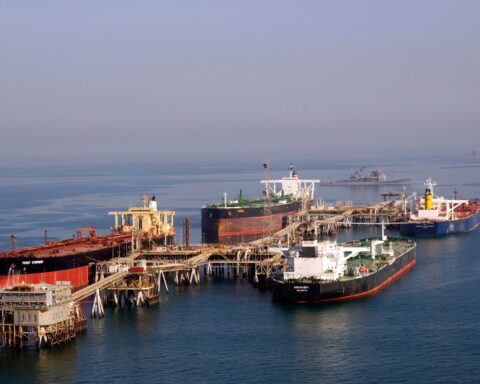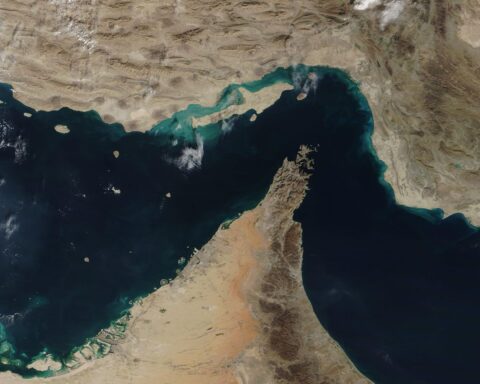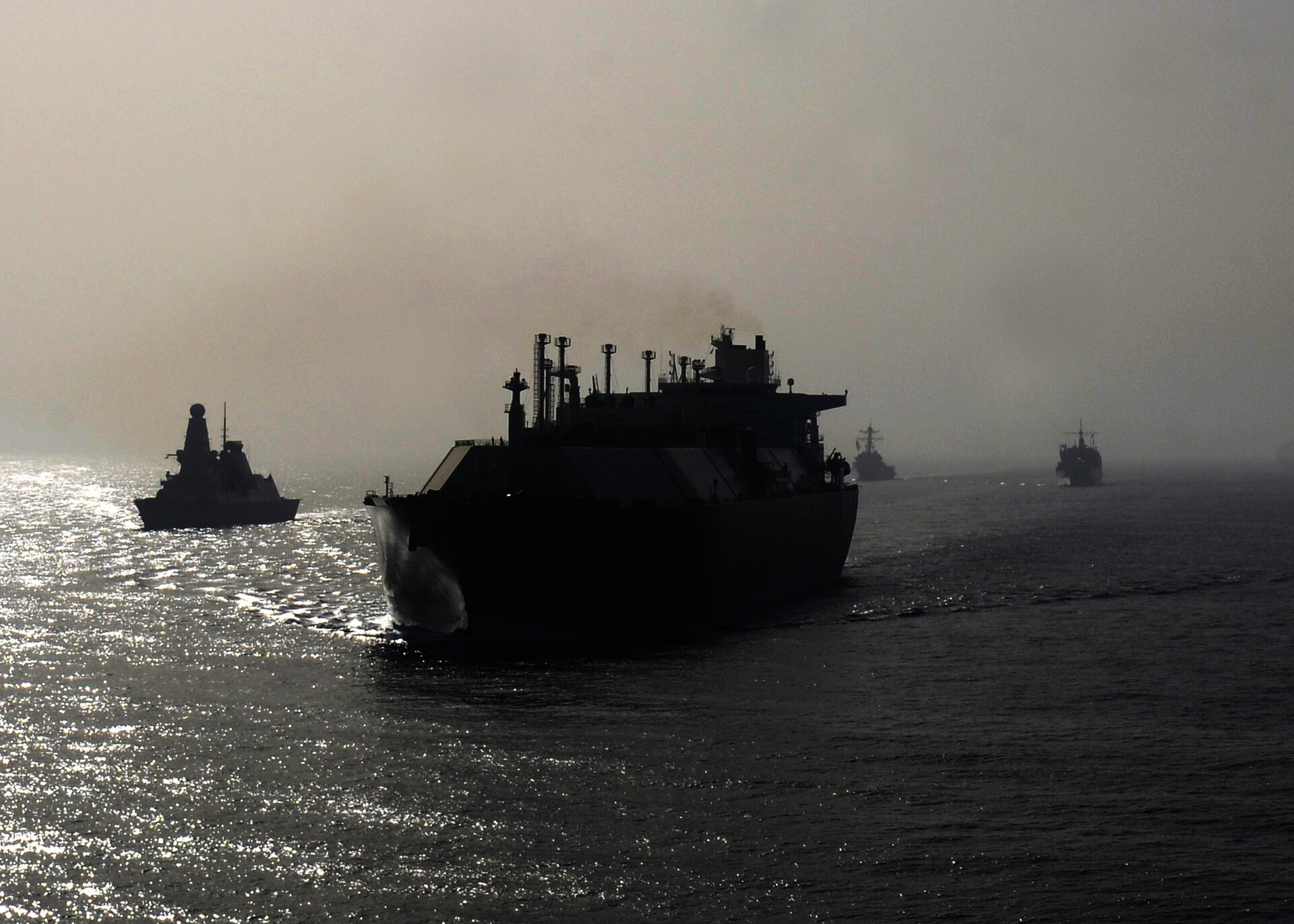

ABU DHABI — ADNOC’s Petroleum Ports Authority imposed 90-day access restrictions on five of the UAE’s crude export terminals — Ruwais, Jebel Dhanna, Das Island, Zirku, and Mubarraz — requiring all tankers regardless of flag to submit documentation at least 72 hours before arrival, Bloomberg reported on November 25. The notice, issued by ADNOC’s Petroleum Ports Authority on November 23, coincided with an escalating sequence of attacks on Gulf shipping, including Iran’s Islamic Revolutionary Guard Corps claiming on November 26 that two oil tankers exploded after hitting sea mines north of Oman’s Khasab port, and UK Maritime Trade Operations separately reporting an explosion near a tanker approximately 50 nautical miles west of Dubai.
The terminal notice came after a month in which attacks on UAE-linked shipping accelerated to their highest pace since the Iran conflict began in February 2026. ADNOC reported as of August 7 that 15 of its vessels had been attacked since the war started, with one fatality and 20 injuries, according to an ADNOC press statement cited by Gulf News. In November alone, four separate incidents struck tankers either owned, managed, or chartered by companies operating in UAE waters — and the body of a seafarer missing since the November 17 attack on the tanker Navig8 Messi washed up off the coast of Ras Al Khaimah around November 25–26, Jordan’s Foreign Ministry confirmed, according to IBTimes Australia.
The House of Saud Daily Briefing
Saudi Arabia's news in 3 minutes, every morning. Free. See today's issue
Table of Contents
What Did ADNOC’s Terminal Restrictions Require?
The 90-day notice applied to five terminals that handle a substantial share of the UAE’s crude and condensate exports. Tankers bound for Ruwais, Jebel Dhanna, Das Island, Zirku, or Mubarraz must now submit documentation at least 72 hours before arrival, regardless of their flag state, Bloomberg reported. The restrictions applied to all commercial vessels seeking to load at ADNOC facilities.
Burak Cetinok, head of research at Arrow Shipping & Energy, described the restrictions as “largely a security measure following the recent attacks on vessels in the region.” He added that he saw no direct implications for Hormuz flows or legitimate tanker operations, but that the bigger issue remains the renewed disruptions in the strait itself, according to Bloomberg.
The measures amounted to a formal acknowledgment of conditions that the shipping industry had been pricing in for weeks. Bloomberg’s base-case scenario has the Strait of Hormuz “essentially closed through 2027.” Hapag-Lloyd, one of the world’s largest container shipping lines, said rerouting ships around the strait costs the company more than €60 million per week, the Noctaaa newsletter reported on November 27.
The 90-day notice marked a shift from incident-by-incident responses to a systematic defensive posture across ADNOC’s export chain. The company had previously addressed attacks through operational adjustments and diplomatic statements — an August press statement catalogued 15 vessel strikes and the UAE’s foreign ministry issued escalating condemnations — but the new restriction covering all five terminals and every flag state formalized a defensive footing that individual incident reports had only implied. ADNOC’s export terminals sit at the end of a supply chain that depends on transit through waters Iran has claimed as a theatre of operations since the conflict began nine months ago.
IRGC Claims 2 Tankers Hit Mines Off Khasab
Iran’s IRGC navy claimed on Thursday, November 26, that two oil tankers exploded and caught fire after hitting sea mines north of Oman’s Khasab port while attempting to cross the Strait of Hormuz via what the IRGC called an “unauthorized route,” according to a statement carried by Tasnim News Agency. Reuters and Iran International reported the claims the same day.
One of the two tankers was described by the IRGC as a supertanker carrying more than 2 million barrels of crude oil, left burning after the mine detonation. Neither vessel was named and no casualties were reported, Reuters reported via the Times of Israel on November 26. The absence of vessel names or independent footage made the claims difficult to verify, a pattern that has repeated across multiple IRGC mine announcements in November.
The IRGC said the tankers had switched off their navigation systems and were relying on US fighter jets for cover while using an “unauthorized route.” Reuters noted that maritime agencies “do not always align” with IRGC claims and that the November 26 mine claims were not independently verified.
IRGC spokesman Hossein Mohebbi was reported in state media as describing the force’s use of heavy firepower to keep the strait closed in order to pressure the US economy and defend Iran, according to Reuters. The language echoed claims the IRGC made on November 19, when it said two supertankers had hit mines, and again on November 27, when it described another tanker explosion in the strait. In each instance, the IRGC described the vessels as having entered mined waters after switching off navigation systems.
A Reuters investigation published on October 14 quoted two senior Iranian officials saying Iran had changed tactics to intensify attacks on vessels, aiming to “frustrate American efforts to reduce energy prices.” The officials said the campaign was coordinated “at the highest levels of Iran’s leadership,” Reuters reported, as cited by Gulf News on November 11.
What Did the UKMTO Report Near Dubai?
Separately from the Khasab mine claims, UK Maritime Trade Operations reported on November 26 that an explosion caused by an unknown projectile occurred near a tanker approximately 50 nautical miles west of Dubai, according to investinglive.com. The crew were described as “safe and accounted for.” No damage was confirmed and no attacker was named.
The position — 50 nautical miles west of Dubai — placed the explosion in waters routinely used by tankers moving between UAE loading ports and the Strait of Hormuz, well west of the Khasab area where the IRGC claimed its mines had been laid. UKMTO’s report contained no claim of responsibility and no identification of the weapon used. The incident was not attributed to Iran or to any other specific actor.
Brent crude settled at $96.57 on November 26, up $1.96 or 2.1%, driven by the Houthi claim of an attack on Saudi Arabia’s Jazan refinery and Iran’s mine claims near Hormuz, Bloomberg reported via nglobenews on November 27. The single-day gain added to a rally that had already pushed Brent up 8.1% in four days after Houthi attacks on Saudi refineries.
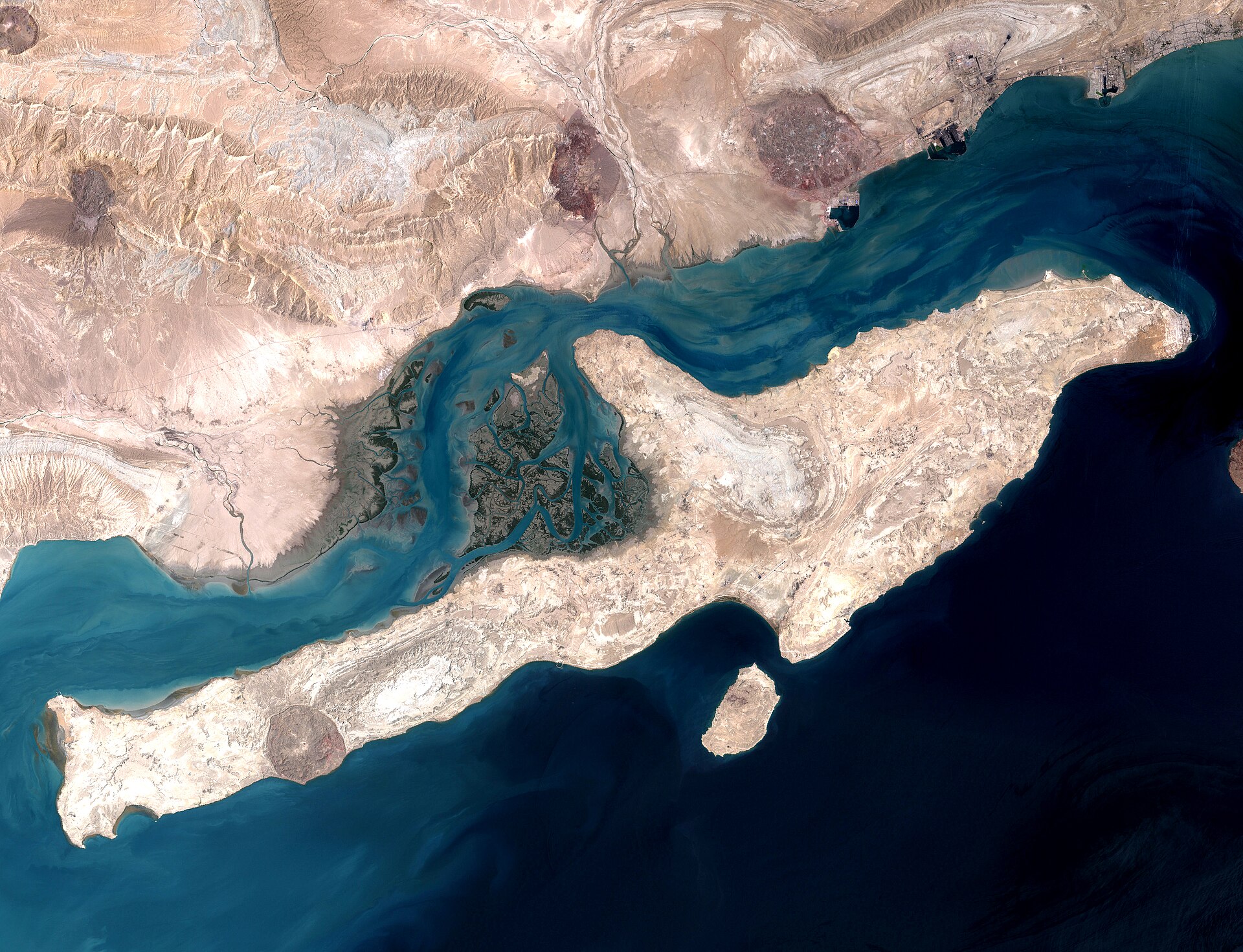
November’s Toll on UAE-Linked Shipping
The ADNOC restrictions and the latest IRGC claims capped a month of sustained targeting of tankers in or near UAE waters. On November 10, the VLCC Fujairah Energy — an ADNOC Logistics & Services-managed tanker linked to South Korea’s Sinokor, with a deadweight tonnage of 299,999 — was hit in UAE territorial waters. Four crew members were injured, Riviera Maritime Media reported on November 12.
The following day, the VLCC Dominica Prosperity (297,274 dwt, managed by Sinokor and Anglo-Eastern) was attacked 14 nautical miles northwest of Ras Al Khaimah. Twenty-two crew members were evacuated after an engine room fire, according to Riviera Maritime Media.
On November 17, the tanker Navig8 Messi — majority-owned by ADNOC Logistics & Services, registered in Liberia, 75,681 dwt — was attacked 13 nautical miles north of Khasab, Oman. One crew member went missing and 11 were injured, the Maritime Executive reported on November 18. The body of the missing seafarer was found off the coast of Ras Al Khaimah around November 25–26, Jordan’s Foreign Ministry confirmed, according to IBTimes Australia on November 28.
On November 22, three tankers were attacked “in quick succession” in the Strait of Hormuz, nglobenews reported. UKMTO had already reported two tankers hit by projectiles near Hormuz on November 21, and the IRGC claimed an LNG carrier hit a mine on November 25.
The cumulative effect showed in transit volumes. Kpler data showed Hormuz weekly transits falling from 217 at the start of November to 147 by November 23, according to IBTimes Australia. Tanker crossings averaged 11 per day in the week ending November 21, compared with about 50 per day before the war, Kpler reported. The International Maritime Organization had documented 141 attacks on commercial ships in the area since the conflict began in February, according to Gulf News on November 11.
The International Maritime Organization’s confirmed incident list recorded 25 seafarer fatalities as of November 26. The Noctaaa newsletter put the total at more than 40 on November 27, a figure that may include deaths not yet formally confirmed by the IMO. Reports of crews “refusing to return to sea at all” have spread across the shipping industry, the Noctaaa newsletter reported. The human cost extended beyond the tanker crews themselves: the Navig8 Messi sailor whose body Jordan’s Foreign Ministry confirmed had been found near Ras Al Khaimah became the latest individual fatality in a campaign that has reshaped the economics and geography of Gulf oil shipping.
Hormuz oil flows had already fallen to 10 million barrels a day as November attacks mounted. Iran’s army ordered the strait closed further each day until conditions were met, and ADNOC’s terminal restrictions suggested the UAE’s national oil company was now planning for a prolonged period of disrupted operations rather than waiting for the strait to reopen.
Frequently Asked Questions
Has Iran attacked UAE oil infrastructure on land during the conflict?
Iran struck the UAE’s Habshan gas facilities in Abu Dhabi on March 19, 2026, in what the UAE Ministry of Foreign Affairs called a “terrorist attack” that “represents a direct threat to the security and stability of the region,” according to ABC News. The Kpler analyst Matt Smith estimated that more than 1.25 million barrels per day of regional refining capacity plus natural gas output were affected by the Habshan strike, ABC News reported. Iran-linked drones also hit the Fujairah Oil Industry Zone on March 9 (storage fire after air defense interception), March 16 (ADNOC crude loading suspended, Brent rose approximately 3.3%), and May 4 (three Indian nationals hurt), according to Reuters, CNBC, and Al Jazeera respectively.
What did the UAE say after the July 14 cruise missile strikes on its tankers?
Two ADNOC VLCCs — the Mombasa and the Al Bahiyah — were struck by Iranian cruise missiles while transiting the Strait of Hormuz on July 14, 2026, killing one Indian crew member and wounding eight (six Indian, two Ukrainian), according to Reuters and gCaptain. The UAE Ministry of Defence called it “a serious violation of international law” and said the UAE “reserves its full right to respond to this escalation and to take all necessary measures to protect its territory, its citizens and residents.” The UAE Ministry of Foreign Affairs called it a “blatant attack” using the strait as “economic coercion” amounting to piracy and demanded “complete and unconditional reopening of the Strait of Hormuz,” according to UAE government statements from July 14. India summoned senior Iranian diplomats in response, Reuters reported.
How has the IRGC described its mine campaign in Hormuz?
The IRGC has used nearly identical language across multiple incidents. After the July 14 Mombasa and Al Bahiyah strikes, the IRGC said the vessels were “offending” supertankers that had been hit after “turning off navigation systems, and attempting a mined route,” and accused the United States of “inciting vessels to use an illegal route,” according to gCaptain citing Reuters. The November 26 claims repeated the same framing: tankers had entered an “unauthorized route” under US air cover, according to Tasnim. Iran’s IRGC issued a broader warning in March 2026 after Israel struck South Pars, saying “clear and repeated warnings were given to your rulers about entering this dangerous path and gambling with the fate of their nations,” according to Mehr News Agency.
What UN resolution has the UAE cited regarding attacks on its shipping?
On August 8, 2026, the UAE Ministry of Foreign Affairs said attacks on ADNOC tankers constituted a “flagrant violation of UN Security Council Resolution 2817,” according to Republic World. The reference to UNSCR 2817 was part of a pattern of escalating diplomatic language, from the March 19 “terrorist attack” characterization to the July 14 “piracy” accusation to the August invocation of a binding Security Council resolution.
The House of Saud Daily Briefing
Saudi Arabia's news in 3 minutes, every morning. Free. See today's issue