
KUWAIT CITY — The Islamic Revolutionary Guard Corps struck Camp Buehring in northern Kuwait early on May 28, targeting what it called the airbase “from which the attack on the control station near Bandar Abbas was launched.” Kuwait’s armed forces confirmed engaging hostile missile and drone attacks. The IRGC claimed hits on fuel tanks and a command building causing “significant destruction and massive fire” — damage unverified by independent sources as of filing. Saudi Arabia, which hosts American military personnel at Prince Sultan Air Base ninety miles south of Riyadh under no Status of Forces Agreement, issued no statement. The kingdom cannot demand US escalation without drawing Iranian fire to its own installations. It holds no seat in the US-Iran negotiations — five rounds over 106 days, zero Saudi participation — where the conditions of its own exposure are being decided.
Table of Contents
- What Happened at Camp Buehring on May 28
- Why Does Iran Treat GCC Bases as Legitimate Targets?
- The Liability Ledger
- Why Does Saudi Arabia Host US Troops Without a Defense Treaty?
- Four Days Without an Umbrella
- Has the GCC’s Collective Defence Failed?
- Can Saudi Arabia Exit the US Security Architecture?
- The Silence
- Frequently Asked Questions
What Happened at Camp Buehring on May 28
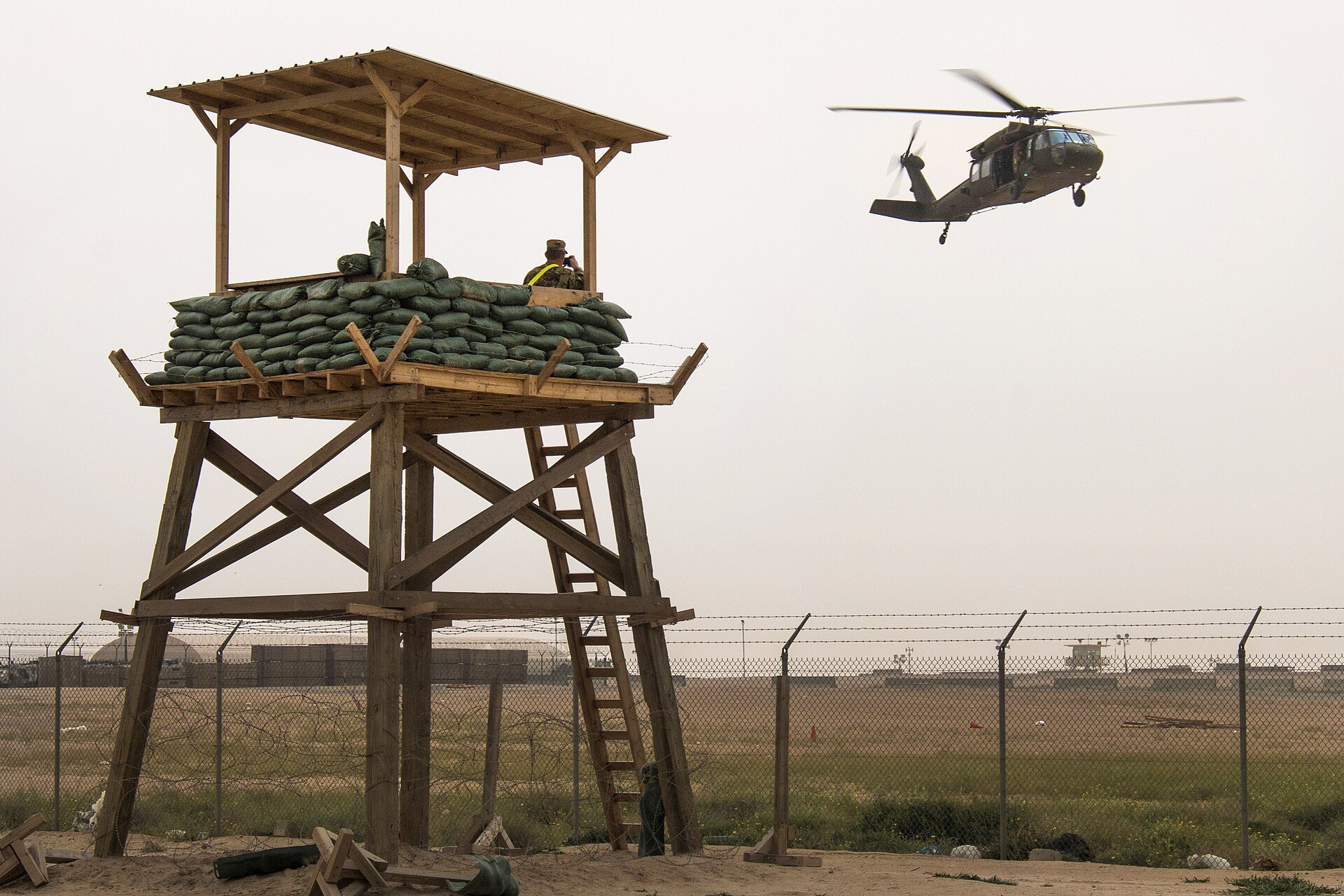
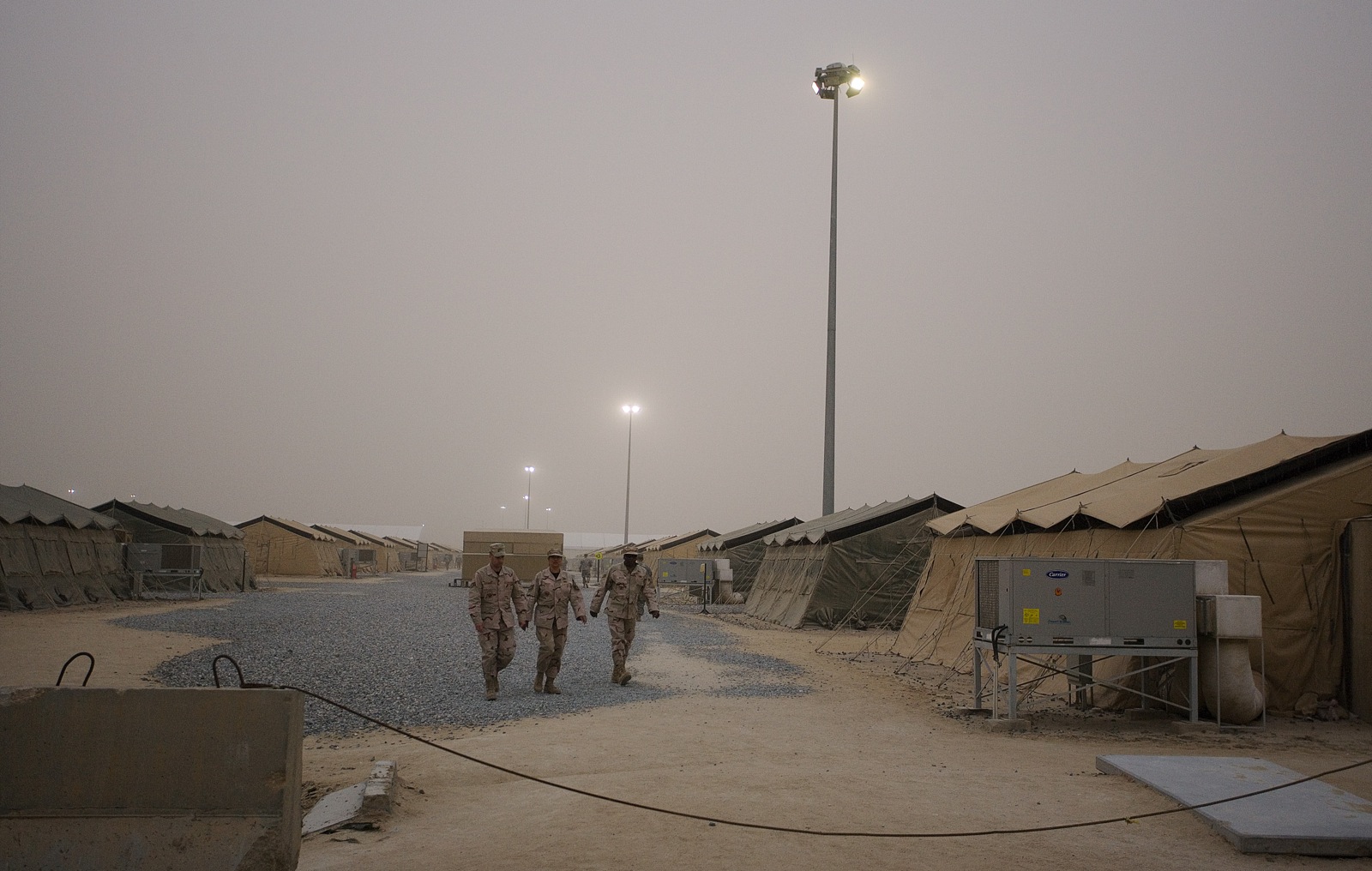
The IRGC struck Camp Buehring — formally the Al-Udairi helicopter base — in Kuwait’s northern desert on May 28, 2026, with a combined missile and drone attack. Kuwait’s military confirmed engaging hostile projectiles. The IRGC identified the base as the launch point for a US attack on a control station near Bandar Abbas, claiming strikes on fuel storage, helicopter maintenance facilities, and a command building — none independently confirmed as of filing.
The IRGC’s formal statement, released at 0120 GMT, framed the strike as direct retaliation for CENTCOM operations against Iranian missile-launch sites on May 25-26: “This response is a serious warning so that the enemy knows that aggression will not go unanswered, and if repeated, our response will be more decisive.” IRGC-aligned Al Mayadeen English reported “significant destruction and a massive fire” at the Al-Udairi facility. Neither US Central Command nor the Kuwaiti Ministry of Defence had confirmed the specific damage claims by end of day.
This is the second strike on Camp Buehring in three months. In March, an attack on the same installation killed six US servicemembers and hospitalised thirty-eight — the deadliest single engagement against American forces in the Gulf since the war began on February 28. A classified investigation reported by The Aviationist on April 26 indicated that an Iranian Air Force F-5 had penetrated multilayered US air defences during the March attack, the first documented breach of an American base perimeter by a crewed Iranian aircraft. The report remains single-source and unverified by the Pentagon.
Kuwait hosts approximately 13,500 US troops across Camp Arifjan, Ali Al Salem Air Base, and Camp Buehring — the largest American troop concentration in any single country in the Middle East. Secretary of State Marco Rubio, speaking hours after the May 28 strike, said the US would give Iran talks “every chance to succeed” and that a deal “could take a few days.” He made no public reference to Camp Buehring. The same day, the Iranian negotiating delegation that had travelled to Doha — Speaker Ghalibaf, Foreign Minister Araghchi, and Central Bank Governor Hemmati — returned to Tehran without a signed agreement.
Why Does Iran Treat GCC Bases as Legitimate Targets?
Iran’s military doctrine classifies any state hosting US military infrastructure as an implicit co-belligerent. The IISS confirmed in March 2026 that Tehran considers “the presence of such facilities as implicit participation in the confrontation.” The IRGC has acted on this principle against all six GCC member states since the war began.
The Middle East briefing 3,000+ readers start their day with.
One email. Every weekday morning. Free.
The doctrine is codified at the highest level of Iranian command. Mojtaba Khamenei’s fourteen-page Arafah Day statement, released May 27, made the targeting hierarchy permanent: “Nations and lands will no longer serve as shields for American bases.” His military affairs adviser Nasser Arasteh dispensed with the doctrinal register: “The US will have no place in the Gulf.”
“Nations and lands will no longer serve as shields for American bases.”
— Mojtaba Khamenei, Arafah Day doctrine, May 27, 2026
The IRGC has applied the doctrine without discrimination among Gulf hosts. Since the war’s opening hours, it has fired more than 400 ballistic missiles and approximately 1,000 drones at Gulf state territory. On February 28, Iran struck all six GCC member states simultaneously — the first time in history that a single actor targeted the entire Gulf Cooperation Council in one coordinated operation. The Centre for Strategic and International Studies characterised the intent: “Iran aims to restore deterrence and ensure the Islamic Republic’s place in the region’s emerging order. Iran signaled its intent to widen and deepen the conflict from day one.”
The Camp Buehring strike follows the framework precisely. The IRGC’s statement did not characterise the attack as aggression against Kuwait. It identified a specific US installation, named the specific American operation it was answering, and struck what it designated as the origin point. Kuwait’s sovereignty was incidental to the IRGC’s published justification.
The structural inversion from 1987 is now complete. During Operation Earnest Will, from 1987 to 1988, the US Navy escorted reflagged Kuwaiti tankers through the Strait of Hormuz while Iran waged a parallel tanker war against Gulf shipping. Tehran attacked Kuwaiti commercial vessels — tankers, container ships, anything under a Kuwaiti flag — but did not strike American military installations on Kuwaiti soil. US presence functioned as the deterrent. Iranian targeting stopped at the base perimeter. The distinction between commercial and military targets on host-state territory was, in the 1980s, an operational red line.
In 2026, the IRGC struck Camp Buehring because American forces were present on Kuwaiti soil. The April 8 ceasefire did not alter the doctrine. Twenty-eight IRGC drones targeted Kuwaiti territory weeks after the ceasefire took effect, engaged by Kuwaiti air defences.
The Liability Ledger
Stars and Stripes reported on April 29 that thirteen US bases across the Gulf region had been classified “nearly uninhabitable” after sustained Iranian strikes, forcing CENTCOM to disperse forces across the theatre to reduce the concentration of targetable assets.
| Date | Target | Host State | Confirmed Impact |
|---|---|---|---|
| March 2026 | Camp Buehring | Kuwait | 6 US KIA, 38 hospitalised |
| March–April 2026 | PSAB (3 strikes) | Saudi Arabia | 1 AWACS destroyed, 5 KC-135s damaged, 15+ US WIA, 1 KIA |
| April 2026 (post-ceasefire) | Mina Al Ahmadi area | Kuwait | 28 IRGC drones engaged by Kuwaiti defences |
| May 28, 2026 | Camp Buehring / Al-Udairi | Kuwait | IRGC damage claims only; not independently verified |
The table tracks confirmed strikes on identifiable US installations and does not include the February 28 opening barrage, which struck military and civilian targets across all six GCC states in a single coordinated operation. Prince Sultan Air Base has absorbed three separate attacks since the war began. February 28 established from the first hours that US basing in the Gulf would not deter Iranian targeting of host countries.
At PSAB, the assets destroyed carry operational weight beyond the casualty figures. The E-3 Sentry AWACS lost in March was one of fewer than thirty in the US Air Force fleet — an airborne surveillance and command-and-control platform that ground-based systems cannot replicate at comparable range. Five KC-135 tankers, the aerial-refuelling aircraft that sustain CENTCOM’s strike and patrol operations, were damaged and evacuated to dispersed locations whose positions remain classified.
The Middle East Institute assessed the shift in April 2026: “For decades, the bases were seen by Gulf leaders and publics as guarantees of Washington’s security commitment to the region and therefore as deterrents against attack, but now at least some in the Gulf see the bases as targets drawing them into an unwanted conflict.”
The Arab Center for Washington DC reached the same conclusion: “U.S. military bases have become targets and a liability rather than a safeguard.” The center’s analysis continued that when “choices made in Washington draw the region into conflict and leave the Gulf states to absorb the consequences, the logic of hosting those bases becomes far less tenable.”
The CENTCOM dispersal itself creates a secondary problem. Concentrated forces are easier to command and supply; dispersed ones require longer logistics chains, more fuel, and more transport flights — all across airspace that Iran has demonstrated it can contest. The dispersal that reduced target concentration also reduced the operational tempo that the bases were built to sustain. Camp Buehring’s function as a helicopter staging base, for instance, depends on co-located maintenance and fuel infrastructure. If the IRGC’s damage claims about the May 28 strike prove accurate, that co-location is exactly what was hit.
Why Does Saudi Arabia Host US Troops Without a Defense Treaty?
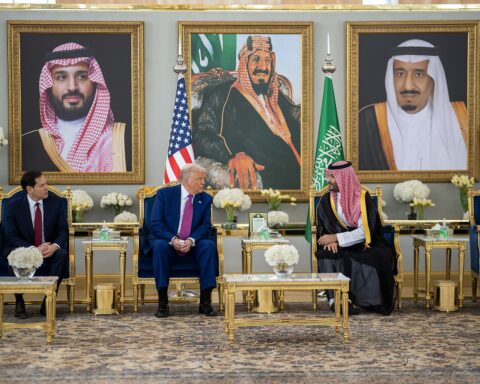
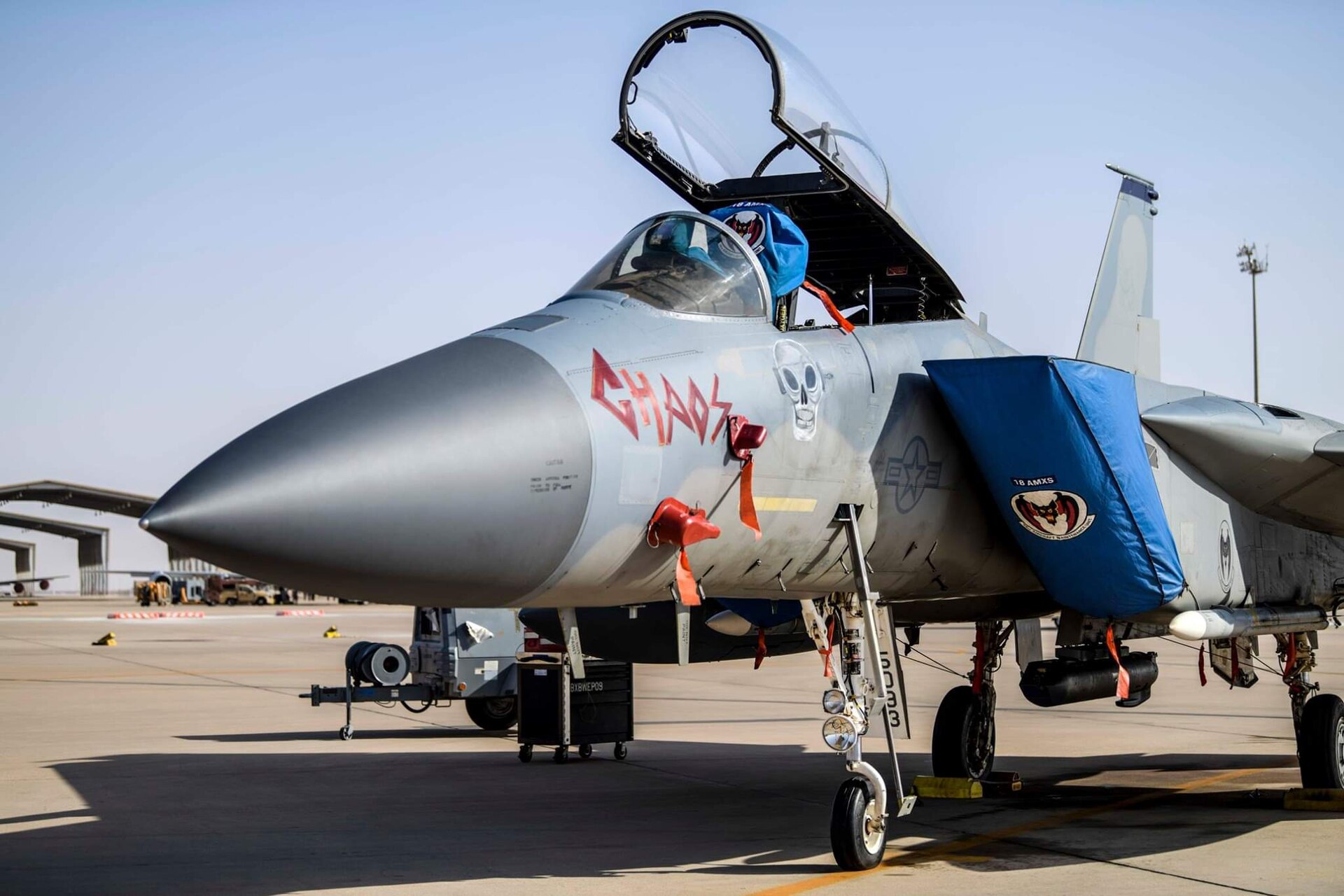
Saudi Arabia hosts 2,500-2,700 US military personnel at Prince Sultan Air Base under no formal Status of Forces Agreement and no mutual-defence treaty. The $142 billion arms package signed in May 2025 — described by the White House as “the largest military cooperation agreement in US history” — covers weapons platforms, maintenance, and training. It does not bind the United States to defend Saudi territory.
Prince Sultan Air Base sits ninety miles south of Riyadh. It has been struck three times since February. The American personnel there serve under informal access arrangements that were suspended unilaterally by Saudi Arabia on May 4, restored four days later after a phone call between heads of state, and have not been renegotiated since. No framework governs what happens when the host country becomes a target because of the guest’s operations.
Pete Hegseth named Saudi Arabia a model partner at the Shangri-La Dialogue on May 30 — a country spending 7.1 percent of GDP on defense, double his own 3.5 percent benchmark — without acknowledging that no treaty governs the relationship. The “partners, not protectorates” doctrine describes the US-Saudi arrangement more precisely than Riyadh would prefer.
The kingdom hosted US forces at the same installation from 1991 to 2003, when approximately 5,000 Air Force personnel enforced the southern Iraq no-fly zone. Saudi Arabia asked them to leave after the Iraq invasion generated domestic backlash. They returned after 2019. The cycle of invitation, exposure, political cost, and expulsion has now completed twice without either government moving to formalise the terms.
The Hill identified the lock that keeps the cycle in place: “U.S. allies in the Persian Gulf have no credible alternative security provider, with technical lock-in from missile defense systems making switching costs prohibitive, and every procurement cycle reinforcing dependence.” Saudi Arabia’s Patriot PAC-3 batteries require Lockheed Martin for sustainment contracts extending beyond 2040. The AWACS fleet runs on Boeing maintenance agreements reaching into the next decade. Each major procurement since 1990 has deepened the technical integration. None has been accompanied by a binding defence commitment.
That procurement dependency extends to the interceptor stockpile itself. Washington has used emergency determinations under Section 36(b) of the Arms Export Control Act to fast-track Patriot resupply to Qatar, Kuwait, the UAE, and Israel. Saudi Arabia — which has expended more interceptors than any other country in the Patriot system’s 40-year history — was not included. The waiver gap and its implications for Saudi Arabia’s remaining air defense ceiling are documented here.
Four Days Without an Umbrella
On May 4, Saudi Arabia blocked US military access to Prince Sultan Air Base and closed Saudi airspace to American combat operations. Kuwait made the identical decision at the same time. Project Freedom — the Pentagon’s operational framework for strikes against Iranian missile infrastructure — collapsed within forty-eight hours. Stratfor assessed the episode: “Riyadh effectively vetoed the U.S.’ Project Freedom.”
Base access was restored on May 8 after a call between President Trump and Crown Prince Mohammed bin Salman. No public conditions were attached. The restoration came four days after the suspension.
The IRGC’s May 28 statement demonstrates that the suspension changed nothing in Iranian targeting doctrine. The language — “from which the attack on the control station near Bandar Abbas was launched” — traces strike origins to host territory without regard to whether the host consented, protested, or temporarily revoked access. The CENTCOM strikes on May 25-26, launched during the restored-access period, were the specific operation the IRGC cited in its justification for striking Kuwait. Saudi Arabia reopened its bases on May 8. Three weeks later, Iran struck the base next door.
Saudi Arabia demonstrated in May that it could ground American operations from its soil. What it did not demonstrate was the ability to sustain the suspension or to extract formal conditions for the restoration of access. The bases reopened on the same informal terms. Kuwait reached the same conclusion on the same timeline. Neither state used the window to negotiate consultation requirements before future strikes, liability provisions for Iranian retaliation, or a framework for when host-state consent would be required.
What the suspension period also obscured was a parallel military track. Reuters and WSJ reporting confirmed that Royal Saudi Air Force jets struck Iranian drone and missile-launch sites on Iranian soil in late March — operating a covert strike campaign while projecting public silence. The full account of Saudi Arabia’s shadow war against Iran is documented here.
The last time Saudi Arabia closed PSAB to American forces, in 2003, the closure lasted sixteen years and restructured the US military posture across the Gulf. The 2026 suspension lasted four days.
Has the GCC’s Collective Defence Failed?
The GCC invoked its Joint Defence Agreement on March 1, 2026, declaring that an attack on any member state constituted an attack on all — language modelled on the principle of collective defence. Iran had struck all six member states simultaneously seventy-two hours earlier. The collective military response since then has consisted of communiqués. The Peninsula Shield Force — 40,000 troops — has not been deployed.
The February 28 barrage set the scale of what collective defence would need to address. The UAE alone absorbed 174 ballistic missiles, 6 cruise missiles, and 541 drones, with 35 penetrating defences. Eighty-three percent of all Iranian fire in the war’s first phase landed on GCC member states, according to IISS data compiled in March 2026.
UAE Minister of State Anwar Gargash called the GCC “weakest historically” — a verdict that escalated from a Kurdistan24 interview on April 27 to the Atlantic Council stage on May 16 over a nineteen-day arc. Bloomberg reported that Crown Prince Mohammed bin Zayed called Mohammed bin Salman to propose a coordinated military response to the Iranian strikes and was refused.
The Gulf International Forum identified the structural shift under way: “Gulf states that host U.S. forces are moving from deference to conditionality, demanding that the alliance be restructured to reflect that the risk these states absorb by hosting is no longer matched by the protection they receive in return.”
The institutional fracture extends beyond communiqués. The UAE has signalled an exit from OPEC after fifty-nine years, acquired Iron Dome batteries for point defence, and closed its embassy in Tehran — a positioning sequence that reads as preparation for a security order that no longer runs through the GCC Secretariat. The Emirati-Saudi-Qatari-Kuwaiti Emergency Post-Strike Talks — the EPST quadrilateral — held three sessions in thirty-one days, functioning as a parallel mechanism to the council’s dormant formal apparatus. The Soufan Center assessed the split as an “irreconcilable rift.”
The Peninsula Shield Force has been operationally deployed once in its four-decade history: to Bahrain in 2011, against a domestic protest movement during the Arab Spring. It has never been activated against an external military attack. The force remained in garrison through the February 28 opening barrage, through the three strikes on PSAB, and through both Camp Buehring attacks.
Can Saudi Arabia Exit the US Security Architecture?
No alternative security provider operates at comparable scale. Saudi Arabia’s defensive systems — interceptors, airborne surveillance, fighter aircraft — depend on American contractors for software updates, spare parts, and maintenance over lifespans measured in decades. China and Russia sell weapons platforms but not the decades of sustainment contracts, training pipelines, and software integration that keep them operational.
The Carnegie Endowment for International Peace assessed the military reality in March 2026: “A substantial U.S. and Israeli air campaign was unable to eliminate Iran’s will or capability to exert power in the Gulf, turning historically secure neighbor states into war zones overnight, with Iran retaining the ability to close the Strait of Hormuz and possessing a nuclear program.”
China has sold ballistic missiles to Saudi Arabia — the CSS-2 in 1987, the DF-21 later — but has not offered the integrated air-defence ecosystem that defines the US-Saudi military relationship. Russia’s S-400, purchased by Turkey in 2019 and India in 2021, triggered US CAATSA sanctions in both cases, a precedent that has deterred every Gulf state from acquiring the system. No non-American supplier currently offers a full-spectrum air-defence package without comparable risk of US secondary sanctions.
Saudi Arabia’s fiscal position narrows the options further. The kingdom reported a $33.5 billion deficit in Q1 2026 — 194 percent of its full-year target — with Brent crude trading below $100 against a fiscal breakeven the Bloomberg Economics team estimates at $108-111 per barrel. Goldman Sachs projects a 6.6 percent GDP-ratio deficit for 2026. Aramco announced a 30 percent dividend reduction effective June 9.
The kingdom is also absent from every forum where the conditions of Gulf security are being set. Five rounds of US-Iran talks over 106 days have included no Saudi representative. The UK-France coalition managing Hormuz shipping lanes from Northwood does not include Saudi Arabia in its command structure. The Persian Gulf Security Administration, operational since May 18, has been collecting transit fees of approximately $2 million per vessel — a new governance institution that Saudi Arabia was excluded from designing and cannot challenge without either US or Iranian cooperation.
Ali Akbar Velayati declared the Strait of Hormuz “the objective guarantee for preserving any agreement” on May 28, speaking to a regional audience in which the Gulf’s largest state has no formal seat.
The Silence
Saudi Arabia’s Ministry of Foreign Affairs has not issued a public statement on the Camp Buehring strike. It did not comment on the CENTCOM strikes near Bandar Abbas on May 25-26. The ministry’s silence now exceeds ten consecutive days, spanning Hajj, Eid al-Adha, and two rounds of Iranian attacks on GCC territory.
Each available response carries a cost the silence is designed to avoid. Condemning Iran risks inviting the retaliation the IRGC promised in its May 28 statement — a statement that identified the specific base it struck and the specific operation it was answering. Demanding American restraint would contradict the base access restored on May 8 and the arms relationship underwriting Saudi air defence. Calling for a negotiated settlement would require acknowledging exclusion from five rounds of talks and from the Hormuz governance coalition forming at Northwood.
Saudi Arabia was absent from the UN Security Council session on May 26, where Pakistan’s Foreign Minister Ishaq Dar addressed the Iran hostilities and China’s Wang Yi presided as rotating chair. No resolution was adopted. Riyadh has not requested an emergency session, issued a bilateral communiqué with Kuwait, or joined any multilateral condemnation of the strikes on GCC soil that have killed and wounded dozens of US and Gulf personnel since the war began.
Camp Buehring sits 400 kilometres from Prince Sultan Air Base. The IRGC has struck both installations since February. Riyadh’s foreign ministry has commented on neither.
Ali Al Salem Air Base was struck on May 30 by debris from a Kuwaiti PAC-3 intercept — an Iranian Fateh-110 was destroyed in flight, but the wreckage fell on the flight line, injuring five Americans and killing MQ-9 Reapers on the flight line at Ali Al Salem. The pattern at both bases is identical: Iran fires, US infrastructure absorbs damage whether the intercept succeeds or not.
Frequently Asked Questions
Has Iran targeted Kuwaiti civilian infrastructure?
Yes. In April 2026, weeks after the ceasefire, twenty-eight IRGC drones targeted the Mina Al Ahmadi refinery — Kuwait’s largest, with a capacity of 346,000 barrels per day — and adjacent desalination plants. The IRGC catalogued the attack as the “95th wave of Operation True Promise 4,” a numbering convention that frames strikes on civilian Gulf infrastructure as routine rather than escalatory. Kuwait depends on desalination for the vast majority of its freshwater supply, making the targeting of water infrastructure a distinct category of coercion beyond the military strikes on Camp Buehring. The refinery had been struck three times by May 2026.
What happened the last time Saudi Arabia expelled US forces?
Saudi Arabia asked US forces to leave Prince Sultan Air Base in 2003, after the Iraq invasion generated severe domestic opposition. Osama bin Laden had cited the presence of American troops on Saudi soil as a central grievance in his 1996 declaration of war against the United States — the political toxicity of foreign military basing was already established well before the expulsion. The approximately 5,000 US Air Force personnel relocated to Al Udeid Air Base in Qatar, which has since served as CENTCOM’s primary regional hub. US forces returned to PSAB only after 2019, sixteen years later.
The Camp Buehring strike was followed hours later by an IRGC ballistic missile launch directly at Kuwait — not a drone wave, but a Zolfaghar missile targeting what Iran described as a US airbase. It was the first ballistic missile fired at GCC soil since the April 8 ceasefire. The May 28 missile strike, Kuwait’s intercept, and CENTCOM’s response are documented here.
Did Kuwait detect the May 28 attack before impact?
Kuwait’s military confirmed “engaging hostile missile and drone attacks,” language that indicates active interception rather than uncontested impact. Kuwaiti air defences had prior practice: the April ceasefire-period strike involved twenty-eight incoming IRGC drones, all engaged by Kuwaiti systems. Kuwait also announced on May 12 that it had foiled an IRGC infiltration operation inside the country, detaining four operatives — an indication that Iranian operational capability inside Kuwait extends beyond the missile and drone envelope to ground-level intelligence collection and potential sabotage.
How does Iran describe its strikes on GCC soil to domestic audiences?
Iranian state media presents strikes on GCC-hosted US infrastructure as enforcement of an established and legitimate doctrine, not as escalation. PressTV’s May 10 editorial was headlined “Decisive edge: Iran dismantles US levers of coercion, rewrites equation of deterrence.” The IRGC numbers each strike wave sequentially under the “True Promise” operational banner, treating attacks on Gulf state territory as bureaucratically routine. Iranian military briefings consistently frame GCC host states not as sovereign neutrals but as participants in the conflict by virtue of the facilities they provide.
The deterrence-inversion dynamic described in this article advanced materially on the same day: Kuwait’s air defenses intercepted nine missiles and 26 drones in the 24-hour period that followed the Camp Buehring strike — a sustained barrage that again produced no GCC Joint Defense Agreement response.