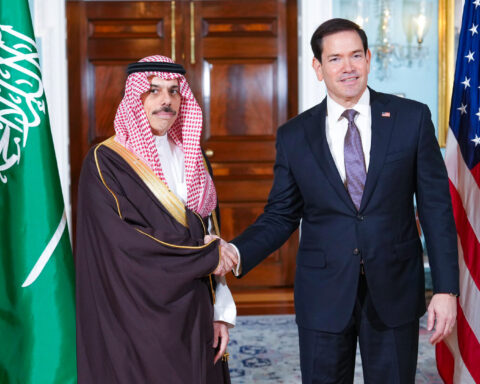
TEHRAN — Iran’s armed forces announced on Sunday a conditional suspension of military operations against Israel, hours after Israeli jets struck targets across six Iranian cities. In the same sequence of statements, Tehran confirmed the Strait of Hormuz remains under Iranian operational control — offering only a two-week window of “coordinated safe passage” — and an Iranian official told MSNBC that a deal with President Trump is “no longer feasible at this stage.”
n
The three positions arrived on Day 100 of the conflict through separate channels, addressed to separate audiences. Iran addressed the military pause to Israel. It addressed the diplomatic rejection to Washington. Saudi Arabia’s foreign ministry, which has not issued a public statement on the conflict in 18 days, was not addressed at all.
n
Foreign Minister Abbas Araghchi framed the Hormuz component as a conditional, time-limited coordination — not a reopening. “If attacks against Iran are halted, our powerful armed forces will cease their defensive operations,” Araghchi said, according to Crisis Group and NBC News sourcing. “For a period of two weeks, safe passage through the Strait of Hormuz will be possible via coordination with Iran’s armed forces and with due consideration of technical limitations.”
n
The Middle East briefing 3,000+ readers start their day with.
One email. Every weekday morning. Free.
n
Table of Contents
n
- n
- The Military Pause and Its Conditions
- Why Did Iran Declare Diplomacy Dead?
- Hormuz: From Lever to Sovereign Claim
- What Can Saudi Arabia Reach?
- Background: Day 100 of the Hormuz Closure
- Frequently Asked Questions
- n
n
n
n
n
n
n
n
n
n
The Military Pause and Its Conditions
n
Iran’s armed forces statement, carried by Fars News Agency, declared that “a painful response was delivered to the Israeli regime, and the suspension of armed forces operations is announced.” The IRGC appended a warning: any continuation of “hostile acts” would provoke “much more severe and decisive actions than before.”
n
Tehran did not use the word ceasefire. The statement frames the suspension as a unilateral Iranian decision, revocable at Iranian discretion under conditions Iran has not publicly defined. What constitutes a “hostile act” is left to Tehran’s interpretation. Araghchi’s June 1 framework — “the ceasefire between Iran and the US is unequivocally a ceasefire on all fronts, including in Lebanon; its violation on one front is a violation of the ceasefire on all fronts” — has not been revoked.
n
The pause followed overnight Israeli strikes on Tehran, Isfahan, Tabriz, Karaj, Kermanshah, and the Mahshahr petrochemical complex. The IDF confirmed the operation, which targeted restored air defense systems, ballistic missile launch sites, and weapons production facilities. Iranian state media reported fifteen injured — fourteen at Mahshahr, one in Tehran.
n
President Trump posted on social media that Israel and Iran “are looking to do an immediate CEASEFIRE!” and described “final negotiations on ‘Peace’” as “proceeding, subject to ignorance or stupidity getting in its way.” This followed a reported phone call with Netanyahu on June 8 in which, according to Time, Trump said: “You’re f–king crazy. … Everybody hates Israel because of this.”
n
The Financial Times reported Trump telling advisers on June 7: “I call the shots. I call all the shots. He doesn’t call the shots.” Netanyahu ordered the strikes within hours.
n
Why Did Iran Declare Diplomacy Dead?
n
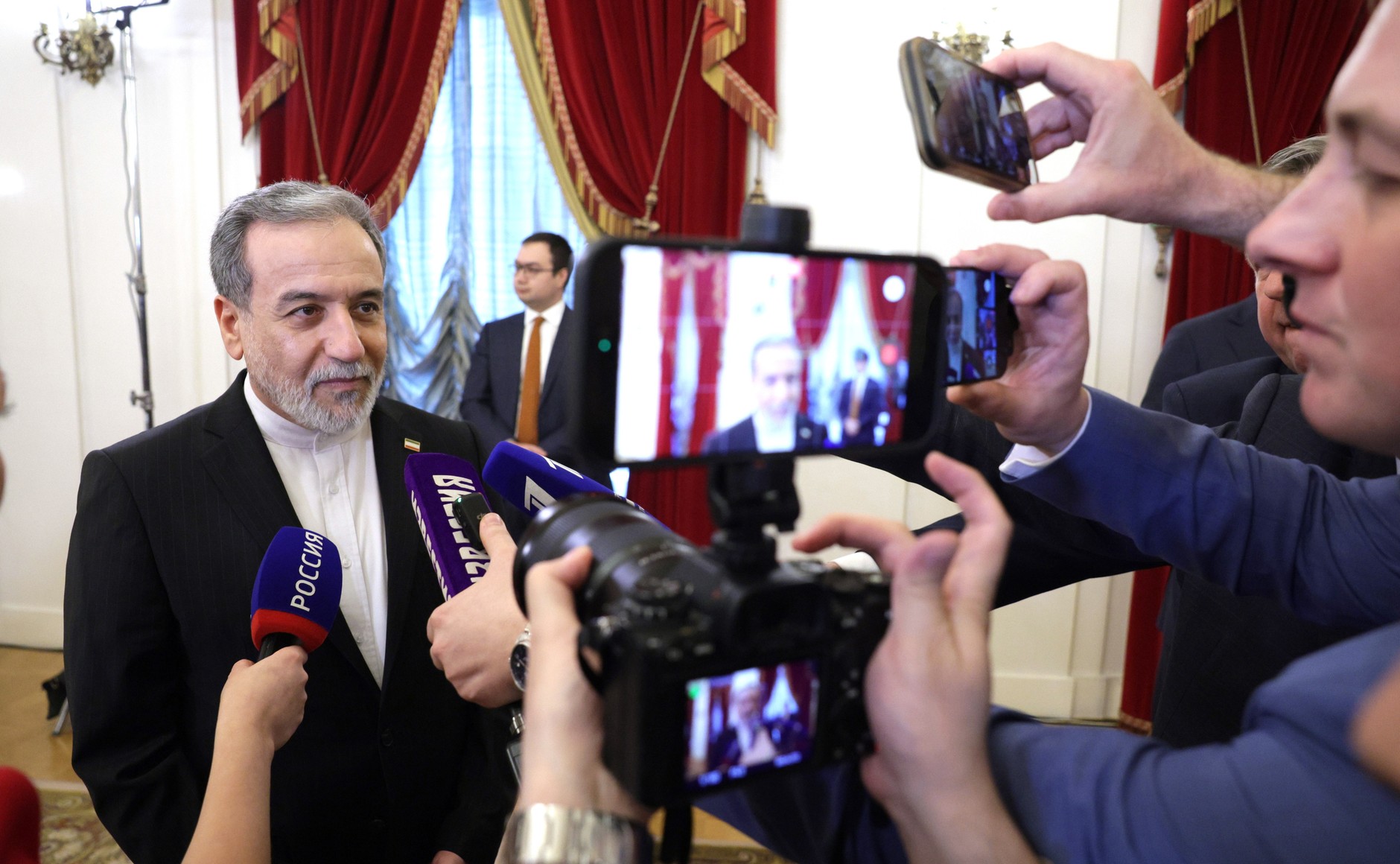
An Iranian official linked to the negotiations told MSNBC’s Inzamam Rashid, David Rohde, and Ayman Mohyeldin on June 8 that “a deal with President Trump is no longer feasible at this stage.” The official attributed the collapse to the administration’s role in the Lebanon escalation and renewed hostilities.
n
The statement hardened Iran’s June 1 position. That day, Tasnim News Agency announced the suspension of all dialogue with Washington until “Israel fully withdraws from occupied areas in Lebanon and stops all attacks in both Lebanon and Gaza.”
n
Iranian FM Spokesperson Esmail Baghei reinforced the position on June 8: “the US holds direct responsibility for the recent ceasefire breaches.”
n
The conditions Iran set for resuming talks — full Israeli withdrawal from Lebanon and Gaza — sit outside the range of current US policy. Secretary of State Marco Rubio rejected Palestinian statehood as “not realistic” on October 5, 2025. The June 4 US-Israel-Lebanon trilateral ceasefire contained no IDF withdrawal timeline and named Hezbollah as a condition of the agreement, not a signatory to it.
n
Jane Darby Menton of Carnegie’s Nuclear Policy Program assessed the broader trajectory: “The decision to deploy force in the middle of negotiations (twice) has vitiated the credibility of diplomatic tools.”
n
The shift from “suspended” on June 1 to “no longer feasible” on June 8 preserved one qualifier: “at this stage.” The conditions for moving past that stage are the same ones Rubio rejected eight months earlier.
n
n
Hormuz: From Lever to Sovereign Claim
n
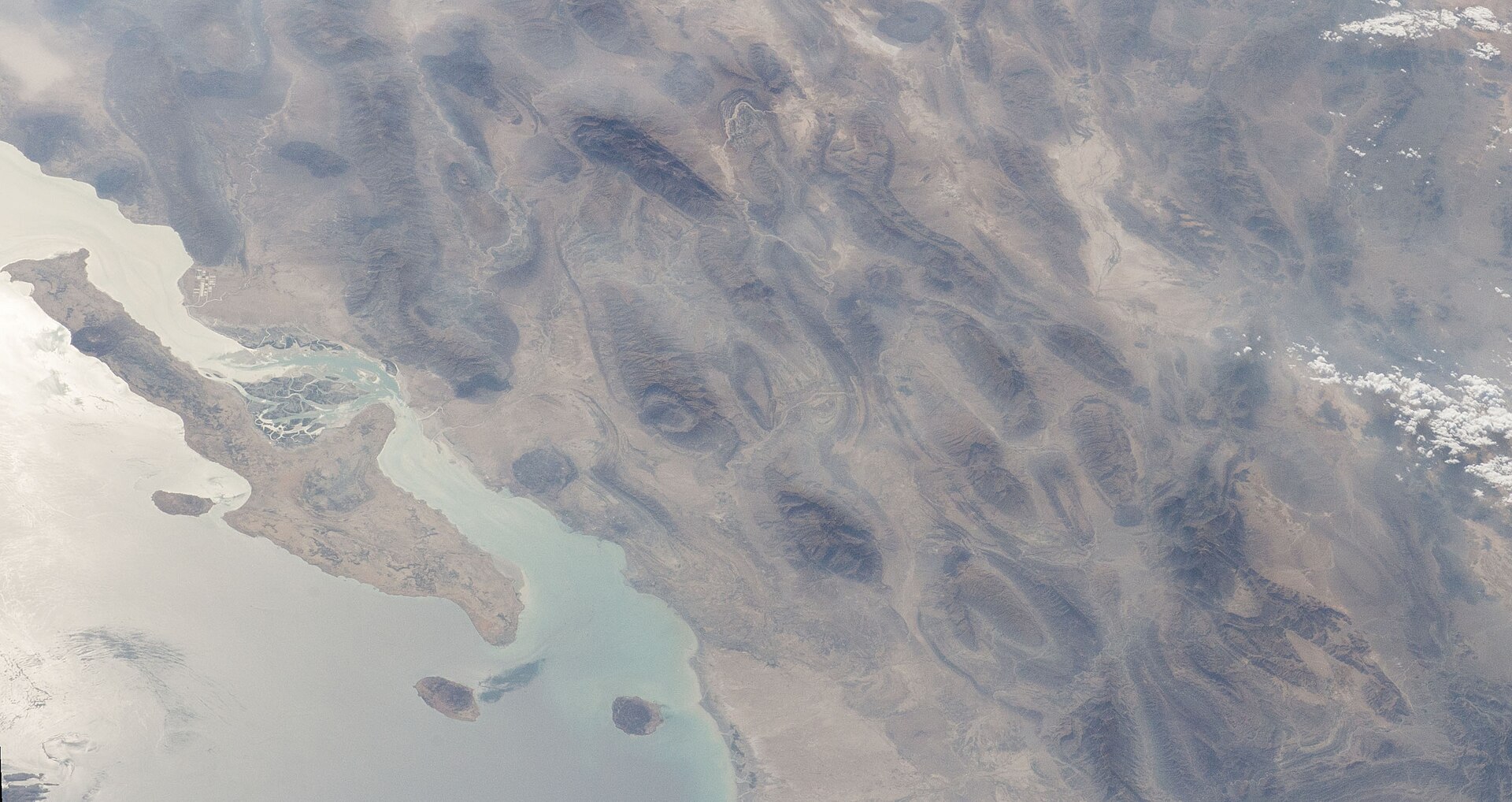
Araghchi’s June 8 offer of “coordinated safe passage” through Hormuz was framed as a temporary accommodation, not a reopening. The offer is conditioned on attacks against Iran halting — the same undefined trigger governing the military pause — and references “technical limitations” Iran has not specified. The proposed window lasts two weeks.
n
The framing reflects an institutional shift months in the making. Supreme Leader Mojtaba Khamenei’s first public statement after taking office, delivered on March 12 and carried by Iranian state media, established the governing doctrine: “the lever of blocking the Strait of Hormuz must definitely continue to be used.” That statement has not been revoked or qualified.
n
Iran formalized the closure on May 5 with the establishment of the Persian Gulf Strait Authority. The PGSA requires all vessels to submit ownership, insurance, crew, and cargo manifests before paying tolls of up to $2 million per transit — denominated in Chinese yuan, not US dollars. The IRGC Navy simultaneously expanded its declared “operational area” from the strait’s physical width of 20–30 miles to a 500-kilometer zone stretching from Jask and Sirik past Qeshm Island to Greater Tunb, according to Argus Media and The War Zone.
n
Ebrahim Rezaei, spokesman for Iran’s parliamentary national security committee, stated that any ceasefire extension must include “Iranian control of the Strait of Hormuz.”
n
n
“Replenishing its conventional capabilities…and maintaining control over the Strait of Hormuz are more pressing concerns [than nuclear enrichment].”
n
— Mohammad Ayatollahi Tabaar, Carnegie Endowment Middle East Program, May 2026n
n
n
Tabaar assessed that Iran is “pushing the enrichment issue down the negotiations agenda” while “focused for now on countering the U.S. blockade.”
n
Araghchi first proposed separating Hormuz from nuclear talks on April 27 during a 72-hour diplomatic sprint to Pakistan, Oman, and Russia. Al Jazeera reported the offer: “Iran offers Hormuz deal without nuclear talks.” The June 8 framework follows the same logic, but the PGSA is now operational, tolls are being collected in Chinese yuan, and the IRGC Navy’s 500-kilometer enforcement zone is staffed.
n
What Can Saudi Arabia Reach?
n
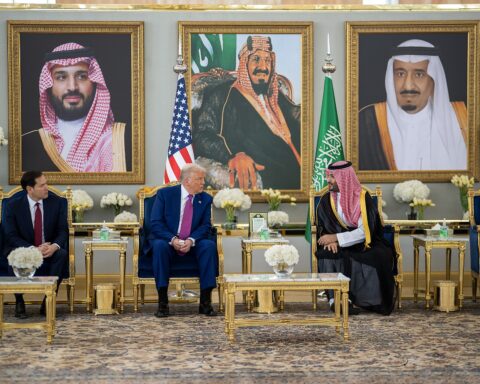
Saudi Arabia’s foreign ministry has not issued a public statement on the Iran conflict since Foreign Minister Prince Faisal bin Farhan’s call at the EU Gymnich in Cyprus on May 20 for Hormuz to be “restored to the state prior to February 28th 2026.” Riyadh responded to none of the June 1 MOU suspension, the June 7–8 Israeli strikes on Iran, or the June 8 military pause.
On June 11, that pattern extended to diplomacy: Prince Faisal signed a GCC-Canada communiqué calling for free navigation through Hormuz on the same day Iran declared the strait a kill zone and struck two commercial vessels. The June 11 communiqué illustrates how far Saudi diplomatic instruments lag Iranian operational tempo.
n
The silence spans all three tracks. On the military track between Israel and Iran, Saudi Arabia has no bilateral channel to Tehran — that function has migrated to Pakistan, whose Interior Minister Mohsin Naqvi made his third trip to Tehran in recent weeks carrying letters from both Prime Minister Shehbaz Sharif and Army Chief Asim Munir. Oman’s channel — the last formal GCC diplomatic bridge to Iran — was threatened in late May when Trump told his cabinet he would “blow them up” if Oman continued brokering the Iran-Oman Hormuz joint-management protocol.
n
On the diplomatic track, Saudi Arabia was excluded from the June 4 US-Israel-Lebanon trilateral ceasefire and has no role in the US-Iran negotiations now frozen. On Hormuz, Iran has declared sovereign control through the PGSA, an institution in which Saudi Arabia has no seat. The IAEA Board of Governors meets this week in Vienna — another forum in which Riyadh confronts Iran-related decisions without diplomatic channels to Tehran.
n
The IMF quantified the dependency on June 3. Its Article IV consultation — the first to include chokepoint conditionality for any Gulf state — stated that Saudi Arabia’s economic recovery is “contingent on Hormuz normalising.”
n
The $24 billion in frozen Iranian assets remains the central financial obstacle between Washington and Tehran. Iran demands $12 billion released at signing. Trump said on June 7 he “will not unfreeze before ceasefire.” The April 8 ceasefire’s two-phase sequencing — Phase 1: Hormuz reopening plus no new sanctions; Phase 2: HEU removal, enrichment suspension, and sanctions relief — was never resolved before Trump extended the framework indefinitely on April 21.
n
Ray Takeyh, the Hasib J. Sabbagh Senior Fellow at the Council on Foreign Relations, offered a measured assessment: “Both sides are interested in an off-ramp, but both have different expectations of what that looks like. It may hold, imperfectly.” Max Boot, also at CFR, has advocated an “open for open” formula in which both sides lift their respective blockades simultaneously. “Because both countries are now complicit in keeping the strait closed,” Boot wrote, “neither one will lose face by opening it — as long as the other one does the same.”
n
Background: Day 100 of the Hormuz Closure
n
The Strait of Hormuz has been under Iranian operational control since February 28, 2026 — the first day of the Iran-Israel conflict. The closure is now in its 100th day.
n
| Indicator | Pre-War | Day 100 (June 8) |
|---|---|---|
| Hormuz throughput | 20+ million bpd | ~3.8 million bpd |
| Cumulative barrels disrupted | — | 1+ billion |
| Tankers stuck inside Persian Gulf | — | 600+ (Aramco CEO, May 11) |
| Tankers waiting outside strait | — | 240 (Aramco CEO, May 11) |
| IRGCN operational zone | 20–30 miles | 500+ km (Jask to Greater Tunb) |
| PGSA transit toll | — | Up to $2 million (in yuan) |
| IEA emergency reserves released | — | 400 million barrels (March 11) |
n
n
The IEA characterized the disruption as “the largest supply disruption in the history of the global oil market.” Approximately 14 million barrels per day of oil production has been shut in since the closure began.
n
n
Frequently Asked Questions
n
Is this a ceasefire between Iran and Israel?
n
Iran has not used the word ceasefire. The armed forces statement describes a “suspension of operations” contingent on Israel halting all “hostile acts” — a term Iran has not defined. Under Araghchi’s June 1 framework, still operative, Israeli military operations in Lebanon constitute a violation regardless of whether they target Iran. The pause is unilateral and revocable under criteria only Tehran controls.
n
Can ships transit Hormuz during the two-week window?
n
Araghchi’s offer specifies “coordinated safe passage” subject to unspecified “technical limitations.” The PGSA’s toll and documentation requirements — established May 5 — remain in effect, including tolls of up to $2 million per transit payable in Chinese yuan. The approximately 840 tankers stuck on both sides of the strait as of Aramco CEO Amin Nasser’s May 11 count would require weeks to clear even under full throughput.
n
Why has Saudi Arabia not responded publicly?
n
Riyadh’s last substantive statement was Foreign Minister bin Farhan’s May 20 call for Hormuz to return to its pre-February 28 state. The kingdom’s bilateral channels to Tehran have been displaced by Pakistan, which now serves as the primary intermediary, and the Oman channel was disrupted when Trump threatened military action against Muscat. Saudi Arabia holds no formal role in any of the three active tracks — the Israel-Iran military track, the US-Iran diplomatic track, or the Hormuz management track.
n
What happens to the April 8 ceasefire framework?
n
The April 8 framework divided the conflict into two phases: Phase 1 required Hormuz reopening and no new sanctions; Phase 2 required HEU removal and enrichment suspension in exchange for broader sanctions relief. Neither was completed. Trump extended the framework indefinitely on April 21 without resolving the core sequencing dispute — Iran insists on $12 billion in frozen assets released at signing; Washington refuses pre-compliance release. The June 8 developments do not formally terminate the framework, but the diplomatic track through which it would be implemented is frozen.
n
What is the Persian Gulf Strait Authority?
n
Established by Iran on May 5, 2026, the PGSA functions as a regulatory body governing all maritime transit through the Strait of Hormuz. It requires advance submission of vessel documentation, crew manifests, and cargo declarations, with transit tolls of up to $2 million per passage payable in Chinese yuan. Its jurisdiction covers the IRGC Navy’s expanded 500-kilometer operational zone, extending well beyond the strait’s physical width to include approaches from the Gulf of Oman. No other nation has representation in or negotiating access to the authority. The same day PGSA jurisdiction was under stress, the Houthis acted on the other end of the dual chokepoint: the Bab el-Mandeb blockade declared on Day 100 closed Saudi Arabia’s East-West Pipeline corridor at Yanbu, the only bulk crude route that did not pass through Hormuz. The same day Iran declared talks dead, Qatar was the one state fielding calls from both FM Faisal and FM Araghchi — the only channel still connecting the two sides — as analyzed in The Back-Channel Saudi Arabia Cannot Name. The Houthi enforcement of that declaration arrived simultaneously: missiles struck M/V Tavvishi and the Norderney in the Gulf of Aden on June 8-9, confirming that both chokepoints are now under active interdiction rather than declaratory threat. On Day 103, US Energy Secretary Wright publicly characterized Hormuz traffic as rising “very meaningfully” on the same day IMF PortWatch recorded two transits — the gap between official US framing and operational Hormuz data is documented in Wright Says Hormuz Traffic Is Rising. IMF Data Shows Two Ships. When Trump then declared the April 8 ceasefire had “collapsed,” the Khatam al-Anbiya shoot-on-sight order was already in force — meaning Hormuz had no ceasefire to collapse.
n Reopening the strait politically would not immediately reopen it commercially: war-risk premiums are set by actuarial loss history, not diplomatic announcements, and Lloyd’s underwriters require quarters of clean transit data before any reclassification.