RIYADH — Iran’s conditional cessation of operations, announced by Khatam al-Anbiya Central Headquarters at approximately 7:30 AM EDT on June 8, restructures Saudi Arabia’s exposure to strikes on Prince Sultan Air Base without reducing it. The condition Iran attached — that Israel halt “aggressions and provocations” including in southern Lebanon — places the trigger for resumed hostilities in the hands of an Israeli government that Saudi Arabia has no diplomatic channel to reach and no pressure to apply.
Parliament Speaker Mohammad Bagher Ghalibaf designated PSAB and all US regional bases “legitimate targets” on June 7, citing Israel’s Lebanon operations as explicit rationale. Iran’s cessation statement did not reference, retract, or modify that designation. The base where an E-3G AWACS was destroyed on March 27 remains doctrinally targetable under Iran’s own stated framework. Saudi Arabia’s air defenses — already depleted to roughly 14 percent of pre-war capacity — must absorb the risk of an Israeli decision over which Riyadh has no instrument of influence.
Table of Contents
- What Did Iran’s Cessation Statement Actually Say?
- The Doctrine That Did Not Pause
- Why Does Lebanon Determine Whether PSAB Gets Hit Again?
- Every Channel Is Either Closed, Threatened, or Occupied
- Who Is Mediating the Condition That Determines Saudi Arabia’s Exposure?
- What Does Day 100 Change for Saudi Arabia’s Air Defense Arithmetic?
- The Precedent Is Already Set
- Frequently Asked Questions
What Did Iran’s Cessation Statement Actually Say?
Khatam al-Anbiya Central Headquarters — Iran’s primary military command — announced a “suspension of armed forces operations” on June 8, conditioned on Israel halting “aggressions and provocations” including in southern Lebanon. The cessation names no timeline, no monitoring mechanism, and no interlocutor. Iran retains unilateral authority to determine when the condition has been violated.
The choice of issuing body matters. Khatam al-Anbiya commands operational forces — not the Foreign Ministry, not the presidency, not the Supreme National Security Council. A military headquarters announced a military pause, on military terms.
Two sentences carried the substance. The first: “A painful response was delivered to the Israeli regime, and the suspension of armed forces operations is announced.” The second: “If the aggressions and provocations continue, including in southern Lebanon, much more severe and decisive actions than before will follow.”
The word “including” carries the structural weight. Iran did not condition resumption solely on direct attacks against its territory. It folded Lebanon into the trigger architecture — an Israeli operation in southern Lebanon, not against Iran, not against Iranian forces, not on Iranian soil, now constitutes sufficient grounds for resumed operations that have already reached Al-Kharj.
The Middle East briefing 3,000+ readers start their day with.
One email. Every weekday morning. Free.
IRNA and Tasnim carried the statement with mission-accomplished framing — “a painful response was delivered” — addressed to Iran’s domestic audience. The condition was addressed to Israel and, through the Lebanon carve-out, to the United States. Neither framing was addressed to Saudi Arabia.
Hours before the cessation announcement, Saudi Civil Defense sounded missile alert sirens in Al-Kharj governorate — home to PSAB. The all-clear was issued without elaboration.
The Doctrine That Did Not Pause
Ghalibaf posted on X on June 7: “The naval blockade against the Iranian nation and America’s green light today to the Zionist regime turn American and regime bases and assets in the region into legitimate targets.” The rationale was specific — Israel’s strikes on Lebanon and the US naval posture — and PSAB fell within the scope of “American bases and assets in the region.”
As of the evening of June 8, no Iranian official has retracted, modified, or qualified the statement. The cessation announcement from Khatam al-Anbiya did not reference it. Ghalibaf has not posted a follow-up. IRGC public affairs channels have issued no clarification.
This is not a gap in the record. The absence of retraction is the record.
The sequence on June 7-8 reinforced the linkage. Israel struck Dahiyeh on June 7 — two killed, eleven wounded, the first strike since the June 3-4 ceasefire. Ghalibaf’s post followed within hours. Iran launched Operation True Promise 5 — ten or more ballistic missiles against Ramat David Air Base. Israel responded overnight with strikes on approximately fifteen targets across Tehran, Isfahan, Tabriz, Karaj, and Kermanshah. Then Khatam al-Anbiya announced the conditional pause.
The circularity is structural. The cessation is conditioned on the same variable — Lebanon — that activates Ghalibaf’s PSAB doctrine. If the condition holds, the doctrine remains dormant. If the condition breaks, both the cessation and the doctrine reactivate simultaneously. There is no configuration in which the condition fails and PSAB is spared.
Hamidreza Azizi of the German Institute for International and Security Affairs observed that “the IRGC framed wider strikes on all American and Israeli targets as a contingency reserved for repetition.” PSAB was struck on March 14 and again on March 27. The contingency is not hypothetical.
Why Does Lebanon Determine Whether PSAB Gets Hit Again?
Iran’s Foreign Minister Abbas Araghchi declared that any ceasefire violation in Lebanon constitutes a violation on all fronts, including against US assets. Ghalibaf’s June 7 designation of PSAB as a legitimate target cited Lebanon operations as explicit rationale. Both the cessation’s condition and the targeting doctrine converge on the same trigger: Israeli action in southern Lebanon that Saudi Arabia cannot influence, deter, or negotiate.
Araghchi’s formulation has been consistent since April: “The ceasefire between Iran and the US is unequivocally a ceasefire on all fronts, including in Lebanon. Its violation on one front is a violation of the ceasefire on all fronts.” This is what Tehran calls the indivisibility doctrine, and it has survived every iteration of the conflict since February 28.
The chain of causation runs through five links. Israel strikes Lebanon. Iran declares the ceasefire violated on all fronts. Ghalibaf’s doctrine designates US bases as targets. PSAB hosts US forces. PSAB becomes targetable. Saudi Arabia does not appear in any link of that chain. Riyadh cannot determine whether Israel strikes Lebanon — Saudi Arabia and Israel maintain no diplomatic relations. It is not a party to the April 8 ceasefire structure or its successors. It cannot modify Iran’s all-fronts interpretation. And it cannot relocate 2,300 US personnel from a facility that operates under no Status of Forces Agreement — a base where access, as Saudi Arabia demonstrated in May when it denied overflight and staging for Operation Project Freedom, is revocable with a phone call.
Michael Ratney, former US Ambassador to Saudi Arabia and now Senior Adviser at CSIS’s Middle East Program, observed that Riyadh had “previously invested considerable diplomatic efforts in reaching a modus vivendi with Iran.” That investment — which included the Chinese-brokered March 2023 normalization agreement and a deliberate posture of restraint through the first weeks of the conflict — produced a bilateral channel that functioned until February 28. The cessation does not restore it. Iran’s indivisibility doctrine treats Lebanon as a component of the broader war, and the war dissolved the Saudi-Iranian track.
The indivisibility doctrine was tested on April 8. Hours after Pakistan’s PM Shehbaz Sharif announced a ceasefire covering “everywhere including Lebanon,” Israel launched Operation Eternal Darkness — 50 IAF jets, approximately 160 munitions, at least 357 killed across Hezbollah positions in southern Lebanon, Beirut, and the Bekaa Valley. Netanyahu rejected Pakistan’s framing: “The ceasefire does not include Lebanon.” Trump and Vance backed him.
The June 7-8 sequence is the second iteration of the same pattern. Israel struck Dahiyeh. Iran struck Israel. Iran paused — and conditioned the pause on Lebanon again.
Every Channel Is Either Closed, Threatened, or Occupied
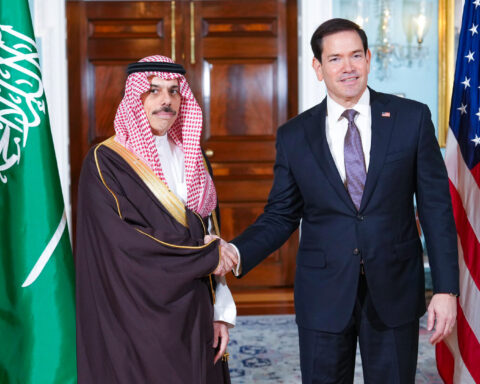
Saudi Arabia’s Foreign Minister Prince Faisal bin Farhan last spoke with Secretary of State Rubio in March 2026. His most recent substantive public statement on the Iran war came on May 20, when he told the EU Gymnich meeting in Cyprus that Hormuz should be restored to its “state prior to February 28, 2026.” Since then — through strikes on Kuwait’s passenger terminal, three IRGC attacks on NSA Bahrain, the June 7-8 escalation cycle — Riyadh’s foreign ministry has produced no confirmed public statement on the conflict.
The channels that might theoretically connect Riyadh to the decisions governing PSAB’s safety are, as of June 8, each compromised in a different way. The most direct channel — to Israel, whose actions in Lebanon constitute the cessation’s trigger — does not exist. Saudi Arabia and Israel maintain no diplomatic relations, no back-channel, and no normalization framework.
The Oman track is under direct US threat. Washington threatened to “blow up” Oman if it continued brokering the Iran-Oman Hormuz joint-management protocol. Iran suspended US message exchanges on June 1. The channel through which Saudi Arabia might have indirectly influenced Iran’s posture is simultaneously threatened by Washington and frozen by Tehran.
The Pakistan track is occupied by a dependency that runs in the opposite direction. Interior Minister Naqvi carried two separate letters to Tehran — one from PM Shehbaz (the civilian channel), one from Army Chief Munir (the IRGC back-channel). Pakistan is the primary ceasefire broker. But 13,000 Pakistani troops are deployed in Saudi Arabia’s Eastern Province under the SMDA. Saudi Arabia cannot pressure the country whose soldiers guard its oil infrastructure.
The quadrilateral — Saudi Arabia, Egypt, Pakistan, Turkey — convened three foreign ministers’ meetings between March 19 and April 18 and produced zero communiqués. The International Institute for Strategic Studies assessed the grouping as “institutionalised consultation” but added the qualifier that matters: “not a defence alliance. None of its members can offer the others collective defence.” Turkey’s FM Fidan maintains a direct line to Araghchi — an instrument that functions for Ankara but is not transferable to Riyadh. The quadrilateral’s only utility for Saudi Arabia was as a forum for collective posture. It produced no posture.
Faisal’s June 2-4 diplomatic cluster — six contacts in three days — included no call with Rubio, no call with Araghchi, and no engagement with any Lebanese counterpart. The contacts were lateral: GCC peers and the Pakistani intermediary, none of whom connect to the decision-makers whose choices determine whether Iran’s cessation condition holds.
Who Is Mediating the Condition That Determines Saudi Arabia’s Exposure?
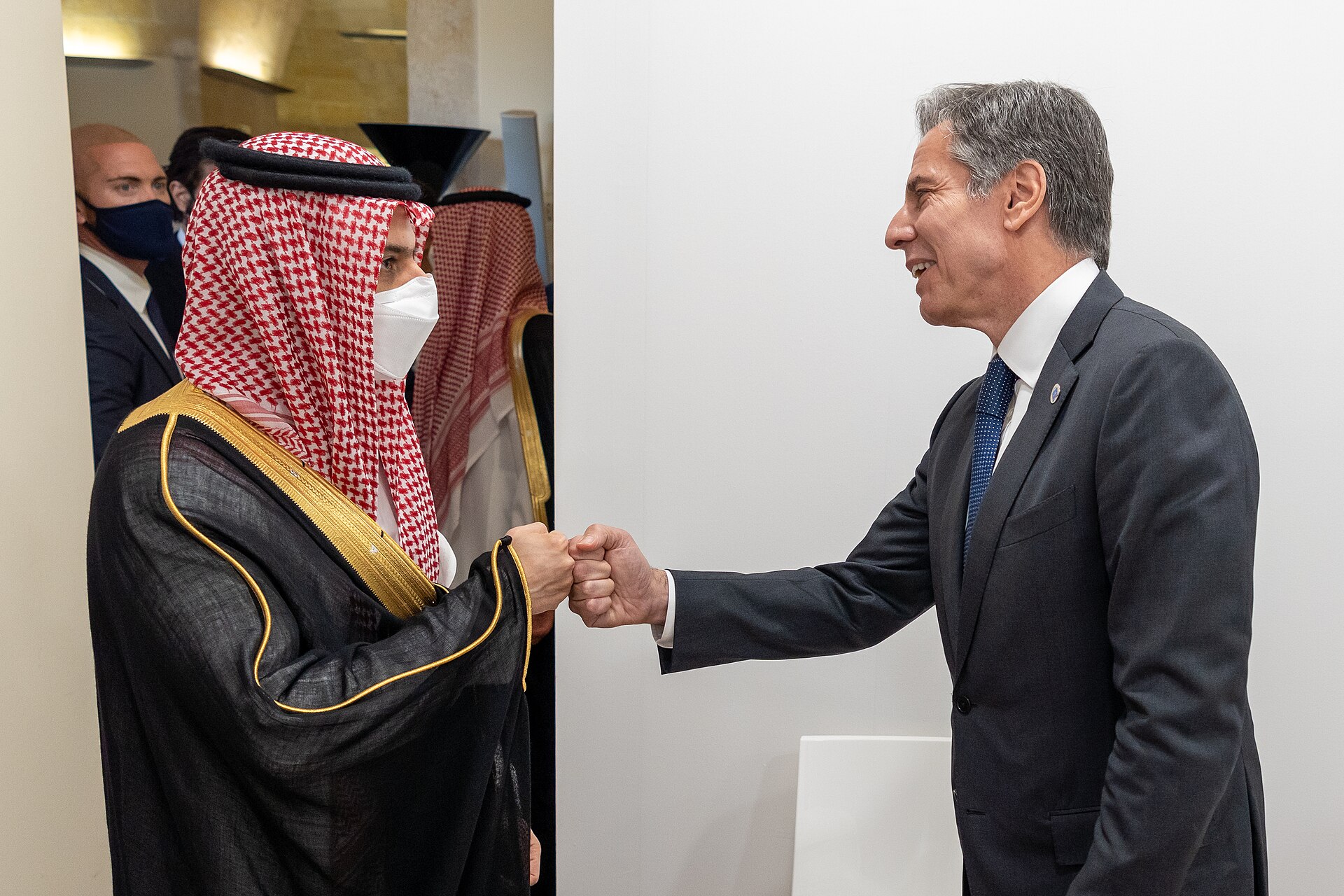
Pakistan, which brokered the April 8 ceasefire, remains the primary interlocutor between Washington and Tehran. China was confirmed as a participant by White House Press Secretary Karoline Leavitt. Qatar assumed a secondary mediation role from May 22, with FM Al Thani discussing Lebanon de-escalation with Iran’s Araghchi by phone on June 7. Saudi Arabia is not among the mediators and has no direct channel to the negotiations.
A Carnegie Endowment analysis confirmed that Saudi Arabia, Qatar, and Oman were “conspicuously absent from brokering efforts” — though Qatar subsequently entered the track. Saudi Arabia did not. Qatar worked through the weekend of June 7-8 to push for restraint in southern Lebanon, the specific issue on which PSAB’s doctrinal status depends.
“Saudis have little confidence that this war will decisively eliminate the Iranian threat, or that the United States, which bears responsibility for starting the current conflict, will protect the Saudis from Iranian attacks.”
Michael Ratney, former US Ambassador to Saudi Arabia, CSIS Middle East Program, May 2026
Ratney noted that Saudi Arabia remains “hesitant about direct military involvement, partly due to vulnerability of economic infrastructure.” The vulnerability is not abstract. PSAB sits inside the same Eastern Province corridor as Aramco’s Abqaiq processing facility — the target of the September 2019 drone and cruise missile attack that temporarily halved Saudi oil output.
The architecture is not accidental. Pakistan holds the primary broker role because it maintains dual channels — civilian through PM Shehbaz and military through Army Chief Munir’s separate letter to Mojtaba Khamenei. Qatar entered because it maintains both an Iranian embassy and a direct FM-to-FM line with Araghchi. China operates through its own bilateral relationship with Tehran. Each mediator possesses a specific instrument Saudi Arabia lacks: a functioning channel to Iranian decision-makers.
Andrew Leber of the Carnegie Endowment framed the structural position: Gulf states “have demonstrated little capacity to either restrain Trump or deter Iran.” In a separate analysis from March: “The Gulf’s rulers are confronting the limits of their ability to spend their way to influence at the White House.” The mediators working the condition that determines PSAB’s exposure are Pakistan, Qatar, and China.
What Does Day 100 Change for Saudi Arabia’s Air Defense Arithmetic?
The hundredth day of conflict arrives with Saudi Arabia’s PAC-3 MSE inventory at approximately 80-150 rounds and no resupply within 36 months. The conditional cessation, if it holds, does not restore a single interceptor, replace the destroyed AWACS, or accelerate the Camden, Arkansas production line that supplies every Patriot round in the US and allied arsenals.
| Indicator | Pre-War / Baseline | Current (Day 100) | Resupply / Recovery |
|---|---|---|---|
| Saudi PAC-3 MSE | ~550-1,070 rounds | ~80-150 rounds (~14%) | 36+ months (FMS) |
| Bahrain PAC-3 MSE | ~60 rounds | ~8 rounds (~13%) | 18+ months (FR Doc 2026-10920) |
| Camden annual output | ~600 units/yr | ~600 units/yr | Target 2,000/yr by 2030 |
| FY2027 US order | — | 2,798 rounds ($12.2B) | Claims full ramp through 2030 |
| E-3G AWACS (PSAB) | Operational | Destroyed (tail 81-0005) | No replacement; E-7A IOC 2027-2028 |
| Brent crude | ~$83/bbl (pre-war) | ~$93/bbl (post-cessation) | Breakeven: $108-111/bbl |
| Saudi Q1 fiscal deficit | — | SAR 125.7B (76% of FY target) | Goldman FY: SAR 300-330B |
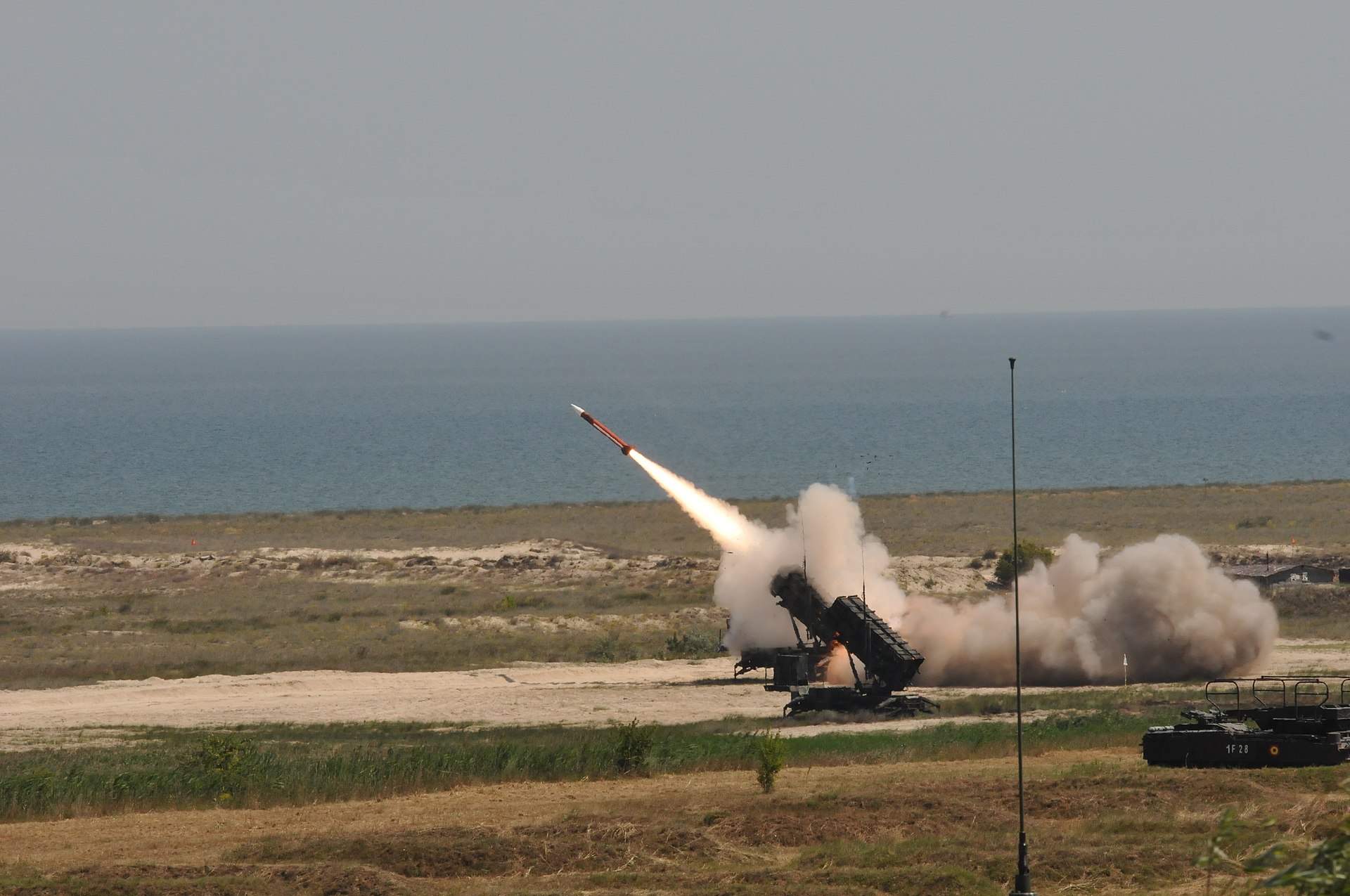
The March 27 strike on PSAB destroyed Boeing E-3G Sentry tail number 81-0005 — an aircraft that monitored 120,000 square miles of battlespace and tracked approximately 600 targets simultaneously. Cedric Leighton, a retired US Air Force colonel and CNN military analyst, called it “a serious blow to surveillance capabilities” and “a serious breach of our Force Protection efforts.” Multiple KC-135 Stratotankers and at least one KC-46 were damaged in the same attack. Ten to twelve US service members were injured.
None of this has been replaced. The Pentagon’s FY2027 order — 2,798 PAC-3 MSE rounds at $12.2 billion — claims the entire Camden production ramp through 2030. Saudi Arabia needs approximately 2,400 rounds to restore pre-war levels. The FMS backlog exceeds 4,300 rounds, roughly seven years of current output. Rubio’s $8.6 billion emergency waiver on May 2 excluded Bahrain entirely. The cost-exchange ratio compounds every engagement: each IRGC ballistic missile costs a fraction of the PAC-3 MSE round that intercepts it, a disparity the IRGC has exploited through sustained multi-axis barrages designed to deplete rather than penetrate.
The fiscal backdrop compounds the military arithmetic. Brent spiked to approximately $97 during the June 7-8 escalation and retreated to around $93 after the cessation — still $15-18 below Saudi Arabia’s $108-111 fiscal breakeven. Goldman Sachs estimates a $14-per-barrel war premium is embedded in current prices. Saudi Arabia’s Q1 fiscal deficit reached SAR 125.7 billion, or 76 percent of the full-year target in three months. On June 9, Aramco distributes its quarterly dividend: $21.89 billion against $18.6 billion in free cash flow.
The pause extends the period during which Saudi Arabia sits at 14 percent interceptor capacity while the condition it cannot influence — Lebanon — determines whether that capacity is tested again. Iran demonstrated that barrage capability on June 7: ten or more ballistic missiles at Ramat David in a single salvo.
Eric Lob of the Carnegie Endowment assessed that “Tehran probably perceives the ceasefire as a pause in hostilities rather than anything permanent, and it is preparing for renewed conflict accordingly.” His stated reason: Tehran “has very little trust that Donald Trump will abide by his commitments.” An unnamed Iranian official linked to negotiations told MSNBC on June 8: “A deal with President Trump is no longer feasible at this stage.”
The Precedent Is Already Set
The pattern — Iran pauses, Israel strikes Lebanon, Iran resumes — has now occurred twice in the span of this conflict.
On April 8, hours after the ceasefire announcement, Israel launched Operation Eternal Darkness — 50 IAF jets, approximately 160 munitions, at least 357 killed across Hezbollah positions in southern Lebanon, Beirut, and the Bekaa Valley. Netanyahu’s position was immediate and public: “The ceasefire does not include Lebanon.” It has not changed since.
The June 7-8 cycle reproduced the same architecture. Israel struck Dahiyeh. Iran launched Operation True Promise 5 against Israeli targets. Iran announced a conditional cessation. The condition: Lebanon. The same day, Israel’s strike on Iran’s Mahshahr petrochemical complex established a separate and durable precedent: a dual-use industrial targeting doctrine that Saudi Arabia has taken no steps to challenge — and that the IDF can apply to Jubail under the same Article 52(2) justification used at Mahshahr.
Hamidreza Azizi of the German Institute for International and Security Affairs, writing for Iran Analytica, described Tehran’s fear of “a bilateral U.S.-Iran deal that eases pressure on Iran while leaving Hezbollah exposed” — what he termed “the ceasefire trap.” The June 4 US-Israel-Lebanon trilateral ceasefire, in which Hezbollah was named as a condition but not a signatory, is the structure Azizi described. It replicates the November 2024 Israel-Hezbollah ceasefire — same non-signatory framework, same Lebanese Army deployment requirements — which lasted fifteen months before collapsing into the current war.
The November 2024 arrangement required Hezbollah’s disarmament south of the Litani River and Lebanese Army deployment to vacated positions. Hezbollah did not disarm. The Lebanese Army deployed to some positions. When Israel determined in March 2026 that the ceasefire’s terms had not been met, the arrangement collapsed — and the collapse fed into the broader war now entering its hundredth day.
Trita Parsi of the Quincy Institute observed: “By defying Trump, Israel has done more than challenge Iran’s new equation; it has also undermined Trump’s credibility.” Marwan Muasher of Carnegie assessed Israel’s operative intent as occupying South Lebanon to force a peace treaty on Beirut that serves exclusively Israeli interests.
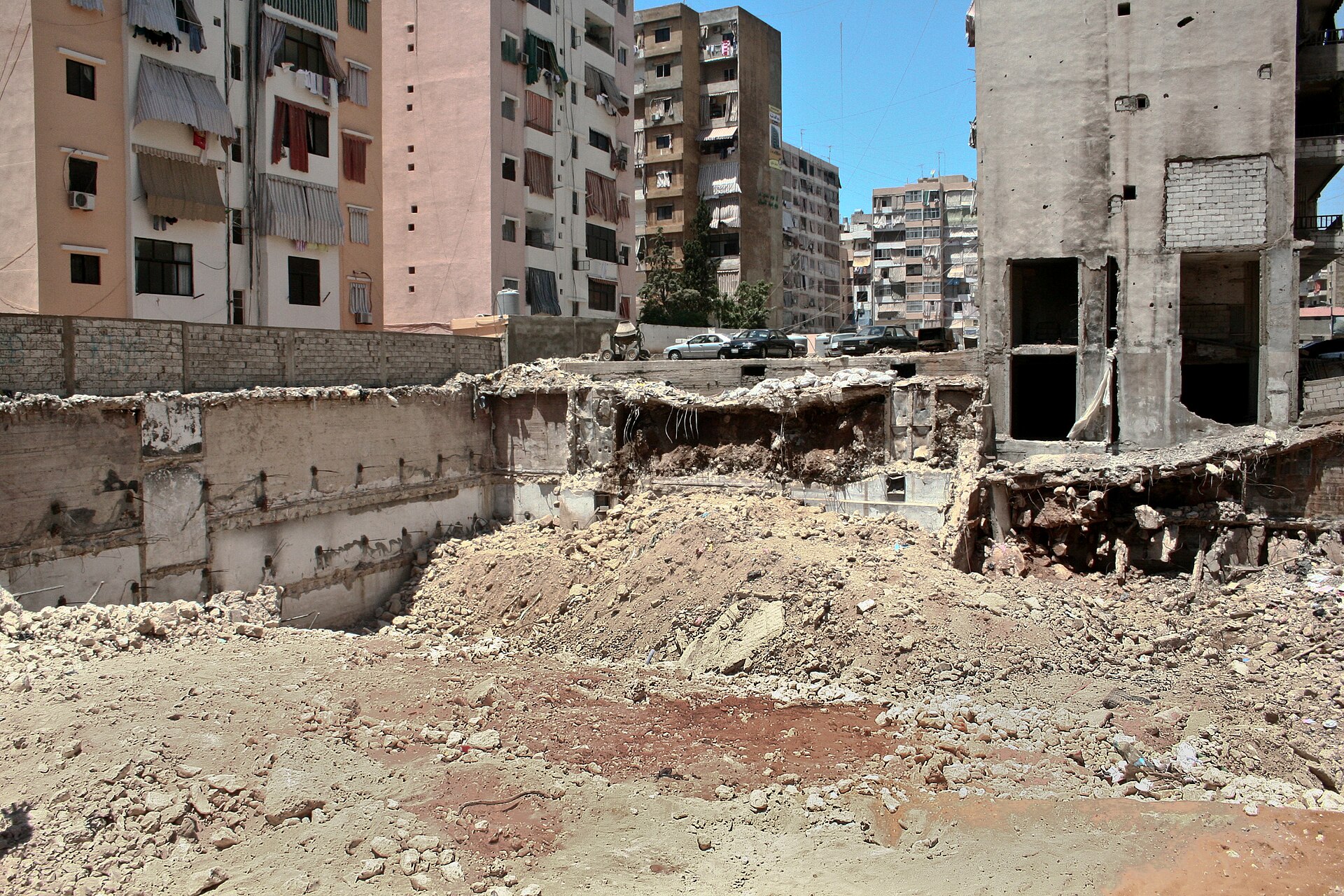
Lebanon’s own Prime Minister Nawaf Salam criticized Iran for treating his country “as merely a card” in negotiations — a statement made to CBS News on the same day Iran’s cessation conditioned resumed operations on Israeli actions in the country Salam governs. The June 4 US-Israel-Lebanon trilateral ceasefire excluded Saudi Arabia from its formalization and from the June 22 Washington follow-on session. The condition governing PSAB’s safety is being negotiated in a sequence of rooms Saudi Arabia has not been invited to enter.
Max Becker-Hicks of the New Lines Institute placed the structural exposure in legal terms: “The lack of any codified U.S.-Saudi mutual defense treaty raises the risk of a U.S. disengagement or an inadequate settlement with Iran.” The US defense commitment, he added, is “largely conditional and susceptible to domestic political pressures” and “unlikely to provide adequate protection.” PSAB operates under no SOFA. Access is revocable — and was revoked, in May, when Saudi Arabia denied the base and overflight for Operation Project Freedom.
Iran’s simultaneous declaration on June 8 that Hormuz remains closed and US talks are “no longer feasible” closed all three diplomatic tracks at once — the Oman bridge, the Pakistan channel, and the Washington-Tehran MOU framework. Hormuz Stays Closed as Iran Halts Strikes, Declares Talks Dead traces what each track’s simultaneous suspension means for Saudi Arabia’s 18-day diplomatic silence. The subsequent Operation Nasr continued this pattern directly: targeting Nevatim and Tel Nof while excluding Saudi territory entirely, confirming the Helsinki bilateral track had survived its most severe test.
Frequently Asked Questions
Has Saudi Arabia publicly responded to Iran’s targeting of PSAB?
Saudi Arabia has not issued a direct public response to Ghalibaf’s June 7 designation of PSAB as a legitimate target. However, Saudi Arabia conducted secret airstrikes on Iranian drone and missile-launch sites during the conflict — strikes never officially acknowledged by Riyadh but known to Tehran. Saudi Arabia also expelled Iranian defense officials on March 21 but has not closed its embassy in Tehran, and Iran has not closed its embassy in Riyadh. The posture — striking Iranian territory while maintaining a diplomatic presence, absorbing PSAB attacks without public protest — reflects undeclared hostility without formal escalation.
What is the replacement timeline for the E-3G AWACS destroyed at PSAB?
The E-3G Sentry fleet is being retired, not replaced on a one-for-one basis. The US Air Force’s planned successor — the Boeing E-7A Wedgetail, based on the 737-700 airframe — is not expected to reach initial operational capability until 2027-2028. Boeing’s Wedgetail production line in Australia has faced repeated delays. The 120,000-square-mile surveillance footprint and 600-target tracking capacity that AWACS 81-0005 provided has no interim replacement. CENTCOM has shifted partial coverage to space-based sensors and ground-based radar, neither of which replicates the E-3G’s role as an airborne command post during active engagements.
How does the H.Con.Res.38 War Powers vote affect PSAB’s status?
The House passed H.Con.Res.38 on June 3 by 215-208 — the first War Powers Resolution to clear either chamber on a final vote since the February 28 conflict began. Four Republican crossovers (Representatives Fitzpatrick of Pennsylvania, Massie of Kentucky, Barrett of Michigan, and Davidson of Ohio) provided the margin. The resolution is legally unenforceable under INS v. Chadha (1983), but the 215 figure is permanently citable. For PSAB specifically, the combination of War Powers opposition in Congress and the absence of a SOFA creates a compound vulnerability: political pressure against US presence that requires no legislative action to take effect, because access exists by invitation rather than treaty.
What triggered the Al-Kharj civil defense alert on June 8?
Saudi Civil Defense sounded missile alert sirens in Al-Kharj governorate on June 8 during the window between Iran’s overnight strikes on Israel and the Khatam al-Anbiya cessation announcement. The Iranian military subsequently denied firing at PSAB. The all-clear was issued, as AP reported, “without elaborating.” Al-Kharj has experienced multiple alert cycles since the March 27 PSAB strike — the system provides warnings to residents but does not confirm whether incoming threats were real, intercepted, or false positives. The June 8 alert activated while approximately fifteen Israeli targets across five Iranian cities were being struck, meaning Saudi civil defense responded during a period of active Israeli-Iranian exchanges in which PSAB’s targeting status was doctrinally live. On June 10, Iran acted on that targeting doctrine against three other capitals — Bahrain, Kuwait, and Jordan — while again excluding Saudi Arabia; Iran Struck Three Capitals Overnight. The Fourth Is Counting Its Interceptors. explains what that omission reveals about Tehran’s coercive strategy toward Riyadh.