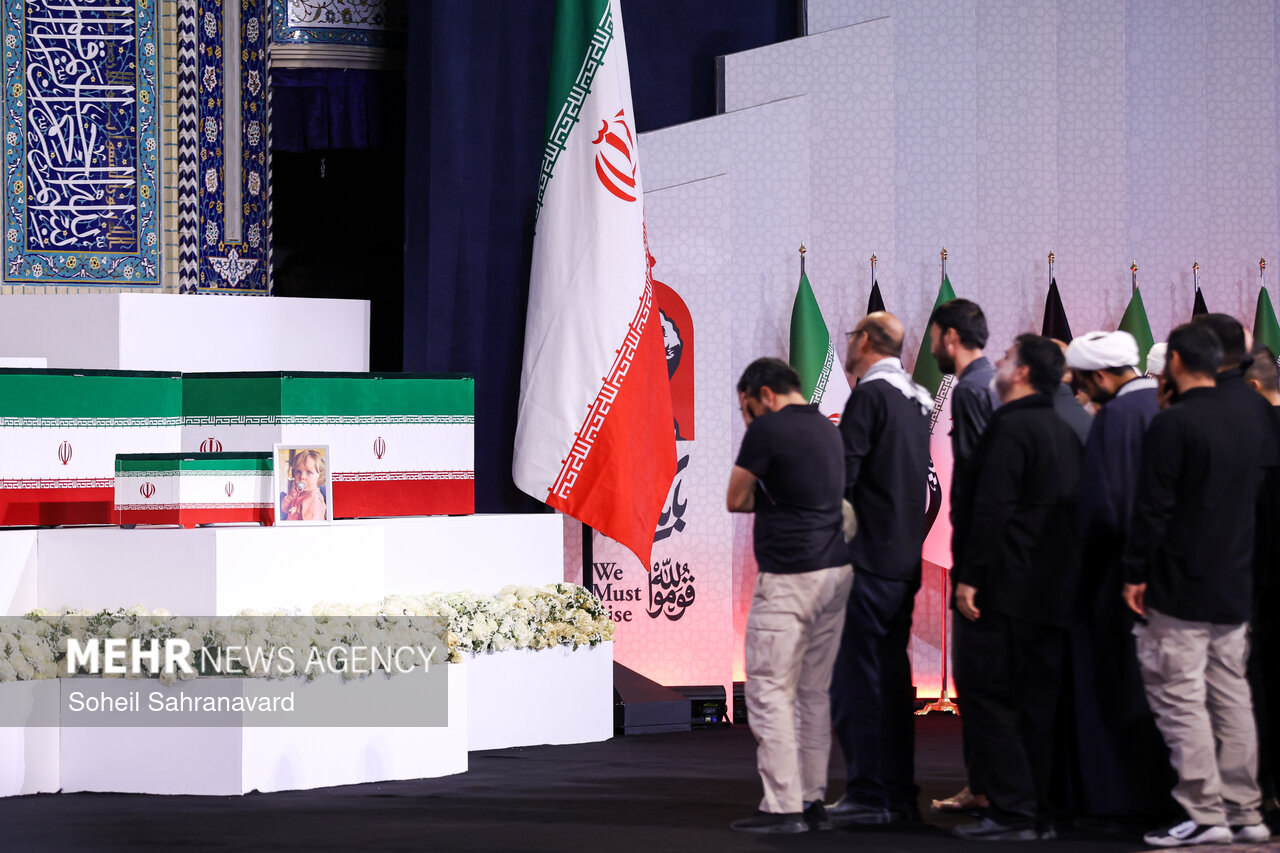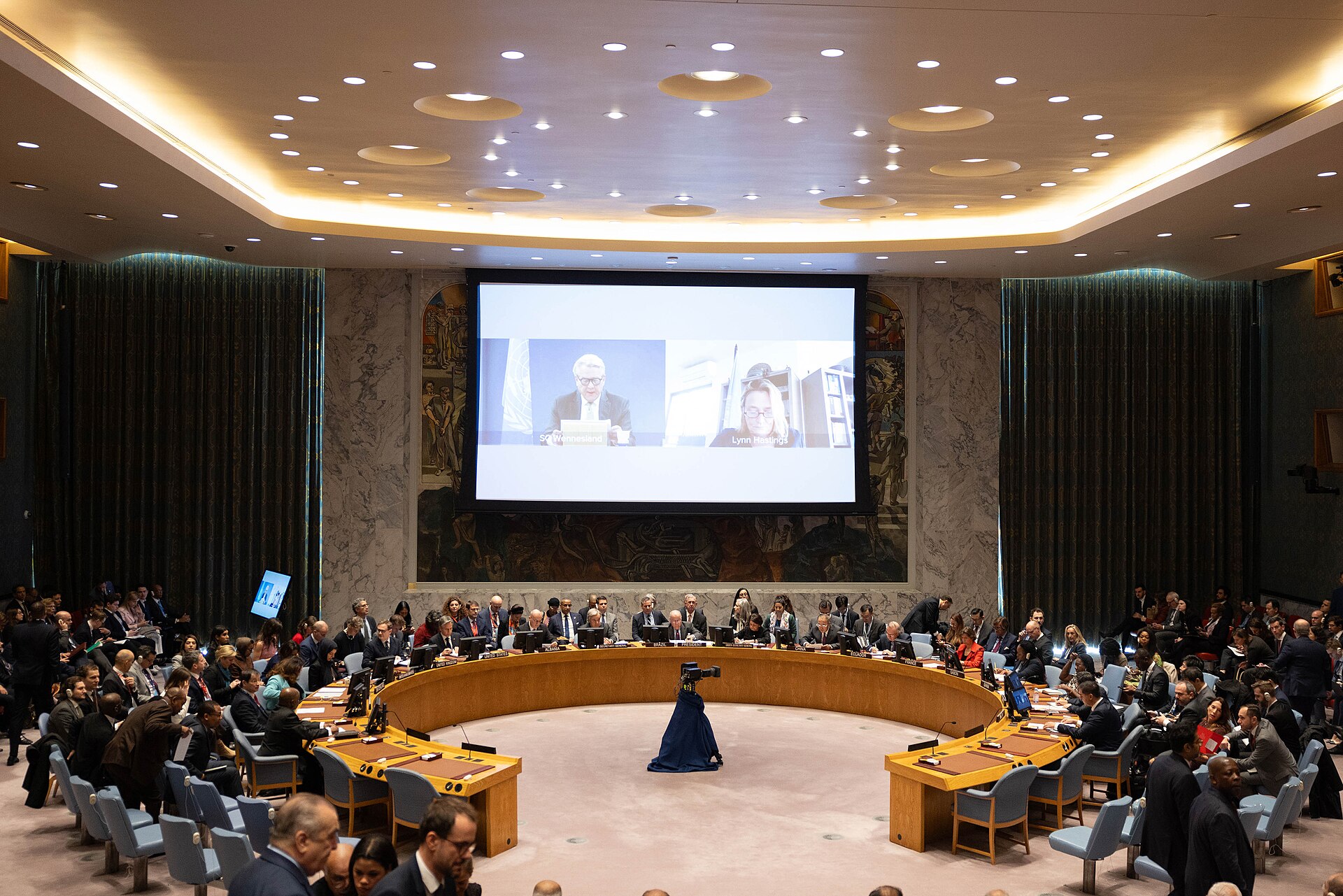

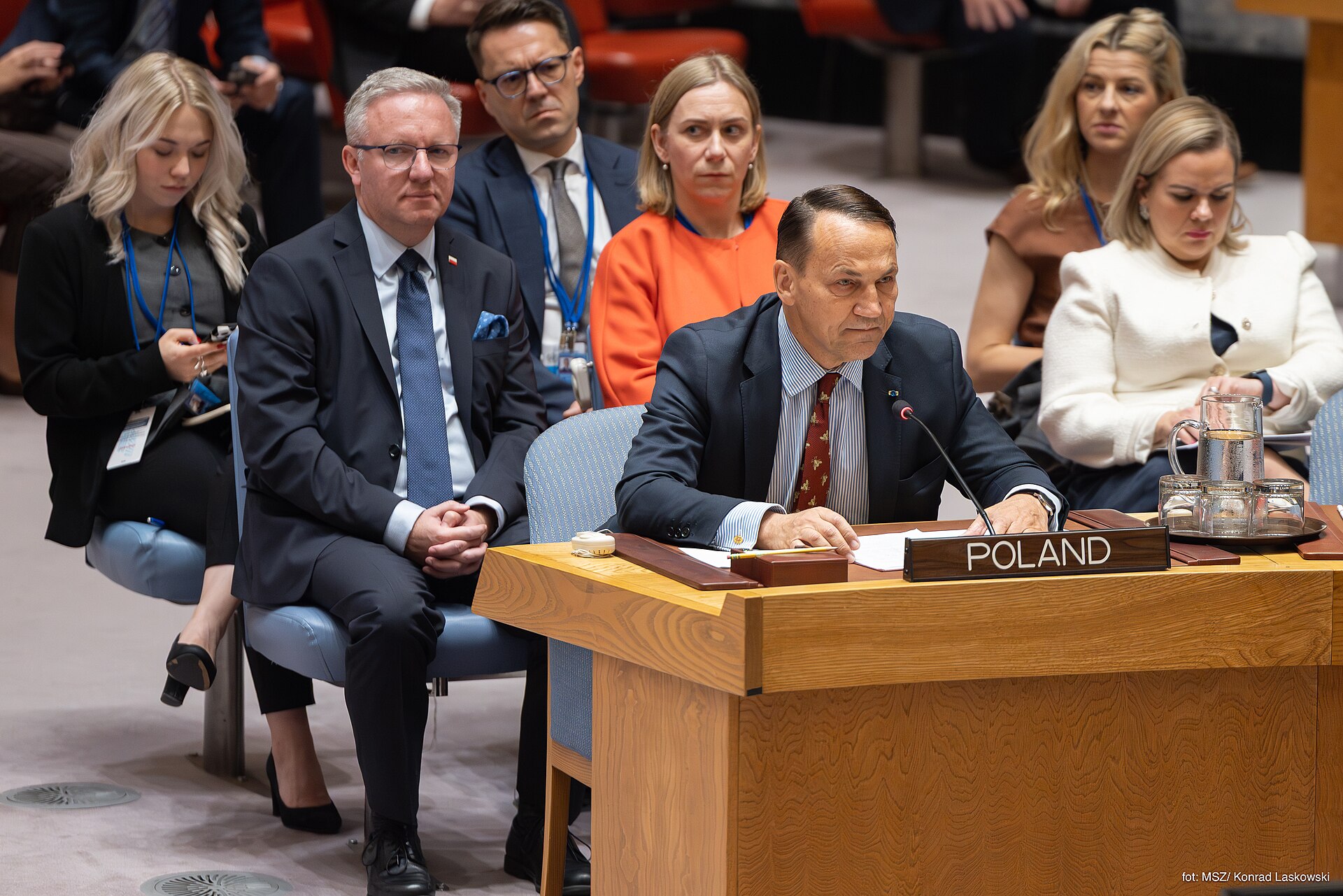
NEW YORK — Pakistan does not speak for one side at the Security Council. It speaks for all of them — and on July 4, 2026, the contradictions arrived simultaneously. At the emergency session convened by Bahrain following Iran’s June 28 strikes on Ali Al Salem airbase in Kuwait and Port Salman Naval Base in Bahrain, Pakistan’s UN Ambassador Asim Iftikhar Ahmad “unequivocally condemned the attacks on GCC member states” and reaffirmed Pakistan’s “full solidarity” with Bahrain and Kuwait. In the same statement, he praised the Islamabad MOU as “a victory of robust and determined diplomacy.” At that moment, Prime Minister Shehbaz Sharif, Army Chief Field Marshal Asim Munir, Deputy PM and Foreign Minister Ishaq Dar, National Assembly Speaker Ayaz Sadiq, PPP Chairman Bilawal Bhutto Zardari, and Sindh Chief Minister Murad Ali Shah were in Tehran for the state funeral of Ayatollah Ali Khamenei.
Pakistan is simultaneously the GCC’s defender at the United Nations, the mourner-in-chief in Tehran, the proposed venue for round three of US-Iran talks, and the courier carrying Saudi Arabia’s back-channel messages. The question is not whether these roles conflict. The question is which one Pakistan will abandon first — and who will make the choice for it.
Table of Contents
- The Split-Screen
- How Did Pakistan Vote at the Security Council in March?
- What Does Saudi Arabia Hold Over Pakistan?
- The Defense Pact Pakistan Told Iran About
- Can Pakistan Mediate While Condemning One Side?
- The IRGC Channel Pakistan Doesn’t Have
- The Funeral Delegation’s Other Message
- Why Pakistan Repaid Abu Dhabi and Not Riyadh
- What Happens When Islamabad Hosts Round Three?
- Frequently Asked Questions
The Split-Screen
The timing was not accidental. Bahrain called the emergency session knowing that Pakistan’s civilian and military leadership was in Tehran. The session forced Islamabad to choose between diplomatic silence — which would have been read in Riyadh and Washington as acquiescence to Iran’s strikes — and public condemnation, which Tehran would interpret as the host of its peace process aligning with the adversary.
Ambassador Ahmad chose condemnation. “Pakistan has been categorically condemning attacks against the GCC countries,” he told the Council, “and once again expresses its full solidarity with our brothers and sisters in Bahrain and Kuwait.” The language tracked precisely with the June 25 US-GCC joint statement that Iran’s foreign ministry had already condemned as “meddlesome, irresponsible, and provocative,” warning regional states against “continuing their hostile alignment with Washington.”
The strikes themselves were severe. On June 28, the IRGC launched ballistic missiles and drones at Ali Al Salem — the primary US forward base in Kuwait — and Port Salman Naval Base in Bahrain, headquarters of the US Fifth Fleet. Iran characterized the attacks as retaliation for American violations of the MOU’s Clause 1. The GCC Secretary-General called them “a flagrant violation of sovereignty.”
Pakistan condemned the violation of sovereignty. It did not condemn Iran by name for committing it. This is the grammar of Pakistan’s four-way diplomacy — active voice for solidarity, passive voice for blame.
The Middle East briefing 3,000+ readers start their day with.
One email. Every weekday morning. Free.
How Did Pakistan Vote at the Security Council in March?
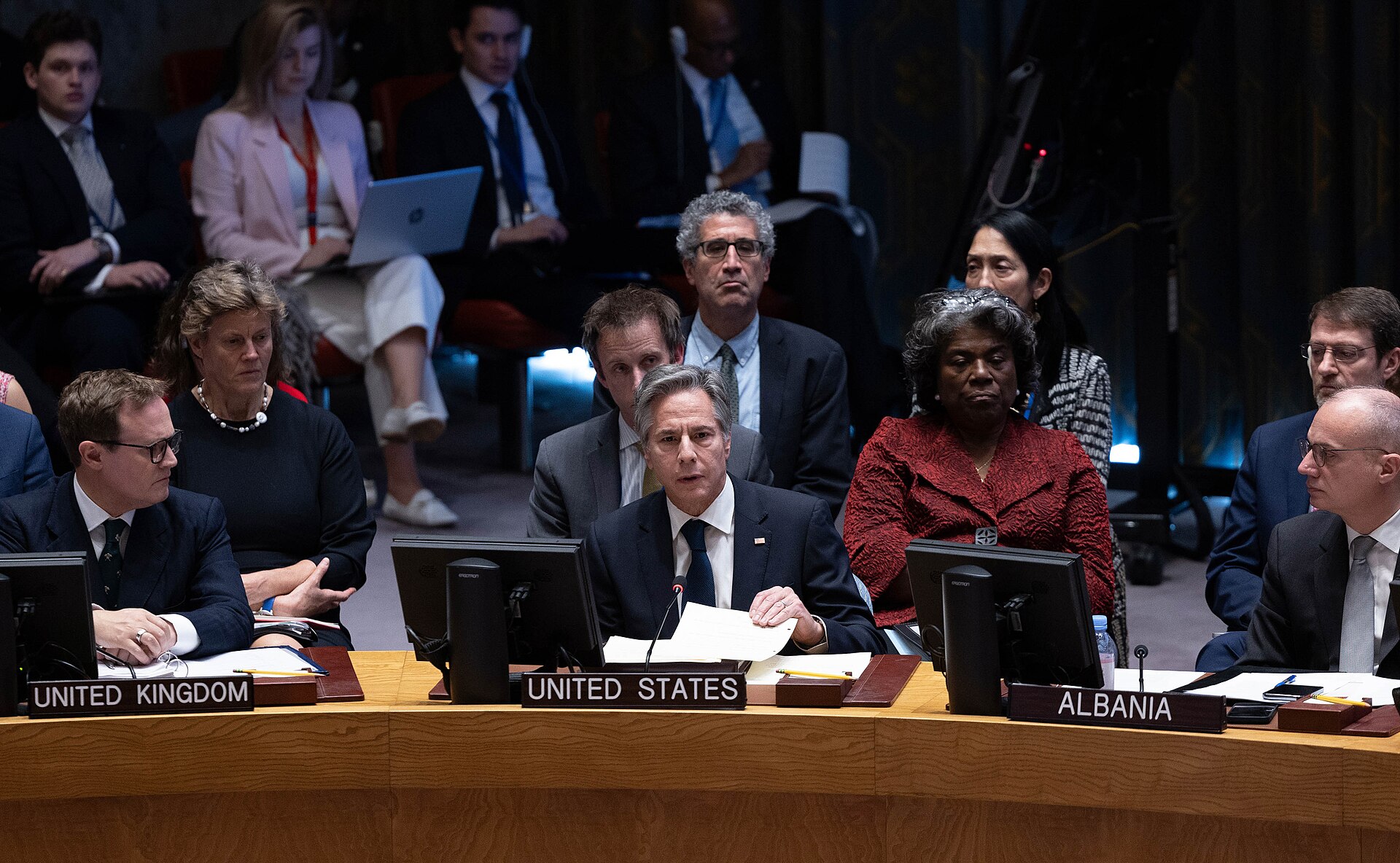
Pakistan voted yes on UNSC Resolution 2817, adopted March 11, 2026, by a 13-0-2 margin, which condemned Iran’s “egregious attacks” against GCC states. The resolution was co-sponsored by 135 UN member states — one of the largest co-sponsor lists in Security Council history. Pakistan’s yes vote placed it firmly in the coalition that included the United States, the United Kingdom, France, and every GCC member.
Pakistan also voted yes on Russia’s counter-draft resolution at the same session. That draft received four votes — China, Russia, Pakistan, and Somalia — and was rejected. The Russian text offered process language: dialogue, de-escalation, respect for sovereignty without naming Iran as the aggressor.
A dual yes — on the condemnation and on the alternative — is diplomatically unusual. It is also Pakistan’s revealed doctrine. The first vote satisfies Riyadh, Washington, and the GCC bloc. The second vote provides cover with Tehran and Beijing. The fact that the Russian draft had no chance of passing made Pakistan’s yes costless in practical terms and valuable as a signal to Iran that Islamabad had tried.
The July 4 statement followed the same architecture. Condemn the strikes (Riyadh’s requirement). Praise the MOU (Tehran’s requirement). Keep channels open (Pakistan’s requirement). Ahmad closed his remarks by noting that “the channels of communication remain open, and we are persisting in our efforts geared toward ushering peace, security, and tranquility that will benefit the entire region and all countries without exception.” The sentence said nothing and everything.
What Does Saudi Arabia Hold Over Pakistan?
The financial architecture of Pakistan’s mediator role is built on Saudi deposits. In April 2026, at the World Bank-IMF Spring Meetings, Saudi Arabia confirmed the rollover of a $5 billion deposit in the State Bank of Pakistan for an extended, multi-year period. Separately, Riyadh extended a $3 billion SBP deposit — originally due December 8, 2025 — through December 2026. Together, these deposits constitute a structural pillar of Pakistan’s foreign exchange reserves, which underpin its $7 billion IMF Extended Fund Facility program.
The remittance pipeline is equally binding. Saudi Arabia accounts for approximately 25 percent of Pakistan’s total global remittances. In fiscal year 2025, Pakistani workers in the Kingdom sent home roughly $9 billion. In FY26, through May alone, Saudi remittances reached $6.168 billion, up 4.6 percent year-on-year. A single month — May 2026 — produced $1.025 billion.
The labor dependency runs deeper than the money. In 2025, 530,256 Pakistani workers migrated to Saudi Arabia, representing 69.54 percent of all registered overseas Pakistani workers that year. Islamabad’s stated target is one million workers deployed to the Kingdom by 2030, with 400,000 earmarked specifically for FIFA 2034 World Cup construction projects. This is not a trade relationship. It is a structural dependency in which Saudi Arabia holds both the deposit floor under Pakistan’s reserves and the employment pipeline that prevents its current account from collapsing.
When Pakistan’s UN ambassador condemns strikes on GCC sovereignty, the condemnation is not a foreign policy choice made in the abstract. It is a statement issued by a country whose central bank reserves are partially denominated in Saudi goodwill.
The Defense Pact Pakistan Told Iran About
On April 14, 2026 — two days after the Islamabad Talks ended without a deal — Pakistan and Saudi Arabia signed a Mutual Strategic Defense Agreement. Al Jazeera reported the pact’s language as “an attack on one is an attack on both.” Pakistan’s defense minister personally conveyed the existence of the agreement to Iranian Foreign Minister Abbas Araghchi, telling him that Pakistan had a defense pact with Saudi Arabia “and the whole world knows about it.”
The disclosure was deliberate. A mediator does not normally inform one party that it has a mutual defense commitment to the other. Pakistan did so because the alternative — having Iran learn of the pact through leaks or Saudi announcements — would have been worse. By front-loading the disclosure, Islamabad attempted to frame the agreement as compatible with mediation: defensive, transparent, not directed at Iran.
An unnamed three-star Pakistani general told Al Jazeera that “Pakistan can hold both roles only if deployment remains strictly defensive, time-bound, and transparently limited. The moment the theatre shifts to offensive operations, or the perception of offensive coordination emerges, the dual role collapses.” On April 11, the same day the Islamabad Talks opened, Pakistan sent fighter jets to Saudi Arabia.
The defense architecture has since thickened. On July 1, 2026, Saudi Arabia announced a security Quintet with Turkey, Pakistan, Egypt, and Qatar — with the UAE conspicuously excluded. The following day, Interior Minister Mohsin Naqvi signed a security cooperation MoU with Saudi counterpart Prince Abdulaziz bin Saud in Riyadh. Pakistan is not a neutral mediator that happens to have security ties with one party. It is a treaty ally of Saudi Arabia that has volunteered to mediate with the country the treaty is designed to deter.
Can Pakistan Mediate While Condemning One Side?
The standard for credible mediation is not neutrality — no mediator is truly neutral — but perceived balance. Oman mediated the original JCPOA back channel between Washington and Tehran in 2012-2013 without being neutral; it had deep ties to both sides. But Oman never condemned Iran at the Security Council while hosting the talks. Qatar maintained its mediator role in Afghanistan negotiations while hosting a Taliban political office, but Qatar did not simultaneously sign a mutual defense pact with Kabul.
Pakistan’s position is structurally different. The Islamabad Talks of April 11-12 — the first direct US-Iran dialogue since 1979 — lasted roughly 21 hours and produced the MOU. Pakistan’s team included PM Sharif, Army Chief Munir, and FM Dar. The US sent Vice President Vance, envoy Steve Witkoff, and Jared Kushner. Iran dispatched Speaker Ghalibaf and FM Araghchi. The talks were Pakistan’s diplomatic capstone — the event that, as Michael Kugelman of the Wilson Center noted, “elevated its global standing.”
That elevation came with a structural cost. Kugelman added the caveat: “With mediation challenges mounting, Pakistan will soon need to grapple with the difficult implications of taking on a role that has elevated its global standing but also put it in a potentially precarious spot.” The July 4 split-screen — condemnation in New York, mourning in Tehran — is the precariousness made visible.
Iran has not publicly withdrawn from the Islamabad channel. But the International Crisis Group reported that Tehran has “at least publicly balked” at sending a delegation to Islamabad while the Hormuz blockade remains in place. The Doha rounds have already displaced Islamabad as the active venue. The question is whether Pakistan’s UNSC condemnation gives Tehran the pretext to formalize what it has already signaled informally.
The IRGC Channel Pakistan Doesn’t Have
Pakistan’s mediation operates through Iran’s civilian diplomatic apparatus: the Foreign Ministry, the presidency, the Majlis speakership. It does not have a direct channel to the Islamic Revolutionary Guard Corps. This is the structural gap the International Crisis Group identified as Pakistan’s primary vulnerability — and it has widened since Khamenei’s death.
The IRGC controls Iran’s missile program, its naval operations in the Strait of Hormuz, the Persian Gulf Security Authority’s fee collection apparatus, and — through the Quds Force — its regional proxy network. Post-Khamenei, with Mojtaba installed as Supreme Leader and lacking the institutional authority his father accumulated over 35 years, the IRGC’s operational autonomy has expanded. Ghalibaf’s warning that Iran will “resume proportionate actions” if the US and Israel fail to meet MOU commitments was delivered through ISNA — not through diplomatic channels — and directed at an audience Islamabad cannot reach.
Husain Haqqani of the Hudson Institute observed that Pakistan “has consistently kept China informed about its role as a mediator and sought Chinese support in convincing the Iranian regime to agree to dialogue with the United States.” The need for Chinese intermediation to reach Tehran reveals the limit of Pakistan’s own access. A mediator who requires a second mediator to reach one of the principals is not a mediator — it is a relay station.
The Hormuz blockade, the PGSA fee regime, the June 28 strikes on Kuwait and Bahrain — these were IRGC decisions, approved through IRGC command structures, executed by IRGC missile units. Pakistan’s FM Dar can brief Saudi FM Faisal on what Iran’s diplomats say. He cannot brief him on what the IRGC will do. And the IRGC is not sending its briefings through Islamabad.
The Funeral Delegation’s Other Message
Pakistan sent its largest overseas delegation in recent memory to Tehran for Khamenei’s funeral. The composition was deliberate: PM Sharif (head of government), Army Chief Munir (head of the military), FM Dar (chief diplomat), National Assembly Speaker Sadiq (head of the legislature), Bilawal Bhutto Zardari (leader of the main opposition party), and Sindh CM Shah (representing Pakistan’s most Iran-proximate province). This was not a courtesy call. It was a whole-of-government display of respect for a leader whose armed forces had, six days earlier, struck two of Pakistan’s closest allies.
Compare the Saudi response. Riyadh sent Deputy FM El-Khereiji — “not officially expected.” No condolence statement issued. No senior royal attended. The last senior Saudi official in Tehran was FM Faisal at Raisi’s funeral in May 2024, and the military attaché was expelled in March 2026. The rank differential between Pakistan’s delegation (PM + Army Chief) and Saudi Arabia’s (Deputy FM) was impossible to miss in Tehran.
For Pakistan, the funeral served three functions. First, it demonstrated continued access to Iran’s post-Khamenei power structure at the moment of maximum institutional uncertainty. Second, it provided a setting for Sharif and Munir to assess Mojtaba’s standing and the IRGC’s disposition firsthand — intelligence that Riyadh cannot gather on its own. Third, it insulated Pakistan against the charge, inevitable after the UNSC condemnation, that it had abandoned balance entirely.
The problem is sequencing. Dar briefed Faisal while Sharif flew to Tehran — the Saudi foreign minister received Pakistan’s intelligence from the Doha round before the funeral delegation departed. The briefing positioned Pakistan as Riyadh’s eyes in a capital Riyadh cannot enter. The UNSC condemnation, hours later, confirmed whose interests that intelligence served.
Why Pakistan Repaid Abu Dhabi and Not Riyadh
In April 2026, Pakistan completed repayment of the UAE’s entire $3.45 billion in State Bank deposits. The same month, Saudi Arabia rolled over its $5 billion deposit for a multi-year term and extended the separate $3 billion facility through December 2026. The result is an asymmetry that has not received sufficient attention: the UAE is financially out of Pakistan, and Saudi Arabia is financially deeper in.
This matters because the UAE was excluded from the Saudi-led security Quintet announced July 1. Abu Dhabi’s absence from the grouping — alongside Turkey, Pakistan, Egypt, and Qatar — reflects a broader Saudi-UAE fracture running through OPEC, GCC defense coordination, and the Iran file. Pakistan’s deposit repayment to the UAE and its deposit dependence on Saudi Arabia track perfectly with this realignment: Islamabad is migrating its financial obligations away from a patron Riyadh is freezing out and toward a patron Riyadh is building a security architecture around.
Pakistan’s 80 percent energy import dependency on Gulf states — a figure cited by the Stimson Center — further constrains its diplomatic freedom. With 530,256 workers in Saudi Arabia, $8 billion in Saudi deposits anchoring its reserves, and an IMF program that assumes those deposits remain in place, Pakistan’s mediator role is not a choice. It is a performance staged on a Saudi-financed set.
What Happens When Islamabad Hosts Round Three?
Islamabad is “under consideration” as the venue for round three of US-Iran talks, with the Doha track paused July 4-9 for the funeral period. If round three returns to Islamabad, Pakistan will host negotiations between two parties while maintaining a mutual defense pact with the ally of one, having condemned the other’s military strikes at the Security Council, and having attended the funeral of the other’s Supreme Leader with its entire civilian-military leadership.
The 2016 precedent is instructive. Pakistan’s last attempt at Iran-Saudi mediation collapsed when Saudi Arabia executed Shi’a cleric Sheikh Nimr al-Nimr. Pakistan condemned the execution but took no punitive action against Riyadh. Iran did not forget. The institutional memory of Pakistan’s revealed preference — condemn in words, protect in practice — is precisely why Tehran has balked at returning to Islamabad.
Iran’s foreign ministry statement of June 26 warned against states “continuing their hostile alignment with Washington” — language broad enough to encompass Pakistan’s UNSC votes. FM Baghaei stated that Iran’s defense capabilities are “essential to its national security and cannot be the subject of negotiations or compromise.” The statement was aimed at Washington but applies equally to any mediator who condemns the exercise of those capabilities while claiming to facilitate negotiations about them.
Pakistan’s MNNA designation — Major Non-NATO Ally, active since June 2004 — carries zero legal US defense obligation. But it signals alignment within the US-Iran framework that Tehran reads clearly. Pakistan brokered the April 8 ceasefire between Washington and Tehran. It hosted the Islamabad Talks that produced the MOU. It is now simultaneously the GCC’s advocate at the Security Council and the proposed host of the process designed to end the conflict the GCC is fighting. The unnamed three-star general’s warning — “the moment the perception of offensive coordination emerges, the dual role collapses” — may already have been overtaken by events.
| Role | Action on July 3-4 | Primary Beneficiary | Tension With |
|---|---|---|---|
| GCC Defender (UNSC) | Condemned Iran’s strikes on Kuwait and Bahrain; voted yes on Resolution 2817 (March) | Saudi Arabia, Bahrain, Kuwait | Iran (Tehran), Mediator credibility |
| Funeral Mourner (Tehran) | PM, Army Chief, FM, Speaker, opposition leader in Tehran for Khamenei ceremony | Iran, Post-Khamenei intelligence gathering | GCC states (who did not attend at leadership level) |
| Proposed Round 3 Host (Islamabad) | Venue “under consideration” for next US-Iran talks | Pakistan’s global standing, US-Iran process | Iran (which has balked at returning to Islamabad) |
| Saudi Back-Channel Courier | Dar briefed FM Faisal on Doha round before departing for Tehran | Saudi Arabia (which has zero seats at US-Iran talks) | Iran (if disclosed), Mediator neutrality |
| Category | Amount | Source |
|---|---|---|
| SBP Deposit (multi-year rollover) | $5 billion | World Bank-IMF Spring Meetings, April 2026 |
| SBP Deposit (extended to Dec 2026) | $3 billion | Express Tribune, April 2026 |
| FY25 Remittances from Saudi Arabia | ~$9 billion | Arab News; State Bank of Pakistan |
| FY26 Remittances (Jul-May) | $6.168 billion (+4.6% YoY) | State Bank of Pakistan |
| Workers Migrated to KSA (2025) | 530,256 (69.54% of total) | Business Recorder |
| UAE Deposits (repaid April 2026) | $3.45 billion (zero remaining) | Business Recorder |
| IMF Extended Fund Facility | $7 billion | IMF |
Frequently Asked Questions
Does Pakistan’s Major Non-NATO Ally status affect its mediator role?
Pakistan’s MNNA designation, active since June 2004, carries no legal US defense obligation — Washington is not required to defend Pakistan under attack, nor is Pakistan required to join US military operations. In the Iran-Saudi-US context, the designation matters less for its formal content than for the signal it sends to Tehran: Pakistan sits within the US alignment architecture. The April 14, 2026 Mutual Strategic Defense Agreement with Saudi Arabia is more operationally binding than the MNNA designation in the current crisis — it commits Pakistan to treat an attack on Saudi Arabia as an attack on itself. Iran has not publicly cited either the MNNA status or the MSDA as a disqualifying factor for Pakistan’s mediation role, but both constrain the space Islamabad can claim as genuinely neutral ground.
Why was Pakistan’s dual UNSC vote in March 2026 unusual?
Voting yes on both the Western-backed Resolution 2817 (which condemned Iran) and the Russian counter-draft (which offered process language without naming Iran) is procedurally rare. States typically vote for one and against the other to signal alignment. Pakistan’s dual yes registered with both blocs simultaneously — a tactic that works only when the alternative draft has no chance of passing, making the second vote a costless gesture. Somalia was the only other state to vote yes on both. The pattern — substantive alignment with the majority, symbolic alignment with the minority — is consistent with Pakistan’s approach throughout the crisis.
Has Iran publicly objected to Pakistan’s UNSC positions?
No specific Iranian statement targeting Pakistan’s UNSC votes has been publicly reported. However, Iran’s June 26 foreign ministry statement condemning the US-GCC joint communiqué as “meddlesome, irresponsible, and provocative” and warning states against “hostile alignment with Washington” is broad enough to encompass any state that condemned the strikes — including Pakistan. The Crisis Group reported that Iran has “at least publicly balked” at returning to Islamabad for round three, though the stated reason is the Hormuz blockade rather than the UNSC vote. The absence of direct criticism may reflect Iran’s calculation that publicly burning the Pakistan channel would leave it with fewer options, not more.
What is Pakistan’s historical track record as a mediator between Iran and Saudi Arabia?
Pakistan attempted mediation in the 1980s during the Iran-Iraq War under Zia-ul-Haq, maintaining official neutrality under intense pressure from Washington and Arab states. A more direct mediation effort in 2016, during heightened Iranian-Saudi tensions, collapsed when Saudi Arabia executed Shi’a cleric Sheikh Nimr al-Nimr. Pakistan condemned the execution but took no action against Riyadh — a sequence Tehran logged as Pakistan’s revealed preference under pressure. The 2026 Islamabad Talks, which produced the first direct US-Iran dialogue since 1979, represent Pakistan’s most ambitious mediation to date. The April 11-12 talks lasted approximately 21 hours and involved Pakistan’s PM, Army Chief, and FM as hosts alongside US VP Vance and Iran’s Speaker Ghalibaf.
How does China factor into Pakistan’s mediator role?
Husain Haqqani of the Hudson Institute noted that Pakistan “has consistently kept China informed about its role as a mediator and sought Chinese support in convincing the Iranian regime to agree to dialogue with the United States.” This triangulation reveals that Pakistan cannot reach Tehran’s decision-making apparatus independently — it needs Beijing as an intermediary to the intermediary. China’s own positioning complicates this further: Beijing voted yes on the Russian counter-draft at the March UNSC session, sent sub-FM He Wei to Khamenei’s funeral (the same tier as Saudi Arabia’s Deputy FM El-Khereiji), and signed an explicit Hormuz freedom-of-navigation commitment with Saudi FM Faisal during his Beijing visit on July 1-2 — language China denied Tehran in the same period. The accumulation of roles — UNSC condemner, Tehran mourner, nuclear-round host — reached its clearest expression on July 4, when Saudi-owned broadcasters confirmed a July 11 date in Islamabad for talks placing nuclear issues on the agenda for the first time: Munir, who had just stood with IRGC commanders at Khamenei’s funeral, would return to host the round that answers the question of what Pakistan speaks for — and Saudi Arabia cannot enter. How Pakistan’s MOU co-guarantor status displaced Saudi Arabia from the negotiating architecture is examined in Pakistan Holds the Guarantee Saudi Arabia Cannot Buy.