ST. PETERSBURG — Saudi Arabia’s energy minister stood on a stage in St. Petersburg this week as Vladimir Putin’s guest of honor, signed more than thirty bilateral cooperation agreements alongside Russia’s deputy prime minister, and returned to a kingdom whose air defence depends entirely on a single Lockheed Martin facility in Camden, Arkansas, that the Pentagon has already claimed through the end of the decade. Prince Abdulaziz bin Salman led more than two hundred officials to the 29th St. Petersburg International Economic Forum — the largest Saudi delegation to a Russian summit in the history of the bilateral relationship — one day before he and the same Russian official would jointly approve another round of OPEC+ production increases that neither country can deliver at prices either can survive.
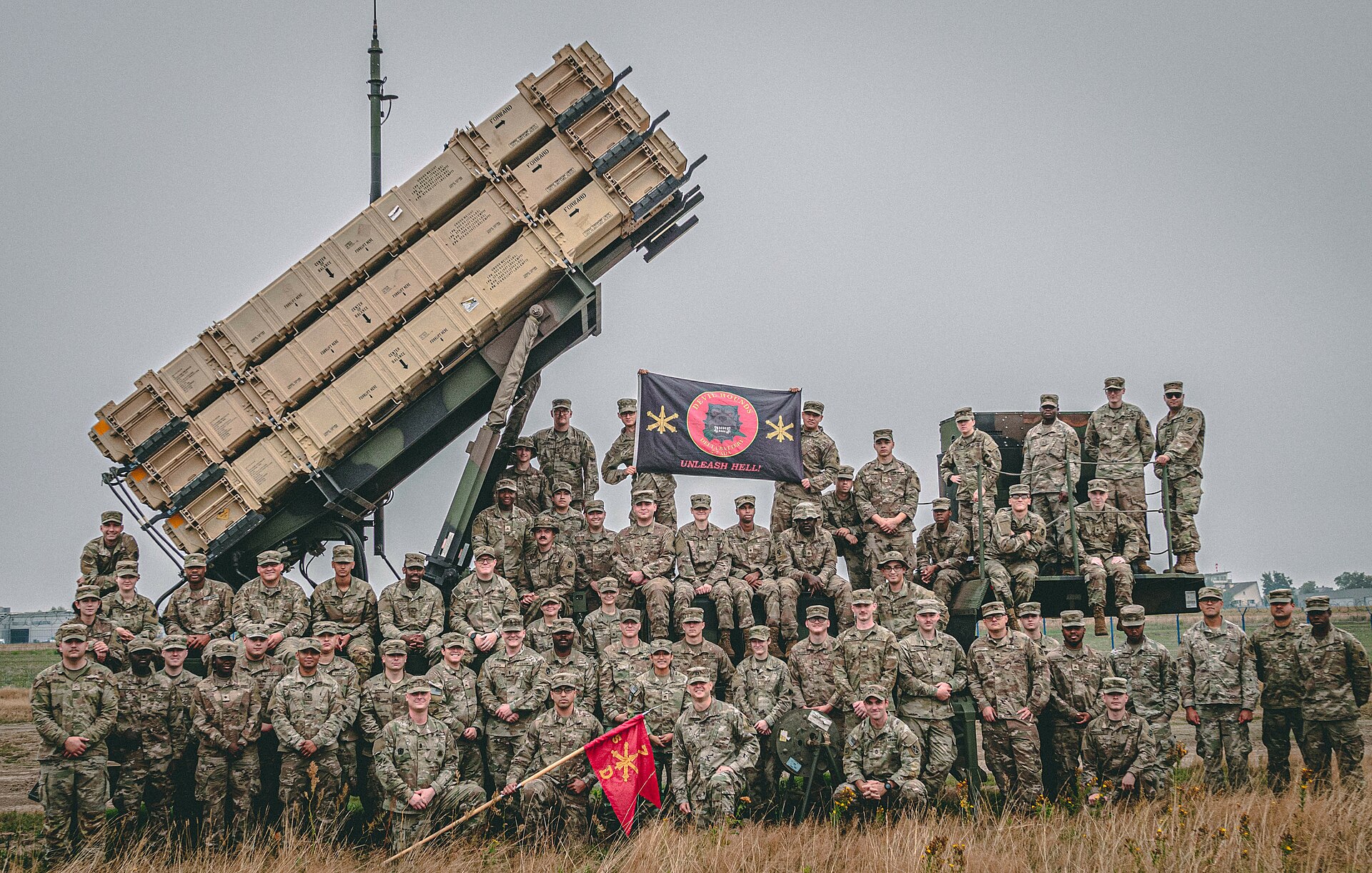
The contradiction is structural, not diplomatic. Saudi Arabia needs American missiles to survive a war that is simultaneously generating record oil revenues for Russia — the country whose deputy prime minister just countersigned those thirty agreements. It also needs the OPEC+ framework it co-manages with Moscow to prevent the fiscal collapse that will follow if the interceptor supply runs out before the war ends.
Table of Contents
- The Guest of Honor
- What Does Russia Get From a War That Is Depleting Saudi Arabia’s Missiles?
- The OPEC+ Meeting Started the Day SPIEF Ended
- A Hundred Years of Relations and Nothing That Stops a Missile
- Where Was Washington While Abdulaziz Was in St. Petersburg?
- Can Saudi Arabia Run Three Incompatible Relationships at Once?
- How Far Can Saudi-Russian Trade Go Before Washington Objects?
- Frequently Asked Questions
The Guest of Honor
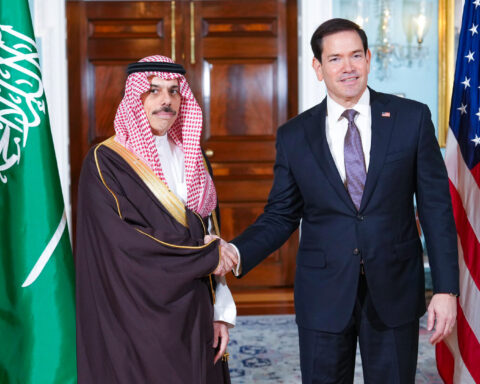
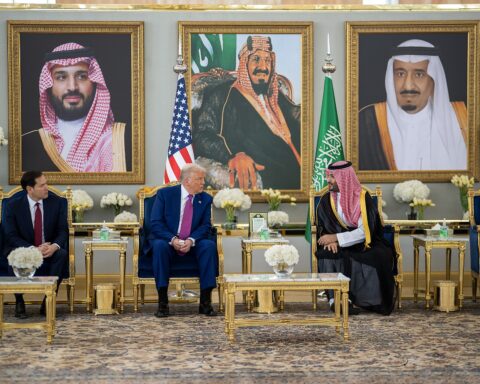
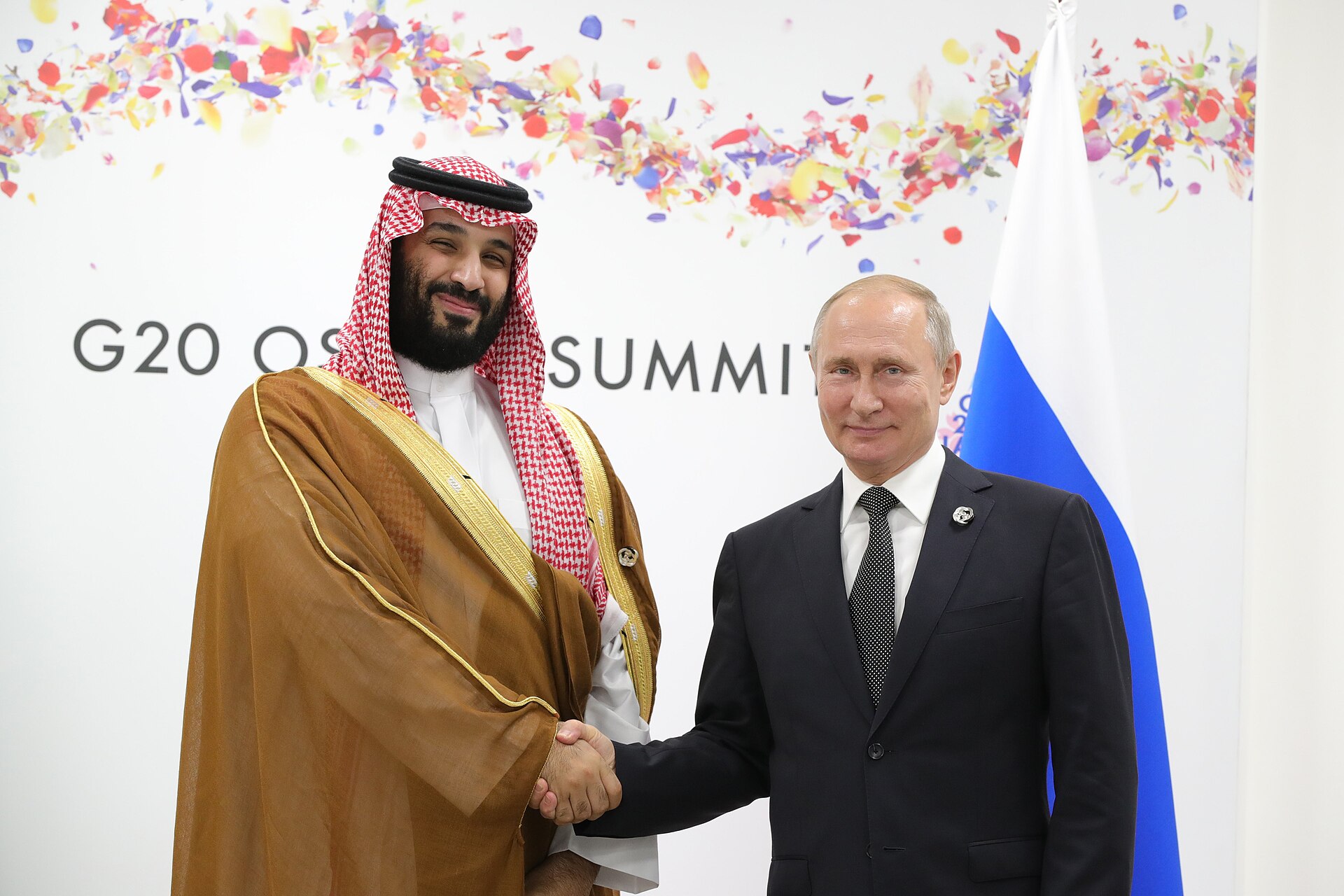
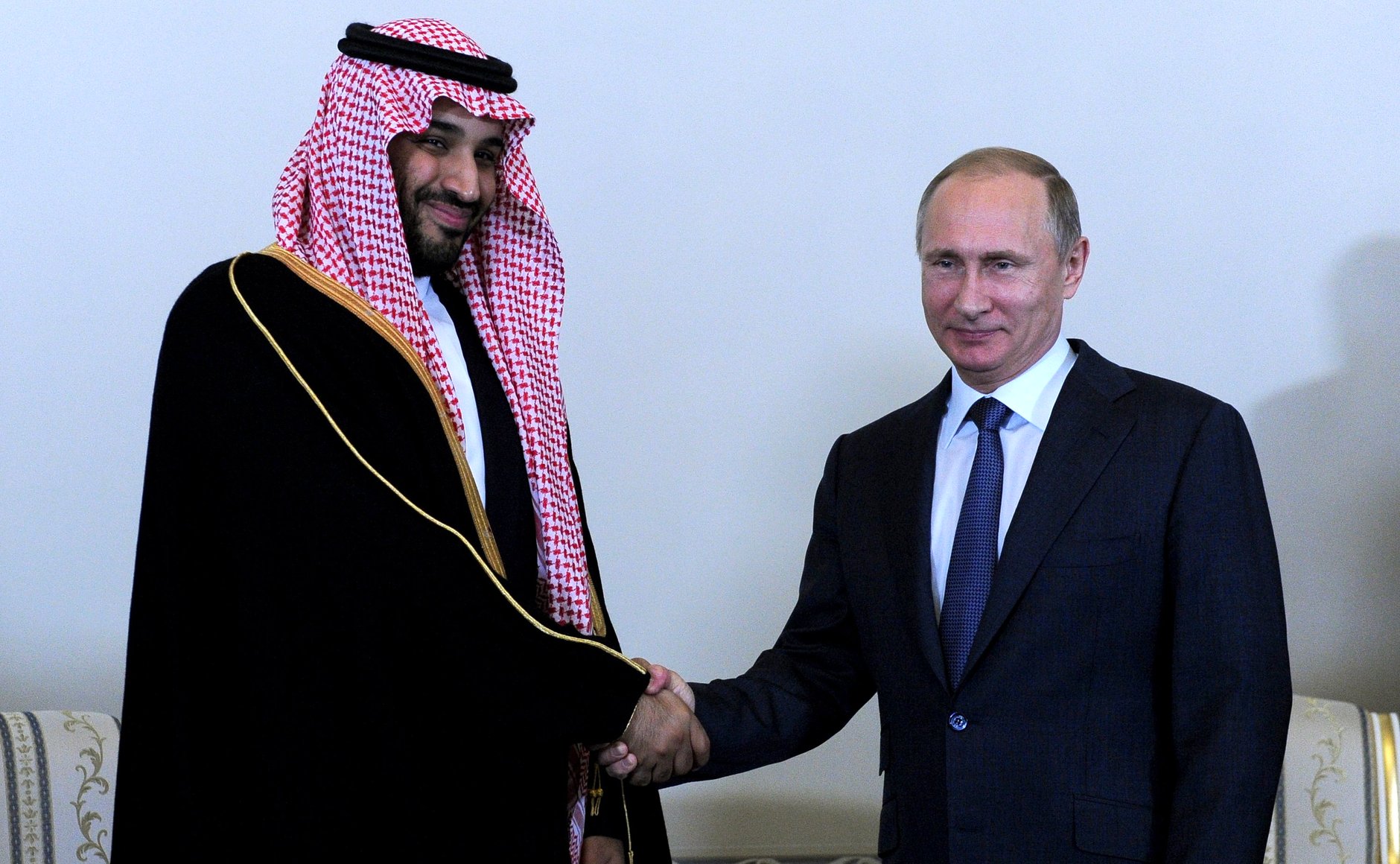
Prince Abdulaziz arrived at the ExpoForum Convention Center leading what the Saudi Press Agency described as a delegation of over two hundred officials, including Industry Minister Bandar Alkhorayef, Investment Minister Fahad Al-Saif, and senior Aramco management. The kingdom occupied a 400-square-metre national pavilion — a physical footprint sized to match the political signal Moscow intended by naming Saudi Arabia its guest of honor, a formal protocol designation conferring priority plenary placement and co-hosting status at Russia’s flagship economic forum.
Moscow anchored the designation to the hundredth anniversary of Saudi-Russian diplomatic relations, a framing that places the partnership in a pre-Cold War lineage predating the Saudi-American security relationship by more than two decades. The centenary narrative is technically accurate and politically loaded, treating the Kremlin’s relationship with Riyadh as older than anything Washington offers and, by that logic, more durable — a message aimed less at the Saudi delegation in the room than at the American officials who were not.
In the presence of Deputy Prime Minister Alexander Novak, the two sides signed what TASS reported as thirty and the Saudi Press Agency called “approximately thirty” cooperation documents spanning energy, education, tourism, and industry, with no public breakdown distinguishing binding contracts from non-binding memoranda. These thirty agreements extended a pattern already running at speed: a Russian delegation visiting Riyadh earlier in 2026 signed approximately ninety bilateral agreements, making the SPIEF package an addition to what is becoming an institutional relationship built on volume and pace rather than on any single transformative commitment.
Kirill Dmitriev, the CEO of Russia’s Direct Investment Fund and Putin’s special envoy for Saudi economic cooperation, described the relationship at SPIEF as having reached a “powerful strategic level,” confirming more than fifty-five joint RDIF projects with the kingdom. Dmitriev brokered the original 2016 OPEC+ agreement — the deal that first brought Russia into formal production coordination with OPEC — and has served as the economic intermediary between MBS and Putin for a decade, which means his assessment of the relationship as “strategic” carried institutional weight that the thirty cooperation documents, individually, did not.
The Middle East briefing 3,000+ readers start their day with.
One email. Every weekday morning. Free.
| Metric | Figure | Source |
|---|---|---|
| Saudi delegation size | 200+ officials | SPA |
| National pavilion | 400 m² | SPA |
| Agreements signed at SPIEF | ~30 | TASS, SPA |
| Agreements signed in Riyadh (earlier 2026) | ~90 | oreanda-news |
| Joint RDIF-Saudi projects | 55+ | Dmitriev (SPIEF) |
| Bilateral trade, 2025 (est.) | ~$4 billion (record) | OEC World |
| Trade growth rate (annual) | ~60% | Eastern Herald |
| Russia oil revenues, March 2026 | $19 billion | PIIE |
| Est. Russia conflict windfall, 2026 | $45–161 billion | KSE Institute |
| Saudi PAC-3 MSE remaining (est.) | 80–150 rounds | HOS |
| Saudi OPEC+ quota (June) | 10.291M b/d | OPEC+ |
| Saudi actual output (est.) | ~7.25M b/d | HOS |
What Does Russia Get From a War That Is Depleting Saudi Arabia’s Missiles?
Money — and more of it than at any point since the 2022 invasion of Ukraine first disrupted European energy markets. Russia’s oil export revenues hit $19 billion in March 2026, nearly double the February figure, driven entirely by the war premium embedded in every barrel of crude that transits or avoids the Persian Gulf. The KSE Institute in Kyiv estimated that depending on the conflict’s duration, Russia could collect between $45 billion and $161 billion in additional budget revenues over the course of 2026 — a windfall generated by the same Gulf disruption that is consuming Saudi Arabia’s air defence interceptors at a rate the Camden production line cannot match.
Moscow’s posture has been to profit from the conflict while maintaining formal distance from it. Kremlin spokesman Dmitry Peskov told reporters in March that “this war is not our war,” a sentence constructed to place Russia outside the fighting while doing nothing to end it. Research published by the Foundation for Defense of Democracies, Carnegie Endowment, Chatham House, and the Peterson Institute documented something more active behind the language: satellite imagery of American military positions shared with Iran, intelligence cooperation that preserved Moscow’s relationships with Tehran without requiring Russian troops or equipment in the theatre. The Carnegie Endowment published its findings under a title that captured the dynamic without euphemism — “What the Russian Energy Sector Stands to Gain From War in the Middle East.”
Abdulaziz addressed none of this during his plenary remarks, choosing instead to tell the SPIEF audience that “the world needs every molecule of energy, and every form of stabilisation to this energy, because without energy security, you will lose sustainability.” He described Saudi Arabia as “a resilient energy supplier” that “has been and will remain so under all circumstances” — language whose steadiness was inversely proportional to the situation it described.
“A minister is required to remain calm and avoid panic, because panic makes you lose control of the narrative.”
Prince Abdulaziz bin Salman, Saudi Energy Minister, SPIEF plenary, June 4, 2026
The composure Abdulaziz described was the professional discipline required when the structural position offers no good exits — when the country signing agreements with Russia is the same country that cannot defend its cities without American interceptors, and when the minister calling for calm presides over an oil market whose elevated prices are the direct product of a war his kingdom is losing materially while Moscow wins financially. He has managed the Novak relationship for a decade and survived crises that would have ended less politically adept energy ministers, but the 2026 war has produced a divergence between Russian and Saudi interests that personal rapport cannot bridge — and the OPEC+ meeting starting the next morning would make the divergence arithmetically visible.
The OPEC+ Meeting Started the Day SPIEF Ended
SPIEF’s final day was June 6, and the OPEC+ Joint Ministerial Monitoring Committee convened on June 7, one calendar day later, in a scheduling alignment that neither government described as coincidental and neither acknowledged as deliberate. Prince Abdulaziz and Alexander Novak — who have co-managed the OPEC+ production framework since its creation through the 2016 Vienna Agreement — sat together on a SPIEF energy panel alongside OPEC Secretary General Haitham Al Ghais. They then proceeded to oversee a ministerial meeting whose outcome had already been determined weeks earlier.
The seven remaining OPEC+ core members — the group contracted when the UAE exited on May 1 — had pre-agreed on May 3 to raise collective output by 188,000 barrels per day in June, with Saudi Arabia and Russia each taking 62,000 barrels of that increase. Saudi Arabia’s official quota after the June adjustment reached 10.291 million barrels per day, a number that existed on paper with a precision the underlying reality did not support: actual Saudi throughput is approximately 7.25 million barrels, a Hormuz-constrained involuntary shortfall of roughly three million barrels per day that has nothing to do with OPEC+ discipline and everything to do with the Iranian naval posture that simultaneously generates the prices Moscow collects.
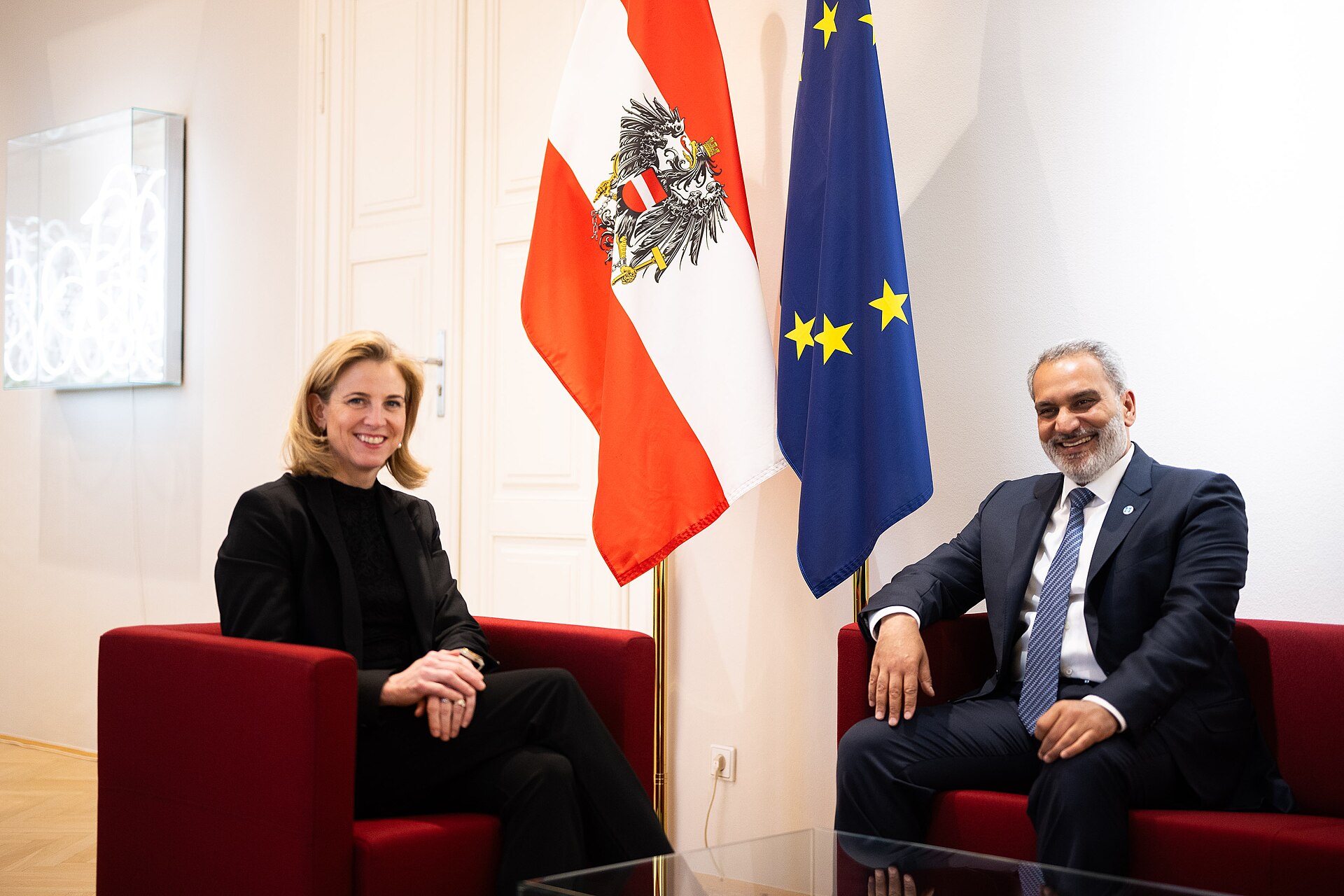
Novak told the SPIEF panel that “global oil demand dynamics are impossible to predict” — a statement technically true and operationally meaningless, serving as diplomatic cover for a reality in which the OPEC+ production agreement has become what it always threatened to become during the 2020 price war: a framework in which Saudi Arabia bears the discipline costs and Russia captures the price benefit. The quota increase is largely notional, a document authorising production Saudi Arabia cannot physically deliver through a strait it does not control, agreed upon jointly with the country profiting from that strait’s effective closure.
The fiscal arithmetic compounds the asymmetry. Russia needs high prices and is getting them from a war it didn’t start and has no incentive to stop, while Saudi Arabia needs both high prices and the war to end — twin requirements the OPEC+ framework was never designed to reconcile and that the SPIEF stage made visible in a way the June 7 communiqué would not.
A Hundred Years of Relations and Nothing That Stops a Missile
Moscow’s centenary framing — one hundred years of diplomatic ties, emphasised in every Kremlin communiqué surrounding the SPIEF designation — is designed to suggest permanence and institutional depth, but the relationship’s actual texture is commercial, not military. A hundred years of relations have produced oil coordination, a growing trade account, fifty-five investment projects, and a 400-square-metre pavilion at a convention centre in St. Petersburg; they have not produced a defence clause, a mutual security commitment, a basing agreement, or any mechanism through which Moscow would intervene if Saudi Arabia’s air defence failed.
The template was set in September 2019, when Iranian drones and cruise missiles struck Aramco’s Abqaiq and Khurais processing facilities in what was then the most sophisticated drone attack on energy infrastructure in history. Putin publicly offered Saudi Arabia the S-400 air defence system, Prince Abdulaziz expressed interest, Washington pushed back, and the deal never materialised — the kingdom subsequently purchased THAAD from the United States. The episode established a dynamic that has persisted into 2026: Russia offers defence systems for the diplomatic signal, not the delivery, and Saudi Arabia entertains those offers to demonstrate independence from Washington without jeopardising the American supply chain it actually depends on.
No confirmed Russian offer of S-400 or S-500 systems to Saudi Arabia has surfaced during the current conflict, despite the kingdom’s interceptor depletion to an estimated 80 to 150 PAC-3 MSE rounds remaining with no emergency waiver in sight. Russia separately denied delivering S-400 systems to Iran during the Israeli air assault period, maintaining a posture of equidistance that costs Moscow nothing and delivers nothing to either prospective buyer. Saudi Arabia’s parallel effort to build an independent security architecture through a quadrilateral with Egypt, Pakistan, and Turkey produced three ministerial sessions in thirty-one days and zero binding communiqués — which is to say that the alternative to American missiles does not yet exist in any form that intercepts an incoming warhead, and the thirty agreements signed in St. Petersburg did nothing to change that.
Where Was Washington While Abdulaziz Was in St. Petersburg?
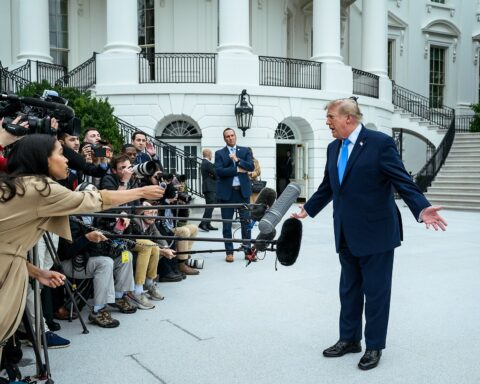
The American presence at SPIEF 2026 consisted of Rodney Mims Cook Jr., a Trump appointee to a federal commission responsible for public buildings and grounds — the first US official at the forum since 2017, dispatched at a level that signals neither engagement nor strategic protest but bureaucratic drift. Secretary of State Marco Rubio, when asked by the Senate Foreign Relations Committee about American attendance, said he was “not aware” of an official delegation — a formulation that is either truthful and damning, because it means the State Department did not track its most important Gulf partner’s highest-profile Russian engagement during an active war, or diplomatic and worse, because it means the department tracked it and chose public silence as its response.
No State Department statement on Saudi Arabia’s guest-of-honor status has been identified in public records. CNN and Reuters covered SPIEF through the lens of American fringe figures attending the forum — Steven Seagal, Candace Owens, the ballroom commissioner — without engaging the structural question of why America’s primary Gulf security partner was headlining Russia’s flagship summit while its missile inventory approached single-digit weeks of supply. The gap in Western coverage meant the Saudi-Russian contradiction went unexamined in major English-language media during the precise week it was most visible.
Meanwhile, Rubio was telling the Senate that Iran had agreed to discuss nuclear provisions it had refused a month earlier, confirming for the first time in open session a courier architecture running through written intermediaries to Mojtaba Khamenei — Phase 1 of a deal framework that would open the Strait of Hormuz in exchange for initial sanctions relief, collapsing the war premium in Brent crude that currently keeps both Russian and Saudi revenues elevated. Saudi Arabia’s foreign minister had been silent for more than ten days, contacting neither Washington nor Tehran, while the kingdom performed strategic autonomy on a stage Moscow built at the same moment the American secretary of state constructed a peace architecture in Washington that excluded Riyadh entirely.
Can Saudi Arabia Run Three Incompatible Relationships at Once?
The Strategy International think tank described Saudi Arabia’s positioning in February as an attempt to establish “itself as an autonomous pole in the emerging multipolar system” by “leveraging Chinese infrastructure, Russian energy coordination, and American security guarantees.” The SPIEF appearance is what that ambition looks like when it encounters a war: a 400-square-metre pavilion announcing equal-partner status with Moscow while American THAAD batteries cover the eastern coast and the remaining American interceptors — however few — protect Saudi cities from missiles that Russia’s intelligence sharing with Iran helps calibrate.
The OPEC+ framework asks Saudi Arabia and Russia to coordinate oil supply as partners, but the war has split their budget interests so completely that the coordination has become performative. Moscow earns $19 billion in a single month from a conflict that is consuming Saudi Arabia’s defence capacity faster than Washington will replace it, while Riyadh’s breakeven price exceeds $108 per barrel and Brent trades near $94 — meaning Saudi Arabia is losing money on every barrel it manages to export through routes bypassing the Hormuz chokepoint. The partnership on which Saudi energy policy has been built for a decade runs on a structural divergence that SPIEF’s signing ceremonies and OPEC+’s production quotas cannot bridge.
The war simultaneously creates the security dependency on Washington that makes deep Russian engagement legally dangerous, even when Washington chooses not to enforce the danger. Congress passed CAATSA’s Section 228 imposing mandatory secondary sanctions on parties facilitating significant transactions with sanctioned Russian entities, and every one of the thirty cooperation documents signed at SPIEF exists in the legal shadow of a statute Congress has not repealed. The Trump administration’s decision not to enforce CAATSA against Saudi Arabia is a political choice, not a legal determination, and the collapse of the Iran MOU removes one of Washington’s incentives to continue looking away from a Saudi-Russian commercial expansion that SPIEF publicly celebrated.
Saudi Arabia needs Russia to at minimum refrain from actively supporting Iran and at maximum exert pressure on Tehran toward a settlement, but Moscow’s incentive runs in the opposite direction — the war’s continuation generates the revenues Russia needs, diverts American military attention from Ukraine, and consumes American interceptors that might otherwise flow to European stockpiles. Peskov’s “not our war” is a position calibrated to hold indefinitely, and nobody in the Saudi delegation at SPIEF was positioned to answer what the signing ceremonies could not — where the ceiling sits on a commercial relationship with Russia that is growing faster than Riyadh’s ability to explain it to Washington.
How Far Can Saudi-Russian Trade Go Before Washington Objects?
The Russian-Saudi Business Council used SPIEF to announce a $10 billion bilateral trade target, an aspiration whose ambition reflects the trajectory even if the target itself may be unreachable under current architecture. Bilateral trade grew from approximately $1 billion in 2020 to roughly $3.6 billion in the first eleven months of 2025, likely topping $4 billion for the full year — a record sustained by approximately sixty percent annual growth that, if maintained, would cross the $10 billion threshold by 2028 without any structural change to the relationship.
The council’s chairman identified payment system restrictions as the primary barrier to the target, an admission that is simultaneously reassuring — the ceiling is technical, not political — and revealing, because the technical restrictions exist as a direct consequence of Western sanctions that Saudi Arabia’s SPIEF appearance implicitly challenges. Dmitriev acknowledged at the forum that “we used to have not very good relations” with Saudi Arabia, a diplomatic understatement of a history that includes the 2020 oil price war, when Moscow and Riyadh flooded the market simultaneously and cratered prices below twenty dollars per barrel. The RDIF’s joint project portfolio with Saudi Arabia has survived that near-collapse and every phase of Western sanctions since 2014, building a web of bilateral dependency that compounds the consequences of any future enforcement decision.
Every new cooperation document signed at SPIEF makes the eventual cost of a CAATSA reckoning more expensive for Riyadh, and the sixty percent annual growth rate means the Saudi-Russian commercial relationship is expanding faster than Saudi Arabia’s diplomatic capacity to justify it in Washington — a city that was represented at the forum by a ballroom commissioner while its most important Gulf partner headlined the event. Prince Abdulaziz left the ExpoForum on June 6 and chaired the OPEC+ monitoring committee on June 7, approving a collective output increase alongside the same Russian deputy prime minister he had signed thirty cooperation documents with the day before. Novak approved the same production target — his country was already exceeding its quota, and his budget, unlike Abdulaziz’s, did not depend on the barrels reaching market.
Frequently Asked Questions
Has Saudi Arabia ever been named guest of honor at SPIEF?
The 2026 designation is the first time Saudi Arabia has received guest-of-honor status at the St. Petersburg International Economic Forum. The designation is a formal Kremlin protocol decision, proposed by Russia’s Ministry of Economic Development, that grants the honoured country a national pavilion, priority plenary scheduling, and co-hosting status equivalent to the economic track of a state visit. Moscow chose to align the designation with the centenary of Saudi-Russian diplomatic relations — a framing decision made by the Kremlin, not Riyadh, meaning Russia set the narrative anchor and Saudi Arabia accepted it.
How has Saudi Arabia’s UN voting record on Russia-Ukraine evolved since 2022?
Saudi Arabia voted in favour of the March 2022 UN General Assembly resolution demanding Russia’s withdrawal from Ukraine and voted in October 2022 to condemn the annexation of four Ukrainian regions, at one point speaking on behalf of the entire GCC. In April 2022, it abstained on suspending Russia from the Human Rights Council — the first signal of selective neutrality. After receiving a BRICS invitation in 2023, the kingdom shifted to consistent abstentions on all Ukraine-related resolutions, a trajectory whose institutional endpoint is the SPIEF guest-of-honor designation, placing Saudi Arabia as Russia’s featured partner at the forum Western governments have boycotted since 2022.
What are the payment system restrictions limiting Saudi-Russian trade growth?
Russian banks were disconnected from the SWIFT international payments network in 2022, and Russia’s domestic alternative — the Mir payment system — has limited international acceptance. Saudi banks have not integrated Mir, and most bilateral transactions currently route through intermediary banks in the UAE, Turkey, or China, adding settlement cost and processing delays that suppress trade volumes below the level that commercial demand on both sides could otherwise support. The Russian-Saudi Business Council’s public identification of payment infrastructure as the primary obstacle to the $10 billion trade target, rather than sanctions law or political will, signals that both governments consider the political intent resolved and the remaining barrier architectural.
How did international media cover Saudi Arabia’s SPIEF 2026 appearance?
Coverage divided sharply by outlet and orientation. Al Jazeera framed it as a technical energy meeting with no security-contradiction angle, running the headline “Saudi energy minister calls for ‘stable energy sector’ during Russia visit.” Asharq Al-Awsat published a business brief and a favourable opinion piece positioning SPIEF as a legitimate global platform. TASS and Russian state media treated the guest-of-honor designation as validation that Western isolation of Russia has failed, while Sputnik published the Saudi participation under the headline “SPIEF 2026: Russia and Global South Forge Stable Future.” CNN and Reuters focused on American fringe figures attending the forum and did not engage with the Saudi structural contradiction at all.
What role does the Russian Direct Investment Fund play in Saudi-Russia relations?
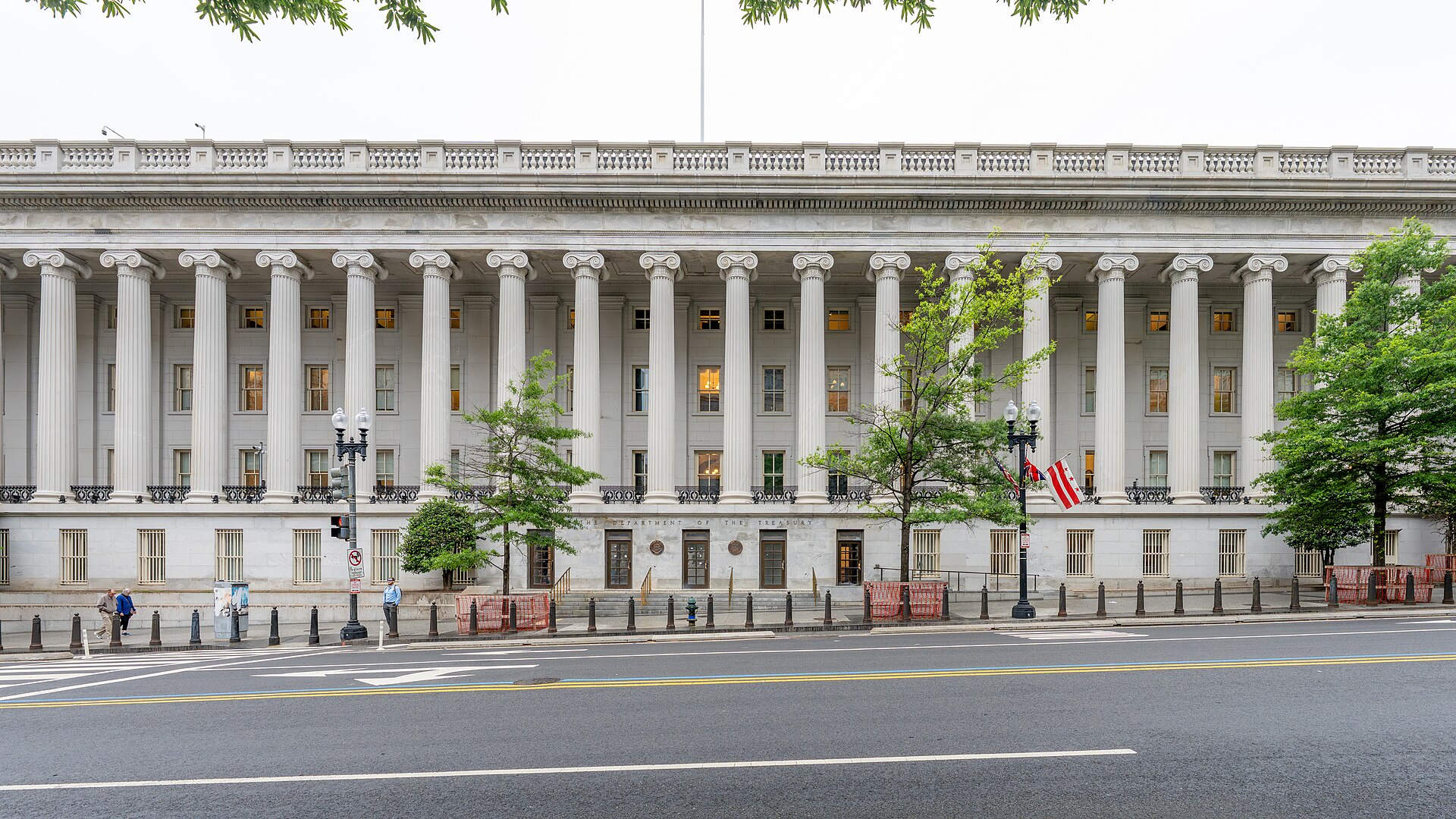
The RDIF was placed on the US Treasury’s SDN list in April 2022 following Russia’s invasion of Ukraine, meaning American persons and institutions are legally prohibited from transacting with it. Saudi Arabia’s Public Investment Fund continued co-investing with the RDIF after the SDN designation, and that co-investment activity has not triggered CAATSA or IEEPA enforcement against Riyadh — a non-enforcement pattern that constitutes a running precedent the Trump and Biden administrations both maintained. The fifty-five joint projects span sectors including logistics, agriculture, and technology; the sectoral composition keeps most of the portfolio out of the energy and defence categories that would attract the most direct congressional scrutiny. Dmitriev’s SDN status also means any Western financial institution that facilitates RDIF-adjacent transactions faces secondary exposure — which is part of why the payment system restrictions the Business Council identified at SPIEF are architectural rather than incidental.