WASHINGTON — The US Treasury confirmed on June 6 that it is exploring the redirection of Iranian frozen assets to finance reconstruction in Kuwait and Bahrain — the same pool of funds that Iran’s Oman-filed counteroffer, delivered the same day, designated as its non-negotiable precondition for any discussion of the Strait of Hormuz. The two positions are structurally incompatible: both sides have now filed competing claims on the same money, and neither claim is reconcilable with the other.
Treasury Secretary Scott Bessent directed a team to assess costs for damage already inflicted on Gulf allies by Iranian strikes and to evaluate whether Iranian frozen assets can cover those repairs, according to Reuters, Bloomberg, CBS News, CNBC, and Arab News, all reporting on June 6. Iran’s counteroffer, delivered through Omani intermediaries the same day, opens not with Hormuz — as the US draft requires — but with a demand for $24 billion in frozen asset releases. On Day 100 of the war, the gap between Washington and Tehran is no longer about sequencing or price. It is about whether the asset pool Iran is demanding still exists as a tradeable instrument — or whether it has been reclassified, before negotiations begin, as war reparations.
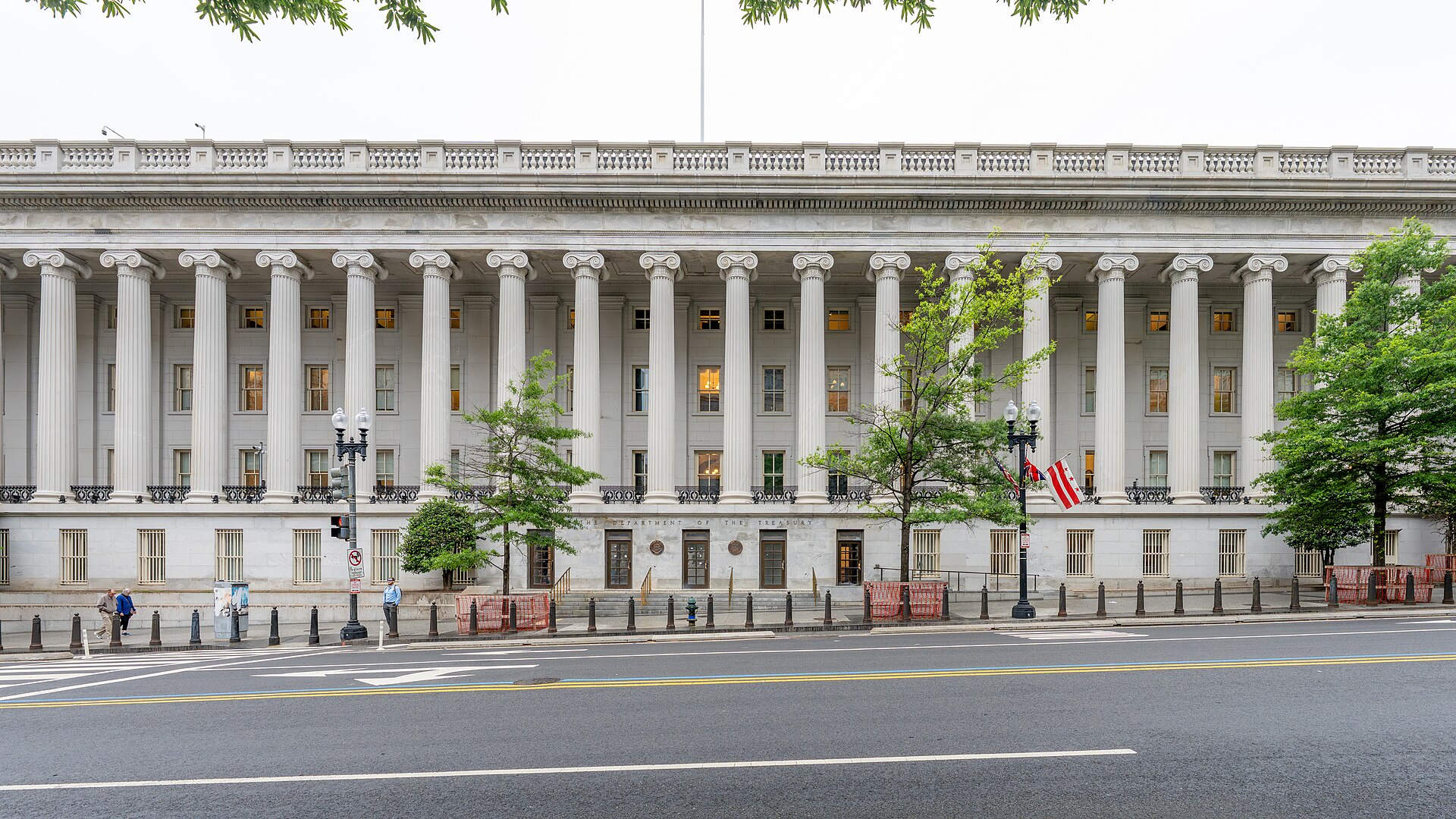
Table of Contents
- What Did Treasury Propose on June 6?
- Iran Filed Its Price Before Washington Filed Its Invoice
- Does the US Have Legal Authority to Redirect Iranian Assets?
- Where Are Iran’s Frozen Assets Actually Held?
- The Reparations Run in Both Directions
- What Would Gulf Reconstruction Cost?
- Can Pakistan Bridge a Gap That Is Not About Price?
- What Does Saudi Arabia Get From Either Outcome?
- Frequently Asked Questions
What Did Treasury Propose on June 6?
Bloomberg reported that Treasury Secretary Scott Bessent directed a team to assess costs for damage inflicted on US Gulf allies by Iranian strikes, with the intention of using Iranian frozen assets to cover repairs. The plan, confirmed independently by Reuters, CBS News, CNBC, and Arab News on the same date, was described in Bloomberg’s framing as “floating” — the verb of trial balloons, not finalized policy.
The specifics remain thin. No dollar figure has been attached to the reconstruction estimate. No legal mechanism for converting a freeze into a disbursement has been identified. No legislation authorizing seizure — as opposed to the existing freeze — has been introduced in either chamber. What exists, as of Day 100, is a declared intention and a bureaucratic directive: Iranian money held under US sanctions architecture should pay for damage Iran inflicted on Kuwait and Bahrain.
The timing matters more than the substance. Bessent’s directive was disclosed on the same day Iran’s Oman-filed counteroffer became public — an offer that treats frozen asset release as the opening move, not Hormuz. Whether the simultaneity was coordinated to undercut Iran’s position or coincidental, the structural effect is identical: Washington’s team would redirect Iranian funds to Gulf reconstruction, while Tehran’s team demands those same funds as the entry fee for any discussion. The two purposes are incompatible in the same way the two offers are.
The “floating” language may itself be the operative move. Trial balloons in Washington serve multiple purposes: they test domestic political viability, they signal to allies, and they establish negotiating positions that can be withdrawn without formal reversal. If the Bessent plan is designed to pressure Iran into accepting less favorable terms on frozen assets — by demonstrating that the alternative is not indefinite freezing but active redirection to Tehran’s adversaries — then the announcement achieves its purpose regardless of whether the policy is ever implemented. The threat to redirect may be worth more than the redirection itself.
The Middle East briefing 3,000+ readers start their day with.
One email. Every weekday morning. Free.
The full scope of Bessent’s June 6 directive — including the legal gap between the existing freeze and outright seizure, the asset geography spread across multiple jurisdictions, and Saudi Arabia’s exclusion from both the beneficiary list and the process — is detailed in Treasury Plans to Seize Iranian Assets to Pay Gulf Allies for War Damage.
The plural sourcing also matters. Five outlets confirmed the same directive on the same date. This is not a single-source leak designed to be retracted quietly. It is a signal broad enough to reach Tehran on every wire, and broad enough that walking it back would carry a political cost visible to the Gulf allies it was designed to reassure.
Iran Filed Its Price Before Washington Filed Its Invoice
Mohsen Rezaei, military adviser to Supreme Leader Mojtaba Khamenei, attached a number to Iran’s demand in a CNN exclusive on June 5 — one day before the Bessent directive surfaced.
“If he wants to reach an agreement with Iran, this $24 billion is a test of trust that Iran wants to have with Trump.” — Mohsen Rezaei, CNN, June 5, 2026
The structure: $12 billion immediately upon signing any interim agreement, a second $12 billion tranche at a later, unspecified stage. The demand predates Rezaei’s televised formulation. Iran’s Supreme National Security Council deputy secretary told Tasnim on May 28 that frozen asset release was “the legal right of the Iranian nation.” Deputy Foreign Minister Kazem Gharibabadi, speaking to IRNA in May, listed frozen fund release alongside sanctions lifting and an end to the US naval blockade as Tehran’s baseline conditions.
PressTV described frozen assets as a “non-negotiable condition” as early as April 11. What Rezaei added was the number, the phasing, and a particular frame: not a demand, but a “test of trust.”
Iran’s Oman counteroffer inverts the US MOU draft’s sequencing entirely. Where Washington’s draft opens with Hormuz — mine removal within 30 days, no tolls, unrestricted passage — Tehran’s version opens with frozen assets. Hormuz does not disappear from Iran’s framework, but it moves from the entrance to the exit. Iran will discuss the Strait’s status after the money moves, not before. The two drafts do not disagree on terms. They disagree on what constitutes the first step.
Iran International reported on May 24 that Tehran had specifically demanded access to “the $12 billion in Qatar funds as a precondition for the US MoU” — referring to the $6 billion transferred from South Korean banks to restricted Qatari accounts in 2023 and then re-frozen after October 7. The identification of a specific tranche is operationally telling: Iran is not requesting an abstract sum. It is naming accounts, jurisdictions, and institutions. When Bessent’s team floated redirecting Iranian assets on June 6, it was — whether intentionally or not — proposing to redirect the same identifiable pool that Tehran had already designated as its entry fee.
Does the US Have Legal Authority to Redirect Iranian Assets?
Not under current law. The International Emergency Economic Powers Act authorizes the president to freeze foreign assets — to block transactions, prohibit access, and maintain indefinite holds. It does not authorize seizure, confiscation, or transfer to third parties. The distinction between freezing and seizing is the legal gap the Bessent plan has not yet addressed.
Outright confiscation of sovereign assets requires one of two legal instruments: the Trading with the Enemy Act, which applies only during congressionally declared wars — and no formal declaration of war against Iran has been issued — or specific congressional authorization. The closest model is the REPO Act of 2024, formally the 21st Century Peace Through Strength Act, which gave the president explicit authority to “seize, confiscate, transfer, or vest” Russian sovereign assets held under US jurisdiction. That statute filled the gap IEEPA leaves. No equivalent Iran-specific legislation has been introduced, debated, or enacted.
The Supreme Court’s leading precedent runs in the opposite direction. In Dames & Moore v. Regan (1981), the Court upheld presidential authority to nullify attachments on Iranian assets and order their return to Iran under the Algiers Accords. The case authorized releasing a freeze in the direction of the asset owner, not seizing frozen property for the benefit of a third party. Citing Dames & Moore to justify the Bessent plan would require reading the precedent backward.
The gap between Bessent’s intention and existing law is not necessarily permanent — Congress could pass an Iran-specific REPO Act. But the legislative environment complicates that path. The House passed H.Con.Res.38 on June 3 by 215-208 to end the Iran war under the War Powers Resolution. The same chamber is an unlikely venue for expanding executive authority over Iranian assets in the same session it voted to restrict executive authority over the conflict that produced the damage claims. A war-ending resolution and an asset-seizure authorization point in opposite directions, and the House adopted the first with four Republican crossovers.
Where Are Iran’s Frozen Assets Actually Held?
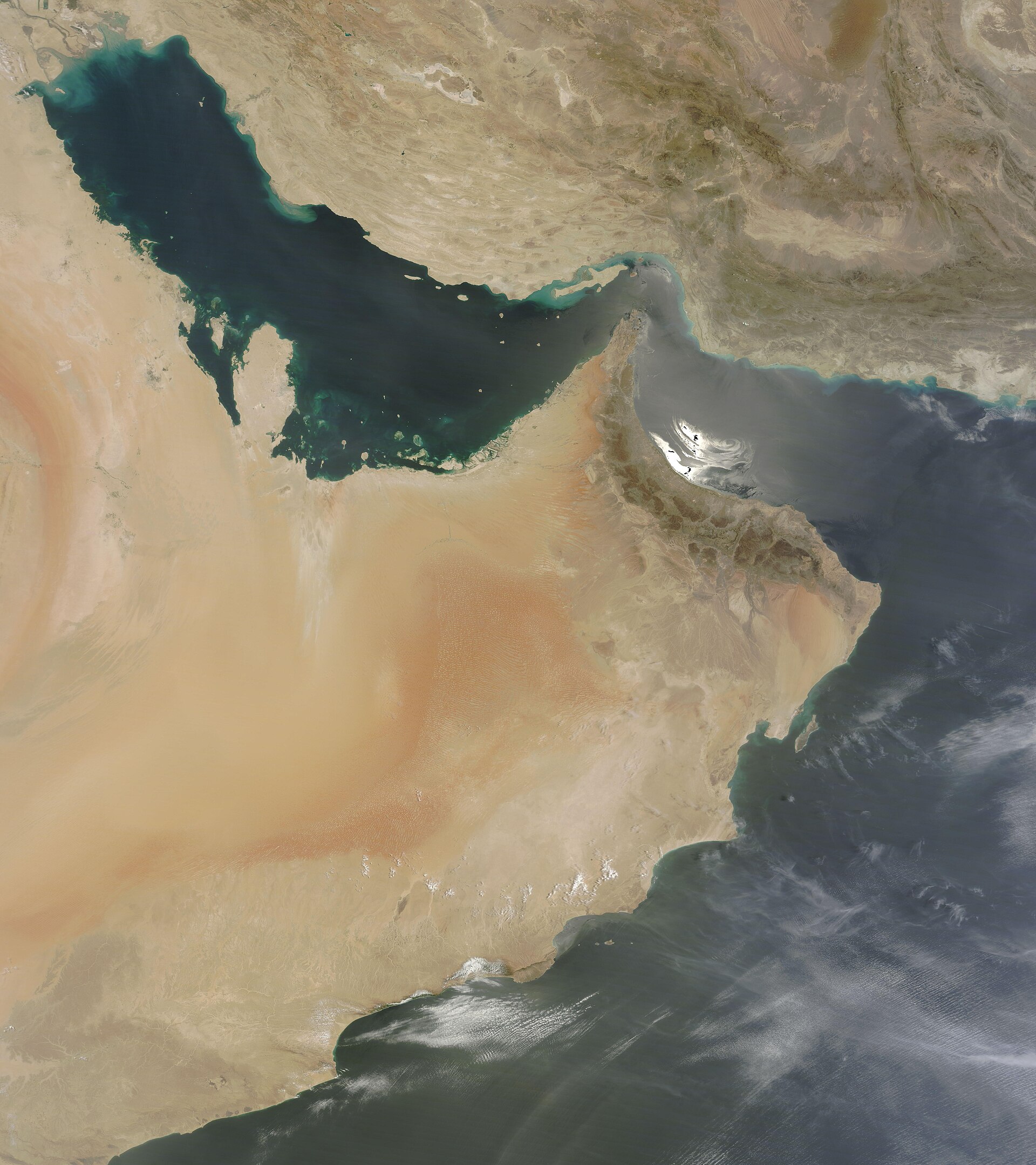
Iranian frozen assets total an estimated $100 to $120 billion globally, but only a small fraction sits under direct US jurisdiction. The largest identifiable US-held pool is the court-ordered Bank Markazi investment of approximately $1.895 billion; separately, a Manhattan skyscraper tied to Iranian state entities has been subject to forfeiture proceedings. Together, the amounts under direct US control represent less than 2% of the global total. The mismatch between what Washington proposes to redirect and what Washington physically controls is the second structural obstacle the Bessent plan faces.
| Jurisdiction | Estimated Frozen Amount | US Ability to Redirect |
|---|---|---|
| China | $20B+ | Indirect — sanctions pressure only |
| India | $7B | Indirect — sanctions pressure only |
| Qatar (South Korean transfer) | $6B | Requires sanctions waiver + Qatari cooperation |
| Iraq | ~$6B | Partial — CBI relationship |
| Japan | ~$1.5B | Indirect — allied compliance |
| United States (direct) | ~$1.9B+ | Direct (Bank Markazi court order; real estate subject to forfeiture) |
| Other jurisdictions | $57.5–77.5B | Varies by bilateral relationship |
The $6 billion held in Qatar — the most liquid, identifiable pool — is the tranche Iran has specifically named. But releasing or redirecting it requires Qatari cooperation and a US sanctions waiver, not a unilateral Treasury action. China’s $20 billion-plus is further from Washington’s reach. India operates under its own bilateral dynamics with Tehran, ones that have survived sustained US pressure on other fronts.
What the US controls is not the money itself but the sanctions architecture — the legal and financial framework that keeps these assets frozen in third-country banks. Bessent can propose restructuring that architecture to redirect rather than release. But doing so for the benefit of Kuwait and Bahrain, rather than Iran, would require either the cooperation of every holding jurisdiction — including Beijing — or a legal mechanism that converts a multilateral freeze into a unilateral seizure across multiple sovereigns. Neither condition currently exists.
The practical consequence: Treasury can announce a plan to redirect $24 billion and direct a team to assess reconstruction costs. What it cannot do, without new legislation and multinational cooperation, is move money it does not hold in accounts it does not control.
The Reparations Run in Both Directions
Iran filed its own reparations demand before the Bessent plan surfaced. Tehran assessed its war losses at $270 billion and named five states as debtors: Saudi Arabia, Bahrain, Qatar, the UAE, and Jordan — accusing each of enabling US and Israeli strikes by providing basing, overflight, or logistical support. The demand, documented by IranWire and Al Jazeera in April, predates both the Oman counteroffer and the Treasury reconstruction proposal by two months.
“We are seeking the release of all Iranian assets frozen by the United States, and this is the legal right of the Iranian nation.” — Deputy Secretary, Iran’s Supreme National Security Council, Tasnim, May 28, 2026
The geometry is worth stating without editorial interpretation. Iran claims Gulf states owe Iran $270 billion in war reparations. Washington proposes redirecting Iranian frozen assets to those same Gulf states for reconstruction. Kuwait and Bahrain appear in both ledgers — as Iran’s supposed debtors and as the proposed beneficiaries of Iran’s own frozen money. The same governments Iran accuses of complicity in its destruction are the governments Washington would compensate using Iranian funds.
IRNA embedded war compensation into Iran’s peace proposal — but as a demand from the United States, not as an outbound redirection of Iranian funds. Iran’s negotiating position treats its frozen assets as sovereign property held unlawfully; Tehran’s view is that releasing them is not a concession but a correction. Redirecting those assets to Gulf reconstruction, in this framing, would constitute using stolen Iranian money to pay for damage Iran holds the United States responsible for causing. The frame is self-serving, but it is also the frame Iran will bring to any negotiation.
Neither reparations claim has a legal venue. The UNCC model required UN Security Council authorization. The ICJ has pending Iran-related cases but no mechanism for war-damage adjudication during an active conflict. What exists is two competing moral claims — Iran’s $270 billion demand against Gulf states and Washington’s claim on Iranian assets for those same states — neither of which has been formalized before a body capable of adjudicating between them.
What Would Gulf Reconstruction Cost?
No official estimate has been published. Bessent directed his team to assess the costs; the assessment has not been disclosed. What exists are fragments. CNN reported in April 2026 that repairs to the US Navy Fifth Fleet headquarters at NSA Bahrain alone could run approximately $200 million. The Pentagon has placed total US war costs at $29 billion as of May 12. Neither figure captures the full scope of civilian and military infrastructure damage across Kuwait and Bahrain after 100 days of Iranian strikes.
The scope of damage extends beyond military installations. Kuwait’s Terminal 1 at Kuwait International Airport — struck by IRGC drones on June 3, forty-eight hours after it reopened — sustained damage to civilian infrastructure serving commercial passengers. One Indian national was killed. Sixty-three were injured. Airport closures across Kuwait, Bahrain, and the UAE have imposed economic costs that no reconstruction estimate has yet attempted to quantify: lost commercial flights, cargo delays, aviation insurance repricing, and the downstream effects on tourism and transit revenue.
The closest structural precedent is the UN Compensation Commission established after Iraq’s 1990 invasion of Kuwait under Security Council Resolution 692. The UNCC processed 1.54 million claims and awarded $52.4 billion over 31 years, with the final payment made in December 2021. It was funded through a 5% levy on Iraqi oil revenues — not through unilateral asset seizure by any single government. It required Security Council authorization, a multilateral administrative body, and a defeated Iraqi government that had no capacity to object.
Kuwait spent $3 billion on air defense in eleven days following the Terminal 1 strike. That single defensive procurement exceeds the Iranian assets under direct US jurisdiction. If reconstruction costs run to tens of billions — a range that 100 days of strikes on airports, military bases, and port infrastructure could plausibly reach — the assets Washington physically controls cover a fraction. The arithmetic of the Bessent plan requires money the Treasury does not hold and legal authority Congress has not granted.
Can Pakistan Bridge a Gap That Is Not About Price?
Pakistan’s Interior Minister Mohsin Naqvi arrived in Tehran on June 7 — Day 100 — carrying what Pakistani government sources described to Anadolu Agency as a “fresh US proposal” offering “slightly better incentives” on frozen assets and sanctions. The sources specified that the proposal contained “no new concession” on Iran’s nuclear program. The proposal reached Tehran on the same day the world learned Washington plans to redirect those same frozen assets to Gulf allies.
“Slightly better incentives” on frozen assets, arriving the day after Washington signaled it may redirect those assets to Gulf reconstruction, is a contradiction no courier can resolve through better drafting. The Naqvi mission faces a gap that is not about price or sequencing. It is about whether the pool of assets Iran has designated as its entry fee still functions as a negotiable instrument — or whether one party has reclassified it as war reparations before the other reaches the table.
Pakistan has replaced Oman as the primary courier in what remains of the US-Iran communication architecture. Rubio confirmed in Senate testimony on June 2 that Mojtaba Khamenei is “increasingly engaging” through written intermediaries, with a six-to-eight person mixed IRGC-civilian advisory council filtering proposals. Araghchi and Ghalibaf serve as messengers, not decision-makers. The courier mechanism was built to manage ambiguity — to carry proposals that could be partially accepted, conditionally modified, or silently shelved. It was not built to resolve a situation in which both parties have filed claims on the same physical resource.
Rezaei’s CNN interview on June 5 paired the $24 billion demand with a warning: Iran will “drag the war” beyond the Persian Gulf to the Indian Ocean, Bab al-Mandab, Red Sea, and Mediterranean if the US resumes conflict. The threat of geographic escalation arrived one day before the Treasury plan that makes Iran’s financial demand structurally impossible to fulfill. Whether Naqvi’s “fresh proposal” accounts for the Bessent directive — or was drafted before it surfaced — is not specified in the Anadolu reporting.
What Does Saudi Arabia Get From Either Outcome?
Neither outcome benefits Riyadh. If frozen assets go to Kuwait and Bahrain as reconstruction funds, Saudi Arabia — which has not suffered a confirmed Iranian strike on sovereign territory — has no reconstruction claim to file. If Iran’s demand for full asset release prevails instead, the resulting deal may collapse oil prices below Saudi Arabia’s $108 to $111 internal breakeven by removing the war premium Goldman Sachs estimates at $14 per barrel.
The Bessent reconstruction plan names Kuwait and Bahrain as beneficiaries. Saudi Arabia is absent from both the beneficiary list and the process that generated it. The $8.6 billion emergency arms waiver Rubio signed on May 2 excluded Saudi Arabia. The Camden PAC-3 production line is allocated through 2030 to fill orders the kingdom cannot access under standard FMS timelines, with an estimated 80 to 150 rounds remaining from a pre-war stock of 2,800. Riyadh is fighting the same war as its neighbors — absorbing the same Hormuz closure, the same fiscal compression, the same threat environment — while watching those neighbors receive financial and military support it cannot obtain.
Saudi Arabia’s exclusion from the frozen-asset framework is structurally different from its exclusion from the arms pipeline or the Hormuz negotiations. In those cases, the kingdom is denied access to something it wants. In the asset dispute, it is absent from a process that will determine the terms under which its primary export route reopens — without being consulted, invited, or addressed. Both the Bessent plan and Iran’s counteroffer treat Hormuz as a downstream consequence of the frozen-asset resolution. Saudi Arabia’s economy runs through Hormuz. Riyadh has no input into the resolution that will reopen or close it.
The kingdom holds no seat at any of the three active negotiation tracks. The US-Iran courier channel runs through Pakistan. The Oman proximity talks produced the counteroffer Riyadh was not consulted on. Saudi FM Prince Faisal broke 14 days of silence by contacting six counterparts — none of them in Washington or Tehran. The private Saudi de-escalation track with Iran operates outside the frozen-asset framework entirely and cannot offer what Tehran demands: sanctions release and asset access are instruments only Washington holds.
The financial pressure is compounding on its own schedule. Brent closed June 6 between $94.66 and $94.81 — below the IMF’s $96 fiscal breakeven for Saudi Arabia and $14 to $17 below the $108 to $111 internal breakeven. Aramco’s $21.89 billion dividend is due June 9 at 0.85 times free cash flow coverage — a payout the company cannot sustain at current prices without drawing down its cash floor. Washington has drained 58 million barrels from the Strategic Petroleum Reserve to suppress prices that Saudi Arabia needs higher. The Bessent plan and the Iran counteroffer both propose to settle the Hormuz question through the frozen-asset dispute. Saudi Arabia has no position in that dispute and no claim on the money at its center.
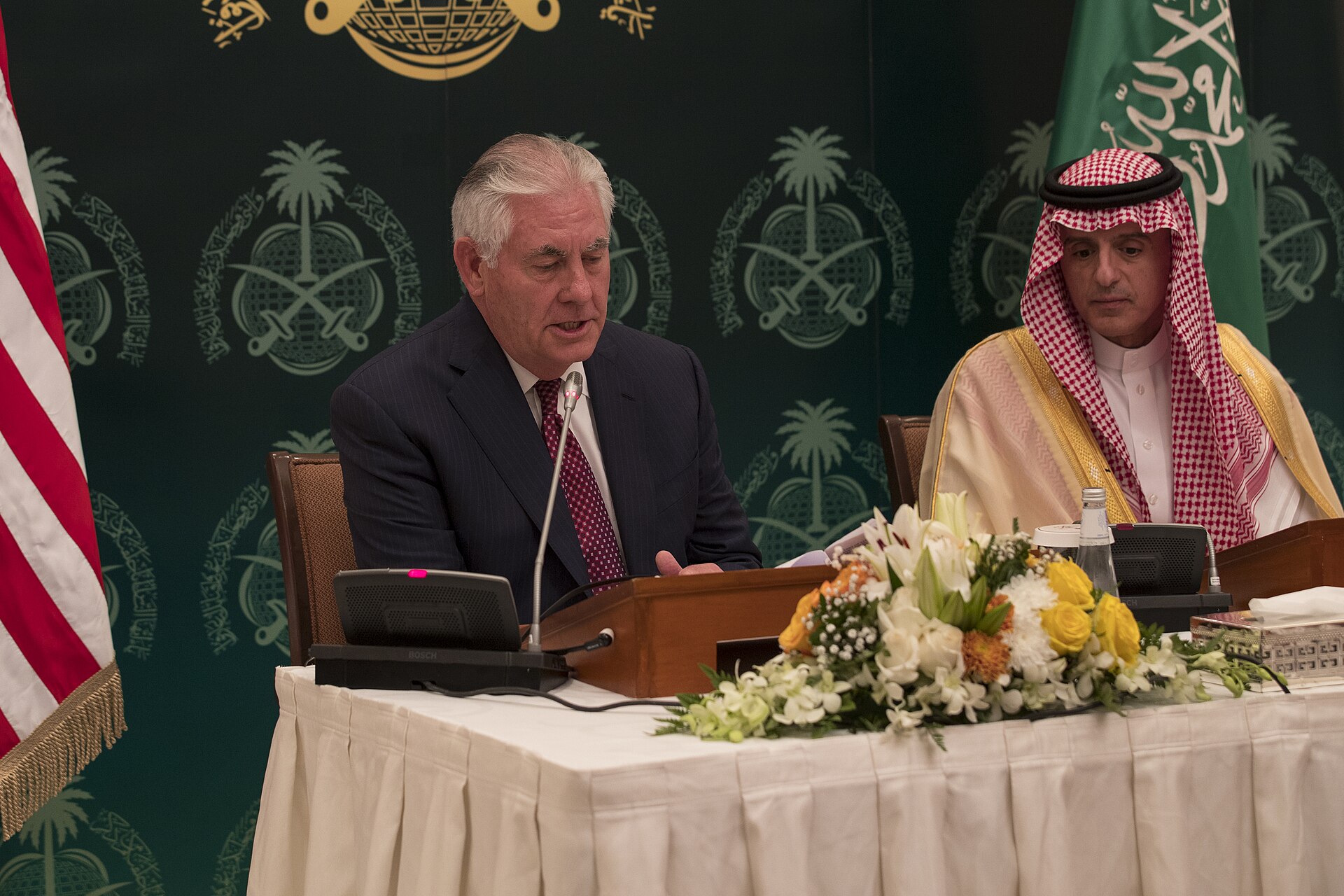
Rezaei called the $24 billion a “test of trust” between Iran and Trump. Naqvi carried the latest iteration of that test across the border on Day 100. Saudi Arabia was not consulted on its contents.
Frequently Asked Questions
Has the United States ever redirected frozen sovereign assets to a third country?
The closest precedent is Afghanistan. In February 2022, President Biden ordered the seizure of $7 billion in Afghan central bank reserves held at the Federal Reserve Bank of New York, splitting them between a Swiss-administered humanitarian trust fund called the Afghan Fund ($3.5 billion) and 9/11 victim litigation claims ($3.5 billion). The legal differences from the Iran case are substantial. The Afghan assets were held directly at the Federal Reserve, not distributed across third-country banks. The Taliban government lacked international recognition, weakening sovereign immunity objections that a recognized state like Iran could raise. No competing demand from the asset owner was active at the time of seizure. Iran’s frozen assets involve recognized sovereign property spread across multiple jurisdictions, an active government filing counterclaims, and a legal framework — IEEPA — that authorizes freezing but has never been interpreted to permit confiscation for third-party benefit.
What is the REPO Act and could Congress pass an equivalent for Iran?
The Rebuilding Economic Prosperity and Opportunity for Ukrainians Act, enacted as part of the 21st Century Peace Through Strength Act in 2024, gave the president explicit authority to “seize, confiscate, transfer, or vest” Russian sovereign assets held in US jurisdiction. It filled the gap between IEEPA’s freeze authority and outright confiscation. The Russia-specific legislation took years of debate and was attached to a broader aid package with bipartisan support. An Iran-specific equivalent would face a different congressional dynamic: the House voted 215-208 on June 3 to end the Iran war under the War Powers Resolution, and no member has introduced draft legislation authorizing Iranian asset seizure. The jurisdictional challenge is also steeper — Russian central bank assets were concentrated in Western financial systems (primarily Euroclear in Belgium), while Iranian assets are spread across China, India, Qatar, Iraq, and Japan, making a single-statute solution for all holding jurisdictions far more complex.
How has the US Treasury seized Iranian financial assets during the current war?
OFAC has seized approximately $1 billion in Iranian cryptocurrency since the war began under its “Economic Fury” enforcement framework. The single largest action was a $344.2 million Tether freeze of wallet addresses attributed to Iran’s Central Bank with ties to the IRGC-Qods Force, reported by CoinDesk on June 2. Cryptocurrency seizures operate under different legal mechanics than sovereign reserve freezes — they target specific transactions and wallet addresses identified as sanctions evasion rather than sovereign reserves held in recognized financial institutions. The crypto seizures demonstrate Treasury’s enforcement capacity and willingness to act on digital Iranian assets, but they do not establish a precedent for redirecting sovereign reserves held in foreign central banks under bilateral agreements. The distinction matters: a Tether wallet attributed to sanctions evasion has different legal protections than $6 billion in oil revenues frozen at a Qatari bank under a US sanctions waiver.
What happened to the $6 billion transferred from South Korea to Qatar in 2023?
In September 2023, $6 billion in Iranian oil revenues frozen in South Korean banks since 2019 was transferred to restricted accounts in Qatar as part of a prisoner exchange that freed five American citizens detained in Iran. The funds were placed in Qatari-administered accounts with access limited to humanitarian purchases: food, medicine, and medical equipment. After the October 7, 2023 Hamas attack on Israel, the Biden administration moved to re-freeze the accounts before any disbursement occurred. None of the $6 billion reached Iran. The funds remain in Qatar, blocked under US sanctions, and constitute the single most identifiable tranche within Iran’s broader $24 billion demand. Any release or redirection requires both a US sanctions waiver modification and Qatari government cooperation — making it a trilateral decision, not a unilateral one. Iran International reported on May 24 that Tehran had specifically named these Qatar-held funds as a precondition for engaging with the US MOU. Pakistan simultaneously escalated its own courier role to the ministerial level: Interior Minister Naqvi delivered a letter from Field Marshal Munir to Khamenei on the same day Washington was bypassing Iran’s counteroffer — the mechanics of that channel are laid out in Pakistan’s direct-to-Khamenei channel. Washington also moved to destroy the only other surviving indirect channel — the Omani bridge — within days of nullifying Iran’s counteroffer: Trump Threatened to Bomb Oman: Saudi Arabia’s Last Channel to Tehran.