VIENNA — Saudi Arabia’s entire public contribution to the nuclear track that will define Iran’s enrichment capacity for a generation is a single sentence. Prince Faisal bin Farhan, the Saudi foreign minister, told a European Council on Foreign Relations conference in Vienna on June 17 that “verification is key” in US-Iran nuclear talks and that “the detail will matter.” Then he returned to a kingdom that holds zero institutional seats on any of the three mediation tracks negotiating those details.
Those five words — delivered at an academic conference, not at a negotiating table — represent the full extent of Riyadh’s visible influence over Phase 2, the sixty-day window that opened June 17 to resolve Iran’s enrichment ceiling, IAEA verification protocols, and the nuclear architecture of the Persian Gulf. On May 13, Saudi Arabia signed a civilian nuclear cooperation agreement with the United States whose commercial and strategic value depends entirely on the outcome of talks it cannot enter. The 123 Agreement stripped out every nonproliferation safeguard Washington had required of every partner since 2009. What it bought was a reactor program tethered to an enrichment outcome Riyadh cannot shape.
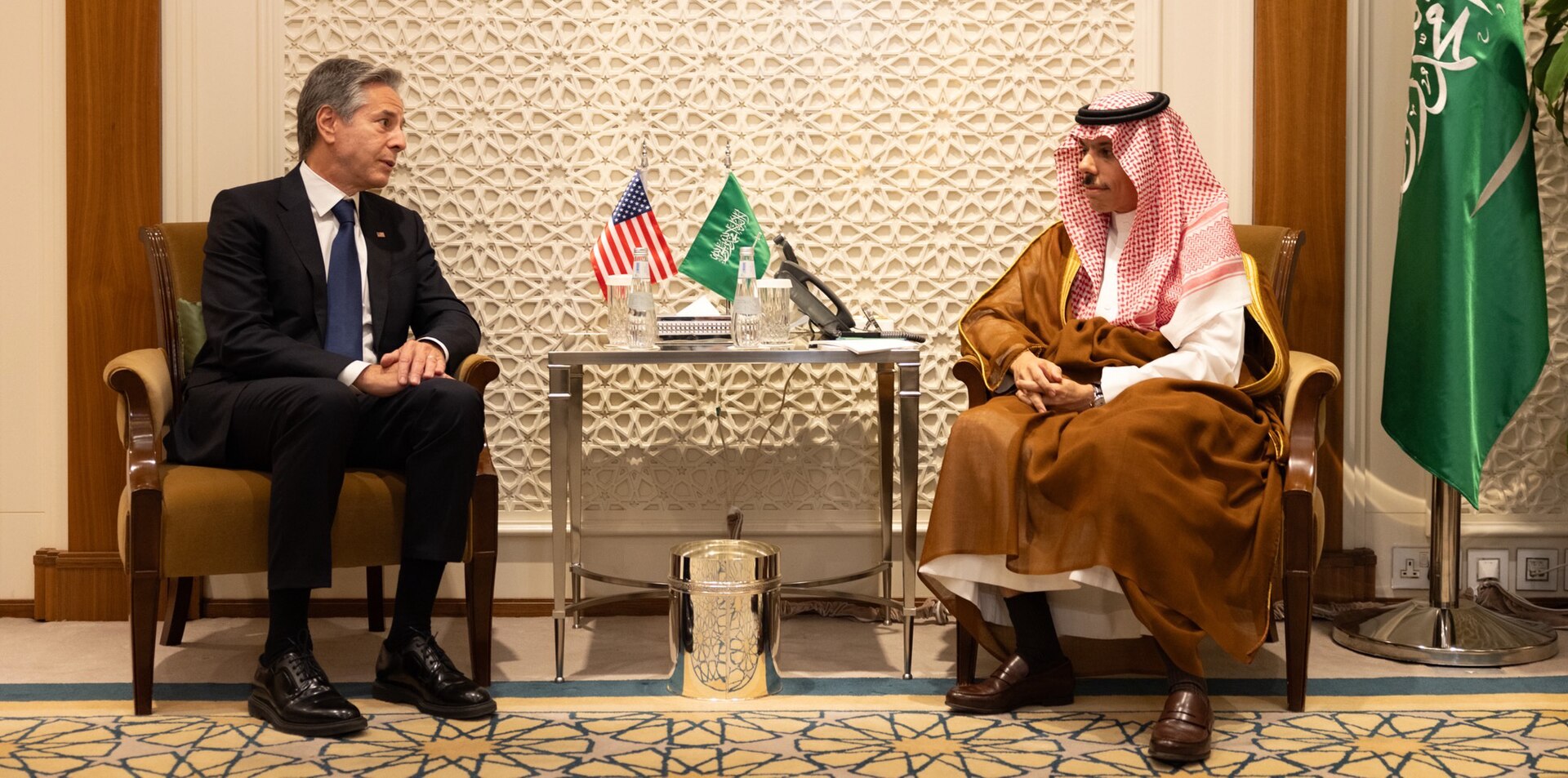
Table of Contents
- What Did Prince Faisal Say in Vienna?
- The 123 Agreement Without the Gold Standard
- Why Does the Enrichment Ceiling Determine the 123 Agreement’s Value?
- Iran’s Enrichment Position Entering Phase 2
- What Is Iran’s Regional Nuclear Consortium Proposal?
- The Congressional Review and the Missing Variable
- How Long Does Phase 2 Have to Settle What JCPOA Took Twenty Months?
- Ninety Thousand Tonnes and a Reactor on the Gulf
- Frequently Asked Questions
What Did Prince Faisal Say in Vienna?
Prince Faisal bin Farhan told a European Council on Foreign Relations conference in Vienna on June 17, 2026, that “the detail will matter” and “verification is key” regarding US-Iran nuclear negotiations. The remarks — delivered at an academic gathering, not a negotiating session — constitute the only public Saudi statement addressing Phase 2 enrichment terms.
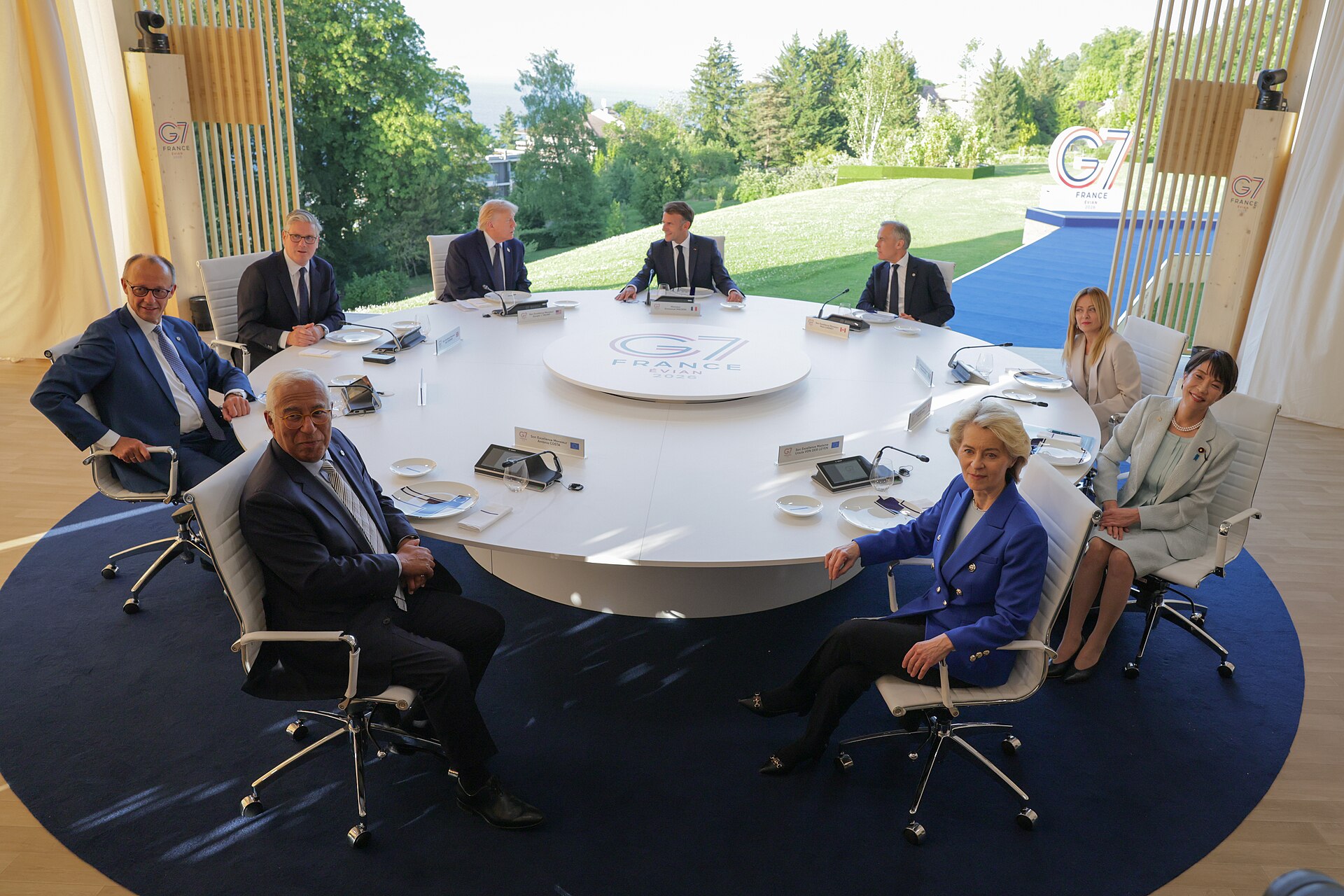
Nothing in the statement indicated Riyadh had been consulted on the substance being negotiated. The venue is worth pausing on. Vienna is the seat of the IAEA, the city where the agency’s Board of Governors voted 21-10-3 on June 12 to refer questions about Iran’s compliance to the next quarterly cycle. It is where the Cairo Agreement — the legal instrument governing IAEA inspection procedures for all declared Iranian facilities — was administered before Tehran terminated it on November 20, 2025. Prince Faisal chose this city to make his statement. He was not invited to Geneva, where the MOU will be signed. He was not present at Évian, where the G7 endorsed a deal whose text no leader had read. He was not in Muscat, where round four of negotiations produced Iran’s consortium proposal.
Saudi Arabia’s foreign ministry has issued no formal communiqué on Phase 2 nuclear terms. The kingdom’s only prior public engagement with the MOU process came when FM Faisal called Pakistan’s foreign minister Ishaq Dar on June 12, and the two “welcomed” the deal’s “final stage” — a statement relayed through Pakistan’s channels, not Saudi Arabia’s own.
“Verification is key” is a statement no government on earth would dispute. Its content is zero. Its function is presence — the diplomatic equivalent of signing an attendance sheet at a conference for a course you are not enrolled in. The following day, June 18, Faisal called Araghchi directly — his Vienna ‘verification’ emphasis did not appear in the call’s published readout.
The Middle East briefing 3,000+ readers start their day with.
One email. Every weekday morning. Free.
The 123 Agreement Without the Gold Standard
The US-Saudi 123 Agreement, formalized May 13, 2026, alongside a $142 billion defense package, removed every nonproliferation safeguard the United States had applied to civilian nuclear cooperation agreements since 2009. The Arms Control Association, in the June 2026 issue of Arms Control Today, labeled it “Saudi Arabia’s Gilded Nuclear Sweetheart Deal” and said it “abandons every nonproliferation standard Washington spent seventeen years building.”
Three specific requirements were omitted. The agreement contains no prohibition on uranium enrichment on Saudi soil. It contains no prohibition on spent-fuel reprocessing. And it does not require Saudi Arabia to ratify the IAEA Additional Protocol — the enhanced inspection regime — before American nuclear export licenses can be issued.
The benchmark is the UAE. Abu Dhabi’s 123 Agreement, signed May 21, 2009, and in force since December 17 of that year, explicitly prohibits the UAE from “possessing sensitive nuclear facilities within its territory or otherwise engaging in activities within its territory relating to enrichment of uranium or reprocessing of nuclear fuel.” The Barakah nuclear plant — the Arab world’s first operating nuclear power station — runs entirely on imported fuel. Every US administration between 2009 and 2025, Democratic and Republican, stated publicly that a Saudi 123 Agreement should match the UAE standard. Riyadh refused for seventeen years. Washington conceded in one signing.
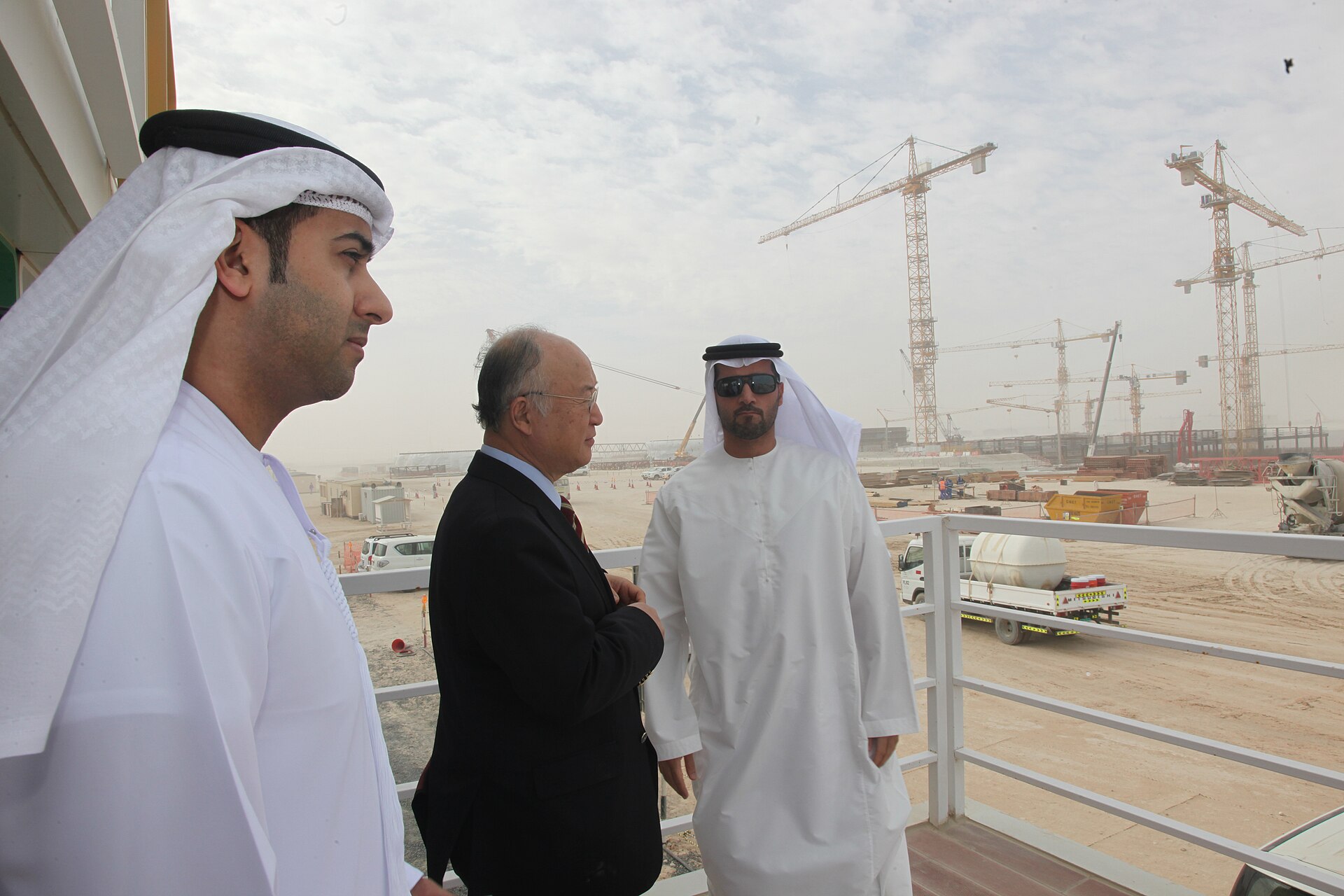
The concession was not incidental to the defense package. The 123 Agreement is the legal instrument that enables the transfer of American nuclear technology, materials, and reactor components. Without it, the $18-22 billion Khor Duweihin reactor project on Saudi Arabia’s Persian Gulf coast cannot proceed with American-origin components. The agreement is the door through which every subsequent procurement decision passes.
The Arms Control Association noted a structural consequence beyond the bilateral: Iran can now cite the Saudi 123 Agreement as an institutional argument against American nonproliferation credibility in Phase 2 negotiations. Washington went to war over Iran’s enrichment program in June 2025. Five weeks after the MOU, it signed a cooperation agreement that permits the same capability for Saudi Arabia.
Why Does the Enrichment Ceiling Determine the 123 Agreement’s Value?
If Phase 2 permits Iran to retain meaningful enrichment capacity, Saudi Arabia’s right to pursue its own fuel cycle — now legally enabled by the non-Gold-Standard 123 Agreement — shifts from an energy procurement decision to a strategic hedging architecture. The enrichment ceiling Iran receives determines whether Saudi Arabia’s nuclear program remains civilian or becomes a latent weapons-capable infrastructure.
The logic runs in one direction. A low enrichment ceiling for Iran — something at or below the JCPOA’s 3.67 percent cap — would leave Saudi Arabia’s 123 Agreement as an advantageous but unremarkable commercial framework. Riyadh imports fuel, builds reactors, generates power. The absence of Gold Standard restrictions is a diplomatic anomaly but not a strategic provocation.
A high ceiling — or an ambiguous one, or a verification regime too weak to confirm the actual ceiling — changes the calculation. Crown Prince Mohammed bin Salman stated on CBS 60 Minutes in March 2018: “Saudi Arabia does not want to acquire any nuclear bomb, but without a doubt if Iran developed a nuclear bomb, we will follow suit as soon as possible.” That statement was made before the June 2025 strikes, before the MOU, before the 123 Agreement. It has not been retracted.
Saudi Energy Minister Khalid Al-Falih was more direct at an Abu Dhabi energy conference in September 2019: the kingdom wants “the full cycle, from producing uranium, to enriching the uranium, [to] using the uranium.” The 123 Agreement, as signed, permits exactly that.
The Stimson Center identified the structural problem in a 2026 paper: the Trump administration “undermined the nuclear nonproliferation regime by simultaneously going to war against Iran over its enrichment program while granting South Korea and Saudi Arabia permission to pursue the same capabilities.” The 123 Agreement was negotiated as though Riyadh would have leverage over the Iranian outcome. Prince Faisal’s five words in Vienna are the visible extent of that leverage.
Iran’s Enrichment Position Entering Phase 2
Iran’s physical enrichment facilities were destroyed in the June 2025 strikes. Iran International reported in November 2025 that Tehran maintains the legal and political right to enrich uranium, even as the centrifuge cascades at Natanz and Fordow are no longer operational. The distinction between capability and right is the entire substance of Phase 2.
Iranian Foreign Minister Abbas Araghchi told PressTV in December 2025 that “Iran’s right for enrichment, for peaceful use of nuclear technology, including enrichment, is undeniable” and that “this is an inalienable right of Iran and we would never give up our rights.” At a UN disarmament conference in Geneva in February 2026, he called enrichment on Iranian soil a “red line.” He also described the enrichment question as “almost a deadlock” with Washington, telling Tribune India that both sides had agreed to “postpone it to the later stages of our negotiations.” Khamenei’s June 18 statement named those same demands “excessive” — establishing the ceiling before Phase 2 opened; the authorization and the exit were written into the same document.
Those later stages are now. Phase 2 opened June 17. The deadlock Araghchi described has not resolved in the intervening months. The United States and Iran disagree on whether enrichment restrictions should last twenty years (Washington’s position) or five years (Tehran’s), according to Carnegie Endowment and Brookings analyses published in May 2026. The Carnegie Endowment framed the shift plainly: “The central policy debate is no longer whether Iran will retain some nuclear capability, but how extensive that capability can become.”
The stockpile that Phase 2 must address cannot be measured. Iran had accumulated 440.9 kilograms of uranium enriched to 60 percent U-235 as of the IAEA’s last verified assessment (GOV/2026/8, February 27, 2026). But the agency has not had access to Iranian facilities for more than 107 days as of the MOU signing. The Institute for Science and International Security estimates that “a bit more than 200 kilograms, maybe a little bit more than that” of 60-percent-enriched material is stored in Isfahan’s underground tunnel complex. Iran terminated the Cairo Agreement on November 20, 2025, eliminating the legal framework for routine IAEA inspections at declared facilities. Four of six unaffected sites have been denied access.
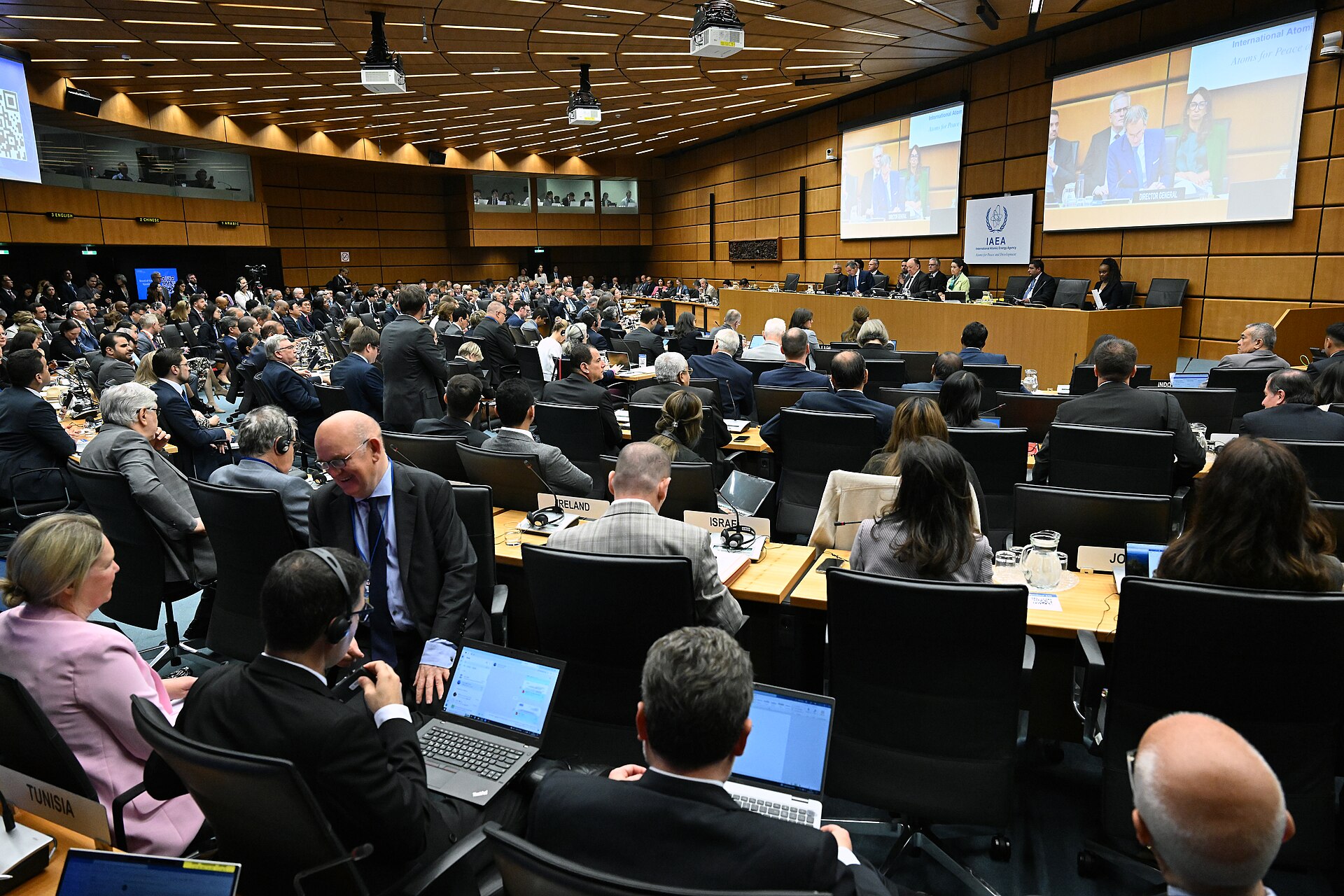
Iranian Deputy FM Kazem Gharibabadi told Mehr News Agency on June 15 that Phase 2 nuclear talks depend on Washington “coming through on its commitments, including ending hostilities, lifting the blockade, and releasing frozen assets.” The preconditions are not about enrichment percentages. They are about everything except enrichment percentages. Nine days after the MOU was signed, IAEA Director General Grossi publicly named the impasse: a “war of statements” over Iran nuclear inspections had overtaken the question of whether any inspector would reach an Iranian enrichment site during Phase 2.
What Is Iran’s Regional Nuclear Consortium Proposal?
Iran proposed during round four of negotiations in Muscat on May 11, 2026, a regional nuclear consortium in which Tehran would enrich uranium on Iranian soil under joint IAEA and regional oversight, with permanent on-site representation from Saudi Arabia, the UAE, and potentially the United States. Oman would host, Saudi Arabia would finance and purchase fuel, and the UAE would serve as administrative headquarters.
The consortium model offers Iran something no other framework does: diplomatic standing to demand that Saudi Arabia’s own enrichment program come under equivalent scrutiny. If Riyadh participates in a regional consortium that oversees Iranian enrichment, Tehran acquires a legitimate institutional basis to insist that Saudi Arabia’s civilian fuel cycle — enabled by the non-Gold-Standard 123 Agreement — be subject to the same consortium’s inspection regime. Saudi Arabia would enter the consortium as a customer and exit as a subject of oversight.
This is the sovereignty trap the 123 Agreement was not designed to navigate. The agreement was signed on May 13. The consortium was proposed on May 11 — two days earlier. There is no public evidence that the 123 Agreement’s terms were drafted with the consortium model in view, or that Riyadh anticipated Iran would propose a structure that uses Saudi participation as the mechanism for constraining Saudi ambitions. If Saudi Arabia refuses to participate, it forfeits the oversight role and leaves its enrichment-capable program as the sole unmonitored civilian fuel cycle in the region. If it joins, it submits to Iranian co-governance of a program the 123 Agreement was supposed to make sovereign.
Nour Eid of the Stimson Center wrote that Saudi Arabia’s nuclear path “will not depend on Iran or the war’s outcome.” The consortium proposal is designed to make that independence impossible. Every feature of the model — the co-administration, the regional oversight, the permanent on-site representation — is a structural linkage between Iran’s enrichment rights and Saudi Arabia’s.
The Congressional Review and the Missing Variable
The 123 Agreement faces a ninety-day Congressional review period once formally submitted. Senator Jim Risch, the Republican chair of the Senate Foreign Relations Committee, stated in March 2026 that the Gold Standard “has to be included” in any Saudi agreement. Representative Brad Sherman announced he will introduce a Resolution of Disapproval if the submitted text fails to include Gold Standard and Additional Protocol requirements. The bipartisan opposition is unusual — nuclear cooperation agreements have historically passed without serious resistance.
The review mechanism permits Congress to block the agreement through a joint resolution of disapproval. But the review will proceed without the variable that determines the agreement’s strategic consequences. The ninety-day Congressional clock and the sixty-day Phase 2 window overlap. Congress will evaluate the 123 Agreement’s nonproliferation implications before knowing what enrichment ceiling Iran receives — the single factor that determines whether Saudi Arabia’s exemption from the Gold Standard is a diplomatic concession or a proliferation pathway.
Congress will review the MOU under separate authorities, but the institutional structure ensures that the nuclear cooperation agreement and the enrichment ceiling are assessed in isolation from each other. Risch and Sherman are evaluating a reactor deal. Phase 2 negotiators are setting an enrichment ceiling. Neither process references the other. The 123 Agreement’s text assumes the enrichment question will be resolved; Phase 2’s mandate does not reference the 123 Agreement at all. A clause-by-clause reading of all fourteen MOU points maps each against Saudi exposure — fees, nuclear sequencing, Lebanon, mines, and Phase 2 scope.
The Arms Control Association’s February 2026 analysis — published three months before the May 13 signing — asked: “Is Trump Jeopardizing Nonproliferation Efforts to Get a Nuclear Cooperation Deal with Saudi Arabia?” The question was about sequencing. The answer arrived on May 13: the cooperation deal would not wait for the nonproliferation outcome. The enrichment ceiling it depends on has not yet been written.
How Long Does Phase 2 Have to Settle What JCPOA Took Twenty Months?
Phase 2 has sixty days — from June 17 to approximately mid-August 2026 — to resolve Iran’s enrichment ceiling, stockpile limits, and IAEA verification protocols. The JCPOA required twenty months to negotiate the same category of terms (Joint Plan of Action November 24, 2013, to final deal July 14, 2015) and produced a 3.67 percent enrichment cap, a 300-kilogram LEU stockpile limit, and confinement of all enrichment to Natanz for fifteen years.
Former US Deputy Secretary of State Wendy Sherman, the lead American negotiator of the JCPOA, said of Phase 2: “I can assure you they will not get all of this done in 60 days.”
The compression is not only temporal. The JCPOA was negotiated with a verified baseline. The IAEA knew, within reasonable margins, how much enriched material Iran possessed and where it was stored. Phase 2 begins with no such baseline. The agency’s last verified stockpile figure is from February. The current inventory is an estimate. The inspection framework that would update it does not exist — Tehran terminated its legal basis five months before Phase 2 opened.
Prince Faisal said verification is key. The IAEA cannot currently verify anything. The enrichment ceiling Phase 2 negotiates will be applied to a stockpile no one can measure, under an inspection regime that does not exist, within a timeline that the JCPOA’s own architect described as insufficient. That outcome — whatever it is — will determine the strategic value of the 123 Agreement Saudi Arabia signed five weeks ago. The day after his Vienna statement, Faisal imposed a trust condition on Iran economic cooperation — the only parallel Saudi instrument in the Phase 2 period, as detailed in Faisal’s Trust Condition and the $300 Billion Fund Saudi Arabia Cannot Block.
The process the enrichment ceiling depends on moved to Bürgenstock on June 20. Qatar PM Al Thani arrived as the active Gulf mediator; Araghchi’s attendance remained conditional on the Lebanon ceasefire. Qatar PM Arrives for Iran Nuclear Talks That Exclude Saudi Arabia documents Day 4 of Phase 2 — who holds the mediating seat, what the conditional arrival signals, and why Saudi Arabia’s absence from the talks is now a baseline fact rather than a diplomatic choice.
Ninety Thousand Tonnes and a Reactor on the Gulf
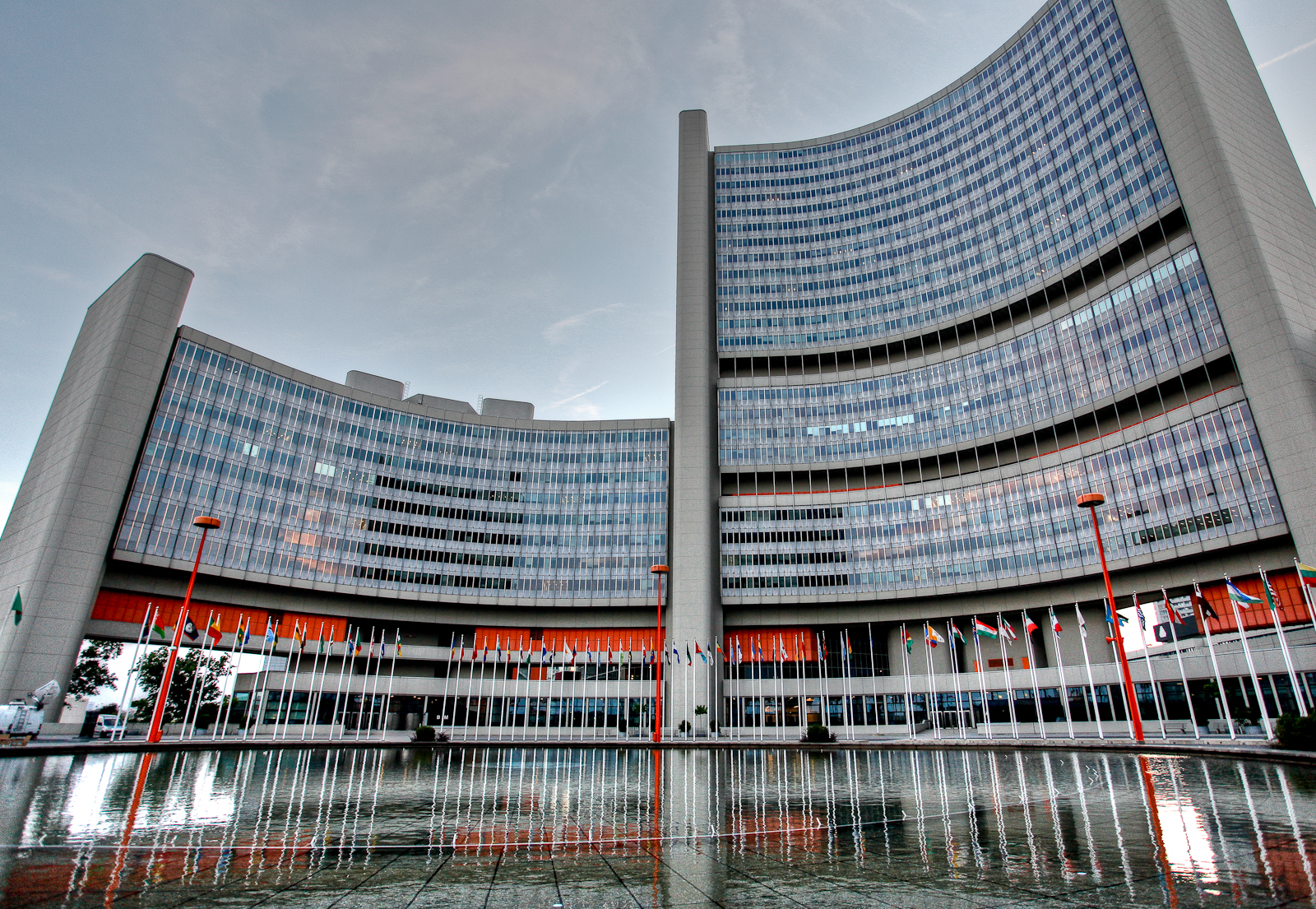
Saudi Arabia’s nuclear program is not a proposal. Geological surveys have identified approximately 90,000 tonnes of uranium reserves in the Arabian Shield. The King Abdullah City for Atomic and Renewable Energy has set a target of 17.6 gigawatts of nuclear electricity by 2040. The centerpiece is a pair of large pressurized water reactors at Khor Duweihin on the Persian Gulf coast, each rated at approximately 1.4 gigawatts, with an estimated construction cost of $18-22 billion. The Duwayhin Nuclear Energy Company, the designated reactor operator, passed its first IAEA Integrated Management System Assessment in May 2025. The agency found its management system “well-structured and aligned with international best practices.”
Separately, Saudi Arabia has pursued small modular reactor cooperation with South Korea’s Korea Atomic Energy Research Institute under a framework valued at approximately $1 billion. The SMART reactor design — a 100-megawatt pressurized water unit — is intended for desalination and distributed power generation.
The infrastructure is being built. The regulatory structures have passed international review. The raw material is in the ground. What the 123 Agreement added on May 13 was the legal right to process that material without the restrictions Washington imposed on every other partner since 2009. Al-Falih’s 2019 demand for “the full cycle” — produce, enrich, use — is now legally permissible under bilateral treaty.
The Brookings Institution wrote in 2026 that “it is acceptable to allow Iran some verifiable amount of very limited nuclear enrichment in pursuit of compromise.” If that is the Phase 2 outcome — limited but nonzero Iranian enrichment — then Saudi Arabia’s non-Gold-Standard 123 Agreement becomes the legal foundation for a parallel program in a region where two states, not one, possess enrichment rights. The Trump administration’s willingness to accept Iranian missile capabilities in the name of proportionality suggests the same logic may extend to the nuclear domain.
The decisions being made at Khor Duweihin — the reactor design, the fuel cycle architecture, the absence of Additional Protocol ratification — will outlast every negotiation currently underway. The MOU will expire or be renegotiated. Phase 2 will conclude or collapse. The 123 Agreement will face Congress and survive or fail. The reactors will still be there. The 90,000 tonnes of uranium will still be in the shield. And the enrichment ceiling — set in rooms where Saudi Arabia was not present — will define what those reactors mean for a generation.
Frequently Asked Questions
Does Saudi Arabia have any indirect channel to influence Phase 2 enrichment terms?
Pakistan operates a dual-track diplomatic channel on Saudi Arabia’s behalf. General Asim Munir and Prime Minister Shahbaz Sharif’s envoy Rao Naqvi carried separate military and civilian letters to Supreme Leader Khamenei on June 7, 2026. Pakistan maintains approximately 13,000 troops in Saudi Arabia’s Eastern Province under the Saudi-Pakistan Military Deployment Agreement signed September 17, 2025. The Stimson Center characterized the SMDA as “largely symbolic,” and the International Crisis Group described Pakistan’s role as a “unique position” of intermediation — not representation. Pakistan can relay messages. It cannot negotiate enrichment ceilings on behalf of a country that is not party to the talks.
Has any US 123 Agreement ever been blocked by Congress?
No. Congress has never passed a joint resolution of disapproval to block a 123 Agreement in the history of the statute. The review mechanism has existed since the Atomic Energy Act of 1954 (amended 1978) and has never been successfully exercised. The bipartisan opposition forming around the Saudi agreement — with Senate Foreign Relations Committee chair Jim Risch and Representative Brad Sherman both publicly opposing the non-Gold-Standard terms — represents the most serious test the mechanism has faced. A simple majority in both chambers is required, and the president may veto the resolution.
Could the UAE renegotiate its 123 Agreement to match Saudi Arabia’s terms?
Technically, yes. The UAE’s 123 Agreement contains no prohibition on renegotiation, and Abu Dhabi has publicly expressed dissatisfaction with the asymmetry since the Saudi deal was announced. The Emirates invested approximately $32 billion in the Barakah plant on the explicit understanding that Gold Standard compliance was the regional norm. If Saudi Arabia operates enrichment facilities under a non-Gold-Standard agreement while the UAE remains bound by its 2009 terms, Abu Dhabi faces an incentive to seek parity. No renegotiation request has been filed, but Emirati officials have made the discrepancy a topic of bilateral discussion, according to Arms Control Association reporting.
What is the IAEA Additional Protocol, and why does its omission from the Saudi deal matter?
The Additional Protocol is a voluntary agreement between a state and the IAEA that grants the agency expanded inspection authority beyond standard safeguards — including short-notice access to undeclared sites, environmental sampling, and broader information requirements. The post-2009 Gold Standard made ratification of the Additional Protocol a precondition for US nuclear technology exports. The Saudi 123 Agreement drops this requirement, meaning American reactor components and nuclear materials can be exported before Saudi Arabia grants the IAEA enhanced inspection rights. Saudi Arabia has signed the Comprehensive Safeguards Agreement but has not ratified the Additional Protocol. The gap means the IAEA would operate with standard — not enhanced — oversight authority over a program that now legally includes the option to enrich.
What happens to the 123 Agreement if Phase 2 collapses without an enrichment ceiling?
The 123 Agreement is a standalone bilateral instrument. It does not contain a sunset clause tied to Iran negotiations, and its legal validity is independent of Phase 2’s outcome. If Phase 2 produces no enrichment ceiling — due to the deadlock Araghchi described, the verification blackout, or the sixty-day timeline expiring — the 123 Agreement remains in force with all its non-Gold-Standard terms intact. The strategic consequence is that Saudi Arabia would possess the legal right to enrich uranium in a region where Iran’s enrichment status is undefined. The congressional review clock runs independently, and a failed Phase 2 could intensify opposition from Risch and Sherman — or, depending on the political environment, strengthen the argument that Saudi Arabia needs the flexibility the agreement provides. The deal’s value shifts depending on the gap it was supposed to close. The Lebanon ceasefire that took effect June 19 nominally removed Iran’s suspension trigger for Phase 2, but the IDF buffer zone Iran defined as an MOU violation remained in place, leaving Saudi Arabia’s absence from the nuclear track unchanged.
The GCC’s collective exclusion from Phase 2 extended to the missile track. On June 25, all six GCC foreign ministers demanded at Manama that Iran’s ballistic missiles be addressed in Phase 2 — a demand that arrived after Trump had already conceded the point at G7 Evian and Iran’s president had declared missiles permanently off the table. The full context of that collective demand and its structural impossibility is examined at The Gulf Asked for What Washington Already Conceded.