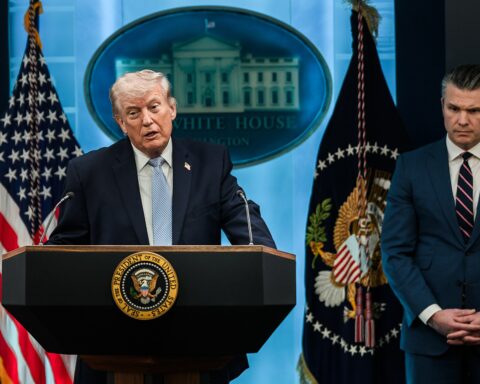
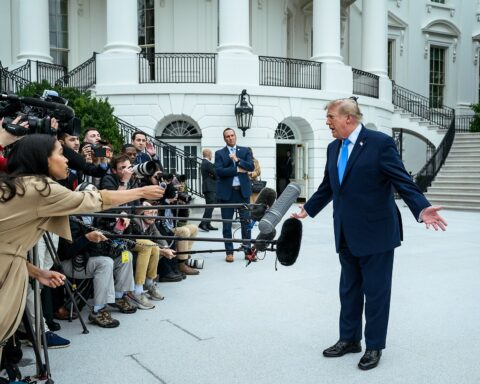
MUSCAT — On May 28, Donald Trump told his Cabinet he would “blow up” Oman if it brokered a joint Strait of Hormuz management deal with Iran. Within hours, Treasury Secretary Scott Bessent called the Omani Ambassador directly, the Ambassador assured Washington that Muscat had “no plans” for a tolling arrangement, and forty-six years of Omani diplomatic architecture — the only surviving indirect channel between Riyadh and Tehran — was placed under existential threat. Saudi Arabia did not learn about this through consultation. It learned about it the same way everyone else did: from the news.
The threat did not arrive in isolation. It landed alongside a Treasury sanctions warning, a Wall Street Journal report that Washington now demands Oman “break Iran ties” entirely, and Iran’s own June 1 suspension of all US message exchanges through intermediaries. Saudi Arabia’s exclusion from US-Iran diplomacy was, until May 28, passive — it was not invited. Now that exclusion is active. Washington is not merely absent from Saudi Arabia’s workarounds; it is destroying them. Abu Dhabi chose a different approach: Sheikh Tahnoun’s office opened the UAE’s first face-to-face security meeting with the IRGC since the war began — the channel Riyadh cannot build and cannot block.
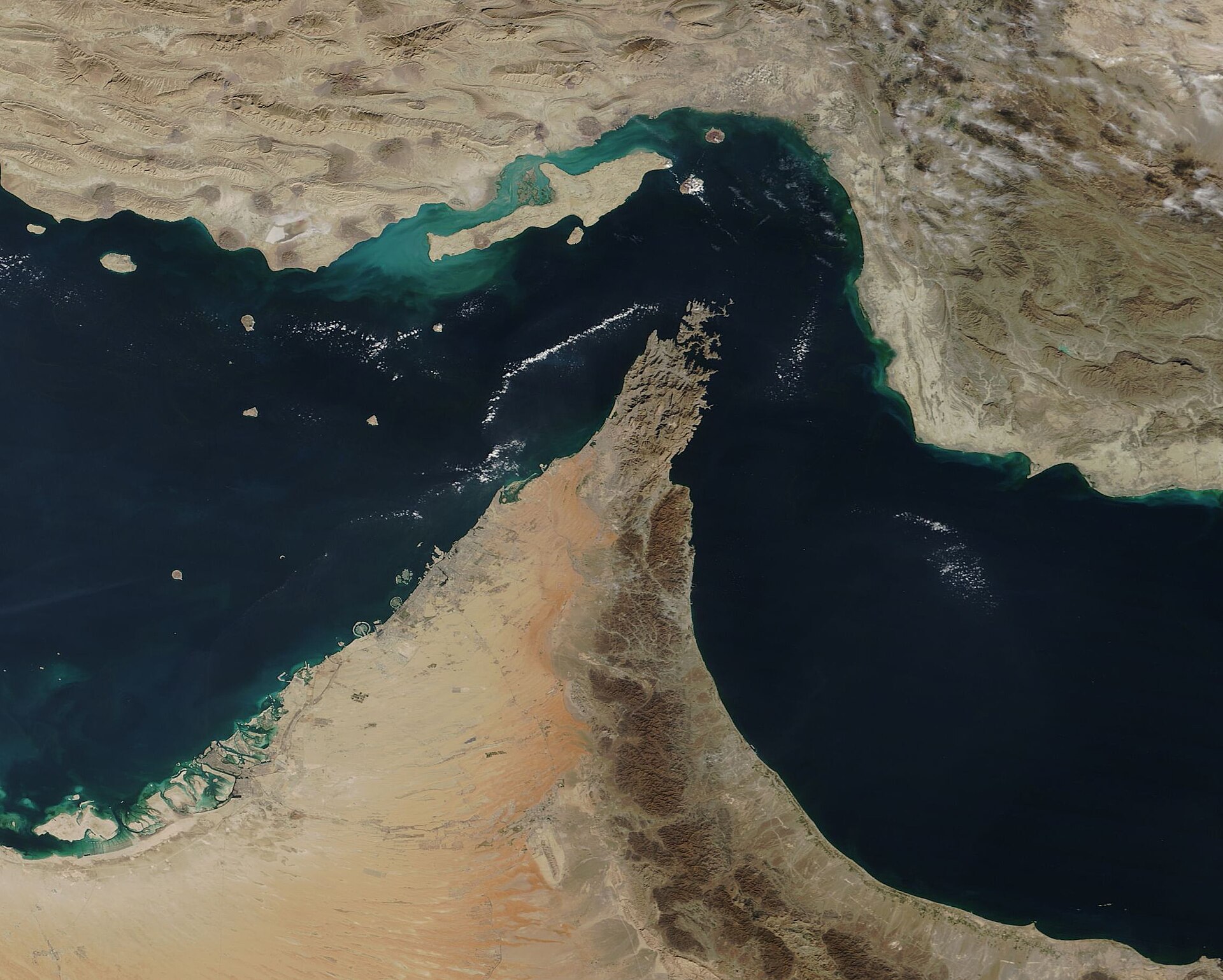
Table of Contents
- What Trump Said on May 28 — and What It Killed
- What Was Iran Building With Oman?
- How Did Washington Collapse the Channel in Twenty-Four Hours?
- The Deeper Demand: Neutrality Itself as a Threat
- What Diplomatic Channels Does Saudi Arabia Still Have?
- Iran Closed the Door From Its Side
- Can Saudi Arabia Reach Tehran Before June 9?
- Frequently Asked Questions
What Trump Said on May 28 — and What It Killed
The statement was delivered at a White House Cabinet meeting, in response to a direct question about whether the President would accept an arrangement allowing Iran and Oman to jointly manage Hormuz transit. Trump’s exact words, reported by Al Jazeera and CP24: “It’s international waters and Oman will behave just like everybody else or we’ll have to blow them up.”
The trigger was not a rumor or a diplomatic leak. Iranian state television had published, the day before, what it described as an unofficial draft of the US-Iran MOU containing a specific term: Iran and Oman would jointly manage Hormuz traffic and restore shipping to pre-war levels within one month of signing. The draft’s publication — making visible a negotiating position that had been developing quietly for weeks — provoked the presidential response within twenty-four hours.
Oman is not a peripheral actor in this architecture. It controls the southern shore of the Strait of Hormuz. The Musandam Peninsula, an Omani exclave jutting into the waterway, makes any reopening framework that excludes Muscat physically incoherent. Oman signed the first US Facilities Access Agreement among Gulf states on April 21, 1980. It has maintained simultaneous security partnerships with Washington and diplomatic relations with Tehran for forty-six years — a dual alignment no other GCC state has replicated.
That dual alignment is what Trump’s statement targeted. Not a specific policy proposal. The structural capacity itself.
The Middle East briefing 3,000+ readers start their day with.
One email. Every weekday morning. Free.
What Was Iran Building With Oman?
Iran was constructing, through Oman, a governance framework for the Strait of Hormuz that would formalize Iranian administrative authority while clothing it in the language of bilateral maritime cooperation. Iranian Deputy Foreign Minister Kazem Gharibabadi publicly announced the two countries were “in the final stages of drafting a protocol for peacetime navigation in the Strait of Hormuz,” under which vessels would need to obtain permits and coordinate with both coastal states in advance.
The protocol was not framed as a toll. Iran described it as a maritime safety and navigation mechanism — permits, vessel coordination, corridor designation. The distinction matters because a toll is a unilateral extraction; a joint protocol is a governance structure that grants one party (Iran) operational control over transit while distributing legitimacy across two parties (Iran and Oman). ISNA reported that legislator Alireza Salimi stated a plan “to implement Iran’s management and sovereignty over the Strait of Hormuz will soon be approved by parliament” — the domestic legislation required to give the Oman-brokered protocol legal force inside Iran’s own system.
For Saudi Arabia, the protocol represented something specific: an architecture under which Hormuz could reopen without requiring either a US-Iran agreement or Saudi consent. Oman’s role was not neutral facilitation. It was a legitimacy vehicle. Oman provided the second coastal-state signature that transformed Iranian unilateral control into something presentable as bilateral governance.
Sohar port’s traffic tells this story in commercial terms. Ship calls rose approximately 40 percent and cargo handling capacity increased roughly 55 percent after the February 28 war outbreak, according to AGBI reporting from March 2026. Oman was not merely mediating. It was benefiting from the very disruption it was positioned to resolve — and would benefit further from any reopening framework in which it held a formal role.
How Did Washington Collapse the Channel in Twenty-Four Hours?
The US operation against the Oman channel was simultaneous, multi-vectored, and complete within a single news cycle. Trump’s Cabinet statement was the public threat. Bessent’s actions were the institutional mechanism that made capitulation the only rational Omani response.
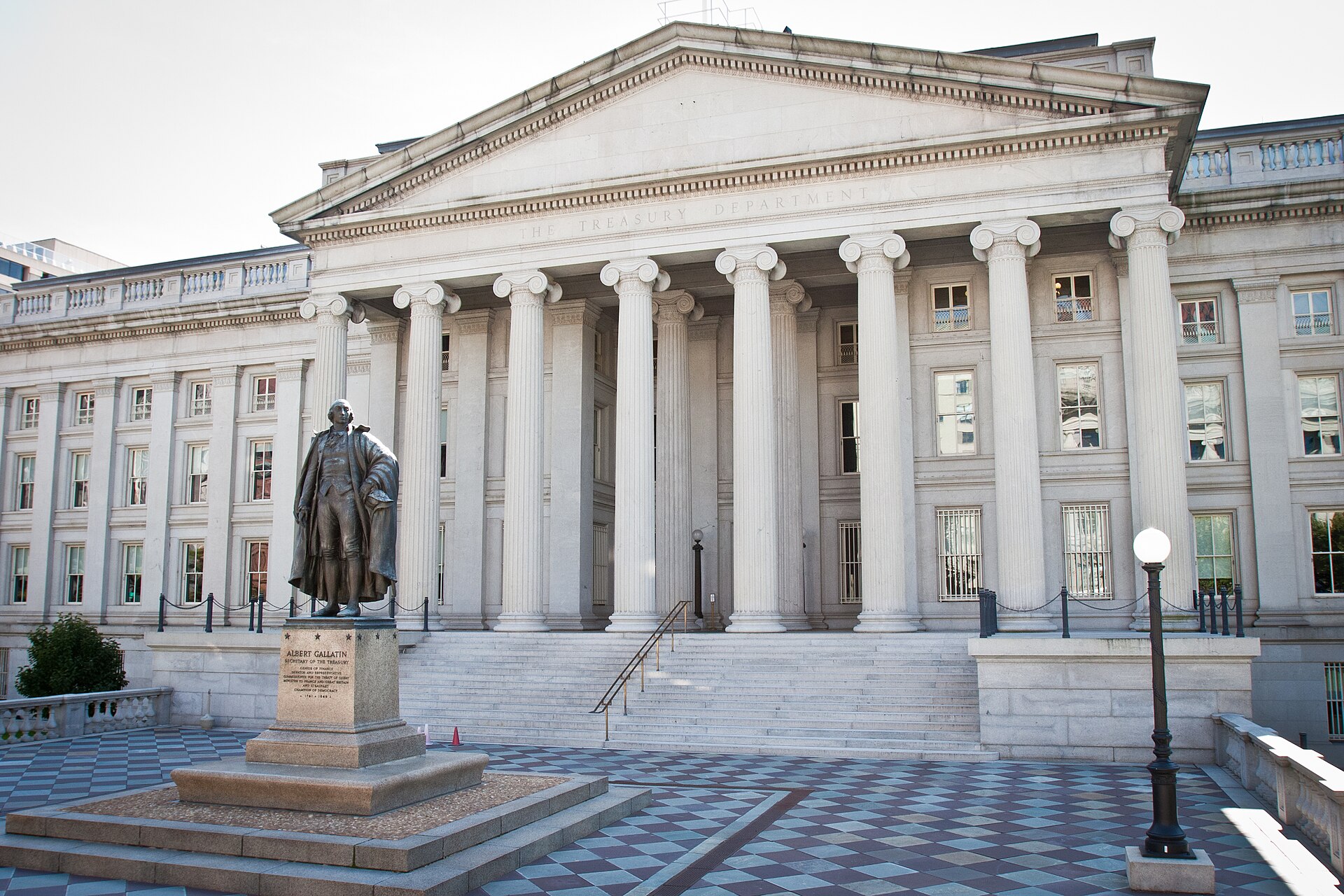
Bessent posted publicly on May 28: “Oman, in particular, should know that the US Treasury will aggressively target any actors involved — directly or indirectly — in facilitating tolls for the Strait and any willing partners will be penalized.” He then called the Omani Ambassador directly and told him the tolling arrangement was “a non-starter.”
“Oman, in particular, should know that the US Treasury will aggressively target any actors involved — directly or indirectly — in facilitating tolls for the Strait and any willing partners will be penalized.”
— Scott Bessent, US Treasury Secretary, May 28, 2026
The Ambassador’s response was immediate. He assured Washington that Oman had “no plans” for a tolling arrangement and did not want to risk Omani individuals or institutions getting sanctioned. Oman’s public denial followed within hours. A draft protocol that Gharibabadi had described as being in “final stages” was, by close of business May 28, something Muscat officially denied ever pursuing.
The speed of capitulation reflects the asymmetry. Oman’s GDP is approximately $115 billion. Its sovereign wealth fund, banking sector, and state-owned enterprises are all dollar-denominated and SWIFT-dependent. Bessent’s threat was not abstract; it was an offer Muscat could not refuse within the architecture of the modern financial system. The military threat was theatrical. The Treasury threat was operational.
The Deeper Demand: Neutrality Itself as a Threat
The Wall Street Journal reported on approximately June 2 that the Trump administration “became distrustful of Oman” after Foreign Minister Badr Albusaidi told US media in February 2026 that a nuclear agreement was “within our reach” — a statement US officials interpreted not as optimistic mediation but as evidence of Omani sympathy for Tehran’s position. The administration’s demand, per the WSJ report sourced through the Jerusalem Post, is that Muscat “break Iran ties” entirely.
This demand goes beyond the toll question. It targets the structural neutrality that has defined Omani foreign policy since Sultan Qaboos established it in the 1970s. Sanam Vakil, Director of the MENA Programme at Chatham House, told the WSJ that Trump’s threat “highlighted perceptions in some American circles that Oman is sympathetic to Iran” and that Oman’s approach “opened the door to criticism and unwelcome scrutiny of a country that has long prided itself on its impartial foreign policy.”
Omani Information Minister Abdulla Al-Harrasi responded with a formula calibrated to retreat from the Iran-Oman joint management position without endorsing the US framing: “Oman stands ready to work with the United States and all responsible partners to promote stability, deter disruption, and safeguard our shared strategic interests.” The phrase “all responsible partners” is doing work — it leaves open whether Iran qualifies. But the structural message is surrender. The word “Iran” does not appear.
The Oman channel did not emerge from nowhere. In 2009, Muscat established a formal backchannel passing messages between Washington and Tehran. In 2012-2013, US and Iranian diplomats met secretly in Muscat, laying the groundwork for the 2015 JCPOA. In February 2026, after the US-Israeli joint attack on Iran on February 28, Oman hosted indirect nuclear talks with FM Albusaidi participating directly as mediator. The channel that Trump threatened on May 28 is the same channel that produced the only successful US-Iran nuclear agreement in history.
Washington is not demanding Oman stop a specific initiative. It is demanding Oman abandon a forty-six-year institutional capability — and doing so at the precise moment that capability is the only remaining mechanism through which any Gulf state can reach Tehran indirectly.
What Diplomatic Channels Does Saudi Arabia Still Have?
Saudi Arabia maintained, until late May 2026, three indirect paths to Tehran: the Oman bridge, the Pakistan IRGC back-channel, and quiet compliance with the PGSA toll regime. All three are now either publicly compromised, under US threat, or functionally inoperative.
The Oman channel is under US military and financial threat since May 28. Oman publicly denied any tolling arrangement the same day. Iran suspended message exchanges through intermediaries on June 1. The channel is closed from both ends simultaneously — threatened by Washington, abandoned by Muscat, and suspended by Tehran.
The Pakistan back-channel is publicly exposed. Interior Minister Naqvi’s June 7 trip to Tehran — carrying two separate letters, one from PM Shehbaz (civilian/state) and one from Army Chief Munir (IRGC back-channel) — was reported openly by Tasnim, Daily Pakistan, and Mehr. The dual-letter architecture, once its utility depended on discretion, is now published. Munir’s direct line to Khamenei exists under the same structural exposure: Washington knows, Tehran knows Washington knows, and Pakistan’s dual role as SMDA troop provider (13,000 authorized in Saudi Arabia’s Eastern Province) and IRGC courier makes any future use of this channel a visible act rather than a quiet one.
The PGSA toll payments are now named on the congressional record. Saudi-flagged and Saudi-bound vessels have been paying approximately $2 million per VLCC transit through the Persian Gulf Security Authority toll regime for eighty-one days as of Rubio’s June 2 Senate testimony — during which he named the toll explicitly on the public record. Quiet compliance with Iranian extraction was a de facto channel: it signaled Saudi willingness to pay for access, which is a form of diplomatic communication. Now that it is named, debated, and targeted by Bessent’s IEEPA directive of June 6, continued payment becomes a political act visible to Congress, the Treasury, and the American public. The subsequent Iranian cessation announcement on June 8 does not restore any of these channels: why the Lebanon carve-out keeps PSAB doctrinally exposed even after the ceasefire declaration is examined in the analysis that follows.
| Channel | Status pre-May 28 | Status post-May 28 | Compromising event |
|---|---|---|---|
| Oman bridge | Active — final protocol stage | Closed from both ends | Trump threat + Bessent call + Iran suspension (June 1) |
| Pakistan IRGC back-channel | Operational, discreet | Publicly documented | Naqvi dual-letter trip reported openly (June 7) |
| PGSA toll compliance | Quiet, unnamed | Named on Senate record | Rubio testimony (June 2) + Bessent IEEPA (June 6) |
| FM Faisal — Araghchi direct | Briefed, not consulted (May 11) | Silent 18+ days | No contact since May 11; not consulted on ceasefire |
Saudi Foreign Minister Prince Faisal bin Farhan’s last contact with Iranian FM Araghchi was May 11, 2026 — a call in which Araghchi briefed him on Pakistani mediation and ongoing US-Iran talks. Saudi Arabia was briefed, not consulted. The MOFA has been publicly silent on Iran for eighteen days. FM Faisal’s June 2-4 activity cluster — six diplomatic contacts — included none with Rubio, Araghchi, or any Lebanese counterpart.
Iran Closed the Door From Its Side
The collapse of the Oman channel is not exclusively a US action. Iran suspended it from its own end on June 1, three days after Trump’s threat, in response to what Tasnim described as ongoing ceasefire violations. Iranian negotiators would “stop exchanging messages with the US through intermediaries” and Tehran would move to fully close the Strait.
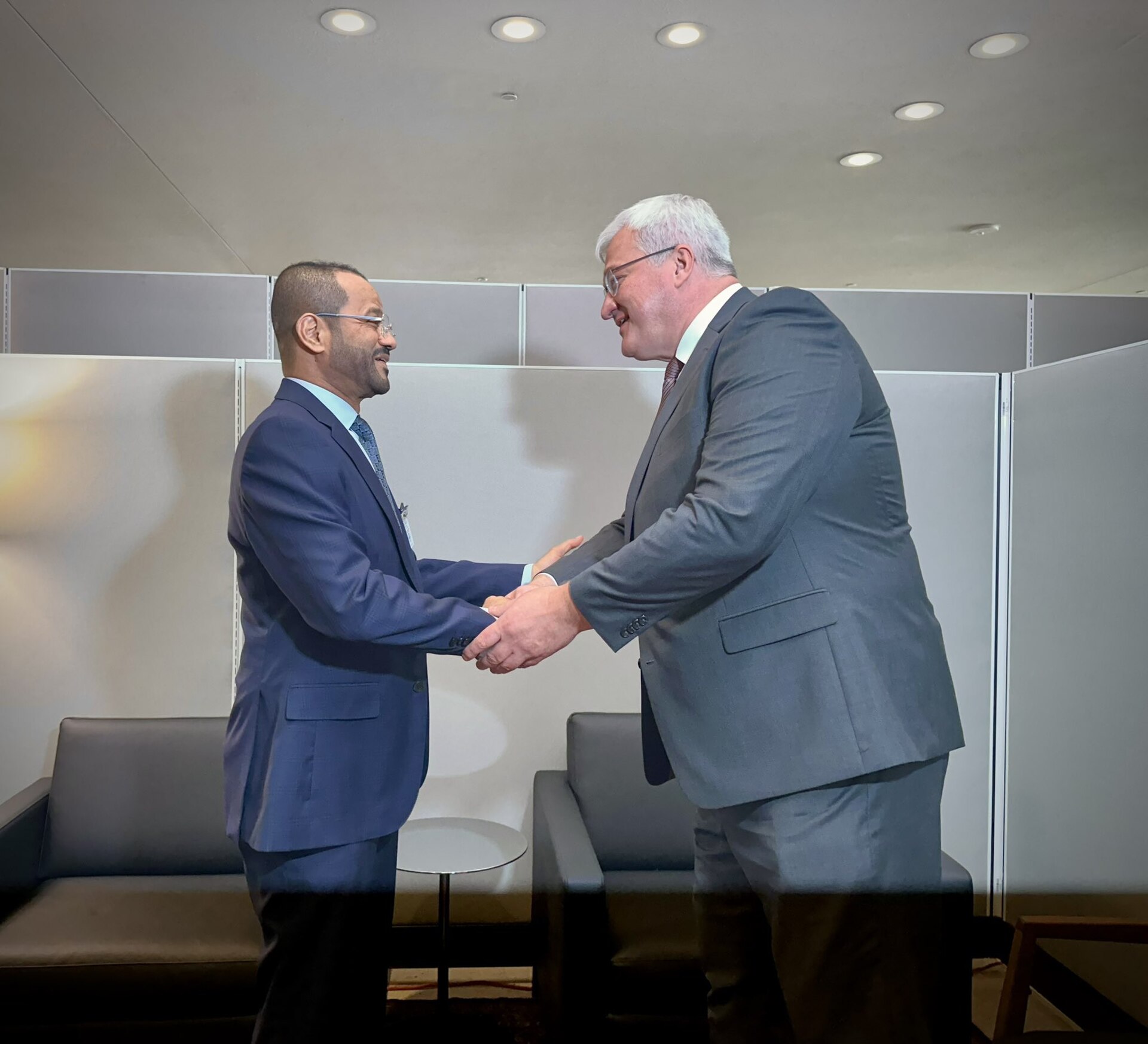
Iran Foreign Ministry spokesman Esmaeil Baqaei framed the Strait as a bilateral Iran-Oman matter from which Washington was inherently excluded: the waterway “had nothing to do with the US” and Tehran was engaging with Oman — “which lies across the waterway” — to decide what happens there. This statement, issued within hours of Trump’s May 29 Situation Room meeting ending without a decision, was designed to assert Iranian sovereignty over the governance framework itself.
“The Strait had nothing to do with the US. Tehran was engaging with Oman — which lies across the waterway — to decide what happens there.”
— Esmaeil Baqaei, Iran Foreign Ministry spokesman, May 29-30, 2026
The Soufan Center’s June 1 IntelBrief identified the structural impasse: Trump wants the MOU to “stipulate clearly that Iran is to end its control over the Strait of Hormuz immediately after the MOU is signed,” while Iran demands frozen asset release first. The Oman joint-management protocol was the only mechanism threading between these incompatible sequencing demands — giving Iran a face-saving governance role while restoring transit. With that mechanism destroyed, there is no remaining bridge between the two positions.
Iran’s formal rejection of the Trump MOU is expected by June 9. The counteroffer filed through Oman — which Washington itself nullified without responding — was the last substantive exchange. The channel through which any modified proposal could travel no longer exists.
Can Saudi Arabia Reach Tehran Before June 9?
June 9 is a convergence date. Iran’s formal MOU rejection is expected. Aramco’s $21.89 billion quarterly dividend is payable — against $18.6 billion in Q1 free cash flow, a coverage ratio of 0.85x. Brent crude trades at $91-95 per barrel against Saudi Arabia’s fiscal breakeven of $108-111, a gap of $13-20 per barrel costing approximately $100 million per day at current production levels. The question is not whether these pressures are bearable in isolation. It is whether Saudi Arabia possesses any instrument capable of influencing any of them.
| June 9 convergence point | Figure | Saudi influence mechanism |
|---|---|---|
| Iran MOU formal rejection | Expected June 9 | None — excluded from all tracks |
| Aramco dividend | $21.89B (vs $18.6B FCF) | Sovereign decision — MBS controls |
| Brent gap to breakeven | $13-20/bbl below $108-111 | OPEC+ June 7 meeting passed without output cut |
| Hormuz daily flow | ~3 tankers/day vs 3,000/month pre-war | Requires Iran agreement Saudi cannot broker |
| Q1 deficit | SAR 125.7B (76% of full-year target) | Spending cuts or borrowing |
The diplomatic inventory is empty. The Oman bridge is closed. The Pakistan channel is exposed. The PGSA toll payments are named. FM Faisal has not spoken to Araghchi in twenty-eight days. The question of whom Saudi Arabia calls in a crisis has moved from rhetorical to operational.
The quadrilateral security bloc Saudi Arabia assembled with Egypt, Pakistan, and Turkey — three ministerial sessions in thirty days between March 19 and April 18, zero communiqués — produced no alternative communication architecture. It was consultation without mechanism. When Trump threatened Oman on May 28, there was no Saudi-built structure capable of absorbing the loss.
Albusaidi’s own formulation of Omani doctrine, delivered to the Arab Center in Washington earlier this year, reads now as an epitaph for the channel: “Our neutrality stands for the cause of peace: the cornerstone of our national security and our unique gift to the world.” The gift has been refused.
When those three tracks collapsed simultaneously on June 8 — Iran halting strikes while keeping Hormuz closed and declaring US talks dead — Saudi Arabia was excluded from all of them in a single news cycle. Hormuz Stays Closed as Iran Halts Strikes, Declares Talks Dead documents how the Oman, Pakistan, and MOU channels each reached their terminus on the same day.
The 1970s root and the 2026 severance
Oman’s non-hostile relationship with Iran predates the Islamic Republic. Shah Mohammad Reza Pahlavi sent Iranian troops to help Sultan Qaboos suppress the Dhofar Rebellion in the early 1970s — a debt that survived the 1979 revolution and distinguished Muscat from every other GCC capital. During the 1980-1988 Iran-Iraq War, Oman maintained diplomatic relations with both sides simultaneously and held secret talks between them. The pattern — dual alignment, quiet facilitation, institutional neutrality — was embedded across five decades of Omani statecraft.
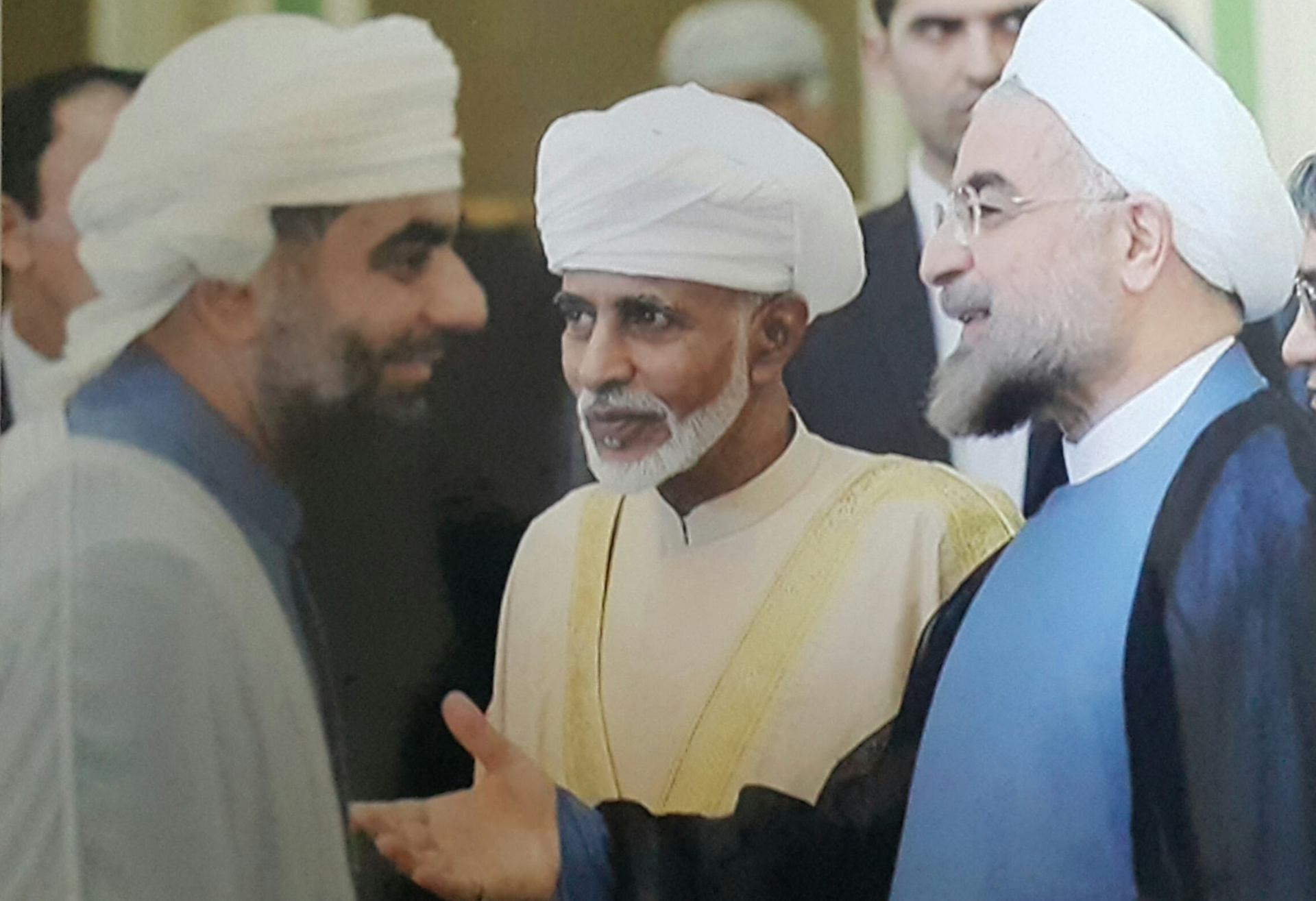
Trump’s demand that Oman “break Iran ties” asks Muscat to dismantle a foreign policy architecture older than the GCC itself. Rubio’s June 2 testimony — naming Mojtaba Khamenei as “increasingly engaging” through written intermediaries and describing a 6-8 person mixed IRGC/civilian advisory council — confirmed the courier architecture that the Oman channel served. Without Oman, that architecture has no Western-accessible relay point. Kuwait expelled two Iranian diplomats on June 3. The UAE closed its Tehran embassy on March 1. Oman was the last complete GCC diplomatic bridge to Tehran.
Was. The tense matters. Oman has not formally severed relations. But the Ambassador’s same-day assurance to Bessent, the public denial of the tolling protocol, and Al-Harrasi’s WSJ statement — which mentions “the United States” and “responsible partners” but not Iran — describe a state that has already made its choice. The question for Riyadh is not whether Oman will resume its bridging role. It is what Saudi Arabia does now that no one will.
The structural trap
Saudi Arabia’s position as of June 8 can be described in a single compound sentence: it faces a fiscal crisis that only Hormuz reopening can resolve, a diplomatic crisis that only Tehran engagement can address, and a security crisis that only Washington can answer — and Washington has just demonstrated it will use military threats against the intermediaries through whom any of these crises might be managed.
The US war cost to date is approximately $100 billion, per Newsweek’s Day 100 tracker. The Saudi cost is distributed differently — not in appropriated military spending but in lost revenue from Hormuz constriction, above-breakeven oil prices that still sit below fiscal needs, and a defense architecture dependent on American resupply that runs through the same Washington that threatened Muscat. Saudi Arabia’s PAC-3 inventory stands at roughly 80-150 MSE rounds — 14 percent of pre-war levels — with replacement timelines measured in years, not months.
There is no June 9 outcome that resolves any of these constraints. Iran’s rejection of the MOU removes the diplomatic track. The Aramco dividend exceeding free cash flow accelerates the fiscal drawdown. Brent below breakeven ensures the gap widens regardless of OPEC+ decisions. And Saudi Arabia arrives at this convergence without a single functioning diplomatic channel to either principal — Washington having demonstrated that Saudi interests are irrelevant to US-Iran negotiations, and Tehran having suspended the only relay mechanism through which Riyadh’s preferences could be communicated indirectly.
The exclusion is not limited to Hormuz. Saudi Arabia is confirmed absent from the June 22 Washington Lebanon follow-on — a trilateral between the US, Israel, and Lebanon — despite Hezbollah’s formal rejection of the ceasefire (Naim Qassem called it “a roadmap to annihilate part of the Lebanese people”) and despite Saudi investment in Lebanese stability dating to the Taif Accord of 1989. The pattern is consistent across every active diplomatic track: US-Iran nuclear, Hormuz governance, Lebanon ceasefire. Saudi Arabia is absent from all three — not because it chose to abstain, but because no one invited it and the one channel through which it could insert itself — Oman — has been closed by the same power that excluded it from the other tables.
Saudi military spending in Q1 2026 reached SAR 64.7 billion — a 26 percent year-on-year increase — buying defense capacity from the same supplier that threatened Riyadh’s last diplomatic intermediary. The $142 billion arms package and Major Non-NATO Ally designation extracted by Washington on May 13 came without normalization, without a Hormuz guarantee, and without any mechanism for Saudi input into the negotiations that will determine whether the Strait reopens. The arms deal gave Washington what it wanted. It gave Riyadh weapons it cannot reload without Washington’s consent.
Frequently Asked Questions
Did Oman actually agree to jointly manage Hormuz with Iran, or was this an Iranian fabrication?
The evidence indicates genuine bilateral progress, not fabrication. Gharibabadi’s public announcement of “final stages” was made before Iran published the draft terms. Oman’s denial came only after Trump’s threat and Bessent’s call — not before. The speed and specificity of Oman’s capitulation (the Ambassador’s same-day assurance about sanctions risk to “Omani individuals or institutions”) suggests Muscat was retreating from a real position rather than denying a fictional one. Oman had material interests in a formalized Hormuz governance role — not merely mediator status — because a joint protocol would have locked in Muscat’s administrative position regardless of whether US-Iran talks succeeded or failed.
Has the United States ever previously threatened military action against Oman?
No. Oman has been a US defense partner since the 1980 Facilities Access Agreement — the earliest such arrangement in the Gulf. US forces use Omani bases including Thumrait and Masirah Island. The May 28 statement is the first recorded presidential-level military threat against a treaty partner hosting US forces in the region. The Chatham House assessment from January 2026 described Oman as “indispensable to nearly every actor in the conflict” — a characterization that makes the threat’s target selection itself a signal about US willingness to destroy mediating infrastructure.
Could Saudi Arabia build a direct channel to Iran without intermediaries?
Technically yes — Riyadh and Tehran restored diplomatic relations in March 2023 via the Beijing-brokered agreement and exchanged ambassadors in September 2023. But the February 28, 2026 war severed formal diplomatic function. Saudi Arabia recalled its ambassador. Iran’s embassy in Riyadh operates at chargé level with restricted communication. Direct ministerial contact exists — FM Faisal received Araghchi’s May 11 call — but the format was briefing, not negotiation. Building a direct negotiating channel would require a political decision by MBS that King Salman’s Article 70 constraints (which tie normalization questions to Palestinian statehood) and 99:1 Saudi public opposition to normalization with Israel (WINEP, August 2025) make structurally difficult to authorize.
What happens to the Strait of Hormuz if neither the Oman protocol nor the US MOU proceeds?
Current flow: approximately 3 tankers per day versus 3,000 per month pre-war. Iran’s June 1 Tasnim statement declared the Strait “would not return to its pre-war status” under any agreement. The parliamentary sovereignty bill (ISNA/Salimi) would formalize Iranian unilateral control as domestic law. Without the Oman joint-management track providing a face-saving framework, and without US-Iran agreement on sequencing (Hormuz-first versus assets-first), the default trajectory is indefinite constriction at current levels — or further closure per Iran’s June 1 threat — with no mechanism to reverse either outcome through diplomacy.
Is the Pakistan channel a viable replacement for the Oman bridge?
The Pakistan channel serves a different function. Oman provided relay capacity between Washington and Tehran — messages passed through Muscat reached both capitals. Pakistan provides access to the IRGC specifically, through Army Chief Munir’s relationship with Mojtaba Khamenei’s circle, and separately to Iran’s civilian government through PM Shehbaz’s letter. But Pakistan cannot relay between Washington and Tehran because it has no equivalent US institutional relationship at the intelligence level (Pakistan’s Interests Section in DC, operating since 1992, lacks the access Oman’s full embassy provided). The Pakistan channel lets Saudi Arabia — through SMDA troop deployment as implied pressure — communicate with Tehran. It cannot substitute for the tripartite relay that Oman uniquely enabled.
With the Oman channel functionally suspended and the MOU track collapsed, the consequences became structural on June 8: Israel struck five Iranian provinces, Trump’s direct request to Netanyahu for restraint was ignored, and Saudi Civil Defense issued a missile alert for Al Kharj Governorate. Israel Strikes Iran After Trump Asked Netanyahu Not To Retaliate documents the full escalation chain and what it means for PSAB’s exposure without a US-Iran diplomatic framework. With Oman shut down, Qatar became the only surviving indirect relay: on June 8, FM Faisal routed his Iran diplomacy through Doha — the state Saudi Arabia blockaded for three and a half years — as documented in The Back-Channel Saudi Arabia Cannot Name. On June 10, Qatar escalated further: a Qatari delegation flew to Tehran after coordinating with Washington — notifying Riyadh but not consulting it — a distinction that marks the difference between a relay and a principal. Qatar Called Saudi Arabia Before Flying to Tehran — That Is the Trap explains why the single MOFA “coordination” readout conceals a structural gap Saudi Arabia cannot close.