

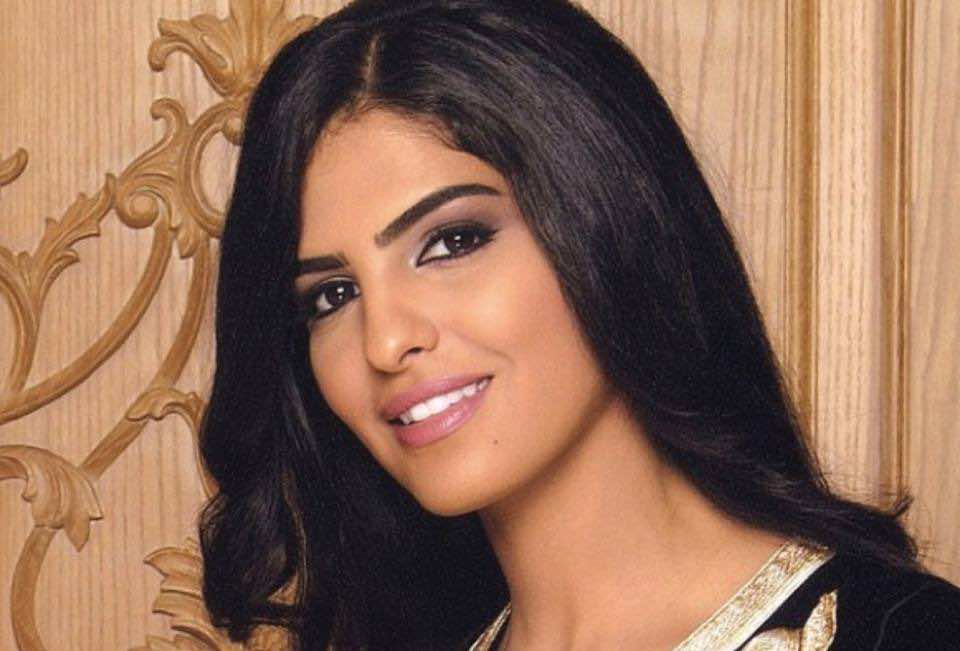
Princess Ameera Al-Taweel — born Ameera bint Aidan bin Nayef al-Taweel al-Otaibi — is a Saudi Arabian philanthropist, businesswoman, and former vice chairperson of the Alwaleed bin Talal Foundation, widely recognized as one of the most prominent Arab women to champion women’s rights on the global stage during the early 2010s. Born on November 6, 1983, in Riyadh, she rose from a non-royal background in the Otaibah tribe to international prominence through her marriage to billionaire Prince Alwaleed bin Talal, her advocacy for Saudi women’s right to drive and work, and her appearances at the Clinton Global Initiative, the World Economic Forum, and across American network television — years before Vision 2030 made those same reforms official state policy.
Her story is not simply the tale of a woman who married a prince and lost the title. It is the story of what happens when a commoner enters one of the most powerful families on earth, uses that platform to push for social change in a society deeply resistant to it, faces public censure from within the royal household itself, and then must rebuild an identity after the title — and the protection it offered — is stripped away. Today, at 42, she is married to Emirati billionaire Khalifa bin Butti Al Muhairi, is a mother to a young son named Zayed, and runs her own business and philanthropic ventures from a far more private position. But the full arc of her life — from a schoolgirl interviewing a prince to a woman whose husband’s business empire would become entangled in one of the Gulf’s largest corporate fraud scandals — has never been properly told.
Until now.
Who Is Princess Ameera Al-Taweel?
Ameera Al-Taweel is a Saudi Arabian philanthropist, businesswoman, and former princess who gained international recognition as one of the Arab world’s most visible advocates for women’s rights between 2008 and 2013. She served as vice chairperson of the Alwaleed bin Talal Foundation, co-founded the Tasamy Social Initiative Center, and now runs Time Entertainment and TimeAgency while maintaining philanthropic work through Ameerah Al-Taweel Philanthropies.
The word “princess” still trails her name in headlines, even though she relinquished the title upon her divorce from Prince Alwaleed bin Talal in November 2013. The persistence of the honorific says something about the power of first impressions. For five years, between 2008 and 2013, Ameera Al-Taweel occupied a space in the Western media imagination that no Saudi woman had held before and arguably none has held since — at least not on her own terms.
She was young, articulate in English, and willing to speak to American television audiences about subjects that the Saudi royal family preferred to keep behind closed doors. She talked about women driving. She talked about the guardianship system. She talked about education. She did this not as a dissident or an exile, but as the wife of the richest man in the kingdom, seated beside Bill Clinton at the Clinton Global Initiative, shaking hands with Prince Philip at Cambridge, and writing her own columns for the Huffington Post.
The arrangement was, in some ways, a perfect symbiosis. Prince Alwaleed bin Talal — the investment tycoon who owned stakes in Citigroup, Twitter, and the Four Seasons — needed a modern face for his philanthropy. Western media needed a Saudi woman who could speak their language, literally and figuratively. And Ameera, raised by a divorced mother and grandparents, educated in the United States, and carrying the quiet fire of someone who had seen the constraints of the system from the inside without the insulation of royal birth, needed a platform.
What she perhaps did not fully anticipate was the cost.
How Did a Commoner Become a Saudi Princess?
Ameera Al-Taweel, a member of the Otaibah tribe with no royal lineage, became a princess by marriage when she wed Prince Alwaleed bin Talal in 2008 at approximately age 24. She first met the prince at age 18 while interviewing him for a school paper, and despite their 28-year age gap, she later described the connection as immediate, saying they “just clicked.”
The Otaibah are one of Saudi Arabia’s largest and most historically significant tribal confederations, but tribal prominence is not royal blood. Ameera bint Aidan bin Nayef al-Taweel al-Otaibi was born into a family that, while respectable, had no connection to the House of Saud. Her father and mother divorced when she was young, and she was raised primarily by her mother and grandparents in Riyadh. This is a biographical detail that Western profiles tend to skim past, but in the Saudi context it carries considerable weight. A girl raised in a single-mother household in a society built on patriarchal guardianship learns early about the gap between how things are supposed to work and how they actually do.
She was, by all accounts, a formidable student. She attended the University of New Haven in Connecticut, where she earned a Bachelor of Business Administration magna cum laude. Some sources report she later completed a Master’s degree in International Relations at King’s College London, though this has not been independently confirmed to the same standard as her undergraduate credentials.
The origin story of her meeting with Prince Alwaleed has become something of a legend in Gulf society circles. At 18, she secured an interview with him for a school paper. The prince, born in 1955 and already one of the world’s wealthiest men, was 28 years her senior. Ameera would later tell interviewers that the connection was immediate. They married in 2008, making her his fourth wife.
The marriage instantly transformed her social position. In Saudi Arabia, a woman who marries into the royal family takes on the honorific “princess” — not as a permanent title, but as a function of the marriage. This distinction would prove crucial later. When the marriage ended, the title went with it. But for five years, Ameera Al-Taweel had something that few commoner-born women in the kingdom have ever possessed: a royal platform, an international audience, and — at least initially — the implicit permission of one of the most powerful families in the Gulf to use both.
What Was Ameera’s Role in the Alwaleed Foundation?
Ameera Al-Taweel served as vice chairperson of the Alwaleed bin Talal Foundation from 2008 to 2013, overseeing both the Saudi Arabia and Global divisions. During her tenure, the foundation inaugurated orphanages in Burkina Faso, conducted flood relief operations in Pakistan, spearheaded humanitarian missions in Somalia, and played a documented role in accrediting more than 600 women lawyers across Saudi Arabia.
The Alwaleed bin Talal Foundation is one of the largest private philanthropic organizations in the Arab world. When Ameera took on the vice chairperson role upon her marriage, she was not simply lending her name to letterhead. Those who worked with the foundation during this period describe her as operationally involved — traveling extensively, overseeing program implementation, and serving as the public representative of the foundation’s work in contexts where Prince Alwaleed himself could not or preferred not to appear.
The scope of her activity was genuinely impressive. She traveled to more than 71 countries during her foundation tenure. In Burkina Faso, she formally inaugurated the Alwaleed Bin Talal Village, an orphanage built to house children displaced by poverty and conflict in one of the world’s poorest nations. In Pakistan, following the catastrophic 2010 floods that displaced over 20 million people, she traveled to the affected regions to coordinate foundation-sponsored relief and education support. In Somalia, she and Prince Alwaleed oversaw the direct distribution of aid to communities suffering from drought and famine.
But perhaps the most consequential and least reported aspect of her foundation work occurred inside Saudi Arabia itself. The Alwaleed bin Talal Foundation played a direct role in accrediting more than 600 women lawyers in the kingdom — a figure that, when placed in context, represents a seismic shift. Before this initiative, women’s access to the legal profession in Saudi Arabia was severely constrained. The foundation’s accreditation program did not merely train these women; it provided the institutional backing necessary for them to practice. Ameera’s own sister was among those who received accreditation through the program.
In 2009, alongside Prince Philip, Duke of Edinburgh, she formally opened the Prince Alwaleed Bin Talal Centre of Islamic Studies at the University of Cambridge. At the ceremony, Prince Philip personally presented her with the Cambridge 800th Anniversary Medal for Outstanding Philanthropy — a recognition that placed her in the company of some of the world’s most established charitable figures.
There is a temptation to dismiss these achievements as accessories to wealth — the kind of philanthropy that billionaires’ wives perform for social currency. But that reading ignores the political risk embedded in the work. In Saudi Arabia between 2008 and 2013, women’s legal accreditation was not a neutral charitable cause. It was a political statement. And every time Ameera Al-Taweel stood on an international stage and spoke about it, she was making that statement with her face and her name attached.
Why Did Prince Alwaleed Divorce Ameera Al-Taweel?
The divorce between Prince Alwaleed bin Talal and Ameera Al-Taweel in November 2013 was precipitated by a public confrontation involving Prince Khalid bin Talal bin Abdul Aziz, Alwaleed’s brother, who posted statements on Twitter warning of “severe and harsh” repercussions over Ameera’s media appearances and called them violations of family honor and a crossed “red line.” No children resulted from the five-year marriage.
The official reasons for the divorce have never been publicly stated by either party. This is standard practice within the Saudi royal family, where private matters are expected to remain precisely that. But the timeline of events tells a story that neither party needs to confirm.
Between 2009 and 2013, Ameera Al-Taweel became increasingly prominent in Western media. She appeared on NBC’s Today Show, sat for extended interviews on CNN International, spoke at length on NPR about women’s right to drive, and contributed her own written pieces to the Huffington Post. In July 2011, she told NPR that every Saudi woman was striving to be treated equally and to gain her own rights. She spoke at the World Economic Forum in Davos, at TEDx events, and most prominently, at the 2011 Clinton Global Initiative, where she participated in a special session titled “Voices for Change in the Middle East & North Africa” alongside former President Bill Clinton himself.
At that CGI session, she made a statement that, within the Saudi context, was incendiary. She told the audience that people take their voices to the streets when they are not heard by their governments. For a woman affiliated with the Saudi royal family to suggest, however diplomatically, that popular protest could be a legitimate response to governmental failure — and to say this on an international stage, alongside a former American president, during the Arab Spring — was an act of extraordinary audacity.
The response from within the family was swift and public in a way that Saudi royal disputes almost never are. On January 18, 2012, Prince Khalid bin Talal bin Abdul Aziz — Alwaleed’s brother — posted a statement warning his brother to curb his wife’s media appearances. The language was unambiguous. He declared that family honor was a “red line” and threatened that if Alwaleed did not “come back to his senses” and stop the “deviation,” the response would be “very severe and harsh next time without prior warning.”
The fact that this statement was made publicly, on Twitter, was itself extraordinary. Saudi princes do not air family grievances on social media. That Khalid bin Talal chose to do so suggested either that private warnings had already been issued and ignored, or that the public statement was itself intended as the punishment — a deliberate humiliation designed to make Alwaleed’s position untenable.
The divorce came in November 2013. Ameera lost the title of princess immediately. She was 30 years old.
The question of who initiated the divorce — whether Alwaleed was pressured by family, whether Ameera chose to leave, or whether some negotiated arrangement was reached — remains unanswered. What is clear is that a woman was punished for saying out loud, to foreign audiences, things that the kingdom itself would adopt as official policy within five years. The reforms she advocated for were not radical. They were, in the end, inevitable. But she said them too soon, too publicly, and from within a family that valued its privacy above all else.
How Did Ameera Rebuild Her Identity After Losing the Princess Title?
After her 2013 divorce, Ameera Al-Taweel systematically rebuilt her public identity by founding Time Entertainment Holding Company with four subsidiaries, launching TimeAgency, co-founding the Tasamy Social Initiative Center, establishing Ameerah Al-Taweel Philanthropies with three divisions (Global, Lebanon, and domestic), and securing a board position at Qatar-based Silatech — all while deliberately stepping back from the high-profile media appearances that had defined her previous chapter.
The loss of a royal title is not merely symbolic in the Gulf. It is the loss of access, protection, social standing, and in many practical senses, identity. When a Western celebrity divorces, they retain their own name and career. When a commoner divorces a Saudi prince, she reverts to her pre-marriage status — with the added complication that the entire world knows who she used to be.
Ameera’s post-divorce strategy was notable for its discipline. She did not do a tell-all interview. She did not write a memoir. She did not become a fixture of the Dubai social circuit, as some former royal-adjacent women do. Instead, she built businesses.
In January 2013 — notably, before the divorce was finalized — she founded Time Entertainment Holding Company, a venture with four subsidiaries focused on media and entertainment content for Arab youth. The timing suggests she had been preparing for independence while still inside the marriage. She subsequently founded TimeAgency, a separate entity. The precise revenues and scale of these businesses are not publicly reported, which is standard for privately held companies in the Gulf, but their existence demonstrates deliberate, forward-looking planning rather than reactive scrambling.
Her philanthropic work continued through Ameerah Al-Taweel Philanthropies, structured into three divisions: a Global arm focused on international humanitarian projects, a Lebanon-specific division addressing that country’s particular social and community needs, and a domestic division. She also formalized a Memorandum of Understanding with the Harfah Association and Ashoka Arab World, connecting her work to established social entrepreneurship networks.
Her appointment to the Board of Trustees at Silatech — a Qatar-based organization focused on youth employment across the Arab world, chaired by Sheikha Moza bint Nasser — was significant for what it signaled. Silatech is a serious institution with serious backers. That Ameera was invited to sit on its board after losing her royal title suggested that the people who mattered in Gulf philanthropy judged her on capability, not status.
The contrast with other women who have lost royal or quasi-royal positions is instructive and worth examining in a structured framework — one that no existing analysis of Ameera Al-Taweel has ever attempted.
| Dimension | Ameera Al-Taweel | Princess Diana | Meghan Markle | Sarah Ferguson |
|---|---|---|---|---|
| Media strategy post-separation | Near-total withdrawal from Western media; minimal social media presence (~18K Instagram followers); no interviews or tell-all projects | Strategic engagement with sympathetic media (Panorama interview, 1995); retained massive public profile until death in 1997 | Controlled narrative via Netflix documentary, Oprah interview (2021), podcast; aggressive media management | Extensive media presence including books, TV, Weight Watchers; oscillated between tabloid crises and rehabilitation |
| Independent philanthropy | Three-division philanthropic structure; Silatech board; Tasamy co-founder; continued but quieter than during marriage | Extensive and personally directed (landmines, HIV/AIDS); redefined royal charity; became her defining legacy | Archewell Foundation (with Harry); blend of philanthropy and brand; Netflix and Spotify partnerships fund operations | Children in Crisis charity; various board roles; philanthropy complicated by personal financial difficulties |
| Business ventures | Time Entertainment (four subsidiaries), TimeAgency; genuine operating businesses rather than brand licensing | None — Diana did not pursue commercial ventures during her lifetime | American Riviera Orchard (lifestyle brand); Netflix deal; Spotify deal (ended); acting career paused | Multiple ventures including books, TV presenting, Weight Watchers; filed for bankruptcy in 2010 |
| Cultural impact | Significant within Arab women’s rights discourse 2008-2013; less visible globally post-divorce; her advocacy preceded policy changes | Unmatched — transformed global perception of the British monarchy; humanitarian icon; cultural phenomenon | Polarizing; sparked conversations about race and the monarchy; cultural impact debated and ongoing | Modest — seen as cautionary tale more than cultural force; rehabilitation narrative in later years |
| Personal rebrand success | Successful pivot to private businesswoman and mother; avoided scandal; maintained dignity but sacrificed global visibility | Complete rebrand from wronged wife to independent humanitarian before her death; universally successful | Ongoing; commercial success mixed with polarized public reception; rebrand still in progress | Late-career rehabilitation via social media and Beatrice/Eugenie’s prominence; uneven but ultimately resilient |
What the comparison reveals is that Ameera took the most conservative and arguably the most culturally appropriate path available to her. In the Gulf context, a quiet withdrawal is not weakness — it is strategic survival. A tell-all interview or a documentary deal would have brought Western sympathy and Gulf ostracism. She chose the latter over the former, and that choice, however much it reduced her global profile, preserved her ability to operate within the region where her life is actually lived.
Who Is Ameera Al-Taweel’s Current Husband?
Ameera Al-Taweel married Emirati billionaire Khalifa bin Butti Al Muhairi on September 9, 2018, at Chateau de Vaux-le-Vicomte outside Paris, in a ceremony attended by Oprah Winfrey and Gayle King. Khalifa is the founder of KBBO Group, an Abu Dhabi-based conglomerate, and was a major shareholder in London-listed NMC Health. The couple have a son, Zayed, born in 2019.
The wedding itself was a study in controlled opulence and extreme privacy. Chateau de Vaux-le-Vicomte — the seventeenth-century French palace that inspired Versailles — was closed to the public for the occasion. Over twenty white horses lined the approach along a blue carpet. Guests were reportedly required to sign non-disclosure agreements and surrender their phones. No interior photographs from the ceremony have ever been publicly released. A fireworks display closed the evening.
The guest list told its own story. The presence of Oprah Winfrey and Gayle King — two of the most powerful women in American media — signaled that Ameera’s social network, even five years after losing her royal title, remained formidable. These were not celebrity acquaintances summoned for show. They were relationships built during the years when Ameera moved in Clinton Global Initiative and World Economic Forum circles.
In a dark footnote to the celebrations, a Saudi royal guest staying at the Ritz Paris in connection with the wedding festivities reported the theft of nearly one million dollars in jewelry from their hotel room on the same weekend. The theft, investigated by France’s anti-organized crime brigade, added an unwanted headline to what had been an otherwise meticulously private event.
Khalifa bin Butti Al Muhairi himself is a figure whose business career demands separate examination — which it receives in the section that follows. On a personal level, the marriage represented Ameera’s definitive move from the Saudi orbit to the Emirati one. Abu Dhabi is not Riyadh. The social constraints are different, the relationship between wealth and visibility follows different rules, and the question of what a woman is permitted to say in public operates under a different calculus. In marrying Khalifa, Ameera did not simply find a second husband. She found a second country.
What Is the NMC Health Connection?
Ameera Al-Taweel’s current husband, Khalifa bin Butti Al Muhairi, was executive vice chairman of NMC Health and one of its three principal shareholders when the London-listed hospital operator collapsed into administration in April 2020 with $6.6 billion in hidden debt — the largest corporate fraud scandal in the Gulf’s modern history. Khalifa resigned in February 2020 and has “categorically” denied wrongdoing, but his KBBO Group subsequently entered the largest onshore bankruptcy proceeding ever conducted under UAE law.
This is the dimension of Ameera Al-Taweel’s current life that no profile of her has adequately addressed. Every existing article treats her as either a “former princess” or a “women’s rights advocate.” None grapples with the fact that the man she married — the father of her son — stands at the center of one of the most consequential corporate collapses in the Gulf’s financial history.
The facts are these. NMC Health was founded by Indian-born entrepreneur B.R. Shetty and grew into one of the largest private healthcare operators in the United Arab Emirates. It was listed on the London Stock Exchange and, at its peak, was a constituent of the FTSE 100 index. Khalifa bin Butti Al Muhairi was one of three principal shareholders and served as executive vice chairman.
In December 2019, the American short-seller Muddy Waters — run by Carson Block, one of the most feared names in activist investing — published a report questioning NMC’s accounts. Muddy Waters alleged that NMC had manipulated its balance sheet to understate its debts and that its financial statements contained what the firm called “hallmarks of significant fraud.”
What followed was a cascade. NMC initially denied the allegations. Then, in early 2020, the company began revising its debt figures upward. The final tally was staggering: $6.6 billion in total debt, more than $4 billion higher than the $2.1 billion reported in its 2018 financial statements. The company had been operating with dual sets of partial accounting records, with internal spreadsheets where borrowing was recorded as “Non-Showing” and excluded from figures reported to the market. In 2023, the UK Financial Conduct Authority formally censured NMC for market abuse.
Khalifa resigned from NMC’s board in February 2020, weeks before the company was placed into administration by a UK High Court judge in April of that year. His own KBBO Group — which held a substantial NMC stake — was caught in the blast radius. KBBO accumulated approximately $2 billion in debt that required renegotiation. In 2021, Khalifa filed for personal bankruptcy in Abu Dhabi. The KBBO Group restructuring, which encompassed 29 corporate applicants and two shareholders with claims estimated between AED 7 billion and AED 12 billion, received creditor and court approval in 2023 — making it the largest onshore bankruptcy case in the history of UAE bankruptcy law.
Khalifa has categorically denied any involvement in fraud. The legal proceedings are complex, multi-jurisdictional, and ongoing. It would be irresponsible to attribute guilt where courts have not done so.
But it would be equally irresponsible to write a comprehensive profile of Ameera Al-Taweel in 2026 and pretend this dimension of her life does not exist. She married Khalifa in September 2018. Their son was born in 2019. The NMC scandal broke in December 2019. The collapse came in April 2020. The bankruptcy filing came in 2021. Her second chapter — the one that was supposed to represent stability, privacy, and a life beyond the Saudi royal family’s reach — has been shadowed by a financial scandal of historic proportions.
How this has affected her personally, financially, and psychologically is impossible to know from the outside. She has made no public statements about NMC. This silence is consistent with her broader post-divorce approach to public life: discipline, restraint, and a refusal to offer the media anything it has not earned.
Why Doesn’t Ameera Al-Taweel Wear a Hijab?
Ameera Al-Taweel has consistently appeared in public without a hijab while maintaining modest dress, a personal choice she has never publicly framed as a political statement but which became one of the most discussed aspects of her public image. Her preference for high-end designers, particularly Chanel, combined with her uncovered hair, made her style choices a de facto commentary on Saudi women’s autonomy over their own appearance.
This question appears in virtually every “People Also Ask” box associated with her name, which tells us something about what the global public finds most arresting about Ameera Al-Taweel. Not her philanthropy, not her advocacy, not her business ventures — but what she wears on her head. The fixation is reductive, but it is also revealing.
In Saudi Arabia during the period of her prominence (2008-2013), the expectation for women in public life — particularly women affiliated with the royal family — was clear. The abaya was standard. The hijab was normative. Full face covering was common. Ameera Al-Taweel observed the first convention but not the second or third. She dressed modestly by any reasonable global standard, but she did not cover her hair.
Within the kingdom, this was noted. Outside it, particularly in the West, it became the visual shorthand through which audiences understood her. She looked, to put it plainly, like someone Western audiences could relate to. The uncovered hair, the designer clothes, the fluent English — these were not just personal choices. They were the attributes that made her legible to CNN viewers and Davos attendees. Whether she intended this effect or simply dressed according to her own preference is a question only she can answer.
What is certain is that her style choices carried political weight regardless of her intent. In a society where women’s bodies are the terrain on which ideological battles are fought, every choice of clothing is a statement. Ameera’s statement was one of modesty without submission — a middle ground that satisfied neither the conservative establishment (which saw her as insufficiently covered) nor Western observers (who sometimes projected onto her a liberalism she may not have intended).
She has never publicly criticized women who do wear the hijab, nor has she framed her own choice as a universal prescription. This restraint is characteristic. Throughout her public life, Ameera Al-Taweel has been careful to present her positions as personal rather than ideological, as preferences rather than mandates. It is the approach of someone who understands that survival in Saudi public life depends on never giving your opponents a clean quote to use against you.
How Does Ameera Compare to Other Saudi Royal Women?
Ameera Al-Taweel occupies a unique position among prominent Saudi women: she is the only major figure who gained her platform through royal marriage rather than royal birth, wielded it for international advocacy, lost it through divorce, and rebuilt independently. Unlike Princess Reema bint Bandar (Saudi ambassador to the United States), Princess Lolowah bint Faisal (education reformer), or Sara bint Mashour (wife of Crown Prince Mohammed bin Salman), Ameera operated without the permanent safety net of blood membership in the House of Saud.
The comparison is worth examining systematically, because the differences are not merely biographical — they reflect fundamentally different models of how Saudi women can hold influence.
| Dimension | Ameera Al-Taweel | Sara bint Mashour | Princess Reema bint Bandar | Princess Lolowah bint Faisal |
|---|---|---|---|---|
| Royal connection | By marriage only (2008-2013); title lost upon divorce; member of Otaibah tribe | Born into Al Saud (granddaughter of King Abdulaziz); married to Crown Prince MBS | Born into Al Saud; daughter of former ambassador Prince Bandar bin Sultan | Born into Al Saud; daughter of King Faisal and Queen Iffat |
| Public visibility | Extremely high (2008-2013); minimal since divorce; no longer appears on Western media circuits | Almost entirely invisible; no public appearances; lives in London; sought political asylum in 2012 | High and official; Saudi Ambassador to the United States since 2019; Davos regular; media-trained diplomat | Moderate; focused on education; Vice Chair of Effat University; occasional international appearances |
| Primary platform | Western media (CNN, NBC, NPR); Clinton Global Initiative; World Economic Forum; Huffington Post | None — has not pursued public platform | Diplomatic channels; official state visits; Asia Society; FII Institute | Academic institutions; Effat University; education policy forums |
| Advocacy style | Direct and personal; spoke in her own voice; “evolution not revolution”; publicly named specific reforms | Not applicable — no public advocacy | Institutional and state-aligned; frames reform as official Vision 2030 policy; diplomatic language | Quiet institutional reform; built Effat University from the ground up; leads by institutional example |
| Relationship to Vision 2030 | Advocated for its core reforms (driving, guardianship, women’s employment) years before it existed; not credited in official narratives | No known public connection to Vision 2030 policy | Official champion of Vision 2030; serves as its international diplomatic face | Preceded Vision 2030 with decades of education reform; work now absorbed into its framework |
| Current influence | Limited within Saudi context; retains Gulf business and philanthropic networks; influence primarily personal, not institutional | Minimal public influence; significance is primarily as MBS’s wife and mother of his children | Substantial and growing; first female Saudi ambassador; direct line to MBS’s reform agenda | Deep institutional influence through Effat University; elder stateswoman status within royal family |
The central insight this comparison reveals is the difference between borrowed power and inherited power. Reema bint Bandar and Lolowah bint Faisal will always be princesses. Their blood membership in the House of Saud is permanent and irrevocable. They can afford to push boundaries because the floor beneath them will not give way. Ameera Al-Taweel’s floor was made of paper — a marriage contract that could be, and was, dissolved.
This makes her period of public advocacy between 2008 and 2013 not less impressive, but more so. She pushed harder, spoke more directly, and took greater personal risks than women who held permanent royal status. She did this knowing — or at least she should have known — that the title protecting her could vanish. When it did, the fall was swift and complete.
The comparison with Sara bint Mashour is particularly telling. Sara, who is married to Crown Prince Mohammed bin Salman but has been living in London with their children since reportedly seeking political asylum in 2012, represents the opposite end of the visibility spectrum. She is a born member of the Al Saud who has chosen — or been compelled to accept — near-total invisibility. Ameera was a commoner who achieved near-total visibility. Both paid a price. The kingdom demands a specific kind of silence from its women, and both — in very different ways — found themselves on the wrong side of that demand.
What Did Ameera Advocate for Before Vision 2030 Made It Policy?
Between 2009 and 2013, Ameera Al-Taweel publicly advocated for Saudi women’s right to drive, reforms to the male guardianship system, and expanded women’s participation in the workforce and legal professions — all reforms that were subsequently adopted as official state policy under Vision 2030, launched by Crown Prince Mohammed bin Salman in April 2016, and the September 2017 royal decree lifting the driving ban.
The timeline is worth laying out precisely, because it reveals an irony that runs through Ameera Al-Taweel’s entire public life.
In 2009, Ameera publicly announced she was ready to be the first woman in the kingdom to drive a car. This was six years before Mohammed bin Salman was appointed deputy crown prince, eight years before the September 2017 royal decree that lifted the driving ban, and nine years before Saudi women actually drove legally on June 24, 2018.
In July 2011, she went on NPR and explicitly lobbied for women’s right to drive, telling the American audience that Saudi women are “very educated, very smart, and very opinionated” and that they want change “for the generations to come.” This interview aired during the same period when Saudi women who actually attempted to drive were being arrested.
At the 2011 Clinton Global Initiative, she framed the cause as part of a broader movement, using the phrase “evolution, not revolution” to describe her approach. She told the CGI audience that she believed in “reform, not rebellion” — a formulation designed to make her advocacy palatable within the Saudi system by framing it as loyalty rather than dissent.
Through the Alwaleed bin Talal Foundation, she oversaw the accreditation of more than 600 women lawyers in Saudi Arabia. She pushed for women’s inclusion in the workforce at a time when female labor force participation in the kingdom was among the lowest in the world.
Every single one of these positions is now official Saudi policy. The driving ban was lifted in 2017. Guardianship rules have been significantly relaxed. Women’s workforce participation is a central pillar of Vision 2030. Women serve as ambassadors, hold corporate board seats, attend sporting events, and drive to work.
And yet, in the official narratives of these reforms, Ameera Al-Taweel does not appear. The credit goes to Mohammed bin Salman and to King Salman. The women who actually drove in protest — several of whom were arrested — receive occasional acknowledgment from human rights organizations but not from the state. And Ameera, who used the most privileged platform available to a Saudi woman to advocate for these changes on international stages, receives nothing.
This is not unusual. Reformers who are ahead of their time are rarely credited by the regimes that eventually adopt their ideas. The discomfort of acknowledging that a former princess-by-marriage, now divorced and living outside the kingdom’s inner circle, was saying the same things in 2011 that the crown prince would say in 2016 is too great. The official narrative requires that reform came from the top. Ameera’s story suggests it came from many places, and that some of those who pushed for it paid for the privilege.
Her own published writings from this period underscore the point. On her HuffPost contributor page, Ameera wrote about Saudi women’s rights in the context of the Arab Spring, discussing how women in the kingdom were attempting to advance their status in a country that afforded them almost no rights without male guardianship. These were not academic observations. They were arguments, made under her own name, at a time when making them carried genuine consequences — consequences she would eventually experience firsthand.
What Is Ameera Al-Taweel’s Net Worth?
Ameera Al-Taweel’s net worth is genuinely unknowable. Published estimates range from $1.5 million to $200 million, a spread so wide it is functionally meaningless. She was wealthy during her marriage to Prince Alwaleed bin Talal, now runs her own businesses, and is married to Khalifa bin Butti Al Muhairi — whose own financial position was drastically altered by the NMC Health collapse and subsequent KBBO Group bankruptcy proceedings.
The honest answer is that anyone who claims to know Ameera Al-Taweel’s net worth is either guessing or lying. This is not unusual for Gulf-based individuals, where private wealth is genuinely private and the distinction between personal assets, family assets, and corporate holdings is often deliberately opaque.
What can be said with reasonable confidence is the following. During her marriage to Prince Alwaleed bin Talal — whose own net worth has been estimated at various points between $17 billion and $25 billion — Ameera lived at the apex of Gulf wealth. The terms of their divorce settlement have never been publicly disclosed, which is standard practice in Saudi royal divorces. It would be unusual, though not impossible, for a woman in her position to have received nothing.
After the divorce, she founded Time Entertainment Holding Company and TimeAgency. These are real, operating businesses, not vanity projects. They generate revenue, though the amount is not publicly reported. She maintains philanthropic organizations in multiple countries. She lives at a standard consistent with considerable, though not headline-grabbing, wealth.
Her marriage to Khalifa bin Butti Al Muhairi in 2018 initially placed her back in the orbit of very significant wealth. KBBO Group was a major Abu Dhabi conglomerate with interests spanning healthcare, hospitality, and investment. But the NMC Health collapse in 2020 and the subsequent bankruptcy proceedings — involving claims estimated between AED 7 billion and AED 12 billion — fundamentally altered that picture. The restructuring received court approval in 2023, but the process of unwinding such complex financial entanglements takes years.
How much of this has affected Ameera’s personal financial position depends entirely on how her assets are structured relative to her husband’s — a question that is not answerable from public information. In the Gulf, sophisticated asset protection arrangements are standard practice among high-net-worth families. It is entirely possible that her personal holdings were insulated from her husband’s corporate liabilities. It is also possible that they were not.
The celebrity net worth websites that confidently assign her a specific figure — whether $5 million or $200 million — are engaged in speculation dressed as fact. The responsible assessment is that Ameera Al-Taweel is a woman of substantial but unverifiable means, whose financial position has been subject to significant and unpredictable external shocks.
Frequently Asked Questions
Is Ameera Al-Taweel still a princess?
No. Ameera Al-Taweel lost the title of princess when her marriage to Prince Alwaleed bin Talal ended in divorce in November 2013. In Saudi Arabia, the princess title is conferred through marriage to a member of the royal family and revoked upon divorce. She was never a princess by birth, as she belongs to the Otaibah tribe and has no Al Saud lineage. Media outlets continue to use the title informally, but she has not held it for over a decade.
How many children does Ameera Al-Taweel have?
Ameera Al-Taweel has one son, Zayed, born in 2019 from her marriage to Emirati businessman Khalifa bin Butti Al Muhairi. She had no children during her five-year marriage to Prince Alwaleed bin Talal, which lasted from 2008 to 2013. She has kept her son almost entirely out of public view, consistent with her post-divorce approach of maintaining strict control over her family’s privacy.
Where does Ameera Al-Taweel live now?
Ameera Al-Taweel’s current primary residence is not publicly confirmed, but her marriage to Abu Dhabi-based Khalifa bin Butti Al Muhairi and her business operations suggest a base in the United Arab Emirates. She has maintained connections across the Gulf and has philanthropic operations with a dedicated Lebanon division, suggesting she divides her time across multiple locations. She has not publicly disclosed a fixed residence since her divorce.
What happened between Ameera and Prince Alwaleed?
Ameera and Prince Alwaleed bin Talal divorced in November 2013 after five years of marriage. While neither party has publicly stated the reasons, the divorce followed a period of escalating tension over Ameera’s international media appearances advocating for women’s rights. Prince Khalid bin Talal, Alwaleed’s brother, publicly warned on Twitter that her appearances crossed a “red line” of family honor. The divorce came approximately two years after this public confrontation.
What is Ameera Al-Taweel’s Instagram account?
Ameera Al-Taweel’s verified Instagram account is @ameerahaltaweel9. As of early 2026, the account has approximately 18,000 followers and only about 53 posts — a notably modest presence for someone of her profile. Multiple fan accounts and impersonator pages exist using variations of her name. Her relatively small following and infrequent posting reflect her deliberate withdrawal from public-facing social media since her divorce in 2013.
Did Ameera Al-Taweel attend university in America?
Yes. Ameera Al-Taweel attended the University of New Haven in Connecticut, where she earned a Bachelor of Business Administration degree magna cum laude. Some sources also report that she completed a Master’s degree in International Relations at King’s College London, though this credential has not been independently confirmed to the same standard as her undergraduate degree. Her American education contributed significantly to her fluent English and comfort in Western media environments.
What tribe does Ameera Al-Taweel belong to?
Ameera Al-Taweel belongs to the Otaibah tribe, one of the largest and most historically prominent tribal confederations in the Arabian Peninsula. Her full name — Ameera bint Aidan bin Nayef al-Taweel al-Otaibi — reflects this affiliation. The Otaibah are a respected tribe, but they are not part of the Al Saud royal family. This distinction is significant: Ameera gained her royal title through marriage alone and lost it when that marriage ended.
How old was Ameera when she married Prince Alwaleed?
Ameera was approximately 24 years old when she married Prince Alwaleed bin Talal in 2008. She first met him at age 18, while interviewing him for a school paper. Prince Alwaleed, born in 1955, was 28 years her senior. She was his fourth wife. Despite their age difference, Ameera described the initial connection as immediate, telling interviewers that they “just clicked” during that first meeting.
What is KBBO Group and how does it relate to Ameera?
KBBO Group is an Abu Dhabi-based conglomerate founded by Ameera’s current husband, Khalifa bin Butti Al Muhairi. The group was a major shareholder in NMC Health, the London-listed hospital operator that collapsed in 2020 with $6.6 billion in hidden debt. KBBO subsequently entered the largest onshore bankruptcy proceeding in UAE legal history, with claims estimated between AED 7 and 12 billion. The restructuring received court approval in 2023. Ameera has never publicly commented on the matter.
Has Ameera Al-Taweel spoken at the World Economic Forum?
Yes. Ameera Al-Taweel has spoken at the World Economic Forum in Davos on multiple occasions, and the WEF maintains an official profile page for her. Her appearances at Davos, combined with her participation in the Clinton Global Initiative and TEDx events, made her one of the most internationally visible Saudi women of the early 2010s. She has not appeared at the Forum since her divorce from Prince Alwaleed in 2013, consistent with her broader withdrawal from international public platforms.
The Woman Behind the Title
There is a particular kind of story that Western media loves to tell about women in the Gulf. It is a story of liberation — a woman throws off the veil, speaks English, appears on television, and is celebrated as a symbol of modernity. The story has a beginning (oppression), a middle (awakening), and an implied ending (freedom). It is a satisfying narrative. It is also almost always incomplete.
Ameera Al-Taweel’s life resists this simplification. She did not throw off a veil. She never wore one. She did not discover feminism through exposure to the West. She was raised by a divorced mother in a society that makes divorced women’s lives difficult, and she understood the constraints long before she had a platform to criticize them. She did not achieve liberation through her marriage to a prince. She achieved a temporary elevation that gave her a microphone, and she used that microphone to say things that the family providing it did not want said.
And then the microphone was taken away.
What followed was not the dramatic exile or the triumphant comeback that Western audiences crave. It was something quieter and, in its own way, more impressive: a methodical reconstruction of a life on different terms. She built businesses. She established philanthropic organizations. She married again. She had a child. She did all of this while her new husband’s financial empire was being consumed by one of the largest fraud scandals in the Gulf’s corporate history. And through all of it, she has maintained a discipline of public silence that is either admirably stoic or frustratingly opaque, depending on your perspective.
The question that hangs over Ameera Al-Taweel’s story is not whether she was courageous — the evidence on that point is clear. It is whether courage, in the Saudi context, can ever be rewarded when it comes from outside the family that holds power. She advocated for reforms that are now celebrated as the crown jewels of Vision 2030. She receives no credit for this. The women who drove cars in protest and were arrested receive no credit for this. The credit goes to King Salman and to Mohammed bin Salman, because in Saudi Arabia, reform always comes from the top, even when it does not.
Ameera Al-Taweel is 42 years old. She has lived through two marriages, one to a Saudi prince and one to an Emirati billionaire. She has held and lost a royal title. She has stood on stages with Bill Clinton and Prince Philip. She has been threatened by her brother-in-law on Twitter. She has watched the reforms she fought for become national policy under someone else’s name. She has seen her second husband’s business empire collapse under the weight of $6.6 billion in hidden debt. And through all of this, she has said almost nothing publicly since 2013.
Her Instagram has 18,000 followers and 53 posts. Her media appearances have ceased. Her public presence has contracted to nearly nothing.
But the 600 women lawyers she helped accredit are still practicing in Saudi Arabia. The orphanage in Burkina Faso still stands. The words she spoke at the Clinton Global Initiative — that people take their voices to the streets when they are not heard by their governments — still hang in the air, more relevant to Saudi Arabia’s complex relationship with dissent than anyone in the kingdom’s leadership would care to admit.
She was, for a brief and extraordinary period, the most visible Saudi woman in the world. That the visibility came at a cost does not diminish the achievement. That she has chosen silence since then does not erase what she said. And that the reforms she demanded are now reality does not require her name to be on them for her contribution to be real.
Ameera Al-Taweel was never really a princess. She was something rarer: a commoner who got a microphone and used it well.