Table of Contents
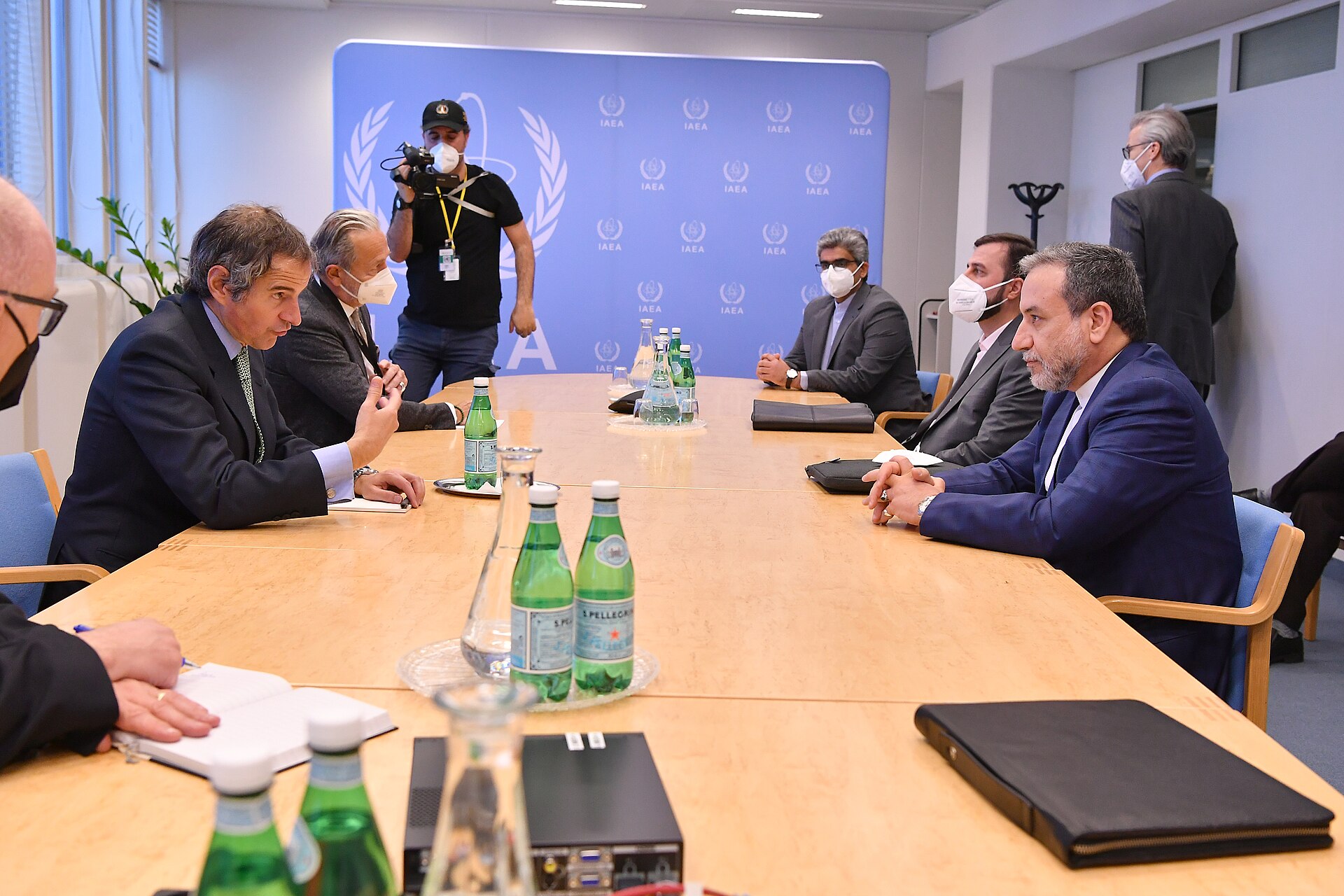
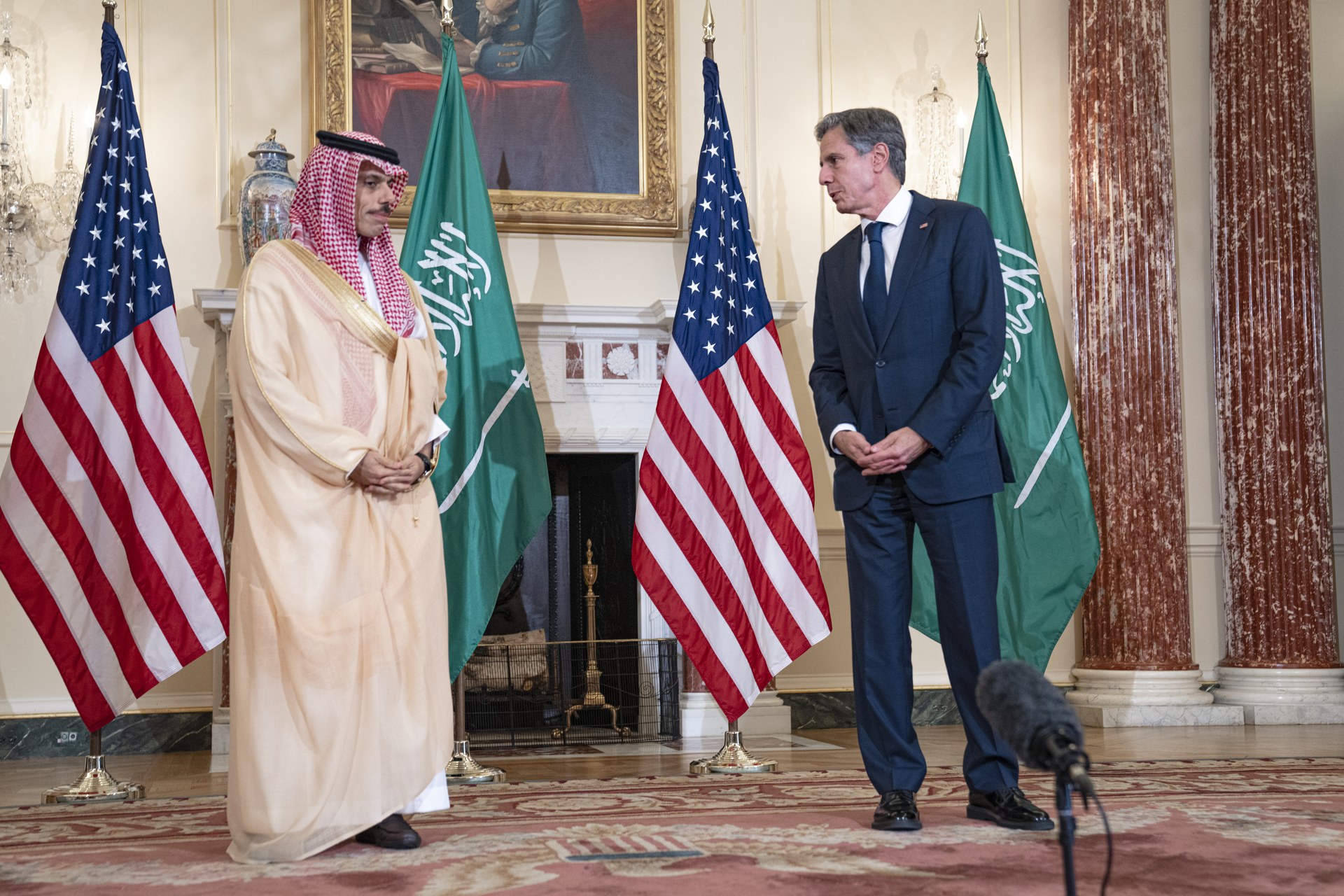
RIYADH — Abbas Araghchi picked up the phone on Sunday and called Saudi Foreign Minister Prince Faisal bin Farhan — the second time in four days, and only hours after the US naval blockade on Iran went live. The timing was not incidental. It was architectural.
The first call, on April 9, broke 40 days of diplomatic silence between Riyadh and Tehran dating to the February 28 strikes that opened the war. The second, on April 13, landed as CENTCOM began interdicting all maritime traffic entering or departing Iranian ports across the Arabian Gulf and Gulf of Oman. Saudi Press Agency confirmed the two ministers “discussed the latest developments following the peace negotiations between the Islamic Republic of Iran and the United States.” Iran’s IRNA confirmed the call but, as Middle East Monitor noted, “provided no substantive details.”
That asymmetry — Saudi confirmation of topic, Iranian confirmation of contact without content — is the point. Tehran needed the call to exist. It did not need the call to achieve anything.
The Call That Was Not a Call
Diplomacy between adversaries during wartime follows a recognizable grammar. One side proposes, the other responds, mediators shuttle between positions. What Araghchi did on April 13 followed none of this. He called Faisal bin Farhan on the day the blockade went live, creating a record of Iranian diplomatic outreach to the kingdom whose oil infrastructure sits within IRGC missile range. The Saudi readout offered nothing — no counter-proposal, no conditions, no substantive content beyond acknowledgment that the conversation occurred.
Consider what a genuine de-escalation call would have contained. At minimum, there would have been a stated agenda — a ceasefire extension framework, a discussion of confidence-building measures, an agreement to establish military-to-military communication channels to prevent miscalculation during the blockade. There would have been follow-up mechanisms: a joint communiqué, a timeline for the next conversation, an agreement to include mediators. The April 13 SPA readout contained none of this. It was a single paragraph confirming that two foreign ministers spoke about “developments.” In the grammar of Gulf diplomacy, where readouts are calibrated to the syllable by protocol offices that understand every word will be parsed in six capitals simultaneously, that level of emptiness is itself a communication. It says: we picked up. We have nothing to add.
This is not a failure of diplomacy. It is diplomacy being used as something other than diplomacy. By placing the call, Araghchi established that Iran sought engagement with Riyadh while the United States was tightening the economic noose. If Saudi oil facilities are subsequently struck, Tehran can point to this conversation — and Riyadh’s empty response — as evidence that Iran attempted a political off-ramp that Saudi Arabia declined to take. The liability sits in the call log.
The Middle East briefing 3,000+ readers start their day with.
One email. Every weekday morning. Free.
The specific utility of the SPA one-liner for Iran’s purposes should not be underestimated. A paper trail for pre-escalation justification requires precisely this kind of document: official, attributable, devoid of commitments that might complicate the narrative later. A detailed readout — one that listed discussion points, noted areas of agreement, or described a framework for continued engagement — would be harder to weaponize. It would suggest both sides were working toward something, distributing responsibility for any subsequent failure across both capitals. The empty confirmation, by contrast, is a one-sided document. Iran called. Saudi Arabia acknowledged the call. Nothing happened. That sequence, repeated across multiple calls, builds a cumulative record of Iranian initiative met by Saudi passivity — a record that requires no distortion to serve Tehran’s messaging requirements.
The context of the Iran-Saudi bilateral relationship makes the call’s architecture more legible. The 2023 Beijing-brokered rapprochement restored diplomatic relations after a seven-year rupture, reopened embassies in August of that year, and generated a wave of optimism about a new regional order. What it did not create was crisis management infrastructure — no hotline protocol, no military deconfliction channel, no agreed framework for communication during escalatory spirals. The Beijing deal was a political agreement, not an operational one. When the February 28 strikes obliterated the rapprochement’s remaining goodwill, there was no institutional residue to fall back on. The phone line between Araghchi and Faisal bin Farhan is now the entirety of the Iran-Saudi crisis channel — a diplomatic relationship reduced to a call log. Araghchi is using it accordingly.
Six Calls, One Message
The April 9 call was not bilateral. Araghchi called all six GCC foreign ministers on the same day — Saudi Arabia, the UAE, Qatar, Kuwait, Bahrain, and Oman — delivering what Al Arabiya and the West Asia News Agency described as a uniform deterrence warning. Any country whose territory is used for operations against Iran, Araghchi told them, will have “the origins and sources of aggressive operations” treated as “legitimate targets.” Six calls, one script, identical framing.
The simultaneous structure is the message. A genuine diplomatic outreach — one aimed at finding a negotiated path through the crisis — would have been sequenced. You call the mediator first, the closest partner second, the adversary last, adjusting your position as you gather responses. Araghchi did the opposite. He delivered the same warning to all six at once, ensuring that each capital knew the others had received identical language. This was not an outreach. It was a broadcast — a declaration dressed as diplomacy, designed to enroll six governments as simultaneous witnesses to an Iranian position they had no role in shaping. The structure itself communicated that Tehran was not soliciting input. It was serving notice.
Araghchi’s public statements after the calls reinforced this reading. He told Iranian state media that the calls were intended to “clarify Iran’s position on the military threats emanating from the region” and to “ensure that all parties understand the consequences of allowing their territories to be used against the Islamic Republic.” The language was calibrated: not a request for mediation, not a proposal for talks, but a notification of consequences. The GCC readouts, by contrast, used the passive voice of diplomatic protocol — “developments were discussed,” “both sides expressed hope for de-escalation” — language that obscures agency and avoids attribution.
The Saudi readout from SPA was the blandest of the six: the ministers “discussed current developments and measures to de-escalate tensions to help restore security and stability in the region.” No specifics, no posture, no pushback. Compare this with Qatar’s response. Sheikh Mohammed bin Abdulrahman Al Thani told Araghchi directly that Hormuz “must not be used as a tool for pressure or bargaining” and called on both sides to “respond positively to ongoing mediation efforts,” according to Asharq Al-Awsat. Qatar named the problem. Saudi Arabia issued a press release.
The difference matters because it reveals what each capital calculated it could afford to say. Qatar’s calculus rests on a specific structural position. It hosts Al Udeid Air Base — the largest US military installation in the Middle East — but it also shares the world’s largest natural gas reservoir with Iran. The North Field on Qatar’s side and the South Pars field on Iran’s side are the same geological structure, and any sustained disruption to either country’s extraction infrastructure threatens the other’s revenue base. Qatar’s LNG transit dependence on Hormuz — the first laden LNG carriers to attempt passage during the war required Chinese intermediation, not Qatari-Iranian direct negotiation — gives Doha both the incentive and the cover to name the strait directly. Qatar can say “Hormuz must not be weaponized” because Qatar needs Hormuz open more urgently than any other GCC state, and Iran knows it. The statement is self-interested enough to be non-threatening.
Saudi Arabia, with roughly 400 PAC-3 interceptor rounds remaining from a pre-war stockpile of approximately 2,800, concluded it could afford to say nothing at all. Where Qatar’s LNG dependence gave it permission to speak, Saudi Arabia’s air defense depletion took that permission away. Naming Hormuz, naming the blockade, naming anything of substance — any of these could be read in Tehran as a position, and any position could generate a response that Riyadh’s depleted missile defense cannot absorb.
Saudi Arabia’s Three-Door Trap
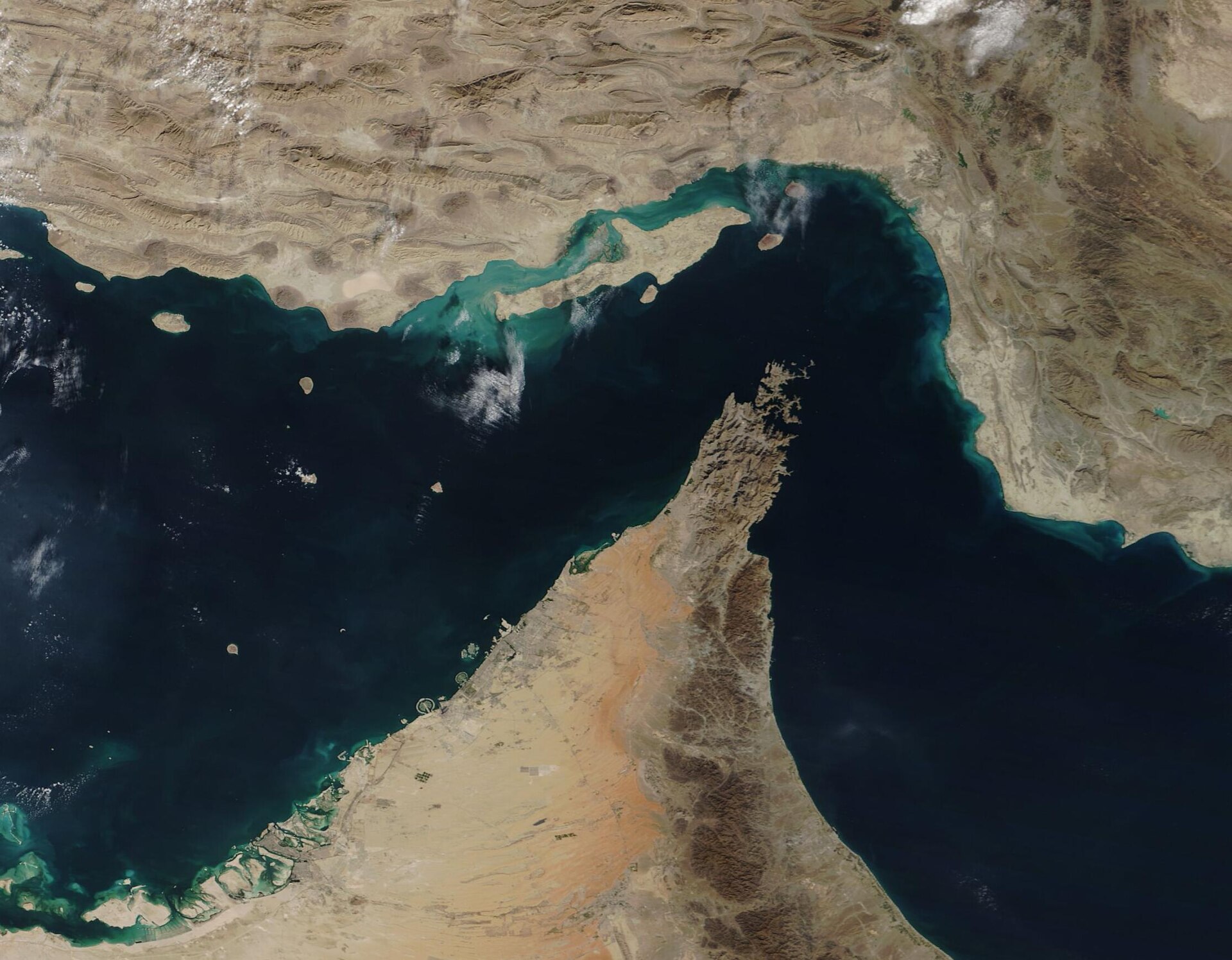
Riyadh’s silence is not ambiguity. It is the sound of a government that has run out of available positions. Saudi Arabia cannot publicly endorse the US blockade because doing so would place it squarely within the IRGC’s co-belligerency targeting doctrine — the same doctrine that produced the Ras Tanura strike on March 2 as a proof of concept. Aramco’s Yanbu export terminal, the kingdom’s only operational bypass around the Strait of Hormuz, is already operating at a ceiling of 5.9 million barrels per day against a pre-war Hormuz throughput of 7 to 7.5 million. There is no spare capacity to absorb further infrastructure damage.
Saudi Arabia cannot publicly oppose the blockade either, because doing so ruptures the US security relationship at the worst possible moment. The $142 billion US-Saudi defense cooperation agreement signed in May 2025 underpins the weapons pipeline that Riyadh needs to replenish those depleted PAC-3 stocks. Camden, Arkansas, produces roughly 620 PAC-3 rounds per year. At current depletion rates, Saudi Arabia’s air defense inventory is a wasting asset that Washington controls.
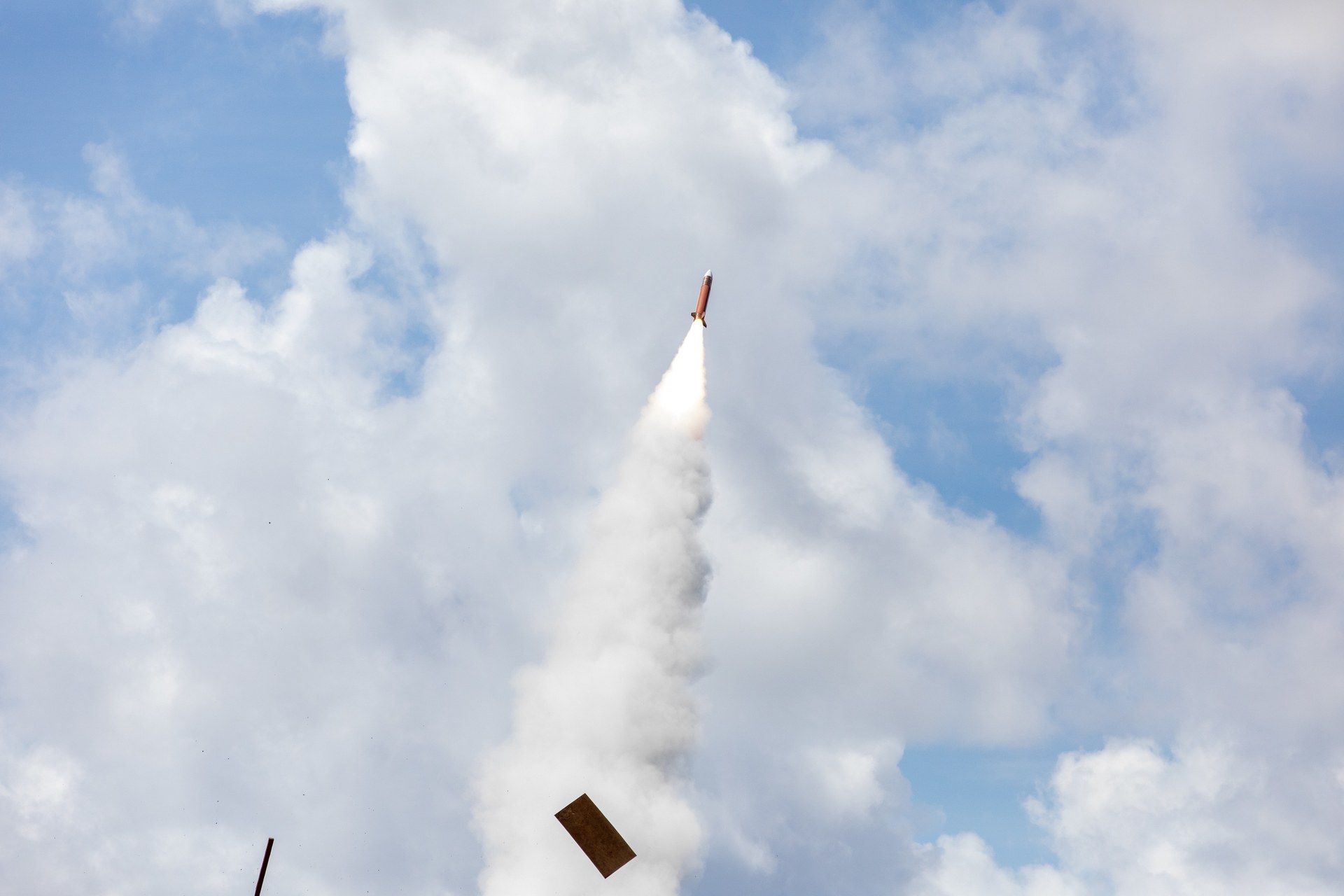
The scale of that depletion deserves attention. Before the war, Saudi Arabia maintained approximately 2,800 PAC-3 Missile Segment Enhanced interceptors distributed across its Patriot batteries — the backbone of the kingdom’s terminal air defense against ballistic missiles. Forty-five days of war reduced that stockpile to roughly 400 rounds. At $3.9 million per round, the interceptors already expended represent approximately $9.4 billion in consumed hardware. The new $9 billion Foreign Military Sale announced in late March covers approximately 730 replacement rounds, but Lockheed Martin’s Camden facility — the sole global production line for PAC-3 MSE — operates at a pace that means those rounds will not begin arriving in meaningful quantities for twelve to eighteen months. In the interim, Saudi Arabia’s remaining inventory can sustain approximately two to three weeks of combat-intensity missile defense before exhaustion. Every day that passes without replenishment narrows the window during which the kingdom can absorb an Iranian barrage. This is the arithmetic that makes silence rational: you do not provoke an adversary when your shield is nearly spent.
And Saudi Arabia cannot privately commit to Araghchi’s outreach because any response of substance would be attributed by Washington within hours. Dr. Dania Thafer of the Gulf International Forum framed the bind precisely: GCC states are “bound to Washington” while “exposed to Iran’s cost imposition strategy,” and their diplomatic autonomy has been “foreclosed rather than actively rejected.” Andrew Leber at the Carnegie Endowment put it more bluntly in March: Gulf rulers have hit “the limits of their ability to spend their way to influence at the White House.”
The Thafer formulation — “foreclosed rather than actively rejected” — deserves unpacking because it describes something more specific than a lack of options. A government that has actively rejected diplomatic autonomy has made a choice and bears responsibility for it. A government whose autonomy has been foreclosed has been structurally positioned such that no choice is available. Saudi Arabia did not choose silence on April 13. Silence was the only output that the system could produce. The US defense dependency forecloses opposition to the blockade. The IRGC targeting doctrine forecloses endorsement. The intelligence-sharing architecture between Washington and Riyadh — the same architecture that allows CENTCOM to coordinate missile defense coverage across the Arabian Peninsula — forecloses private backchannel commitments to Tehran that Washington would detect within the intelligence cycle. The silence is not a policy failure. It is the policy — the only one that does not trigger an immediate negative consequence from at least one of the three actors whose behavior Saudi Arabia cannot control.
There is a fourth dimension to the trap that operates on a different timescale: fiscal alignment. Saudi Arabia needs Brent crude above $108 to $111 per barrel to balance its budget, according to Bloomberg’s estimate that includes PIF spending obligations. On April 13, Brent closed at $103 — still $5 to $8 below break-even. The blockade, by constraining Iranian exports and tightening global supply, is the single most effective mechanism currently operating to push prices toward the level Saudi Arabia needs. Riyadh cannot be seen to want the blockade, but it cannot afford the blockade to fail either. This uncomfortable alignment of interests — where Saudi fiscal survival and American coercive strategy point in the same direction — is precisely the kind of convergence that Araghchi’s call is designed to surface. If Tehran can frame the blockade as a joint US-Saudi economic siege, the fiscal incentive becomes the evidence.
Araghchi’s April 13 call exploits all three doors being locked. Saudi non-response will be catalogued in Tehran as evidence that Riyadh was offered relief from the blockade’s consequences and chose — or was forced — to stand with Washington. That framing is pre-built justification for escalation against Saudi energy infrastructure as part of what Iran will characterize as a response to an American-Saudi economic siege.
The Oman Template
This is not the first time Iran has used diplomatic outreach to build a pre-escalation paper trail. In February, three rounds of US-Iran indirect talks ran through Muscat and Geneva, mediated by Oman’s Foreign Minister Badr Al Busaidi. The first round convened in Muscat on February 6, with Araghchi leading the Iranian delegation and Brett McGurk representing the United States through Omani intermediaries. The second and third rounds moved to Geneva, culminating on February 26 — two days before the strikes. Participants described a framework that had narrowed disagreements on sanctions sequencing and nuclear enrichment thresholds to what one European diplomat involved in parallel consultations called “bridgeable gaps.” After each round, Araghchi declared progress. On February 27 — the day before Israeli and American strikes hit Iranian nuclear facilities — Al Busaidi flew to Washington and told reporters a deal was “within reach.” After the strikes, he said “active and serious negotiations had been undermined,” as Al Jazeera and NPR reported at the time.
The Oman sequence gave Tehran a narrative: Iran was negotiating in good faith when the other side attacked. Whether that narrative is accurate matters less than the fact that it was pre-constructed. The diplomatic record provided the raw material.
April’s GCC-wide outreach replicates this architecture at scale — six states enrolled simultaneously, not as mediators but as witnesses. The distinction is not semantic. A mediator has equities in the outcome, participates in drafting proposals, and bears some responsibility for the success or failure of the process. A witness has a single function: to confirm that something occurred. In international disputes, the diplomatic record carries weight — not the binding legal weight of a treaty, but the softer weight of narrative legitimacy, of being able to demonstrate before audiences that range from the UN General Assembly to a domestic television broadcast that a government pursued every available avenue before resorting to force. Six simultaneous calls to six foreign ministries, generating six official readouts from six sovereign governments, constitutes a body of evidence that Iran can cite in any forum. In February, Oman was a genuine intermediary with equities in the outcome — its own economic relationship with Iran, its traditional role as a Gulf neutral, its investment in the diplomatic infrastructure that hosted the talks. In April, the GCC foreign ministers are being handed a role they did not audition for. They did not draft the message. They did not negotiate the terms. They received a phone call, issued a readout, and were enrolled in a record that Iran controls.
The parallel extends to Iran’s broader diplomatic history. During the JCPOA negotiations between 2013 and 2015, Tehran pursued a dual-track strategy: negotiating with the P5+1 while simultaneously building a coalition of diplomatic legitimacy through Russia and China. Moscow and Beijing were not neutral parties — both had commercial and strategic interests in the outcome — but their participation in the process gave Tehran a coalition it could invoke when the United States withdrew from the deal in 2018. Iran did not need Russia and China to enforce the agreement. It needed them to have been present when it was signed, so that American withdrawal could be framed as unilateral defection from a multilateral consensus. The GCC outreach in April 2026 operates on the same logic. Araghchi does not need the six foreign ministers to do anything. He needs them to have been called.
Blockade Day: Who Showed Up
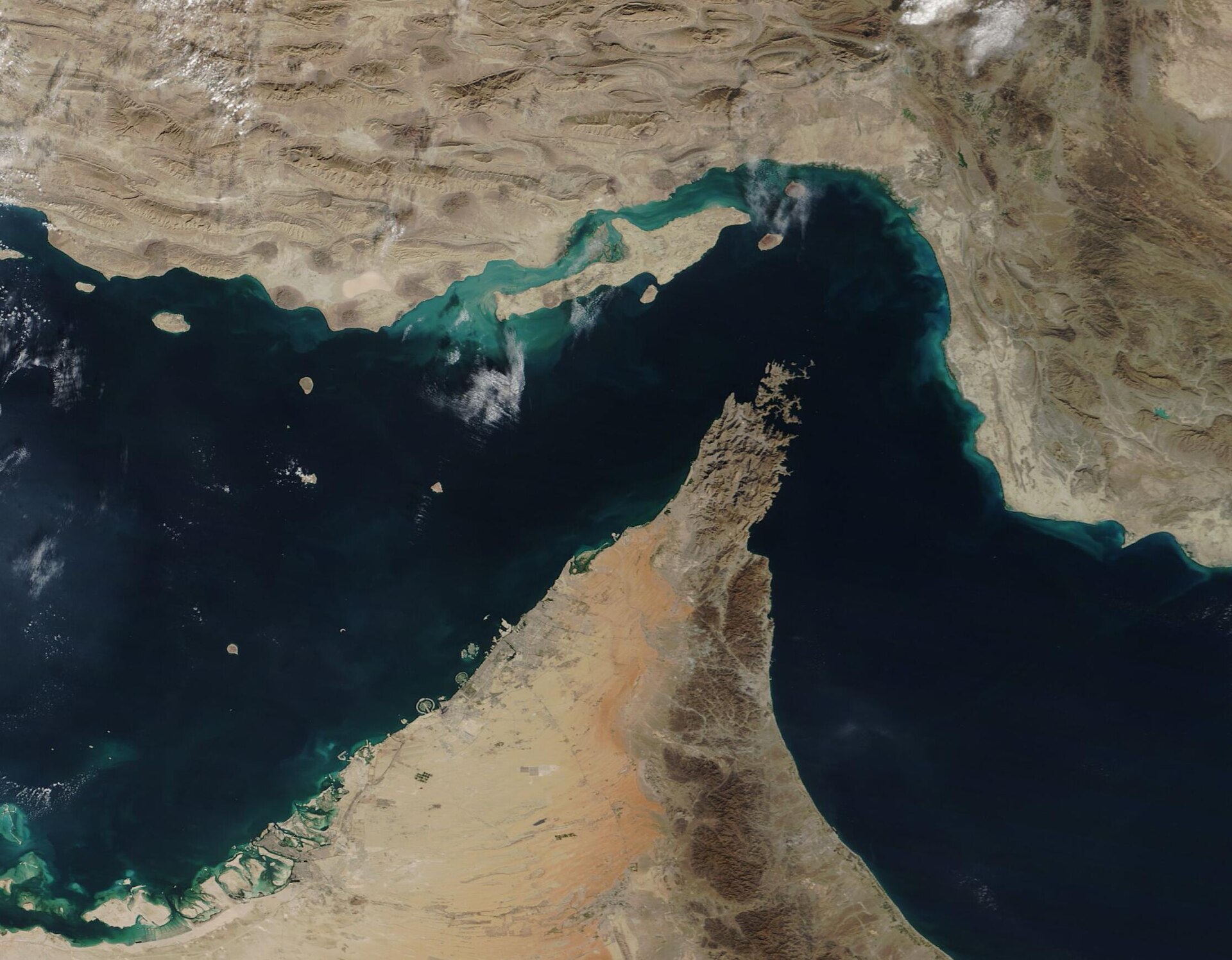
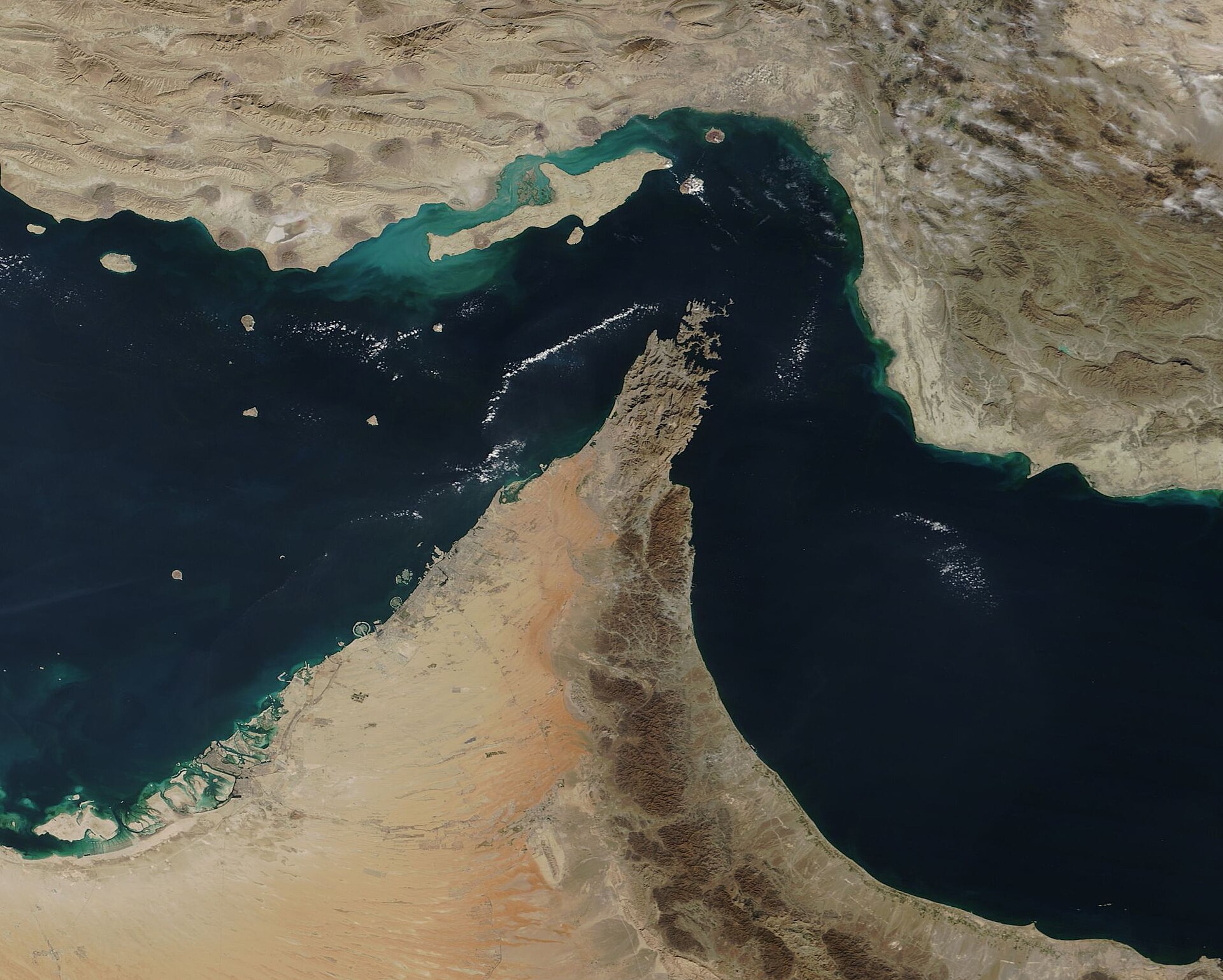
The CENTCOM blockade went live on April 13 at 10:00 a.m. Eastern Time, interdicting all maritime traffic entering or departing Iranian ports on the Arabian Gulf and Gulf of Oman. Hormuz transit to non-Iranian ports remained permitted. The day-one coalition that materialized to support the operation tells its own story: the UAE and Bahrain joined. The United Kingdom, Germany, and Australia declined. Saudi Arabia was absent.
Brent crude rose to $103 per barrel. WTI reached $104, as Bloomberg and CNBC reported. The oil market was pricing in the structural risk that the blockade introduces — not merely to Iranian exports, but to the entire Hormuz throughput architecture that was already operating at a fraction of pre-war capacity. At $103 Brent, Saudi Arabia remains below its fiscal break-even.
The coalition’s thinness is itself a signal. When the United States organized freedom of navigation operations in the Persian Gulf during the 1987-88 Tanker War, European allies eventually participated. In April 2026, the two GCC states that joined are also the two most exposed to Iranian retaliation — Bahrain hosts the Fifth Fleet at NSA Bahrain, the UAE houses Al Dhafra Air Base — and both had already been struck. Their participation reflects a calculation that they are already inside the target set and have nothing additional to lose by formalizing it.
The Paper Trail as Weapon
Araghchi’s post-Islamabad messaging reinforces the interpretation that Tehran is building a legal and rhetorical architecture, not pursuing reconciliation. The Islamabad talks collapsed on April 12 after 21 hours, deadlocked on Hormuz status and highly enriched uranium removal. Araghchi posted on X within hours: “When just inches away from ‘Islamabad MoU’, we encountered maximalism, shifting goalposts, and blockade.” He added: “Zero lessons earned.” Trump announced the naval blockade the same day.
Rear Admiral Shahram Irani, Iran’s Army Navy Commander, told PressTV on April 13 that “the threats of the US president following the humiliating defeat of his army in the third imposed war, a naval blockade on Iran, are very ridiculous and laughable.” The confident derision was directed at the Iranian domestic audience. The Araghchi-Faisal call was directed elsewhere — at the Saudi foreign policy establishment and, above all, at the historical record.
The two performances on April 13 — Irani’s mockery and Araghchi’s phone call — were complementary, not contradictory. They served different nodes in Iran’s strategic communication architecture. Irani’s audience was the Iranian street, the IRGC rank-and-file, and the domestic media ecosystem that requires a steady supply of defiance rhetoric to sustain morale during a war that has degraded civilian infrastructure and disrupted daily life. His language — “ridiculous and laughable” — is not analytical. It is performative. It tells the Iranian public that the blockade is not a serious threat, that American power is hollow, that Iran remains ascendant. This message has no utility outside Iran’s borders. No GCC foreign minister, no CENTCOM planner, no oil trader will adjust their calculus because an Iranian admiral called a blockade “laughable.”
Araghchi’s call to Faisal bin Farhan operates in an entirely different register. It is quiet, procedural, and generates a document rather than a headline. Its audience is the SNSC session that will review the diplomatic record before authorizing the next round of escalation, the legal advisors who will draft Iran’s position in any future international proceeding, and the historical record itself. The two tracks — domestic bravado and international proceduralism — are not in tension. They are the same strategy addressed to different recipients.
Iran’s Supreme National Security Council had already declared after the ceasefire that “negotiations are a continuation of the battlefield.” The phrase is not metaphorical. It is doctrinal. It means that every diplomatic interaction — every call, every readout, every public statement — is evaluated not for its potential to produce agreement but for its contribution to Iran’s strategic position in the event that agreement fails. Under this doctrine, the purpose of negotiation is not to negotiate. It is to generate a record that strengthens Iran’s position when the next phase of conflict arrives. The April 13 call to Faisal bin Farhan is what that doctrine looks like in practice. The phone call is the battlefield. The readout is the ammunition. The absence of substance is the substance.
What is being assembled now will be deployed if the IRGC uses the April 22 ceasefire expiry to resume operations. Iran will need justification — not for its domestic audience, which requires only defiance, but for the international and regional audiences that will determine the diplomatic cost of escalation. A documented record of Iranian outreach to all six GCC states, followed by empty readouts and Saudi silence, followed by a US blockade that Iran characterizes as an act of war, followed by the expiration of a ceasefire that Iran will claim it honored — this sequence, properly assembled, constitutes a narrative of exhausted alternatives. It is the diplomatic equivalent of a legal brief, constructed not in a courtroom but in the call logs of six foreign ministries.
A Gulf Split in Real Time
The divergence between GCC states’ responses to both the Iranian outreach and the American blockade is now visible enough to constitute a structural fracture. The UAE joined the coalition. Saudi Arabia stayed silent. Bahrain joined the coalition. Qatar and Oman maintained their de-escalatory posture. Kuwait absorbed 28 Iranian drones during the ceasefire period and still did not sign up. Kristian Coates Ulrichsen at Rice University’s Baker Institute noted that despite their collective neutrality efforts, all six GCC nations faced simultaneous Iranian attacks — the most serious collective security threat since Iraq’s 1990 invasion of Kuwait.
The UAE’s decision to join the blockade coalition was rational within its own strategic logic. Abu Dhabi was already a target — Al Dhafra Air Base had been struck, and UAE territory was inside the IRGC’s demonstrated engagement envelope. Joining the coalition formalized what was already operationally true and, critically, secured the hardware guarantees that come with coalition membership. The United States resupplies its partners. Standing outside the coalition while absorbing strikes offered the worst of both worlds: the targeting without the replenishment. The UAE resolved the bind by choosing clarity — accepting the label of co-belligerent in exchange for the material support that the label unlocks.
Saudi Arabia’s non-decision is structurally different, and the divergence from the UAE on this question runs deeper than a tactical disagreement. The Institute for National Security Studies in Tel Aviv has characterized the Saudi-UAE relationship since the war began as a shift “from quiet competition to open rivalry.” Before February 28, the two kingdoms competed for investment, for diplomatic influence, for positioning within the American security architecture — but they competed within a shared framework. The war has broken that framework. The UAE is inside the blockade coalition. Saudi Arabia is outside it. They are now, for the first time in the modern GCC era, on functionally different sides of an American military operation in their own neighborhood. The implications for GCC collective security — an architecture that was already more aspirational than operational — are severe. The Peninsula Shield Force, the GCC’s nominal collective defense mechanism, requires a consensus that no longer exists.
The fracture runs along a specific axis: exposure versus alignment. The UAE resolved its bind by joining the coalition — accepting that it was already a target and choosing to formalize the relationship with Washington. Saudi Arabia’s bind is structurally different. The kingdom’s Yanbu bypass capacity is not a permanent solution but a ceiling, and every barrel exported through the Red Sea route passes Bab el-Mandeb, where Houthi-adjacent threats have not disappeared. Joining the coalition would make Saudi Arabia an explicit party to the blockade. Not joining leaves it exposed to Iranian narrative framing. Araghchi’s call is designed to widen this gap.
The broader question is whether the GCC as a collective security architecture can survive a war in which its members occupy different positions relative to an American blockade. The answer emerging from April 2026 is that it probably cannot — at least not in its current form. The GCC was designed to manage intra-Gulf competition and to present a unified front to external threats. It was not designed for a scenario in which the external threat — Iran — has successfully differentiated between member states, and in which the security guarantor — the United States — has created a coalition that divides the membership. The organization’s structures assume consensus. The war has produced divergence. Araghchi’s six simultaneous calls on April 9, by generating six different responses from six different capitals, made that divergence a matter of public record.
Frequently Asked Questions
What does the US naval blockade on Iran actually cover?
CENTCOM’s April 13 interdiction order covers all maritime traffic entering or departing Iranian ports on the Arabian Gulf and Gulf of Oman. Transit through Hormuz to non-Iranian ports remains technically permitted. In practice, enforcement relies on US and coalition naval assets — primarily carrier strike groups and destroyers already positioned in theater — conducting hails, inspections, and diversions of vessels bound for Iranian terminals. The blockade does not extend to overland pipeline routes or Iranian exports transiting third-country ports such as Jask, though Jask’s effective throughput capacity is approximately 0.3 million barrels per day against Iran’s pre-war export level of roughly 1.5 to 1.7 million barrels per day.
Does international law permit a naval blockade of Iran’s ports?
The legal basis is contested. The United States would invoke customary laws of armed conflict and the San Remo Manual on International Law Applicable to Armed Conflicts at Sea, which permits blockades against belligerents provided they do not starve civilian populations and do not unreasonably restrict neutral shipping. Iran’s position — that any blockade constitutes an act of war requiring a UN Security Council mandate — draws on the UN Charter’s Article 2(4) prohibition on force. Neither the United States nor Iran has ratified UNCLOS, which governs transit passage through international straits. Russia and China, both permanent Security Council members, have signalled they will veto any resolution authorising the blockade under Chapter VII, effectively removing the multilateral legal track.
What are the operational consequences if the ceasefire lapses on April 22?
Iran’s SNSC retains three primary escalation instruments it has used since February 28: ballistic missile strikes on Gulf energy infrastructure, IRGC Navy harassment and seizure of commercial shipping in Hormuz, and drone-and-missile swarms against land targets in Bahrain, the UAE, and Saudi Arabia’s Eastern Province. A ceasefire lapse does not automatically trigger any of these; it removes the formal constraint and returns authorization decisions to the IRGC command structure. The highest-risk window is the 48 to 72 hours following lapse, when IRGC commanders at corps level have the most operational latitude before strategic-level reassessment. The Hajj arrival cordon sealing on April 18 — four days before ceasefire expiry — creates a specific pressure point: any escalation against Saudi Arabia during active Hajj operations would carry acute international reputational costs for Iran.
Why did Qatar speak more directly than Saudi Arabia after the April 9 calls?
Qatar’s structural position differs from Saudi Arabia’s in one specific way: Doha sits inside the US security architecture through Al Udeid Air Base while simultaneously sharing geological and revenue infrastructure with Iran through the North Field/South Pars gas reservoir. This dual exposure gives Qatar a legitimate interest in named de-escalation that neither the US nor Iran can characterise as hostile. Qatar can call for Hormuz to remain open without being accused of endorsing the blockade or endorsing Iran’s toll architecture, because Qatar’s economic survival depends on the strait regardless of which side prevails. Saudi Arabia’s interest in keeping Brent above $108 runs too close to alignment with the blockade’s supply-restriction effect for Riyadh to name it without inviting the framing Araghchi is trying to construct.
Nine Days
The ceasefire expires on April 22. Hajj arrivals begin on April 18. The convergence of those two dates — the collapse of the security framework and the onset of the kingdom’s most consequential religious obligation — gives Araghchi’s outreach a deadline dimension. If the ceasefire lapses without extension and the blockade remains in force, Tehran will have a documented record of having reached out to Riyadh twice in the final days, receiving nothing actionable in return.
That record is not for the Saudi foreign ministry. It is for the IRGC targeting committee, for the SNSC session that authorizes the next round, for the PressTV segment that explains why Aramco’s eastern terminals are legitimate military objectives. Araghchi did not call Faisal bin Farhan to make peace. He called to make sure that when the next escalation comes, it arrives with a footnote.
Tehran has since moved that paper trail to a new arena: on April 14, Iran formally filed a compensation demand at the UN against Saudi Arabia, the UAE, Bahrain, Qatar, and Jordan, alleging co-belligerency in the US-Israeli strikes. The claim has no enforcement path, but it converts Araghchi’s phone calls into legal exhibits. The mechanism and its diplomatic purpose are examined in Iran Demands Compensation From Five Arab States at the UN. It Cannot Collect — But That’s Not the Point.
When just inches away from the ‘Islamabad MoU’, we encountered maximalism, shifting goalposts, and blockade. Zero lessons earned.Abbas Araghchi, Iranian Foreign Minister, on X, April 13, 2026
Saudi Arabia’s silence on April 13 was the only answer available to a government caught between an American blockade it cannot endorse and an Iranian threat it cannot deter. Araghchi knew that before he dialed. The call was never designed to get an answer. It was designed to make the absence of one useful.
Araghchi’s decision to call Riyadh on blockade day — and the calculations that drove it — is also behavioural evidence for the thesis that the blockade is a coercive instrument, not a strategic exit: states do not telephone adversarial capitals to build targeting footnotes if they believe the coercive pressure has already been fully activated. The broader argument about what the blockade actually represents is examined in The US Blockade of Iran Is Coercive Diplomacy, Not a Strategic Walkaway — and Pakistan Holds the Proof.