
ABU DHABI — Anwar Gargash called the GCC’s response to the Iran war “the weakest historically” on April 27, and when nineteen days passed without retraction he said it again at the Atlantic Council’s Europe Gulf Forum in Greece — this time to Frederick Kempe, this time before a transatlantic audience, this time sharpened to “the underperformance here of the GCC in the face of this historical challenge.” He had the platform to walk it back and he doubled down instead, because the UAE’s presidential adviser was not offering commentary — he was staking a post-war position.
While Gargash spoke, the UAE was acting. Abu Dhabi departed OPEC after 59 years of membership on May 1, hosted an Israeli Iron Dome battery and IDF operators on Emirati soil for the first time in history, closed its embassy in Tehran, and sought a dollar swap line from the US Treasury. These are not the gestures of a state lodging a complaint about an alliance partner’s performance; they are the gestures of a state that has already concluded the institution is finished and is building the evidentiary record to justify what comes next.
Table of Contents
- What Did Gargash Say — and Why Did He Say It Twice?
- The Numbers Iran Sent the GCC’s Way
- Why Was the Joint Defense Clause Never Invoked?
- MBZ Called — MBS Declined
- The OPEC Exit as Strategic Divorce
- Iron Dome in Abu Dhabi, Peninsula Shield in Storage
- Is the GCC Already Being Replaced?
- What Does Saudi Arabia’s Silence Actually Mean?
What Did Gargash Say — and Why Did He Say It Twice?
Gargash’s first statement, on April 27, was delivered to Kurdistan24 and picked up by Middle East Eye — a regional outlet with a broad Arab-language readership but limited Western policy penetration. The phrasing was blunt but could have been read as emotional: “I did not expect it from the GCC, and I am surprised by it.” A diplomat of Gargash’s tenure — he served as Minister of State for Foreign Affairs from 2008 to 2021 before moving to his current presidential advisory role — does not express surprise unless the surprise is the message, and the intended audience is not the interviewer but the capitals watching.
The second iteration, nineteen days later at the Atlantic Council forum in Costa Navarino, was neither blunt nor emotional — it was architectural. Speaking with Kempe, Gargash diagnosed the failure in structural terms: Gulf states had “long pursued a policy of containment toward Iran through diplomacy, trade, and regional partnerships,” but those “policies have failed miserably” and required a “comprehensive reassessment.” He called for “more security integration, not to replace national capability, but to also be in parallel with national capabilities” — the language of someone designing a successor framework, not lamenting the current one. And when he singled out Bahrain for praise (“I salute them for it” — for fighting Iranian attacks “really ferociously”), the implicit contrast with Saudi Arabia was loud enough that it did not need to be made explicit.
The escalation arc — from regional media to a transatlantic policy forum, from emotional shock to institutional prescription, from complaint to architectural proposal — is the story. Gargash was not venting; he was constructing a record, one that will be cited when the post-war Gulf security order is negotiated and the question of who failed whom needs an authoritative answer.
The Numbers Iran Sent the GCC’s Way
The empirical foundation for Gargash’s indictment is not abstract. Iran targeted the UAE with approximately 550 ballistic and cruise missiles and more than 2,200 drones — a combined 2,750-plus projectiles, more than any other country in the conflict including Israel, according to the Soufan Center’s IntelBrief published on May 14. Across all GCC states, roughly 83 percent of all Iranian missile and drone fire during the war was directed at Gulf Arab territory — five of every six Iranian projectiles fired in this war landed in GCC airspace, and the GCC has no collective response to show for it.
The Middle East briefing 3,000+ readers start their day with.
One email. Every weekday morning. Free.
The targeting pattern was not random. Iran calibrated its fire toward states hosting US military infrastructure or maintaining Abraham Accords-adjacent relationships — the UAE, Bahrain, and Kuwait absorbed the overwhelming majority of strikes, while Saudi Arabia, which had pivoted to accommodation after its March strikes, and Oman, which was actively co-drafting Hormuz governance with Tehran, were treated with comparative restraint. The distribution was designed to exploit existing GCC divisions rather than create new ones, punishing the states most aligned with Washington’s confrontation posture while rewarding those that stayed out of the fight or facilitated diplomacy.
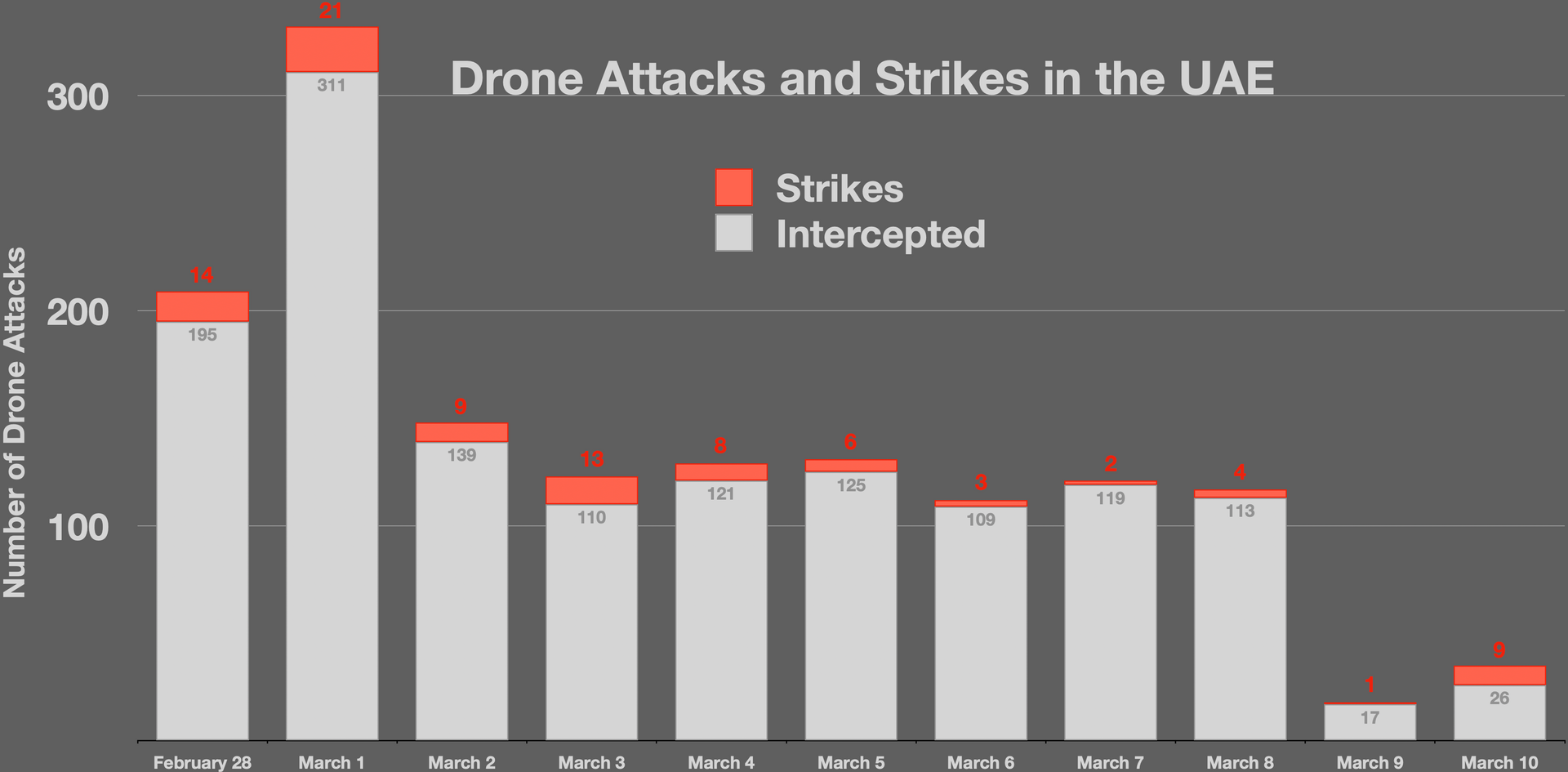
What makes Gargash’s public anger legible — and what distinguishes it from previous intra-GCC disagreements over burden-sharing — is proportionality. The UAE did not absorb a symbolic strike or a proxy provocation; it absorbed the single largest sustained missile and drone assault on any country in the Middle East since the 2003 invasion of Iraq, directed at its commercial and energy infrastructure, while its treaty allies in the GCC either watched, mediated for the attacker, or maintained a silence that Gargash clearly regards as complicity. Saudi Arabia, which fields the GCC’s largest defence budget at $74.76 billion in 2026 according to Global Firepower data, launched unilateral strikes against Iran in March without coordinating with the UAE — then reversed course entirely and helped facilitate Pakistan’s mediation, leaving Abu Dhabi without a partner for confrontation or a GCC consensus to shelter behind.
Why Was the Joint Defense Clause Never Invoked?
The GCC Joint Defense Agreement, signed in 2000, stipulates that any attack on one member state constitutes an attack on all — the Gulf’s equivalent of NATO’s Article 5, and equally untested until the moment it mattered. Iran struck Abu Dhabi, Dubai, Bahrain, and Kuwait with ballistic missiles and drones in sustained campaigns across the first three months of the war, and the clause was not invoked — not by any individual member, and not collectively. The legal architecture designed to produce exactly this response sat unused while member states absorbed fire individually, negotiated separately, and in some cases actively worked against each other’s strategic preferences.
The reason the clause was never triggered is structural, not procedural, and understanding it explains why Gargash’s critique goes beyond this particular war to the institution itself. Every previous activation of GCC collective defence required three conditions that were all absent in 2026. The first was an unambiguous external aggressor: Saddam’s Iraq in 1990, Iranian-backed unrest in Bahrain in 2011. But the 2023 Beijing-brokered Saudi-Iran normalisation agreement means Iran is no longer an unambiguous adversary to all GCC members — it is a diplomatic partner to some and an active combatant against others, simultaneously.
The second condition was Saudi-UAE strategic alignment, which held through the Kuwait liberation, the Bahrain intervention, and even the early Yemen campaign, but fractured over the STC-Islah split in 2019 and has not recovered. The third was a US military backstop operating through Gulf state coordination; in 2026, CENTCOM struck Iranian targets on Arafah Day without consulting Saudi Arabia, operating on its own self-defence doctrine entirely independent of Gulf state preferences.
| Crisis | Year | Peninsula Shield Activated | Saudi-UAE Aligned | External Backstop | Outcome |
|---|---|---|---|---|---|
| Kuwait Liberation | 1991 | Yes | Yes | US-led coalition | Collective success |
| Bahrain Intervention | 2011 | Yes (~10,000 troops) | Yes | Implicit US support | Stabilised |
| Qatar Blockade | 2017–2021 | No | Yes (as co-aggressors) | None | GCC fractured |
| Iran War | 2026 | No | No | CENTCOM (unilateral) | No collective response |
The Peninsula Shield Force — roughly 40,000 troops across two brigades, headquartered in Hafar al-Batin — has not deployed since 2011. Its non-activation in 2026 is not a policy failure in isolation but a consequence of the three structural preconditions having eroded in sequence over fifteen years. The 2017 Qatar blockade offered an early warning: Saudi Arabia, the UAE, Bahrain, and Egypt blockaded a fellow GCC member for three and a half years without any GCC mechanism being invoked, and Kuwait’s emir at the time publicly cited “the damage done to the institution of the GCC.” The Al-Ula Declaration that resolved the blockade in January 2021 restored diplomatic ties but reformed nothing institutional. Gargash is not asking the GCC to work harder — he is pointing out that the conditions under which it ever worked no longer exist.
MBZ Called — MBS Declined
Bloomberg reported on May 15 that UAE President Sheikh Mohammed bin Zayed held multiple calls with Saudi Crown Prince Mohammed bin Salman after US-Israeli strikes on Iran began on February 28, urging a coordinated military response from Gulf states. Saudi Arabia refused, and so did Qatar, Bahrain, Kuwait, and Oman — MBZ’s neighbours told him, in Bloomberg’s paraphrase, that “it was not their war to join.” The UAE’s confrontation posture, which Gargash would later articulate as the only rational response to a threat affecting all Gulf states equally, was rejected by every potential partner in the alliance that was supposed to provide exactly this kind of collective security.
Saudi Arabia did not merely decline the UAE’s request for coordination — it acted unilaterally in a different direction. Saudi forces struck Iranian targets in March without consulting Abu Dhabi, then reversed course entirely, pivoting to an accommodation posture that included facilitating Pakistan’s emergence as a mediator. The effect on UAE strategic planning was devastating in its specificity: Riyadh demonstrated that it retained the military capability for confrontation, that it was willing to use it, but that it would not do so in concert with the UAE or within any GCC framework. Saudi Arabia’s problem was not inability — it was unwillingness to treat the GCC as the vehicle for its response.
“The Iran war has widened differences between Saudi Arabia, which favors accommodation with Iran and Iran-backed regional actors, and the United Arab Emirates, which believes military confrontation with Iran and its allies can produce transformative change.” — Soufan Center IntelBrief, May 14, 2026
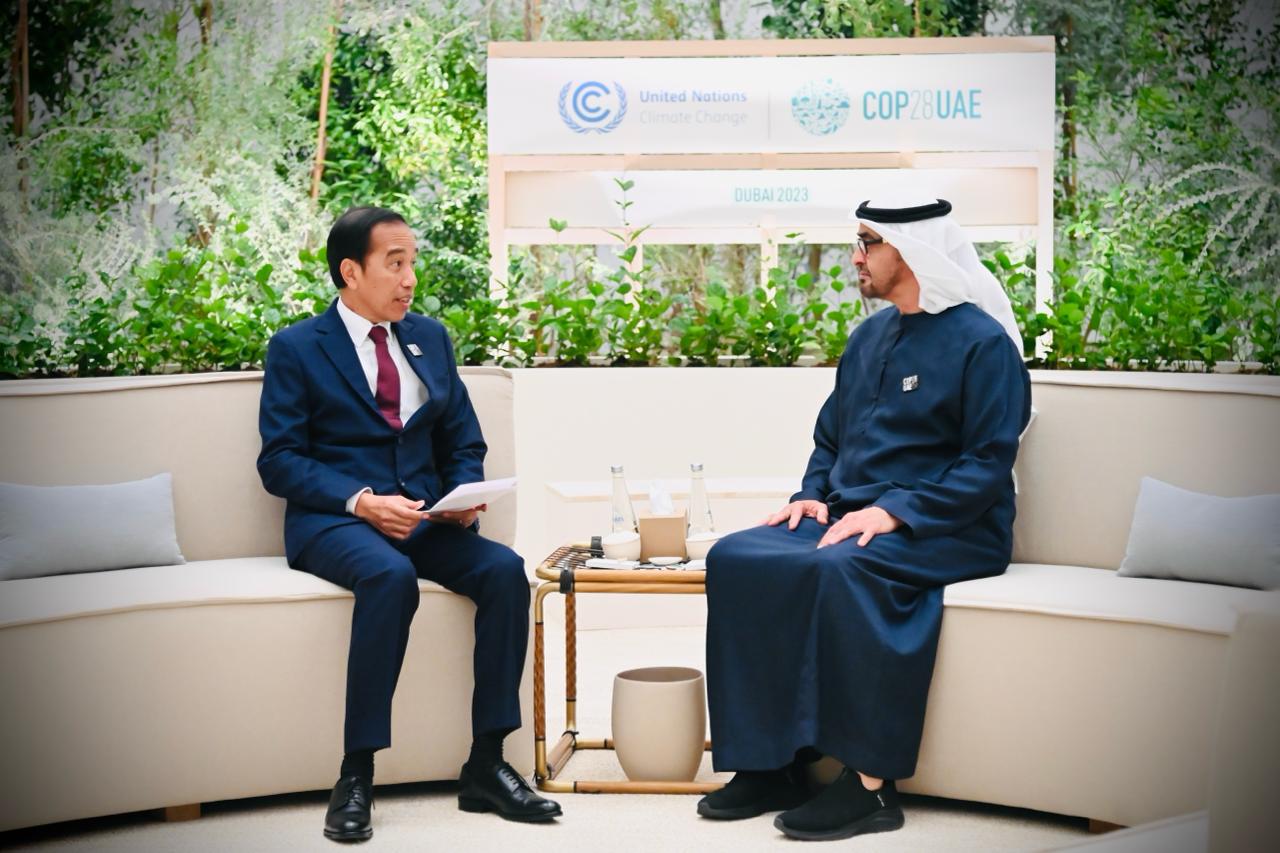
That word the Soufan Center used elsewhere in the same assessment — “irreconcilable” — carries institutional weight that exceeds ordinary diplomatic friction. It does not describe a policy disagreement that can be resolved at the next GCC summit or papered over with a communiqué; it describes a structural condition in which the alliance’s two most powerful members hold incompatible theories of regional security, and neither has an incentive to converge. The UAE wants confrontation because it absorbed 2,750-plus Iranian projectiles and concluded that deterrence requires military response. Saudi Arabia wants accommodation because it is bleeding $700 million a day through a Hormuz closure it cannot reopen and a fiscal deficit it cannot close, because Washington can afford to wait on Iran in ways that Riyadh cannot — and because the East-West Pipeline workaround that was supposed to protect Aramco’s Asian revenue has instead left it exposed to the sharpest collapse in Chinese, Indian, Japanese, and South Korean crude offtake in a decade. The GCC’s charter provides no framework for reconciling those positions, because its drafters assumed the alliance’s two anchors would never simultaneously face the same threat and choose opposite responses.
The OPEC Exit as Strategic Divorce
The UAE’s departure from OPEC, effective May 1 after 59 years of membership, was the clearest signal that Abu Dhabi’s frustration extended beyond security policy into the economic architecture of Gulf Arab coordination. ADNOC’s production capacity sits at 4.85 million barrels per day against an OPEC quota that had been capped at just under 3.5 million bpd — a 1.35-million-bpd gap that the UAE had argued with increasing impatience represented an unacceptable economic constraint imposed primarily by Saudi Arabia’s insistence on production discipline. The UAE’s target of 5 million bpd by 2027, reported by Wood Mackenzie, is achievable only outside the OPEC framework that Saudi Arabia dominates.
The timing — May 1, two months into the war — mattered as much as the decision itself. Brent crude had briefly broken below $100 on Iran deal optimism before climbing back to the high $90s, and Saudi Arabia was running a first-quarter deficit of $33.5 billion that had already consumed 194 percent of its full-year target in three months. The OPEC architecture that had once served both countries was now serving neither: Saudi Arabia needed higher prices but was losing the production volume to achieve them, while the UAE needed higher volume and was willing to accept lower prices to get it. States do not leave 59-year-old institutions as negotiating tactics — the exit was an institutional conclusion, one that mirrored and reinforced the security fracture Gargash was articulating in public.
Chatham House, in its May 1 analysis, connected the threads explicitly: “The US–Israel war against Iran has presented many challenges for Saudi Arabia, including the Strait of Hormuz closure, a deepening rift with the UAE, and the latter’s exit from the oil cartel OPEC.” The phrasing treated the security disagreement and the OPEC departure as cause and effect, not coincidence. When a GCC member concludes that the alliance cannot protect it militarily and will not accommodate it economically, departure from the economic institution is a down payment on departure from the security one — and the question Gargash is now answering publicly, from regional media to the Atlantic Council stage, is whether the security institution is worth preserving at all.
Iron Dome in Abu Dhabi, Peninsula Shield in Storage
The most symbolically devastating fact of the war, from a GCC institutional perspective, is not what the alliance failed to do — it is what the UAE did instead. When Israel deployed an Iron Dome battery and IDF operators to the UAE on Netanyahu’s direct order following a call with MBZ, it marked the first time Israel had deployed its flagship air defence system to a third country and the first time Israeli combat personnel had operated inside a Gulf Arab state. The deployment, confirmed by Axios on April 26, meant that Israeli soldiers were defending Emirati territory while 40,000 Peninsula Shield Force troops — the GCC’s dedicated collective defence mechanism, headquartered in Saudi Arabia — remained in barracks.
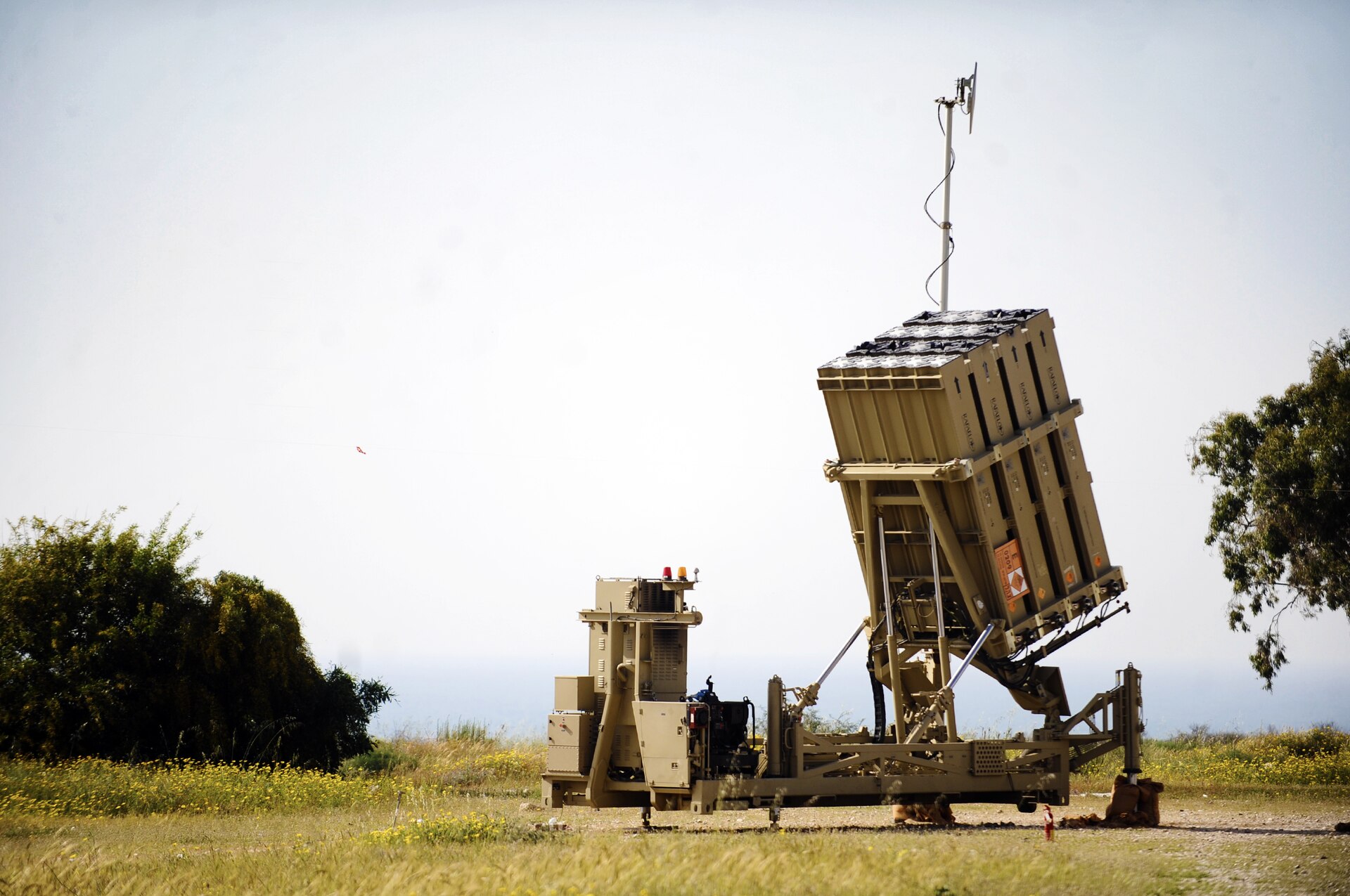
The comparison is not abstract, and the institutional damage is not recoverable through future summits or communiqués. The Peninsula Shield Force last deployed in 2011, when approximately 10,000 troops crossed into Bahrain to support the ruling Al Khalifa family during protests that Riyadh and Abu Dhabi attributed to Iranian influence — a deployment that worked because Saudi Arabia and the UAE were aligned, because the threat was internal rather than interstate, and because the US acquiesced. In 2026, none of those conditions held, and the PSF did precisely what an unused collective defence mechanism does in a crisis: it demonstrated the absence of the consensus required to activate it. Gulf defence spending is expected to rise roughly 20 percent over the next three years, according to AGBI — but that spending will flow to national capabilities, not collective ones, because the collective mechanism’s credibility did not survive this war.
The UAE simultaneously sought a dollar swap line from the US Treasury and formally labelled Iranian strikes as “terrorist attacks” — framing designed to invoke US statutory authorities rather than GCC mutual-defence provisions. Abu Dhabi’s wartime improvisation created a de facto security architecture that ran through Washington and Jerusalem rather than Riyadh and the GCC headquarters, not as a long-term strategic design but because the GCC alternative simply did not function when the missiles arrived. Gargash’s public remarks are the diplomatic articulation of what the Iron Dome deployment already proved operationally: the UAE will source its security from whoever provides it, and the GCC is no longer a credible provider.
Is the GCC Already Being Replaced?
While Gargash was diagnosing the GCC’s failure at the Atlantic Council in Greece, a different institutional architecture was being assembled in real time. The Egypt-Pakistan-Saudi Arabia-Turkey quadrilateral — EPST — held three ministerial sessions in 31 days between April and May 2026, a pace that the International Institute for Strategic Studies characterised as marking “the shift from reactive coordination to institutionalised consultation.” The phrasing matters: IISS did not describe the EPST as a crisis response group but as an institutional process, one with a tempo and trajectory distinct from any GCC format.
The EPST’s composition reveals what it is designed to replace. It includes Egypt (military weight, Suez corridor control), Pakistan (nuclear capability, Iran mediation role), Saudi Arabia (financial anchor, Hajj calendar weight), and Turkey (NATO member, Muslim-majority state with independent Iran relations). It does not include the UAE, Qatar, Kuwait, Bahrain, or Oman — the five states that, with Saudi Arabia, comprise the GCC. Saudi Arabia is building a new consultative framework for the post-war regional order and has chosen not to build it on GCC foundations. The Gulf International Forum’s assessment was blunt: “The GCC Will Not Unify on Iran” — citing “the relationship between Saudi Arabia and the UAE’s leaders being too frayed, their policy disagreements in Yemen and Sudan remaining” unresolved.
The fracture lines that Gargash named extend to post-war Hormuz governance: the 40-nation UK-France coalition managing the strait’s transition includes GCC member states but not Saudi Arabia at any level of command — the clearest institutional expression yet of the kingdom’s isolation from the security architecture its own fiscal survival depends on.
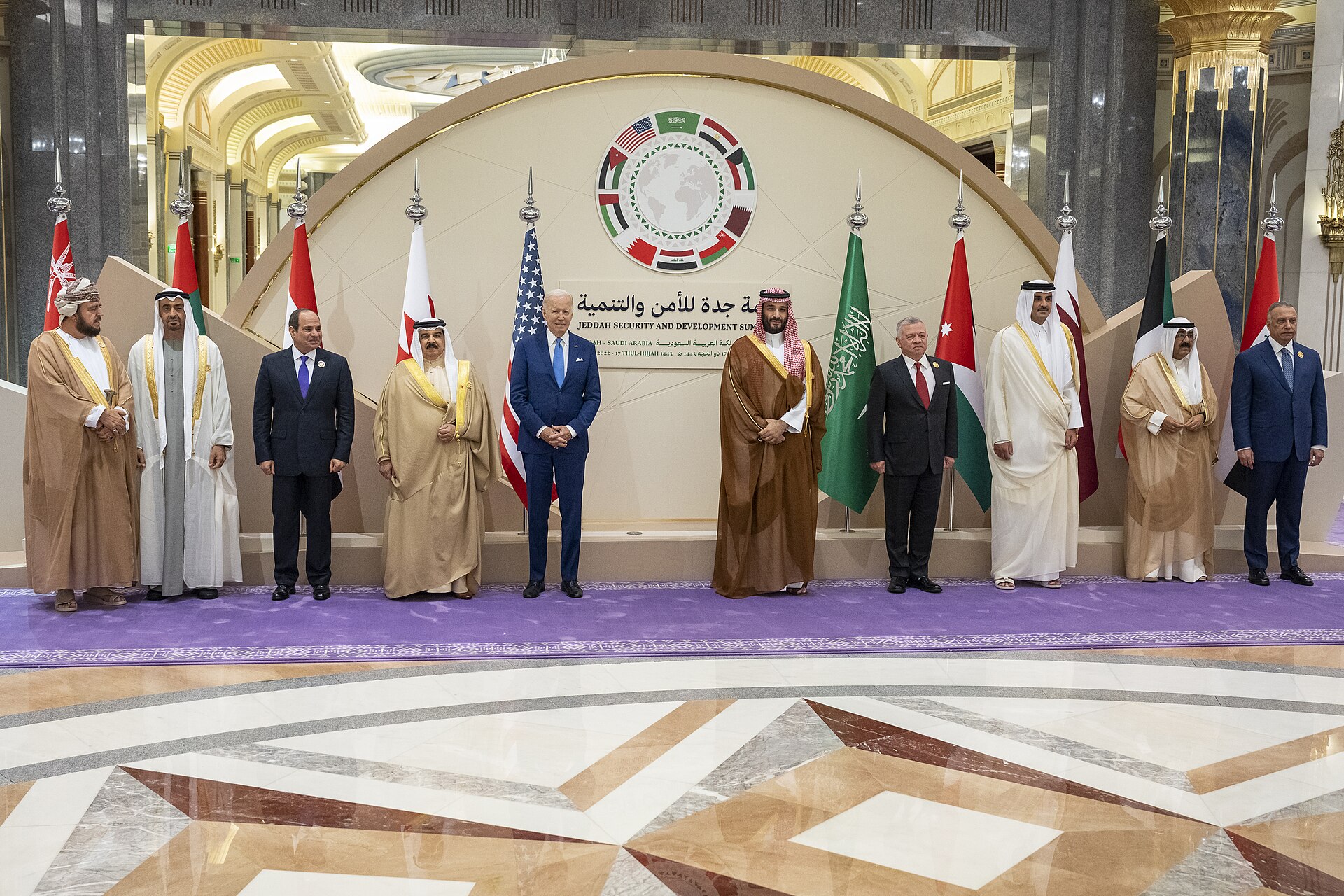
The institutional contradiction extends within the GCC itself. Oman, a GCC member that joined the collective statement telling ships to ignore Iran’s Hormuz navigation map, is simultaneously co-drafting a Hormuz governance mechanism with Tehran — endorsing the GCC’s position in one diplomatic channel while negotiating the legal architecture of the very tolls that position opposes in another. Qatar co-signed the same Hormuz protest while hosting the Doha negotiations where Iran’s delegation arrived and departed without signing, serving as financial mediator for a state the GCC collectively opposes on maritime law. When two of six members are actively engaged with the adversary in ways that contradict the alliance’s own collective positions, the institution’s statements become performative rather than operational — and Gargash’s critique becomes less an attack on the GCC than a clinical description of its condition.
The Carnegie Endowment’s April 2026 assessment of post-war GCC options offered hopeful, realistic, and cautionary scenarios — and found that both the realistic and cautionary paths led toward greater fragmentation, not reconvergence. The hopeful scenario required Saudi-UAE realignment, US-Iran deal resolution, and GCC institutional reform — three conditions that, 89 days into the war and counting, appear further from realisation than when the assessment was published. The institution Gargash is critiquing is not failing in a way that future summits can repair; it is failing the way the Arab League failed — remaining formally operational while strategic coordination migrates to newer, smaller, purpose-built formats that do not carry the institutional baggage of a 45-year-old consensus machinery that no longer produces consensus.
What Does Saudi Arabia’s Silence Actually Mean?
Saudi Arabia’s Ministry of Foreign Affairs has been silent for six consecutive days as of May 26 — through CENTCOM’s Arafah Day strikes on Iranian missile launch sites, through the destruction of two IRGC mine-laying fast boats near Bandar Abbas, through Gargash’s Atlantic Council address, and through the UAE’s formal characterisation of Iranian strikes as terrorist attacks. The silence coincides with Hajj, and there is a plausible calendar explanation: Saudi Arabia, as custodian of the two holy mosques, operates under a structural incentive to suppress escalation during pilgrimage, and MOFA’s quietude could be read as the responsible behaviour of a state prioritising religious duty over diplomatic theatre. Gargash, at the Atlantic Council, did not appear to read it that way.
The evidence supports Gargash’s reading more than the charitable one. Saudi Arabia’s accommodation posture predates Hajj — it began with the unilateral March strikes followed by the pivot to Pakistan-facilitated mediation, continued through Riyadh’s endorsement of the Iran deal framework, and persisted through a first-quarter fiscal deficit that has paradoxically benefited from the very Hormuz closure Saudi Arabia publicly demands be reversed. Bloomberg’s reporting that MBZ personally urged MBS to coordinate a military response and was refused indicates that the accommodation posture was a deliberate strategic choice, not a Hajj-imposed pause. The silence is the posture’s diplomatic expression — Riyadh has nothing to say because saying anything would require choosing between the confrontation the UAE demands and the accommodation it has already committed to, and the GCC charter provides no framework for acknowledging that its two most powerful members have chosen opposite strategies.
“The GCC’s stance was the weakest historically, considering the nature of the attack and the threat it posed to everyone. I did not expect it from the GCC, and I am surprised by it.” — Anwar Gargash, UAE Presidential Adviser, April 27, 2026
The silence also creates a specific institutional problem that compounds with time. Every day Saudi MOFA does not respond to Gargash’s public critique, the critique hardens from an opening position into an established narrative — and when Chatham House, Soufan Center, IISS, Carnegie, and the Gulf International Forum all publish assessments that align with Gargash’s diagnosis, using words like “irreconcilable,” “deepening rift,” and “will not unify,” the analytical consensus forms around the UAE’s framing rather than any Saudi counter-framing, because there is no Saudi counter-framing to form around. Saudi Arabia’s $74.76 billion defence budget, the GCC’s largest by a wide margin, becomes not evidence of capability but evidence of the gap between capability and collective commitment — the institutional proof that the alliance’s most powerful member chose not to lead when leadership was the institution’s only remaining purpose.
Frequently Asked Questions
Has the UAE formally withdrawn from the GCC?
No, and no withdrawal process has been initiated. The UAE remains a GCC member state, and Gargash’s critique targets the institution’s operational failure rather than its formal existence. The OPEC departure — a separate institution — is the only formal withdrawal Abu Dhabi has executed. However, the parallel development of alternative consultative frameworks like the EPST quadrilateral suggests that GCC membership may persist formally while strategic coordination migrates elsewhere, a pattern that mirrors the Arab League’s trajectory after it ceased to function as a meaningful policy-coordination body decades ago.
What was the last time the GCC mounted a collective military response?
The Peninsula Shield Force last deployed in March 2011, when approximately 10,000 troops entered Bahrain to support the Al Khalifa government during widespread protests. Before that, GCC-coordinated military action occurred during the 1991 Kuwait liberation, in both cases against threats that did not involve ballistic missile strikes on member territory. The 2026 Iran war is the first test of the alliance’s collective defence posture against a peer-level military threat with intercontinental-range projectiles directed at member states’ population centres — and the first such test the GCC failed.
How did Iran’s targeting of GCC states compare to its targeting of Israel?
Iran directed more projectiles at the UAE alone than at Israel, with the Soufan Center reporting that roughly 83 percent of all Iranian missile and drone fire went to Gulf Arab territory across the conflict. The asymmetry reflects strategic logic rather than capability limits: Iran calibrated fire toward states hosting US military infrastructure while restraining strikes against Israel — where the risk of escalation to a nuclear threshold was higher and where the US defence commitment was more explicit. GCC states absorbed the bulk of the attrition campaign precisely because they lacked the mutual-defence architecture that might have deterred it.
Could the GCC Joint Defense Agreement still be invoked?
Legally, the 2000 agreement remains in force and could technically be invoked by any member claiming an external attack. Practically, invocation now requires consensus among members who hold incompatible strategic postures — the UAE favouring confrontation, Saudi Arabia and Qatar favouring accommodation, and Oman simultaneously co-drafting maritime governance with Iran. The clause’s non-invocation during the largest sustained missile assault on GCC territory in the alliance’s history establishes a precedent that will make future activation politically difficult even if the structural conditions change, because any member considering invocation must now account for the possibility that it will be ignored again.
What is the EPST quadrilateral and why does it matter?
EPST refers to the Egypt-Pakistan-Saudi Arabia-Turkey consultative format that held three ministerial sessions in 31 days during April–May 2026 — a pace IISS characterised as “institutionalised consultation.” The format includes NATO-member Turkey and nuclear-armed Pakistan, capabilities absent from the GCC, while excluding all five of Saudi Arabia’s GCC partners. Its significance is architectural rather than operational: Saudi Arabia’s post-war security consultations are being built outside GCC structures, with partners chosen for capability relevance to the Iran conflict rather than geographic proximity or historical alliance membership.
The institutional fracture inside the GCC acquired a new doctrinal dimension when Oman refused to sign IMO Circular Letter 5028 — the GCC’s collective condemnation of Iran’s Hormuz closure. Oman’s refusal is grounded in a 1974 bilateral treaty with Iran that formally places the Hormuz inbound lane in Omani territorial waters, giving Muscat a treaty-based reason to abstain that Riyadh cannot challenge without litigating its own dependence on the strait Oman co-governs.
On May 16, in a conference room on the Peloponnese coast, Gargash told a transatlantic audience that the Gulf needed “a comprehensive reassessment” of its Iran approach — and then flew home to a country where Israeli soldiers were operating the air defence batteries that GCC treaty obligations should have made unnecessary. Forty thousand Peninsula Shield troops remained in Hafar al-Batin, fifteen days after the UAE had ended 59 years of OPEC membership, and nobody in Riyadh had said a word.
The GCC Joint Defense Agreement was again not invoked on May 28 when Kuwait absorbed 35 strikes — nine missiles and 26 drones — in a single 24-hour air battle, the most concentrated barrage the country has faced since the conflict’s opening week.
The institutional failure Gargash described acquired its sharpest legal form on May 28, when Kuwait’s legally isolated Article 51 filing became the first formal self-defense notice by a GCC state in the conflict — co-signed by none of its partners, an act that reduced the Joint Defense Agreement from a paper commitment to a nullity on the record.