DHAHRAN — Saudi Aramco has not confirmed, denied, or acknowledged Houthi claims that its Shedgum gas plant and Tanajib oil facility were struck on October 11, 2026. More than twenty-four hours after Houthi military spokesman Yahya Saree said fires broke out at both sites, according to TASS, Aramco’s public communications remain silent — no damage assessment, no production update, no restoration timeline.
The silence is a departure from precedent. After the September 2019 attack on Abqaiq, Aramco communicated a restoration schedule within forty-eight hours and the market rewarded the transparency with a rapid recovery. Shedgum and Tanajib have received no comparable response. The oil market has priced a risk premium for weeks, but a risk premium is not a supply assessment — and Aramco has provided no data on which to base one.
Table of Contents
- What Did the Houthis Claim to Strike on October 11?
- Why Has Aramco Not Issued a Statement?
- The Shedgum–Tanajib Target Set
- How Did Oil Markets Respond to the Combined Strikes?
- Can Saudi Air Defences Cover Two Theatres at Once?
- The Cumulative Infrastructure Toll
- Sixty Million Barrels Pre-Sold and Undelivered
- The Diplomacy Running Alongside the Strikes
- Frequently Asked Questions
What Did the Houthis Claim to Strike on October 11?
Yahya Saree announced on October 11, 2026 that Yemeni forces carried out four large-scale operations using ballistic and cruise missiles and drones, targeting King Khalid International Airport in Riyadh, King Fahd International Airport in Dammam, Aramco’s Shedgum gas plant in the Eastern Province, and the Tanajib oil facility on the Persian Gulf coast, according to TASS. It was the first time the Houthis claimed to have paired energy infrastructure strikes with airport attacks in a single operational window.
The pairing marked a shift. Earlier Houthi operations in 2026 targeted airports and energy facilities in separate cycles — strikes on KKIA in one window, claims against refineries or pipelines in another. The October 11 operations merged both target sets into a single coordinated wave, forcing Saudi defence planners and crisis communicators to manage casualties at an international airport and unconfirmed damage at energy facilities simultaneously. For Aramco, the airport strikes absorbed the immediate international media coverage, while the Shedgum and Tanajib claims received less scrutiny — and no response.
Saree said the Shedgum and Tanajib strikes “sparked fires at the two Aramco sites,” according to the same TASS report. No independent source — neither satellite imagery provider, nor journalist on the ground, nor any government — has confirmed or denied fire or physical damage at either facility as of October 12. Aramco has not responded. EnterpriseAM, reporting on October 12, was the only outlet to explicitly note the absence of any Aramco statement alongside coverage of both airport closures and energy facility targeting.
Saree framed the combined targeting as retaliation for “124 airstrikes delivered by the Saudi-led coalition against Yemen over the past day,” according to TASS. He described the logic in reciprocal terms — “airport for airport, siege for siege, escalation for escalation,” according to juancole.com — and told CBS News that “the airports and airspace are exposed to targeting and constitute a theatre of operations for our forces.” That declaration, as the Houthis’ subsequent exemption of only Mecca and Medina confirmed, extended the threat to every commercial airport in the kingdom and, for the first time, linked it to simultaneous energy targeting.
The Middle East briefing 3,000+ readers start their day with.
One email. Every weekday morning. Free.
The operational sequencing followed a pattern Saudi investigators are now studying. A probe launched after the October 11 attacks found that the Houthis fired drones first “to pave the way for a mix of cruise and ballistic missiles” travelling more than 1,000 kilometres, according to WPXI. The missiles, the investigation found, “can change direction during flight,” complicating interception. The same operational window produced the second King Khalid International Airport strike in twenty-four hours — the Terminal 4 attack on October 11 that killed one Pakistani national and injured eleven, according to CNN.
Why Has Aramco Not Issued a Statement?
Aramco has not confirmed or denied damage to Shedgum or Tanajib, has not released production data, and has not communicated a restoration timeline. The absence of any public communication prevents oil markets from distinguishing between a successful strike with material production impact and a failed or limited attack.
The contrast with Abqaiq makes the silence analytically significant. On September 14, 2019, a coordinated drone and missile attack on the Abqaiq processing facility and the Khurais oil field removed 5.7 million barrels per day from global supply — roughly five per cent of the world’s crude output, according to the U.S. Energy Information Administration. Brent crude spiked nearly twenty per cent intraday on September 16 before settling approximately ten per cent higher, briefly topping $70, according to CNBC. Saudi Arabia announced forty per cent restoration by Monday September 16 and fifty per cent by Tuesday September 17. Aramco committed to full 12 million b/d capacity by November. Markets calmed within two days once the restoration timeline was communicated, according to CSIS analysis.
In 2019, Aramco treated transparency as a market-stabilisation tool. Speed of communication signalled operational competence. The restoration timeline allowed traders to model the supply gap and its duration. Brent retraced most of its spike within a week. The message was clear: the damage was bounded, and the company could fix it on a schedule it was willing to publish.
In October 2026, the silence admits three readings. Aramco may still be assessing damage it does not yet understand — a nighttime strike on a complex of gas separation plants, NGL fractionation units, and pipeline connections may take days to survey in full. Aramco may have determined that damage is limited or absent but sees no benefit in confirming a failed Houthi attack, which would invite questions about the next attempt. Or Aramco may know the damage is significant and is managing the information to prevent a market reaction it cannot control. Each explanation carries different implications for supply. The market, unable to distinguish between them, has defaulted to pricing a premium and waiting.
Shedgum and Tanajib have received none of the Abqaiq treatment. No damage confirmation. No production figures. No timeline. Aramco CEO Amin Nasser had earlier described global reserves as “scarily thin,” according to energynewsbeat.co — a characterisation that preceded the Shedgum and Tanajib claims by less than three days. The company has since set its deepest Asian crude discount since June 2020 while saying nothing about the facilities that process the gas those barrels travel alongside.
The Shedgum–Tanajib Target Set
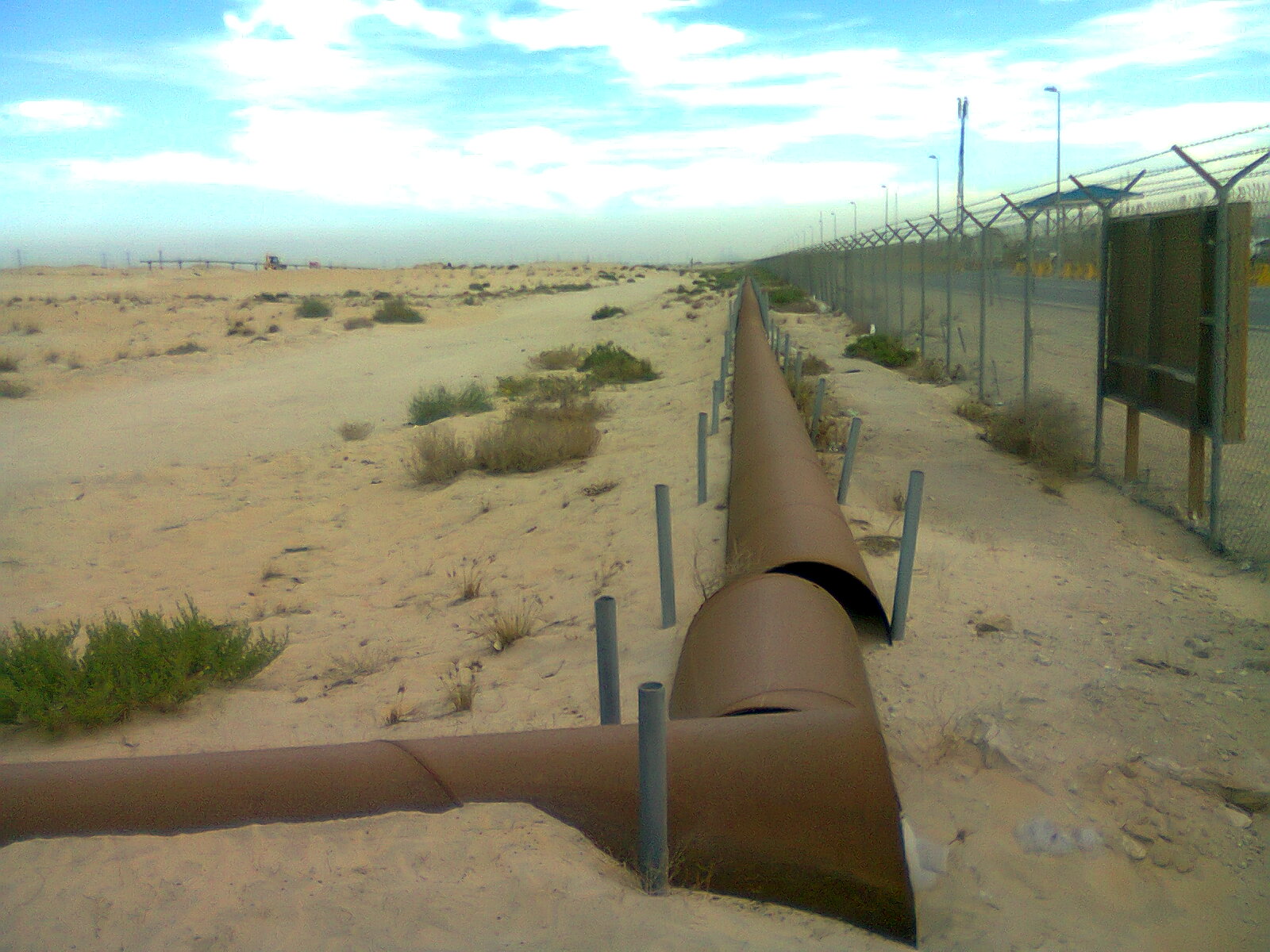
Shedgum is one of six operating areas within the Ghawar field — the world’s largest onshore oilfield — and has processed gas in Saudi Arabia’s Eastern Province since its inauguration in 1980, according to saudipedia.com and Fluor.com. No prior attack on Shedgum has been documented in any public source. The facility covers 121 hectares and its oldest component, Gas-Oil Separation Plant No. 4, dates to November 1952, according to saudipedia.com.
Tanajib sits on the Persian Gulf coast approximately 200 kilometres north of Dammam. It serves the Safaniya Oil Field — the largest offshore oil field in the world — which produces more than 1.3 million barrels per day of crude. The complex includes a 24-berth port stretching 1.5 kilometres that exclusively handles oilfield supply vessels.
| Shedgum | Tanajib | |
|---|---|---|
| Location | Ghawar field, Eastern Province | Gulf coast, ~200 km north of Dammam |
| Inaugurated | 1980 | — |
| Gas processing capacity | 2.21 billion scfd (raw gas) | 2.6 billion scfd |
| NGL production | 240,000–317,000 bpd | — |
| Connected field | Ghawar (world’s largest onshore) | Safaniya (world’s largest offshore, 1.3 mb/d) |
| Key pipeline | 1,170 km NGL line to Yanbu | — |
| Port | — | 24 berths, 1.5 km |
| Prior attacks | None documented | None documented |
Sources: saudipedia.com; ognnews.com; Fluor.com; Wikipedia (Tanajib, Safaniya).
Neither facility had been targeted before October 11. The Houthis had struck Saudi energy infrastructure repeatedly in 2026 — Ras Tanura in March, the East-West pipeline in September, refineries in between — but those targets were midstream or downstream: pipelines, refineries, and storage terminals. Shedgum and Tanajib sit closer to the wellhead. They process the raw output that upstream production depends on. Targeting them represents a move up the value chain from disrupting transport and refining to threatening the separation process without which crude cannot be prepared for export.
Together, the two facilities process more than 4.8 billion standard cubic feet of gas per day. Shedgum’s 1,170-kilometre NGL pipeline to Yanbu, according to saudipedia.com, means that damage to the plant would affect not only Eastern Province processing but the Red Sea export corridor that Saudi Arabia has spent seven years and billions of riyals defending. Tanajib’s role as the onshore hub for Safaniya means that a strike on the complex carries implications beyond gas — crude from the world’s largest offshore field transits through it.
How Did Oil Markets Respond to the Combined Strikes?
Brent crude rose from $102.94 on October 9 to $105.48 on October 11 and $106.19 by October 12 at 11:24 GMT, according to CNBC, Nation Thailand, and Sunday Guardian Live — a move of approximately three per cent despite the simultaneous targeting of two Aramco energy facilities and two international airports. Markets treated the strikes as a risk premium event rather than a confirmed supply loss, according to financefeeds.com.
The analyst consensus reflected the same uncertainty Aramco’s silence has created. Goldman Sachs raised its December Brent forecast to $90 from $85 and estimated that a risk premium of “just over $20 a barrel” was already embedded in current prices, according to tradersagency.com on October 12. Bank of America’s Francisco Blanch projected Brent in a range of “$95 to $120, and up to $150 if major infrastructure is damaged,” according to energynewsbeat.co. Aaron Kildow of Sparta Commodities warned of “explosive upside if pieces of energy infrastructure are targeted again,” according to the same source. All three forecasts conditioned higher prices on confirmed infrastructure damage — the one variable Aramco’s silence withholds.
The gap between physical and paper markets told a different story. Before the October 11 strikes, physical Brent traded at $125.44 while futures stood at $102.99 — a spread of more than twenty-two dollars a barrel, according to energynewsbeat.co. Physical delivery counterparties, unlike futures traders, cannot discount the risk that Saudi crude will not arrive as contracted. That spread had widened before Shedgum and Tanajib were named as targets.
Aramco’s share price closed at 25.68 SAR on October 11, down 0.85 per cent, according to TradingView and Saudi Exchange data. The Tadawul All Share Index showed broader weakness as investors reacted to increased geopolitical risk from the combined airport and energy strikes, according to whalesbook.com.
Can Saudi Air Defences Cover Two Theatres at Once?
The October 11 strikes tested whether Saudi Arabia’s air-defence architecture can respond to simultaneous attacks in two geographically separated zones — the Eastern Province energy corridor and the capital region around Riyadh, separated by more than 400 kilometres. The results prompted a formal investigation, and the initial findings were not encouraging.
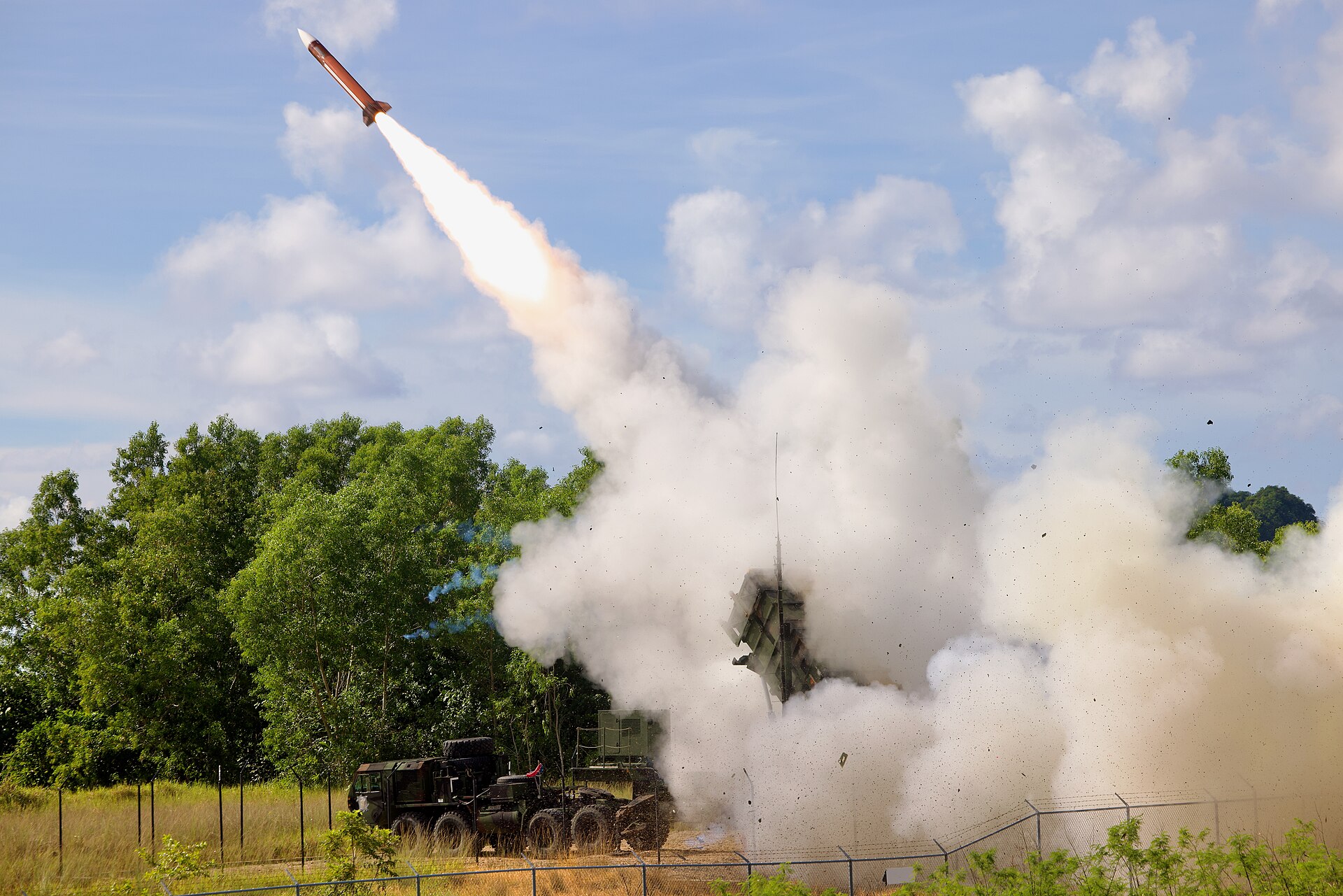
Saudi Arabia launched a probe into how its Patriot and other defence systems failed to intercept the multi-stage Houthi attack, according to WPXI on October 11. Investigators found that the Houthis fired drones first to force Saudi air defences to engage, track, and allocate interceptors before the faster and more destructive missile wave arrived behind it. The investigation also found that the incoming missiles “can change direction during flight” — a manoeuvring capability that degrades the effectiveness of systems calibrated for ballistic trajectories.
Daniel Byman and Alden Ness of the Center for Strategic and International Studies assessed that Saudi air defences “cover only partial territory despite expensive upgrades.” Two similar UAV strikes on the same infrastructure “can have radically different outcomes” depending on precise impact location, they wrote. The assessment implied that successful interception in one sector does not guarantee coverage in another — a vulnerability the Houthis’ two-theatre approach is designed to exploit.
Michael Ratney, a CSIS Senior Adviser, described Saudi Arabia as facing “a real dilemma — faced with Houthi attacks and provocations on the one hand, and a U.S. administration reticent to broaden the existing conflict on the other.” The dilemma is compounded when attacks arrive simultaneously in the Eastern Province and the capital, because the interceptor inventory drawn down in one theatre is the same inventory unavailable in the other.
The geographic problem is structural. Saudi Arabia’s Eastern Province energy installations — from Ras Tanura and Jubail in the south to Tanajib in the north — span roughly 300 kilometres of coastline. Riyadh sits more than 400 kilometres inland to the west. Defending both regions simultaneously requires either duplicating air-defence batteries across the kingdom or accepting that coverage will be selective. The Houthis’ drone-first tactic compounds the cost: intercepting a slow-moving drone requires the same Patriot engagement cycle as intercepting a cruise missile, but the drone costs a fraction of the interceptor expended against it. When drones serve as the first wave, they force the defender to spend expensive munitions on cheap targets before the missiles arrive.
The air-defence gaps have economic consequences beyond the energy sector. The second KKIA strike on October 11 extended the airport’s closure to midnight October 13, according to blog.wego.com. Approximately 606 flights were cancelled at KKIA by Sunday, according to EnterpriseAM. Jeddah Airport — not itself a target — recorded 156 cancellations, twenty per cent of its scheduled flights, and 374 delays, forty-nine per cent, as a knock-on effect, according to No1’s Daily Digest. KLM suspended operations until October 24, Lufthansa Group through October 16, and British Airways set a return date of November 3. The total airport death toll from October 6 to 11 reached approximately twenty, according to BBC and GACA statements. The shield Rubio reaffirmed in early October did not prevent any of it, and thirteen of those deaths came in the single October 10 KKIA strike that prompted Trump to say, when asked about joining strikes against the Houthis: “We may. We’re going to look at it,” according to CNN.
The Cumulative Infrastructure Toll
Shedgum and Tanajib — if the Houthi claims carry any accuracy — join a lengthening list of Saudi energy facilities struck, damaged, or shut in 2026. The cumulative pattern has eroded Saudi Arabia’s production capacity from distributed points across the system.
| Facility | Date (2026) | Impact | Source |
|---|---|---|---|
| Ras Tanura refinery | March 2, 4 | Limited fire; reopened March 13 | Wikipedia / 2026 Aramco refinery attack |
| Khurais and Manifa fields | April | Combined output cut 600,000 bpd | CSIS, October 2026 |
| Jazan refinery (400,000 bpd) | September | Shut since early September | energynewsbeat.co |
| East-West pipeline (7 mb/d design) | September 10 | 3 of 11 stations hit; flowing at 5.8 mb/d | energynewsbeat.co |
| Riyadh refinery (126,000 bpd) | October 3 | Fire confirmed | energynewsbeat.co |
| Shedgum gas plant (2.21 billion scfd) | October 11 | Houthi claim of fire; unconfirmed | TASS, October 11 |
| Tanajib oil facility (2.6 billion scfd) | October 11 | Houthi claim of fire; unconfirmed | TASS, October 11 |
The aggregate production data reflects the damage. Saudi Arabia produced 5.97 million barrels per day in August 2026, against a sustainable capacity of 12.11 million b/d, according to IEA data cited by energynewsbeat.co. Saudi crude shipments fell to 6 million barrels per day in August — down 2.6 million b/d from earlier in the year, according to IEA figures cited by Trend on September 14. The IEA’s September 2026 assessment placed Saudi Arabia’s effective OPEC+ spare capacity at 0.22 million barrels per day, according to globaloilshock.com — a margin that would leave virtually no buffer if any confirmed facility were to go offline for an extended period.
OPEC+ set a Saudi November production target of 10.5 million b/d, according to Enerdata. The gap between that target and the 5.97 million b/d Saudi Arabia actually produced in August is 4.53 million barrels per day — a gap the cumulative strikes help explain. Saudi Arabia’s spare capacity has historically served as the global oil market’s shock absorber. At 0.22 million barrels per day, that buffer is effectively exhausted; any confirmed strike on an operating facility subtracts from a production base the cumulative 2026 attacks have already pushed to half its rated capacity.
Sixty Million Barrels Pre-Sold and Undelivered
Aramco halted all October crude deliveries to European term customers after the East-West pipeline damage in September, having informed at least two European refiners on September 18, according to Bloomberg reporting cited by egyptoil-gas.com. Approximately sixty million barrels had been pre-sold from Ras Tanura for September and October loading, according to oilprice.com. An anonymous trader cited by No1’s Daily Digest assessed “near zero chances” that Aramco could deliver the pre-sold volume.
The delivery problem preceded the Shedgum and Tanajib claims. The East-West pipeline, damaged in the September pumping station attacks, was already constraining flow to the Red Sea terminals. With the Jazan refinery shut since early September, Aramco’s ability to route crude to its export terminals at Yanbu was doubly constrained. The Shedgum and Tanajib claims — even unconfirmed — introduce a further variable.
The distinction matters because of what gas processing plants do. A pipeline carries crude — damage constrains flow but does not alter the barrel. A gas processing plant separates raw wellstream into marketable components. Without gas processing, wells in the Ghawar and Safaniya fields cannot operate at capacity, because the associated gas that rises with the oil must be handled before the crude can be stored or loaded. If Shedgum’s processing capability has been materially degraded — a question Aramco’s silence leaves open — the production impact would cascade upstream to the wellhead, constraining the very barrels Aramco has pre-sold.
Bruce Riedel, a Senior Fellow at the Brookings Institution, assessed that Houthi drone attacks on oil installations represent “a dramatic escalation in their battle to take the war inside the kingdom.” The escalation is not only military. Each facility added to the target list compounds the logistical challenge of loading, processing, and shipping the crude Aramco has already sold. Aramco set its November Arab Light Official Selling Price to Asia at $5 below the Oman/Dubai benchmark — the widest discount since June 2020, according to Reuters — a price for barrels whose physical availability the market cannot verify.
The Diplomacy Running Alongside the Strikes
On the same day the Houthis claimed to strike Shedgum and Tanajib, Iranian Foreign Minister Abbas Araghchi offered to “facilitate dialogue between Saudi Arabia and Yemen,” according to BBC reporting on October 11. The Saudi Press Agency confirmed the call between Araghchi and Saudi Foreign Minister Prince Faisal bin Farhan but reported no Saudi response to the mediation offer.
The offer arrived alongside the strikes, not instead of them. Riedel assessed that while the Houthis “enjoy Iranian support,” they “make their own decisions” and Iran holds “sharply limited” influence over Houthi military strategy, according to his Brookings analysis. The assessment suggests that Iranian mediation offers and Houthi strikes can coexist without contradiction — Tehran offers diplomacy it may not be able to deliver, while the Houthis maintain an operational tempo Iran does not control. For Riyadh, the implication is that a ceasefire negotiated through Tehran cannot guarantee that strikes on Saudi energy infrastructure will stop. Araghchi can offer to facilitate, but the October 11 target selection — Shedgum and Tanajib, neither of which serves an obvious military purpose for Iran — suggests the Houthi planning cell operates on a logic separate from the one Araghchi brought to the phone call with Faisal.
Washington has offered Riyadh words without action. Trump, asked on October 10 about joining strikes against the Houthis, said: “We may. We’re going to look at it,” according to CNN. Trump ruled out US strikes on Iran before the November 3 midterm elections, according to The National on October 8 — a timeline that leaves Saudi Arabia absorbing Houthi attacks for at least three more weeks without the American military response Riyadh has sought.
The aviation closures reinforce the economic pressure. The KKIA shutdown — extended to midnight October 13 — and suspended European carrier operations coincide with two scheduled events that depend on foreign arrivals: the EU-GCC Summit on October 24 and the Future Investment Initiative conference from October 26 to 29, falling within what analysts have described as a narrowing diplomatic window. Neither event has been cancelled. The airports required to host their delegates remain intermittently closed.
Frequently Asked Questions
What does the Shedgum–Yanbu NGL pipeline supply?
The pipeline carries natural gas liquids — ethane, propane, butane, and natural gasoline — from the Shedgum processing plant in the Eastern Province to Yanbu on the Red Sea coast, according to saudipedia.com. Yanbu is home to major petrochemical facilities that depend on NGL feedstock from the Eastern Province. A sustained disruption at Shedgum would constrain not only gas processing but Saudi Arabia’s downstream petrochemical export sector — a revenue stream the kingdom has cultivated to reduce dependence on crude oil sales.
Did the Houthis warn before targeting Saudi energy infrastructure?
On October 8, 2026, the Houthis warned people to stay away from oil sites, according to the Associated Press. On October 11, after claiming the Shedgum and Tanajib strikes, Saree told Al Jazeera: “Take our warnings seriously, and Saudi Arabia bears responsibility for any failed interceptions.” An earlier Houthi claim on October 4 — that they had struck an “Aramco site in Riyadh” — was described by the Saudi-led coalition as “misleading,” according to Al Jazeera.
Has any independent source verified damage at Shedgum or Tanajib?
No. As of October 12, 2026, no independent journalist, satellite imagery provider, government, or international organisation has confirmed or denied physical damage to either facility. The Houthi claim of fires at both sites was reported by TASS and SouthFront on October 11, with SouthFront describing the simultaneous energy and airport targeting as implementing a “blockade for blockade” equation. Aramco has issued neither confirmation nor denial, and no commercial satellite imagery showing the condition of either site has been published. The verification gap matters because oil traders, cargo insurers, and airline operators all require confirmed data to adjust pricing, coverage, and scheduling — and none have received it. Until either Aramco or an independent source provides a damage assessment, the market will continue to price Shedgum and Tanajib as an unresolved risk rather than a quantified supply disruption.