
DOHA — Qatar told Saudi Arabia on October 13 that “the Kingdom’s security and the security of the countries of the GCC is one,” seven days after Qatar’s Emir sat in the Amiri Diwan with an Iranian envoy carrying a message from President Pezeshkian. That sequence — solidarity with Riyadh in public, a channel to Tehran behind it — is not a contradiction but the entire substance of Qatar’s current diplomatic position, and it explains why Saudi Arabia is keeping the Doha phone line open even as its F-15s continue to hit targets across Yemen.
Riyadh needs a de-escalation mechanism it can activate before the EU-GCC summit on October 24 and the Future Investment Initiative conference opening two days later, and Qatar is the only Gulf state that can talk to Iran without the conversation running through a military alliance. What Doha can actually deliver — beyond relaying messages between capitals already talking past each other — is the question that neither its solidarity statements nor its quiet Iranian meetings have answered, and the calendar is running out of days in which ambiguity counts as strategy.
Table of Contents
- The Two Calls That Define Qatar’s Position
- Why Does Saudi Arabia Need Qatar When Oman Built the Framework?
- What Does Iran Get From Qatar’s Mediation Offer?
- The Mecca Pact and Qatar’s Absence From It
- Can Qatar Deliver What the Houthis Actually Demand?
- What Happens if the Summits Open Under Fire?
- Who Fills the American Vacuum Before November 3?
- The Limits of a Messenger
- Frequently Asked Questions
The Two Calls That Define Qatar’s Position
The October 13 phone call between Qatar’s Prime Minister and Foreign Minister Sheikh Mohammed bin Abdulrahman Al-Thani and Saudi Foreign Minister Prince Faisal bin Farhan produced a statement dense with diplomatic language and deliberately empty of specifics. Qatar affirmed solidarity with Saudi Arabia’s measures to protect “its sovereignty, security and peace,” called for “all endeavors aimed at defusing tension,” and endorsed “a comprehensive agreement that brings about sustainable peace” — but the published text did not name Yemen, the Houthis, or Iran. The omissions are the message: Doha wants Riyadh to know it stands with the Kingdom without closing any door to the parties Riyadh is currently bombing.
That word “comprehensive” is doing work the rest of the statement refuses to do, because it directly echoes the Houthi demand for a comprehensive rather than temporary ceasefire — the same demand Houthi chief negotiator Mohammed Abdulsalam restated on October 15 when he dismissed Saudi ceasefire overtures as “nothing new.” Whether Qatar chose the word deliberately or absorbed it from the broader diplomatic vocabulary is impossible to verify from outside, but the overlap is conspicuous, and neither Doha nor Riyadh has addressed it publicly.
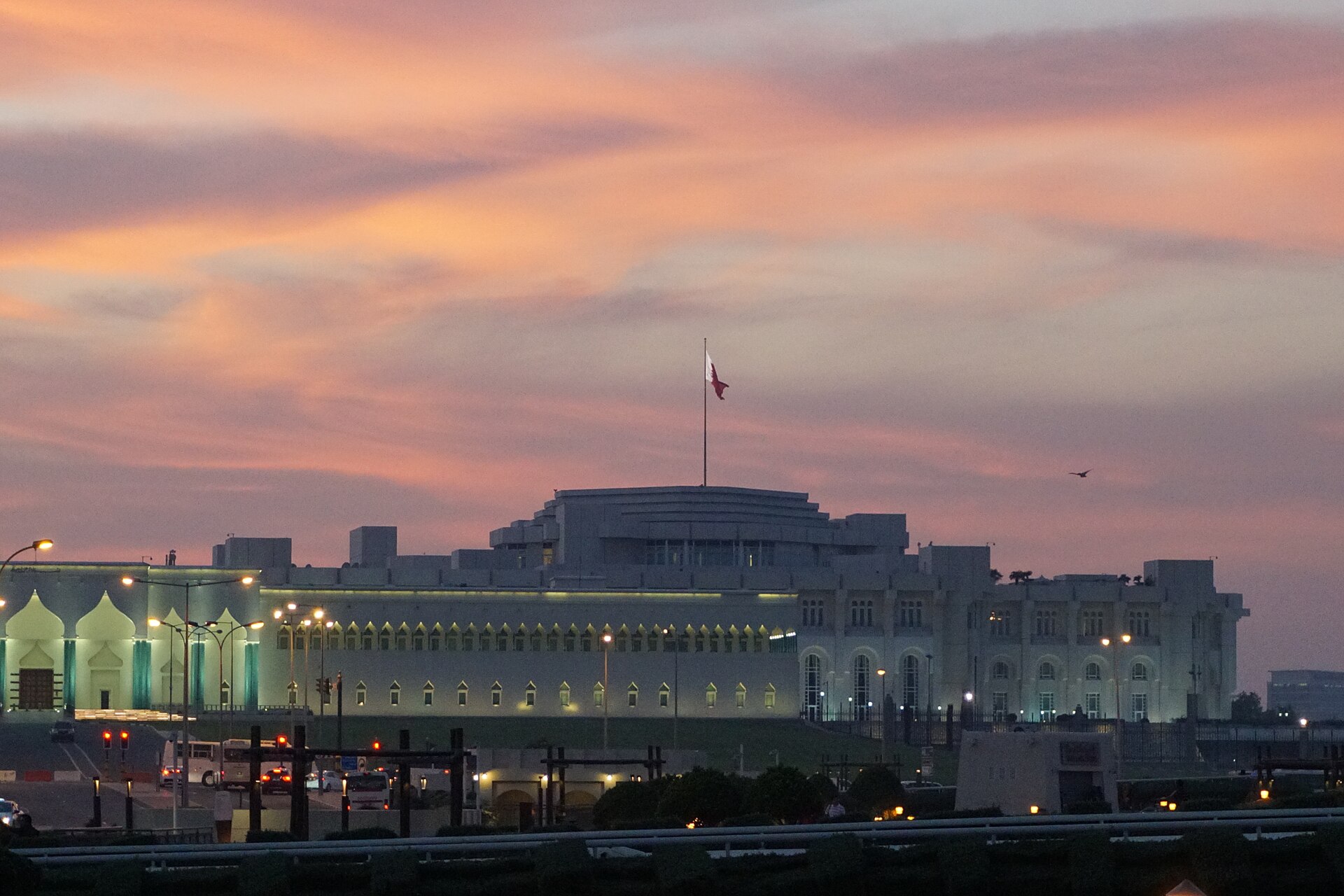
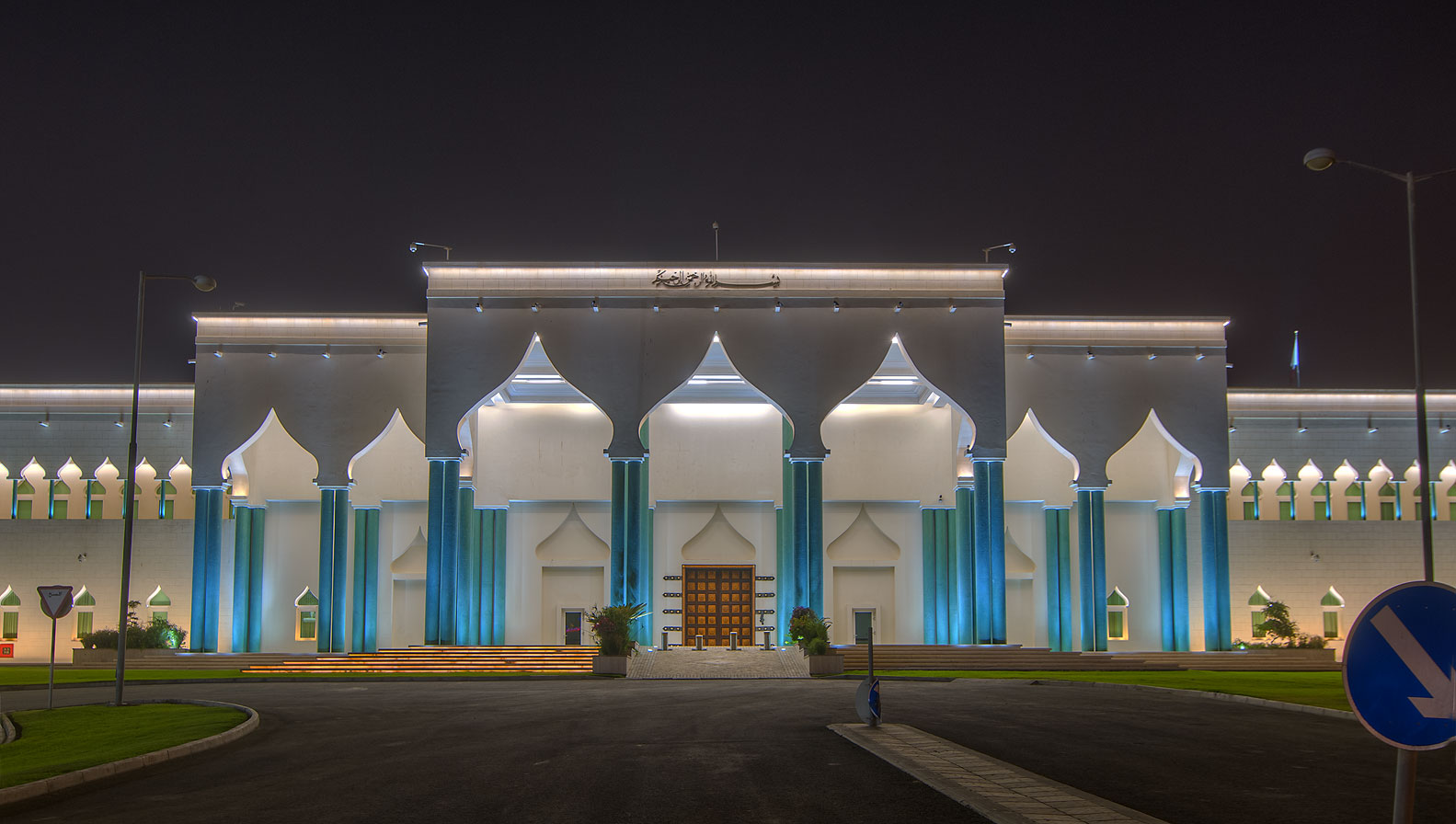
Seven days before the solidarity call, Qatar’s Emir received Iranian Interior Minister Eskandar Momeni at the Amiri Diwan on October 6, in a meeting that attracted less attention than it deserved. Momeni carried “a message from President Pezeshkian,” and the Emir responded with “views and proposals” to be relayed to Tehran, language Momeni later described as “good and constructive.” Four days after that meeting — and three days before the solidarity call with Faisal — the Houthi missile strike on King Khalid International Airport killed twelve people and shut down Saudi Arabia’s busiest aviation hub, a toll that rose to thirteen after an Indian victim died on October 11, according to the BBC; Qatar’s foreign ministry called the attack “a direct threat to the security of the region.”
The sequencing tells the story the statements will not: Qatar met Iran on October 6, the airport was struck on October 10, and Qatar called Riyadh on October 13. Doha was already positioned as a channel before the escalation forced Saudi Arabia to admit it needed one, and the fact that Qatar’s solidarity statement arrived after — not before — the October 10 strike that killed twelve suggests that the phone call was as much a response to the attack as a gesture of alliance.
The Middle East briefing 3,000+ readers start their day with.
One email. Every weekday morning. Free.
Why Does Saudi Arabia Need Qatar When Oman Built the Framework?
Oman’s back-channel has been the primary intermediary between Saudi Arabia and the Houthis since before the current escalation, and Muscat’s mediation produced the closest thing either side had to an operational diplomatic architecture: a three-phase roadmap framework, a set of preliminary understandings, and — until the summer of 2026 — the only functioning mechanism for prisoner exchanges. The framework was never a ceasefire agreement, but UN Special Envoy Hans Grundberg worked within its contours rather than outside them, and its existence gave both Riyadh and Ansar Allah a shared reference point that has since gone dormant.
That architecture is now technically alive but operationally frozen, because the prisoner swap planned for July 2026 stalled when the escalation made both sides unwilling to proceed with confidence-building measures under active fire. The Security Council Report noted in October 2026 that Grundberg and Oman continued mediation attempts without visible progress, and Muscat has pursued its own bilateral channel with Iran on Hormuz shipping — an engagement that gives Muscat its own interests in the broader conflict, interests that do not always align with Riyadh’s preference for isolation over accommodation.
Qatar’s entry into this space is not a replacement for the Omani channel but a parallel track operating on different structural terms. Unlike Muscat, Doha has no geographic proximity to the conflict, no forces committed to any side of it, and no membership in the Mecca pact — the military alliance binding Saudi Arabia, Turkey, and Pakistan — which means it has not been branded a belligerent by the Houthis. Iran Dossier Online assessed that Qatar’s posture is “deliberate and probably sustainable for weeks,” contingent on the conflict remaining geographically confined, and that Doha “names the Houthis, says nothing about Iran, and keeps its forces and money out of Yemen.”
The structural advantage is clear enough: the three Mecca pact members are belligerents in Houthi eyes, and Qatar is not yet, a distinction that holds only as long as Doha’s solidarity statements do not translate into military commitments. For Iran, the question is not whether Qatar can deliver a ceasefire but whether Qatar’s channel can deliver Iran a seat at the table where the terms are set.
What Does Iran Get From Qatar’s Mediation Offer?
Iran gains positioning as an indispensable party to any Yemen settlement, regardless of whether a settlement is close. By offering to “facilitate” through Qatar rather than command the Houthis directly, Tehran builds the diplomatic premise that no ceasefire can bypass Iranian involvement — whether or not Iran actually controls Houthi military decisions on the ground.
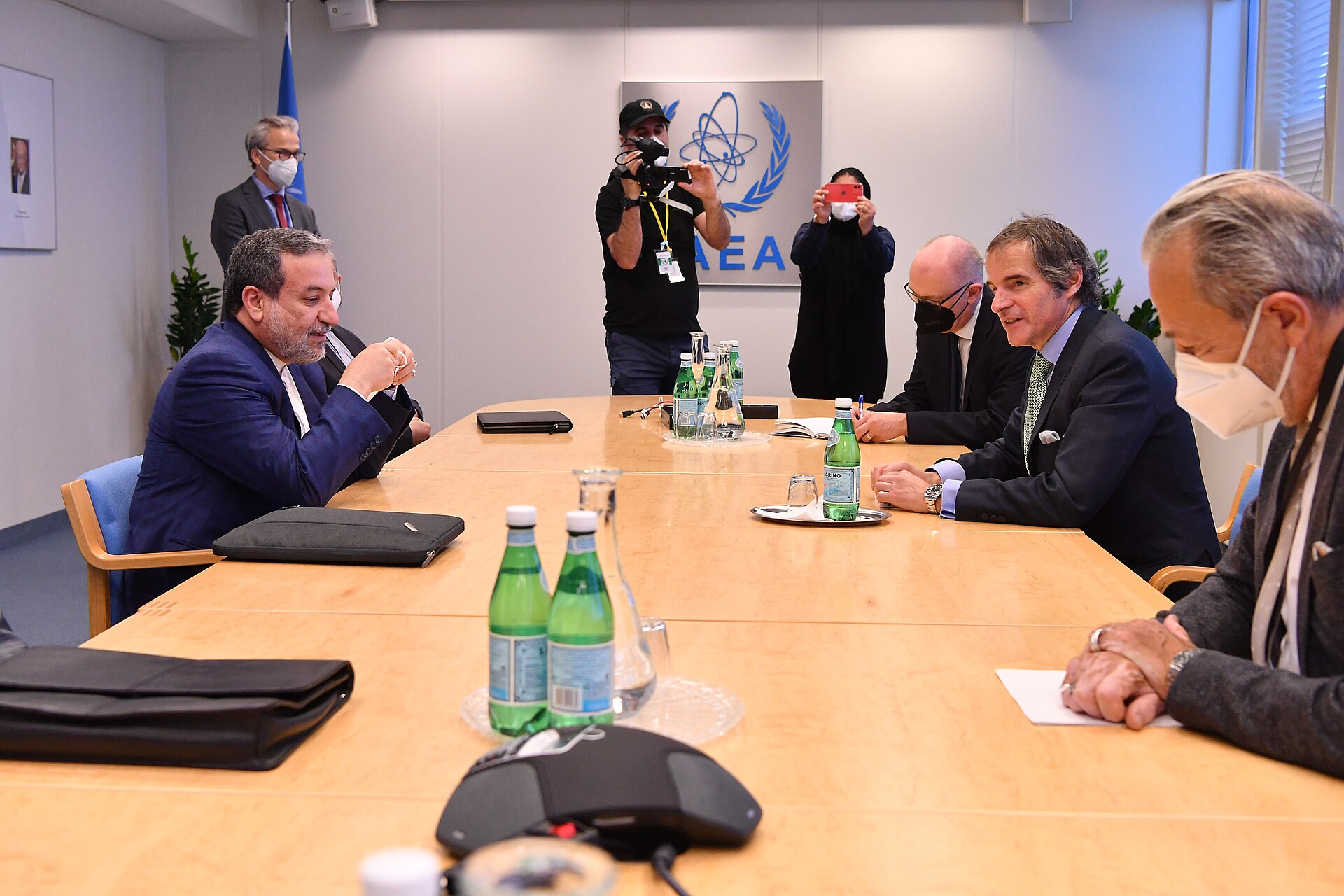
Iranian Foreign Minister Abbas Araghchi called Prince Faisal on October 12 and stated that Iran was “ready to provide any assistance necessary to facilitate the start of dialogue between Saudi Arabia and Yemen.” Al Jazeera described the call as the first publicly reported foreign-minister contact since the current escalation reached Saudi airports. He warned that “insisting on a military approach and disregarding a political solution would only further complicate the situation,” a formulation that presents Iran as the adult in a room full of combatants. Saudi Arabia issued no public response to the call, a silence consistent with institutional discomfort about acknowledging the conversation at all.
“Insisting on a military approach and disregarding a political solution would only further complicate the situation.”
Abbas Araghchi, Iranian Foreign Minister, October 12 2026
Iran’s framing is neither accidental nor philanthropic. Negar Mortazavi of the Center for International Policy observed that “Iran is positioning itself as an indispensable party to a broader regional settlement,” and Araghchi had already tested this posture in September when he presented a seven-day roadmap via Qatar proposing Hormuz reopening in exchange for the US lifting its blockade, sanctions waivers, and the release of approximately twelve billion dollars in frozen assets — a package Trump rejected and that Riyadh was never in a position to accept. The October 12 call to Faisal is the continuation of the same strategy: Iran wants to be at every table, and Qatar is the state that keeps setting the chairs.
But researcher Andreas Krieg of King’s College London identifies the constraint that Iran’s mediation offer cannot acknowledge: “Ansar Allah is not simply an Iranian proxy awaiting instructions.” The Houthis maintain independent political ambitions, a domestic constituency across northern Yemen, and a military apparatus that has demonstrated autonomous decision-making in its target selection and timing across the 2026 campaign. If Krieg’s assessment is correct — and the Houthi strike on King Khalid Airport came without any evident coordinating signal from Tehran — then Iran’s offer to broker dialogue is an offer to deliver something it may not control, and Qatar is relaying that offer without testing whether it can be honoured.
The Mecca Pact and Qatar’s Absence From It
Haaretz identified Turkey and Pakistan in early October as Saudi Arabia’s primary diplomatic exit corridors from the Yemen war, a framing that positions the Mecca pact members — not Qatar — as the states with the weight to broker an endgame. The logic is straightforward: Ankara has military presence and a defence industry that Saudi Arabia is buying into, Islamabad has a nuclear deterrent and troop commitments, and both capitals have direct interests in Saudi Arabia’s survival as a strategic partner that Qatar does not match.
But this framing confuses alliance with mediation, because Turkey and Pakistan can pressure Saudi Arabia toward compromise — they are invested in Riyadh’s security — but they cannot pressure the Houthis toward compromise, since they are parties to the coalition that the Houthis are fighting. Fidan’s visit to Riyadh produced bilateral defence commitments, not a conversation with Houthi leadership or a phone call to Tehran. The Mecca pact is a war-fighting instrument, not a peace-making one, and its members are structurally unsuited to the mediating role that Riyadh needs someone to fill before the end of October.
Qatar occupies the gap the pact left open, and it does so precisely because it stayed out. Iranian Foreign Ministry spokesperson Esmaeil Baghaei reinforced this distinction on October 12 when he said, “We do not want hostilities to continue between two Muslim countries, especially as the region is already facing tensions caused by the United States and Israel” — a framing that places Iran and Qatar on one side of a narrative in which the conflict is externally imposed, a narrative Doha has been careful not to contradict even while affirming Saudi sovereignty in separate phone calls. The tension between these positions is real, but it is a tension Qatar has managed before, and the question of how long it can maintain both postures depends less on diplomatic skill than on whether the Houthis decide to test it by naming Qatar among their targets.
Can Qatar Deliver What the Houthis Actually Demand?
The Houthis demand a complete lift of the blockade on Sanaa airport, full opening of Hodeidah port, and the release of fourteen ships held by the coalition. Saudi Arabia offered a two-week truce without addressing any of these, and the gap between the two positions is structural, not a negotiating distance that a skilled mediator can close with enough phone calls.
Mohammed Abdulsalam responded to Saudi ceasefire overtures on October 15 with a framing that left no room for the kind of incremental confidence-building that Doha typically brokers. “Opening the airports and seaports is a humanitarian right and should not be used as a pressure tool,” he told Reuters, presenting the demands not as bargaining positions but as preconditions — the price of admission to talks, not the substance of a deal. The Saudi ceasefire proposal, first reported by Al Akhbar on September 18 and conveyed through Oman, offered a two-week truce and the opening of direct talks with Houthi leadership but did not address the airport, the port, or the ships.
“Opening the airports and seaports is a humanitarian right and should not be used as a pressure tool.”
Mohammed Abdulsalam, Houthi chief negotiator, October 15 2026
The two-week truce addresses the military dimension of the conflict; the Houthi demands address the economic blockade that predates the current escalation by years and that Ansar Allah frames as the original act of aggression. A mediator can narrow the gap between two bargaining positions, but Qatar cannot manufacture the strategic decision — by either side — that would bridge two entirely different conceptions of what a ceasefire is supposed to achieve. A senior Houthi official put the logic to Crisis Group in terms that strip away the diplomatic vocabulary entirely: “blockade for blockade, port for port.”
The Houthis view the current escalation as structurally symmetric — Saudi Arabia blockades Yemen’s ports, and the Houthis strike Saudi airports — which makes Qatar-mediated humanitarian gestures beside the point. As Abdulsamad Elfgeeh wrote in Al Jazeera on October 14, the purpose of Houthi negotiations “would not be to seek peace but to get enough breathing room,” and breathing room is precisely what Riyadh’s September offer did not provide. Qatar can carry the message between the two sides, but the message itself is one neither side is prepared to hear from the other, and Doha has shown no capacity — and perhaps no inclination — to change its contents before delivering it.
What Happens if the Summits Open Under Fire?
Riyadh has three major events in nine days — Riyadh Season opening on October 21, the EU-GCC summit on October 24, and the Future Investment Initiative from October 26 to 29 — and each becomes harder to stage as a demonstration of Saudi stability and openness if the Houthi strikes have not paused. The calendar is what gives Qatar’s back-channel its urgency, because Saudi Arabia does not need a permanent peace agreement before these events; it needs a credible basis for saying that de-escalation is underway.
FII has already begun to show the strain. The conference shifted to hybrid format after the airport strikes, with BP, ExxonMobil, and TotalEnergies executives dropping out of in-person attendance, and organisers offered alternatives including private-jet access to Dhahran with a road transfer to Riyadh. The conference will proceed — Saudi Arabia has no option that includes cancellation — but without the physical footfall that was its entire purpose. FII was designed to put foreign executives in a room with Saudi decision-makers, to generate the handshakes and hallway deals that drive investment flows, and a video link does not replicate the dynamics of a room built for that purpose.
The EU-GCC summit carries different stakes but the same vulnerability, because it is co-chaired by Crown Prince Mohammed bin Salman and is meant to demonstrate that the Gulf’s relationship with Europe has matured beyond energy dependence into a strategic partnership spanning defence, technology, and climate investment. The GCC Secretary-General predicted in September that the summit would accelerate bilateral ties, but acceleration is hard to sustain when the host country’s airports are intermittently closed and EASA has widened its Saudi airspace warning.
Qatar’s October 13 statement — with its language about “diplomatic efforts” and “comprehensive peace” — provides exactly the kind of diplomatic scaffolding these events require, regardless of whether it leads anywhere concrete. The EU-GCC summit needs a narrative that is not exclusively military, and Doha is supplying one that Riyadh could not produce on its own — though whether that narrative survives contact with the Houthi demands Abdulsalam restated the same week is a question neither Qatar nor Saudi Arabia appears willing to test before the summits have passed.
Who Fills the American Vacuum Before November 3?
Qatar fills it by default. Trump stated on October 8 that the United States “will not be attacking Iran at any time prior to the midterm elections” on November 3, removing Washington as a credible military backer or diplomatic interlocutor for the duration of a window that happens to coincide with Saudi Arabia’s most important events calendar in years.
The statement was not a surprise — Trump had already signalled restraint by rejecting Araghchi’s seven-day roadmap in September and by loading ordnance onto Saudi-bound aircraft without following through with the policy framework that would make the weapons strategically coherent. Washington sent over one hundred military advisers under a new joint command for intelligence support, a deployment that provides tactical capability without strategic direction, and the gap between intelligence support and diplomatic engagement is the gap Qatar is attempting to fill.
In this vacuum, Qatar’s value is precise: it is the only Gulf state that can serve as a diplomatic intermediary for both Riyadh and Tehran during a period when Washington has voluntarily stepped away from the conversation. Oman has the institutional knowledge but its channel has stalled. The Mecca pact members can apply pressure to Saudi Arabia but not to the Houthis. Egypt joined Qatar on October 15 in calling for “activating political and diplomatic channels to resolve the current crisis,” adding Cairo’s diplomatic weight to a mediation posture that had previously been Doha’s alone, but Egypt has no more influence over Houthi decision-making than Qatar does.
The American absence has a specific expiry date, and both Riyadh and Doha know it. After November 3, Washington will either have a validated mandate for its Iran posture or a new political reality that forces recalibration — either way, the diplomatic space Qatar currently occupies will shrink as American attention returns. Riyadh is tolerating Qatar’s dual messaging now rather than demanding the kind of unconditional alignment that characterised the 2017 blockade era, and that tolerance is a measure of how few options Saudi Arabia has left in the weeks before FII and the EU-GCC summit, not a sign that the old tensions between the two capitals have been resolved.
The Limits of a Messenger
Qatar’s diplomatic utility in this conflict rests on a structural condition that is also its structural limitation: Doha can talk to everyone because it has committed to no one. It is not in the coalition, not in the Mecca pact, not financing the Saudi air campaign, and not hosting American strike assets — and these absences, taken together, are the reason Iran’s foreign ministry takes Qatar’s calls and the Houthi leadership has not yet closed the door.
But a messenger who cannot enforce the terms of the message is a channel, not a mediator, and the distance between those two functions is the distance between Qatar’s current position and anything resembling a ceasefire. Annelle Sheline of the Arab Center DC argued that Saudi Arabia “believes that diplomacy has failed and previous efforts to appease the Houthis have merely caused their ambitions to expand” — a reading that, if accurate, reduces Qatar’s channel to a pressure-release valve rather than an exit corridor, something Riyadh keeps open to demonstrate diplomatic activity without expecting diplomatic results.
The October 15 joint call between Egyptian and Qatari foreign ministers, demanding the activation of “political and diplomatic channels,” suggests Doha is trying to broaden the base of its mediation before the summits arrive. The effort may not produce a ceasefire, but it gives Riyadh something it needs almost as badly: a visible record of diplomatic motion that makes the bombs look like one arm of a two-track strategy rather than the only policy Saudi Arabia has left.
Frequently Asked Questions
What is Qatar’s track record as a mediator in Gulf and Middle Eastern conflicts?
Qatar has served as a mediation channel for Yemen hostage and detainee releases on multiple occasions and carried back-channel communications during the Iran nuclear talks. The current effort differs from previous mediation because Saudi Arabia is under active military attack and the stakes extend beyond prisoner exchanges to the viability of Riyadh’s economic and diplomatic calendar. The 2017–2021 blockade, during which Saudi Arabia, the UAE, Bahrain, and Egypt severed ties with Doha over its Iran policy and Al Jazeera, paradoxically positioned Qatar as the GCC state most capable of maintaining independent dialogue with Tehran — a capacity that became an asset rather than a liability once the Al-Ula Summit restored relations in January 2021.
Does Qatar have any military commitment to Saudi Arabia’s Yemen campaign?
Qatar is not a member of the Saudi-led coalition and has no forces committed under the Mecca pact, the 2026 military alliance binding Saudi Arabia, Turkey, and Pakistan. Iran Dossier Online assessed that Qatar “keeps its forces and money out of Yemen,” which is the structural precondition for Doha’s credibility as a channel. The Emir’s October 6 meeting with an Iranian envoy occurred without any reported objection from Riyadh, suggesting that Saudi Arabia accepts Qatar’s non-belligerence as the price of maintaining a channel it cannot replicate through its own diplomatic apparatus.
How does Qatar’s media ecosystem affect its mediation posture?
Qatar’s state-adjacent media sends dual signals that mirror its diplomatic balancing act. Al-Watan has tended toward pro-mediation framing that emphasises Doha’s constructive role in the crisis, while Al-Sharq has positioned Saudi security as a collective Gulf red line that Qatar shares. The simultaneous messaging allows Doha to present itself to Tehran as a neutral broker and to Riyadh as a solidarity partner without forcing either audience to confront the contradiction — a division of labour that Iran Dossier Online attributes to editorial discipline rather than accident.
Could Qatar’s mediation role survive a Houthi strike on Qatari territory?
A direct Houthi attack on Qatar would almost certainly end Doha’s ability to maintain its non-belligerent posture and would force a choice between solidarity and mediation that Qatar has so far avoided making. The Houthis have not named Qatar among their targets — their strike list has focused on Saudi airports, Aramco facilities, and coalition infrastructure — and the geographic distance between Qatar and Yemen’s missile range offers some protection that the peninsula’s Gulf neighbours do not share. An expansion of the war to include Qatari territory would remove the one Gulf channel to Tehran that is currently active, which gives both the Houthis and Iran reason to leave it undisturbed.