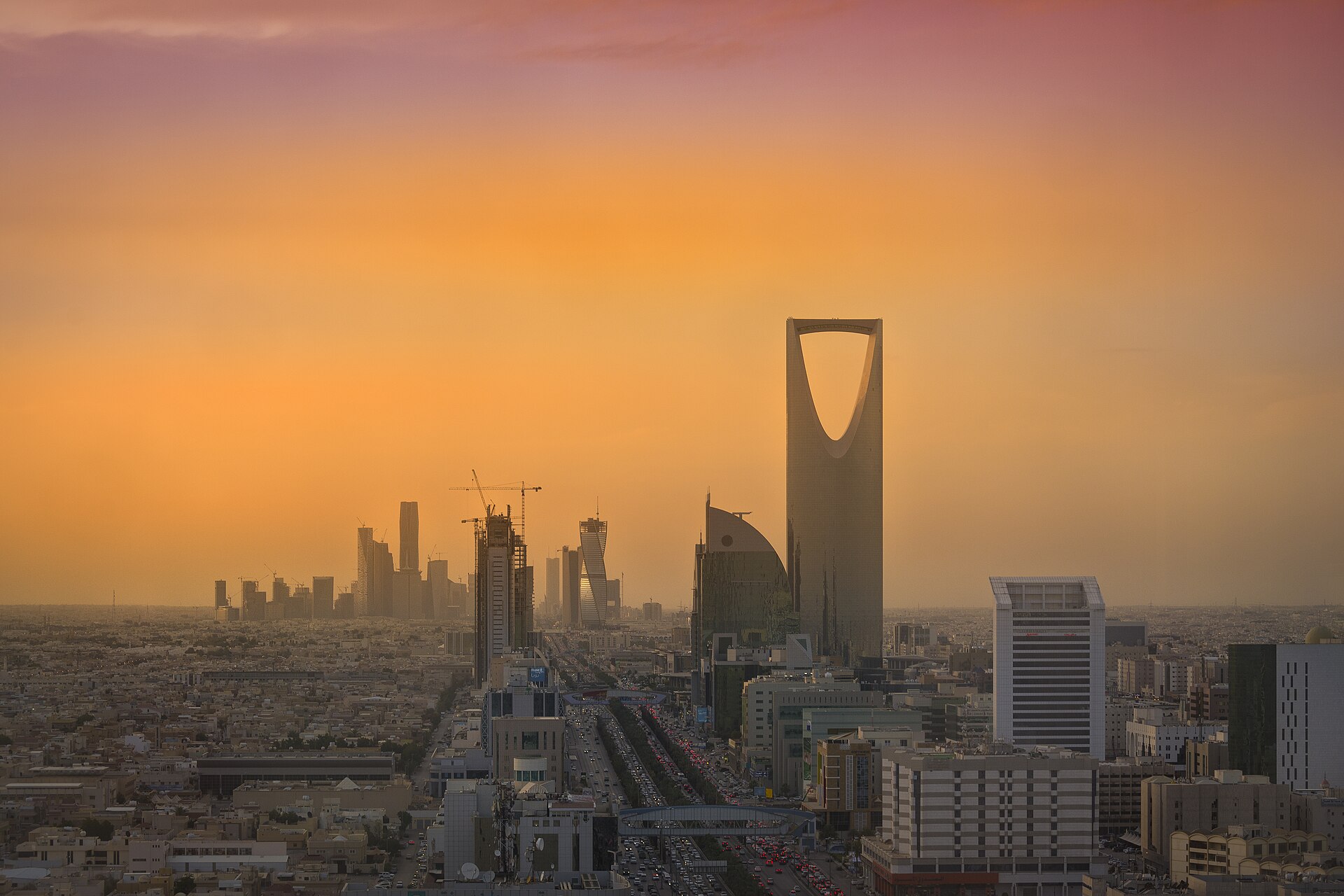

RIYADH — Saudi Arabia announced its largest electricity price increases since 2018 on October 25, together with new water and wastewater tariffs, raising residential power rates by up to 17 percent from January 2027, while King Salman simultaneously approved a SAR 500 monthly allowance for government employees, retirees and social security recipients — a paired move that reveals the political arithmetic of subsidy reform in an authoritarian state under active military attack. The kingdom is fighting a war against the Houthis that has struck its airports, hit Aramco infrastructure and damaged buildings in the Riyadh financial district, while running a fiscal deficit that has ballooned to SAR 245 billion in 2026 and is projected at SAR 191 billion for 2027, according to pre-budget figures reported by Reuters via Zawya. That MBS chose this moment to push through domestically unpopular price rises — and that the kingdom’s adversaries have said nothing about it — tells you more about the real state of the Saudi political economy than any GDP forecast.
Table of Contents
- What Changed on October 25
- How Much More Will Saudi Households Pay From January 2027?
- The SAR 500 Allowance and Its Limits
- Why Did Saudi Arabia Wait 8 Years to Raise Utility Prices?
- The Logic of Wartime Reform
- How Does the Tariff Rise Fit the Saudi Deficit?
- What the Tariff Rise Means for Saudi Industry
- The IMF and the Subsidy Question
- The Dog That Didn’t Bark
- FAQ
What Changed on October 25
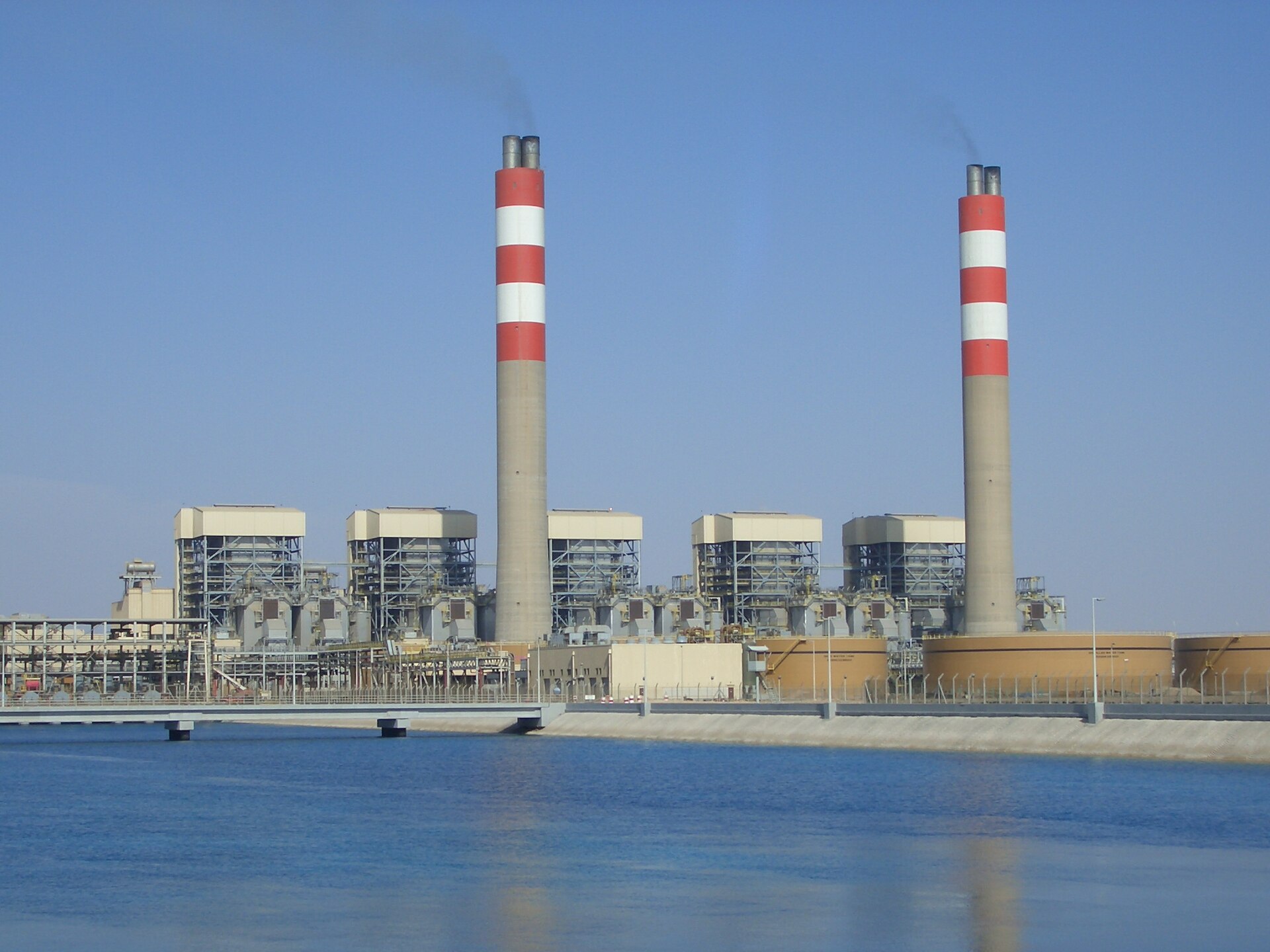
Saudi Energy — the state-controlled utility formerly known as the Saudi Electricity Company, rebranded in February 2026 and 81.24 percent government-owned — and the National Water Company jointly published revised tariff schedules on October 25, effective January 1, 2027, according to Saudi Gazette. The announcement covered electricity rates across every sector, a new tiered water pricing structure and revised wastewater charges, and it came packaged with a royal order directing cash compensation to Saudi citizens on the state payroll or in the welfare system. The Middle East Economic Survey, in a detailed analysis published October 30, described the electricity increases as “the largest electricity price hikes since 2018” — a characterisation that carries weight because the 2018 adjustment was one of the most politically sensitive economic reforms in the kingdom’s modern history.
The House of Saud Daily Briefing
Saudi Arabia's news in 3 minutes, every morning. Free. See today's issue
The timing was not accidental. On the same day, the government announced that the minimum monthly salary for a Saudi employee to count toward private-sector Saudisation quotas under the Nitaqat system would rise to SAR 5,000 from April 25, 2027, and to SAR 6,000 from April 25, 2028, according to The National and Gulf Business. This is the way Riyadh packages pain: bundle the price increase with the wage floor increase, attach a cash transfer, and release everything at once so the conversation is about the package rather than any single element.
How Much More Will Saudi Households Pay From January 2027?
For residential customers, the first-tier electricity rate — covering usage up to 6,000 kilowatt-hours per month — rises from 18 halalas per kWh to 21, a 16.7 percent increase, according to ARY News citing Saudi Gazette. The second tier, above 6,000 kWh, rises from 30 to 33 halalas, a 10 percent increase. These are not dramatic numbers in isolation, but the structure of Saudi electricity consumption means the first-tier rise hits the broadest number of households, while the more modest second-tier increase affects the heaviest users — a design choice that spreads the impact rather than concentrating it.
The more consequential change, in practical terms, is the new fixed monthly charge tied to breaker size. A household with a standard 20-to-99-amp breaker will now pay SAR 70 per month as a fixed fee, up from SAR 10, according to saudilifeguide.com citing Saudi Energy. For a 100-to-199-amp breaker, the fixed charge rises to SAR 80 from SAR 15; for 200-to-299 amps, SAR 90; and for 300 amps and above, SAR 100. The jump from SAR 10 to SAR 70 — a 600 percent increase in the fixed component — is the part of this reform that will appear on every bill regardless of consumption behaviour, and it is the part that has drawn the sharpest attention from household budget analysts.
| Sector | Tier | Old Rate (halalas/kWh) | New Rate (halalas/kWh) | Change |
|---|---|---|---|---|
| Residential | Up to 6,000 kWh | 18 | 21 | +16.7% |
| Residential | Above 6,000 kWh | 30 | 33 | +10% |
| Commercial | Up to 6,000 kWh | 22 | 25 | +13.6% |
| Commercial | Above 6,000 kWh | 32 | 35 | +9.4% |
| Industrial | Flat rate | 20 | 23 | +15% |
| Agricultural | Up to 6,000 kWh | 18 | 19 | +5.6% |
| Agricultural | Above 6,000 kWh | 22 | 23 | +4.5% |
| Government | Flat rate | 32 | 35 | +9.4% |
Water tariffs follow a four-tier residential structure from January: SAR 1 per cubic metre for the first 15 cubic metres per month, rising to SAR 2 for 15-to-30, SAR 4 for 30-to-45 and SAR 6 above 45 cubic metres, according to ARY News and the National Water Company. Wastewater charges run at exactly half the water rate at each tier. The fixed monthly charge for a standard meter of up to 20 millimetres is SAR 20 for water plus SAR 10 for wastewater, according to the same sources. For households using no more than 30 cubic metres per month, Asharq Al-Awsat English reported that the total bill increase will not exceed SAR 67 including VAT — a cap that appears designed to give the government a precise defensive number when citizens complain.
Across all sectors, the range of electricity price increases runs from 5 to 17 percent, according to Zawya citing Reuters. The agricultural sector saw the gentlest increases — a political choice that protects the food production narrative central to Saudi self-sufficiency messaging — while the industrial flat rate, at 15 percent, falls on the manufacturers that the kingdom is simultaneously trying to attract through Vision 2030’s diversification agenda.
The SAR 500 Allowance and Its Limits
King Salman ordered the SAR 500 monthly increase on the same day, acting on a proposal from Crown Prince Mohammed bin Salman, according to Saudi Gazette citing the Saudi Press Agency. The allowance covers four categories: civil servants on government pay scales, military personnel, retirees, and social security beneficiaries including eligible family members of deceased social insurance subscribers, according to The National and Gulf Business. It is added to a designated allowance line, not to basic salary — a technical distinction that matters for pension calculations and end-of-service benefits, and one that limits the compounding fiscal cost. Expatriates, who make up roughly a third of the Saudi population, are excluded entirely.
The design of this transfer tells you something about how the Saudi state thinks about its own legitimacy. The Citizen Account — launched in December 2017, one month before the 2018 electricity shock — was a needs-tested, variable transfer that attempted to target compensation based on household income and size, and it paid an estimated SAR 20 billion in transfers in the first eight months of its operation, according to Asharq Al-Awsat. Cumulative payouts have exceeded SAR 293 billion since launch, according to Ajel English reporting on the October 2026 disbursement cycle. The 2027 SAR 500 allowance is structurally different: it is a flat-rate payment channelled through existing payroll and welfare systems, not a new mechanism, which means lower administrative cost but cruder targeting.
“The measures are meant to shield households and state employees from the cost impact of the tariff changes… Officials acknowledge the tariffs will put some upward pressure on inflation, which the support measures are expected to contain.”
— Asharq Al-Awsat, October 25, 2026
The flat-rate structure means a government clerk in Riyadh earning SAR 8,000 per month gets the same SAR 500 as a senior military officer earning SAR 25,000 — a design that is politically efficient because it is simple to explain and impossible to means-test incorrectly, but economically blunt because it overcompensates high earners whose utility bills represent a smaller share of income. The academic literature on authoritarian subsidy reform, including work by Molly Hickey published through the International Growth Centre in 2025, describes this pattern precisely: “Authoritarian regimes adopt preemptive and responsive strategies to implement subsidy reforms despite broad popular opposition,” with direct household transfers being a key tool for managing the political risk of price liberalisation.
Why Did Saudi Arabia Wait 8 Years to Raise Utility Prices?
The 2018 reform was far larger — the first-tier residential rate jumped from 5 halalas to 18 halalas per kWh, a 260 percent increase, according to APICORP — and the political memory of that shock has hung over every subsequent discussion of utility pricing in the kingdom. The 18/30 halalas residential structure that was set in January 2018 has remained frozen for more than eight years, the longest unbroken period in the Saudi energy-subsidy reform era, and the October 25 announcement ended that freeze. No competing coverage of this reform has noted the duration of that freeze, which is itself a measure of how politically radioactive utility pricing has been since the 2018 backlash.
The 2016 increase, often grouped with 2018 in shorthand accounts of the reform timeline, was described as “minor” in academic literature. The real shock — the one that required the creation of an entirely new cash-transfer mechanism in the Citizen Account — came in December 2017 and January 2018, when the electricity hike was paired with gasoline price increases and the introduction of 5 percent VAT, a triple hit that compressed several years of planned liberalisation into a single billing cycle. The political lesson Riyadh drew from that experience was clear: bundle reforms with compensation, announce them together, and never let the price increase arrive before the transfer mechanism is operational.
The eight-year gap also reflects the political calendar. From 2018 to 2020, the kingdom was managing the diplomatic fallout from the Khashoggi murder and the reputational risk of further domestic austerity. From 2020 to 2022, the pandemic oil crash and then the price recovery changed the fiscal calculus entirely — with Brent above $80, there was no urgency to extract more from households. From 2022 to mid-2026, the Iran crisis and then the war with the Houthis created a security environment in which the political cost of utility reform appeared too high. What changed in October 2026 was not the need for the reform — the IMF has been recommending it since at least 2017 — but the calculation that the security crisis had reached a point where the domestic audience would accept it.
The Logic of Wartime Reform
This is the analytical core of the October 25 package, and it is the dimension that no competing article has explored in structural terms. The National, in its coverage, noted that “renewed Houthi attacks… have disrupted Riyadh airport operations and threatened the economic overhaul” — framing the war as an obstacle to reform. The opposite reading is at least as plausible: the war provided cover for a reform that would have been harder to push through in peacetime, precisely because the security crisis has shifted the domestic conversation from economic grievance to national survival.
The mechanism is straightforward. When Houthi missiles are striking Saudi cities and the cabinet is issuing statements about threats to the Strait of Hormuz and Bab al-Mandeb, the political bandwidth available for domestic opposition to utility prices shrinks. Citizens who might otherwise organise complaints through social media or municipal channels are processing a different set of anxieties — about air-raid alerts, airport closures and missile interceptions. The government, in effect, has a window in which the normal mechanisms of domestic political pressure are suppressed by a security environment that demands unity rather than dissent.
This is not a cynical observation but a structural one, and it aligns with what the academic literature describes as the authoritarian reform playbook. The Hickey research, published through the IGC, documents how regimes time subsidy reforms to coincide with periods when alternative political narratives — in this case, national defence — dominate public attention. The Saudi government has not acknowledged this logic publicly, and it would be surprising if it did, but the timing speaks for itself: the largest utility price increase in eight years, announced during the most active period of Houthi strikes on Saudi infrastructure since the war began.
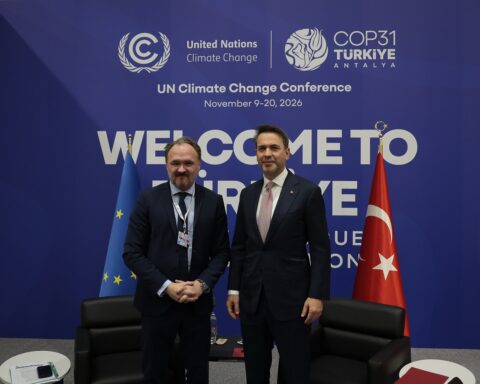
The electricity cooperation MoU signed with Turkey at COP31 in Antalya on November 11 adds another layer to the reform context, signalling that the kingdom is thinking about its power sector in long-term structural terms — generation, interconnection, efficiency — rather than treating the January tariff adjustment as an isolated fiscal measure. That the kingdom is simultaneously signing cross-border electricity agreements and raising domestic tariffs suggests a coordinated strategy that extends well beyond the immediate fiscal need.
How Does the Tariff Rise Fit the Saudi Deficit?
The fiscal context makes the reform’s urgency legible. The pre-budget statement for 2027, reported by Reuters via Zawya on September 30, projected spending of SAR 1.39 trillion against revenue of SAR 1.20 trillion — a deficit of SAR 191 billion, or 3.6 percent of GDP. It also revised the 2026 deficit estimate upward to SAR 245 billion from the budgeted SAR 165 billion, a blowout driven by the 21.8 percent collapse in oil activities that dragged real GDP down 3.6 percent for the year. The 2027 forecast of 12.8 percent real GDP growth, also from the pre-budget statement, assumes a recovery in oil output that depends on security conditions the kingdom does not fully control.
The tariff increase does not close this gap, and Saudi Energy itself has said as much. MEES reported on October 30 that the company stated the tariff changes “won’t have a material impact on its financial results” because higher rates reduce the government compensatory payments made through the balancing account mechanism — the system by which the state subsidises the difference between the cost of generation and the price consumers pay — rather than increasing company revenues directly. In other words, the government pays less to Saudi Energy, which improves the fiscal balance, but the money does not flow as new revenue into the utility’s accounts.
This is the reform’s real function: it is a subsidy reduction disguised as a tariff increase. The consumer pays more; the government pays less in balancing-account transfers; the deficit narrows by whatever the difference amounts to. The total fiscal saving has not been disclosed, and no independent estimate of the number of SAR 500 allowance recipients has been published, which means the net fiscal impact — tariff savings minus compensatory payouts — cannot be calculated from public data. What can be said is that the IMF’s 2025 Article IV staff report estimated that accelerating energy subsidy reform could yield approximately 3.5 percent of GDP, according to the IMF Staff Country Report, a figure that dwarfs the likely impact of this single adjustment but indicates the scale of the remaining subsidy bill.
The inflation impact, at least, has been quantified. EFG Hermes, the regional investment bank, forecast that the electricity tariff changes would add 0.2 to 0.3 percentage points to Saudi consumer price inflation in January 2027, according to Asharq Business — a modest number in a country where annual inflation was running at 1.8 percent as of July 2026, according to GASTAT data reported by Argaam. Saudi industrial output rose 15.6 percent in September on mining activity, according to GASTAT, but whether that trajectory survives higher input costs is a question the tariff reform has now placed on the table.
What the Tariff Rise Means for Saudi Industry
The industrial flat rate rises from 20 to 23 halalas per kWh — a 15 percent increase that falls uniformly on every factory, smelter and processing plant in the kingdom. Riyadh Steel estimated that its electricity costs would rise by approximately SAR 1.4 million in 2027, according to AGBI, a figure that represents a meaningful but not existential increase for a mid-sized manufacturer. Southern Province Cement, by contrast, told AGBI that the impact would not be material to its results, reflecting the wide variance in energy intensity across Saudi industry.
The political tension here is real. Vision 2030’s industrial diversification agenda depends on attracting manufacturers who make location decisions partly on the basis of energy costs — the kingdom’s traditional competitive advantage has been cheap power derived from cheap hydrocarbons. Every halala added to the industrial rate narrows that advantage, and the 15 percent October increase comes after eight years in which no electricity rate across any sector was adjusted, consistent with MEES’s characterisation of the package as the largest increase since 2018. The commercial rate, which covers private healthcare and education facilities alongside retail and office buildings, rises from 22 to 25 halalas in the first tier and from 32 to 35 in the second, according to ARY News — increases that will flow through to operating costs for the private hospitals, international schools and retail centres that the kingdom is building as part of its quality-of-life transformation.
The agricultural rate, at 19 halalas for the first tier up from 18, received the gentlest treatment, rising just 5.6 percent. This is not generosity — it is strategic. Saudi Arabia imports the bulk of its food, and domestic food production is treated as a national security input, not a commercial activity. In a wartime context where Aramco has been cutting official selling prices and oil revenue is under pressure, protecting the cost base of domestic food production is a defensive calculation that outweighs the fiscal benefit of charging farmers market-rate electricity.
The IMF and the Subsidy Question
The International Monetary Fund has been recommending energy subsidy reform to Saudi Arabia since at least 2017, with increasing specificity. The July 2026 Article IV consultation, published as IMF Press Release PR26/267, included the assessment that “Directors stressed the importance of energy subsidy reform, non-oil revenue mobilisation, and better public investment management” as medium-term priorities — language that, in the IMF’s habitually diplomatic phrasing, amounts to saying the kingdom is spending too much, charging too little for energy, and needs to fix both. The non-oil primary balance, the metric that strips out oil revenue and measures whether the government’s non-oil economy is self-sustaining, stood at negative 22.2 percent of non-oil GDP in 2026, according to the same IMF report.
That figure — negative 22.2 percent — is the number that explains why the tariff reform happened now, even during a war. It means that for every riyal the Saudi non-oil economy generates, the government spends more than a fifth of that amount beyond what it collects in non-oil revenue. The gap is filled by oil money, and oil money in 2026 has been diminished by the Hormuz disruption, the output cuts, and a Brent price that, while still elevated, has not delivered the windfall that $120 oil would have. Saudi Arabia told OPEC that output surged 26 percent to 10.563 million barrels per day in October, but that recovery, even if it holds, arrives in a fiscal year where the deficit has already overshot by SAR 80 billion.
MEES framed the tariff reform as “a further step towards reducing subsidies, a longstanding IMF recommendation, while helping curb demand growth and strengthen the kingdom’s energy security.” The demand-management dimension is worth noting: Saudi Arabia’s domestic electricity consumption has grown steadily for decades, driven by subsidised pricing, air conditioning demand in a desert climate, and a desalination-dependent water system that is itself enormously energy-intensive. Every kilowatt-hour consumed domestically is a kilowatt-hour not available for export as crude oil or LNG, which means subsidy reform has an energy-security rationale independent of its fiscal benefit — a point the government has not made publicly but that MEES’s framing captures.
The Dog That Didn’t Bark
The most telling feature of the international reaction to the tariff reform is the reaction that did not happen. Iranian state media, which has extensively publicised infrastructure damage from the conflict and framed every Saudi economic setback as evidence of strategic failure, made no public comment on the October 25 announcement. The Houthi information apparatus, which routinely claims credit for economic disruption caused by its strikes, did not seize on the tariff increase as evidence that Saudi Arabia is being forced to squeeze its own population to fund the war. This absence is itself analytically meaningful, because the adversary information space had every incentive to frame the reform as a sign of Saudi weakness and chose not to.
The likely explanation is structural rather than strategic. Utility tariff reform is a domestic policy story that does not fit the adversary narrative template — which is built around military damage, infrastructure destruction and the spectacular — and amplifying it would require acknowledging that the Saudi state is capable of managed fiscal adjustment rather than chaotic decline. For Tehran and the Houthis, the more useful narrative is that the kingdom is burning through reserves and will collapse under military pressure; a story about a 17 percent electricity increase paired with a cash transfer is too bureaucratic to support that framing, and publicising it might inadvertently signal that the Saudi state retains the administrative capacity to implement complex domestic reforms while fighting a war.
No competing article on the tariff reform has noted this absence. It is the kind of negative evidence — what didn’t happen, and why — that often reveals more about the strategic landscape than the event itself, because it maps the limits of what each side’s propaganda apparatus is willing to engage with. The silence from Tehran and Sanaa suggests that they recognise, even if they would never say so, that the October 25 package is a sign of state capacity rather than state fragility.
FAQ
Do the new Saudi utility tariffs apply to expatriates?
The tariff increases apply to all electricity and water consumers in the kingdom regardless of nationality — every household, business and institution will pay the new rates from January 1, 2027. The distinction is in the compensatory SAR 500 monthly allowance, which is restricted to Saudi nationals on government and military payrolls, retirees and social security beneficiaries, according to The National and Gulf Business. Expatriate workers, who make up a large portion of the Saudi workforce, receive the higher bills without the offsetting transfer, which effectively means the reform is more costly for non-citizen households than for Saudi ones.
Are further tariff increases planned after January 2027?
No official timeline for future adjustments has been published. Saudi Energy stated that the tariff changes “won’t have a material impact on its financial results” because the reform reduces government balancing-account transfers rather than directly boosting utility revenues — a structure that keeps the fiscal pressure on the government side rather than the utility side, and that could drive further adjustments in future budget cycles. MEES described the package as “a further step towards reducing subsidies,” language that implies a sequence rather than a destination. The IMF’s estimate that full energy subsidy reform could yield approximately 3.5 percent of GDP indicates how far rates remain from full liberalisation even after the January 2027 adjustment; the gap between the current reform and a fully cost-reflective tariff structure remains large.
Will the tariff increase affect Saudi Arabia’s competitiveness for foreign investors?
The industrial rate rise from 20 to 23 halalas per kWh represents a 15 percent increase in a key input cost for manufacturers considering Saudi Arabia as a production base. For energy-intensive industries — aluminium smelting, petrochemicals, steel — the increase is material, as Riyadh Steel’s projected SAR 1.4 million cost increase for 2027 illustrates. The real risk for businesses planning operations in the kingdom is not the current level but the trajectory: if 2027 is the first of a series of annual adjustments, the cumulative impact on location decisions could be more consequential than any single year’s increase.
What happens to the Citizen Account after this reform?
The Citizen Account, launched in December 2017 and still operational, has paid cumulative transfers exceeding SAR 107 billion since inception, according to Arab News. The October 25 announcement did not modify the Citizen Account — the SAR 500 allowance is a separate mechanism channelled through payroll and welfare systems rather than through the Citizen Account’s needs-tested variable transfer platform. This means some Saudi households may receive both Citizen Account payments and the new SAR 500 allowance, though no official guidance has clarified whether the two will be coordinated to prevent double-compensation for the same tariff increase.
The House of Saud Daily Briefing
Saudi Arabia's news in 3 minutes, every morning. Free. See today's issue