
DHAHRAN — OPEC+ crude output rose 2.04 million barrels per day in October to 41.23 million bpd, the largest monthly increase since the group’s production collapsed during the US-Iran conflict earlier this year, according to the OPEC November Monthly Oil Market Report. Saudi Arabia led the recovery with the largest single-month output gain in the alliance, followed by Iraq and Kuwait.
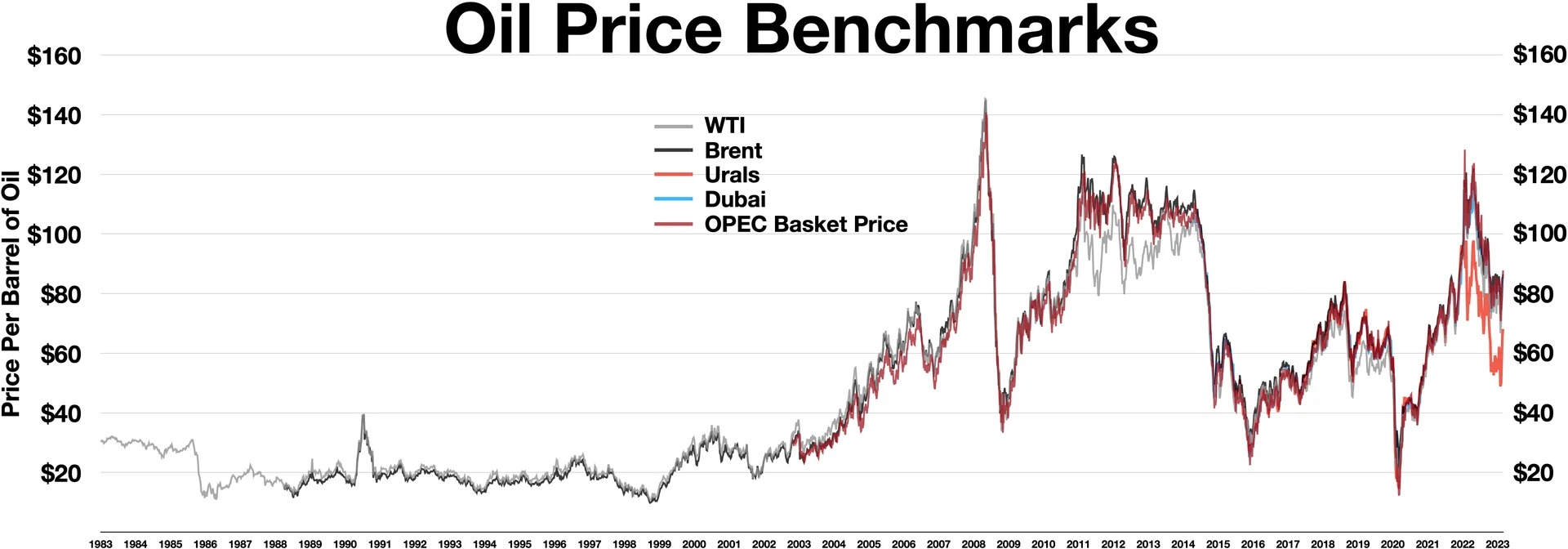
Brent crude settled at $91.49 on November 10 after touching $89.16 — its first dip below $90 since August, according to CNBC. The benchmark has fallen roughly 23% from its October peak, CoinPaper reported, even as mines and missiles continued to strike tankers in the Strait of Hormuz. Markets are pricing the supply recovery above the conflict risk, and the war premium that held Brent above $100 for most of the past seven months is draining out.
The House of Saud Daily Briefing
Saudi Arabia's news in 3 minutes, every morning. Free. See today's issue
Table of Contents
The October Production Recovery
October’s gain brought OPEC+ output to roughly 97% of its pre-war February baseline of 42.72 million bpd, according to Al Jazeera. The group had fallen to 34.29 million bpd in the second quarter of 2026, when the Hormuz blockade and attacks on Gulf export infrastructure took their heaviest toll, and recovered to an average of 38.35 million bpd in the third quarter, per data compiled by The Tribune. October’s figure is also close to the group’s 2025 full-year average of 41.98 million bpd, indicating a near-complete return to the run-rates that prevailed before the disruption, according to The Tribune.
Saudi Arabia accounted for the largest share of the October increase. The kingdom’s direct-communication figure of 10.563 million bpd was marginally above its November OPEC target of 10.5 million bpd, set in early October by Enerdata’s count. Secondary sources placed Saudi production lower, at 9.19 million bpd — a gap that reflects methodological differences between what a country reports and what independent agencies measure. Saudi supply to the market stood at 9.20 million bpd, up from 7.99 million bpd in September, per The Tribune.
Iraq posted the second-largest gain, adding 496,000 bpd to reach 4.49 million bpd. Kuwait contributed an additional 232,000 bpd. OPEC crude output as measured by secondary sources rose 1.97 million bpd to 27.16 million bpd, according to dmarketforces.com.
| Producer | October Output (mb/d) | Monthly Change (b/d) |
|---|---|---|
| Saudi Arabia (direct comm.) | 10.563 | +2,193,000 |
| Iraq | 4.49 | +496,000 |
| Kuwait | n/a | +232,000 |
| Iran | ~1.91 | −44,000 |
| OPEC+ Total | 41.23 | +2,040,000 |
| Saudi Arabia monthly change is calculated from direct-communication output (10.563 mb/d vs. 8.37 mb/d in September). The OPEC+ total uses secondary-source methodology, which placed Saudi output at 9.19 mb/d in October. Direct-communication and secondary-source figures are not directly comparable across rows. | ||
Why Did Brent Fall Below $90 During an Active Conflict?
Brent’s dip below $90 on November 10 reflected a market recalibrating between two forces: the rapid return of supply and a growing expectation that the US-Iran standoff will end in negotiation rather than escalation. The sell-off began in earnest after Democrats won both chambers of Congress on November 3, a result that traders read as political pressure on the White House to seek a diplomatic exit. Brent fell more than 16% in the week ending November 6, according to CNBC.
President Trump’s declaration on November 10 that the war was “effectively over” — contradicted hours later by Houthi missile launches at Riyadh — further suppressed the risk premium. The EIA’s Short-Term Energy Outlook put the October Brent average at $124 and said the benchmark fell below $100 on November 4 for the first time in weeks. The agency forecast Brent averaging approximately $100 in both November and December. West Texas Intermediate settled at $86.04 on November 10, per CNBC.
“The market has continued to unwind some of the geopolitical risk premium built into prices in recent weeks,” Ewa Manthey and Warren Patterson, commodity strategists at ING, told CNBC. They cautioned that “we expect oil prices to remain sensitive to developments in the Middle East.”
Not all analysts agree the sell-off is warranted. Brett Erickson of Obsidian Risk Advisors told Benzinga that oil looked “significantly oversold and underpriced” near $92 a barrel. Fereidun Fesharaki, chairman of energy consultancy FGE, told CNBC that “the difference between the two sides is so wide, it cannot be bridged,” estimating a decision window of roughly two weeks before Trump faces a choice between claiming victory and returning to military action. Brent rebounded to approximately $92.50 on November 11, Le Private Banker reported, and traded between $91.62 and $93.92 on November 12, per The Tribune.
Iran Cut Output as the Rest of OPEC Surged
Iran was the only major OPEC member to reduce production in October, with output falling 44,000 bpd to approximately 1.91 million bpd — the largest decline in the group, according to dmarketforces.com. The drop reflects the continuing effect of the US naval blockade reinstated on July 14, which CENTCOM said had turned around 135 ships as of October 10.
Tehran’s diplomatic signals remained contradictory. Mohsen Rezaei, Secretary of Iran’s Supreme National Security Council, dismissed reports of US-Iran negotiations as “fake news” on November 10, per OilPrice.com. That same day, Foreign Minister Abbas Araghchi said Iran’s standing offer to reopen Hormuz within two days remained on the table provided “the war ends on all fronts,” OilPrice.com reported.
A Qatari-brokered interim proposal — reportedly approved by Iran, according to two diplomatic sources cited by Israeli media — would have Tehran reopen the strait and halt Gulf tanker attacks in exchange for the US lifting its naval blockade and releasing $8 billion in frozen Iranian funds held in Qatar. Iran would also drop its demand to control the strait and charge transit fees but would not discuss its nuclear programme. Neither government confirmed the terms. Secretary of State Marco Rubio called Iran’s demands “outrageous and ridiculous,” per OilPrice.com.
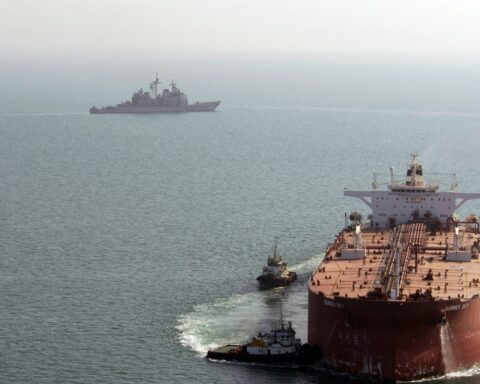
Attacks on shipping continued regardless of the diplomatic maneuvering. The Bahri-operated NCC Fajr was involved in a suspected attack in the Strait of Hormuz on November 11, and Iran’s army reported a tanker striking a mine around the same date, Euronews reported.
What Does the Price Drop Mean for Saudi Arabia’s Budget?
The price decline arrives at a difficult moment for Saudi public finances. Third-quarter oil revenue came in at 116.5 billion riyals, down 23% from 150.8 billion riyals in the same period a year earlier, Le Private Banker reported on November 3. The nine-month deficit reached approximately 244 billion riyals against an original full-year budget ceiling of 165.4 billion riyals. The government’s revised deficit projection for 2026 stands at 245 billion riyals, according to a pre-budget statement reported by Reuters via Zawya on September 30.
The revenue dynamic is split. Export volumes have recovered sharply from their mid-year lows, but the price per barrel is falling at the same time. Aramco cut its November Arab Light official selling price to Asia to a six-year low, reflecting both weak Asian demand and competitive pressure as Gulf supply returned to the market. The pre-budget statement projected real GDP falling 3.6% in 2026, driven by a 21.8% drop in oil activities, followed by a 12.8% rebound in 2027, per Reuters via Zawya.
The combination of higher volume at lower prices leaves Riyadh in a tighter position than either variable alone would suggest. The kingdom has already moved to diversify its revenue base. Riyadh approved new power and water tariffs for 2027 alongside a 500-riyal monthly allowance for citizens. Umud Shokri, an energy strategist at George Mason University, told Al Jazeera that “higher Saudi production does not automatically mean lower prices at American gas stations” and that “Gulf countries are learning how costly dependence on a single maritime chokepoint can be.”
How Are Oil Exports Bypassing the Hormuz Blockade?
The recovery in export volumes has depended on two workarounds that allow crude to reach buyers without transiting the contested strait. The East-West pipeline, running from the Eastern Province to the Red Sea port of Yanbu, restarted on September 22 after a precautionary suspension on September 11, according to Baird Maritime citing Reuters. The line has a design capacity of approximately 7 million bpd, per the Saudi Gazette via Zawya.
Ship-to-ship transfers off the coast of Oman provided a second route. The EIA’s November Short-Term Energy Outlook said these transfers, combined with the pipeline restart, were the primary factors behind the decline in Middle East crude shut-ins from a peak of 10.9 million bpd in May to 2.5 million bpd in October. The roughly 8.4 million bpd recovery over five months is the proximate cause of the supply surge that has weighed on prices.
Both routes carry their own risks. The Houthis have targeted infrastructure near Yanbu, and the Saudi cabinet on November 10 called for an immediate end to threats in both the Strait of Hormuz and Bab al-Mandeb, the Red Sea chokepoint through which Yanbu exports must pass. The workarounds have restored volume, but the infrastructure that supports them remains within range of the attacks that shut production down in the first place.
The November 29 Ministerial
The OPEC+ seven-country subgroup kept December output targets at September levels at its November 1 meeting, according to Rigzone. The next full OPEC+ ministerial is scheduled for November 29. OPEC held its 2026 global oil demand growth forecast at 180,000 bpd — unchanged for the first time after six consecutive monthly downward revisions — with global demand averaging 105.72 million bpd, The Tribune reported. The group’s 2027 demand forecast calls for growth of approximately 2.55 million bpd, also unchanged from the prior month.
The ministers will meet at a moment when supply is returning faster than the demand picture supports. The EIA’s forward estimate for Brent implies a continued decline from the prices that prevailed when most Gulf production was offline. Whether the Hormuz standoff resolves before November 29, and whether any deal changes the supply calculus, remains the variable that the market — and the ministerial — cannot yet price.
Frequently Asked Questions
What is the difference between OPEC direct communication and secondary source output figures?
Direct communication is the production volume a country reports to OPEC itself. Secondary sources are independent estimates compiled by agencies such as Platts, Argus and the IEA, which use tanker tracking, port data and other methodologies. For October, Saudi Arabia reported 10.563 million bpd by direct communication but secondary sources placed its output at 9.19 million bpd — a gap of more than 1.3 million bpd that can reflect volumes in transit, draws from or additions to storage, and timing differences in measurement windows.
How much oil transited the Strait of Hormuz before the conflict?
The Joint Maritime Information Centre (JMIC) estimated approximately 138 tanker transits per day through Hormuz before the conflict — a flow carrying roughly one-fifth of global oil consumption. Iran declared the strait closed on April 18, 2026. The US first imposed its naval blockade on April 13; both sides briefly reopened the strait under a June 2026 arrangement before Iran re-closed it on July 12 and the US reinstated its blockade on July 14. Transit volumes collapsed during the spring and summer, with the IRGC claiming to have reduced them to single digits at the crisis peak, before ship-to-ship transfers off Oman partially restored flows in the autumn.
Which Saudi oil facilities were attacked during the conflict?
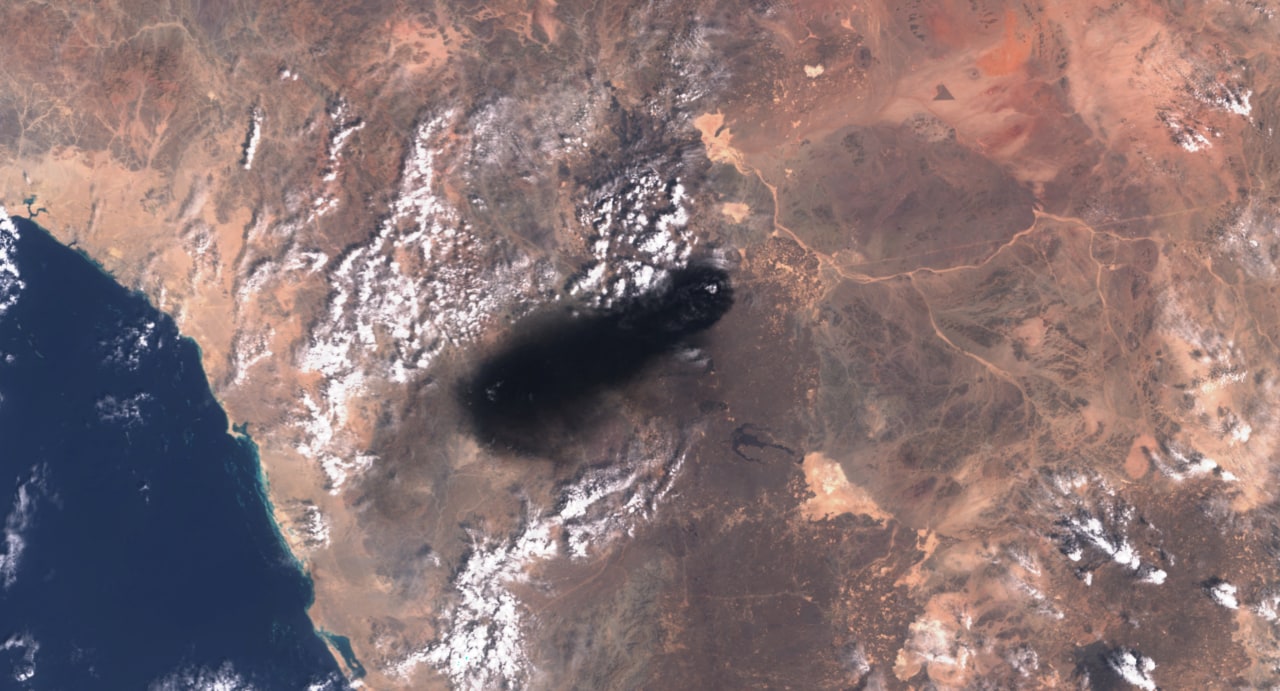
Houthi and IRGC operations have struck multiple Saudi energy installations since early 2026. The 400,000 bpd Jazan refinery was shut after a Houthi strike damaged its IGCC complex and tank farm in late July, according to IIR via Hydrocarbonprocessing. A drone strike hit Aramco’s remote Shaybah field in October, killing two people, World Oil reported. Aramco’s headquarters in Dhahran was struck by a missile in mid-October, causing a fire in one building, per the Saudi Ministry of Energy. The East-West pipeline was suspended as a precaution on September 12 after Houthi attacks on targets near Yanbu.
What production increases had OPEC+ planned before the conflict?
Before the Hormuz crisis, OPEC+ had been implementing a series of gradual output increases. The group agreed a 137,000 bpd increase for December 2025, a 206,000 bpd increase for April 2026 — which set Saudi Arabia’s target at 10.2 million bpd, per Enerdata — and successive monthly increases of 188,000 bpd for June, July, August and September. The conflict collapsed actual production far below these targets in the second and third quarters, and the October recovery has only now brought the group close to where it started.
The House of Saud Daily Briefing
Saudi Arabia's news in 3 minutes, every morning. Free. See today's issue