
RIYADH — The United States has deployed between 100 and 200 military advisers to Saudi Arabia who provide real-time targeting intelligence and geospatial support through a newly established joint forces command, according to CNN, which reported the arrangement on September 10 citing US officials familiar with the mission. The advisory presence, run by US Central Command, has since expanded to include aerial refueling of Saudi fighter jets and broader planning support, a US official confirmed to Al Jazeera on October 5.
The arrangement represents what Al-Monitor described as a partial reversal of Washington’s 2018 withdrawal from direct support to Saudi military operations. Iran has responded with explicit warnings that such assistance makes participating states legitimate targets. The two ballistic missiles that the Houthis claimed struck Riyadh’s King Khalid International Airport on November 15 have raised the question of whether the advisory link will deepen — and what Iran will do if it does.
The House of Saud Daily Briefing
Saudi Arabia's news in 3 minutes, every morning. Free. See today's issue
Table of Contents
What the US Advisory Mission Provides
CNN’s September 10 report, based on multiple US officials, described a targeting tool comparable to the Pentagon’s Project Maven artificial-intelligence system. The tool provides Saudi forces with real-time geospatial intelligence for strike planning. At the time, US officials characterised the mission as having “tight limits”: the United States was not participating directly in strikes and was not refueling Saudi warplanes, CNN reported.
The Department of Defense declined to comment on intelligence-related matters, CNN said. A second unnamed US official told the network there was “deep wariness inside the military of being too closely associated with a Saudi strike campaign against the Houthis” — especially if a strike went wrong and there were civilian casualties.
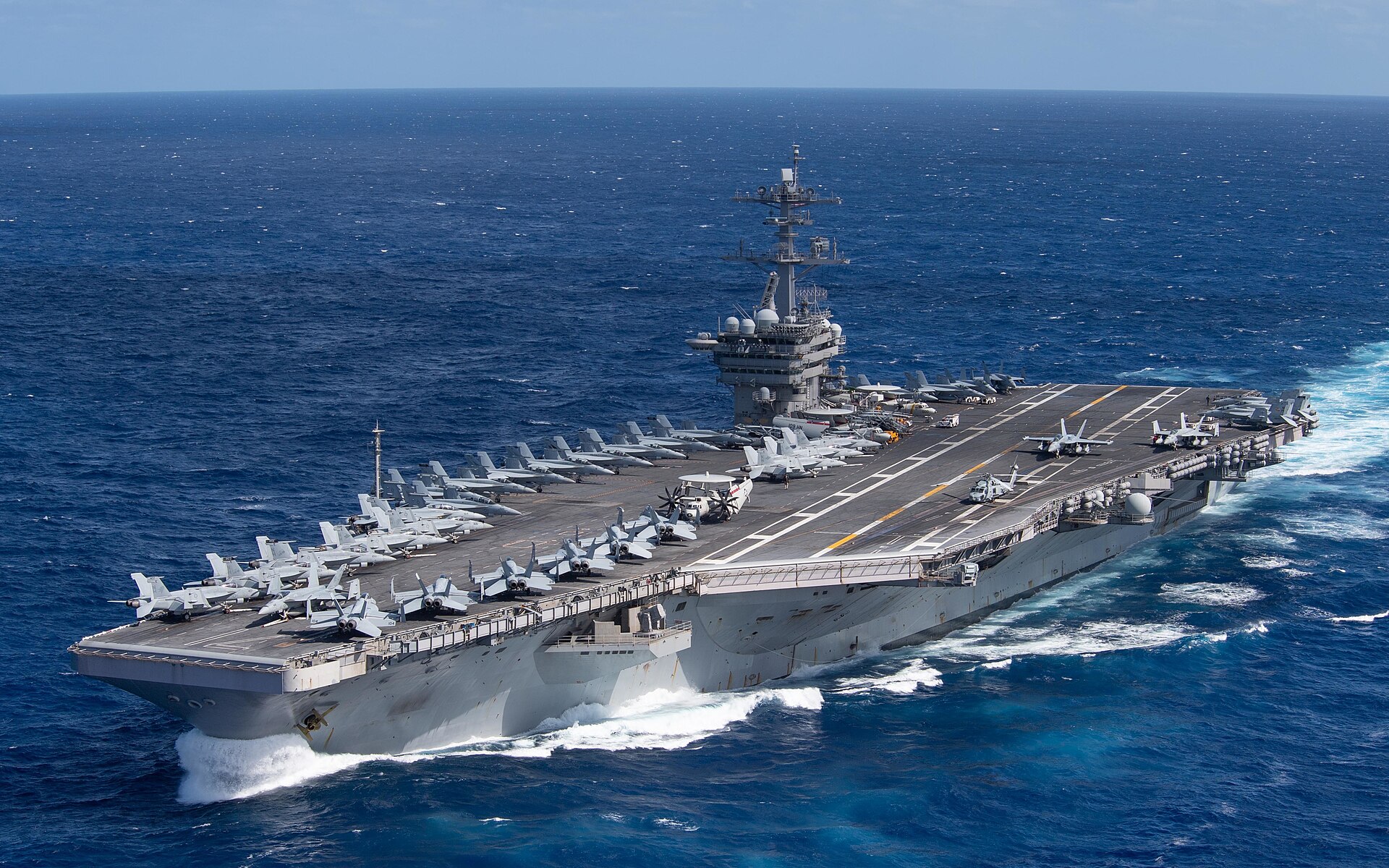
The joint forces command through which the support flows is a new structure, distinct from the bilateral military channels that have existed between Washington and Riyadh for decades. CENTCOM, the combatant command overseeing it, maintains approximately 50,000 troops across its area of responsibility, according to the Institute for National Security Studies. As of November 15, three carrier strike groups were positioned in the broader Middle East region, the INSS reported.
What distinguishes the advisory mission from conventional arms sales or training programmes is the real-time data flow. Saudi officers receive processed intelligence while operations are under way — a level of integration that places American analysts inside the Saudi targeting cycle even if no American personnel are present at the point of weapons release.
From Limited Support to Refueling Sorties
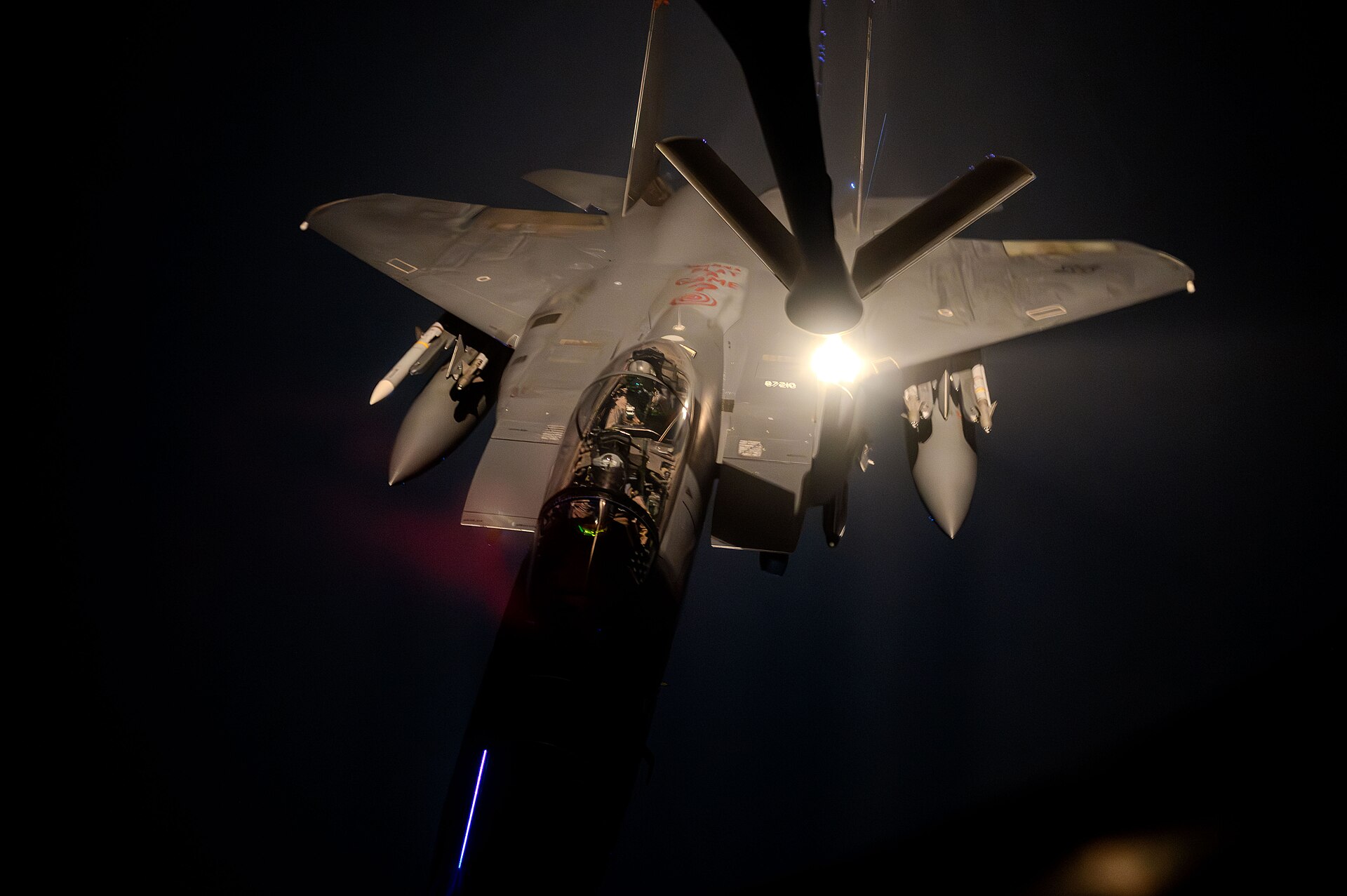
The “tightly limited” characterisation that CNN’s sources used in September had begun to erode by October. Al-Monitor reported that CENTCOM had ramped up its advisory mission and that US Air Force tankers were flying refueling sorties to keep Saudi fighter jets aloft — a form of direct operational support that the September reporting had specifically said was not occurring.
On October 5, an unnamed US official confirmed to Al Jazeera, via Newsquawk, that the United States was providing “support to Saudi Arabia in planning, intelligence sharing, and refueling to counter Houthi attacks.” The addition of refueling represented a measurable shift from the posture described four weeks earlier. Planning, intelligence, and now fuel: three of the four components of a strike campaign, with only the weapons release itself still in Saudi hands.
The trajectory has a direct precedent. Between 2015 and 2018, the United States provided intelligence, logistics, and aerial refueling to the Saudi-led coalition fighting Houthi forces in Yemen. Congressional pressure over civilian casualties — and a 2018 Senate resolution to end US support — led to a drawdown. Al-Monitor described the current arrangement as “a partial reversal” of that withdrawal, with the new joint forces command providing an institutional framework that the earlier, more ad hoc, support had lacked.
What Has Iran Said About US Intelligence Sharing?
Tehran has laid down its position publicly and repeatedly. On August 5, Reuters reported that Iran demanded Gulf states “stop sharing intelligence with Washington.” Two weeks later, on August 19, Major General Ali Abdollahi, chief of staff of Iran’s armed forces, issued what amounted to a doctrinal statement on the matter. “Any assistance or facilitation to the aggressive US army is tantamount to participation with US military forces,” Abdollahi said, according to IRIB as reported by RFE/RL.
The Islamic Revolutionary Guard Corps has been more specific about consequences. On November 5, Ali Reza Balali, a senior adviser to the IRGC Aerospace Force commander, said that “any country or force that helps America attack Iran can be a legitimate target,” according to the Caspian Post as reported by Al Jazeera. Houseofsaud.com reported on those warnings, which framed Gulf states hosting US forces as legitimate military targets.
Hamidreza Moghadamfar, another IRGC official, went further on November 4 and 5, citing “new doctrine and new technology” and naming the UAE and Bahrain as expanded targets, according to Arab News and Tasnim. The threat was not confined to statements. On November 15, the IRGC launched six drones at the US helicopter base at Al-Rifaa in Bahrain; the US military said all were intercepted. Al-Rifaa, in the Riffa area of Bahrain, hosts US helicopters and air-defence radar. It is a separate facility from Naval Support Activity Bahrain at Juffair, the Fifth Fleet headquarters struck on February 28.
Abdollahi’s language — “any assistance or facilitation” — is broad enough to encompass the documented US advisory role in Saudi Arabia. Iran has not issued a statement that names US fire-control integration with Saudi air defences as a distinct red line. The threat doctrine, as articulated by Abdollahi and Balali, rests on a general principle of co-belligerence rather than on an itemised list of military activities.
Did US Intelligence Detect the November 15 Missiles?
The two ballistic missiles that the Houthis claimed struck King Khalid International Airport on November 15 tested the intelligence arrangement from the defensive side. The Saudi-led coalition confirmed that day it had destroyed two ballistic missiles aimed at Riyadh, but the Houthis said their missiles had reached the airport.
The question of whether US sensors are detecting Houthi launches before impact predates November 15. Stephen Bryen, a former US Deputy Undersecretary of Defense, wrote in Asia Times in October that “there are no reports that others, especially the US and Israel, either picked up the Houthi launches” in reference to earlier attacks. Bryen cited “serious intelligence gaps” and “inadequate integration of sensors including radars” in the Saudi defence architecture.
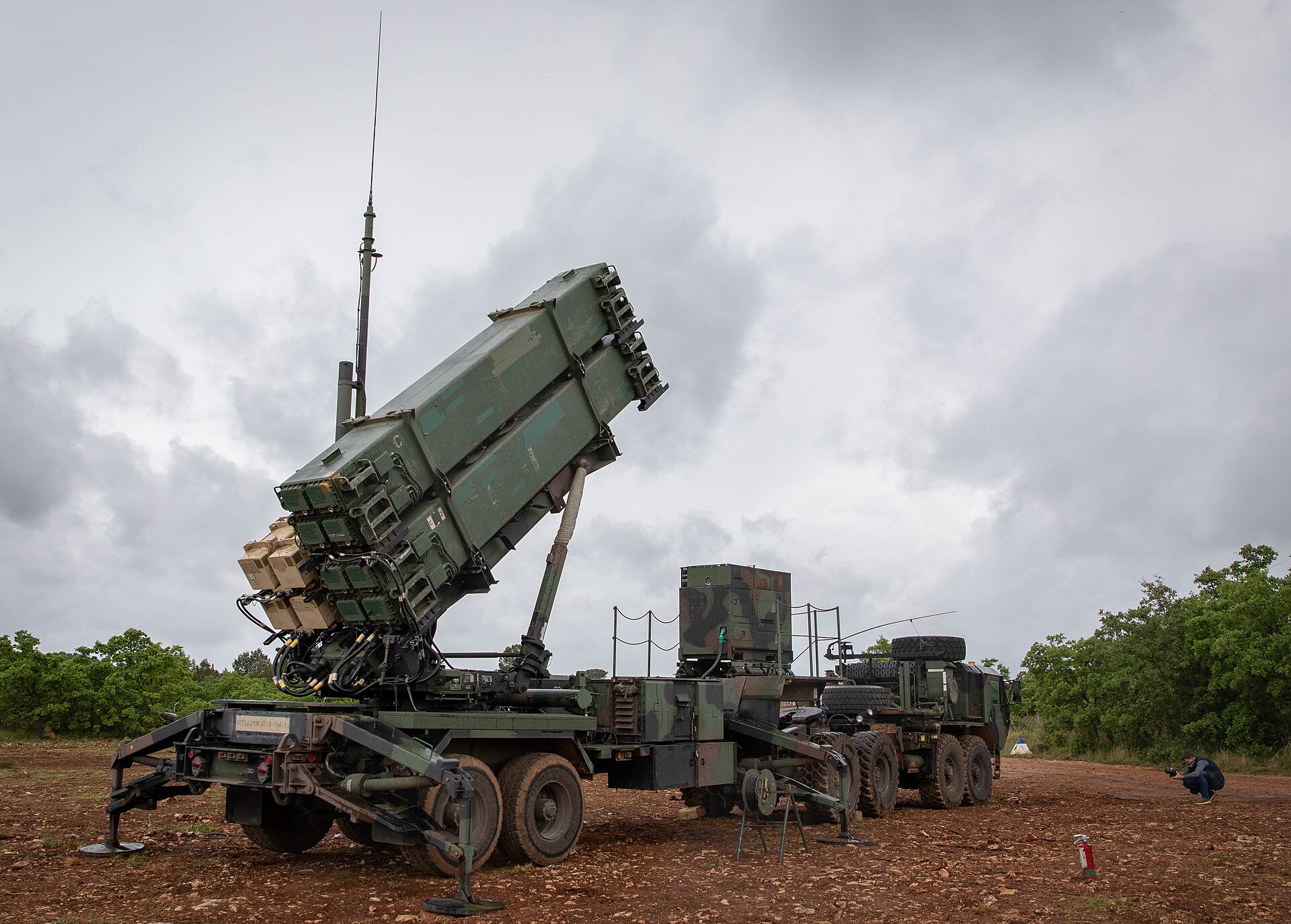
Part of the problem may be hardware attrition. Bryen reported in Asia Times that a THAAD AN/TPY-2 radar — one of the most capable missile-tracking sensors in the US inventory — had been destroyed at Muwaffaq Salti Air Base in Jordan in March 2026. The rest of Saudi Arabia’s layered air defence stack, according to his account, includes Patriot PAC-3 batteries, additional THAAD interceptors, South Korean KM-SAM Block-II medium-range systems, five E-3A AWACS aircraft, and two SAAB 2000 Erieye airborne early warning platforms.
Whether the November 15 attack has prompted a change in the intelligence-sharing arrangement is unresolved. Reports surfaced after the KKIA strike suggesting a formal US offer to integrate real-time ISR directly into Saudi defensive fire-control loops, but extensive searches could not verify the existence of such an offer. The existing arrangement — targeting support and intelligence sharing for offensive operations — is confirmed by CNN, Al-Monitor, and Al Jazeera. Its extension to defensive fire-control systems is not.
Does Any Treaty Bind the US to Saudi Arabia’s Defence?
The 2025 US-Saudi Strategic Defence Agreement, reviewed by Al Majalla, contains no mutual defence guarantee equivalent to NATO’s Article 5. It establishes a framework for arms sales, training, and security cooperation, but it does not obligate the United States to come to Saudi Arabia’s defence in the event of an attack.
Secretary of State Marco Rubio said on September 24 that the United States would “honor its defense commitments to Saudi Arabia,” according to Eurasia Review. He did not specify what those commitments entailed. President Trump, responding to the October KKIA attack, told NBC News on October 11 that “we may” join the fight against the Houthis. “We’re gonna look at it,” he said.
The operational reality runs ahead of the legal architecture. US advisers feed targeting data into Saudi strike planning. US tankers refuel Saudi fighters. A joint forces command integrates American intelligence with Saudi operations. The US Embassy issued a nationwide security alert on November 14 warning American citizens in Saudi Arabia of Houthi threats.
There is a 2019 precedent for defensive integration. After the Abqaiq-Khurais attack, the US deployed additional Patriot batteries and Sentinel radars to Saudi Arabia and took steps to improve early warning coverage, as reported at the time. That deployment was intended to close the sensor gaps exposed by the attack — a limited defensive reinforcement driven by a specific crisis. The November 15 KKIA attack presents a parallel set of circumstances. No US or Saudi official has confirmed an expansion of the defensive linkage.
Background
Saudi Arabia has been under sustained aerial attack since the Iran-Saudi conflict escalated in early 2026. Houthi forces, backed by Iran, have launched ballistic missiles, cruise missiles, and drones at Saudi cities, airports, and energy infrastructure. The October 10 attack on King Khalid International Airport killed at least 13 people and wounded more than 300, according to Al Jazeera.
The US military relationship with Saudi Arabia’s air defences spans decades. Washington has sold Riyadh Patriot batteries, THAAD systems, and AWACS aircraft. The 2015-2018 intervention in Yemen marked the deepest operational partnership, with US intelligence and refueling directly enabling coalition strikes. Its curtailment under congressional pressure made the current re-engagement — and its potential expansion — a matter of political as well as military calculation.
Saudi Arabia has pursued parallel diplomatic channels. Prince Faisal bin Farhan, the kingdom’s foreign minister, sought European naval escorts and pressed the EU for stronger action against Iran during his November 15 visit to the Foreign Affairs Council in Brussels. The approach presumes continued American engagement while avoiding dependence on a treaty guarantee that does not exist.
Frequently Asked Questions
What is Project Maven?
Project Maven, formally the Algorithmic Warfare Cross-Functional Team, is a Pentagon programme launched in 2017 that uses artificial intelligence to process drone surveillance footage and satellite imagery for military targeting. CNN described the targeting tool provided to Saudi forces as “comparable to” the Maven system. Google withdrew from Project Maven in 2018 after employee protests over the military application of its AI technology; the programme was subsequently run through other defence contractors. Maven’s core function is to reduce the time between collecting imagery and producing actionable targeting data from hours to minutes.
Has Iran attacked US forces in Saudi Arabia?
Iran-backed forces have struck US facilities across the Gulf. Prince Sultan Air Base, approximately 80 kilometres south-southeast of Riyadh, has come under repeated drone and missile attack; the Times of Israel reported at least 29 US servicemen were wounded there in a single week in March 2026. In Bahrain, the IRGC struck Naval Support Activity Bahrain at Juffair — the Fifth Fleet headquarters — on February 28, and launched drones at the separate US helicopter base at Al-Rifaa on both November 13 and November 15. No public reports have confirmed an attack specifically targeting US advisers embedded with Saudi forces.
How does the current US role differ from 2015-2018?
During the 2015-2018 Yemen intervention, the US provided intelligence, aerial refueling, and logistical support to the Saudi-led coalition on an ongoing and relatively open basis. Congressional passage of resolutions to end that support — vetoed by President Trump in 2019 — eventually led to a drawdown. The current arrangement restores intelligence sharing and refueling but operates through a dedicated joint forces command structure that did not exist during the earlier period, and it has expanded incrementally without public announcement.
What would fire-control integration mean?
Fire-control integration would connect US intelligence, surveillance, and reconnaissance data directly to Saudi air defence batteries’ targeting systems, allowing US sensor feeds to guide Saudi interceptor launches in real time. This would be a step beyond the current arrangement, which provides intelligence for offensive strike planning rather than defensive interception. The 2019 post-Abqaiq deployment of additional US Patriot batteries and Sentinel radars to Saudi Arabia represented a limited version of defensive integration for early warning. Whether the current arrangement has been extended to cover defensive fire-control loops has not been confirmed.
The House of Saud Daily Briefing
Saudi Arabia's news in 3 minutes, every morning. Free. See today's issue