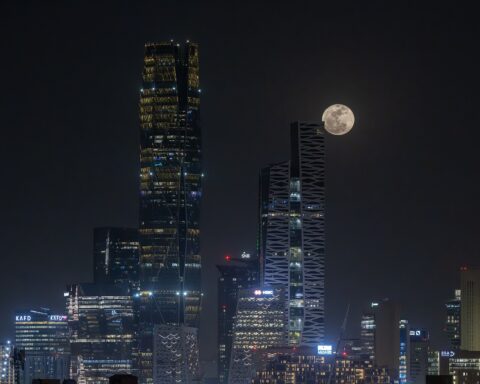
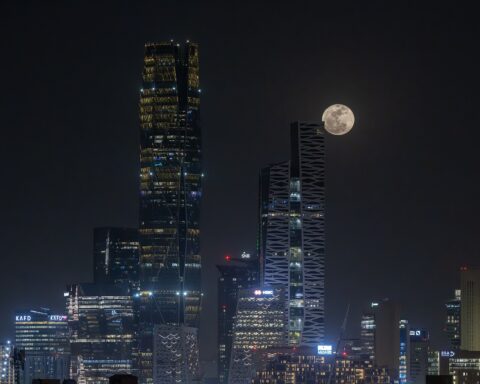
RIYADH — Saudi Arabia’s Future Investment Initiative Institute on October 19 postponed its 10th annual summit, seven days before it was due to open in Riyadh. On November 12, the institute confirmed new dates a full year away: October 25-28, 2027.
The delay creates a two-year gap in an annual event that has run since 2017. The only previous postponement was forced by COVID-19: the 2020 edition (FII4) moved from October 2020 to January 2021 (Arab News, 2020-09-01; Al Arabiya, 2020-09-01). The 2025 edition drew 9,000 delegates from 90 countries and 20 heads of state, generating over $50 billion in deals (Zawya, 2025-10). The kingdom’s Vision 2030 programme depends on FII to attract the $100 billion a year in foreign direct investment it targets by 2030 (Fortune, 2026-10-07). Yet the official statement cited only the importance of the milestone 10th edition — not the Houthi missile campaign that had shut Riyadh’s main airport for a week.
The House of Saud Daily Briefing
Saudi Arabia's news in 3 minutes, every morning. Free. See today's issue
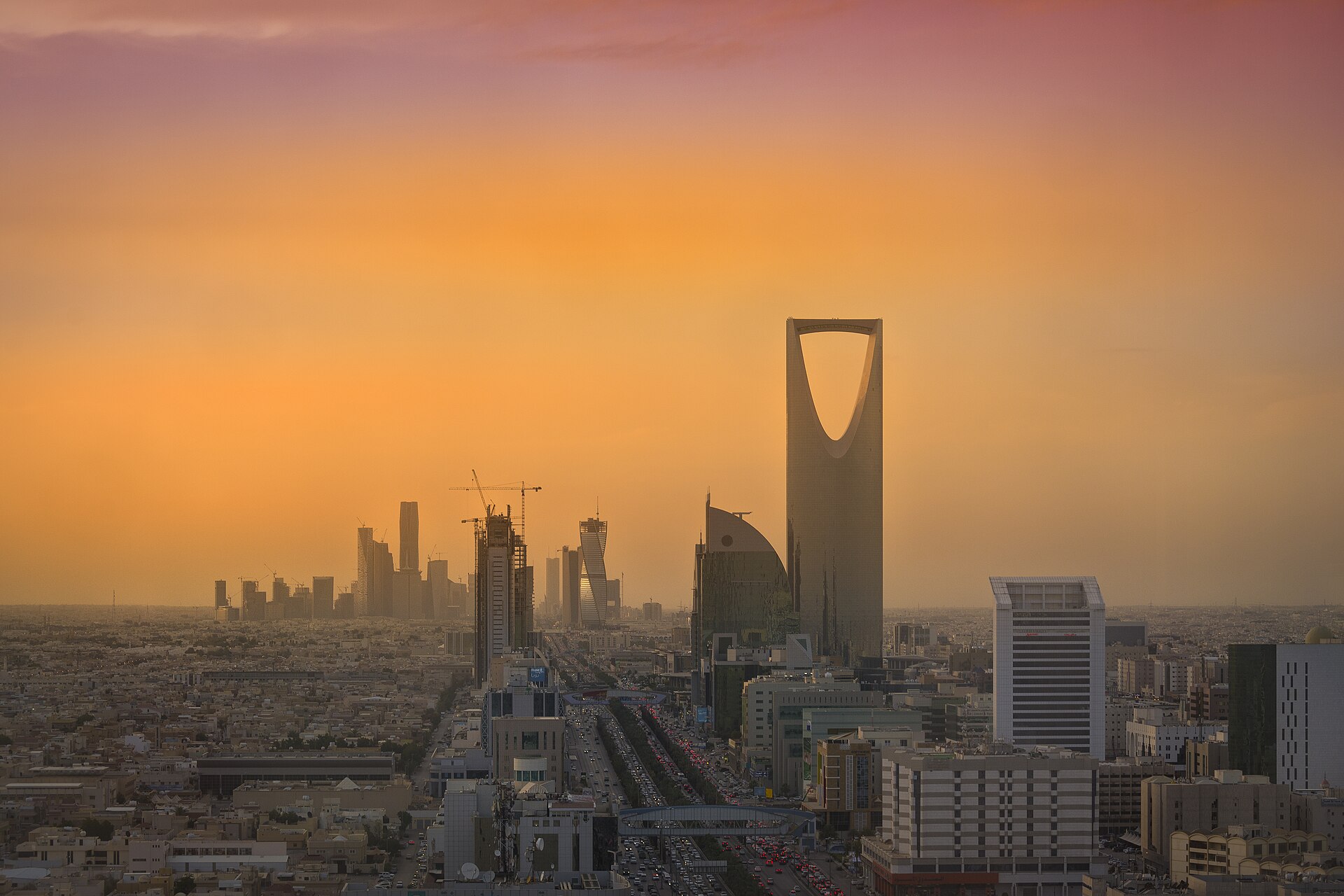
What Did the FII Institute Say About the Postponement?
FII CEO Dr Maha Bint Mishari Al Saud said on October 19 that the decision “comes from a deep commitment to our partners, members, speakers and delegates” (The National, 2026-10-19). A “decade of partnership and shared vision,” she said, “deserves nothing less than our absolute best.” The words “security,” “Houthi,” “attack” and “airport” did not appear in the statement.
“Because this is our landmark 10th edition, we want to ensure it delivers the full scale, extraordinary quality, and unforgettable impact that our community has come to expect and truly deserves.”— Dr Maha Bint Mishari Al Saud, CEO, FII Institute (The National, October 19, 2026)
When the institute confirmed new dates on November 12, Al Saud said the move reflected “our commitment to ensuring the highest level of international participation, visibility and impact” (The National, 2026-11-12). She added that the institute was “deeply grateful for the continued support of the kingdom’s leadership.” The original theme — “The Power of Legacy” — will carry over to the 2027 edition (FII Institute, 2026-07-14; The National, 2026-11-12).
No separate statement was issued by PIF Governor Yasir Al-Rumayyan or any Saudi government ministry. The original October 19 announcement gave no rescheduled date, saying only that new dates would be announced “very soon” (The National, 2026-10-19).
The Airport That Forced the Decision
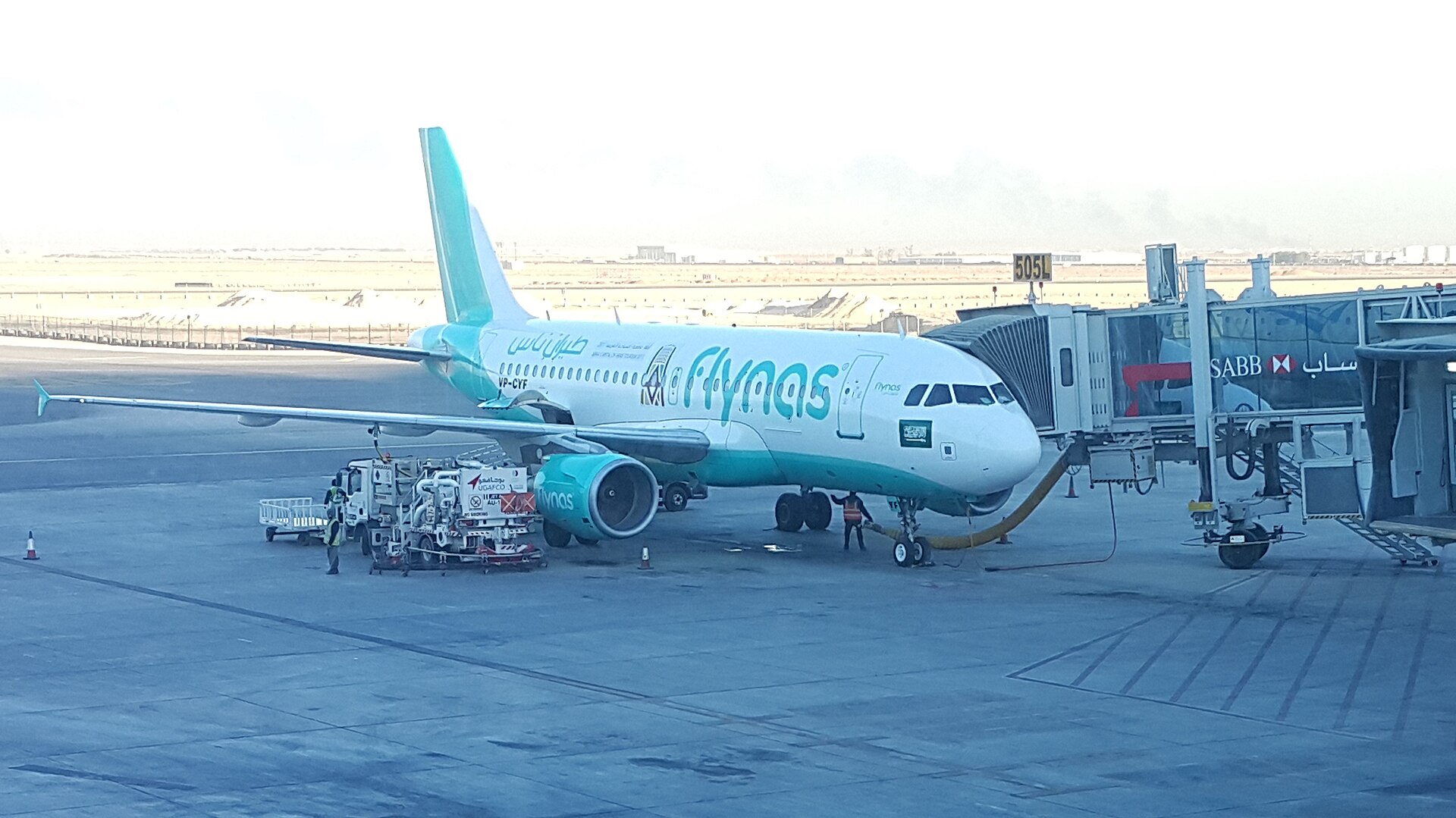
The official language was careful. The operational reality was not. King Khalid International Airport had only reopened on October 18 — one day before the postponement — after a week-long closure caused by Houthi missile and drone attacks (Al-Monitor, 2026-10-19).
On October 19, Al-Monitor reported that 108 flights — roughly 18 per cent of scheduled services — were still cancelled, citing Flightradar24 data. FII10 had been set for October 26-29, putting its opening night one week after an airport still running at a fraction of its normal capacity. The European Union Aviation Safety Agency had widened its Saudi airspace warning (Fortune, 2026-10-09).
Houthi attacks on the airport between October 6 and 11 killed at least 12 people at KKIA on October 10 alone, with the death toll rising to at least 14 as more died of injuries, according to Al Jazeera (2026-10-10) and Saudi Gazette (2026-11). By late October, strikes had grounded close to 90 per cent of Riyadh’s flights, the Jerusalem Post reported (2026-10-26). An international investment summit needs an international airport that works, and in October 2026, Riyadh did not have one.
Al-Monitor’s Jack Dutton wrote that the attacks “dealt a major blow to Saudi Arabia’s efforts to establish itself as a destination for investment, tourism and business” (Al-Monitor, 2026-10-19). Those sectors are pillars of the kingdom’s push to diversify away from oil. The New York Times reported separately that the airport strikes threatened Riyadh’s events calendar (New York Times, 2026-10-10).
Did Financial Institutions Signal Concerns?
The FII10 speakers list read like the front row of the global financial establishment. BlackRock CEO Larry Fink, JPMorgan CEO Jamie Dimon, Goldman Sachs CEO David Solomon and Bridgewater founder Ray Dalio were all listed on the FII website before the postponement. So were Alphabet president and CIO Ruth Porat and HSBC Group CEO Georges Elhedery (Al Jazeera, 2026-10-20; Al-Monitor, 2026-10-19). No company publicly announced a withdrawal before the decision was made.
According to Semafor, as reported by TimesLive (2026-10-19), major banks and private equity firms had privately relayed safety concerns about attending to PIF Governor Al-Rumayyan. That report has not been independently confirmed, and no named institution has stated publicly that it raised objections. An unnamed company source told The National they had “remained committed to attending the event despite the attacks on the airport” (The National, 2026-10-19). They described the mood as “calm and level-headed” and said they “appreciate that safety is a higher priority.”
FII’s commercial value depends on physical presence. The billions in deals signed at each edition are negotiated face to face — not on video calls. An airport that had been shut entirely the previous week could not reliably receive 9,000 international delegates.
A Calendar of Disrupted Events
FII was not the first Saudi event shelved because of the Iran-linked conflict, but it was the most commercially significant. The pattern of cancellations and postponements tells a story the official statements avoid.
| Event | Original date | Action taken | Source |
|---|---|---|---|
| National Day fireworks and drone shows | September 23, 2026 | Postponed indefinitely | Khaleej Times, 2026-09-23 |
| Red Sea International Film Festival | Q4 2026 | Postponed to Q4 2027 | The National / Gulf News, 2026-09-21 |
| Riyadh Season | October 2026 | Postponed indefinitely | Khaleej Times, 2026-09-23 |
| EU-GCC summit | October 24, 2026 | Postponed; no new date | The National, 2026-10-15 |
| FII10 | October 26-29, 2026 | Postponed to October 25-28, 2027 | The National, 2026-10-19 / 2026-11-12 |
The contrast with events that did proceed sharpens the picture. The 25th World Petroleum Congress ran in Riyadh from October 11 to 15 and drew a record 33,000 attendees from 135 countries, according to Asharq Al-Awsat. ADIPEC 2026 in Abu Dhabi ran from November 2 to 5 and closed with $67 billion in deals announced (ADIPEC press release, 2026-11-05). Energy-industry gatherings went ahead; Saudi Arabia’s flagship investment showcase — aimed at financial executives rather than oilfield engineers — could not.
Messe Frankfurt Saudi Arabia, which also postponed a trade show, said the decision followed “close monitoring of recent developments in Saudi Arabia” (The National, 2026-10-19). It was taken, the company said, “in co-ordination with the venue, the local government partners, and the event’s local and international stakeholders.” That language came closer than the FII Institute’s to acknowledging conditions on the ground. The pattern of postponements overlaps directly with the Houthi campaign that Saudi Arabia has been planning a six-month military operation to counter, extending into 2027.
How Does the Postponement Affect Saudi Arabia’s Investment Brand?
The Clingendael Institute, a Dutch think tank, reported that the conflict had led Saudi Arabia to “cancel, freeze or scale back several large-scale flagship Vision 2030 projects” in early 2026 (Clingendael, 2026 policy brief). That assessment covered the broader retrenchment: the indefinite postponement of the 2029 Asian Winter Games at Trojena in January (MEED, 2026-01-26) and the termination of NEOM’s Trojena contracts in March (MEED, 2026-03-26). Semafor reported in May that work on NEOM’s The Line had been halted until after 2030 (Semafor, 2026-05-22). The FII postponement added the investment calendar itself to the list of Vision 2030 casualties.
Saudi Arabia’s Q2 2026 foreign direct investment fell 18 per cent quarter-on-quarter to 22.3 billion riyals, according to Fortune (2026-10-07). Real GDP was forecast to fall 3.6 per cent in 2026 on a 21.8 per cent drop in oil activities, according to Reuters via Zawya (2026-09-30). The pre-budget statement in September revised the 2026 fiscal deficit upward to 245 billion riyals from a budgeted 165 billion and projected the 2027 deficit at 191 billion riyals — 3.6 per cent of GDP.
Rating agencies have not downgraded. Fitch maintained Saudi Arabia at A+ with a stable outlook in July 2026, forecasting 2026 GDP growth of 0.6 per cent. Moody’s held Aa3 stable in May 2026, and S&P held A+ stable in September 2026, forecasting real GDP at minus 0.9 per cent for 2026 (Arab News, 2026-09-12). The divergence reflects how much the conflict’s economic toll depends on its duration and the pace of oil-output recovery.
PIF Governor Al-Rumayyan, speaking at the FII Priority event in Miami in March 2026, said Saudi Arabia’s position remained “strong, stable and resilient” (Arab News, March 2026). PIF, he said, remained “committed to its investments around the world.” That was before the airport closures, before the flight cancellations and before FII itself was delayed by a year. PIF has since explored securitisation and stake sales as its returns fell to 5.8 per cent. The kingdom is pressing ahead with a 15 per cent minimum tax on multinationals from January 2027 as part of its effort to broaden the revenue base.
The Venue Became the Target
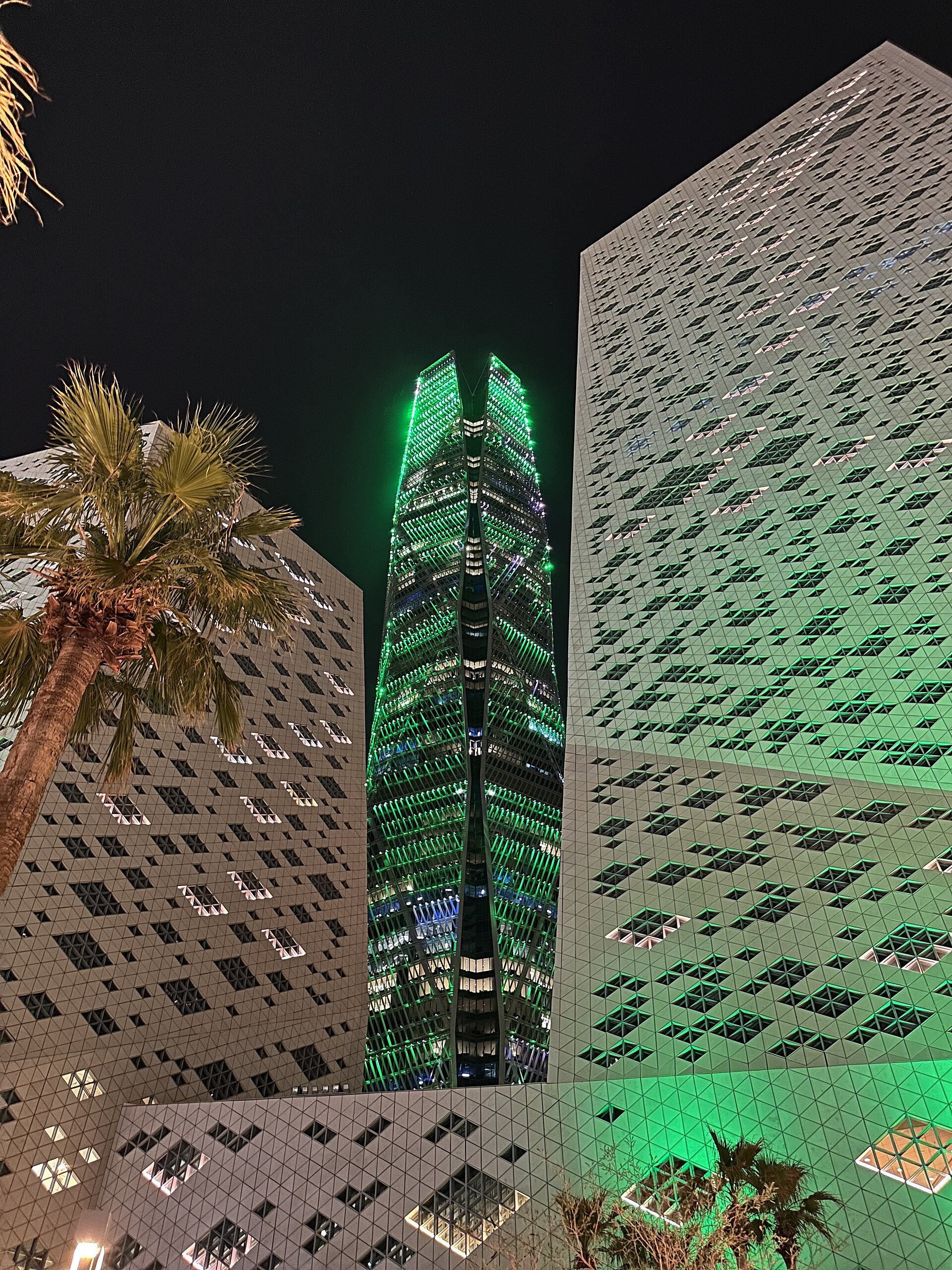
On November 19 — one week after the FII Institute announced its rescheduled 2027 dates — a suspected Houthi missile struck PIF Tower in Riyadh’s King Abdullah Financial District, shattering windows across seven to eight floors (Bloomberg, 2026-11-19; Firstpost, 2026-11-20). Brent crude rose on the news.
The PIF Tower strike carried a symbolism that the airport closures did not. KKIA is infrastructure; PIF Tower is a statement. It houses the fund that underpins both Vision 2030 and FII itself, sitting in the financial district the kingdom built to project economic modernity. The same conflict the FII Institute’s statements had avoided naming had now put visible damage on the institution’s own building.
The Houthis have not been found making any specific statement about FII or about targeting Vision 2030 events. Their attacks on KKIA forced the postponement indirectly by making the airport unusable for mass international travel. The PIF Tower strike hit the institution itself. Whether Riyadh’s financial district will be secure enough for a 9,000-person international summit by October 2027 remains an open question.
Background
The Future Investment Initiative was founded in 2017 by the Public Investment Fund. Its purpose: to position Saudi Arabia as a global investment hub, a core objective of Vision 2030. The event has been held annually since, with the 2020 edition (FII4) delayed from October 2020 to January 2021 by the COVID-19 pandemic (Arab News, 2020-09-01).
FII’s scale grew rapidly. PIF Governor Al-Rumayyan said at the 2025 edition (FII9) that the event had generated more than $250 billion in cumulative investment commitments since 2017 (Arab News, 2025-10). PIF’s 2025 annual report showed assets under management exceeding $900 billion, revenue of $120 billion and net profit of $17 billion (Asharq Al-Awsat, 2026-08-17). The original FII10 programme was announced on July 14, 2026, under the theme “The Power of Legacy.” It promised to examine “how the decisions, investments, and partnerships we make today will shape generations to come” (Fortune press release / FII Institute, 2026-07-14).
The Iran conflict that escalated on February 28, 2026, reshaped the fiscal and security backdrop. The fiscal deterioration described above coincided with giga-project retrenchment, and PIF shifted its strategy from “rapid expansion to consolidating efficiency” (Jawlah, 2026-08-12). The investment-attraction machinery — of which FII is the most visible piece — was disrupted by the same forces reshaping the kingdom’s fiscal outlook.
Frequently Asked Questions
What is FII Priority and did those events also get postponed?
The FII Institute runs smaller satellite events under the FII Priority brand in cities outside Saudi Arabia, including Miami, Hong Kong and Rio de Janeiro. FII Priority Miami took place in March 2026 and has not been reported as postponed. The November 12 announcement from the FII Institute referenced upcoming FII Priority events alongside the rescheduled Riyadh summit, indicating the satellite programme continues (The National, 2026-11-12).
Did any company or government publicly withdraw from FII10 before it was postponed?
No company, government delegation or individual speaker publicly announced withdrawal from FII10 before the October 19 postponement. According to Semafor (via TimesLive, 2026-10-19), some financial firms raised safety concerns privately with PIF Governor Al-Rumayyan, but that report remains unconfirmed. The institute’s decision to postpone before any public withdrawal materialised meant the event’s brand absorbed a delay rather than a string of high-profile defections.
What happened to the EU-GCC summit that was also scheduled for Riyadh?
The EU-GCC summit, scheduled for October 24 — two days before FII10 was due to open — was postponed on October 15 with no new date set, according to The National and the GCC Secretariat (The National, 2026-10-15). Unlike FII, it has not been rescheduled as of November 2026. The postponement of both a diplomatic summit and the region’s largest investment conference within four days underscored the breadth of the disruption to Riyadh’s international calendar.
How did the World Petroleum Congress proceed while FII did not?
The 25th World Petroleum Congress ran in Riyadh from October 11 to 15, drawing a record 33,000 attendees from 135 countries (Asharq Al-Awsat). Its dates fell before the most severe airport disruptions that followed Houthi strikes in mid-October. FII, scheduled 11 days later for October 26-29, fell after the week-long KKIA closure, when the airport infrastructure needed for 9,000 international delegates was still severely constrained.
Can Saudi Arabia still meet its $100 billion annual FDI target by 2030?
Saudi Arabia’s Q2 2026 FDI of 22.3 billion riyals — roughly $5.9 billion — annualises to approximately $24 billion, well below the $100 billion target (Fortune, 2026-10-07). Rating agencies have maintained investment-grade ratings, suggesting long-term creditworthiness holds, but the conflict has compressed the timeline for attracting the capital Vision 2030 requires. With FII rescheduled to October 2027, the kingdom’s most important investor-facing event will not have been held for two years.
The House of Saud Daily Briefing
Saudi Arabia's news in 3 minutes, every morning. Free. See today's issue