
RIYADH — Saudi Arabia entered its hundredth day of war having consumed three-quarters of its annual deficit allowance in a single quarter, depleted all but a fraction of the interceptors that protect its cities, and lost access to every diplomatic channel through which it once communicated with Iran or influenced the American negotiating position toward Tehran. The war that began on February 28 has not destroyed the kingdom’s economy or its military, but it has done something that may prove more damaging across the next hundred days: it has closed, dimension by dimension, every option MBS once had for shaping the outcome of a conflict he did not start.
Chatham House described the war in May as “as unsettling as it is unprecedented” for Saudi Arabia, and the fiscal, military, and diplomatic evidence accumulated since has only widened the gap between the kingdom’s available tools and the demands of a conflict that offers no clean exit — escalation, negotiation, and a brokered American peace all require resources that have already been spent or committed. The Brookings Institution has identified July 9, thirty-two days from the Day 100 mark, as the date when every remaining global supply buffer is exhausted, after which markets absorb the full 7.1 million barrels per day of disrupted Hormuz-dependent supply with no cushion at all.
Table of Contents
- How Much Has One Hundred Days of War Cost Saudi Arabia?
- How Many Interceptors Does Saudi Arabia Have Left?
- Why Can Saudi Arabia Not Pump Its Way Out?
- Who Is Negotiating on Saudi Arabia’s Behalf?
- What Did the $142 Billion Arms Deal Actually Buy?
- The Alliance That Put Nothing in Writing
- Thirty-Two Days Until the Last Buffer Disappears
- Frequently Asked Questions
How Much Has One Hundred Days of War Cost Saudi Arabia?
The Ministry of Finance reported a Q1 2026 deficit of SAR 125.7 billion ($33.5 billion), consuming 76 percent of the full-year SAR 165 billion target in ninety days. Defence spending reached SAR 64.7 billion for the quarter, a 26 percent year-on-year increase, while total government expenditure rose 20 percent to SAR 387 billion ($103.2 billion) and the National Debt Management Centre declared its annual borrowing plan “approximately 90 percent complete” before spring arrived. The one commercial upside — Saudi airports absorbing diverted Gulf traffic while Bahrain, Kuwait, and the UAE shut theirs — is detailed in Riyadh’s wartime hub windfall and the deficit it cannot cover.
| Indicator | Q1 2026 | Full-Year Target or Implied Pace |
|---|---|---|
| Fiscal deficit | SAR 125.7B ($33.5B) | SAR 165B — 76% consumed |
| Defence spending | SAR 64.7B (+26% YoY) | ~SAR 258B implied |
| Total expenditure | SAR 387B (+20% YoY) | — |
| Oil revenue | SAR 145B (−3% YoY) | — |
| NDMC borrowing plan | ~90% utilised | SAR 217B ($57.86B) |
| PIF cash | $15B (6-year low) | — |
The implied annual run rate for defence alone, roughly SAR 258 billion, would consume close to half of the government’s projected SAR 560 billion in total revenue — a wartime ratio without precedent in modern Gulf fiscal history, driven by a war whose scale and duration no Gulf state had experienced before February 28. Oil revenue fell 3 percent to SAR 145 billion ($38.6 billion) despite Brent averaging above $90 for most of the quarter, a decline explained not by price weakness but by the physical inability to export full volumes through a Strait of Hormuz that Iran has kept functionally closed since the war began.
NDMC targeted SAR 217 billion ($57.86 billion) in 2026 issuance to cover both the deficit and SAR 52 billion in maturing debt repayments, and reaching “approximately 90 percent” of that plan before Q1 ended means the kingdom has almost no domestic borrowing capacity left for the remaining nine months of the year. May’s domestic sukuk raised SAR 2.42 billion ($644 million), a figure that reads less like a market test than a rationing exercise, and Saudi Arabia will need to access international capital markets in H2 2026 under credit conditions that have deteriorated since February on every metric sovereign bondholders price — fiscal trajectory, oil-export capacity, geopolitical risk, and the physical security of the infrastructure that generates the revenue.
The sovereign wealth fund that was supposed to insulate the economy from external shocks has itself been drained by pre-war commitments. PIF cash stands at $15 billion, a six-year low, with $50 billion spent on NEOM — a megaproject that produced 2.4 kilometres of a planned 170-kilometre Line before Semafor reported its formal construction halt on May 22. PIF’s 2026-2030 strategy designated NEOM a “standalone pillar,” financial quarantine language designed to contain a write-down, and the only surviving protected investments are the Oxagon industrial port ($3 billion active) and the Green Hydrogen complex ($8.4 billion), while the Aramco cash position has itself become a question of how many more quarters the state-owned company can keep paying dividends that exceed its free cash flow. Semafor’s June 7 report that NEOM has budgeted $16 billion in contractor termination payments for 2026–2030 adds a precise cost to the write-down architecture: the exit bill exceeds PIF’s remaining cash. The same dividend payment — $21.89 billion, disbursed June 9 — also determines whether Aramco activates its parent guarantee on Sadara Chemical’s $3.7 billion debt, as examined in Aramco’s Q1 2026 FCF shortfall.
The Middle East briefing 3,000+ readers start their day with.
One email. Every weekday morning. Free.
How Many Interceptors Does Saudi Arabia Have Left?
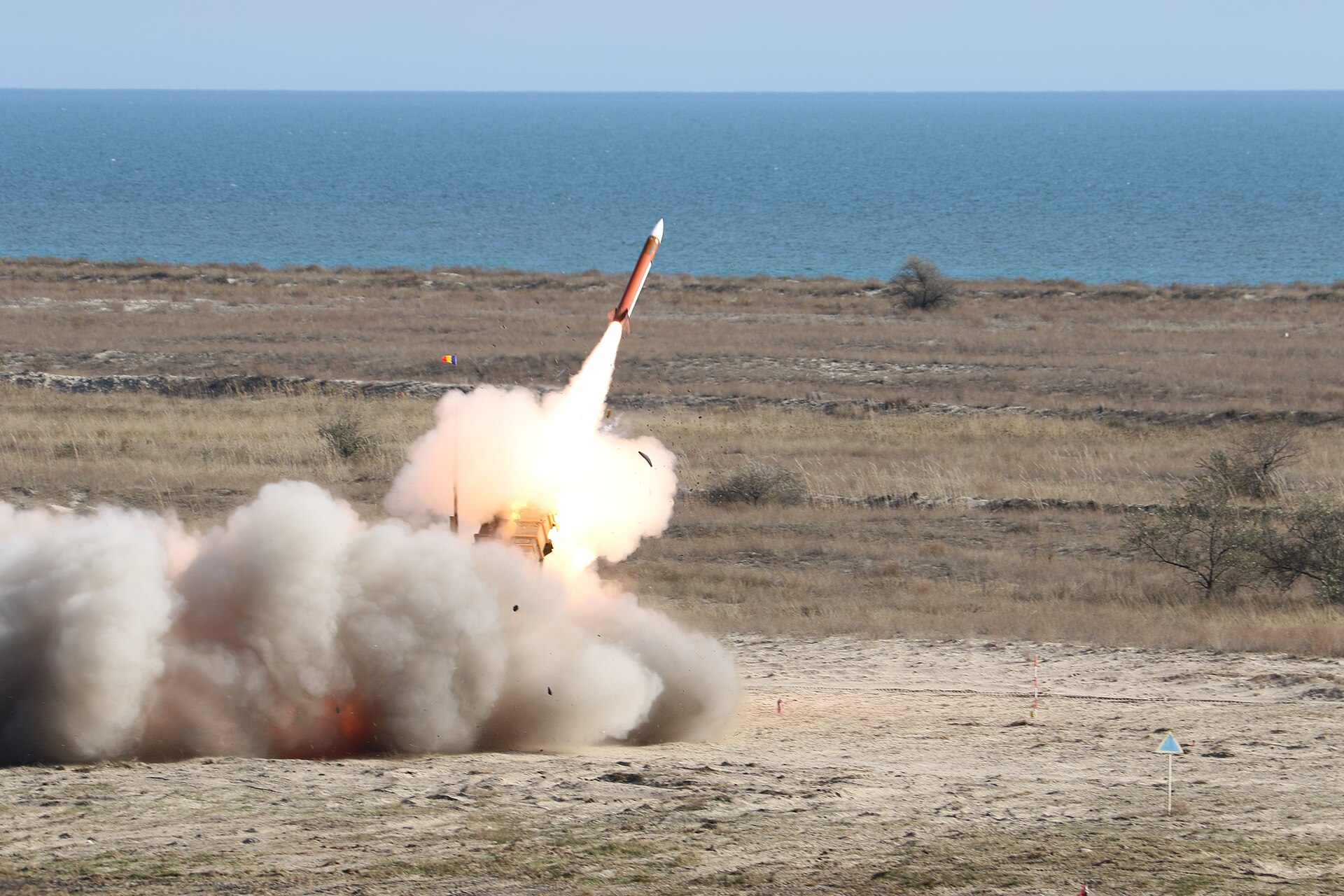
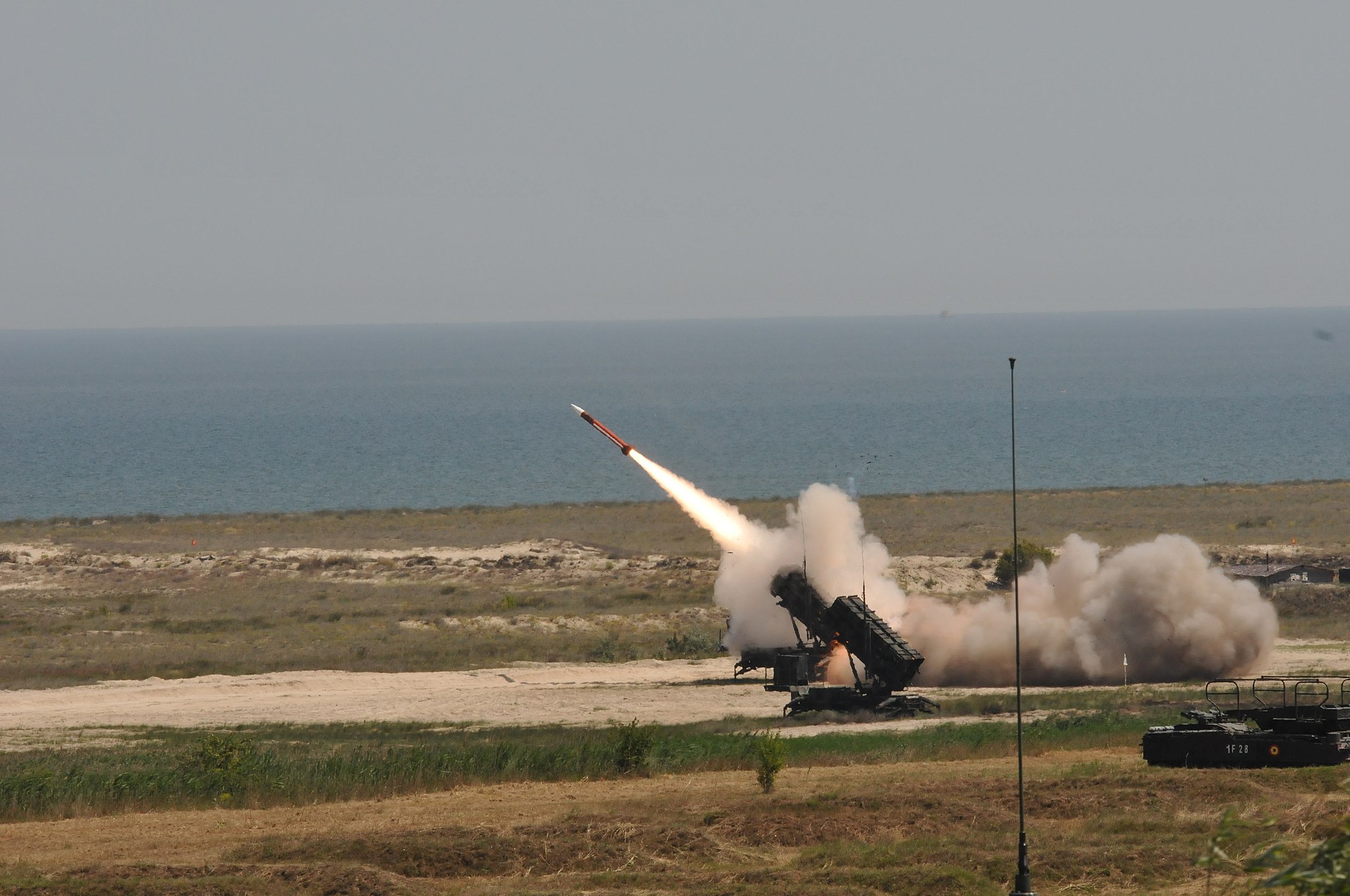
Saudi Arabia’s PAC-3 MSE stockpile, the interceptor that forms the backbone of the kingdom’s air defence, has been depleted from approximately 2,800 rounds on February 28 to an estimated 80-150 remaining on Day 100 — a consumption rate of 95-97 percent in one hundred days, according to DSCA procurement data and operational attrition reporting. The $9 billion foreign military sales order placed on January 30 for 730 interceptors, an order that exceeds one full year of global production, will not deliver a single round before mid-to-late 2027.
Lockheed Martin’s facility in Camden, Arkansas produces approximately 620 PAC-3 MSE rounds annually for all customers worldwide — the United States, Israel, Japan, and every Gulf state draw from the same production line — and Saudi Arabia’s 730-round order sits in a queue behind every other allied nation that has drawn down its own inventory in the same conflict. The replenishment gap extends through at least 2028 under the most optimistic production scenarios, with Camden not scheduled to reach 2,000 rounds per year until 2030. At current IRGC salvo rates, approximately 40 missiles per wave (down 92 percent from the 480-missile opening barrage on Day 1), the remaining stockpile provides roughly two to four full engagement cycles before complete exhaustion.
The shift from mass barrages to smaller, sustained salvos is itself an Iranian strategic choice: the IRGC has traded the possibility of a single overwhelming strike for the mathematical certainty of grinding Saudi inventories to zero through attrition, at a cost-exchange ratio that makes every engagement a financial victory for Tehran regardless of the tactical outcome. Each IRGC drone costs an estimated $30,000, each PAC-3 MSE interceptor roughly $4 million, and the 130-to-1 asymmetry means Iran can sustain this campaign for years at a fraction of what Saudi Arabia pays to survive each wave.
Secretary Rubio’s $8.6 billion emergency arms authorisation on May 2 bypassed Saudi Arabia entirely — Bahrain received a 50-round standard FMS allocation under FR Doc 2026-10920 (June 1), while the kingdom that hosts the larger American military presence received nothing. The gap is structural, not political: Section 36(b) emergency foreign military sales require a bilateral Status of Forces Agreement, and Saudi Arabia has never signed one for Prince Sultan Air Base, leaving the kingdom’s air defence dependent on a standard peacetime procurement timeline applied to a wartime depletion rate that no pipeline was built to sustain.
Why Can Saudi Arabia Not Pump Its Way Out?
Saudi Arabia’s OPEC+ production quota stands at 10.291 million barrels per day, but actual output has fallen to approximately 7.25 million bpd — a gap of more than 3 million bpd that represents not a compliance decision but the physical consequence of exporting through a strait that Iran controls. The kingdom’s pipeline alternatives, primarily the East-West Petroline to Yanbu, cannot compensate for the volumes Hormuz once carried, and Iran’s Tasnim news agency has placed Bab al-Mandab alongside Hormuz on its published escalation agenda, threatening the Red Sea redirect that was supposed to serve as the workaround.
OPEC+ ratified a 188,000 bpd production increase on June 7 at Brent prices of roughly $95.25, and the increase is, for Saudi Arabia, physically undeliverable through a closed strait — a decision that widens the gap between the kingdom’s paper entitlement and its actual export capacity without generating a single additional dollar of revenue. Kazakhstan, which exceeded its own quota by 322,000 bpd in Q1 on the back of Chevron’s $48.5 billion Tengiz expansion (901,000 bpd from the field alone), faces no enforcement mechanism, and the combined OPEC+ compliance debt stands at 4.779 million bpd with no credible path to resolution.
The breakeven arithmetic is straightforward and unforgiving: Saudi Arabia requires $108-111 per barrel to balance its consolidated budget, Brent sits at roughly $94-95, and the $13-16 per barrel shortfall translates into approximately $100 million per day of lost fiscal capacity at current production volumes. Closing that gap through output cuts — the lever Saudi Arabia has pulled for decades — would require removing 1.5-2 million bpd from global supply, a reduction larger than the entire remaining OPEC+ scheduled increases of 1.65 million bpd combined, and the lever itself has been disabled by the same strait closure that created the shortfall.
On June 9, Aramco will pay a quarterly dividend of $21.89 billion at a coverage ratio of 0.85 times free cash flow — the state-owned company paying out more than it earns, with post-dividend cash projected to fall toward $53.3 billion. The same day, Iran is expected to formally reject the American MOU proposal and file a counteroffer through Oman, a convergence that prices the cost of continued war and the cost of a deal on the same calendar date, and that arrives while the kingdom’s export capacity, borrowing position, and interceptor stockpile are all at or near their wartime lows.
“The conflict has unraveled the basic premise on which Saudi foreign policy has rested for the past five years — a logic of de-escalation in service of economic transformation.”
Arab Center DC, “Saudi Arabia’s Strategic Dilemma in the Iran War”
Who Is Negotiating on Saudi Arabia’s Behalf?
No one with an independent Saudi mandate. Saudi Arabia has been excluded from all three active US-Iran negotiating tracks — the Oman channel, the Pakistan courier architecture, and the UK-France/Northwood maritime track — and the kingdom’s last remaining back-channel to Tehran, routed through Islamabad, is shared with Washington and structurally subordinated to the American negotiating position that Rubio described at the Senate Foreign Relations Committee on June 2-3.
Foreign Minister Prince Faisal bin Farhan’s last confirmed contact with either Rubio or Iranian FM Araghchi was before May 11, a silence of nearly four weeks during which the war’s diplomatic trajectory has been determined entirely by capitals that do not carry Riyadh’s brief. The MOU’s expected formal rejection on June 9 eliminates the Omani track — the only multilateral channel with a history of producing frameworks both sides would engage with — and leaves Pakistan as the sole remaining conduit. The structural problem is that Pakistan simultaneously serves as the US-Iran MOU courier (Rubio described a six-to-eight-person mixed IRGC-civilian advisory council communicating through “written intermediaries”), as the SMDA military provider with 8,000 troops on Saudi soil, and as the kingdom’s private de-escalation back-channel — three roles that cannot operate independently when carried by the same country under competing pressures from Washington and Tehran.
Iran’s diplomatic posture has made the exclusion worse by design. Araghchi’s standing formulation — “violation on all fronts including Lebanon” — links every dimension of the conflict into a single negotiating package, making it impossible for Riyadh to pursue a Hormuz-only conversation without accepting terms on Lebanon and the nuclear file that it has no authority to deliver. Tasnim has placed “Hormuz blockade plus Bab al-Mandab” explicitly on Iran’s published agenda, and Tehran applied to Kuwait the formulation that it bore “direct responsibility” for hosting US forces — logic that implicates Riyadh far more directly, which Iran has not yet formally extended but does not need to, because the implicit threat serves its purpose.
FM Faisal’s June 2-4 diplomatic burst — six contacts with counterparts across three days — included no call to Rubio, no call to Araghchi, and no communication with anyone in Beirut, a pattern that reflects not a strategic choice to disengage but the absence of counterparts willing to take the call on terms Saudi Arabia can offer. MBS called Macron on May 31 to discuss “maritime navigation security and freedom,” a conversation the Élysée conspicuously issued no readout for, suggesting it was Saudi-initiated — and needing Paris to carry your diplomatic freight to Tehran, however capable the intermediary, represents a considerable distance from 2023, when MBS was brokering the Saudi-Iran rapprochement through Beijing with both sides at his table.
What Did the $142 Billion Arms Deal Actually Buy?
The $142 billion US-Saudi arms package announced on May 13 extracted MNNA designation, F-35 fighter offers, advanced semiconductor access, and civil nuclear cooperation — but it produced zero progress on MBS’s stated condition for normalisation with Israel, a clear and irreversible commitment to Palestinian statehood, which Secretary Rubio told the Senate Foreign Relations Committee on June 2-3 is “not realistic.” Zero of the four Saudi preconditions — independent state, 1967 borders, East Jerusalem as capital, irreversible commitment — are met by the current American position.
CSIS framed the transaction as MBS extracting maximum security concessions while Washington received primarily a $600 billion investment commitment and the goal of normalisation, but the leverage problem is temporal: Saudi Arabia’s strategic concessions were banked on May 13, three weeks before Rubio’s testimony confirmed that the reciprocal commitment on Palestinian statehood would never materialise. The deal produced the largest single-day extraction of Saudi leverage in the history of the bilateral relationship, and it was spent before Washington needed Saudi cooperation on the Iran negotiations that followed — meaning both sides gave away their strongest card before the hand that mattered was dealt, but only one side received hardware in return, and the hardware arrives on a timeline that does not help.
The deal also failed to close the SOFA gap that has become the kingdom’s most consequential structural vulnerability. Saudi Arabia remains the only major US arms recipient in the conflict zone without a Status of Forces Agreement covering American personnel at Prince Sultan Air Base, where the IRGC struck on March 27 with at least six ballistic missiles and 29 drones, destroying an E-3 Sentry AWACS aircraft, damaging KC-135 refuellers, and wounding 15 US troops (five critically), according to Al Jazeera. The SOFA absence is what excluded Saudi Arabia from Rubio’s May 2 emergency arms authorisation, and the nuclear cooperation component — bilateral-only safeguards, no enrichment ban, no Additional Protocol, no IAEA Gold Standard compliance — has already been characterised by the Arms Control Association as a “gilded sweetheart deal” (Arms Control Today, June 2026) that Iran can cite in its own negotiations.
Saudi Arabia denied Project Freedom overflight access between May 3 and 6, and the MBS-Trump call convened to resolve the impasse “did not resolve the issue” — a sequence that demonstrates how the SOFA gap functions as leverage running in both directions. Saudi Arabia can deny the Americans its airspace, but the Americans can deny Saudi Arabia emergency interceptors, and when the PAC-3 inventory is measured in dozens rather than thousands, the asymmetry of consequence between those two denials is not close.
The Alliance That Put Nothing in Writing
The Saudi Military Deployment Agreement with Pakistan, signed September 17, 2025, authorised up to 80,000 troops for deployment to Saudi Arabia, accompanied by JF-17 Thunder jets, military UAVs, and Chinese HQ-9 surface-to-air missiles with a 200-kilometre engagement envelope — a security architecture assembled to provide the integrated air defence layer that the American relationship was supposed to deliver but has not. One hundred days into the war, approximately 8,000 of those 80,000 authorised troops have deployed, a ten-percent fill rate that reflects Pakistan’s domestic political constraints, the logistical burden of sustaining a foreign force in an active conflict zone, and the diplomatic tension created by Islamabad’s simultaneous role as courier between Washington and Tehran. The IISS characterised the broader arrangement in May as having moved “from reactive coordination to institutionalised consultation,” a description that captures the existence of structure without suggesting it has produced substance.
Three Saudi-Egypt-Pakistan-Turkey foreign-minister sessions took place between March 19 and April 18, and all three concluded without a communiqué — a documentary output that suggests the four governments agree on the need to meet but not on what to commit to paper. Turkey’s intelligence chief Fidan maintains a direct channel to Araghchi, giving the quadrilateral a diplomatic asset that no Western-aligned track possesses, but Ankara has kept that channel bilateral rather than making it available to the group. The HQ-9 system deployed with SMDA forces fills part of the gap left by the kingdom’s depleted PAC-3 stockpile, but it operates entirely outside the American-manufactured Patriot battle management system, creating an air defence picture that is layered in principle and fragmented in operation — two systems defending the same airspace without speaking to each other.
The political backdrop deteriorated on June 3, when the US House of Representatives passed H.Con.Res.38 — the War Powers Resolution — by 215-208, with four Republican crossovers (Fitzpatrick, Massie, Barrett, Davidson), the first time a WPR resolution has cleared either chamber on a final vote since the conflict began. The resolution is legally unenforceable under INS v. Chadha (1983), but the 215 figure is now a permanent fixture in the diplomatic record: a number Iran can cite in any future negotiation to argue that American domestic support for the war is eroding, and a number that Saudi Arabia, hosting US forces without a SOFA, cannot afford to dismiss, because a future WPR invocation with genuine enforcement teeth could sever the military presence that remains the only proven deterrent to IRGC strikes on Saudi territory.
“For Saudi Arabia, the Iran war in its scale, intensity, and potential impact is as unsettling as it is unprecedented. The Saudi leadership finds itself simultaneously trying to protect and prioritise its own economic and societal transformation, to navigate its relationship with an impulsive and unpredictable U.S. president, and to manage the geographic reality of living a drone’s flight away from a country that is likely to remain its principal antagonist for the foreseeable future.”
Chatham House, “How the Iran war is reshaping Saudi strategy,” May 2026
Thirty-Two Days Until the Last Buffer Disappears
Samantha Gross at the Brookings Institution has identified July 9, 2026, as the date when every temporary cushion in global oil markets is gone — Russian floating storage exhausted by the end of April, Iranian floating storage drained by the end of May, and IEA emergency strategic petroleum releases calculated to run out around the second week of July. Gross characterised the date as “the big one” that energy security planners have warned about for decades, and it sits thirty-two days from the Day 100 mark, arriving while the world’s largest swing producer is physically unable to deliver its own crude to market.
The IMF made Saudi Arabia’s economic recovery explicitly conditional on Hormuz in its June 3 Article IV assessment (PR 26181), the first time the Fund has applied chokepoint conditionality to any Gulf state in the history of the Article IV process. The language — recovery “contingent on maritime shipping through the Strait of Hormuz normalising over the coming months” — transforms an implicit market assumption into a binding institutional condition, and it cut the kingdom’s 2026 growth forecast by 1.4 percentage points to 3.1 percent. Saudi Arabia cannot satisfy the IMF’s condition because it does not control the strait, and the country that does has just rejected the American deal and filed its own terms through a channel Riyadh has no seat at.
Gulf News concluded in its Day 100 assessment that “one hundred days on, Hormuz has become as important to the conflict as the battlefield itself,” and the correction that observation requires is small but consequential: for Saudi Arabia, Hormuz is not a separate front but the front that determines whether the kingdom can fund its defence, service its debt, pay Aramco’s dividend, and sustain an economy built on the assumption that oil could always reach the sea. Both outcomes — continued war and successful peace — make the fiscal arithmetic worse rather than better: Goldman Sachs estimates that $14 of the current Brent price is war premium, meaning any deal that reopens Hormuz collapses crude below $82 per barrel and widens the deficit from the opposite direction.
Operation Decisive Storm launched in Yemen on March 26, 2015, with projections of a campaign lasting “a few weeks” at an estimated $200 million per day — by Day 100, the timeline had already collapsed, and that war eventually ran seven years, cost over $100 billion, and ended with the Houthis in a stronger bargaining position than they held on the morning it started. The structural difference is not one of scale but of agency: in Yemen, MBS chose to fight and could choose to stop, while in 2026 Saudi Arabia is the host territory for a war between Iran and the United States, its air bases absorb the strikes, its treasury funds the defence, and the Carnegie Endowment assessed in April that “Iranian missiles and drones have undermined the image of the Gulf states as safe and secure destinations for foreign capital” — before the IMF conditioned recovery on Hormuz, before the House voted 215-208 on war powers, before the NDMC exhausted its borrowing plan, and before Camden, Arkansas became the most consequential facility in Saudi Arabia’s national defence.
Frequently Asked Questions
What is Saudi Arabia’s consolidated fiscal breakeven oil price in 2026?
The IMF and Goldman Sachs estimate the consolidated breakeven, which includes government spending, PIF disbursements, and off-budget Vision 2030 capital commitments, at $108-111 per barrel. The narrower government-only breakeven sits at approximately $85-90 but excludes the Vision 2030 expenditures that MBS has designated as non-negotiable transformation priorities. Goldman projects a fiscal deficit equivalent to 6.6 percent of GDP for 2026 at current oil prices and production volumes, a figure that captures the full economic damage more completely than the headline deficit number alone.
Could Saudi Arabia bypass Hormuz entirely through the East-West Pipeline?
The Petroline connecting Abqaiq to the Red Sea terminal at Yanbu has a maximum throughput of approximately 5 million barrels per day, which could in theory handle a substantial share of Saudi output. In practice, Yanbu’s loading infrastructure was designed for lighter crude grades and cannot process the full export slate, and Iran has placed Bab al-Mandab — the chokepoint controlling Red Sea access from the south — explicitly on its published military agenda through Tasnim, threatening the exit point that any pipeline workaround depends on reaching safely.
Has Iran directly targeted Saudi military assets or only US assets on Saudi soil?
The IRGC has deliberately targeted American military infrastructure at Saudi bases — the March 27 Prince Sultan strike destroyed a US E-3 Sentry AWACS and damaged KC-135 refuellers — while avoiding direct attacks on Saudi-owned military assets. This targeting distinction keeps Saudi Arabia in diplomatic limbo between belligerent and neutral status under international law, preventing the kingdom from invoking certain bilateral defence provisions while absorbing the fiscal and political consequences of hosting a conflict that Iran frames, through Araghchi’s formulations and the IRGC’s targeting choices alike, as a US-Iran bilateral affair in which Gulf states are targets rather than participants. Israel’s Day 100 Mahshahr strike introduced a separate targeting logic that does not require the IRGC’s restraint: the dual-use industrial doctrine that justified Mahshahr applies directly to Jubail, and Saudi Arabia has made no legal or diplomatic effort to challenge it.
How does Saudi Arabia’s interceptor shortage compare to Israel’s?
Both countries face interceptor depletion, but the structural difference is domestic production capacity. Rafael Advanced Defense Systems manufactures Iron Dome interceptors inside Israel, giving Jerusalem a supply chain that does not depend on a single foreign factory or a foreign government’s political authorisation for emergency deliveries. Saudi Arabia has zero domestic missile production capability and is entirely dependent on Lockheed Martin’s Camden facility, which serves every global customer from one production line — Israel’s shortage is a production-rate problem with a domestic path to resolution, while Saudi Arabia’s is a dependency problem that no bilateral agreement short of a SOFA can accelerate. That dependency became a regional condition on Day 100: the synchronized GCC Patriot belt collapse shows that Bahrain, Kuwait, and the UAE face the same structural depletion, leaving the entire Gulf without a functioning interceptor reserve for the first time since hostilities began. The same Day 100 also brought the Houthi Red Sea ban that sealed Saudi Arabia’s final export bypass at Yanbu, completing the dual chokepoint enclosure of the kingdom’s crude export system. The ban moved to kinetic enforcement within hours: Houthi missiles struck two commercial vessels in the Gulf of Aden on June 8-9, confirming the transition from declaratory interdiction to active targeting of non-Israeli-flagged ships connected to Israeli port calls.
One constraint that did hold through Day 100 was the passive deterrent created by 30,000 Iranian Hajj pilgrims inside Saudi sovereign territory — a bilateral exposure that restrained both Riyadh and Tehran until the last pilgrims departed on June 9. That deterrent has now expired without replacement, as assessed in Mecca Held 30,000 Iranians for Thirty-Nine Days — Today the Shield Expires. One cost that cannot be measured in a single-day tally is the marine insurance lag: the war-risk premiums built up over a hundred days will persist for 12 to 36 months after any Hormuz ceasefire, embedding the war’s cost into every barrel’s journey long after the shooting stops.