RIYADH — The Gulf Cooperation Council was built to coordinate prosperity. It was never designed to fight a war — and 57 days into one, that flaw has become the single greatest threat to Saudi Arabia’s negotiating position. All six GCC members have absorbed direct Iranian missile and drone strikes since late February 2026. Not one has produced a binding collective military response. The reason is structural: the GCC’s founding charter requires unanimity on substantive decisions, giving every member an effective veto. That means Oman can block a joint military communiqué, Qatar can refuse interoperability demands, and the UAE can declare unilateral victory while Riyadh is still negotiating. Iran, which directed approximately 83 percent of its total strikes at GCC members, appears to have understood this better than the Gulf capitals themselves.
Table of Contents
- The Unanimity Trap: How One Veto Paralyzes Six Nations
- Why Did Iran Target All Six GCC States?
- Six Countries, Six Wars
- Can the Peninsula Shield Force Actually Defend the Gulf?
- The Interceptor Crisis Nobody Wants to Discuss
- What Happens When Hormuz Closes and 80 Percent of Your Food Comes by Sea?
- The Saudi-UAE Fracture Running Through Everything
- Pakistan, Turkey, and the Islamabad Channel
- If the Ceasefire Collapses, the GCC Fractures
- FAQ
The Unanimity Trap: How One Veto Paralyzes Six Nations
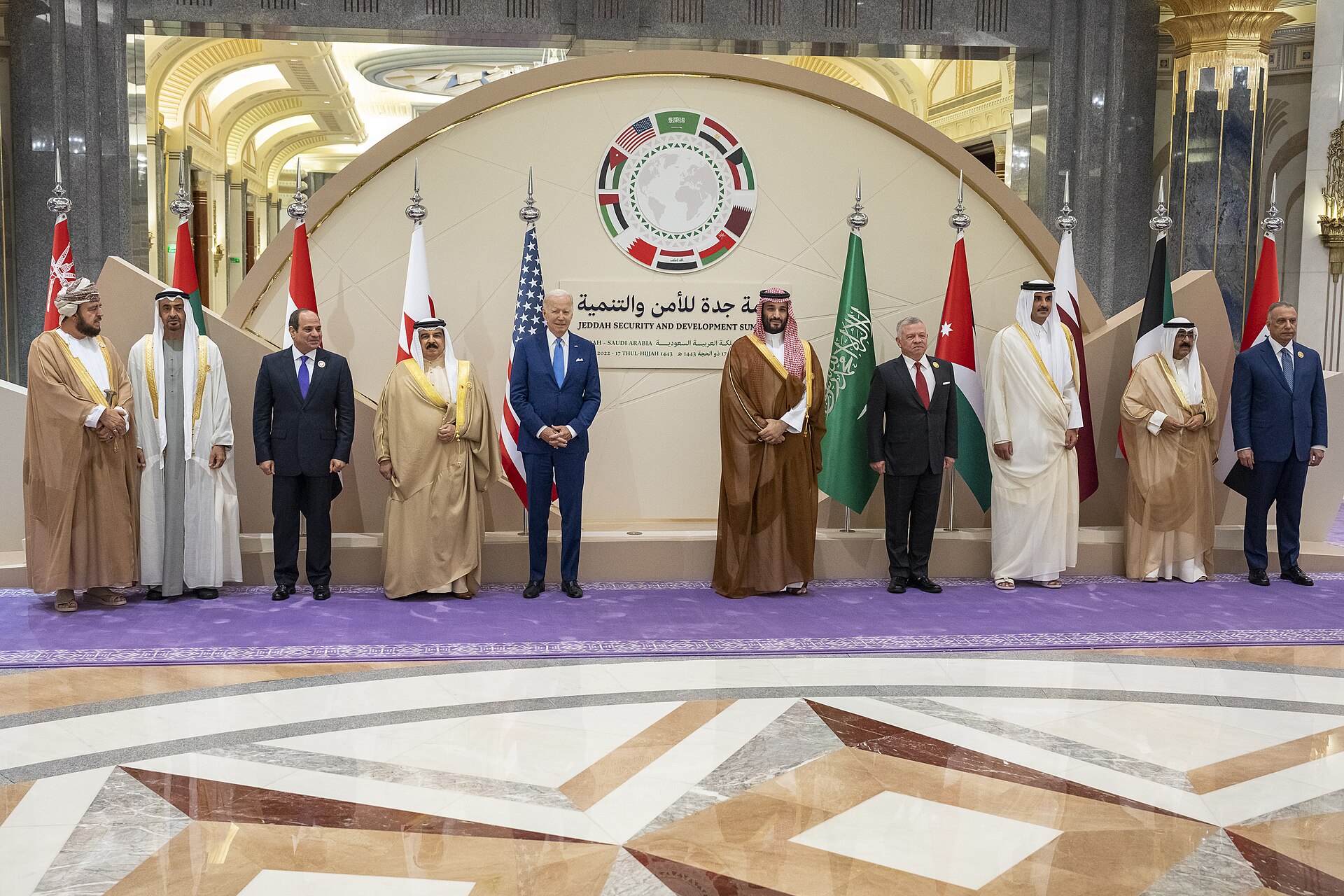
The GCC’s decision-making architecture is often compared to NATO’s, but the comparison flatters the Gulf bloc. NATO operates an integrated military command, maintains a standing rapid reaction force of 40,000 troops, and has invoked its binding Article 5 mutual defense clause — once, after September 11, and every member responded. The GCC has a Joint Defence Agreement signed in 2000 modeled on Article 5. It has never been invoked. The Unified Military Command, established in 2013 and renamed in January 2021, has no standing force, no integrated command structure, and no history of collective deployment against an external threat.
The reason is procedural but devastating. The GCC Supreme Council and Ministerial Council both require unanimous approval on substantive matters, according to the organization’s charter. Only procedural questions — scheduling, agenda items — can pass by majority vote. A decision to authorize joint military operations, to share intelligence in real time, or to negotiate collectively with Iran would all qualify as substantive. Any single member can block any of them. During the GCC fracture that preceded the war, this unanimity requirement made the bloc structurally incapable of agreeing on threat assessment, let alone collective action.
The GCC also lacks anything resembling a supranational executive. The General Secretariat in Riyadh has no treaty-based foreign policy authority and no power to compel member states. As the Arab Center in Washington documented, member states have consistently refused to grant the Secretariat independent powers, treating it as a coordination body rather than a decision-making authority. This makes the GCC a forum, not an alliance — a distinction Iran has exploited with precision.
Why Did Iran Target All Six GCC States?
Iran directed approximately 83 percent of its missile and drone strikes at GCC member states rather than at US military assets or Israeli targets, per IISS and ISPI analysis. The logic was to spread costs across six states that would each respond independently — exploiting the GCC’s unanimity requirement to prevent any collective military answer.
Iran’s targeting pattern since February 28 reveals a strategy calibrated not to the GCC’s military capacity but to its institutional weakness. The IISS/ISPI assessment held that the approach was designed to “spread the cost of the war, expose the limits of US capabilities and will, and put pressure” on individual Gulf states — each of which Iran knew would respond independently.
The Middle East briefing 3,000+ readers start their day with.
One email. Every weekday morning. Free.
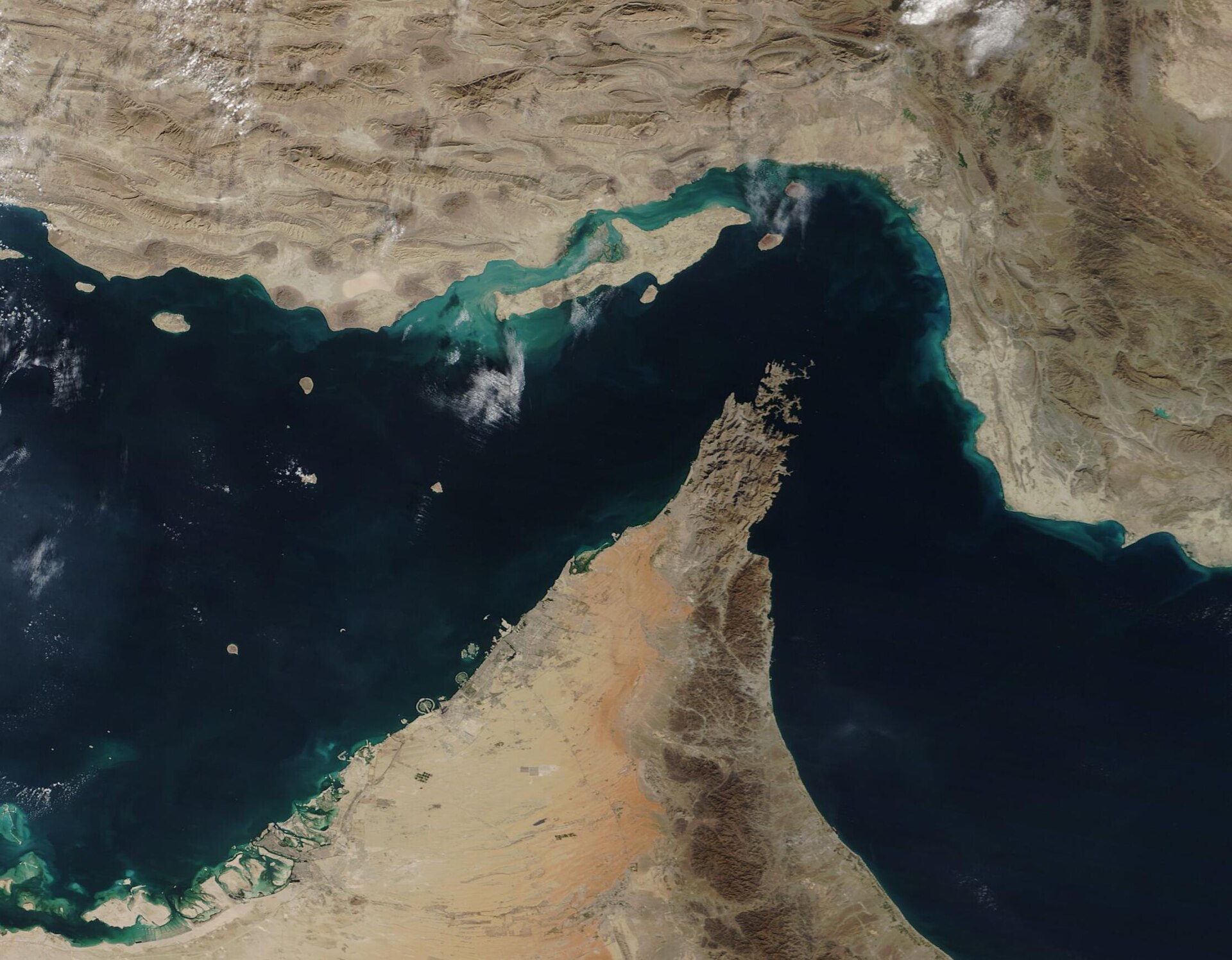
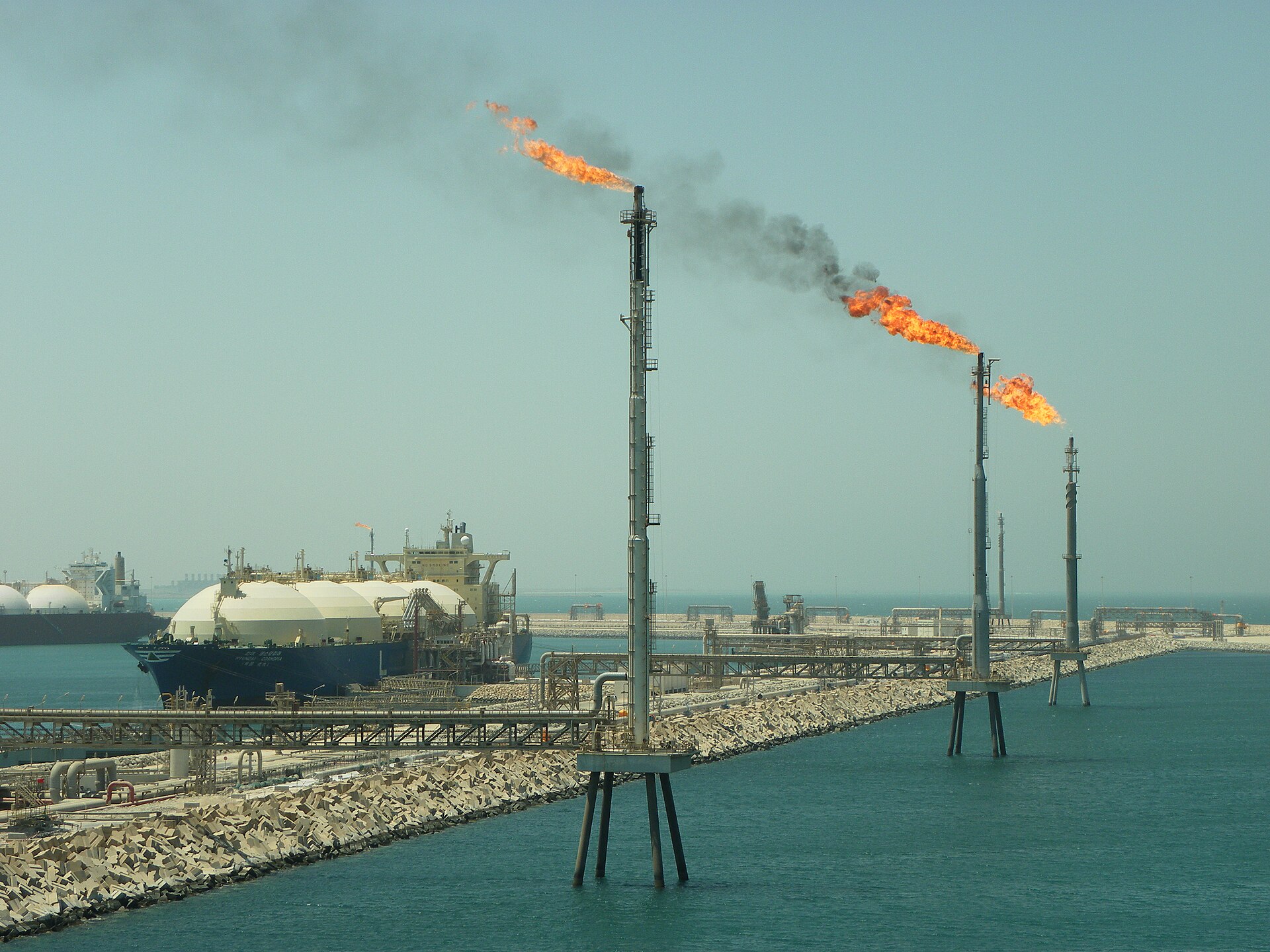
Between April 7 and April 14, all six GCC states absorbed direct strikes or activated air defenses. Saudi Arabia took the heaviest kinetic damage, including hits on the East-West Pipeline pumping stations, Ras Tanura, and infrastructure struck during and after the nominal ceasefire. The UAE activated THAAD and Patriot batteries across Abu Dhabi and Al Dhafra. Kuwait’s desalination infrastructure was hit. Bahrain, which hosts the US Fifth Fleet at NSA Bahrain, saw SATCOM terminals destroyed as early as February 28. Qatar’s Ras Laffan LNG facility sustained what Al Jazeera described as “extensive damage” after Israel struck Iran’s South Pars gas field on March 18 — an escalatory chain that Qatar had no role in initiating.
The targeting of Ras Laffan exposed a vulnerability unique to Qatar. The North Dome gas field, which Qatar shares with Iran’s South Pars, generates roughly 80 percent of Qatar’s government revenues. Iran’s stake in the shared reservoir is a fraction of Qatar’s — production and fiscal dependence are heavily asymmetric. Striking Qatar’s gas infrastructure costs Iran comparatively little in lost production while threatening to collapse Qatar’s fiscal position entirely. This asymmetry is precisely the kind of vulnerability that a functional alliance would address collectively. The GCC has not.
Six Countries, Six Wars
When the April 8 ceasefire was announced, the six GCC members did not issue a joint statement. They each spoke separately, and what they said revealed a bloc that was already fighting six different wars with six different objectives.
Saudi Arabia’s foreign ministry said the kingdom “welcomes” the ceasefire and urged “comprehensive sustainable pacification” — diplomatic language that kept every option open while committing to nothing specific. The Saudi FM separately called for the Strait of Hormuz to be reopened, a position that aligned with Riyadh’s broader strategy of negotiating a separate peace that prioritized economic recovery over collective security guarantees.
The UAE took a radically different approach. Presidential Adviser Anwar Gargash declared that “The UAE triumphed in a war we sincerely sought to avoid” and warned that rebuilding trust with Tehran would take “ages and ages.” This language — declaring victory while Saudi Arabia was still absorbing strikes on its pipeline infrastructure — was not the statement of an ally. It was the statement of a country positioning itself for a post-war order in which Abu Dhabi, not Riyadh, sets the terms.
The UAE triumphed in a war we sincerely sought to avoid. Rebuilding trust with Tehran will take ages and ages.
Anwar Gargash, UAE Presidential Adviser, April 8, 2026
Oman stayed in a category of its own. Foreign Minister Badr Albusaidi had declared on March 11 that “Our neutrality stands for the cause of peace: the cornerstone of our national security and our unique gift to the world.” That neutrality was operationally useful — Oman served as a back-channel conduit between Iran and the West — but it also meant Muscat effectively opted out of any collective GCC defense posture. Kuwait, for its part, issued the most anodyne statement, hoping the ceasefire would lead to a “comprehensive and permanent settlement.” Bahrain, the most exposed member after Saudi Arabia, channeled its energy toward the United Nations rather than the GCC itself.
The Carnegie Endowment captured the dynamic with unusual bluntness: “Disparities in resources and differences in how member states tackle challenges have increasingly caused GCC-birthed mutual institutions to fall by the wayside, with countries often choosing to pursue their national interests alone.” That assessment was published in April 2026, but it could have been written a decade earlier — and the war simply made what was latent visible.
Can the Peninsula Shield Force Actually Defend the Gulf?
No. Created in 1984 as a rapid-response force of 10,000 soldiers, the Peninsula Shield has never deployed against an external threat. When Iraq invaded Kuwait in August 1990 — the precise scenario it was built for — only 5,000 troops were available. The Foreign Policy Research Institute called it “virtually useless.” Nothing has changed since.
The Peninsula Shield Force was stationed at King Khalid Military City in Saudi Arabia, drawn from all six member states, and given no integrated command, no common communications standard, and no history of combined-arms training against an adversary with Iran’s missile inventory.
The force’s only recorded deployment came in March 2011, when approximately 1,200 Saudi Arabian National Guard troops and 500 UAE police crossed the King Fahd Causeway into Bahrain to help suppress pro-democracy protests. That operation — deploying against unarmed civilians, not an invading army — is the single data point that defenders of GCC military integration can cite. It tells you everything about what the Peninsula Shield Force was actually designed to do, and what it cannot.
The Joint Defence Agreement of 2000 was supposed to upgrade this capability. Modeled explicitly on NATO’s Article 5, it committed member states to treat an attack on one as an attack on all. But NATO’s Article 5 is backed by an integrated military command structure — Supreme Allied Commander Europe, Allied Command Transformation, standing multinational brigades with interoperable communications and pre-positioned logistics. The GCC’s Joint Defence Agreement has no enforcement mechanism, no integrated command, and no standing force. When all six members were simultaneously under Iranian attack in April 2026, the Agreement existed only on paper.
| Feature | NATO | GCC |
|---|---|---|
| Mutual defense clause | Article 5 (invoked 2001) | Joint Defence Agreement 2000 (never invoked) |
| Integrated military command | SACEUR, ACT, standing HQ | None |
| Standing rapid reaction force | ~40,000 troops | ~10,000 (notional); 5,000 available in 1990 |
| Decision-making | Consensus with integrated command execution | Unanimity required; no execution authority |
| Interoperable communications | Standardized (STANAG) | No common standard |
| Combat deployment vs external threat | Afghanistan, Libya, Kosovo | None |
The Interceptor Crisis Nobody Wants to Discuss
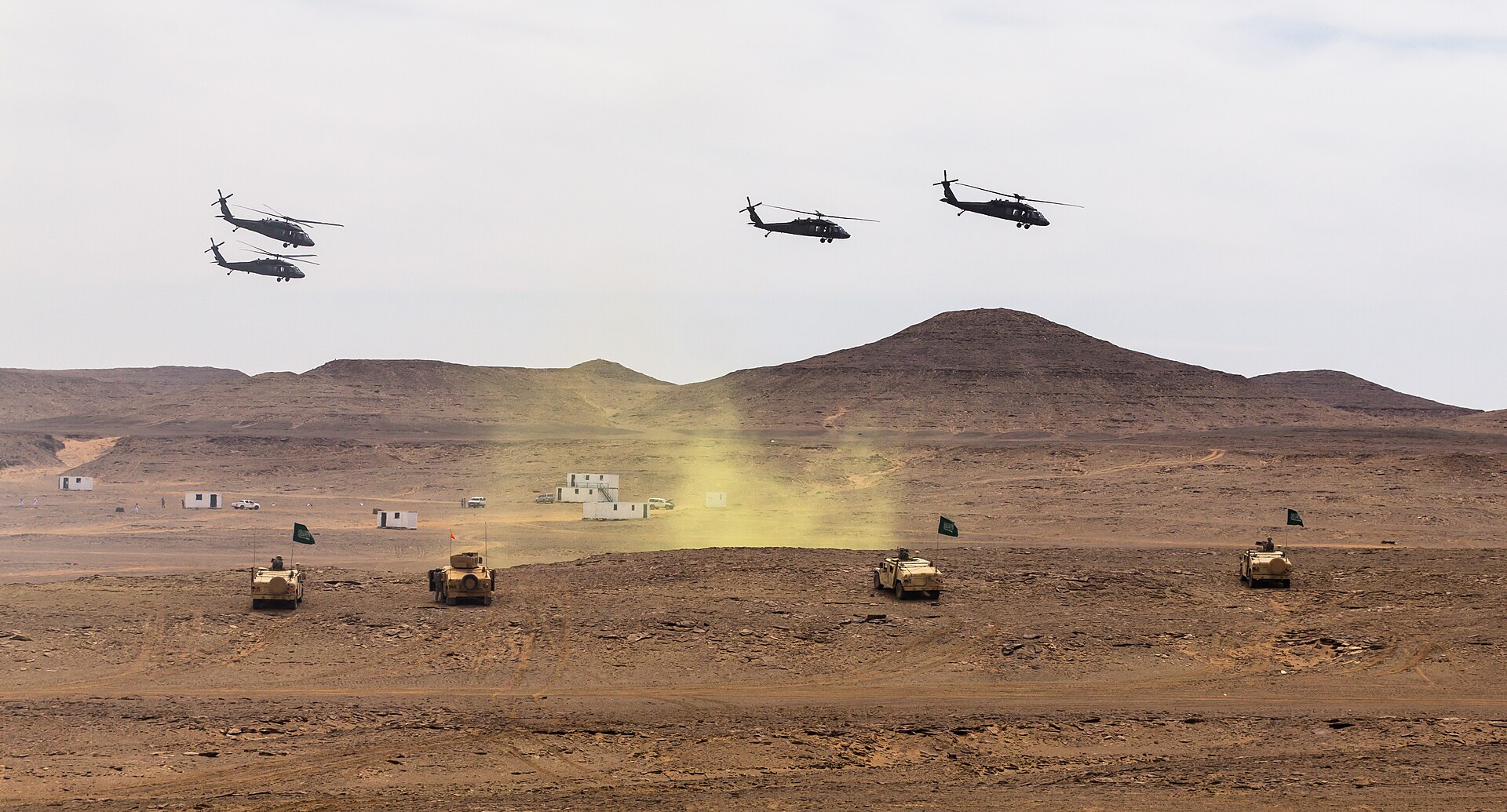
The war exposed a vulnerability that no amount of diplomatic language can conceal: the GCC’s air defense systems are running out of ammunition. By late March 2026, the UAE and Kuwait had depleted roughly 75 percent of their Patriot interceptor stocks, according to Al Jazeera reporting on April 8. Bahrain’s depletion was worse — approximately 87 percent of its Patriot inventory had been fired or rendered unserviceable. Each PAC-3 MSE interceptor costs approximately $4 million. Replacing them requires US government approval through the Foreign Military Sales process, manufacturing lead times measured in years, and Lockheed Martin production slots that are already oversubscribed by European and Asian orders.
Saudi Arabia entered the war with the largest interceptor stockpile in the region, but the kingdom’s remaining approximately 400 PAC-3 rounds represent roughly 14 percent of pre-war stocks. The five-layer defense architecture that Riyadh assembled — THAAD, PAC-3, the South Korean KM-SAM, experimental directed-energy weapons, and the Skyguard point-defense system — was designed for a short, intense conflict. A renewed Iranian campaign lasting weeks rather than days would burn through remaining stocks at a rate no resupply chain can match.
This is where the GCC’s institutional failure becomes a military crisis. A functional alliance would pool interceptor stocks, share targeting data in real time, and coordinate air defense coverage to minimize gaps. The GCC’s members instead operate independent air defense networks with no common data link, no shared interceptor reserves, and no mechanism to transfer ammunition from a less-threatened member to a more-threatened one. When Saudi Arabia builds its own defense industrial base, it will solve one country’s resupply problem. It will not solve the GCC’s.
What Happens When Hormuz Closes and 80 Percent of Your Food Comes by Sea?
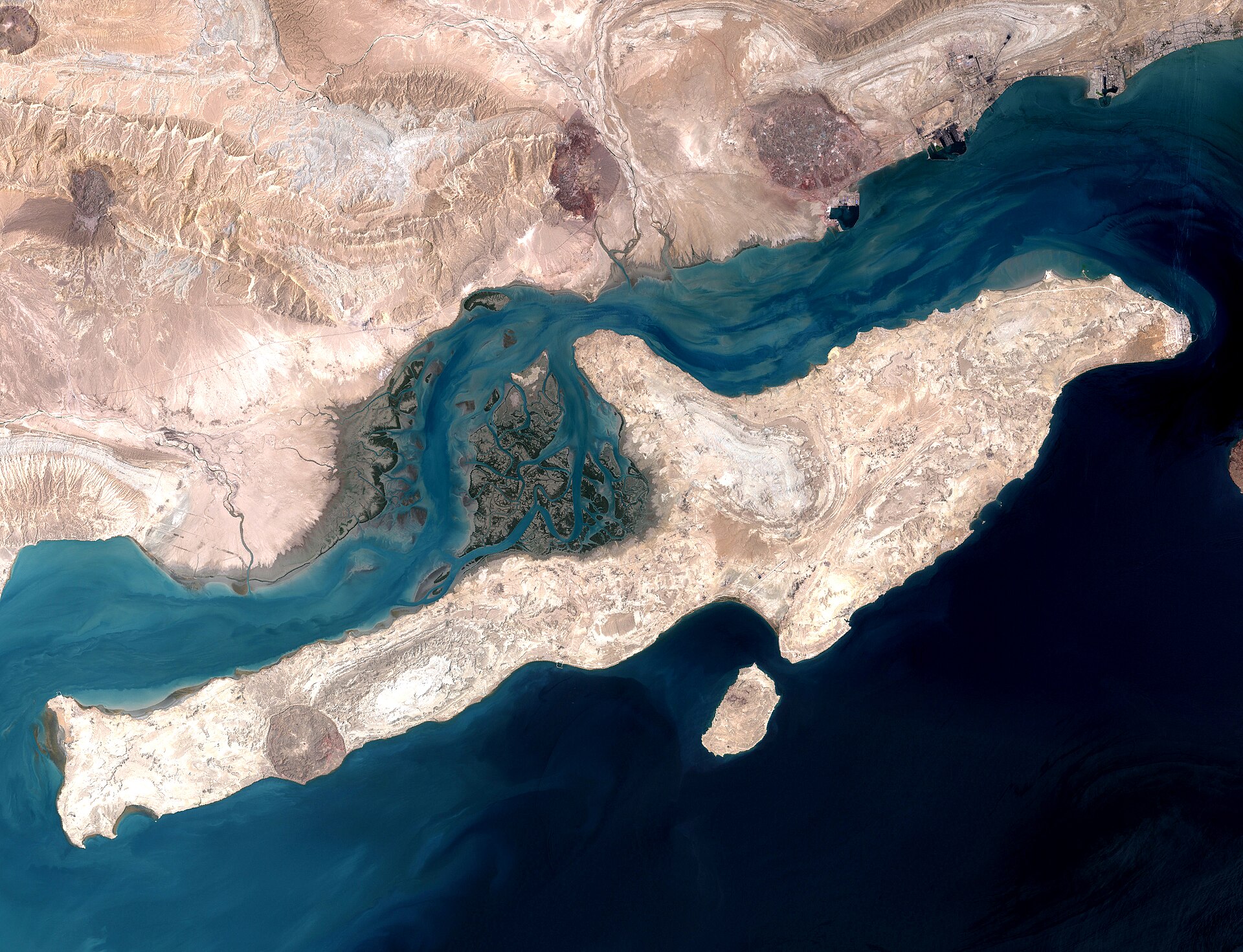
GCC states rely on the Strait for over 80 percent of caloric intake, per UNCTAD — yet the closure has been discussed almost entirely in energy terms. By mid-March 2026, 70 percent of regional food imports were disrupted, with tanker transits down to 3-5 daily and 230 loaded tankers idling in the Gulf. Kuwait and Qatar, sourcing 99 percent of drinking water from desalination plants that Iran struck, faced the fastest-moving humanitarian exposure.
The water dimension is the sharpest edge of this. Iranian strikes on desalination facilities — confirmed in Kuwait, reported in Qatar — shifted the crisis from fiscal to humanitarian. A desalination plant is not a refinery; it cannot be bypassed with a pipeline or replaced with strategic reserves. When it stops operating, people run out of water within days, not months.
| GCC Vulnerability | Pre-War Baseline | War Impact (as of April 25) | Source |
|---|---|---|---|
| Hormuz tanker transits | 60-140/day | 3-5/day; 230 tankers waiting | Windward/LSEG |
| Oil production loss | Combined ~17M bpd | -10M bpd by March 12 | IMF Regional Outlook |
| Food import disruption | 80%+ caloric intake via sea | 70% of food imports disrupted | UNCTAD |
| Desalination dependency | 99% (Kuwait, Qatar) | Facilities struck; no alternative | UNCTAD; Al Jazeera |
| GDP growth forecast | 4.4% (pre-war) | 2.6% (-1.8pp downgrade) | IMF April 2026 |
| Saudi production | 10.4M bpd (Feb) | 7.25M bpd (March) = -30% | IEA |
The GCC oil production collapse tells the same story in economic terms. Kuwait, Iraq, Saudi Arabia, and the UAE saw combined output fall by 6.7 million barrels per day by March 10, with the total decline reaching at least 10 million bpd two days later, according to the IMF’s April 2026 Regional Economic Outlook — the same report that downgraded GCC growth to 2.6 percent and described the damage as “setting back their economies by a year.” The Atlantic Council was more pointed: Gulf states’ belief that “wealth and diplomacy could insulate them from the US-Iran rivalry” had been dismantled entirely.
None of this triggered a collective GCC response. Each member negotiated its own food supply chains, managed its own desalination crisis, and calculated its own fiscal exposure independently. The Saudi effort to lobby Washington on the Hormuz blockade was a bilateral play, not a GCC initiative.
The Saudi-UAE Fracture Running Through Everything
The GCC’s paralysis cannot be understood without confronting the fissure at its center: Saudi Arabia and the UAE are no longer functioning as partners. The two countries are backing opposite sides of two active conflicts beyond the Iran war itself, and those proxy competitions have corroded whatever institutional trust the GCC once possessed.
In Sudan, the UAE provides financial and military support to the Rapid Support Forces, while Saudi Arabia backs the Sudanese Armed Forces. In Yemen, the divergence became kinetic on December 30, 2025, when Saudi airstrikes halted advances by the UAE-backed Southern Transitional Council, according to Atlantic Council and Foreign Policy reporting. These are not policy disagreements between allies. They are structural ruptures between two countries that were supposed to anchor the GCC’s collective security architecture.
Gargash’s “victory” declaration on April 8 crystallized the problem. While Saudi Arabia was still negotiating ceasefire terms, absorbing strikes on its pipeline infrastructure, and managing a 30 percent collapse in oil production, Abu Dhabi declared the war won and pivoted to post-war positioning. The Middle East Council on Global Affairs documented what this meant institutionally: the GCC “has never operated as a unified actor in its approach toward Iran,” with divergence running “along three lines: pre-existing economic competition, divergent assessments of Israel, or differing calculations on accommodating U.S. versus Iranian demands.” Iran’s April 16 UN Security Council filing — the first formal complaint naming an Arab state as an attacker in this war — has sharpened those lines into a documented three-camp GCC split that directly costs MBS his claim to speak for Gulf consensus.
The 2017-2021 Qatar blockade — in which Saudi Arabia, the UAE, Bahrain, and Egypt imposed a comprehensive economic embargo on a fellow GCC member for more than three years — demonstrated that the bloc’s members were willing to weaponize the institution against each other. That episode ended with a reconciliation summit at Al-Ula in January 2021, but the structural damage was permanent. When Iran struck all six members in April 2026, the bloc that was supposed to respond collectively had already spent three years proving it could not even maintain internal cohesion.
Pakistan, Turkey, and the Islamabad Channel
On April 14, 2026, senior officials from Pakistan, Saudi Arabia, Turkey, and Egypt met in Islamabad to establish a four-nation ceasefire monitoring channel. The GCC was not represented as an institution. The meeting did not take place in Riyadh. The format did not include all six Gulf states. This was not an oversight — it was a statement about where Saudi Arabia believed collective action was actually possible.
The Islamabad channel, which evolved from the STEP quartet that built itself around Saudi Arabia, represented Riyadh’s implicit acknowledgment that the GCC format could not deliver what the crisis demanded. Pakistan brought enforcement credibility — its army chief, Munir, had personally relayed ceasefire terms between Tehran and Washington. Turkey brought a relationship with Iran that no GCC member possessed. Egypt brought military weight. What the format excluded was as telling as what it included: no Oman, no Qatar, no UAE, no Bahrain, no Kuwait.
The same week, Bahrain held the first-ever GCC cooperation briefing at the UN Security Council on April 22, co-sponsoring a resolution backed by 135 countries demanding Iran end its attacks. Bahrain also drafted a second resolution, which Russia and China vetoed. The fact that Bahrain — the GCC’s smallest military power — was leading the bloc’s international advocacy, and doing so at the UN rather than through the GCC’s own institutions, confirmed that the organization had effectively ceased to function as a security coordination body. When your alliance needs the UN Security Council to validate positions that your own charter should authorize, the alliance exists in name only.
If the Ceasefire Collapses, the GCC Fractures
The ceasefire that began on April 8 was never a GCC achievement. It was brokered by Pakistan, shaped by US demands, and accepted by Iran under conditions that the IRGC immediately began undermining. The ceasefire functioned as an Iranian operational maneuver, allowing Tehran to reposition forces while the Gulf states exhausted their limited diplomatic leverage on process questions rather than security guarantees.
If that ceasefire collapses — and Israel’s renewed strikes on Lebanon are already eroding one of Saudi Arabia’s core conditions — the GCC will face a scenario its charter was never designed to handle: six member states simultaneously under renewed attack, with no mechanism to coordinate defense, allocate interceptors, share intelligence, or negotiate as a bloc. The unanimity requirement means that Oman’s neutrality policy alone is sufficient to block any collective military response. Qatar’s independent relationship with Iran — rooted in the shared North Dome/South Pars gas field — gives Doha incentives that diverge sharply from Riyadh’s. The UAE’s declaration of victory suggests Abu Dhabi may not even participate in a renewed collective effort.
This is the strategic consequence that no competing analysis has articulated clearly. Saudi Arabia is the GCC’s convening power, its largest economy, and its dominant military force. But the unanimity requirement means that Saudi Arabia cannot compel the bloc to back its negotiating positions with Iran or the United States. When Riyadh sits across from Washington demanding security guarantees, or across from Tehran demanding Hormuz reopening, it cannot credibly claim to speak for the Gulf. Iran knows this — and so does Washington. Trump’s indefinite ceasefire extension was, among other things, a bet that the Gulf states would fragment further under sustained pressure — a bet that the GCC’s own charter makes structurally sound.
Saudi Arabia’s options are narrow but clear. Riyadh can continue operating through ad hoc coalitions like the Islamabad channel, accepting that the GCC format is dead for security purposes. It can push for charter reform — eliminating the unanimity requirement and creating an integrated military command — knowing that such reform would itself require unanimous approval from members who benefit from the current system. Or it can accept the GCC’s limitations and build bilateral defense relationships with each member individually, which is what the Nicosia summit’s parallel diplomatic track already suggests is underway. None of these options is fast, and none is cheap.
The IMF projects that the war has already set GCC economies back by a year. A renewed conflict, fought by six states operating independently, would multiply that damage geometrically. Each member would negotiate its own terms, accept its own concessions, and rebuild on its own timeline. The GCC would survive as a letterhead. It would cease to exist as an alliance.
FAQ
Why didn’t the GCC invoke its Joint Defence Agreement when all six members were attacked?
The Joint Defence Agreement of 2000 contains mutual defense language modeled on NATO’s Article 5, but it lacks three elements that make Article 5 functional: an integrated military command to execute collective operations, a standing rapid reaction force that can deploy without new political authorization, and an enforcement mechanism that compels participation. Invoking the Agreement would have required unanimous approval — the same unanimity that prevented every other collective decision during the crisis. The Agreement also contains no provision for partial invocation, meaning members cannot form a coalition of the willing within the GCC framework; they must either achieve full consensus or act outside the institution entirely, which is what Saudi Arabia did through the Islamabad channel.
How does the GCC’s unanimity rule compare to other regional security organizations?
The African Union requires a two-thirds majority for peace and security decisions and can authorize military intervention even over a member’s objection under Article 4(h) of its Constitutive Act. ASEAN operates by consensus but has developed “ASEAN Minus X” formulas allowing economic agreements to proceed without full participation. The EU’s Common Security and Defence Policy allows qualified majority voting on certain defense matters. The GCC stands alone among major regional organizations in requiring unanimity on all substantive matters with no fallback mechanism, no opt-out provision, and no qualified majority alternative — a structural rigidity that no comparable regional security body replicates.
Could Saudi Arabia reform the GCC charter unilaterally?
No. Charter amendments require the same unanimity that governs all other substantive decisions, creating a procedural paradox: the unanimity rule can only be changed by unanimous vote, meaning any member that benefits from veto power — Oman’s neutrality policy, Qatar’s independent Iran relationship, the UAE’s desire for autonomous positioning — can block reform indefinitely. The closest precedent for overcoming this is the European Coal and Steel Community’s evolution into the EU, which took 35 years of incremental treaty revision. Saudi Arabia does not have 35 years; it may not have 35 days.
What is Iran’s stated rationale for targeting GCC infrastructure rather than purely military sites?
Iran has not publicly articulated a GCC fragmentation doctrine, but IRGC operational patterns and state media commentary reveal the logic. By striking economic infrastructure — desalination plants, oil facilities, LNG terminals — rather than concentrating firepower on US military bases, Iran imposes costs that each GCC member calculates individually. A strike on Bahrain’s desalination infrastructure creates a humanitarian crisis that Manama must address with its own resources; a strike on Qatar’s Ras Laffan threatens the single industrial complex that generates the overwhelming share of Doha’s fiscal base — with no alternative revenue source capable of substituting within any meaningful timeframe. ISPI analysts assessed that this approach was designed to “put pressure” on individual members, exploiting the fact that the GCC’s unanimity requirement prevents any collective military response to economically targeted attacks.
What would a functional GCC defense architecture require?
At minimum: a standing integrated air defense network with common data links across all six members (currently nonexistent); a shared interceptor reserve with pre-authorized transfer protocols (each member currently hoards its own stocks); qualified majority voting for military decisions to eliminate single-member vetoes; a permanent joint operations center with real-time intelligence sharing (the 2013 Unified Military Command exists on paper only); and a supranational secretariat with executive authority to coordinate crisis response without requiring six separate political authorizations. The integration cost would be substantial over a decade, though still a fraction of what Saudi Arabia alone spends on defense annually.