
DHAHRAN — Israel struck Iran’s Mahshahr petrochemical complex on Day 100 of this war because it produces “unique materials critical for Iran’s ballistic missile program.” Saudi Arabia’s Jubail Industrial City — responsible for seven percent of global petrochemical output — manufactures chemicals in the same dual-use categories, and Riyadh has built no legal, diplomatic, or military counter-argument in a hundred days of war.
The IDF’s June 8 justification invoked the standard embedded in Additional Protocol I, Article 52(2): that the target made “an effective contribution to military action” and its destruction offered “a definite military advantage.” International humanitarian law does not recognize “dual-use” as a legal category — three Yale Law School scholars established as much in a 2025 study — but the operational doctrine Israel applied at Mahshahr does not depend on legal precision. It depends on precedent, repetition, and the absence of challenge.
Saudi Arabia has supplied all three conditions. Iran struck Jubail on April 7, three days after Israel’s first Mahshahr attack on April 4. The IRGC had publicly named Jubail and Ras Tanura as “direct and legitimate targets” on March 18 — three weeks before following through. On June 8, with Mahshahr hit again, the three-day clock restarted.
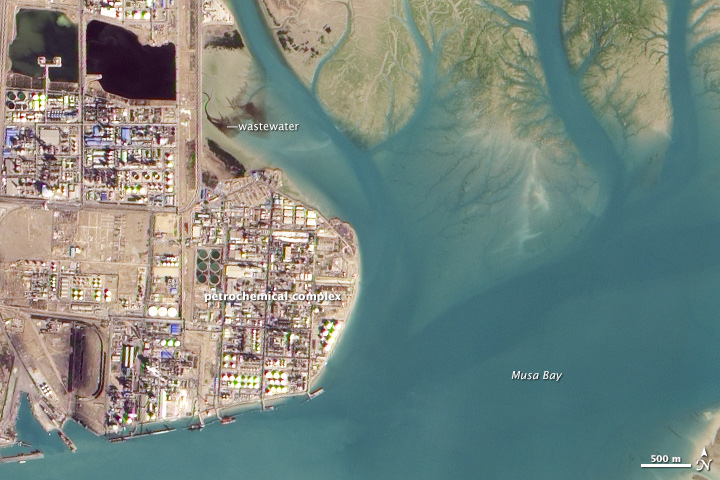
Table of Contents
- What Did Israel Strike at Mahshahr on June 8?
- The Chemistry Israel Named as Justification
- Does International Law Recognize “Dual-Use” as a Legal Category?
- Iran’s Mirror Doctrine — “A Similar Plant in Haifa”
- Why Does Jubail Meet Every Criterion Israel Applied at Mahshahr?
- Saudi Arabia’s Missing Counter-Argument
- Eighty Missiles to Defend Seven Percent of Global Output
- What Happens When the Doctrine Crosses the Gulf Again?
- Frequently Asked Questions
What Did Israel Strike at Mahshahr on June 8?
Israel struck the Mahshahr Petrochemical Special Economic Zone (PETZONE) in Khuzestan Province for the second time, targeting facilities the IDF described as producing “unique materials critical for Iran’s ballistic missile program.” An April 4 strike had already hit eight of the zone’s twenty-plus complexes — seventeen million tonnes per year of combined capacity, roughly 27 percent of Iran’s total petrochemical output.
The June 8 strike package included truck-based missile launchers alongside the petrochemical targets. The largest complex in the zone — Bandar Imam, at 6.5 million tonnes per year — was among those hit in April. Iran’s petrochemical sector generates $29.1 billion in annual revenue; roughly half, about $13 billion, is exported, representing more than one-fifth of Iran’s non-oil exports. Israeli Defense Minister Israel Katz said in April that IDF strikes had disrupted 85 percent of Iran’s petrochemical export capacity.
The Middle East briefing 3,000+ readers start their day with.
One email. Every weekday morning. Free.
The June 8 attack targeted a partially degraded facility. The April strikes had already hit two utility plants — Fajr 1 and Fajr 2 — that supplied gas, power, and industrial water to over fifty petrochemical plants in the complex. Hamed Shams, head of marketing for Iran’s Oil Ministry petrochemical industries, said at the time that those plants “play a key role in providing electricity to 500,000” people in Khuzestan Province during summer. The June 8 follow-up means Israel returned to a target it already knew could not fully operate.
The IDF did not need to return to a degraded facility for operational reasons alone. The Fajr utility plants were already offline; the chemical production they supported was already disrupted. What the second strike accomplished was doctrinal: it established that the targeting rationale survives the initial degradation. A facility classified as dual-use on the first strike remains dual-use on the second, regardless of whether it is still producing at capacity — and that classification, once established, travels.
The Chemistry Israel Named as Justification
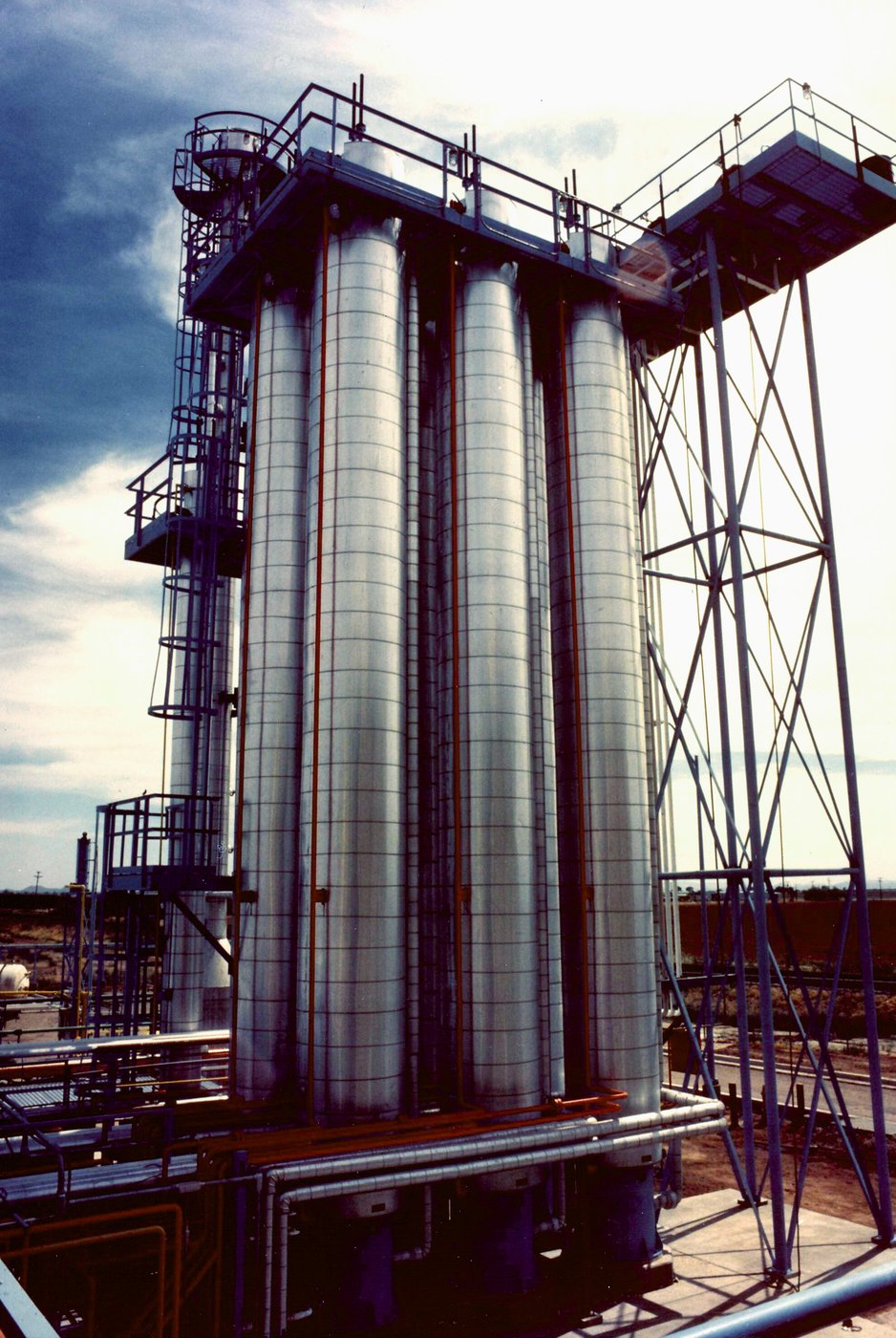
The IDF stated in April 2026 that facilities at Mahshahr are “central to producing materials for explosives, ballistic missiles, and additional weaponry.” In June, the language narrowed to “unique materials critical for Iran’s ballistic missile program.” The specific chemicals at issue are produced at the Karun facility within the Mahshahr zone: toluene diisocyanate (TDI), methylene diphenyl diisocyanate (MDI), and nitric acid in quantities measured in hundreds of thousands of tonnes per year.
Nitric acid is the most directly applicable to weapons production. It is a primary feedstock for ammonium nitrate and nitrocellulose — both used in conventional explosives — and a precursor in the production of liquid rocket propellant oxidizers. TDI and MDI are polyurethane feedstocks used in insulation, coatings, and elastomers across global industry; they also appear in solid rocket motor insulation and flexible propellant binder systems. The chemicals are not inherently military. They are inherently industrial, with military applications that no petrochemical facility anywhere in the world can exclude from its output profile.
The Foundation for Defense of Democracies, in an April 7 analysis titled “Israeli Strikes Target Iran’s Chemical Weapons Program,” framed Mahshahr as producing precursors to chemical weapons — a more aggressive characterization than the IDF’s own public statements. The FDD analysis expanded the justification from ballistic missiles to the Chemical Weapons Convention, giving Israel a selectively deployable legal argument it can amplify or narrow depending on the diplomatic audience. The chemistry is real. The question is who gets to define its purpose — the producer, the attacker, or the precedent that accumulates in the absence of challenge.
Does International Law Recognize “Dual-Use” as a Legal Category?
No. International humanitarian law does not recognize “dual-use object” as a legally meaningful category, according to a 2025 Yale Law Journal study by Oona A. Hathaway, Azmat Khan, and Mara Redlich Revkin. The actual legal standard — Additional Protocol I, Article 52(2) — requires a two-part test that the dual-use label collapses into a single self-justifying classification.
Hathaway, Khan, and Revkin’s Yale Law Journal study (Vol. 134, No. 8, 2025) documented that “the term ‘dual-use object’ has become common, [but] international law does not recognize it as a legally meaningful category,” finding that dual-use targeting has “blurred the line” between military objectives and civilian objects, “placing civilians at great risk.”
The legal standard that actually governs targeting is Additional Protocol I, Article 52(2). It defines a military objective as an object that by its “nature, location, purpose, or use” makes “an effective contribution to military action” and whose “total or partial destruction, capture or neutralization, in the circumstances ruling at the time, offers a definite military advantage.” Each element must be met independently. The phrase “dual-use” collapses this two-part test into a single label that functions as its own justification: once a facility is tagged dual-use, the attacker has already answered both legal questions by asking them.
The operational precedent traces to the 1991 Gulf War, when the US-led coalition struck Iraq’s electrical grid, bridges, and industrial infrastructure under dual-use reasoning. Hathaway, Khan, and Revkin identify 1991 as the origin point of the doctrinal expansion that now dominates modern conflict. Coalition strikes on Syrian oil infrastructure between 2014 and 2018 — targeting ISIS revenue sources under dual-use rationale — extended the precedent further. In each case, the label was applied, challenged marginally or not at all, and absorbed into operational norms.
“War on essential infrastructure is war on civilians.”
— ICRC President Mirjana Spoljaric Egger, March 23, 2026
Human Rights Watch weighed in on April 22, 2026, finding that Israeli and Iranian attacks on energy infrastructure in mid-March 2026 “were unlawfully indiscriminate and could trigger profound economic consequences for millions of people in the region and globally” and “may amount to war crimes.” The HRW assessment applied to both belligerents, not one — a finding that dissolves any claim of legal asymmetry between the Mahshahr strikes and the Jubail strikes.
Iran’s Mirror Doctrine — “A Similar Plant in Haifa”
Hours after the June 8 Mahshahr strike, Iran’s Revolutionary Guards launched missiles at what Tasnim News Agency described as “a similar plant in Haifa.” The phrasing was precise, not incidental. By naming the Haifa target as “similar,” the IRGC asserted explicit targeting symmetry: if Mahshahr qualifies as a military objective because it produces dual-use chemicals, then any petrochemical facility producing the same chemicals qualifies under the same standard.
This mirror logic was already operational before June 8. On March 18, 2026, the IRGC issued a public statement naming the Jubail Petrochemical Complex, Ras Tanura, the UAE’s Al Hosn Gas Field, and Qatar’s Mesaieed as “direct and legitimate targets.” Three weeks later, on April 7 — three days after Israel’s first Mahshahr strike — Iran struck Jubail with medium-range missiles and suicide drones. Targets included the $20 billion Sadara complex, a joint venture between Aramco and Dow Chemical, and an ExxonMobil-affiliated facility. SABIC declared force majeure on five product lines: MMA, MEG, DEG, styrene, and methanol.
The April cycle established the pattern. Israel hits Iranian petrochemical infrastructure under a dual-use rationale; Iran retaliates against Gulf petrochemical infrastructure under an identical rationale; international institutions issue statements and initiate no proceedings. The Abqaiq-Khurais attack of September 2019, when Houthi and Iranian-linked munitions briefly cut Saudi output by 5.7 million barrels per day, confirmed that strikes on Saudi energy infrastructure generate condemnation but no legal remedy. Iran studied that precedent as carefully as anyone.
The IRGC’s adoption of the dual-use rationale is not mimicry — it is legal arbitrage. Any international legal challenge faces the same problem from either direction: the doctrine that justifies Mahshahr also justifies Jubail. A tribunal cannot condemn one without condemning both, and cannot accept one without accepting both. That symmetry is the entire strategic purpose of Iran’s framing, and it creates a paralysis in international law that benefits the party willing to keep striking — which, after a hundred days of war, is not Saudi Arabia.
Why Does Jubail Meet Every Criterion Israel Applied at Mahshahr?
Jubail produces the same chemical families Israel cited at Mahshahr — MDI, nitric acid, methanol, MEG — at equal or greater scale. Sadara, the Aramco-Dow joint venture, produced 400,000 tonnes per year of MDI before the April 7 strike, identical to the chemical named in the IDF’s Karun facility justification. The comparison is not analogical; it is chemically direct.
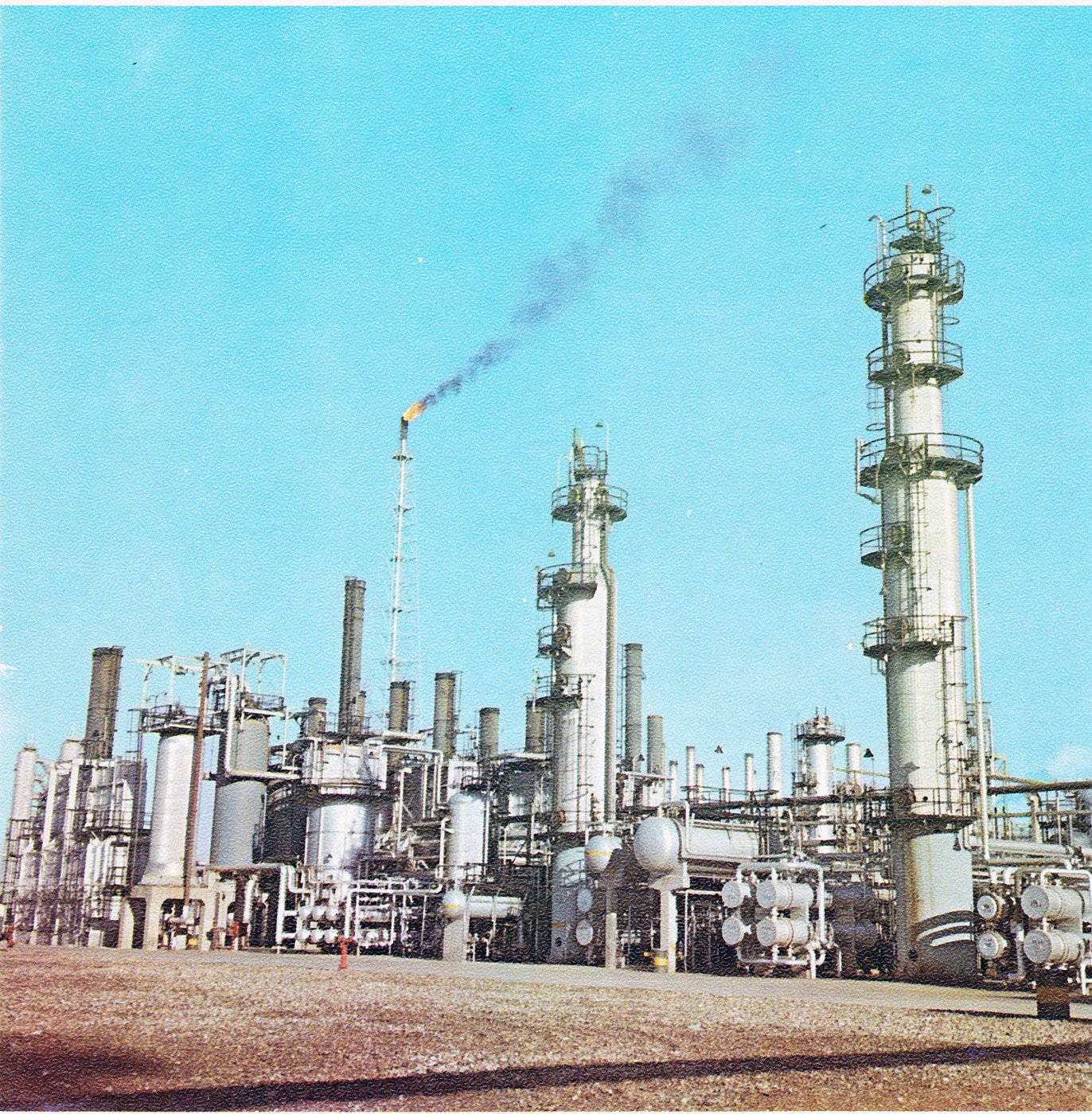
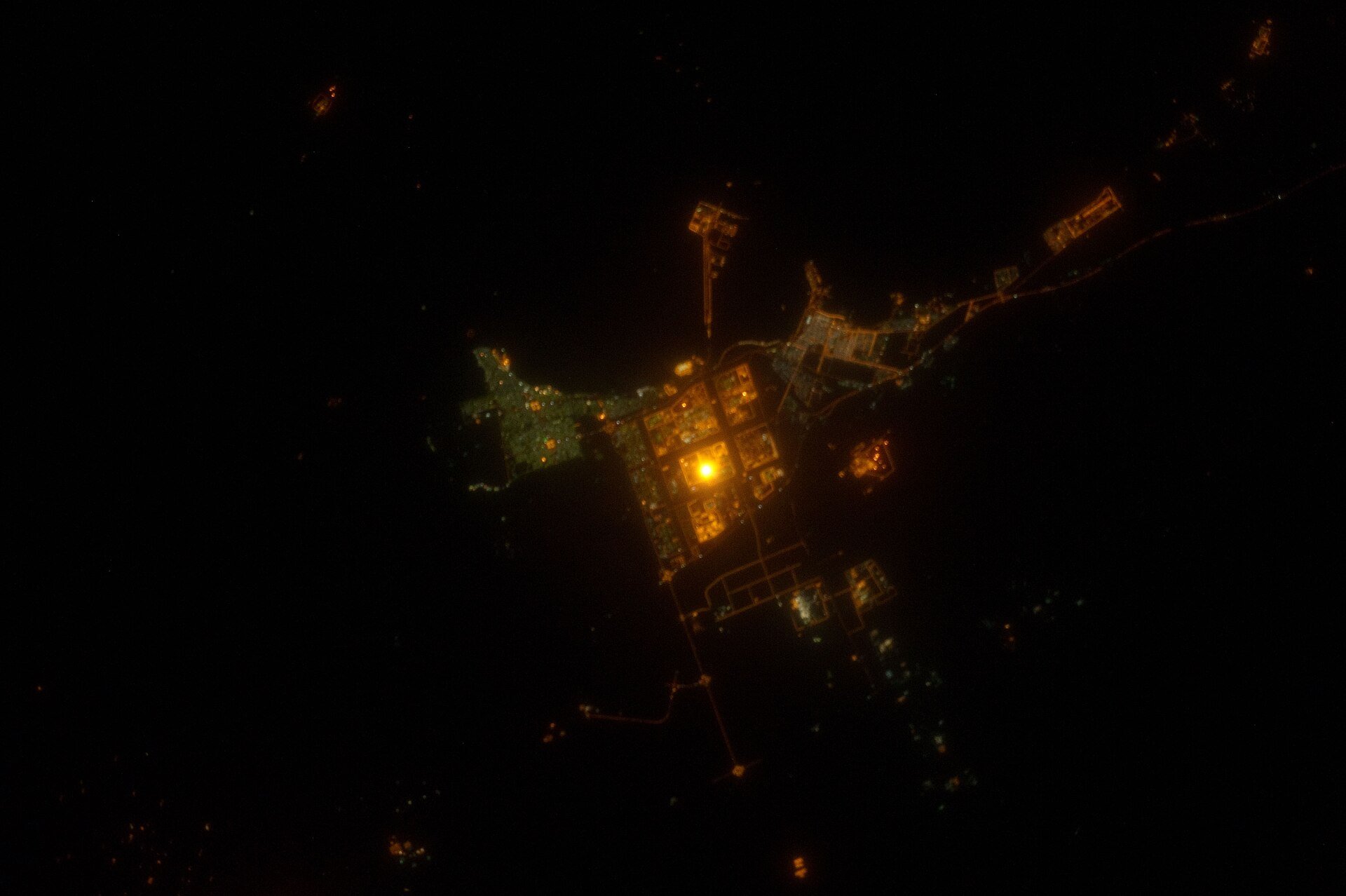
Jubail Industrial City produces seven percent of the world’s petrochemicals, with thirteen of SABIC’s sixteen Saudi production plants located there. Output spans the full industrial-chemical spectrum: ethylene, polyethylene, monoethylene glycol (MEG), diethylene glycol (DEG), styrene, methanol, benzene, and PVC.
Apply the IDF’s Article 52(2) argument to Jubail, element by element. Does the facility, by its nature or use, make “an effective contribution to military action”? Jubail produces MDI — the chemical Israel classified as missile-relevant at Mahshahr’s Karun facility — along with MEG (polyester resins used in military-grade composites) and methanol (a precursor in formaldehyde-based adhesives used in ammunition manufacturing). Does the facility’s destruction offer “a definite military advantage”? Under the logic the IDF applied at Mahshahr — where destroying civilian-adjacent chemical production was framed as degrading Iran’s missile supply chain — eliminating Jubail’s output would degrade any military sourcing precursor chemicals from Saudi industrial supply chains.
The comparison is not a thought exercise — it is arithmetic, and it favours the attacker. Every chemical family Israel cited as justification for striking Mahshahr has a production line at Jubail operating under the same industrial processes, at equal or greater scale, and with identical civilian-military dual applicability.
| Mahshahr (Iran) | Jubail (Saudi Arabia) | |
|---|---|---|
| Share of national petrochemical output | 27–28% | ~60% (13 of 16 SABIC plants) |
| Share of global petrochemical output | — | 7% |
| Dual-use chemicals produced | TDI, MDI, nitric acid | MDI, MEG, methanol, styrene |
| Nominal capacity (facilities struck) | 17M tonnes/year (8 complexes) | Sadara alone: 3M tonnes/year |
| Struck in 2026 | April 4 and June 8 | April 7 |
| Legal justification cited by attacker | AP I Art. 52(2) — “effective contribution to military action” | IRGC: “direct and legitimate target” |
| Export revenue at risk | ~$13B/year (petrochemical exports) | SABIC force majeure on 5 product lines |
| Pre-declared as target before strike | No | Yes — IRGC, March 18, 2026 |
Sadara’s rated capacity went to zero after the April 7 strike: 1.5 million tonnes per year of ethylene, 750,000 tonnes of polyethylene, 330,000 tonnes of propylene oxide, and 400,000 tonnes of MDI. The joint venture carries $3.7 billion in outstanding debt, and its grace period expires June 15. SABIC’s Tadawul regulatory filing warned of “material impact to 2026 financial results” that it “cannot provide, at the present time, an estimate for.” The question of whether Aramco’s parent guarantee will be activated — and how Aramco’s post-dividend cash position affects that calculus — is examined in the Sadara Chemical debt grace period expiring June 15.
Saudi Arabia’s Missing Counter-Argument
Saudi Arabia’s formal response to infrastructure targeting in this war rests on a single instrument: UNSC Resolution S/RES/2817, adopted March 11, 2026, which called for Iran to cease targeting civilian infrastructure and condemned attacks on “ports and energy facilities.” The resolution passed and accomplished nothing: the IRGC struck Jubail twenty-seven days later, after having publicly pre-declared it a target. Saudi Arabia co-sponsored a Hormuz resolution it knew would be vetoed, then treated the veto record as the product rather than the failure.
What Riyadh has not done is build a legal doctrine to pre-empt the dual-use framing that Israel has now applied twice at Mahshahr and that Iran has adopted as reciprocal justification. There is no Saudi position paper at the United Nations defining the parameters under which petrochemical infrastructure qualifies as a civilian object under IHL, no coalition of petrochemical-producing states organized around that principle, and no diplomatic initiative aimed at codifying protections for industrial infrastructure in the Gulf.
On Day 100, FM Faisal bin Farhan’s confirmed diplomatic activity consisted of a phone call with Qatar’s Prime Minister. He has had no confirmed contact with Secretary Rubio since March — roughly eighty-six days — and no confirmed contact with Iranian FM Araghchi since May 6. Mohammed bin Salman chaired no bilateral meeting in June. The Saudi-Pakistan-Turkey-Egypt quadrilateral — three ministerial sessions between March 19 and April 18 — produced zero communiqués, no collective defense doctrine, and no public position on infrastructure targeting.
The 2019 Abqaiq-Khurais attack established the governing precedent. Drones and cruise missiles hit the world’s largest oil processing facility, temporarily cutting 5.7 million barrels per day of Saudi output, and no IHL accountability proceeding was initiated — not by Saudi Arabia, not by the United Nations, not by any third party. The attack generated a week of G7 statements and no legal consequence. Iran observed the entire cycle, and six years later, it is operating comfortably within the space that precedent left open.
The permissive environment is compounded by Saudi Arabia’s own targeting record. US-led coalition strikes on Syrian oil infrastructure between 2014 and 2018, and the Saudi-led coalition’s campaign in Yemen from 2015 to 2022 — which struck ports, bridges, and industrial sites across Houthi-held territory — make it functionally impossible for Riyadh to argue before an international tribunal that petrochemical infrastructure deserves absolute protection under IHL without exposing its own prior conduct to the same standard. The legal shield Saudi Arabia needs is one that its own military history prevents it from credibly building.
Eighty Missiles to Defend Seven Percent of Global Output
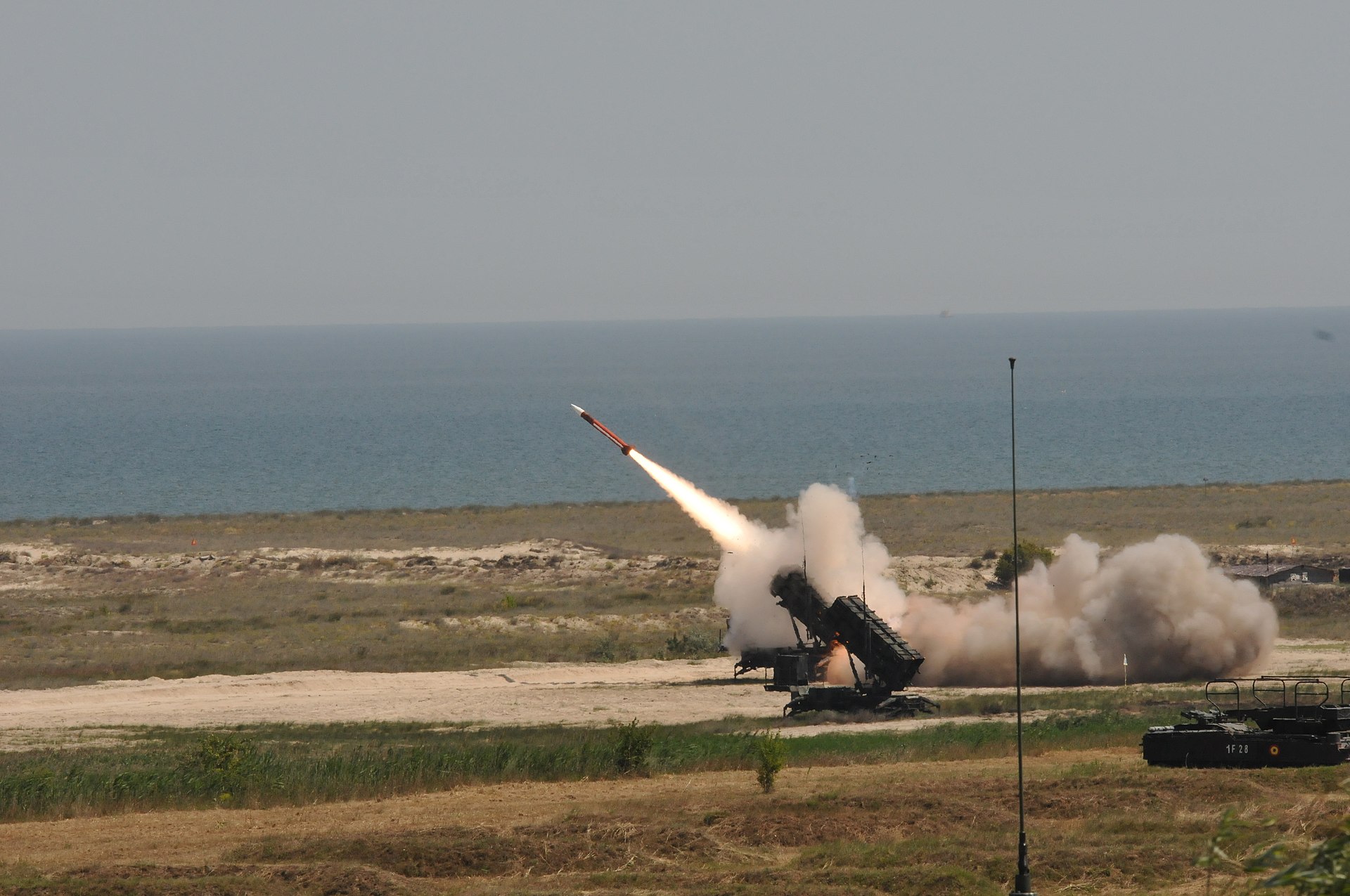
Even if Saudi Arabia had built the legal counter-argument, it would need the military capacity to physically defend its industrial corridor while legal and diplomatic processes played out. It does not have that capacity. Saudi Arabia’s remaining PAC-3 MSE inventory stands at approximately 80 to 150 rounds — roughly 14 percent of its pre-war stock. Bahrain, which sits across the King Fahd Causeway from Saudi Arabia’s Eastern Province, has approximately eight rounds left.
The production bottleneck is structural. Lockheed Martin’s Camden, Arkansas plant produces approximately 620 PAC-3 MSE rounds per year — a record. The Pentagon’s FY2027 budget request claims 2,798 rounds at $12.2 billion, effectively reserving the entire Camden production ramp through 2030. The Foreign Military Sales backlog exceeds 4,300 rounds across twelve-plus countries, representing over seven years of factory output. Saudi Arabia needs roughly 2,400 rounds to restore its pre-war inventory. It cannot jump the queue, because it has no Status of Forces Agreement with the United States and is therefore excluded from the Section 36 emergency delivery pathway that Kuwait and Qatar have used to secure emergency waivers.
The IRGC’s March 18 target list — Jubail, Ras Tanura, Al Hosn, Mesaieed — names more targets than Saudi Arabia has interceptor reloads to defend. Ras Tanura, the world’s largest offshore oil loading facility, sits sixty-five to seventy-three kilometres from Jubail. Defending both simultaneously against a saturation attack would require magazines Saudi Arabia no longer possesses and replacements it cannot procure for years. The SOFA gap that blocks emergency resupply is not a diplomatic technicality — it is the structural reason Saudi Arabia’s Eastern Province will remain exposed for the foreseeable duration of this conflict.
The cost-exchange ratio makes the math worse. An IRGC Shahed-136 drone costs between $20,000 and $50,000; a PAC-3 MSE interceptor costs $4.1 million at Army unit cost and $12.3 million at Saudi FMS pricing. Iran can force Saudi Arabia to expend a $12 million interceptor on a $30,000 drone — a 400-to-1 cost exchange that depletes a finite magazine at a rate no production line can match. At the current inventory of 80 to 150 rounds, a single saturation attack on Jubail and Ras Tanura could exhaust Saudi Arabia’s remaining Patriot stock in hours.
What Happens When the Doctrine Crosses the Gulf Again?
The April cycle took three days: Israel struck Mahshahr on April 4, Iran struck Jubail on April 7. Israel struck Mahshahr again on June 8. If the mirror pattern holds, the next Jubail strike window opens around June 11 — four days before Sadara’s $3.7 billion debt grace period expires and two days after Aramco distributes its $21.89 billion Q1 dividend.
The financial and military calendars are converging in a way that compounds exposure. Aramco’s Q1 dividend exceeds its $18.6 billion free cash flow by approximately $3.3 billion — a structural overpay that funds the Saudi government’s revenue floor while the Kingdom simultaneously runs its largest quarterly deficit on record (SAR 125.7 billion in Q1 alone, 76 percent of the full-year target consumed in ninety days). A second Jubail strike during the Sadara grace period would force creditors to make write-down decisions against the backdrop of an active military campaign targeting the very facility that generated the debt. SABIC has already warned on the Tadawul that it “cannot provide, at the present time, an estimate for the return to production, as this is contingent on domestic and international factors.”
The dual-use doctrine that Israel refined at Mahshahr now operates as a self-reinforcing cycle. Israel strikes Iranian petrochemical infrastructure and publishes a legal justification; Iran applies the same justification in reverse against Gulf infrastructure, while international institutions document the strikes as potentially unlawful but initiate no proceedings. The absence of legal challenge becomes the next round’s precedent — and the round after that.
“Israeli and Iranian attacks on energy infrastructure were unlawfully indiscriminate and could trigger profound economic consequences for millions of people in the region and globally [and] may amount to war crimes.”
— Human Rights Watch, April 22, 2026
Saudi Arabia sits inside this cycle — producing the same chemicals, named on the same target lists, defended by a depleted magazine it cannot replenish — without having spent a single one of these hundred days building the legal, diplomatic, or military framework to interrupt it. The Mahshahr doctrine does not require Israel to strike Jubail. It requires only that the targeting logic Israel built remain unchallenged long enough for the next party to apply it — and Iran has already applied it, with the IRGC’s published target list serving as the address.
Frequently Asked Questions
Has any state successfully challenged dual-use infrastructure targeting under international humanitarian law?
No state has secured a binding ruling against dual-use infrastructure targeting in an active conflict. The International Court of Justice’s 1996 Nuclear Weapons Advisory Opinion addressed proportionality in the abstract but did not rule on specific infrastructure categories. The International Criminal Tribunal for the former Yugoslavia examined dual-use targeting in its review of the NATO bombing campaign against Serbia (1999) but concluded it could not establish criminal responsibility for strikes on the Serbian electrical grid and broadcasting infrastructure. The dual-use doctrine has been documented by legal scholars, criticized by humanitarian organizations, and never successfully prosecuted — a pattern that makes each new application harder to reverse than the last.
Could Saudi Arabia invoke UNSC Resolution 2817 to legally shield Jubail from further strikes?
Resolution 2817 condemned attacks on “ports and energy facilities” but contains no enforcement mechanism, no sanctions trigger, and no referral to the International Criminal Court. It was adopted under Chapter VI of the UN Charter, which authorizes recommendations, not Chapter VII, which authorizes binding measures with enforcement authority. Russia and China abstained on a separate Hormuz-specific resolution, signaling they would veto any binding instrument. Saudi Arabia would need to file a case at the ICJ or seek an ICC referral — neither of which Riyadh has pursued, likely because both pathways would also expose the Saudi-led coalition’s own record of infrastructure strikes during the Yemen war (2015–2022) to the same legal standard Riyadh would be asking the court to enforce.
What insurance and shipping consequences follow from the dual-use characterization of Gulf petrochemical output?
Lloyd’s of London and the International Union of Marine Insurance classified the entire Persian Gulf as a “Listed Area” requiring additional war-risk premiums after the conflict began in late February 2026. The dual-use characterization of petrochemical output adds a separate commercial layer: cargo insurers can invoke war-exclusion clauses on shipments of chemicals that a state actor has publicly identified as military-relevant. TDI, MDI, and nitric acid shipments from any Gulf port now carry reputational and regulatory risk for European and Asian buyers subject to dual-use export control regimes, even when the chemicals are destined for entirely civilian markets. SABIC’s five force majeure declarations have already triggered contract renegotiations with downstream buyers across India, China, and South Korea — commercial damage that extends well beyond the physical strike zone and into supply chains that may not return to pre-war routing even after hostilities end.
How does the 2026 Mahshahr-Jubail mirror pattern compare to the Iran-Iraq War precedent at the same facility?
The Mahshahr petrochemical complex was a target during the Iran-Iraq War (1980–1988), when Iraqi airstrikes damaged the Bandar Imam complex — establishing a forty-year targeting history for the same industrial zone. The difference in 2026 is not the fact of the strikes but the legal scaffolding around them. In the 1980s, neither side articulated an IHL justification; the strikes were undifferentiated acts of economic warfare. In 2026, Israel published a specific legal rationale tied to Article 52(2) — dual-use chemicals, missile program contribution, definite military advantage — and Iran adopted the identical framework in explicit, documented terms (“a similar plant in Haifa”). The formalization converts what was once indiscriminate wartime destruction into a replicable doctrine with named targeting criteria that any belligerent, state or non-state, can cite against any petrochemical facility producing the same chemical families anywhere in the world.