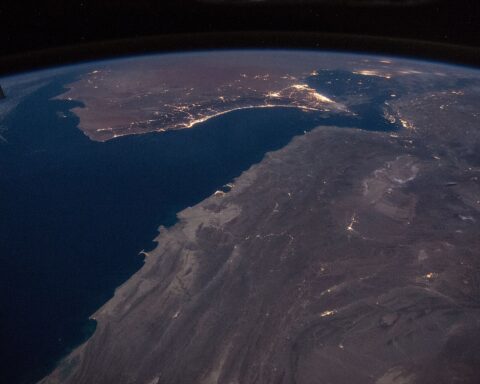

MANAMA — Iran’s Islamic Revolutionary Guard Corps said its combat drones carried out a “precision operation” against a US military radar at Sheikh Isa Air Base in Bahrain early on Tuesday, November 17, shifting its aim from a helicopter base in Riffa to the airfield that hosts American maritime patrol aircraft. Residents of Manama received mobile-phone threat alerts and explosions were heard in the capital, Gulf News reported, before Bahrain’s state television said the drone attack had been thwarted.
The attack was the third on American targets in the island kingdom in recent days by the Associated Press’s count, after strikes on Friday and Sunday, and AP described Tehran as resuming attacks on its Arab neighbours “after a roughly two-month lull.” It landed on the same day Iranian Foreign Minister Abbas Araghchi sat down in Muscat with Oman’s Badr Albusaidi to discuss “diplomatic options available to contain tensions,” talks that produced no announced agreement, and as a third US carrier strike group arrived in the region.
Table of Contents
- What Did the IRGC Say It Targeted at Sheikh Isa?
- Sirens in Manama and “Several” Intercepts
- Why Is Sheikh Isa a Different Target From Al-Rifaa?
- Three Attacks, Three Carriers and a Meeting in Muscat
- What Does the Sheikh Isa Attack Mean for Saudi Arabia?
- Background: Bahrain in Iran’s Sights Since February 28
- Frequently Asked Questions
What Did the IRGC Say It Targeted at Sheikh Isa?
The IRGC said its drones “precisely targeted a radar system belonging to US forces at Sheikh Isa Airbase in Bahrain,” according to the statement carried by Iran’s state-owned Press TV and the official broadcaster IRIB. It did not say how many drones it launched, and it stopped short of claiming the radar was destroyed, a more cautious formula than the one it used on Friday, when it said it had destroyed a US early-warning radar in Bahrain.
The House of Saud Daily Briefing
Saudi Arabia's news in 3 minutes, every morning. Free. See today's issue
The stated motive was American surveillance. The Guards called the operation a response to “continued violations of Iranian airspace by US military drones,” Reuters reported via the Jerusalem Post, and Press TV said the IRGC claimed to have intercepted or captured several of those aircraft. The AP put the grievance more broadly, reporting that Iran says its Bahrain attacks answer US strikes on Iranian communications towers as well as continuing drone surveillance, and Press TV tied the statement to the dispute over the Strait of Hormuz.
Then came the warning, aimed not at Bahrain but at the Americans using its runways. The statement said continued violations of Iranian airspace, and the use of regional bases for operations against Iran, “will not go unanswered,” and it held US military commanders responsible for whatever followed, Anadolu Agency reported.
“Cool. New rule: Any dam, port, or power plant near a US or Israeli base is dual-use.”Mohammad Bagher Qalibaf, Speaker of Iran’s parliament, on X, November 17, 2026 (via Anadolu Agency)
The line from Qalibaf, posted on the same morning, was a mocking reply to a New York Times report that some Iranian dams overlap geographically with suspected underground missile sites struck by the US and Israel. Qalibaf warned that Tehran would answer any attack on Iranian civilian infrastructure in kind. The post opened with the words “Prepping the next round on civilian infra, their ‘experts’ tell NYT: ‘dams near Iran’s missile sites are dual-use,'” before the warning that followed, Anadolu reported.
Sirens in Manama and “Several” Intercepts
Bahrain’s account is shorter and gives away less. The Interior Ministry told citizens and residents to “remain calm” and move to the nearest safe location, according to Anadolu and TRT World, then later announced that the threat had ended while keeping precautionary measures in place and urging the public to follow official channels, Gulf News reported.
Bahrain state television said the drone attack had been thwarted after the IRGC “launched a barrage of unmanned aerial vehicles,” Gulf News and CBS News reported, and Bahraini authorities said their air defences intercepted “Iranian air attacks.” Neither Manama nor Tehran gave a number. The Jerusalem Post’s Reuters copy carried no drone count and no intercept count for Tuesday, which leaves the weekend’s figures, examined below, as the only numbers on the table.
No casualties and no damage had been reported by Tuesday afternoon, and US and Bahraini authorities had not confirmed that anything at Sheikh Isa was hit, according to Anadolu. US Central Command had issued no public statement on the Tuesday attack at the time of writing, which is a departure from Friday, when CENTCOM was quick to say American forces had shot down two Iranian attack drones without injury or damage.
Americans in Bahrain had been warned. A US Embassy security alert issued in Manama on November 16 cautioned of increased threats from the Iranian-backed Houthis and of Iranian efforts to target US officials and facilities, and advised US citizens to prepare for alerts, flight cancellations and airspace closures, Gulf News reported. The embassy in Riyadh had issued its own nationwide alert on the Houthi threat two days earlier.
Why Is Sheikh Isa a Different Target From Al-Rifaa?
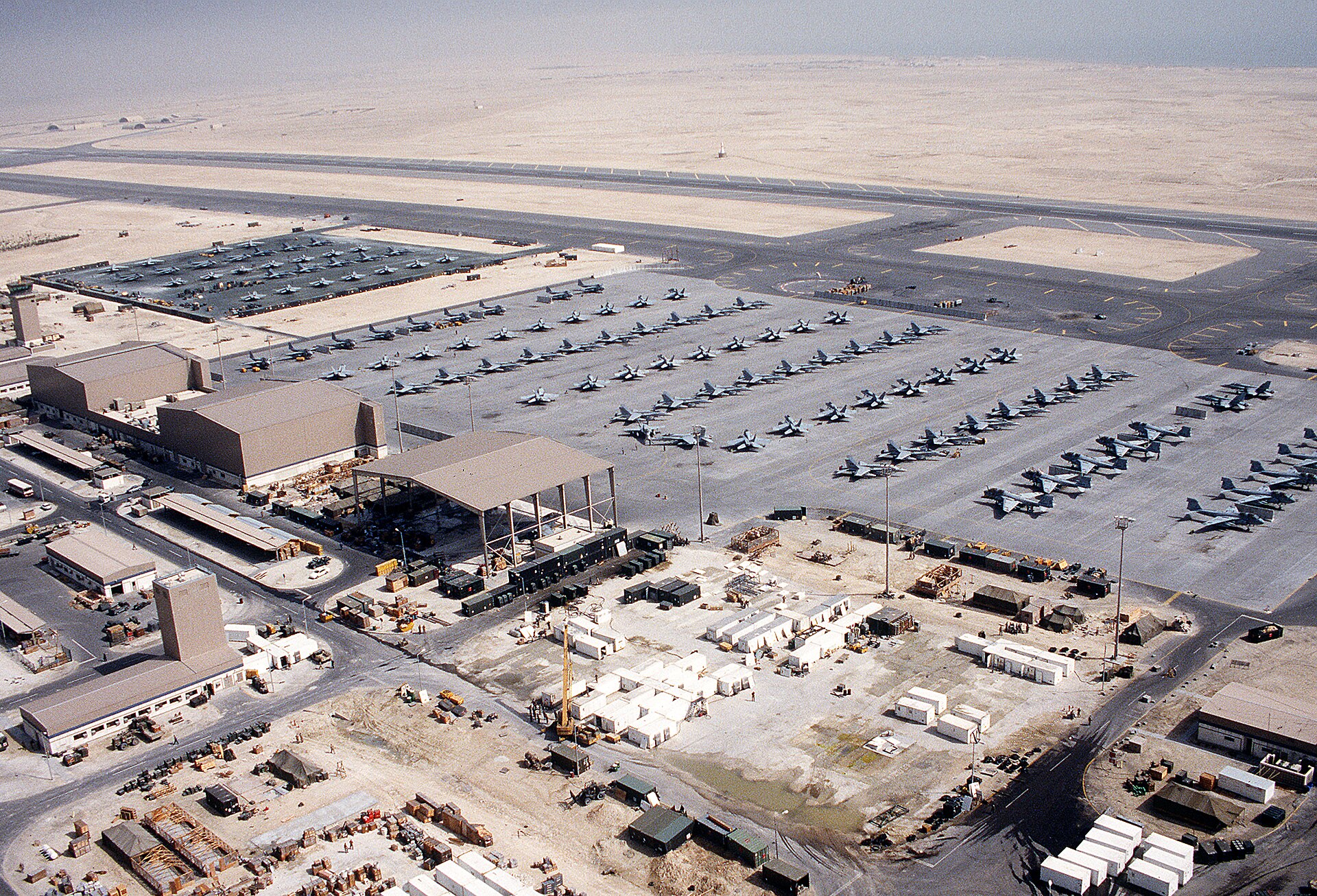
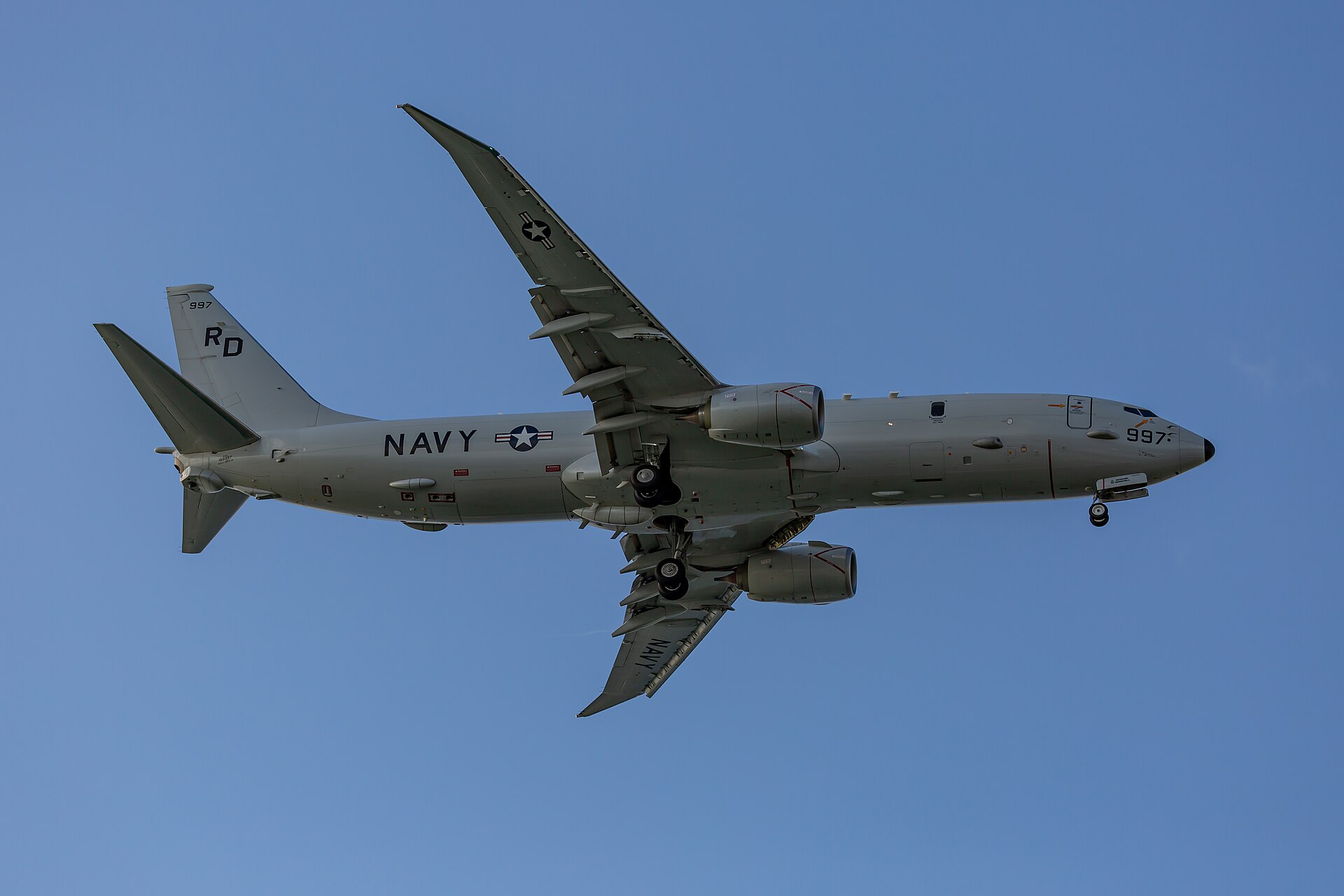
Sheikh Isa is the Royal Bahraini Air Force’s fighter base and a separate site from both the Riffa helicopter base Iran targeted at the weekend and the Fifth Fleet headquarters at Naval Support Activity Bahrain in Juffair, according to Janes and GlobalSecurity. Reaching it would mean reaching the airfield where US maritime patrol jets are based, not just the radar guarding a helicopter pad.
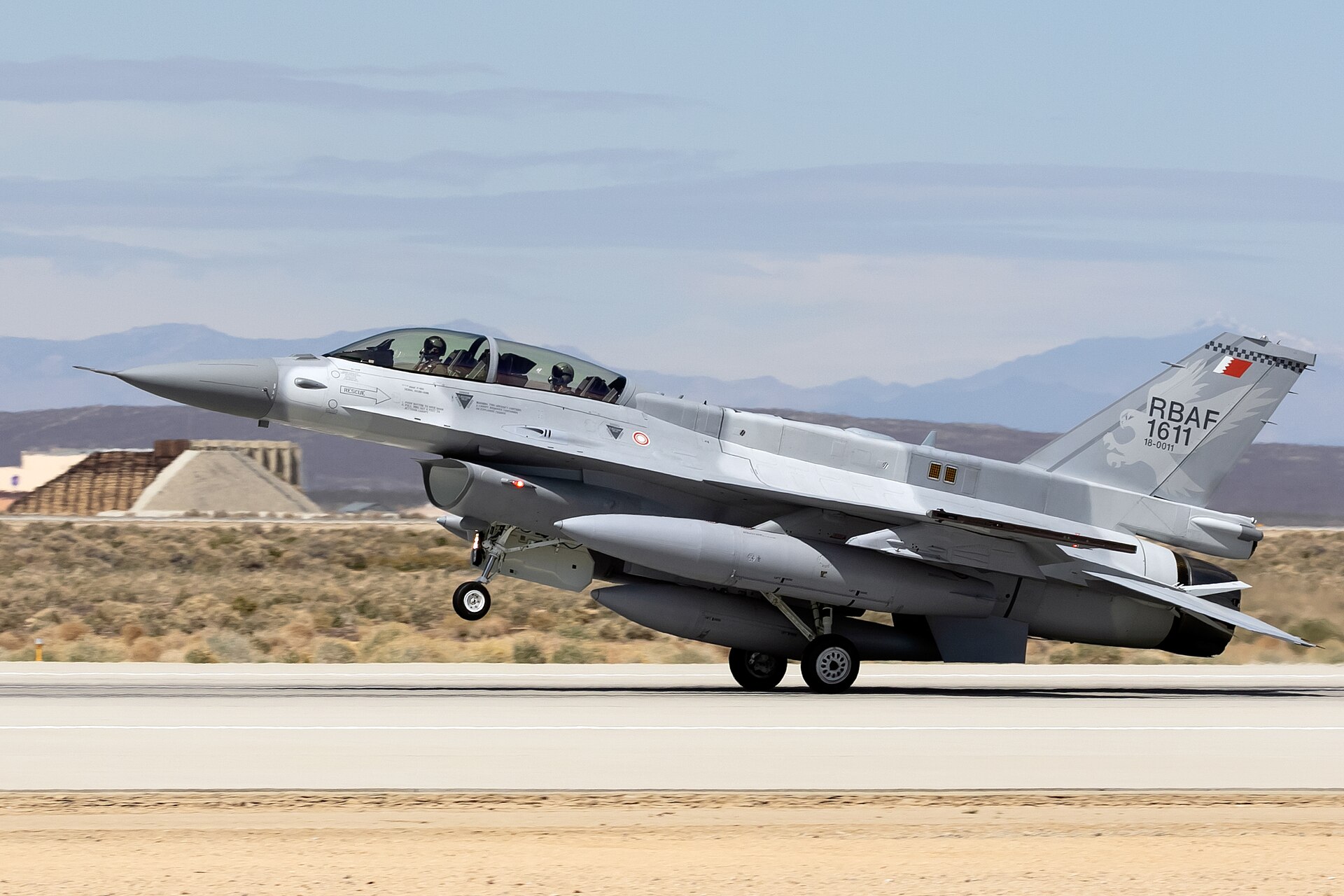
The base, now formally called Isa Air Base, sits on the Gulf coast in southern Bahrain and is operated by the Royal Bahraini Air Force, which bases its 1st Fighter Wing and F-16C/D squadrons there. Since 2009 the US Air Force has run a detachment from the 379th Air Expeditionary Wing at the base, according to GlobalSecurity and Wikipedia’s base record, and GlobalSecurity and Janes list it as the primary deployment site for the US Navy’s P-8A maritime patrol aircraft.
That makes the radar claim less abstract than it sounds. Iran has been here before: satellite imagery from March 30 reportedly showed hits on hangars used by P-8 surveillance aircraft at Sheikh Isa, according to the public record of Iranian strikes on Bahrain compiled on Wikipedia. On September 2, Iran’s regular army said it had sent “massive drone attacks” against radar installations and “gathering centres” of American forces at the base, part of a day on which Iran fired at US positions in Bahrain, Jordan and Iraq after US strikes killed at least 11 people in southern Iran, Sahara Reporters reported.
| Date | Target named by Iran | Iran’s claim | US / Bahraini response |
|---|---|---|---|
| Friday, Nov 13 | US early-warning radar, Bahrain | Radar destroyed (IRGC) | CENTCOM: 2 drones shot down, no damage |
| Sunday, Nov 15 | US air-defence radar, Al-Rifaa helicopter base | 6 drones launched (IRGC via Press TV) | Bahrain: “several” aerial attacks intercepted; US Ambassador Hallett: all drones intercepted, no injuries or damage (no CENTCOM statement) |
| Tuesday, Nov 17 | US radar system, Sheikh Isa Air Base | “Precision operation,” number of drones not stated | Bahrain: attack thwarted; no CENTCOM statement |
Read across, the table shows Iran’s numbers thinning as the week went on. On Sunday the IRGC said six drones flew at Al-Rifaa and CENTCOM said it downed two, a gap nobody has explained; on Tuesday Iran stopped giving numbers at all, which leaves no figure for Washington to contradict.
The IISS’s Bahrain-based defence analyst, Sascha Bruchmann, told the AP that Tehran is growing impatient but that the Bahrain attacks are not yet a decisive escalation. “This is not it — yet,” he said.
Three Attacks, Three Carriers and a Meeting in Muscat
While the drones were in the air over Bahrain, Iranian diplomacy was in Oman. Araghchi and Albusaidi discussed “diplomatic options available to contain tensions and revitalise tracks of dialogue and negotiation,” the Oman News Agency said, as reported by ARY News, and stressed keeping international navigation flowing through maritime passages. Gulf News, summarising the day, said there was “no confirmed breakthrough or agreement to end the conflict,” with the US naval blockade, Iran’s conditions for reopening Hormuz, sanctions and the nuclear programme all unresolved; the HOS account of the Muscat meeting has the detail.
The military backdrop was moving the other way. The USS Theodore Roosevelt carrier strike group arrived in the region, joining the USS George H.W. Bush and the USS George Washington, the AP reported, and the Washington has been deployed for about three months after being sent to relieve the USS Abraham Lincoln. The AP said US Navy ships were maintaining the blockade of Iranian shipping and that President Donald Trump was weighing whether to resume all-out attacks or tighten the blockade, a choice HOS reported on when the third carrier reached the Middle East.
Iranian officials describe the standoff as “no war, no peace,” the AP reported, saying they are open to a negotiated deal while signalling readiness to escalate, and Qalibaf has said Iran aims to establish “sustainable deterrence” against further attacks. Hamidreza Azizi, a senior Iran analyst at the International Crisis Group, framed the choice facing Tehran in harder terms, writing that Iranian leaders must now weigh whether “breaking the blockade through escalation” is less costly than accepting it.
What Does the Sheikh Isa Attack Mean for Saudi Arabia?
For Riyadh, an Iranian campaign against Bahrain is a campaign against the country at the other end of the King Fahd Causeway, a neighbour whose security Saudi Arabia has formally tied to its own. At the December 2025 Gulf Cooperation Council summit in Sakhir, members adopted a declaration treating any infringement on a member state’s sovereignty as a threat to collective security, Khaleej Times reported, and Bahrain’s Foreign Ministry invoked that architecture on Sunday when it said it would coordinate with GCC members under the Joint Defence Agreement, QNA reported.
The Saudi foreign ministry responded to Sunday’s attack on Al-Rifaa by expressing “full solidarity” with Bahrain and calling for an “immediate cessation” of attacks that it said violated “international law and good-neighbourliness principles,” according to Middle East Eye’s live coverage. Qatar’s foreign ministry, also on Sunday, called the attacks “a flagrant violation of its sovereignty and territorial integrity” and warned that continuing them “constitutes a dangerous escalation,” QNA reported.
The UAE added its own condemnation of the renewed attacks, calling them “violations of the kingdom’s sovereignty and threats to its security and stability” and reaffirming its solidarity with Bahrain, Gulf News reported on Tuesday. That puts Saudi Arabia, Qatar and the UAE on the record behind Manama since Sunday, and Bahrain’s own reference to the Joint Defence Agreement is the clearest sign of where it wants that support to lead.
There is a practical dimension for Saudi residents and travellers too. The causeway was briefly suspended on April 7 when overnight attacks hit SABIC plants at Jubail and the Saudi defence ministry said it intercepted seven ballistic missiles in the east, Al Jazeera reported; anyone planning to drive across should check the Saudi land border crossing guide before setting off. The Houthi front is also live: Sunday’s Al-Rifaa claim came on the same day the Saudi-led coalition said it intercepted two Houthi ballistic missiles aimed at Riyadh and three drones over the Eastern Province, Reuters reported via Khaleej Times.
Background: Bahrain in Iran’s Sights Since February 28
Bahrain has been inside the war from its first day. The US and Israel struck Iran on February 28, and Iranian missiles and drones hit the US Fifth Fleet headquarters at Naval Support Activity Bahrain the same day; Military Times estimated in August that damage to the base came to nearly $400 million, covering the headquarters, communications towers, a barracks and warehouses, according to the Wikipedia record of the strikes.
Radars have been the recurring target. An AP photograph distributed with Tuesday’s coverage shows a radar facility at Jabal ad Dukhan struck by an Iranian ballistic missile on July 13, 2026, TRT World reported, and on Friday the IRGC claimed to have destroyed a US early-warning radar. Iran said Friday’s attack was retaliation for a US strike on a communications tower in Sirik, Reuters reported via Ynet, an incident HOS covered in its report on the Sirik tower strike and in the account of the two drones launched on November 13.
Sunday’s attack then produced Bahrain’s first interception since September, after two warnings telling residents to seek shelter, Reuters reported. Bahrain’s military accused Tehran of continuing a “systematic hostile approach” toward the kingdom, Reuters reported, and the Foreign Ministry held Iran “fully responsible for the attacks and their repercussions,” citing Article 51 of the UN Charter, according to QNA. HOS covered the six-drone claim and the US response in its report on the Al-Rifaa attack.
Tuesday’s alert lifted within hours, and nobody has produced evidence that the radar at Sheikh Isa was touched. In the two days since Sunday the Guards have still moved their aim from a helicopter pad in Riffa to the runway the US Navy’s patrol jets fly from, and on Tuesday they did not bother to say how many drones it took.
Frequently Asked Questions
Is Isa Air Base the same as Sheikh Isa Air Base?
Yes. The airfield was renamed from Shaikh Isa Air Base to Isa Air Base, and carries the ICAO code OBBS. Its runway is 3,800 metres long, according to its Wikipedia record, and a 1991 photograph shows US Marine Corps aircraft of Marine Aircraft Group 11 at the base during the Gulf War. Some coalition personnel at the time nicknamed it “Shakey’s Pizza.”
Where is the 379th Air Expeditionary Wing headquartered?
The wing’s main base is Al Udeid Air Base in Qatar. The detachment at Isa Air Base was set up in 2009 to support aerial port operations, and it sped up delivery of MRAP armoured vehicles to US forces in Afghanistan, according to the base’s Wikipedia record. Contractor KBR took over base operations support services there in August 2020.
What has Bahrain asked the UN Security Council to do?
Bahrain, currently a Security Council member, called on the Council on November 15 to condemn the repeated Iranian attacks and to ensure Iran complies with Resolution 2817, QNA reported. Earlier in the war, on April 7, Russia and China vetoed a Bahrain-drafted resolution urging coordinated defence of Hormuz shipping; the vote was 11-2 with two abstentions, Dawn reported.
Has Iran claimed attacks on civilian or commercial sites in Bahrain?
Yes. On July 21 the IRGC claimed cruise missiles had destroyed Amazon data infrastructure in Bahrain, with no immediate comment from Bahrain, the US or Amazon, Aaj News reported. A Reuters photograph published by the Jerusalem Post also records a strike on the Bapco oil refinery on Sitra Island on March 9, 2026.
Has CENTCOM disputed earlier IRGC drone claims near Hormuz?
Yes. When the IRGC said in late September that it had captured a US underwater drone in the Strait of Hormuz, CENTCOM spokesperson Captain Tim Hawkins denied it, saying the US maintained “positive control of all of our operational drone assets” and calling the claim “clearly desperate,” the Express Tribune reported on September 28. The IRGC had claimed a separate submarine-drone capture at the strait’s entrance earlier that month, Oman Observer reported.
The House of Saud Daily Briefing
Saudi Arabia's news in 3 minutes, every morning. Free. See today's issue