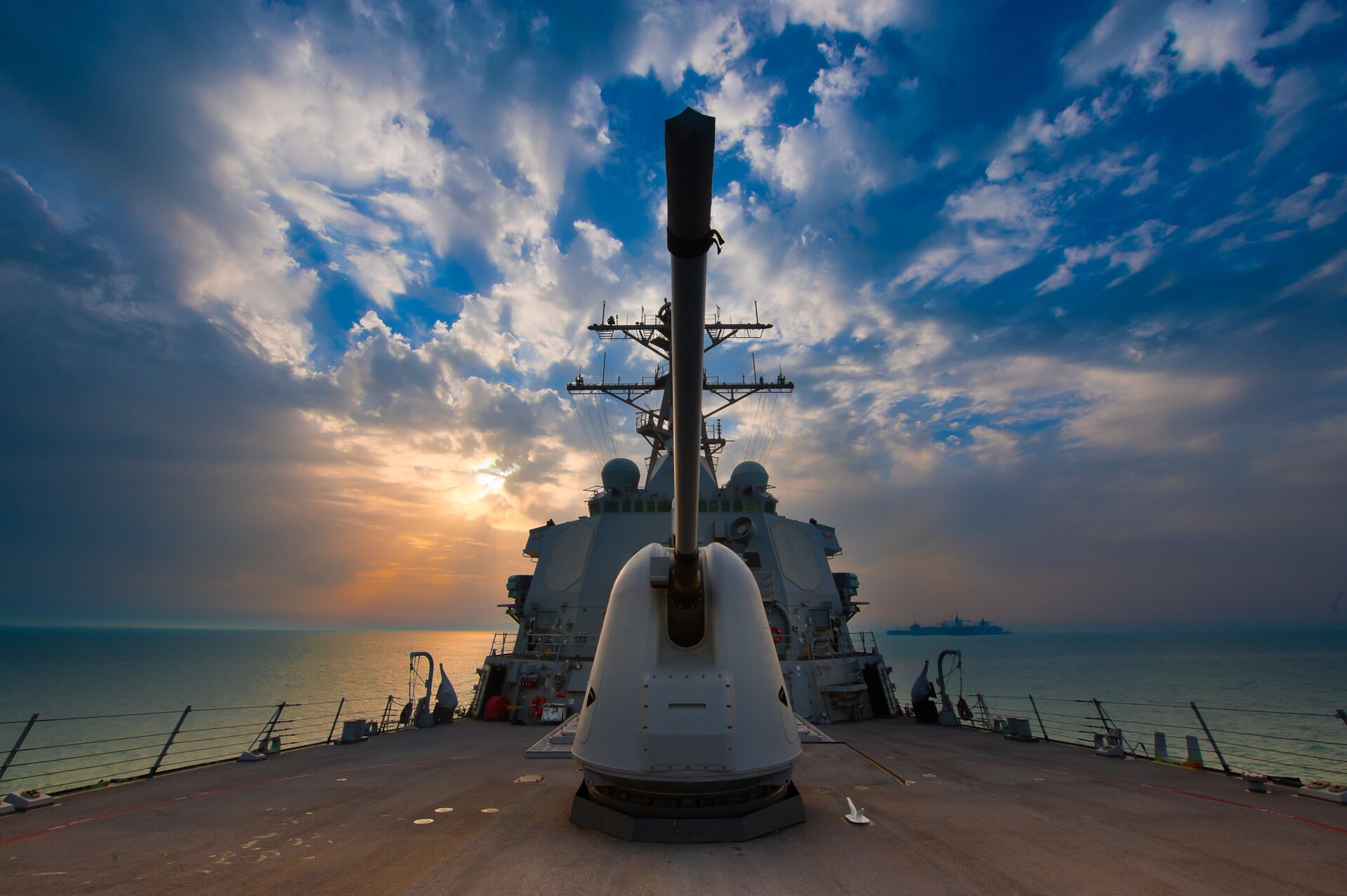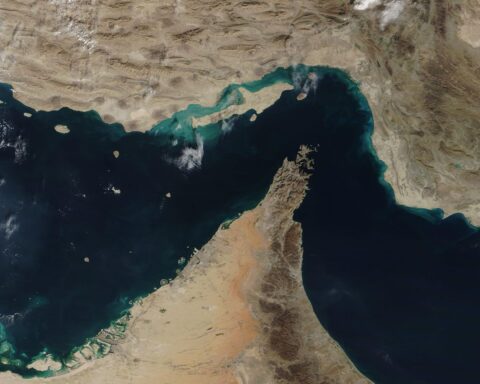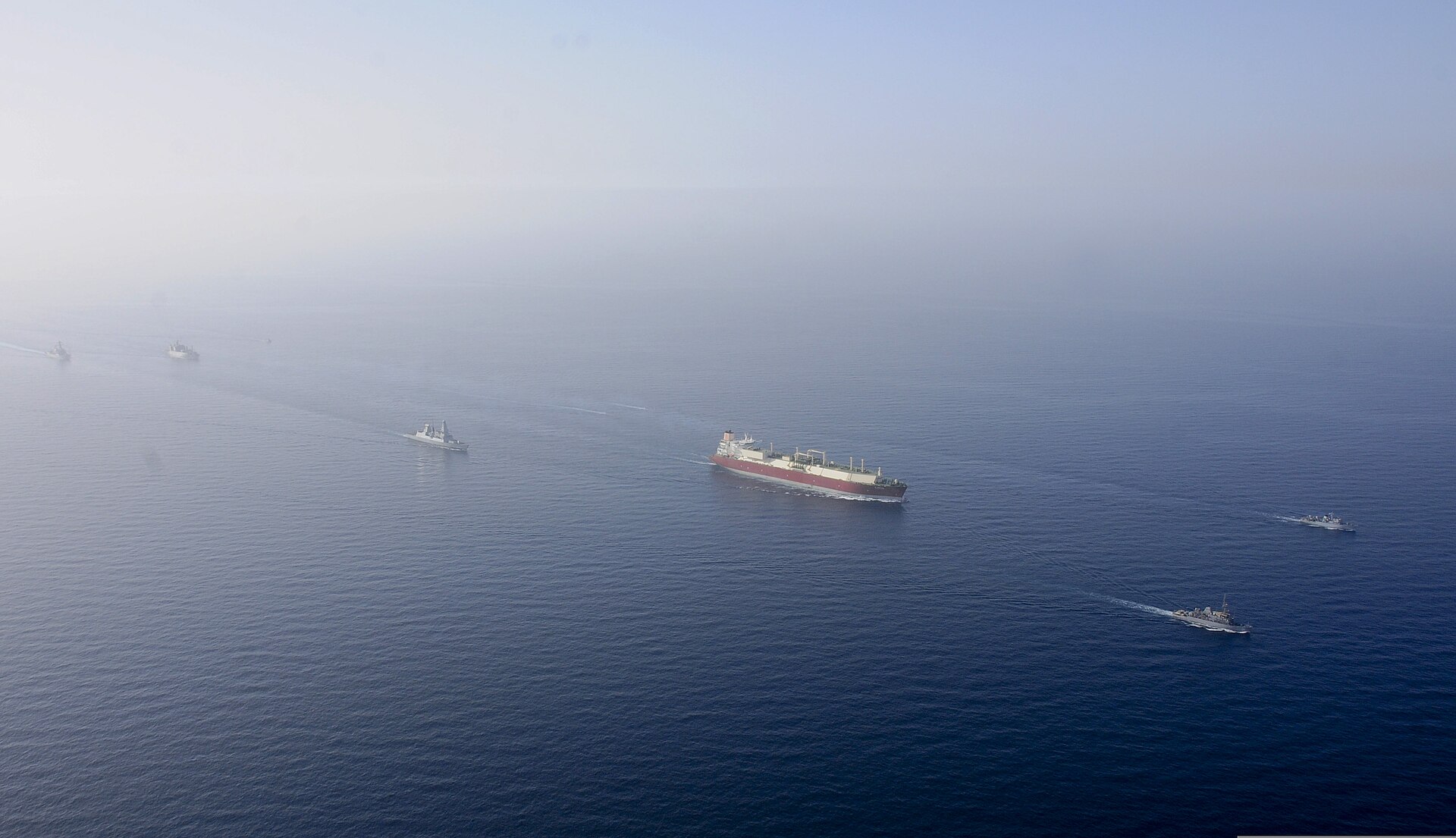

ABU DHABI — An ADNOC Logistics and Services vessel was attacked while transiting the Strait of Hormuz on the evening of 17 November 2026, leaving one crew member missing and 11 injured, according to ADNOC and Gulf News. The company did not name the vessel, its type, or the method of attack, and did not attribute responsibility. Search and rescue operations were ongoing as of 18 November.
The attack was the latest in a series of strikes on ADNOC vessels since the Iran-Gulf war began in late February — a pattern that by August had reached 15 vessels hit, one crew member killed, and 20 injured, according to an ADNOC statement reported by OilPrice.com and Khaleej Times. It came one week after a separate ADNOC vessel was damaged on 10 November in UAE territorial waters in the Arabian Gulf. For ADNOC’s chief executive, Sultan al-Jaber — who since April has publicly demanded the strait reopen fully and unconditionally — the latest casualty report sharpened a confrontation with Tehran that Abu Dhabi once tried to manage through quiet diplomacy.
The House of Saud Daily Briefing
Saudi Arabia's news in 3 minutes, every morning. Free. See today's issue
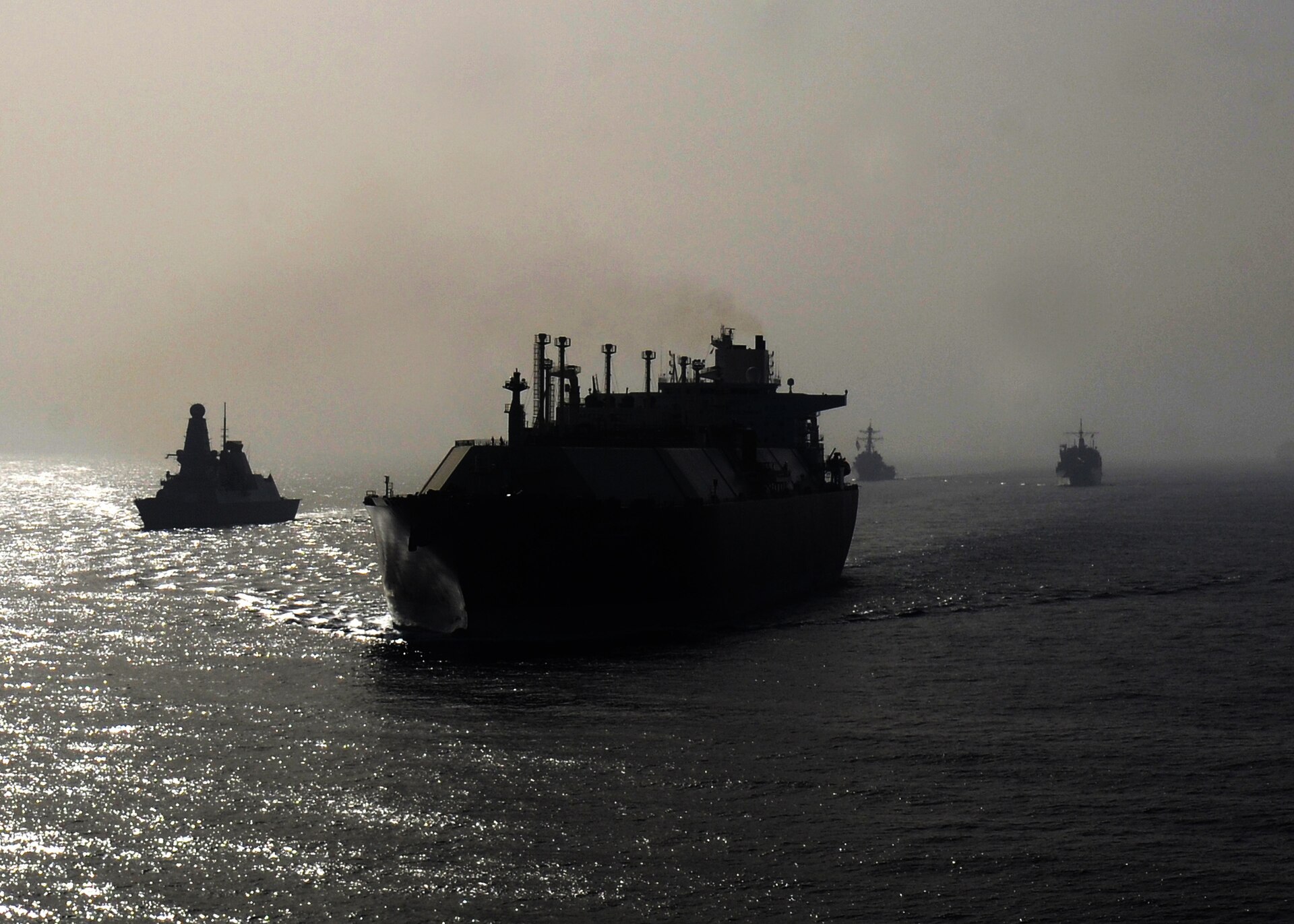
Table of Contents
The November Attacks
ADNOC Logistics and Services — the shipping arm of Abu Dhabi National Oil Company, one of the world’s largest energy producers — confirmed the 17 November incident in a statement that stressed the “importance of protecting seafarers and safeguarding freedom of navigation,” according to OilPrice.com and Gulf News. The company provided no further operational detail. Gulf News separately reported that 56 vessel damage reports had been filed in the Strait of Hormuz and nearby waters since 28 February 2026, when Iran first closed the waterway.
The 10 November attack on a different ADNOC vessel in UAE territorial waters — not the strait itself but the broader Arabian Gulf — suggested a geographic expansion of the threat. OilPrice.com noted the second attack came just one week before the Hormuz transit strike, raising the operational tempo against ADNOC-flagged shipping in particular.
Neither Iran’s Islamic Revolutionary Guard Corps nor any other entity has publicly claimed either November attack. ADNOC’s statements have been confined to crew welfare and navigation principles, a restraint consistent with its approach throughout the conflict. The company owns more than 340 vessels and operates roughly 600 chartered ships, according to OilPrice.com — a fleet large enough that any single-company pattern of targeting carries commercial and insurance consequences well beyond the vessels themselves.
Al-Jaber’s Standing Demand
Sultan al-Jaber occupies an unusual position in the Gulf’s response to the Hormuz crisis. He is simultaneously the managing director and group chief executive of ADNOC, the UAE’s Minister of Industry and Advanced Technology, and the former president of the COP28 climate summit. When he speaks, the ambiguity is structural: it is never entirely clear whether the voice belongs to a corporate leader, a cabinet minister, or a global energy diplomat. Abu Dhabi appears to find that ambiguity useful.
His most direct statement on the strait came on 9 April 2026, in a LinkedIn post that Reuters distributed widely. “The Strait must be open — fully, unconditionally and without restriction,” al-Jaber wrote. “Energy security and global economic stability demand it.” In the same statement, he noted that roughly 230 ships loaded with oil were ready to sail and unable to transit. He called the current state of the strait coercion, not navigation: “passage is subject to permission, conditions and political leverage. That is not freedom of navigation. That is coercion.” He added that “Iran must be held accountable and fully liable for damages and reparations,” according to Daily Sabah, which carried the Reuters report.
The language had escalated steadily before that. At CERAWeek on 23 March 2026, al-Jaber called the closure “economic terrorism,” according to an ADNOC press release: “Weaponizing Hormuz is economic terrorism against every nation.” He added: “No country should be allowed to hold Hormuz hostage, not now, not ever,” a line Gulf Business also reported.
Two months later, at an Atlantic Council event on 21 May, he offered a timeline that no other Gulf official had been willing to state publicly. “Even if this conflict ends tomorrow, it will take at least four months to get back to 80% of pre-conflict flows,” al-Jaber said, according to Reuters via gCaptain. Full flows, he said, “will not return before the first or even second quarter of 2027.” He framed the precedent in terms that went beyond the current conflict: “Once you accept that a single country can hold the world’s most important waterway hostage, if we don’t defend this principle today, we will spend the next decade defending against the consequences.”
These are not off-the-cuff remarks. They represent a sustained, months-long public campaign by the head of one of the world’s largest national oil companies — a campaign whose tone has not softened as the attacks have continued. The 17 November strike on an ADNOC crew gave the April demand renewed urgency without requiring a new statement. The position was already on the record.
The Cost Al-Jaber Laid Out at ADIPEC
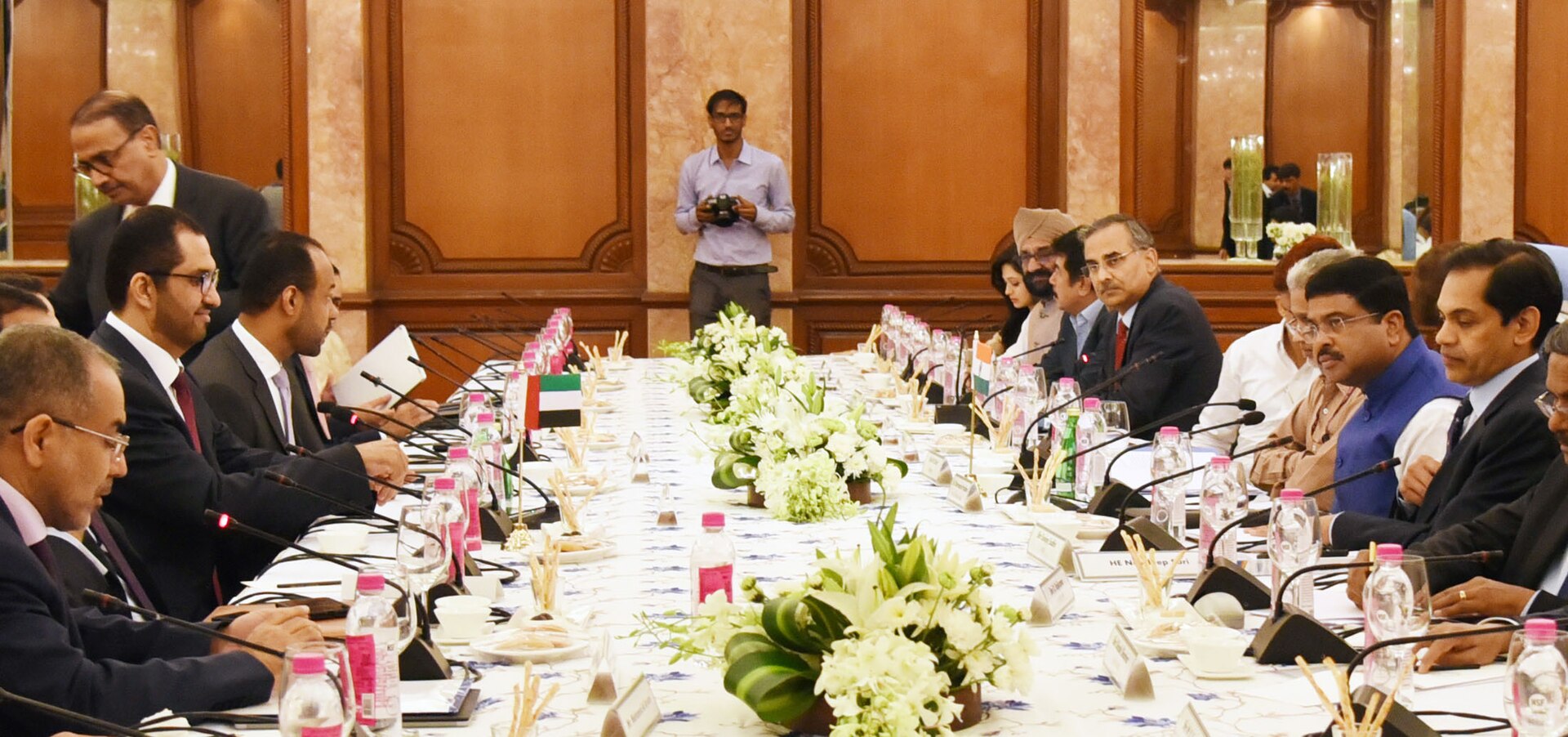
At the opening of the Abu Dhabi International Petroleum Exhibition and Conference on 2 November 2026, al-Jaber quantified the damage in terms that markets and insurers could price. Nearly one billion barrels of crude had been drained from global inventories since the Hormuz disruption began, he said, according to The National. Logistics costs — the expense of moving a barrel from wellhead to refinery — had risen from under 5% to over 30% of the cost per barrel. Diesel stocks in some markets had fallen to 35-year seasonal lows. A 600 billion cubic foot gap had opened in LNG supply, according to World Oil’s report on the same address.
“Simply put, the world has eroded its supply buffers,” al-Jaber told the ADIPEC audience. He reframed the security question in delivery terms: “Energy security is not only measured at the point of production. It is now also measured at the point of delivery.” The phrasing was deliberate — it placed ADNOC’s shipping losses at the center of the global energy conversation, not on its periphery.
The figures aligned with broader market data. Brent crude traded at $102.94 on 9 October, according to CNBC. The International Energy Agency reported in September 2026 that Saudi Arabia’s output had fallen by 2.6 million barrels per day in August alone, with crude shipments dropping to 6 million bpd, according to Trend. The disruption was not limited to the UAE. But ADNOC, whose fleet transits the strait daily, bore a disproportionate share of the physical risk — and al-Jaber was making certain the cost was public.
Why Does ADNOC Speak, Not the Foreign Ministry?
The UAE’s formal diplomatic response has been blunter than its traditional register but less quotable than al-Jaber’s corporate statements. After an ADNOC tanker was struck by a missile in transit on 8 August, the UAE Ministry of Foreign Affairs condemned the attack as a “blatant violation” of UN Security Council Resolution 2817 and called for the “complete and unconditional reopening” of the strait, according to Gulf News and Khaleej Times. The UAE has recalled its ambassador from Tehran, a step the National Iranian American Council noted in an analysis of the bilateral collapse.
Anwar Gargash, a senior adviser to UAE President Sheikh Mohamed bin Zayed, delivered a parallel message at the Hili Forum in Abu Dhabi on 7 September. “Our energy exports will not be held hostage, nor will our trade and economic activity,” Gargash said, according to Al-Monitor, which carried the Reuters report. He added: “Freedom of navigation is not a concession to be granted, nor a principle to be renegotiated under pressure.” Asked about the future of UAE-Iran relations, Gargash said rebuilding trust would take “decades.”
Al-Jaber’s role, then, is not a substitute for diplomacy. It is a second channel — one that speaks the language of barrels, logistics costs, and fleet insurance rather than Security Council resolutions. A corporate chief executive can call Iran’s actions “economic terrorism” and demand “reparations” in ways a foreign ministry communiqué cannot without triggering a formal escalation. Abu Dhabi gets the message delivered and retains deniability on tone. This has been the pattern since March: Gargash sets the diplomatic line, al-Jaber delivers the economic indictment, and the Foreign Ministry issues the formal condemnations. The 17 November attack on an ADNOC crew gave al-Jaber — not the Foreign Ministry — the freshest grievance.
Iran’s Seven Conditions
Iran’s position on the strait has been stated with equal clarity, and it has not moved. Mohammad Baqer Ghalibaf, the speaker of Iran’s Majlis, said on 4 October that “the position of the Islamic Republic of Iran is completely clear and firm” and that “the Strait of Hormuz will not be opened until our seven conditions are met,” referring to conditions based on the Islamabad Memorandum of Understanding. Ghalibaf repeated the position on 11 November, according to newsonair.gov.in. The conditions were reported by Khaleej Times, Reuters, and Nournews.
Mohsen Rezaei, the secretary of Iran’s Supreme National Security Council, has outlined some of the conditions in public statements reported across multiple outlets between September and October 2026: an end to war on all fronts, the release of frozen Iranian funds, and an end to the naval blockade. Iran’s foreign minister, Abbas Araghchi, offered a timeline in a statement reported by Arab News: Tehran’s plan “could lead to the strait reopening within seven days if accepted” — a formulation that placed the burden of delay on Washington, not Tehran.
The gap between the two positions is not a negotiating range. Al-Jaber demands unconditional reopening. Tehran conditions reopening on the resolution of a war, the lifting of sanctions, and the withdrawal of a naval blockade. Each side has stated its terms clearly. Neither has shown movement since October. The continued mining of Hormuz and the continued attacks on commercial vessels suggest Iran views the strait as its primary bargaining instrument — one it will not relinquish before a comprehensive settlement.
Can the UAE Bypass Hormuz?
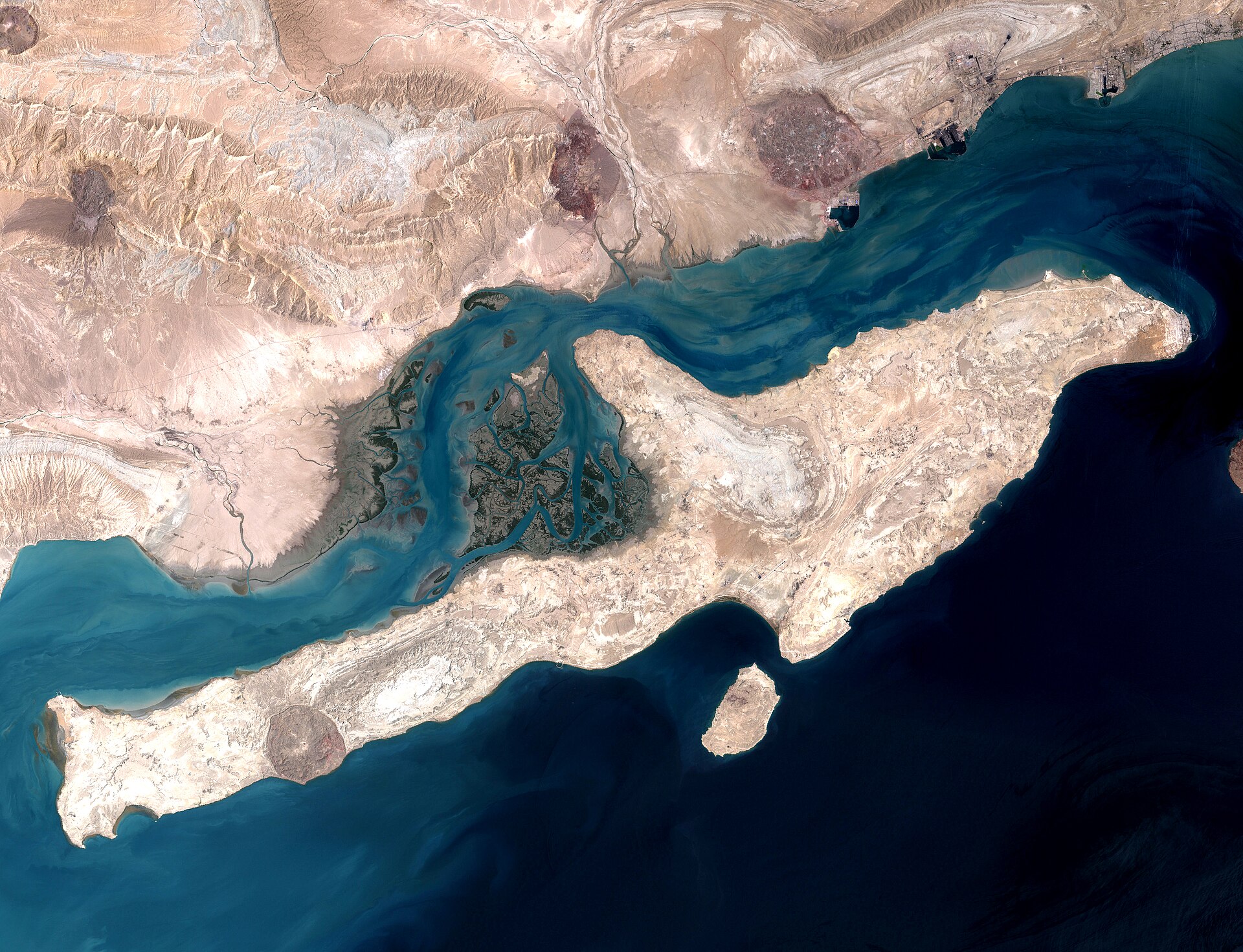
The short answer is: partially, and not at scale. The Habshan-Fujairah pipeline — the UAE’s only land-based alternative to the strait — has a maximum capacity of 1.8 million barrels per day, according to multiple industry sources. The UAE’s pre-war crude output was 3.1 to 3.4 million bpd, according to Kpler data reported by Reuters. After the Hormuz closure forced shut-ins, UAE output fell by more than half, Reuters reported via Tribune.com.pk in March 2026.
The arithmetic is straightforward. Even at full pipeline capacity, the UAE can export barely more than half its pre-war production without Hormuz. The pipeline terminates at the Fujairah export terminal on the Gulf of Oman — outside the strait — but the IRGC has claimed Fujairah “falls within a maritime zone where Tehran claims security jurisdiction,” according to an analysis by the National Iranian American Council. That claim has not been tested militarily, but it hangs over the bypass route’s viability.
Al-Jaber had warned at the Atlantic Council in May that full flows would not recover before Q1 or Q2 2027 even after a ceasefire, according to Reuters via gCaptain. The delay reflects not only the physical challenge of de-mining and clearing the strait but also the insurance environment. Against the backdrop of those vessel damage reports, underwriters have imposed war-risk premiums that make Hormuz transit prohibitively expensive for many operators regardless of whether the waterway is technically passable.
ADNOC’s response to the capacity constraint has been to invest in its own fleet. The company purchased 11 tankers — six very large crude carriers (VLCCs) and five very large gas carriers (VLGCs) — for $1.3 billion in August 2026, according to OilPrice.com — a move that gives it more control over routing and scheduling but does not solve the fundamental chokepoint. The broader regional cost of the closure extends well beyond any single company’s fleet investments.
The Cumulative Toll on ADNOC’s Fleet
By August 2026, ADNOC had disclosed that 15 of its vessels had been attacked in the Strait of Hormuz since the conflict began, with one crew member killed and 20 injured, according to an ADNOC statement reported by OilPrice.com and Khaleej Times. The 17 November attack extended that toll — one crew member still missing and 11 newly injured. The 10 November incident, in which a separate ADNOC vessel was damaged in UAE territorial waters, may represent an additional attack, though ADNOC’s August tally covered only Hormuz transit strikes.
The pattern of targeting is difficult to attribute with certainty. ADNOC has not named the attackers in any of its public statements. The methods have varied — mines, missiles, and unspecified forms of attack all feature in the broader record of Hormuz vessel strikes. Gulf News’s tally of 56 vessel damage reports across the strait and nearby waters since February suggests ADNOC vessels account for roughly a quarter of all incidents — a proportion consistent with the size of its fleet relative to total Hormuz traffic, but one that also reflects the company’s transparency in reporting compared with operators who disclose less.
The human toll is concentrated among seafarers — the crews who transit the strait under conditions that al-Jaber described at the Atlantic Council as an environment where “every farm, every factory, every family is paying the price,” according to Reuters via gCaptain. The 17 November attack left one of those seafarers unaccounted for. The company’s statement focused on crew safety and the principle of navigation. It did not mention al-Jaber’s earlier demands by name. It did not need to. His position has been public since March.
The UAE’s posture has shifted in stages. It maintained working economic ties with Iran — including a substantial Iranian business diaspora in Dubai — long after the conflict began. The cumulative effect of vessel attacks, the IRGC’s claim over Fujairah’s maritime zone, and the expansion of Iranian drone strikes to other Gulf states collapsed that working relationship. The ambassador recall was the formal marker. Gargash’s statement that trust would take “decades” to rebuild was the operational one. The Iranian military’s targeting of US and Gulf military infrastructure in Kuwait and Bahrain has reinforced Abu Dhabi’s conclusion that accommodation is no longer viable.
Al-Jaber’s public campaign — from “economic terrorism” in March to “unconditional reopening” in April to the ADIPEC cost accounting in November — tracks that shift. He spoke before the Foreign Ministry found its own language for the same position. That a corporate chief executive led the rhetorical escalation, rather than a diplomat or a general, tells its own story about where Abu Dhabi locates the injury. The damage is commercial. The demand is commercial. The missing crew member from 17 November was working a commercial route. The continued attacks on commercial shipping in the strait have not altered al-Jaber’s terms. They have reinforced them.
Frequently Asked Questions
What is ADNOC’s global ranking among oil companies?
ADNOC is generally ranked as the twelfth-largest oil company in the world by production capacity. It operates across the full hydrocarbon value chain — upstream exploration, midstream logistics, and downstream refining. As Abu Dhabi’s national oil company, ADNOC’s revenues feed directly into the emirate’s sovereign wealth and government budget — which means its shipping losses carry fiscal consequences that extend well beyond any corporate balance sheet. That fiscal exposure helps explain why Abu Dhabi has allowed al-Jaber’s commercial statements to function as a parallel track alongside its diplomatic response.
What is UN Security Council Resolution 2817?
UNSC Resolution 2817 is the resolution the UAE cited when condemning the 8 August missile attack on an ADNOC tanker. The UAE Ministry of Foreign Affairs called that attack a “blatant violation” of the resolution, which addresses freedom of navigation and the protection of commercial shipping. The UAE’s invocation of the resolution framed the Hormuz attacks as violations of international law, not merely bilateral disputes, according to Gulf News and Khaleej Times.
What is the Islamabad Memorandum of Understanding that Iran references?
Iran’s Majlis Speaker Ghalibaf has stated that his country’s seven conditions for reopening the Strait of Hormuz are “based on the Islamabad Memorandum of Understanding,” according to Khaleej Times and Nournews. The memorandum appears to reference a framework negotiated through Pakistani mediation earlier in the conflict. Known elements of Iran’s conditions, as outlined by SNSC Secretary Mohsen Rezaei, include an end to hostilities on all fronts, the release of frozen Iranian funds, the lifting of sanctions, and the end of the US naval blockade, according to multiple outlets.
When could the Strait of Hormuz fully reopen for commercial shipping?
No fixed timetable exists. Iran’s stated position links reopening to the resolution of the entire conflict — including an end to hostilities, the lifting of sanctions, and the withdrawal of the US naval blockade — conditions that set no calendar. The physical challenge compounds the diplomatic one: al-Jaber warned at the Atlantic Council in May that full flows would not recover before Q1 or Q2 2027 even after a ceasefire, according to Reuters via gCaptain, citing the de-mining challenge and the war-risk insurance environment. The two timelines — diplomatic settlement and physical restoration — run in sequence, not in parallel.
Has any country successfully mediated between Iran and the Gulf states on Hormuz?
Oman has hosted multiple rounds of talks between Iranian and Gulf or Western officials, but no agreement on reopening the strait has been reached. Iran’s FM Araghchi met Oman’s FM Busaidi in Muscat on 17 November, the same day as the ADNOC vessel attack, without result, according to Arab News. Qatar has also been involved in mediation efforts. Iran’s position — that the strait remains closed until its seven conditions are met — has not shifted in any reported negotiation, according to newsonair.gov.in.
The House of Saud Daily Briefing
Saudi Arabia's news in 3 minutes, every morning. Free. See today's issue