
{“content”: “
RIYADH u2014 Iran launched coordinated strikes against US military installations in three countries early on June 10, retaliating for CENTCOM’s overnight campaign against Iranian air defense sites along the Hormuz corridor u2014 and excluded Saudi Arabia from the target list. The IRGC struck NSA Bahrain, Ali Al-Salem Air Base in Kuwait, and Al-Azraq Air Base in Jordan in a synchronized salvo beginning at 02:30 local time, wounding fifteen Americans and claiming twenty-one targets hit across the three countries. Saudi Arabia, whose Prince Sultan Air Base was named a “legitimate target” by Iran’s parliamentary speaker three days earlier, received no incoming fire and issued no statement. The kingdom’s absence from the target list is not evidence of safety. It is evidence of function u2014 Saudi Arabia operating exactly as Tehran needs it to: silent, depleted, and available as the final escalatory instrument Iran has not yet spent.
n
Table of Contents
n
- n
- What Iran Hit at 02:30 on June 10
- Why Was Saudi Arabia Absent From the Target List?
- The PSAB Precedent: A Strike Iran Chose Not to Repeat
- How Many Interceptors Does Saudi Arabia Have Left?
- Twenty-One Days of Silence from MOFA
- What Does Iran Gain by Not Striking Saudi Arabia?
- Jordan Intercepted. Kuwait Bled. Bahrain Absorbed.
- Seventy Percent of Iranian Projectiles Targeted Saudi Oil
- The Three-Hour Window
- The Structural Logic of Being Last
- Frequently Asked Questions
The Middle East briefing 3,000+ readers start their day with.
One email. Every weekday morning. Free.
- n
n
n
n
n
n
n
n
n
n
n
n
n
n
n
What Iran Hit at 02:30 on June 10
n
The IRGC launched at approximately 02:30 local time u2014 roughly 23:30 GMT on June 9 u2014 less than three hours after CENTCOM concluded strikes on air defense installations at Jask, Sirik, Qeshm Island, and Bandar Abbas. Those US strikes, which Axios described as a “proportional response” to the downing of a US Army Apache helicopter over the Strait of Hormuz, hit ground control stations and surveillance radar across Iran’s southern coastal defense network.
n
Iran’s retaliation was synchronized across three countries. Drones struck NSA Bahrain, where US Naval Forces Central Command and the Fifth Fleet are headquartered alongside 8,300 Navy personnel. A combined drone-and-missile barrage hit Ali Al-Salem Air Base in Kuwait u2014 the same installation Iran struck on June 3, when shrapnel from a Terminal 1 attack killed one Indian national and injured 63 others. Long-range ballistic missiles targeted Al-Azraq Air Base in Jordan, where the US stations F-35 fighter jets.
n
n
Jordan’s air defenses shot down all five ballistic missiles targeting Al-Azraq. Debris fell on Jordanian territory without casualties. The initial US assessment, per Reuters, was that “nearly all” projectiles fired at US facilities across the region had been intercepted.
n
The IRGC’s statement specified four “major targets” destroyed u2014 including what it called “F-35 fighter nests” and a “command-and-control centre” at Al-Azraq u2014 within its broader claim of twenty-one targets hit across the three countries. Iran’s state media framed the strikes as targeting “America’s air and naval bases in the region” u2014 language that defines the conflict as US-Iran. Saudi Arabia appears nowhere in the IRGC’s statement, its state media commentary, or its operational footprint.
n
Why Was Saudi Arabia Absent From the Target List?
n
Iran has struck Kuwait three times, Bahrain twice, and Jordan for the first time since February 28 u2014 but has not targeted Saudi Arabia since mid-March, despite parliamentary speaker Mohammad Bagher Ghalibaf naming PSAB a “legitimate target” on June 7. CSIS characterized the pattern as a “calibrated approach” in which Tehran preserves the kingdom as its highest-value escalatory lever rather than spending it on a single salvo.
n
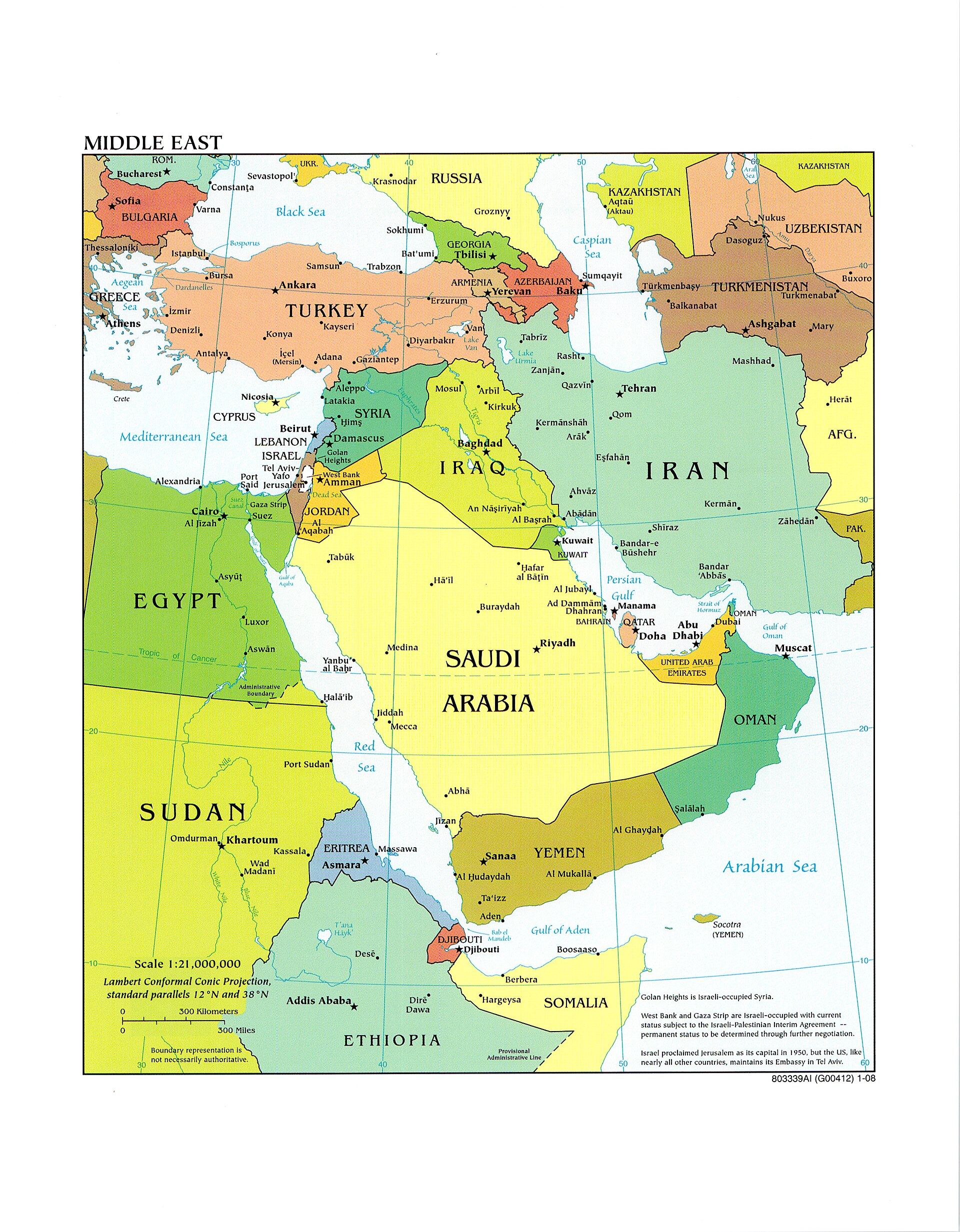
The horizontal expansion is observable on a map. Bahrain, Kuwait, Jordan u2014 the ring around Saudi Arabia fills in without crossing the border. CSIS described the mechanism: Iran “escalated both horizontally u2014 expanding the war’s geography by drawing in an increasing number of countries u2014 and vertically u2014 hitting an expanding array of targets, escalating from military targets to civilian targets and critical infrastructure.” The June 10 three-capital salvo is horizontal escalation with Jordan as the newest geography. Saudi Arabia sits at the center of the expanding perimeter, undisturbed.
n
The Stimson Center was more direct about what Iran holds in reserve: “Tehran still holds cards it has yet to play. Saudi Arabia’s Abqaiq oil processing facility remains vulnerable, and expanded attacks on desalination plants could threaten drinking water for tens of millions.” Abqaiq processes roughly seven percent of global oil supply. It sits within range of the same missile systems that struck Al-Azraq from Iranian territory.
n
Iran’s March decision to limit strikes on Saudi territory was, by this publication’s earlier reporting, a deliberate choice by commanders who assessed that sustained attacks would trigger a direct Saudi military response. That assessment has not changed. What has changed is the number of alternatives u2014 by June 10, Iran has demonstrated it can strike US installations in three countries simultaneously without touching Saudi soil. Every successful strike on a non-Saudi target reinforces the implicit message: the kingdom’s turn is a policy choice Tehran has not yet made, not a capability gap.
n
The PSAB Precedent: A Strike Iran Chose Not to Repeat
n
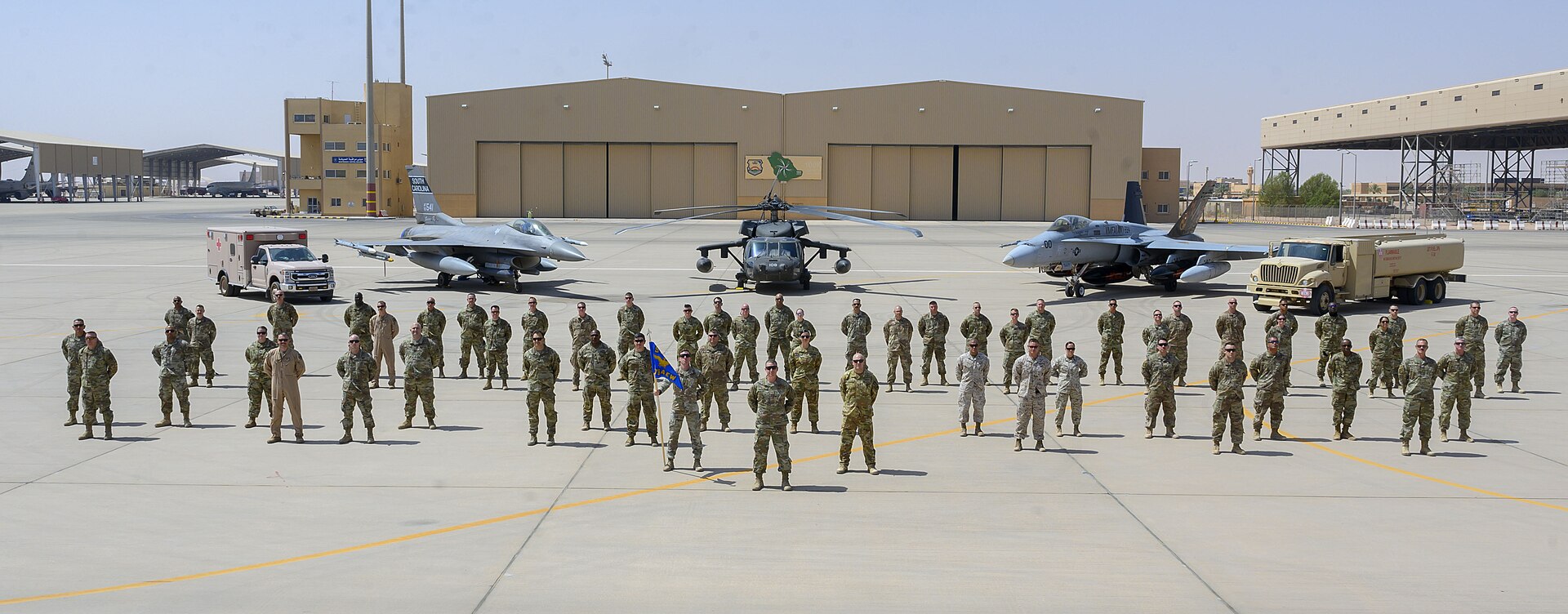
Prince Sultan Air Base was hit on March 27. The strike destroyed an E-3G AWACS early-warning aircraft and caused an estimated $4 billion in damage. KC-135 aerial refueling tankers were evacuated in the aftermath. It remains the single most destructive Iranian strike against a US asset inside a GCC country during the conflict.
n
Iran has not struck PSAB again. The gap between the March 27 attack and Ghalibaf’s June 7 statement u2014 seventy-two days u2014 is the longest pause in Iranian operations against any US facility it has previously hit. NSA Bahrain was first struck February 28 and hit again June 10. Ali Al-Salem was first struck June 3 and hit again seven days later. PSAB: once, and silence.
n
The distinction matters because the IRGC’s targeting doctrine, as CSIS documented, operates by escalation tiers. Military targets first, then civilian infrastructure. Bahrain and Kuwait have entered the repeat-strike tier u2014 the phase where Iran establishes that a target is permanently on the list. Saudi Arabia’s PSAB remains in the signal tier: struck once, referenced by name at the highest levels of Iranian political leadership, but not operationally revisited.
n
The March 27 strike also contained a structural message that Iran’s subsequent restraint has preserved. PSAB does not host offensive platforms targeting Iran. Its AWACS and tanker fleet supported air defense coordination and aerial refueling u2014 defensive and support functions. Iran destroyed those assets and stopped, leaving the base’s remaining infrastructure intact.
n
Underlying that calculus is a legal void that constrains Saudi options regardless of what Iran chooses: as detailed in the legal void at Prince Sultan Air Base, PSAB is the only US installation in the Gulf operating without a Status of Forces Agreement, meaning Washington can reduce, relocate, or withdraw personnel without formal Saudi recourse.
n
Reuters reported on March 7 that Saudi Arabia privately warned Iran against further attacks and threatened retaliation. The kingdom expelled Iran’s military attachu00e9 and three embassy staff on March 21, severing the last direct military communication channel. Whether the warning and expulsion altered Iran’s targeting decisions is unknowable from public reporting. What is observable is the sequence: Iran stopped striking Saudi territory, started striking everything adjacent to it, and Ghalibaf went on the record that PSAB remains on the list.
n
How Many Interceptors Does Saudi Arabia Have Left?
n
Saudi Arabia holds an estimated 80 to 150 PAC-3 MSE rounds, enough for perhaps a single large-scale engagement. The GCC’s combined stockpile stands at approximately 400 rounds u2014 fourteen percent of pre-war levels u2014 with Bahrain at 87 percent depletion and no Saudi resupply path open through at least 2030.
n
| Country | Est. Remaining | Depletion | Iranian Strikes (2026) |
|---|---|---|---|
| Saudi Arabia | 80u2013150 | u2014 | Multiple (Febu2013Mar; 38+ BMs/435 drones total) |
| Bahrain | ~20 | 87% | 2 (Feb 28, Jun 10) |
| Kuwait | ~60 | ~75% | 3 (Jun 3, Jun 6, Jun 10) |
| UAE | ~85 | ~75% | Multiple through Mar |
| Qatar | ~115 | ~40% | 0 |
n
n
The resupply arithmetic is worse than the stockpile figures suggest. Lockheed Martin’s Camden, Arkansas plant produces 620 PAC-3 MSE rounds per year. The Pentagon’s FY2027 order u2014 2,798 rounds at $12.2 billion u2014 claims Camden’s entire output through 2030. The Foreign Military Sales backlog exceeds 4,300 rounds, or seven years of current production. Saudi Arabia has no active FMS case for PAC-3 resupply and no Status of Forces Agreement that would open a Section 36 emergency transfer pathway.
n
Every Iranian strike on Kuwait and Bahrain draws down the regional magazine that Saudi Arabia cannot replenish. The June 6 dual-capital salvo forced intercept expenditures in countries whose remaining inventories Saudi Arabia may eventually need if mutual defense coordination activates. The June 10 three-capital expansion adds Jordan to that ledger.
n
The IRGC’s cost-exchange ratio, estimated at 40:1 to 60:1, makes the math unsustainable over any extended period. The Day 100 PAC-3 analysis described the mechanism: gap-filling acceleration outpaces uniform depletion. As Bahrain’s magazine approaches empty, Kuwait absorbs a disproportionate share of intercept demand. As Kuwait degrades under repeated strikes, Saudi Arabia’s eastern flank loses its buffer.
n
Twenty-One Days of Silence from MOFA
n
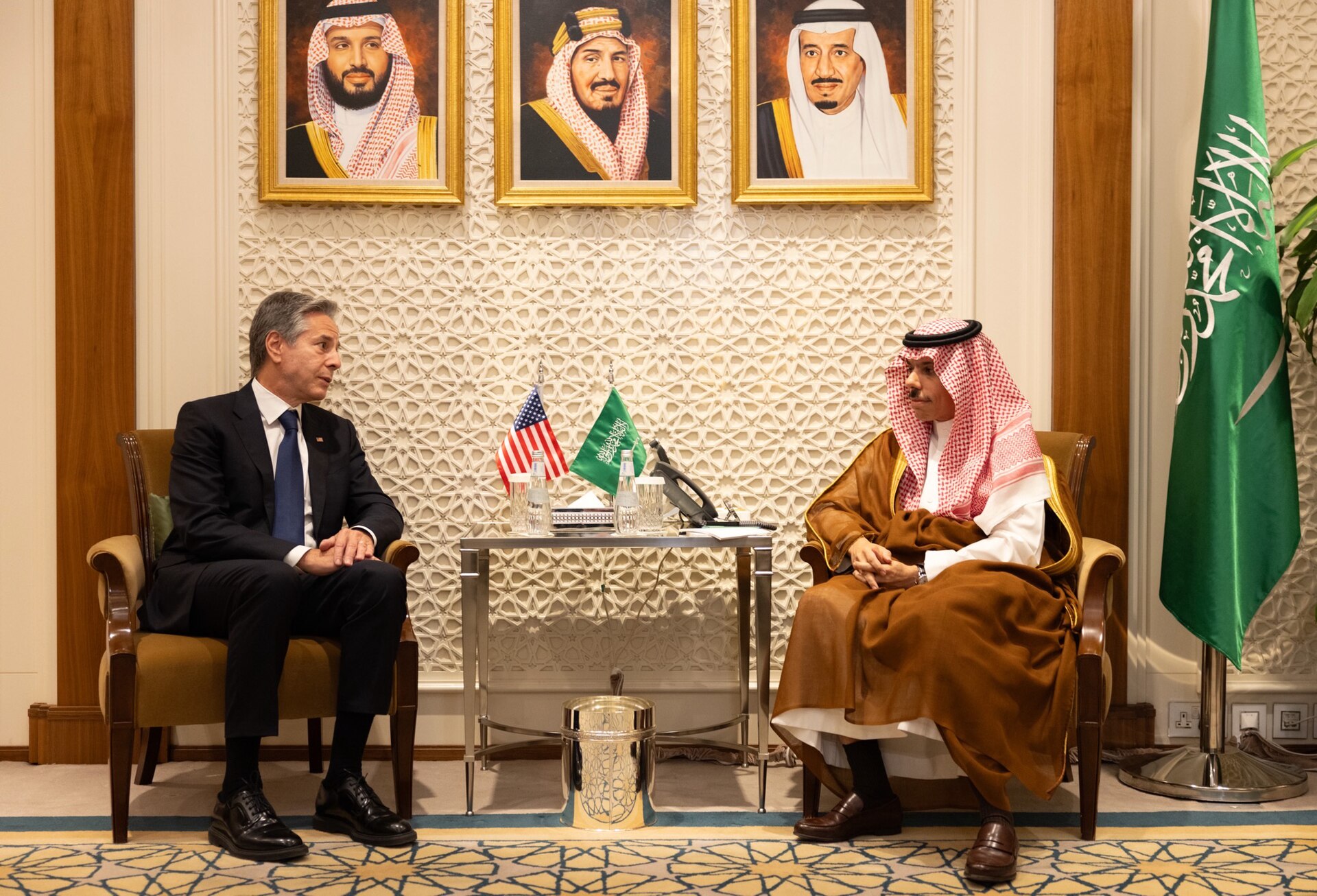
Saudi Arabia’s Ministry of Foreign Affairs issued no statement on the June 9 CENTCOM strikes against Iran, no statement on the Apache helicopter downing over Hormuz, and no statement on the Iranian three-capital retaliation that wounded fifteen Americans at a base 140 kilometers from the Saudi border. Saudi silence extended to the diplomatic sphere as well: when India filed a formal demarche over the three Indian sailors missing after US blockade enforcement operations in the Gulf of Oman, Riyadh u2014 dependent on the same US security guarantee it could not publicly question u2014 offered no support.
n
The last substantive Saudi diplomatic comment on the Hormuz crisis came May 20, when Foreign Minister Prince Faisal bin Farhan called for “restoring Hormuz to the state prior to February 28th.” Twenty-one days have passed. In the interval, Iran struck Kuwait twice, hit Bahrain again, extended operations into Jordan, and the United States bombed Iranian military installations on Iranian soil.
n
When Iran fired seven ballistic missiles at Kuwait and Bahrain on June 6, Saudi Arabia’s response amounted to condemnation without action. The June 10 three-capital escalation has not yet produced even the condemnation.
n
Al Jazeera’s June 10 live blog noted that Saudi Arabia has framed the conflict’s origin in “US-Israeli attacks on Iran” and called for “all parties” to end violence u2014 language that distributes responsibility without assigning it. The posture places Riyadh equidistant from Washington and Tehran, a diplomatic stance harder to sustain each time American servicemembers are wounded at a facility neighboring Saudi territory.
n
n
Prince Faisal’s most assertive public statement remains his March 19 warning that Saudi patience “is not unlimited” and the kingdom “reserves the right to take military action if deemed necessary.” That was eighty-three days ago. In the twelve weeks since, Saudi Arabia has not taken military action, has not issued an ultimatum, and has not convened an emergency GCC session.
n
What Does Iran Gain by Not Striking Saudi Arabia?
n
A Saudi Arabia under active bombardment must respond u2014 militarily, diplomatically, or both. A Saudi Arabia being conspicuously spared remains incentivized to lobby Washington for de-escalation, which, as the Stimson Center concluded, “is exactly what Iran is counting on.” The threat of future strikes is a more effective coercive instrument than the strikes themselves.
n
n
n“The Gulf states are a particularly well-chosen pressure point not because they are combatants, but precisely because they are not. In the weeks before the conflict, Gulf leaders urgently warned Washington against attacking Iran, yet they now find themselves entrapped in a war they neither chose nor supported.”
nu2014 Stimson Center, “Iran Isn’t ‘Flailing’ u2014 It’s Executing a Coercive Risk Strategy,” 2026nn
n
The economic dimension reinforces the logic. War risk premiums for Hormuz transit have risen 4,000 times above pre-crisis levels, according to WTW broker assessments, with VLCC voyage premiums at $2u20133 million per transit. The US Development Finance Corporation established a $40 billion reinsurance facility to keep shipping moving. Saudi Arabia’s oil revenue depends on these corridors remaining insurable. An Iranian strike on Abqaiq would collapse not just Saudi production but the insurance architecture backstopping Gulf maritime trade.
n
By not striking Saudi Arabia, Iran preserves the kingdom’s incentive to keep the conflict contained. The moment Tehran hits Riyadh’s territory again, the dynamic moves from absorption to retaliation u2014 and with it, the diplomatic equidistance Saudi Arabia has sustained since mid-March. Iran’s commanders understood this in March, when they made a deliberate decision to pull back from Saudi targeting. The June 10 target selection u2014 three US-hosting countries, all smaller and less capable of unilateral retaliation than Saudi Arabia u2014 reflects the same operational logic.
n
The Times of Israel has reported that Saudi Arabia “covertly launched strikes on Iran during war.” If confirmed, the picture would invert: Iran may be exercising restraint toward a country already conducting offensive operations against it. Saudi silence, in that reading, is not neutral paralysis but the diplomatic surface of an undeclared belligerency u2014 and Iran’s restraint, a choice to tolerate that belligerency for as long as Saudi public posture remains useful to Tehran’s de-escalation strategy.
n
Jordan Intercepted. Kuwait Bled. Bahrain Absorbed.
n
The three targets responded differently to the same salvo, and the differences map the range of outcomes Saudi Arabia faces.
n
Jordan destroyed all five inbound ballistic missiles targeting Al-Azraq. Zero casualties, zero material damage. The Jordanian Armed Forces issued a public confirmation u2014 an institutional response that demonstrated both defense capability and political willingness to acknowledge the engagement openly. Jordan’s integrated air and missile defense architecture performed as designed.
n
Kuwait took casualties for the third time in eight days u2014 American personnel wounded at Ali Al-Salem, on top of the June 3 Terminal 1 strike that killed one civilian and the June 6 dual-capital barrage. Kuwait’s response has been the most assertive in the GCC: diplomatic expulsion of two Iranian staff on June 3, public attribution of the strikes, and continued hosting of US forces despite serial targeting.
n
Bahrain absorbed the drone strike on NSA Bahrain without publishing a damage assessment. The facility was first hit on February 28, when a radar installation was damaged. Bahrain’s air defense inventory u2014 at 87 percent depletion u2014 offers the thinnest margin of any GCC state for sustained defense. The 8,300 US Navy personnel there operate under a 1992 Status of Forces Agreement that predates the current conflict by thirty-four years.
n
Jordan demonstrated that interception is possible with adequate systems and open political will. Kuwait demonstrated that repeated strikes produce casualties even when most incoming projectiles are intercepted. Bahrain demonstrated that depleted defenses reduce every strike to mathematics. Saudi Arabia’s 80u2013150 PAC-3 MSE rounds place it closer to Bahrain’s position than Jordan’s, with an Eastern Province target set u2014 Abqaiq, Ras Tanura, Shaybah u2014 that dwarfs anything at Al-Azraq or Ali Al-Salem in global economic consequence.
n
Seventy Percent of Iranian Projectiles Targeted Saudi Oil
n
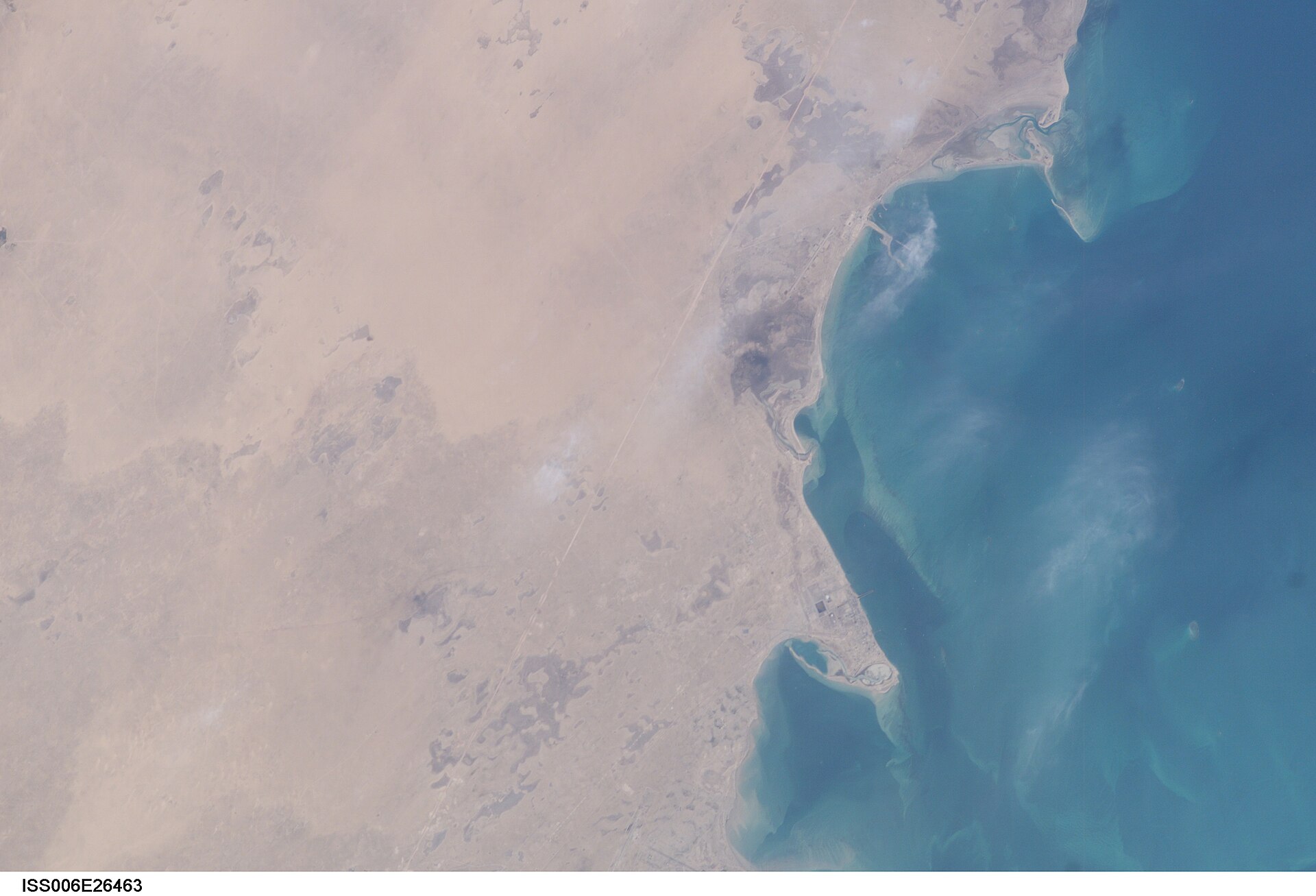
The targeting data from the conflict’s first three weeks, analyzed by CSIS in its “Assessing the Air Campaign After Three Weeks” report, found that nearly 70 percent of Saudi-intercepted Iranian drones and missiles were on course for the oil-rich Eastern Province or specific energy facilities u2014 including Shaybah Oil Field near the Saudi-UAE border and the Samref refinery on the Red Sea coast.
n
That concentration establishes that Iran’s pre-March strikes on Saudi Arabia were not indiscriminate. They were directed at the kingdom’s revenue infrastructure: the same facilities that fund Vision 2030, service PIF’s $3.7 billion Sadara obligations, and cover the fiscal deficit Goldman Sachs projects at SAR 300u2013330 billion for the full year.
n
n
n“While Saudi Arabia has vulnerabilities in its oil, desalination, electricity, SCADA, shipping, and other systems, Iran has thus far adopted a calibrated approach.”
nu2014 CSIS, “Iran’s Threat to Saudi Critical Infrastructure,” 2026nn
n
The words “thus far” carry the weight of that sentence. The CSIS framework describes a conflict pattern that escalates from military to civilian targets progressively. Vertical escalation u2014 the shift from bases to infrastructure u2014 has occurred in Kuwait, where the June 3 Terminal 1 strike hit a civilian airport. It has not occurred in Saudi Arabia. The gap between Iran’s demonstrated willingness to strike civilian facilities in Kuwait and its restraint toward Saudi civilian infrastructure is the gap the Stimson Center identifies as a card Tehran holds.
n
n
Eight countries have closed or restricted airspace over the Gulf and Arabian Peninsula in June 2026. Saudi Arabia remains under active airspace advisories u2014 covered by the bureaucratic instruments of a country assessed as under threat, defended by the stockpile of a country that cannot resupply.
n
The Three-Hour Window
n
CENTCOM’s Hormuz strikes began at 22:00 GMT on June 9 and concluded before 01:00 GMT on June 10. Iran’s three-capital retaliation launched at approximately 23:30 GMT u2014 ninety minutes into the US operation, before it had ended.
n
The response speed indicates pre-positioned assets and pre-authorized targeting packages. The three-capital salvo was ready before the US strikes provided the trigger. This is consistent with Iran’s established pattern: the June 7 True Promise 5 conditional declaration demonstrated that targeting packages are prepared in advance and activated by specified thresholds, not improvised in the moment.
n
The pre-positioning extends to the Saudi question. If Iran has pre-authorized packages for Bahrain, Kuwait, and Jordan, the probability that no equivalent package exists for Saudi Arabia u2014 a country Iran has already struck dozens of times and whose primary air base has been named publicly as a target u2014 is negligible. The three-capital salvo’s execution speed demonstrated the IRGC’s capacity for near-simultaneous multi-country operations. Adding a fourth country is an operational expansion. It is not a doctrinal innovation.
nn
The communications picture around the three-hour window is equally revealing. On June 11, Trump claimed on Fox News that Iranian officials had called him directly seeking a halt to strikes u2014 a claim Iran’s government denied the same day. Saudi Arabia learned of the alleged contact from a broadcast, not a briefing. Riyadh has no standing consultative mechanism with Washington that would oblige notification before or after US-Iran communications u2014 including communications that, if real, would determine whether the pre-positioned packages targeting a fourth Gulf country are activated or stood down. The parallel ceasefire question at Hormuz — where the IRGC’s shoot-on-sight order preceded Trump’s ceasefire collapse declaration, leaving Saudi Arabia structurally excluded from both the closure and the framework meant to end it — is examined in Hormuz Has No Ceasefire to Collapse. The deal assembled to reopen the strait — a 14-point US-Iran MOU negotiated through Oman, Pakistan, and Qatar — excluded Saudi Arabia from every channel. The Deal That Governs Saudi Waters Was Negotiated Without Saudi Arabia examines what Riyadh cannot verify, price, or contest in an accord it had no hand in drafting.
n
The Structural Logic of Being Last
n
Iran redirected operations from Israel toward US basing infrastructure across the Gulf and now into the Levant. As of June 10, it has struck that infrastructure in every country adjacent to Saudi Arabia: Bahrain to the east, Kuwait to the north, Jordan to the northwest. Only Oman u2014 which maintains the GCC’s last complete diplomatic bridge to Tehran u2014 has been spared alongside the kingdom.
n
Saudi Arabia sits in the center of that ring, holding 80u2013150 interceptors it cannot replace, operating without a SOFA that would enable emergency US transfers, relying on a defense plant in Arkansas whose production run through 2030 belongs to the Pentagon, and led by a foreign ministry that has been silent for twenty-one days.
n
The Stimson Center’s framework u2014 that Gulf states are effective pressure points “precisely because they are not” combatants u2014 applies to Saudi Arabia more than any other GCC member at this stage. Kuwait has become a participant by proximity and posture: it expelled diplomats, hosts active strike platforms, has taken casualties three times. Bahrain hosts the Fifth Fleet and has been hit twice. Jordan intercepts Iranian missiles over its own territory.
n
Each of these countries has crossed from bystander to belligerent in ways that reduce Iran’s coercive power over them. Once you are being bombed regularly, the threat of being bombed loses its disciplinary function.
n
n
Saudi Arabia has not crossed that threshold since March. The twelve weeks of what Prince Faisal called Saudi “patience” are also twelve weeks of Iranian restraint. The correlation is structural, not coincidental: the threat works only as long as it remains a threat. Saudi Arabia absorbed 38 ballistic missiles and 435 drones through mid-March u2014 three killed, 29 injured, no declared military response. Iran stopped. The kingdom has been operating inside that pause ever since, accumulating silence where allies accumulate casualties.
n
Al Jazeera noted on June 10 that Saudi Arabia is the only GCC country besides Oman that Iran has not struck in the current escalation cycle. The Houthi maritime enforcement of a total Israeli shipping ban and the Saudi IAEA vote both suggest the kingdom’s room for diplomatic equidistance is narrowing. EASA Conflict Zone Information Bulletin CZIB 2026-03-R11, which covers Saudi Arabia’s Eastern Province and Gulf coastline at elevated risk, is valid through June 10.
n
Frequently Asked Questions
n
Did Iran claim responsibility for the Apache helicopter downing over Hormuz?
n
No. As of June 10, Iran has not issued a formal claim of responsibility for the downing of the US Army Apache that triggered the CENTCOM strikes. Radio Free Europe/Radio Liberty reported the ambiguity as deliberate, preserving Iran’s narrative management space. The IRGC’s June 10 statement referenced the helicopter incident only as context for CENTCOM’s “aggression” without directly claiming the shoot-down u2014 a pattern of allowing attribution without confirmation that has recurred throughout the conflict when operational responsibility is widely assumed but formal acknowledgment would carry diplomatic costs.
n
Has the $40 billion US DFC reinsurance facility kept Hormuz shipping viable?
n
The facility has kept vessels transiting but has not restored pre-conflict pricing or private market confidence. The World Economic Forum characterized the mechanism as transforming a market-driven insurance crisis into a US government-underwritten fiscal exposure: the cost of maintaining shipping does not disappear but is transferred to the American taxpayer. Private reinsurers continue to restrict Hormuz coverage independently of the DFC backstop, and Lloyd’s of London syndicates have imposed sub-limits on Gulf-bound cargo that effectively cap vessel values entering the Strait at levels below full replacement cost u2014 a structural gap no government facility addresses.
n
What coverage does Saudi Arabia’s air defense network provide over the Eastern Province?
n
Saudi Arabia’s Eastern Province is defended by a layered architecture in principle: PAC-3 MSE batteries at Dhahran, Hafar al-Batin, and Khobar; THAAD batteries procured but dependent on US contractor support for sustained operations; and medium-altitude radar linked to the joint US-Saudi Air Operations Center at PSAB. In practice, the architecture’s depth is constrained by the same PAC-3 depletion documented above. THAAD’s high-altitude intercept envelope does not overlap with the low-altitude, saturation-strike profile Iran used against Bahrain and Kuwait on June 10, leaving terminal defense to PAC-3 batteries whose combined ready-round count sits between 80 and 150 for the entire kingdom. Dhahran, which hosts both Aramco’s headquarters and the Eastern Province’s highest-density civilian population, lies within the same missile-range envelope as Al-Azraq u2014 the Jordanian base Iran struck with long-range ballistic missiles on June 10.
n
How does Jordan’s June 10 intercept compare to its April 2024 performance?
n
Jordan’s five-for-five intercept at Al-Azraq on June 10 was a qualitatively different engagement from its April 2024 role during Iran’s True Promise 1 operation against Israel, when Jordanian airspace served as a transit corridor and intercepts were conducted in coordination with US, British, and Israeli assets. On June 10, Jordan was defending its own territory independently u2014 not participating in a coalition defense of a third country. The Jordanian Armed Forces’ public confirmation of the engagement, unusual for a government that has historically avoided publicizing military encounters with Iran, signals an open acknowledgment of belligerent status that Saudi Arabia has not matched.
The GCC collective defense architecture that failed to cover PSAB is analyzed in detail in Saudi Arabia Signed the Collective Defense Clause for Kuwait, which traces how the 167th GCC ministerial invocation applied to Kuwait and Bahrain but not to the kingdom’s own primary air base.
n”}
The June 11 IRGC operation extended this escalation: eighteen targets across Kuwait, Bahrain, and Jordan were struck, with Saudi Arabia again excluded — extending the pattern of selective targeting for the second consecutive multi-base operation.