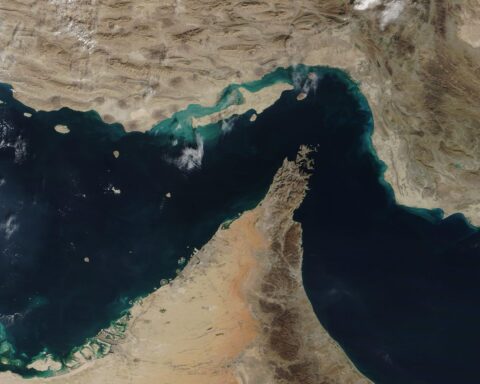

LONDON — The Strait of Hormuz is functionally closed to commercial shipping as of May 29, 2026 — not because any government or military ordered it shut, but because the interlocking decisions of insurance underwriters, compliance officers, flag-state registries, and trade finance desks have made transit commercially impossible. Zero commercial vessels crossed the strait on the morning of May 29, according to gCaptain, down from a pre-war baseline of roughly 130 ships per day. The closure mechanism is invisible and distributed: P&I club war-risk exclusions, OFAC sanctions compliance, charterer force majeure clauses, and crew-safety assessments each independently produce the same outcome. The OFAC designation of the Persian Gulf Shipping Authority on May 28 hardened a behavioral closure already weeks old — but the structural barriers to reopening predate it, and no single actor possesses the authority to reopen what no single actor ordered closed.
Table of Contents
- Zero Transits: The Numbers Behind the Invisible Blockade
- How Did the Strait of Hormuz Close Without a Military Blockade?
- The PGSA-OFAC Compliance Binary
- Why Is Insurance Not the Binding Constraint?
- Who Is Still Transiting Hormuz?
- Can Saudi Arabia’s East-West Pipeline Replace Hormuz?
- Qatar’s LNG Force Majeure and the $20 Billion Annual Cost
- Will the US-Iran MOU Reopen the Strait?
- The Insurance Market’s Permanent Memory
- The Authority Gap: Who Can Reopen What No One Ordered Closed?
- Frequently Asked Questions
Zero Transits: The Numbers Behind the Invisible Blockade
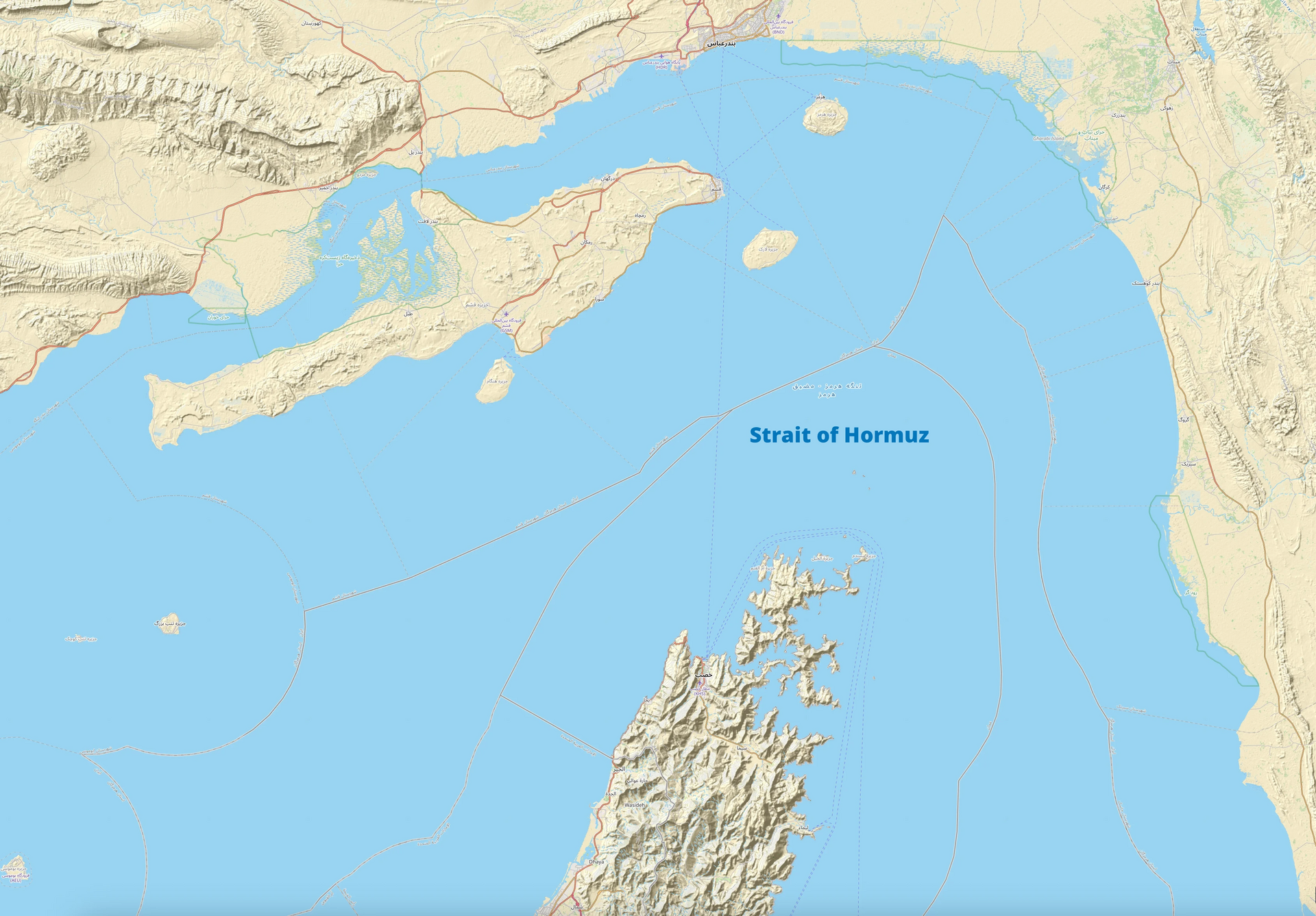
The operational data is unambiguous. On the morning of May 29, 2026, gCaptain reported zero commercial vessel transits through the Strait of Hormuz. The previous day recorded only six two-way crossings — a collapse of more than 95 percent from the pre-war baseline, representing the loss of roughly 20 million barrels of crude, condensate, and refined products per day from global markets.
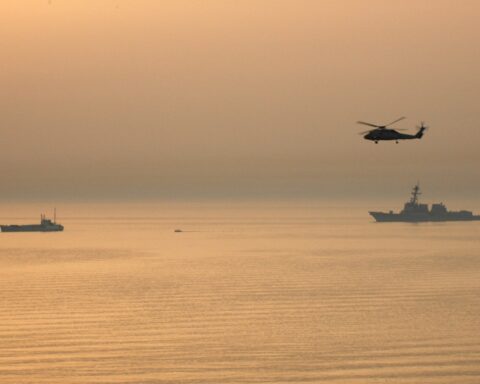
The decline did not happen overnight. Lloyd’s List data showed just 40 ships transiting in the entire week ending May 3, 2026 — down from a weekly equivalent of roughly 1,246 vessels immediately before the war began on February 28. USNI News reported in April that approximately 1,000 vessels sat in a holding pattern: 800 inside the strait waiting eastbound, 200 outside waiting westbound. These ships are not stranded by mines, naval interdiction, or military blockade in any conventional sense. They are stranded by paperwork.
Heavy AIS signal jamming compounds the opacity. Windward, the maritime intelligence firm, documented a 600 percent surge in dark vessel activity between April 19 and May 3, peaking at 671 dark incidents on May 2. Satellite imagery from May 6 identified 97 vessels near the northern Hormuz corridor — only three transmitting AIS. The strait has become simultaneously empty of legitimate commerce and dense with unmonitored traffic, a condition that defies every previous model of maritime chokepoint disruption.
How Did the Strait of Hormuz Close Without a Military Blockade?
The Strait of Hormuz closed through the simultaneous withdrawal of the commercial infrastructure that makes maritime transit possible — insurance, compliance clearance, flag-state authorization, crew willingness, and trade finance. No single actor ordered it shut. Each actor in the chain independently concluded that the risk of transit exceeded its institutional tolerance, and the aggregate effect was cessation.
The sequence began with P&I clubs. Major International Group clubs — Gard, Skuld, NorthStandard — cancelled war risk cover for Persian Gulf transits effective March 4, 2026, just days after the war began. This withdrawal covered charterers’ covers, fixed-premium P&I entries reinsured outside the International Group Programme, and all war-risk extensions. Without P&I cover, a vessel transiting Hormuz operates without liability insurance for crew injury, pollution, cargo loss, or third-party damage — a condition no port authority, terminal operator, or cargo receiver will accept.
The Middle East briefing 3,000+ readers start their day with.
One email. Every weekday morning. Free.
Flag-state registries followed. Marshall Islands, Panama, and Liberia — which collectively flag more than 40 percent of global tonnage — issued advisories that effectively suspended authorization for their registered vessels to transit the strait under active war-risk conditions. Charterers invoked force majeure clauses and contractual rights of deviation. Holland & Knight, the maritime law firm, confirmed in April 2026 that charterers may lawfully decline voyage orders for Hormuz transit, invoke off-hire provisions, and exercise deviation rights under standard charter party terms.
Trade finance completed the encirclement. Letters of credit for cargo originating from or destined for Gulf ports became unobtainable from major Western banks. Correspondent banking relationships with Gulf-based commodity traders froze as compliance departments applied blanket risk flags to any transaction touching the Hormuz corridor.
The critical distinction from every historical precedent: during the Tanker War of 1984-1988, over 540 vessels were attacked and Lloyd’s hull rates reached 7.5 percent for Kharg Island voyages, yet shipping through Hormuz never fully ceased. Tankers absorbed the risk premium and kept moving. The 2026 closure is the first functional cessation of commercial shipping through the strait in recorded history — achieved not through physical destruction but through the collapse of the commercial architecture that makes shipping possible.
The PGSA-OFAC Compliance Binary
The Persian Gulf Shipping Authority, established by Iran on May 18, 2026, imposed a toll regime on all vessels transiting Hormuz — approximately $2 million per transit, collected through an application process requiring vessel operators to disclose “extensive details covering ownership, management, insurance, cargo, crew and intended voyage,” as Steamship Mutual, the P&I club, described in its advisory to members. Iran framed the fees as payment for “specialized services” — navigation assistance, mine-clearance corridor maintenance, IRGC escort — and explicitly cited the Panama Canal and Suez Canal as precedent for sovereign toll collection on international waterways.
The compliance trap was immediate. OFAC issued an advisory on May 1, 2026 — 27 days before the PGSA was formally SDN-listed — warning that any payment facilitating Iranian government revenue, including transit fees, could expose both US and non-US persons to sanctions risk. Kennedys Law, the marine insurance firm, captured the resulting dilemma in an April 10 advisory: “Western-aligned tonnage faces a compounding compliance dilemma: payment exposes vessels to OFAC secondary-sanctions risk, while non-payment exposes them to IRGC interdiction.” The IRGC demonstrated that interdiction threat directly on May 28, firing warning shots at four commercial vessels near Hormuz as US and Iranian negotiators simultaneously described “good faith” talks — the clearest single-day illustration of why the compliance binary cannot be resolved through diplomatic assurances alone.
On May 28, 2026, the US Treasury formally designated the PGSA as a Specially Designated National, confirming that any payment — fiat currency, digital assets, offsets, or informal swaps — exposes payers to sanctions. OFAC specified that non-US firms face secondary sanctions for engaging with the PGSA, extending the compliance net to every shipowner, charterer, and cargo interest globally regardless of jurisdiction. The Treasury’s parallel engagement with Oman and the Gulf states on PGSA enforcement signaled that Washington treats the toll regime as an IRGC revenue channel, not a legitimate sovereign fee.
The SDN designation did not cause the cessation. It formalized and hardened a closure that was already behavioral. The compliance binary — pay and face OFAC consequences, or refuse and face IRGC interdiction — existed from May 1. The May 28 listing eliminated any remaining ambiguity for compliance officers at P&I clubs, trade finance desks, and flag registries. Kennedys acknowledged the structural novelty: “Like so many aspects of this conflict, there is no guide or precedent (let alone certainty) on how these issues might be resolved.”
Why Is Insurance Not the Binding Constraint?
The Lloyd’s Market Association issued a statement on March 23, 2026 that complicated the conventional narrative: “The reason ships are not moving is not through a lack of insurance; it is a question of the risk to crew and vessel safety being assessed by ship masters and owners.” LMA reported that 88 percent of Lloyd’s marine war market underwriters retained appetite for international hull war risks, and more than 90 percent maintained appetite for cargo war risks.
Insurance, in other words, is available. Ships are not moving for reasons that insurance alone cannot address. This distinction matters because it reveals the closure mechanism is not primarily financial — it is behavioral and legal. A shipowner can, in theory, obtain war-risk cover at elevated premiums. But that cover does not resolve the PGSA compliance binary, does not restore crew willingness to transit an active conflict zone, does not reverse flag-state advisories, and does not unfreeze trade finance.
The P&I club withdrawal, while significant, operates at a different layer than hull war-risk insurance. P&I cover addresses third-party liability — pollution, crew injury, cargo damage, wreck removal. A vessel without P&I cover is uninsurable in the eyes of port states and terminal operators, regardless of its hull war-risk status. The March 4 cancellations removed a structural prerequisite for legitimate commercial operation, distinct from the war-risk premium that LMA says remains available.
The result is a layered closure. Each layer — hull insurance, P&I liability, OFAC compliance, flag-state authorization, crew consent, trade finance — operates independently. Removing one layer does not restore transit capability if the others remain in place. A ceasefire might address crew-safety concerns. It would not automatically reinstate P&I war extensions, reverse OFAC designations, or restore trade finance relationships. The strait closed through the simultaneous failure of multiple independent systems, and reopening requires the simultaneous restoration of all of them.
Who Is Still Transiting Hormuz?
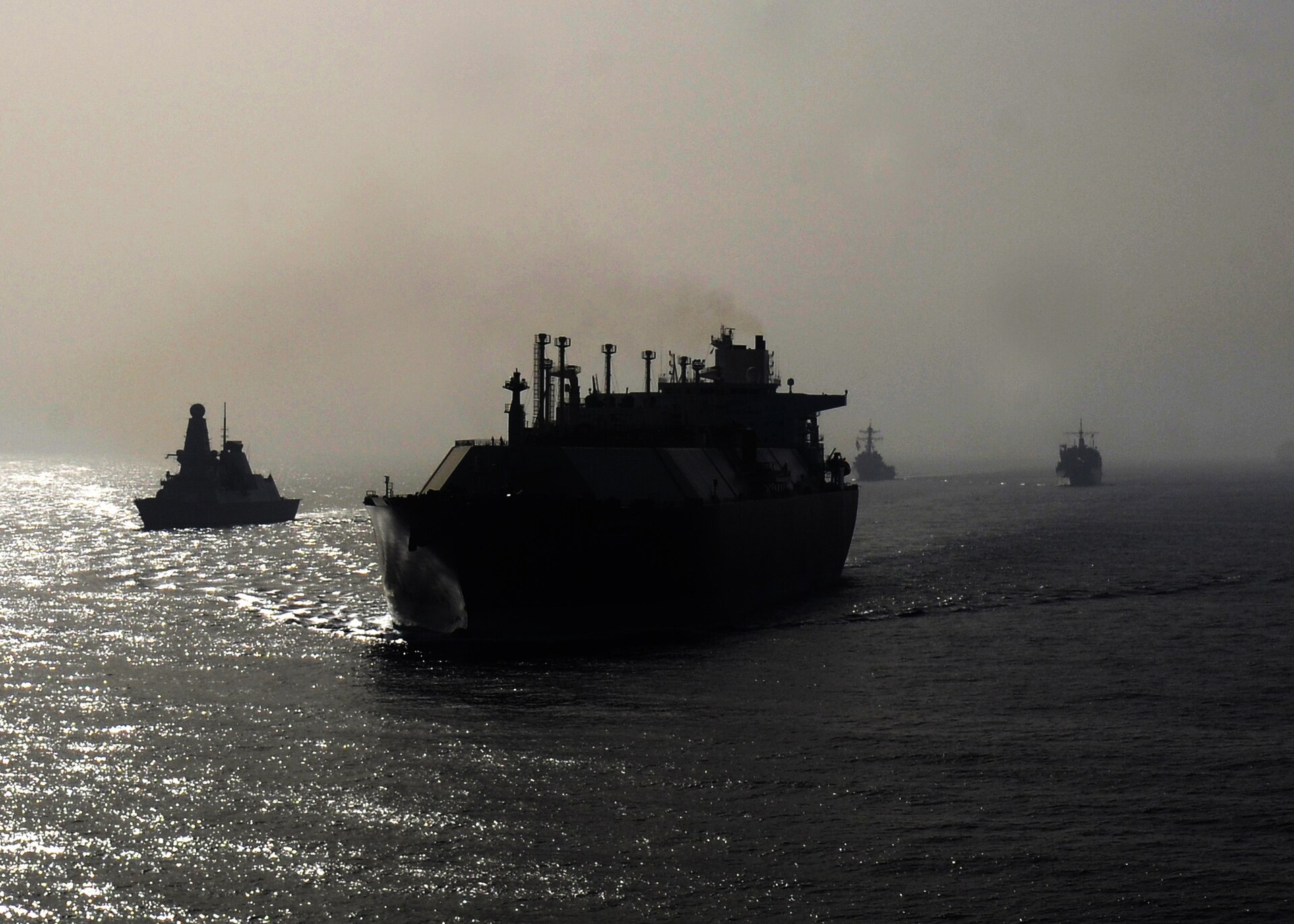
The strait is not empty. It is bifurcated. While Western-aligned commercial shipping has effectively ceased, a parallel corridor operates under IRGC escort for vessels flagged to or commercially linked with nations Iran designates as “friendly” — primarily China and Russia.
Bloomberg reported on April 1, 2026 that Chinese-linked operators absorb the $2 million per-transit PGSA toll, paid in yuan via Kunlun Bank — the Chinese financial institution specifically structured to handle Iran-related transactions outside the dollar system. Russian-flagged and Russian-linked vessels similarly access the IRGC-escorted corridor. Windward’s satellite data showing 21 dark commercial tankers — including 12 VLCCs — in Iranian-water anchorage zones on May 10 provides the physical evidence of this parallel system.
The bifurcation creates a two-tier strait. Western operators face an impassable compliance barrier. Chinese and Russian operators absorb the PGSA toll but maintain physical access. The commercial consequence is structural: crude and LNG that previously flowed to global markets through a single, open waterway now flows selectively to buyers willing to operate outside Western compliance frameworks. Iran has, in effect, converted a global commons into a preferential trade corridor — the maritime equivalent of a sanctions-era pipeline serving only allied consumers.
PressTV, Iran’s English-language state broadcaster, characterized the OFAC PGSA designation on May 28 as “unlawful sanctions” imposed in “a desperate attempt to prevent the country from exercising its sovereign rights over the strategic waterway following failed military operations.” This framing — sovereignty over Hormuz rather than freedom of navigation through it — reflects Tehran’s operational reality. The IRGC controls physical access. The toll regime monetizes that control. The SDN listing punishes engagement with the regime but does not alter the physical facts on the water.
The dark fleet precedent is instructive. When P&I clubs announced “RUB exclusion” — Russia-Ukraine-Belarus — for war risk cover in 2022, Western commercial shipping from Russian ports restructured around a shadow fleet of older tankers operating outside the International Group insurance system. Iran’s bifurcated Hormuz access mirrors this structure at a chokepoint scale. The difference: Russian shadow fleet operations affected one exporter’s crude. Hormuz bifurcation affects approximately 20 percent of global oil supply and 25 percent of global LNG trade.
Can Saudi Arabia’s East-West Pipeline Replace Hormuz?
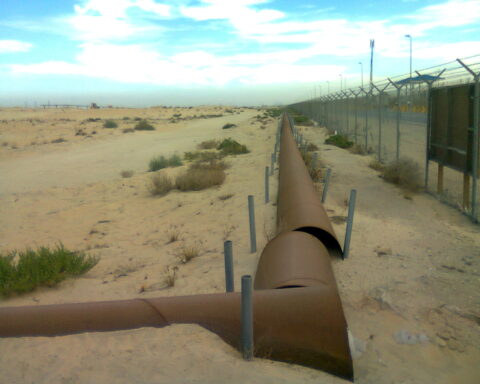
Saudi Aramco CEO Amin Nasser confirmed in early March 2026 that the East-West Pipeline — the Petroline system connecting Gulf coast facilities to the Yanbu terminal on the Red Sea — would operate at its full nameplate capacity of 7 million barrels per day. The implicit message: Saudi Arabia had a Hormuz bypass ready.
The operational reality is more constrained. Vortexa, the energy consultancy, estimated Yanbu terminals could handle approximately 3 million barrels per day under wartime conditions — well below the pipeline’s nameplate capacity and a fraction of the roughly 20 million barrels per day that transited Hormuz before the war. Saudi production of approximately 7.76 million barrels per day means 2.5 to 4.76 million barrels per day remain Hormuz-dependent even with the pipeline at full throughput.
The pipeline carries crude only — no LNG, no petrochemicals, no refined products. Saudi Arabia’s pipeline solved the logistics problem but created a commercial trap: OSP premiums lost their physical rationale as Asian buyers shifted to Russian ESPO crude at spreads exceeding $5.50 per barrel above the semi-permanent switching threshold.
The Yanbu terminus introduces its own vulnerability. CNN Business reported on March 30, 2026 that Iranian drone and missile strikes hit the SAMREF refinery at Yanbu, forcing temporary evacuation before operations resumed. Houthi politburo member Mohammed al-Bukhaiti explicitly threatened a naval blockade, stating the group would “specifically target vessels belonging to aggressor countries.” BloombergNEF estimated that 70-75 percent of Saudi exports rerouted to the Red Sea face potential Houthi interdiction exposure — the same proxy threat vector Saudi Arabia has confronted throughout the conflict.
The pipeline, in short, is a partial mitigation, not a solution. It reduces Saudi Arabia’s Hormuz dependence from total to substantial. It does nothing for Qatar, Kuwait, the UAE, Bahrain, or Iraq — all of whose hydrocarbon exports remain entirely Hormuz-dependent. And it converts a maritime chokepoint vulnerability into a terrestrial infrastructure vulnerability, trading the IRGC’s Hormuz chokehold for the Houthis’ Red Sea threat.
Qatar’s LNG Force Majeure and the $20 Billion Annual Cost
QatarEnergy declared force majeure on all LNG shipments on March 4, 2026 — four days after the war began and the same day P&I clubs cancelled war-risk extensions. The declaration suspended Qatar’s contractual obligations to deliver LNG to buyers worldwide, triggering cascading force majeure invocations across downstream supply chains. Holland & Knight confirmed that charterers exercising force majeure rights under standard LNG charter parties faced no immediate legal liability, though long-term contractual renegotiation was inevitable.
The physical toll is stark. Approximately seven LNG shipments have successfully transited Hormuz since February 28 — against a pre-war baseline that saw Qatar alone export roughly 80 million tonnes per annum, equivalent to several shipments per day. On April 6, 2026, Bloomberg reported that two Qatari LNG tankers — the Marshall Islands-flagged Rasheeda and the Bahamian-flagged Al Daayen — aborted a Hormuz crossing, turning back before entering the strait. Qatar estimates the closure costs approximately $20 billion annually in lost revenue.
Qatar’s position is structurally distinct from Saudi Arabia’s. The kingdom has the Petroline bypass, however imperfect. Qatar has no pipeline alternative. Every cubic foot of Qatari LNG must transit Hormuz. The North Field — the world’s largest natural gas field — sits in waters directly adjacent to the strait. Qatar’s $6 billion custodial role in the 2023 US-Iran prisoner swap positioned Doha as a financial intermediary in the current negotiations, but Oman’s parallel Hormuz governance track and the PGSA toll regime have placed Qatar in the position of paying for access to its own export infrastructure.
The force majeure cascade extends beyond energy. Hapag-Lloyd, the German container shipping line, disclosed that the Hormuz situation costs $60 million per week. Six Hapag-Lloyd vessels carrying approximately 25,000 TEUs combined remain stuck inside the Gulf. Container shipping, unlike crude tankers, cannot reroute through pipelines. Every manufactured good, food import, and consumer product destined for Gulf states by sea faces the same compliance-insurance-safety barrier as energy cargoes transiting outbound.
Will the US-Iran MOU Reopen the Strait?
Axios reported on May 28, 2026 that the United States and Iran reached a tentative 60-day memorandum of understanding. The draft states that shipping through Hormuz will be “unrestricted, meaning no tolls and no harassment.” Iran must remove mines within 30 days. The US naval blockade lifts “in proportion to the restoration of commercial shipping.” Neither Trump nor Iran had formally approved the agreement at the time of reporting.
Even if signed, the MOU confronts a structural problem: it addresses the political conditions for reopening but not the commercial ones. The PGSA SDN designation does not automatically reverse upon political agreement. OFAC delisting typically requires 1-3 years even under expedited review, according to sanctions practitioners. Banks and financial institutions adopt what the Royal United Services Institute documented from Iran’s 2015 JCPOA experience: a posture of “once bitten, twice shy” — refusing relationships with Iranian entities even after formal sanctions were lifted, because the cost of compliance failure exceeded the value of restored business. Separately, the PGSA’s entrenchment during Trump’s signing delay means the toll architecture accumulates institutional precedent with each day the US president withholds his signature.
The UK-France 40-nation Hormuz coalition — with 27 signatories as of May 12 — represents a parallel reopening architecture, but one focused on naval escort rather than commercial facilitation. Naval escorts do not resolve P&I coverage, flag-state authorization, or OFAC compliance. A warship accompanying a tanker does not make the tanker’s insurance valid, its crew willing, or its cargo financeable.
The mine-clearance timeline presents its own constraint. The MOU draft specifies 30 days for Iran to remove mines. Pentagon estimates cited in earlier reporting suggest 6 months as a realistic mine-clearance timeline for the Hormuz corridor. Even after physical clearance, insurers require certification by independent hydrographic survey — a process that adds weeks to months. The Trump administration’s direction of the Development Finance Corporation to establish a $40 billion revolving reinsurance facility, reported by the World Economic Forum in April 2026, acknowledges implicitly that the private market alone cannot restore shipping even after political conditions change. The timeline problem sharpened on May 30 when Oman’s Maritime Security Centre confirmed a suspected mine in the TSS inbound lane — the first publicly confirmed sighting by Omani authorities in their own territorial waters.
The 2012 Iran SWIFT exclusion offers the closest historical parallel — but in reverse. When the EU disconnected Iranian banks from SWIFT and banned EU insurers from covering Iranian oil shipments, Iranian crude exports fell from roughly 2.5 million to 1 million barrels per day within months — not through physical interdiction but through collapse of transaction and insurance infrastructure. The 2026 PGSA-OFAC dynamic applies the same mechanism inversely: compliance risk falls on the non-Iranian party, and the behavioral consequences are identical.
The Insurance Market’s Permanent Memory
The most consequential barrier to reopening may be actuarial, not political. Insurance Business magazine reported in 2026: “Even in the optimistic scenario — a ceasefire that holds, negotiations that progress, a gradual restoration of shipping — industry analysts expect the Strait of Hormuz to carry a lasting risk premium for years to come. The war demonstrated, in ways that decades of theoretical concern had not, that the strait could be closed.”
This observation identifies a structural irreversibility. Before February 28, 2026, the closure of Hormuz was a theoretical risk — discussed in war games, modeled in energy security scenarios, but never actualized. The 2026 closure converted that theoretical risk into demonstrated fact. Actuarial models do not revert to prior assumptions after a risk is realized. The premium attached to Hormuz transit will reflect the demonstrated reality of closure for as long as underwriters price marine war risk — which is to say, permanently.
Capacity withdrawn at the treaty reinsurance level must be reinstated through negotiation between primary insurers and their reinsurance panels, not through political announcement. The reinsurance renewal cycle operates on annual terms, typically renewing on January 1. A ceasefire in June 2026 would not restore treaty reinsurance capacity until January 2027 at the earliest — and only if reinsurers judge the political settlement durable enough to price. The Small Wars Journal noted in May 2026 that the Hormuz closure demonstrated for the first time that the strait could be fully closed, knowledge “now permanently priced into actuarial models.”
On May 29, Chevron Chairman and CEO Mike Wirth told Bloomberg Surveillance that ships had been attacked at Hormuz that week — including incidents not publicly reported, a disclosure that underscores the insurance market’s permanent memory problem: every unreported kinetic event still enters the actuarial record. The parallel with the broader GCC defense architecture failure is instructive. The same structural lesson — that theoretical protections can fail simultaneously — applies to both the GCC Joint Defense Agreement (never invoked despite 2,750-plus Iranian projectiles at member states) and the commercial shipping infrastructure that theoretically guaranteed free transit. Both operated on untested assumptions. Both failed when tested. Neither will carry the same credibility again.
The DFC reinsurance facility — $40 billion in revolving coverage — represents Washington’s recognition that sovereign intervention is necessary to bridge the gap between political settlement and commercial restoration. But sovereign reinsurance introduces its own dependencies. It makes Hormuz transit contingent on continued US government willingness to backstop the risk. A future administration that withdraws the facility, or a Congress that refuses appropriations, would reproduce the closure conditions without any action by Iran.
The Authority Gap: Who Can Reopen What No One Ordered Closed?
The Hormuz closure exposes a governance vacuum that no existing institution was designed to fill. UNCLOS guarantees transit passage through international straits. Iran’s toll regime violates that guarantee. But UNCLOS provides no enforcement mechanism beyond state-to-state dispute resolution — a process measured in years, not the days that energy markets require.
The International Maritime Organization has no operational authority over straits. Flag states can advise but not compel their registered vessels. OFAC can designate and delist but cannot control the secondary behavioral effects of its designations on global compliance culture.
The P&I clubs are mutual associations governed by their own members’ risk appetite, not by political directive. LMA confirmed that insurance is available — but availability and willingness are different things.
Each institution controls one variable. No institution controls all of them. And the closure requires all variables to align simultaneously — a coordination problem that the international maritime system was never designed to solve because the system assumed Hormuz could not actually close.
The MOU draft, if signed, would address political intent. The DFC facility would address reinsurance capacity. The UK-France coalition would address physical security. None addresses the behavioral residue — the compliance departments that will flag Hormuz transactions for years, the P&I clubs that will price Gulf cover at prohibitive levels, the trade finance desks that will demand enhanced due diligence on every Gulf-origin cargo, the flag registries that will issue advisories calibrated to the demonstrated rather than theoretical risk.
The strait closed through a distributed, emergent process — thousands of independent risk assessments converging on the same conclusion. Reopening requires reversing that convergence. The question is not whether Hormuz can be reopened politically. It is whether the commercial infrastructure that makes maritime transit possible — insurance, compliance, finance, crew consent, flag authorization — can be reassembled after its simultaneous collapse demonstrated that the world’s most critical energy chokepoint was always one war away from functional cessation.
Frequently Asked Questions
How does the 2026 Hormuz closure compare to the 1984-1988 Tanker War?
During the Tanker War, over 540 vessels were attacked and Lloyd’s hull insurance rates surged to 7.5 percent for Kharg Island voyages, but commercial shipping never fully ceased — tankers absorbed the premium and continued transiting. The 2026 closure is categorically different: it is the first complete functional cessation of commercial transit in recorded history, driven not by physical attacks on vessels but by the collapse of the regulatory and financial infrastructure (P&I coverage, OFAC compliance, flag-state authorization, trade finance) that enables shipping to operate. The Tanker War was a physical-risk event within a functioning commercial system. The 2026 closure is a commercial-system failure.
Can individual shipping companies choose to transit Hormuz by accepting the risk?
In theory, a shipowner with hull war-risk cover could order a transit. In practice, the vessel would operate without P&I liability coverage (cancelled since March 4), without OFAC compliance clearance if PGSA fees are paid, without flag-state authorization from most major registries, and potentially without willing crew — seafarer unions and crew management agencies have issued blanket advisories against Hormuz transit. No port authority or terminal operator at the destination would accept a vessel operating without P&I cover, making the transit commercially pointless even if physically completed.
What is the estimated timeline for restoring full commercial shipping through Hormuz?
Optimistic estimates suggest 12-18 months after a durable political settlement. Mine clearance alone requires an estimated 6 months (Pentagon assessment), followed by independent hydrographic survey certification. Treaty reinsurance capacity renews annually (next cycle: January 2027). OFAC delisting averages 1-3 years. Trade finance de-risking reversal, based on the JCPOA precedent documented by RUSI, took 2-4 years and was never fully complete before the US withdrew from the deal in 2018. The sequential nature of these dependencies — each requiring the prior step’s completion — means full restoration is measured in years, not months.
How are Asian energy importers managing without Hormuz access?
China has maintained limited access through the IRGC-escorted corridor, paying PGSA tolls in yuan via Kunlun Bank — absorbing approximately $2 million per transit. Japan and South Korea, bound by US alliance obligations and OFAC compliance, have drawn on strategic petroleum reserves and increased purchases of non-Gulf crude (West African, Brazilian, US Gulf Coast). India has pursued a dual-track approach, with some state-linked refineries exploring Iranian transit arrangements while private refiners comply with OFAC guidance. Total Asian crude imports from Saudi Arabia specifically have plummeted — Chinese imports fell from 1.6 million to 600,000 barrels per day between February and June, with Sinopec volumes dropping from 10 million to 2 million barrels per month. How the PGSA selectively exempts India’s crude lane while charging Saudi-flagged cargoes the full million rate is examined in Iran’s differential pricing at Hormuz.
What role does the $40 billion DFC reinsurance facility play?
The Trump administration directed the Development Finance Corporation to partner with US insurers on a revolving reinsurance facility covering up to $40 billion in marine war risk for Hormuz transits. The facility acknowledges that the private reinsurance market alone cannot restore shipping — an implicit admission that sovereign backstop is necessary to bridge the gap between a political settlement and commercial confidence. Critically, the facility makes Hormuz access contingent on continued US government backing, introducing a new sovereign dependency into what was previously a private-market risk transfer system.