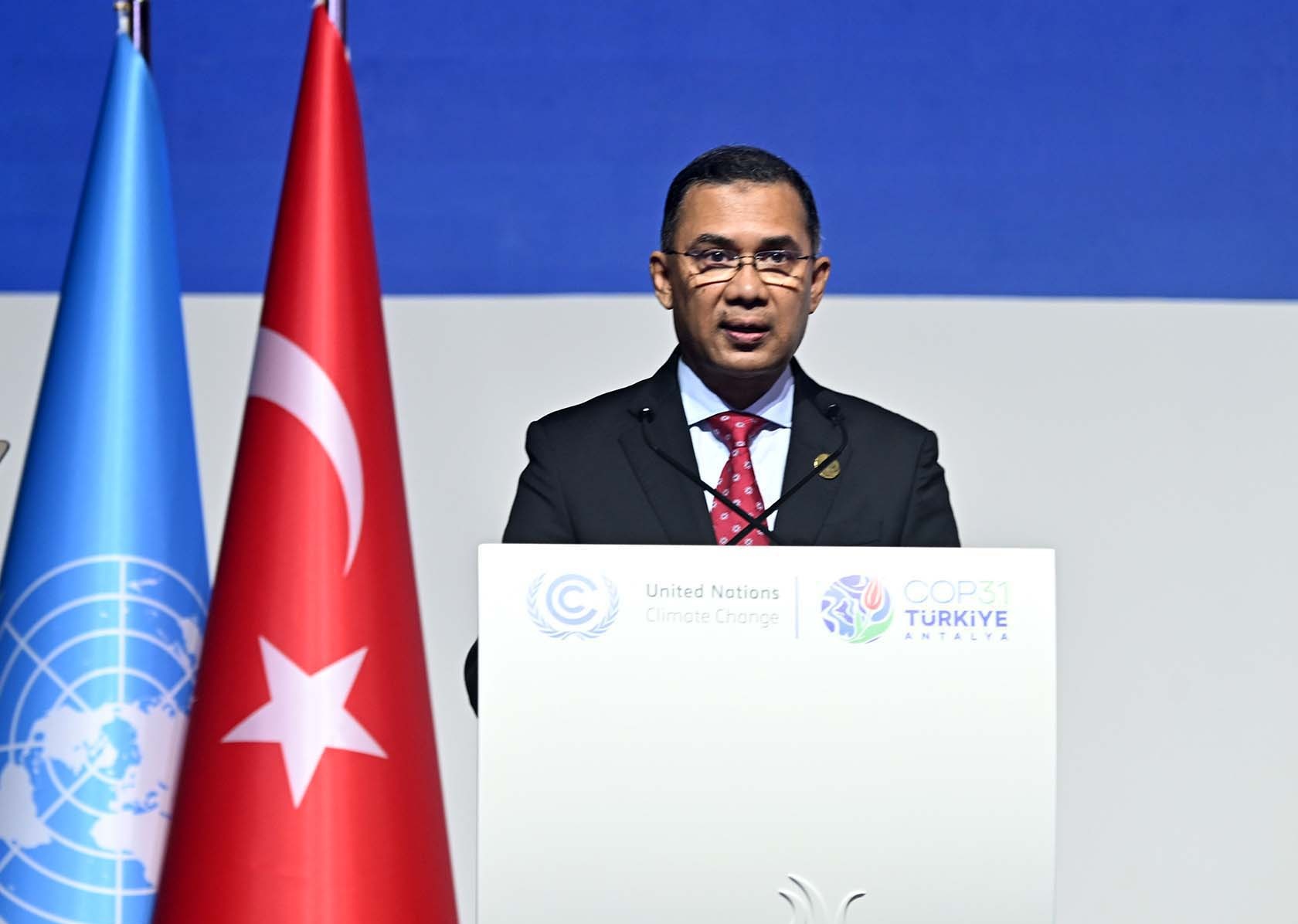

ANTALYA — Saudi Arabia deployed its 22-member Arab Group bloc on the opening day of COP31 to oppose every reference to the COP30 fossil fuel transition roadmap in any negotiated decision at the Antalya summit, a procedural move recorded by the Earth Negotiations Bulletin on 9 November that — if it holds through the remaining days of talks — would keep the most detailed international plan for winding down oil, gas and coal production out of the formal UN climate record entirely. The objection did not single out a paragraph or contest a phrase; it targeted the 182-page Brazilian roadmap’s presence in the text at any level, from an operative commitment down to a preambular clause that would merely “note” the document exists.
The tactic extends what has become a three-summit pattern: at COP28 in Dubai in December 2023, “transitioning away from fossil fuels” entered a formal UNFCCC text for the first time in the framework’s history; at COP30 in Belém in November 2025, the final decision dropped every fossil fuel reference; and now in Antalya, the kingdom’s negotiators want to stop even a voluntary roadmap from being acknowledged in any COP31 decision. Saudi Arabia is not merely resisting new commitments — it is contesting the record, working to ensure that the language agreed in Dubai remains an isolated event rather than the beginning of a direction.
Table of Contents
- What Did the Arab Group Oppose on Day 1 of COP31?
- Why Does a Single “Noting” Clause Matter?
- Prince Abdulaziz Sets the Terms in Antalya
- The Other Side of the Room
- COP28’s Fossil Fuel Breakthrough Has Not Been Repeated
- What Happens If the Mitigation Work Programme Dies at COP31?
- Frequently Asked Questions
What Did the Arab Group Oppose on Day 1 of COP31?
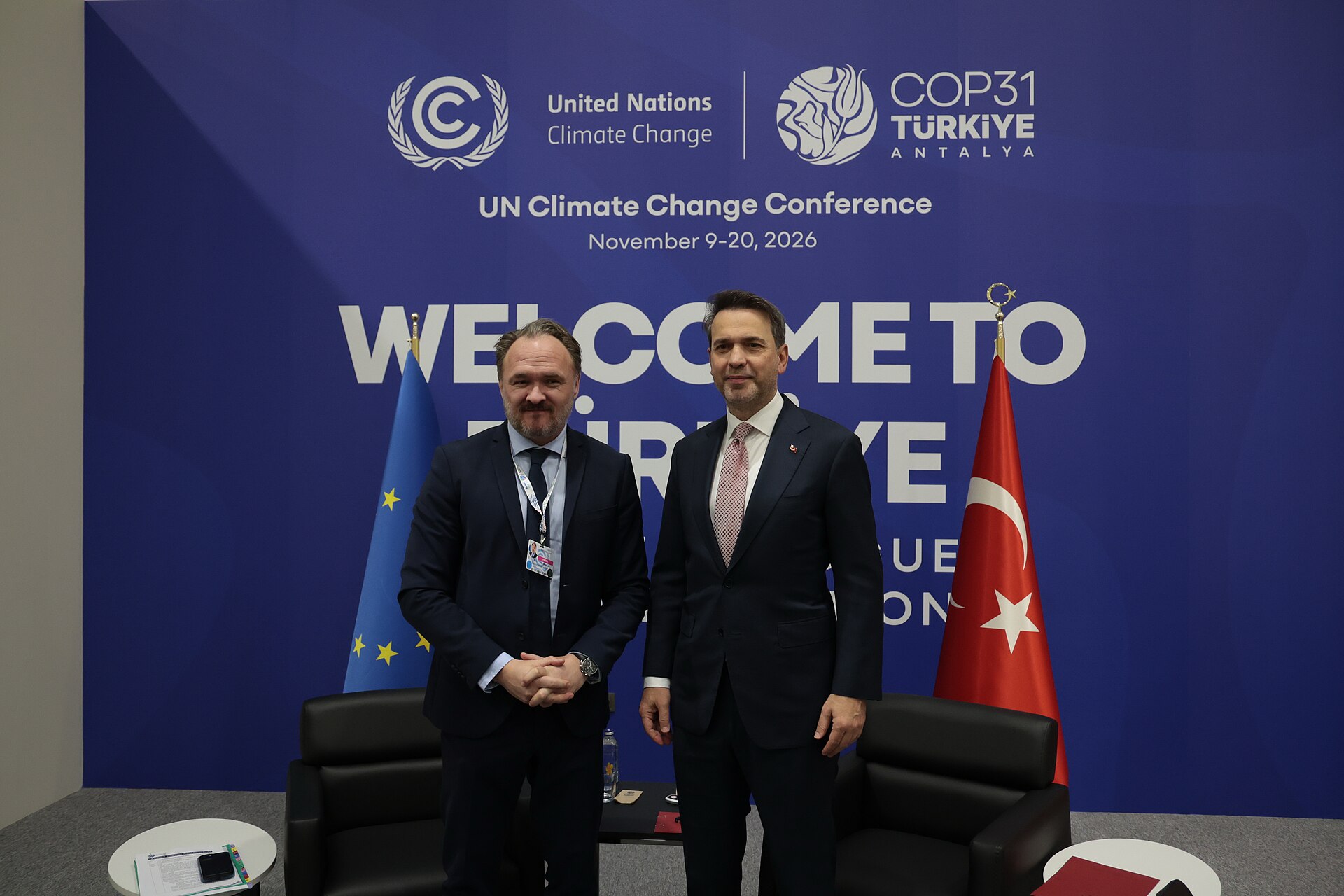
The Arab Group — a 22-member UNFCCC negotiating bloc that includes the UAE, Iraq, Qatar, Kuwait, Oman and Egypt, with Saudi Arabia as its leading voice — filed its objection during the first formal session on 9 November, according to the Earth Negotiations Bulletin’s daily report for that day. The bloc opposed references to both the COP30 Presidency’s fossil fuel transition roadmaps and the COP30 Action Agenda appearing in any COP31 negotiated decision, a position that covers the entire range of possible outcomes: preamble, operative paragraphs, and any prospective cover decision the Australian-Turkish presidency might produce.
The House of Saud Daily Briefing
Saudi Arabia's news in 3 minutes, every morning. Free. See today's issue
Russia and Saudi Arabia have also separately questioned the legitimacy of the proposed COP31 “cover decision” — a single negotiated outcome document the Australian-Turkish hosts envisioned as the summit’s main deliverable, and into which references to Brazil’s roadmap could theoretically be inserted, according to Climate Change News. By challenging both the content and the container, the Arab Group has left little procedural space for the roadmap to enter the formal COP31 record through any channel.
The document at the centre of the dispute is Brazil’s 182-page voluntary fossil fuel transition roadmap, released by the COP30 presidency around 3 November — less than a week before negotiations opened, according to the Japan Times. Brazilian officials have said it is not a document to be negotiated at COP31, according to Climate Change News, but the question the Arab Group is answering in Antalya is not whether the roadmap will be negotiated — everyone already knows it will not — but whether it will be mentioned at all, and what a mention would set in motion.
Why Does a Single “Noting” Clause Matter?
UNFCCC decisions follow a rigid architecture: preambles open with verbs like “Recalling” and “Noting,” which set non-operative context, followed by numbered operative paragraphs using “Decides,” “Requests” and “Welcomes,” which carry political commitments. A preambular “noting” of the COP30 roadmap would not commit any country to a single tonne of emissions reduction — but it would place the document in the official COP record, and can be referenced in future rounds of climate diplomacy, including the 2028 Global Stocktake.
A roadmap that exists as a voluntary Brazilian paper outside the UNFCCC process is a diplomatic suggestion that carries no formal weight; the same roadmap, once “noted” in a COP decision, becomes a reference point that parties can invoke to argue that governments without fossil fuel phase-down plans are falling behind international expectations. The distinction is the difference between a document that sits on a shelf and one that sits in the negotiating record, and Saudi Arabia’s negotiators appear to understand the stakes of that distinction better than many of the delegations pushing for inclusion.
The roadmap proposes a three-phase collective agenda: by 2028, countries draw up national transition plans in time for the next Global Stocktake; from 2029 to 2030, governments prioritise building clean energy systems; and from 2031 to 2033, the main push to reduce fossil fuel production begins, according to Climate Change News. The Arab Group’s position, stripped to its essentials, is that the roadmap’s language should not appear in any text that carries a COP31 header.
Prince Abdulaziz Sets the Terms in Antalya
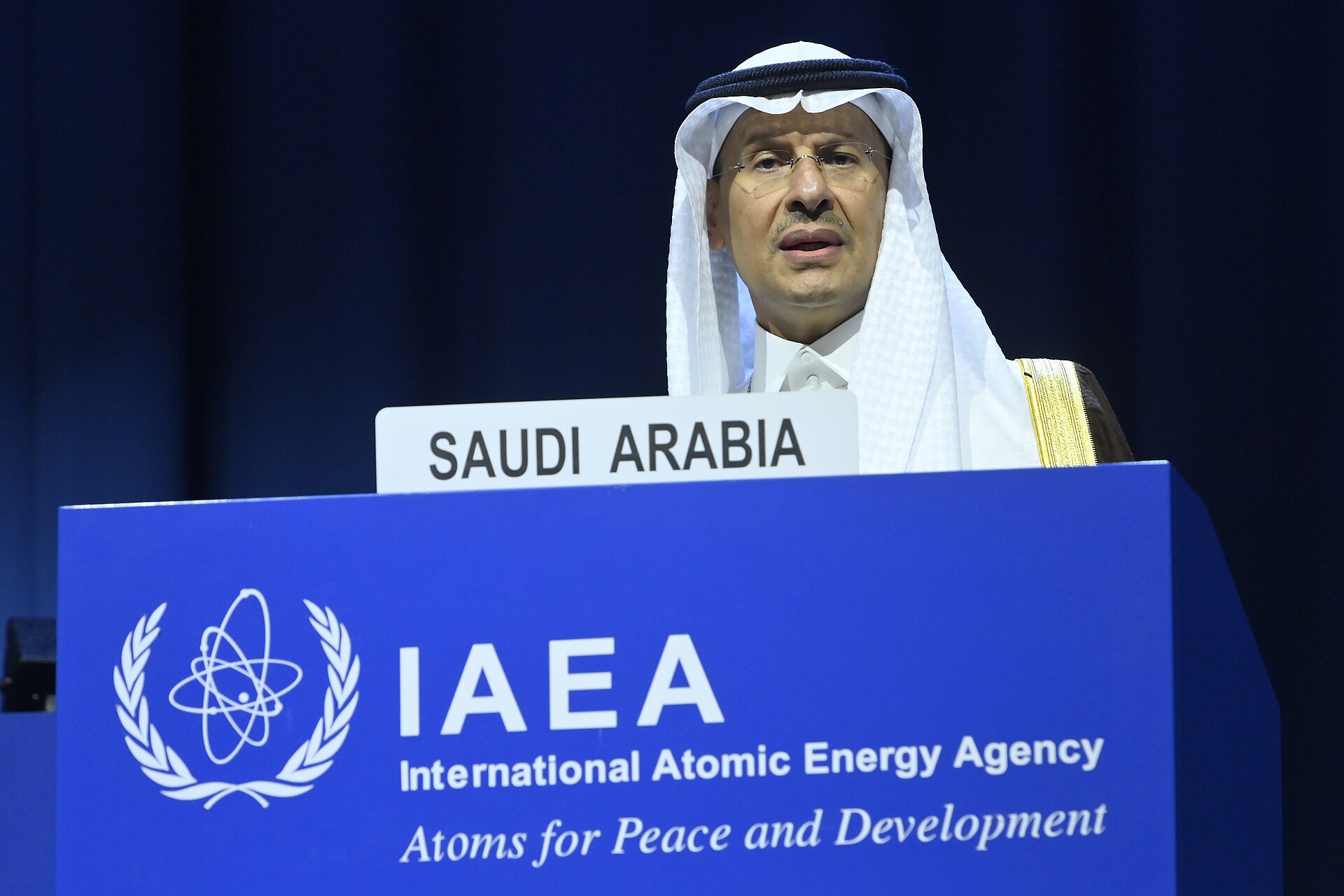
Saudi Energy Minister Prince Abdulaziz bin Salman addressed the COP31 World Leaders’ Summit on 11 November — the same day the kingdom signed an electricity cooperation MoU with Türkiye on the summit’s sidelines — with a speech that avoided mentioning fossil fuels by name but left no ambiguity about where Saudi Arabia stands. “What unites us is the goal of reducing emissions, not necessarily the track to achieving it,” he told delegates, a formulation that rejects the premise of any fossil fuel roadmap without having to say the word.
“What unites us is the goal of reducing emissions, not necessarily the track to achieving it.”
Prince Abdulaziz bin Salman, Saudi Energy Minister, COP31 World Leaders’ Summit, 11 November 2026
He warned that “the quest for carbon neutrality without guaranteeing energy security can undermine our efforts” and said that “measures that are aimed at protecting the climate should not constitute barriers facing countries and impede their achievements of economic development.”
The line has been consistent for over a year. At COP30 in Belém, Saudi Deputy Minister for Environment, Water and Agriculture Osama Faqeeha told Carbon Brief that “the issue is emissions rather than fuel, and that emissions must be cut regardless” — a framing that lets the kingdom endorse emissions reduction in principle while blocking every text that names the fuel it exports. Ahead of COP31, the Arab Group wrote that the Mitigation Work Programme should maintain “a focus on emissions management rather than targeting specific sectors or energy sources,” according to Climate Change News.
Saudi Arabia’s fiscal exposure to oil explains the consistency of its negotiating position across three summits. Crude and oil-product export revenues reached approximately 92.5 billion riyals — about $24.7 billion — in March 2026, the highest monthly figure since October 2022, with oil accounting for 80.3 per cent of the kingdom’s merchandise exports, according to AGBI. The government’s 2026 budget deficit has been revised upward to 245 billion riyals, roughly $65 billion, driven by a 21.8 per cent drop in oil economic activities, according to Reuters — a fiscal hole that persists even as Saudi oil output has risen sharply, Aramco has cut its November Arab Light pricing, and OPEC’s broader output has surged. A roadmap that tells the world to begin phasing down fossil fuel production from 2030 is not an abstract climate policy for a government whose diversification programme, for all its progress, has not yet loosened oil’s grip on the balance sheet.
The Other Side of the Room
UN Secretary-General António Guterres, delivering what will be his final COP address before stepping down in December, called on every government to “show what it has done to cut fossil fuel use or production, what it will do next, and how it will measure progress” — a demand that runs directly counter to the Arab Group’s insistence that national energy choices fall outside the UNFCCC’s remit, according to Climate Change News.
Former US climate envoy John Kerry, speaking at COP31, said “we have to make sure that we really do a roadmap,” according to Health Policy Watch. Brazilian President Luiz Inácio Lula da Silva, whose COP30 presidency produced the roadmap the Arab Group is working to exclude, told the summit that “consensus cannot become a hurdle for advancement in times of polarisation,” according to Climate Change News.
The sharpest language came from the countries facing the most immediate physical consequences. Marshall Islands President Hilda Heine warned at the leaders’ segment that new fossil fuel discoveries should be feared rather than celebrated — a position shaped by the reality that her country could be submerged within decades if warming exceeds 1.5°C. At the Bonn intersessional in June, Fiji’s Sivendra Michael warned that “anyone that is blocking references to science — they are not our friends,” while a broader coalition of Pacific and climate-vulnerable states accused the “usual suspects” of coordinated attacks on IPCC findings and the 1.5°C goal, according to Climate Change News.
The rhetorical support for the roadmap has not translated into much domestic follow-through, however. Finland announced a fossil fuel phase-out at COP31, joining France, Germany and the Netherlands among European nations to have published such plans, according to Health Policy Watch. The gap between vocal opposition to the Arab Group’s position and the number of governments that have published binding domestic phase-out plans remains wide.
COP28’s Fossil Fuel Breakthrough Has Not Been Repeated
COP28 in Dubai in December 2023 was the inflection point: for the first time in the UNFCCC’s history, a formal decision text called for “transitioning away from fossil fuels in energy systems,” language embedded in paragraph 28 of the Global Stocktake, as reported by Axios. Saudi Arabia accepted the text but has spent every negotiating session since arguing that paragraph 28 represents a menu of options rather than a directional mandate — a reading that strips the phrase of the prescriptive force its drafters intended. Laurent Fabius, the former French prime minister and COP21 president, has argued that the Dubai language must be implemented and not reinterpreted as optional.
At COP30 in Belém in November 2025, the Saudi strategy delivered concrete results. The final “Global Mutirão” decision contained zero references to fossil fuels, according to Carbon Brief, despite draft options for paragraphs 35 and 44 that had included transition-away language linked back to the COP28 Global Stocktake. Saudi Arabia told delegates the energy sector was “off the table,” and all fossil fuel text was dropped between the first and second drafts. The COP30 presidency compiled an informal list of 84 countries characterised as roadmap opponents, built around the Arab Group and the Like-Minded Developing Countries bloc — though Carbon Brief later found that 14 countries appeared on both the “support” and “oppose” lists and the Least Developed Countries group adviser said the LDCs had “never blocked a fossil-fuel roadmap.”
At the Bonn intersessional in June 2026 — the last formal session before COP31 — Saudi Arabia, speaking for the Like-Minded Developing Countries, called the Global Stocktake dialogue a “non-prescriptive space with a focus on finance” and warned against “cherry-picking” GST paragraphs, a direct pushback against European and island state efforts to use paragraph 28 as a baseline for stronger mitigation commitments, according to Carbon Brief. Three agenda items, including the Mitigation Work Programme, were forwarded to COP31 under Rule 16 of the UNFCCC rules of procedure without any agreed text — which means they arrive in Antalya without a negotiating base, giving opponents of new fossil fuel language the advantage of a blank page.
What Happens If the Mitigation Work Programme Dies at COP31?
The Mitigation Work Programme — the only formal UNFCCC track dedicated to driving stronger emissions-cutting action beyond what countries pledge in their national plans — has a mandate that runs only through 2026, making COP31 the last session that can decide whether the programme continues or expires entirely. It arrived in Antalya without agreed text after failing at both COP30 and the Bonn intersessional, forwarded each time under Rule 16, the procedural mechanism that places unresolved items on the next session’s agenda with nothing to build on.
The programme’s fate is tied to the roadmap battle, because the MWP is the most obvious UNFCCC venue where fossil fuel-specific discussions could take root — and Saudi Arabia’s pre-COP31 position, channelled through the Arab Group, is that the programme should focus on “emissions management rather than targeting specific sectors or energy sources.” If the MWP is allowed to lapse, the paragraph 28 language from Dubai becomes stranded: formally on the books but disconnected from any ongoing process that might translate it into sector-level action. The EU has called for the programme to be extended through 2040, while Germanwatch has noted that allowing the programme to lapse would close the only dedicated channel for raising emissions ambition between Global Stocktakes.
The talks in Antalya run until 20 November, and COP summits routinely produce their most consequential text in the final 48 hours of negotiation. But the trajectory across three summits is readable enough without waiting for the ending: fossil fuels entered the formal climate record for the first time in Dubai, were erased from it in Belém, and are being kept out of it in Antalya — and the 22-member bloc responsible for that pattern has not yet lost a round.
Frequently Asked Questions
What is the COP31 electrification pledge?
The Turkish-Australian COP31 presidency has proposed a “35×35” target: raising electricity’s share of global energy consumption to 35 per cent by 2035. The pledge has drawn support but India has said it will not sign, according to Climate Change News. Prince Abdulaziz bin Salman cautioned that expanding electrification reduces nothing if the electricity is generated from fossil sources, according to Climate Change News — a caveat the current pledge text does not include.
What role does the Like-Minded Developing Countries bloc play alongside the Arab Group?
The LMDC is a negotiating group that includes China, India, Saudi Arabia, Iran, Egypt and Indonesia, and its positions on fossil fuel questions overlap with the Arab Group’s — Saudi Arabia holds membership in both. At COP30, the two blocs together formed the core of the 84-country informal opposers list compiled by the Brazilian presidency, and at Bonn in June 2026 it was the LMDC that formally argued the Global Stocktake dialogue should focus on finance rather than energy transition. The practical effect is that Saudi Arabia can advance the same argument through two different bloc voices in different negotiating rooms, amplifying its procedural reach across the summit.
Is this António Guterres’s last COP as UN Secretary-General?
Yes. Guterres steps down in December 2026 after two terms, making COP31 in Antalya his final climate summit as secretary-general. His 11 November speech went beyond the fossil fuel line: he called for a windfall tax on fossil fuel industry profits to fund climate action in vulnerable countries, according to Health Policy Watch. It was among the most direct language a sitting UN chief has used against the oil and gas industry.
The House of Saud Daily Briefing
Saudi Arabia's news in 3 minutes, every morning. Free. See today's issue