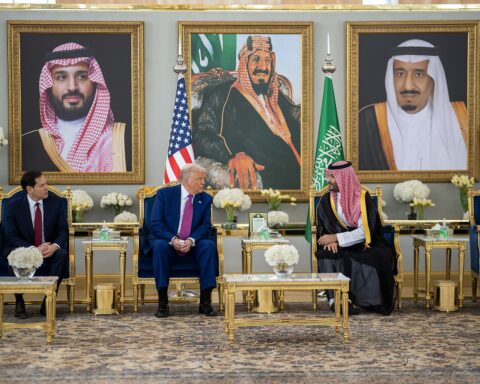
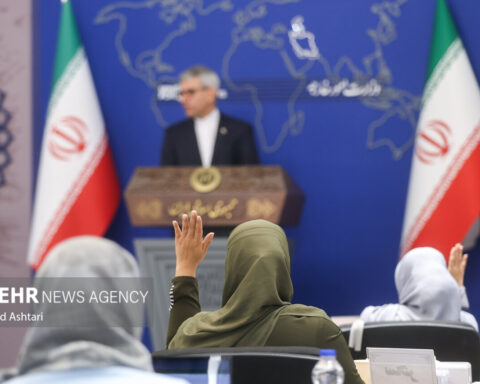
RIYADH — On June 1, Donald Trump told ABC News a deal with Iran could happen “over the next week,” and on the same day — the same afternoon, in fact — Iran’s IRGC-affiliated Tasnim News Agency announced it was suspending all exchanges with the United States through mediators. Both statements were true in the rooms where they were spoken, and neither was addressed to Saudi Arabia, which is the only country in this triangle with a $21.89 billion bill due on June 9 that cannot be deferred, renegotiated, or wished away by posting on Truth Social.
The Aramco quarterly dividend — payable regardless of whether talks are “continuing at a rapid pace” or frozen by an IRGC communiqué — is the single hardest date on the calendar of a kingdom that has consumed 76% of its full-year deficit target in ninety days, borrowed through 90% of its annual debt capacity, and is running a fiscal breakeven gap of $13–16 per barrel against a Brent price that surged 7% on Iran’s suspension announcement and then retraced the moment Trump tweeted optimism. Saudi Arabia is not a negotiating party in the Iran MOU talks. It is, by every fiscal metric that matters, the collateral damage of two governments’ competing communications strategies.
Table of Contents
- Three Signals, Zero Coordination, One Afternoon
- Why Are Trump’s Optimism and Iran’s Suspension Both True?
- The Man in the Cave and the President Who Said Next Week
- What Happens on June 9 and Why Can’t Saudi Arabia Wait?
- The Brent Whiplash That Proved the Problem
- How Much Fiscal Ammunition Does Saudi Arabia Have Left?
- Lebanon as the Legal Tripwire Iran Already Pulled
- The Counteroffer That Confirmed Iran’s Strategy
- Saudi Arabia’s Planning Horizon Is Now a Dividend Date
- FAQ
Three Signals, Zero Coordination, One Afternoon
The compression of June 1 into a single news cycle was, by itself, the story that no competing outlet fully assembled. Trump spoke to CNBC first and said he “didn’t really care” whether Iran talks ended, calling the exchange “very boring.” Within hours, he posted on Truth Social that “talks are continuing, at a rapid pace, with the Islamic Republic of Iran.” Then, speaking to ABC News’ Jonathan Karl, he upgraded the timeline to a deal happening “over the next week,” describing the Israeli escalation in Lebanon — the very trigger Iran cited for its suspension — as a “glitch” that he had resolved through pledges to stop fighting.
Three audiences received three messages. The CNBC line — calculated indifference — was aimed at a domestic base that rewards toughness. The Truth Social post was addressed, almost entirely, to oil markets; Brent retraced most of its 7% spike within the hour. The “next week” claim to Karl was the one that landed in diplomatic cables, because it implied a timeline that is, as a matter of physical logistics, incompatible with the courier-based ratification architecture through which Iran’s actual decision-maker communicates.
None of these three statements was coordinated with Iran’s announcement. Tasnim published its suspension at a moment calibrated for the IRGC’s constituency: “Considering that Lebanon was one of the preconditions for the ceasefire and that this ceasefire has now been violated on all fronts, including Lebanon, the Iranian negotiating team is suspending dialogues and exchange of texts through mediators.” The language was chosen for an audience that views the Lebanon clause — embedded in Iran’s March 2026 five-point counter-proposal — as non-negotiable. It was not chosen for the audience at CNBC.
Why Are Trump’s Optimism and Iran’s Suspension Both True?
The answer is that each statement operates inside a separate credibility architecture, and neither requires the other to be false. Tasnim — an IRGC outlet, not the government’s foreign ministry — suspended “text exchanges through mediators,” which is a specific channel, not all diplomatic communication. Foreign Minister Abbas Araghchi’s statement that “a violation on one front of the ceasefire is a violation on all fronts” established the formal legal predicate for the freeze, but Araghchi himself was not the one who announced it, and his civilian diplomatic track — the channel through which Iran’s June 9 counteroffer would eventually flow — remained structurally intact beneath the IRGC’s louder signal.
The Middle East briefing 3,000+ readers start their day with.
One email. Every weekday morning. Free.
Trump’s “next week” was not a lie in any conventional sense. It was a projection based on the White House’s understanding that text exchanges — regardless of Tasnim’s public declaration — had not been formally terminated through the Omani mediator channel that carries the actual MOU drafts. The White House had called Iran’s previous escalatory statements a “complete fabrication” in separate contexts, and Trump’s personal experience of the JCPOA cycle, in which suspensions and resumptions alternated across fourteen months, provided a template for treating any given freeze as tactical rather than terminal.
The problem is that the gap between these two truths — Tasnim’s truth for the IRGC base, Trump’s truth for the oil market — is not an academic puzzle. It is a planning variable. And the only government that must resolve it into a single actionable scenario before a fixed calendar date is the one that was not consulted by either side.
The Man in the Cave and the President Who Said Next Week
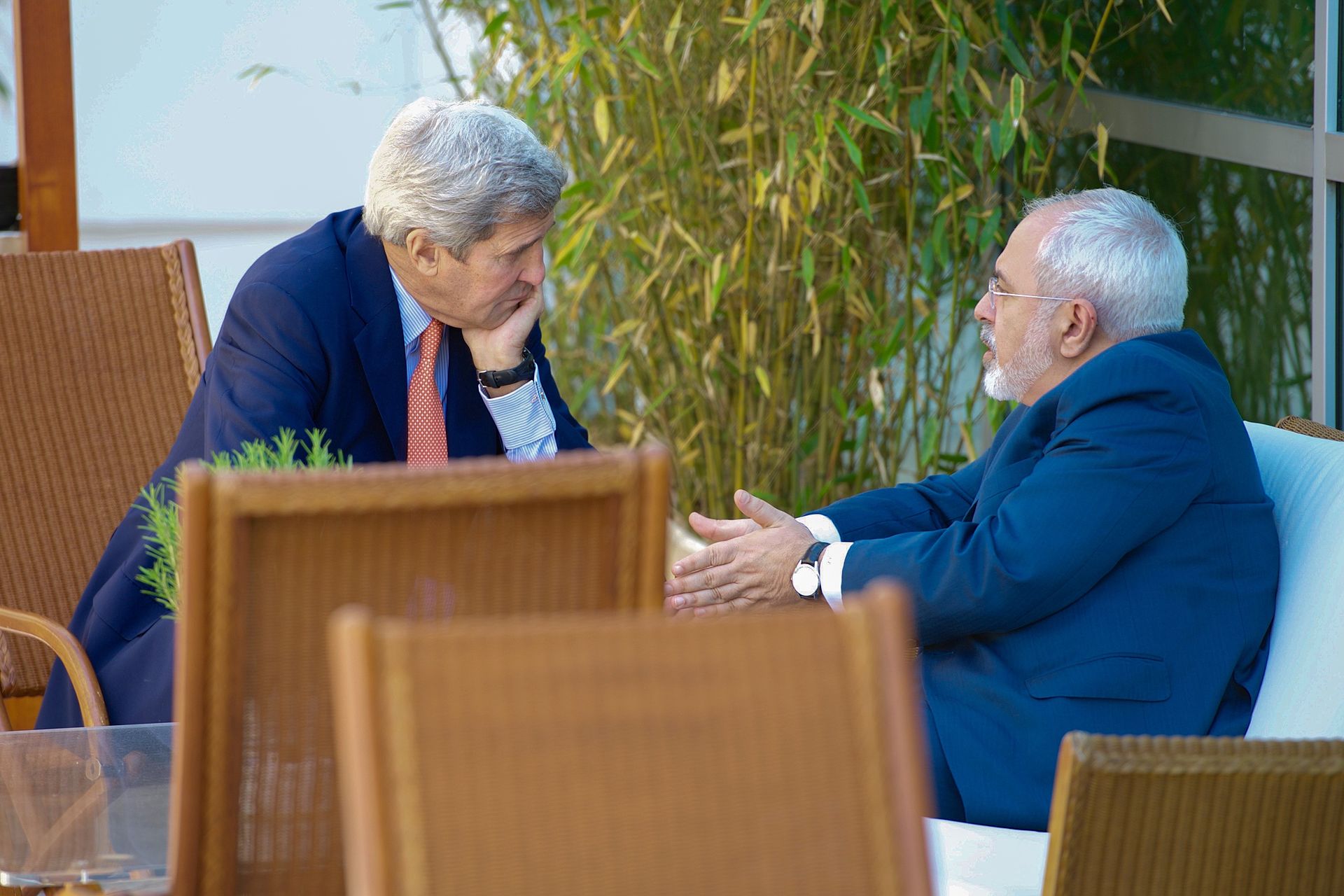
Trump’s timeline collides with a physical constraint that no amount of diplomatic optimism can compress. The MOU draft, as amended by Trump’s own team on May 31 with harder language on HEU removal timing and Hormuz access, must be ratified by Mojtaba Khamenei — who holds ratification authority from an underground bunker, communicates through motorcycle couriers, and operates on what a senior US official described to Axios as having “a lot of latency to his responses.” The same official’s characterisation was blunter: the man who must approve any deal is “literally in caves, not using email.”
The courier loop from Oman to Mojtaba Khamenei and back requires, at minimum, 72 hours per exchange — and the MOU draft that was last sent, according to Mehdi Khanalizadeh, a state television pundit with access to the Islamabad talks, “violates eight of the 10 conditions approved by Mojtaba Khamenei.” Each violated condition that requires amendment triggers another courier cycle, another 72 hours minimum, and another layer of technical complexity — particularly on the HEU verification question, where a 93-day IAEA blackout since February 28 means nobody, including Iran, can produce a verified baseline for the 440.9 kilograms of 60% enriched uranium that anchors the entire Phase 2 framework.
“Over the next week” would require Mojtaba Khamenei to receive the amended text, approve it against eight outstanding objections, transmit approval back through the courier network, and have that approval ratified through the Supreme National Security Council — all while the IRGC apparatus that controls his communications has publicly suspended the channel. This is not a question of political will. It is a question of bandwidth, measured in motorcycle trips, not megabits.
What Happens on June 9 and Why Can’t Saudi Arabia Wait?
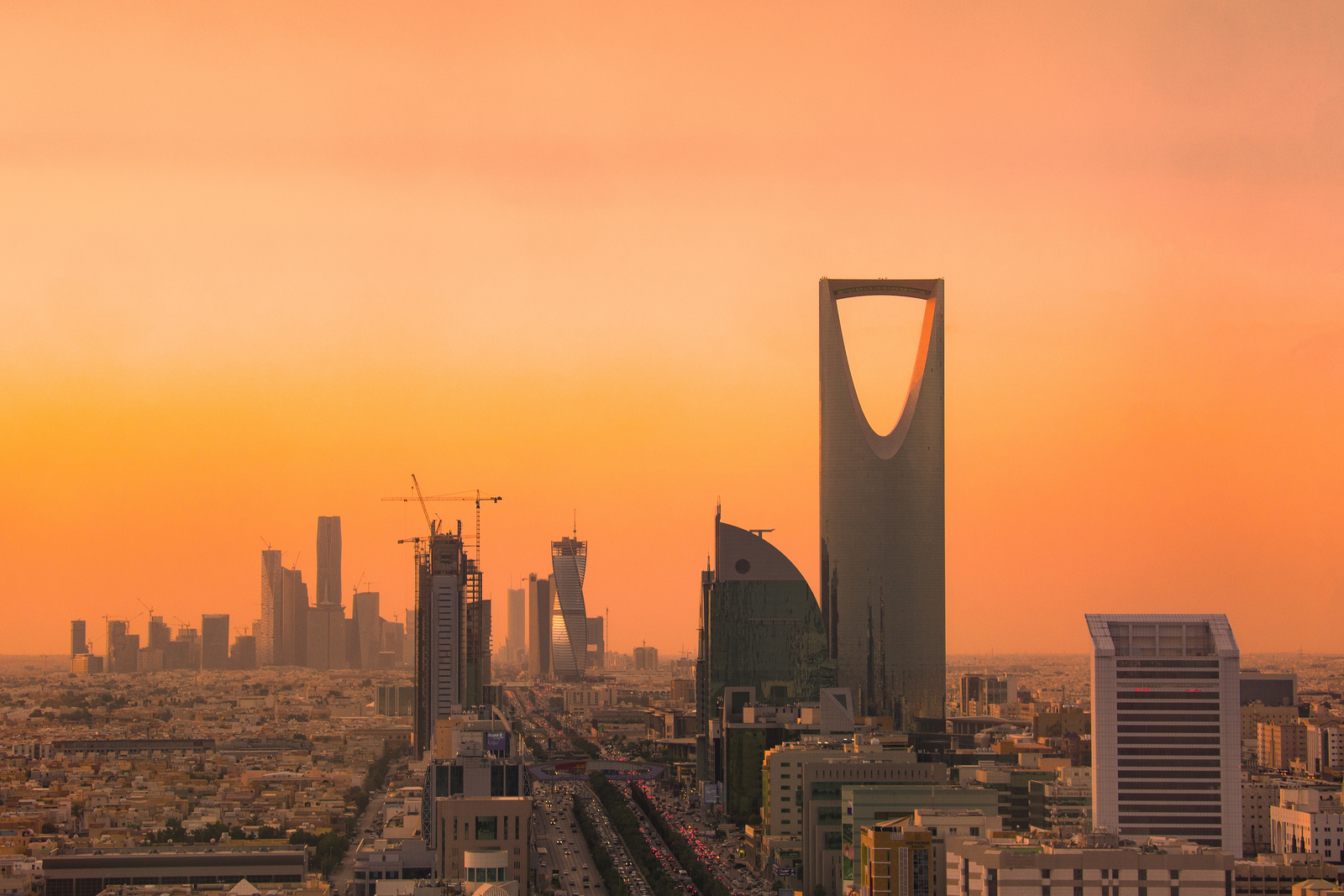
On June 9, two events converge on the same 24-hour window. Saudi Aramco pays its quarterly base dividend of $21.89 billion — SAR 0.3393 per share across 241.9 billion eligible shares, a 3.5% increase year-over-year, with the eligibility date already locked on June 1. And on the same date, Iran’s foreign ministry spokesperson Esmaeil Baghaei declared the US proposal “not acceptable to us” and announced a counteroffer would be transmitted via Oman, exactly as Reuters had predicted a week earlier. Saudi Arabia entered that window unable to know whether the dividend would land against deal optimism or confirmed collapse.
The dividend is non-deferrable. Aramco’s board committed to it on May 10 with the Q1 2026 results. The eligibility record was set June 1 — the same day Trump said “next week” and Tasnim said “suspended.” Approximately 98.5% of Aramco’s shares are held by the Saudi state (directly and through PIF), meaning approximately $21.5 billion of the $21.89 billion flows to government-controlled entities. This is not a market event. It is a sovereign cash transfer that occurs regardless of whether Brent is at $94 or $74, regardless of whether the MOU is alive or dead.
The problem is what it costs. Aramco’s Q1 2026 free cash flow was $18.6 billion against a dividend of $21.89 billion. The coverage ratio — the most basic measure of whether a company can afford its payout — was approximately 0.85x, meaning Aramco paid out $1.18 for every dollar it generated. The $3.3 billion shortfall for a single quarter is manageable in isolation. It is not manageable against the backdrop of a kingdom three-quarters through its annual deficit target in a single quarter, with 90% of its borrowing programme already committed.
The Brent Whiplash That Proved the Problem
The Brent crude price action on June 1–2 was, in miniature, the entire Saudi planning crisis compressed into a trading session. When Tasnim announced the suspension, Brent surged above $95 and briefly touched approximately $102 — a war-premium spike that, had it held, would have narrowed Saudi Arabia’s fiscal breakeven gap to single digits and given Riyadh room to treat the June 9 dividend as uncomfortable but absorbable. Then Trump posted “rapid pace,” and the price retraced to close at $94.58, down 0.42% on the day, as if the suspension had never happened.
This is the mechanism through which the credibility fracture costs Saudi Arabia money in real time. Every Trump statement that signals deal optimism pushes Brent down by removing the geopolitical premium. Every Iranian escalation pushes it up. The two actors are operating on different schedules, through different communications channels, for different audiences — and the net effect on Brent at any given close is essentially a coin flip between their competing signals. At $94.58, the gap to Saudi Arabia’s consolidated fiscal breakeven of $108–111 per barrel (Bloomberg Economics composite) is $13–16 per barrel, translating to approximately $140–150 billion in annualized revenue shortfall.
The gap is not theoretical. It arrives in the form of a quarterly deficit — SAR 125.7 billion ($33.5 billion) in Q1 2026 alone — that Goldman Sachs projects will push the full-year figure to 6.6% of GDP, more than double Finance Minister Mohammed Al-Jadaan’s official target of 3.3%. Al-Jadaan has not publicly addressed the discrepancy. The market, which watched Brent swing seven percentage points in a single session on the basis of two contradictory statements from two governments that are not coordinating, has drawn its own conclusions.
| Metric | Figure | Source |
|---|---|---|
| Aramco Q1 2026 base dividend | $21.89B (SAR 82.08B) | Aramco/Sahm Capital |
| Aramco Q1 2026 free cash flow | $18.6B | Aramco Q1 report |
| Dividend coverage ratio | ~0.85x ($3.3B shortfall) | Calculated |
| Q1 2026 budget deficit | SAR 125.7B ($33.5B) | Saudi MOF |
| % of full-year deficit target used in Q1 | 76% | Saudi MOF/Energy News Beat |
| Goldman Sachs projected 2026 deficit | 6.6% of GDP | Goldman Sachs/AGBI |
| Official government deficit target | 3.3% of GDP | Saudi MOF |
| NDMC borrowing capacity used | ~90% (~$5.8B residual) | Zawya/NDMC/Reuters |
| Saudi fiscal breakeven (Brent) | $108–111/bbl | Bloomberg Economics |
| Brent close June 2 | $94.58/bbl | Trading Economics |
| Annualized revenue shortfall at $94.58 | ~$140–150B | Bloomberg Economics/AGBI |
How Much Fiscal Ammunition Does Saudi Arabia Have Left?
The National Debt Management Center entered 2026 with a total financing need of SAR 217 billion (approximately $57.8 billion) and had, by the time conflict escalated, completed roughly 90% of the programme — leaving approximately $5.8 billion in residual borrowing capacity. That figure was calculated before the Q1 deficit overshoot consumed 76% of the full-year target in a single quarter, before Brent dropped below $95, and before the MOU talks entered their current state of Schrödinger’s negotiation — simultaneously alive (Trump) and suspended (Tasnim).
PIF’s cash position has fallen to $15 billion, a six-year low representing just 1.6% of assets under management, at the same moment the sovereign wealth fund issued its largest-ever single bond ($7 billion) and implemented a 20% spending cut. The structural loop that connects Aramco dividends to PIF funding to national development spending is now running at a loss: Aramco generates less than it distributes, PIF receives less than it spends, and the borrowing capacity that would normally bridge the gap has been substantially exhausted before the fiscal year is half over.
This is the context in which “over the next week” and “suspending all exchanges” collide. A kingdom that could afford to wait — that had fiscal reserves, borrowing headroom, and a Brent price above breakeven — could treat the ambiguity as the market did: a volatility event to be traded, not a planning crisis to be solved. Saudi Arabia in June 2026 cannot wait because every day of unresolved ambiguity at $94 Brent costs approximately $400 million relative to breakeven — the annualized $140–150 billion shortfall divided by 365 — and the borrowing capacity to absorb those daily losses is functionally depleted.
Lebanon as the Legal Tripwire Iran Already Pulled
Iran’s suspension was not improvised. The Lebanon clause — the precondition that Israel would cease military operations in Lebanon as part of any broader ceasefire — was embedded in Iran’s March 2026 five-point counter-proposal, the same document from which the MOU framework was built during the Pakistan-brokered Islamabad talks in April. When the IDF crossed the Litani River on June 1 and Israel issued displacement orders for seven Lebanese villages on the same day, Tehran had what it needed: a documented, prior-condition violation with an unambiguous date stamp.
Trump called the escalation a “glitch” and claimed he had secured pledges from both sides to stop fighting. Netanyahu, within hours, told the Times of Israel that Israel would “continue to operate as planned in southern Lebanon.” The gap between “glitch” and “continue as planned” mirrors, in the security domain, the same credibility fracture that the “rapid pace” / “suspended” contradiction creates in the diplomatic one. Araghchi’s formulation was precise: “A violation on one front of the ceasefire is a violation on all fronts. The US-Iran ceasefire is unequivocally a ceasefire on all fronts, including in Lebanon.”
For Saudi Arabia, the Lebanon trigger carries a specific and unwelcome implication. Riyadh has no leverage over Israeli operations in Lebanon, no channel to Mojtaba Khamenei that bypasses the IRGC courier network, and no mechanism to compel the two actors whose behaviour determines whether the MOU survives to coordinate their timelines. Saudi Foreign Minister Prince Faisal bin Farhan’s May 20 statement — calling to “restore Hormuz to the state prior to February 28th 2026” — was the kingdom’s most explicit public positioning on the negotiations, and it was addressed to neither Trump nor Mojtaba Khamenei but to the international community at large, which is not a party to the courier-based exchange that will determine whether a deal exists. The documented sequence of what Trump declared, what the IDF did in the hours after, and how Iran converted those actions into a formal MOU suspension is covered in Trump Declared a Lebanon Ceasefire. Israel Struck a Hospital the Next Morning.
The Counteroffer That Confirmed Iran’s Strategy
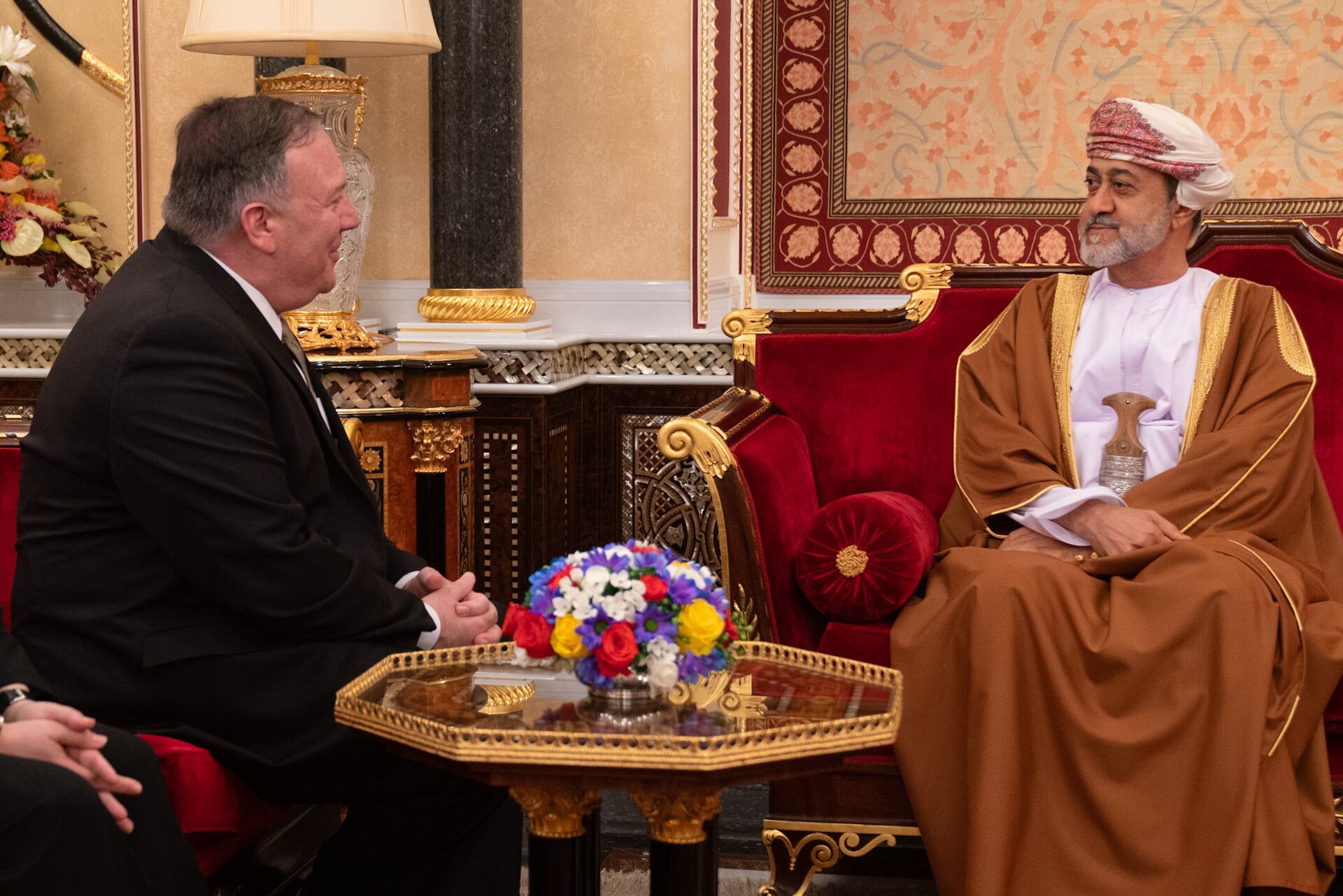
On June 9, Iran did exactly what Reuters had reported a week earlier: Baghaei declared the US proposal “not acceptable to us” and announced a counteroffer would be transmitted through Oman, describing it as “reasonable, logical, and balanced.” The precision of the Reuters-to-Baghaei arc — a prediction on June 2, fulfilled on June 9, through the exact channel specified — confirms that the suspension was structured from the beginning, not a spontaneous rupture triggered by Lebanon.
This is the JCPOA pattern replicated at accelerated tempo. The original Iran nuclear deal took fourteen months and included multiple suspension-and-resumption cycles. Each pause served the same function: resetting the negotiating baseline without terminating the architecture. Iran’s counteroffer, transmitted via Oman rather than through the “mediator” channel that Tasnim suspended, preserves the civilian diplomatic track while allowing the IRGC to claim it forced the Americans back to the table on Iranian terms. Tasnim suspended one channel while Oman quietly carried another. The rejection was not a walkout but a reset, designed to keep international interlocutors engaged while extracting maximum concessions during the interval.
The Wall Street Journal editorial board, which warned against an “economic bailout” for Iran in the deal terms, captured one dimension of the problem. But the more immediate dimension — the one that arrives on June 9 — is that Saudi Arabia cannot know whether the counteroffer represents a genuine path to resolution (in which case Brent faces downward pressure from deal optimism) or a tactical delay (in which case Hormuz risk repricing pushes it higher). Both scenarios are financially dangerous for Riyadh. A deal that lowers Brent below $94 widens the breakeven gap. A collapse that triggers Hormuz escalation and Bab al-Mandab activation threatens physical export capacity. The kingdom needs resolution. What it received on June 9 was another iteration of ambiguity.
Saudi Arabia’s Planning Horizon Is Now a Dividend Date
The deepest structural problem exposed by the June 1 credibility fracture is not that Trump was wrong or that Iran was bluffing. It is that Saudi Arabia’s fiscal planning horizon has been compressed from quarters and years into individual payment dates. The kingdom’s ability to plan capital expenditure, maintain PIF investment schedules, sustain defense procurement at wartime rates, and service the $57.8 billion in annual borrowing that was 90% committed before the crisis accelerated — all of these depend on a Brent price that is now determined, day to day, by which of two contradictory narratives the market believes at closing bell.
When Trump says “next week,” Brent drops on the removed geopolitical premium; when Tasnim says “suspended,” Brent rises on the restored threat of escalation. When Baghaei says “not acceptable,” the market calculates whether the counteroffer extends the timeline or collapses it. When Netanyahu says “continue as planned” in Lebanon, the market reprices the probability that Iran’s precondition will remain violated, which reprices the probability that talks resume, which reprices Brent, which reprices Saudi Arabia’s fiscal position — all within a single trading session, all without Riyadh having any input into any of the decisions that drive the chain.
The June 9 dividend was paid. Aramco transferred $21.89 billion at a moment when the kingdom had consumed three-quarters of its annual deficit capacity and could not know, based on the public signals from Washington and Tehran, whether the next quarter would bring resolution or escalation. That is not a fiscal position. It is a forced bet on other people’s credibility — a kingdom whose $140–150 billion annualized revenue shortfall is governed not by its own decisions but by the gap between a man posting from a social media platform and a man communicating from an underground bunker through couriers on motorcycles.
“Literally in caves, not using email.”
— Senior US official on Mojtaba Khamenei’s communications, Axios, May 2026
Trump’s “over the next week” expired without a signature, and the MOU remains unsigned. The counteroffer is now in Oman’s hands, and the courier network that connects Muscat to Mojtaba Khamenei’s bunker will determine whether it produces a revised text in days, weeks, or not at all. Meanwhile, the Aramco dividend cycle resets: the next quarterly payment will come due in September, by which point the full-year deficit will have consumed its remaining 24% of target capacity and then some, the NDMC will have exhausted its borrowing programme, and PIF’s $15 billion cash position will have absorbed another quarter of spending obligations against an investment portfolio that cannot be liquidated on the timeline the fiscal position demands.
Saudi Arabia’s planning horizon is no longer defined by the five-year strategies that Vision 2030 was built on, or by the annual budgets that Finance Minister Al-Jadaan presents with deficit targets the market no longer believes, or even by the quarterly earnings cycles that Aramco uses to calibrate its dividend commitments. It is defined by the next date on which a non-deferrable payment meets an unresolvable ambiguity — a kingdom waiting for two men who are not talking to each other to decide its fiscal fate, one from a podium, the other from a cave.
FAQ
Could Saudi Arabia cut the Aramco dividend to reduce fiscal pressure?
Theoretically, yes — but the dividend is the primary funding mechanism for PIF, which holds approximately 8% of Aramco shares directly, and the government holds approximately 90.5%. Cutting the dividend would reduce the revenue flowing to both entities at the exact moment PIF is at a six-year cash low ($15 billion) and trying to service $7 billion in new bond issuance. The 3.5% year-over-year increase in the Q1 2026 dividend signals that the kingdom is prioritising payment stability as a sovereign creditworthiness signal; reversing that in Q2 would reprice Saudi sovereign debt across the curve. The political cost — admitting the fiscal model is strained — exceeds the financial savings for any single quarter.
Has Saudi Arabia historically been able to influence the pace of US-Iran negotiations?
During the original JCPOA negotiations (2013–2015), Saudi Arabia operated through a combination of backchannel lobbying in Washington and direct engagement with the P5+1 framework. In 2026, all three available channels to Iran’s decision-making centre have been severed or downgraded: the Saudi-Iran bilateral channel is limited to FM-level contacts (four Bin Farhan–Araghchi exchanges, plus a “purely bilateral” MBS–Pezeshkian Eid call), the Beijing NSA-tier track through Shamkhani is defunct after IRGC restructuring, and the Oman channel through which the MOU text travels has never included Saudi Arabia as a party. Riyadh’s structural exclusion from all three negotiating tracks — US-Iran, Oman bilateral, and the UK-France coalition (Northwood) — is historically unprecedented.
What happens if Iran’s counteroffer is accepted and a deal lowers Brent further?
A completed MOU that removes the Hormuz geopolitical premium could push Brent toward the $80 “Quick Peace” scenario modelled by Wood Mackenzie, with further decline to $65 by 2027. At $80 Brent, Saudi Arabia’s breakeven gap widens to $28–31 per barrel — more than double the current $13–16 gap — implying an annualized shortfall exceeding $250 billion. This is the paradox of the Saudi position: a deal that ends the military conflict also ends the geopolitical premium that is currently the only factor keeping Brent above $90. The kingdom would trade physical security for fiscal pressure that is, in certain scenarios, worse than the war itself.
Why did Tasnim — not the foreign ministry — announce the suspension?
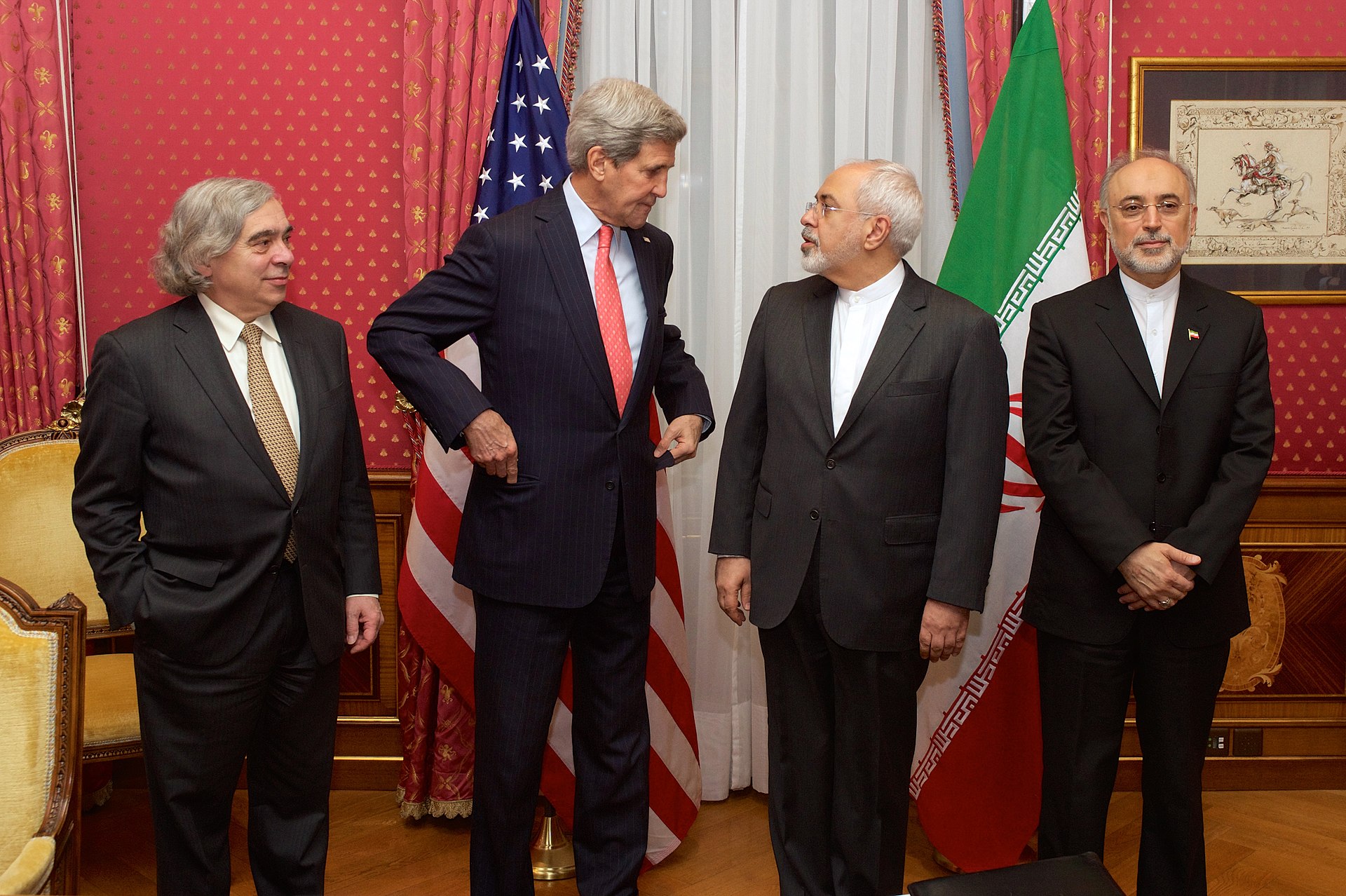
The institutional choice is the signal. Tasnim is an IRGC-affiliated outlet that speaks to the revolutionary apparatus and the domestic hardline constituency. The foreign ministry under Araghchi represents the civilian diplomatic track. By routing the suspension through Tasnim while leaving Araghchi’s channel technically intact, Iran preserved the architecture for the June 9 counteroffer — which was, in fact, transmitted through Oman via the government track, not the IRGC one. This dual-channel approach mirrors Iran’s 2015 JCPOA negotiating structure, where Zarif’s diplomatic team and the IRGC operated as parallel power centres with different audiences, different messaging, and occasionally contradictory public statements that served a unified strategic objective.
What is the IAEA verification blackout and why does it matter for the MOU timeline?
Since February 28, 2026 — when US and Israeli strikes triggered the current conflict — the IAEA has had no access to Iranian nuclear facilities, creating a 93-day “continuity of knowledge” gap as of May 31. The last verified figure for Iran’s 60% enriched uranium stockpile was 440.9 kilograms, recorded on June 13, 2025. IAEA Director General Grossi has called restoration of the verification baseline “absolutely possible, terribly difficult.” Trump’s May 31 amendments to the MOU text specifically demanded clarity on “how the US gets the material and the timing” for HEU removal — a question that cannot be answered without a verified baseline that currently does not exist. The courier-based ratification cycle needed to resolve this single technical issue alone would extend well beyond any “next week” timeline, even before addressing the other seven of eight violated Mojtaba Khamenei conditions.