
DUBAI — Iran’s Islamic Revolutionary Guard Corps said on October 29 that three oil tankers exploded and caught fire after striking sea mines while transiting a southern route through the Strait of Hormuz, according to Arab News, Saudi Gazette, and Xinhua. The United Kingdom Maritime Trade Operations separately confirmed in Warning 185-26 that a vessel was burning approximately 9 nautical miles north of Khasab, Oman, at around 0300 UTC, though it identified neither the cause of the fire nor the crew’s status.
No ship names, flags, operators, or cargo quantities were disclosed in the IRGC’s statement, and no Western maritime authority has independently confirmed the mine claim, according to the Times of Israel. The announcement lands three days before OPEC+ convenes on November 1, with Saudi Arabia’s production quota locked at 10.5 million barrels per day, according to the cartel’s October 4 communiqué, while tanker transits through Hormuz have collapsed from a pre-crisis baseline of 85 per day to just 4 on the day the IRGC declared the strait closed on October 26, per IMF PortWatch data. War-risk insurance premiums for Hormuz transits have surged to levels that would have been unthinkable a year ago, according to Marsh, the insurance broker, with freight rates hitting records as tankers reroute around the Cape of Good Hope.
Table of Contents
What Did the IRGC Claim on October 29?
The IRGC Navy stated that three oil tankers “exploded and caught fire” after hitting sea mines over the previous 24 hours while using a southern route it classifies as unauthorised, according to Arab News and Saudi Gazette. The vessels had “switched off all their radar and navigation systems” and ignored IRGC warnings before the blasts, according to Middle East Eye and the Times of Israel. The IRGC added that the ships were subsequently abandoned on the southern shores of the strait, according to Newsquawk.
The House of Saud Daily Briefing
Saudi Arabia's news in 3 minutes, every morning. Free. See today's issue
None of the IRGC’s claims came with verifiable detail. No vessel names, no flag states, no operating companies, no cargo manifests, and no casualty figures appeared in the statement or in any follow-up reporting as of October 29, according to the Times of Israel. The absence of identifying information has been a consistent feature of Iranian mine-warfare claims throughout October, making independent confirmation effectively impossible.
The IRGC accompanied the announcement with a direct challenge to the US military presence in the strait. Shipowners should not “pay attention to the illusions of the U.S. Central Command on social media,” the IRGC said, according to Caspian Post — a message aimed squarely at commercial operators weighing whether American assurances about cleared shipping lanes justify the risk of a Hormuz transit.
What Does UKMTO’s Warning Reveal?
UKMTO Warning 185-26 confirmed at least one vessel was on fire in the Strait of Hormuz at around 0300 UTC on October 29, approximately 9 nautical miles north of Khasab on Oman’s Musandam Peninsula, according to Arab News Pakistan and the Maritime Executive. The advisory told vessels in the area to “exercise caution” but did not attribute the fire to a mine, a missile, or any other cause, and described the crew’s status as unknown.
UK maritime security consultancy Vanguard Tech offered a separate assessment, stating that the vessel had been hit by a “projectile” and was “mostly submerged,” according to the Maritime Executive. Vanguard Tech is a commercial consultancy, not an official body, and its assessment has not been corroborated by UKMTO, CENTCOM, or any government agency. Whether this vessel is one of the three cited by the IRGC remains unconfirmed, according to the Times of Israel and Arab News Pakistan.
The gap between the IRGC’s sweeping claim of three tankers aflame and the UKMTO’s narrow confirmation of a single burning vessel echoes a pattern that has played out repeatedly this month. UKMTO and the UK’s Joint Maritime Information Centre previously said there was “no substantiation” for mid-October IRGC mine claims, according to Fox News — yet each new allegation still moves the price of Brent crude and the cost of shipping insurance.
CENTCOM and the IRGC: Competing Claims Over a Mined Strait
The US military’s position has not changed. CENTCOM’s standing statement holds that “all internationally recognized primary transit routes through the Strait of Hormuz have been cleared of sea mines by US forces and remain so,” according to Fox News and CBS News. That assurance covers the primary traffic-separation scheme but does not specifically address the southern route the IRGC targeted in its October 29 statement — a route that, according to Fox News and CBS News, is the same lane the US has been encouraging commercial vessels to use.
Shipowners should not “pay attention to the illusions of the U.S. Central Command on social media.”
IRGC Navy statement, October 29, 2026 (Caspian Post)
That contradiction sits at the centre of the crisis. CENTCOM tells tanker operators to transit the southern route; the IRGC calls that route unauthorised and says it is mined. The International Maritime Organization warned on October 27 that the Hormuz traffic route has mines and it cannot guarantee safe transit — a rare public admission from a body that normally confines itself to regulatory matters. Iran, meanwhile, has set its own terms for reopening the strait: on October 28, Tehran said Hormuz could reopen in four to five days if the US lifts its blockade, then immediately added a $24 billion reserves demand before any countdown begins.
Before the conflict, 130 to 140 vessels of all types passed through Hormuz daily, according to Reuters — tankers, container ships, LNG carriers, and bulk freighters serving markets from Tokyo to Rotterdam. That traffic has been reduced to a trickle, and for a tanker captain weighing a Hormuz transit today, the question is not which side is telling the truth — it is which side’s claim carries the greater risk if wrong. A CENTCOM assurance that proves wrong means a ship on fire; an IRGC warning that proves false means a wasted detour. Lloyd’s List Intelligence counted at least 28 attacks in the Strait of Hormuz and surrounding waters in October alone, as of October 22 — a rate that Lloyd’s List editor Richard Meade described as unsustainable.
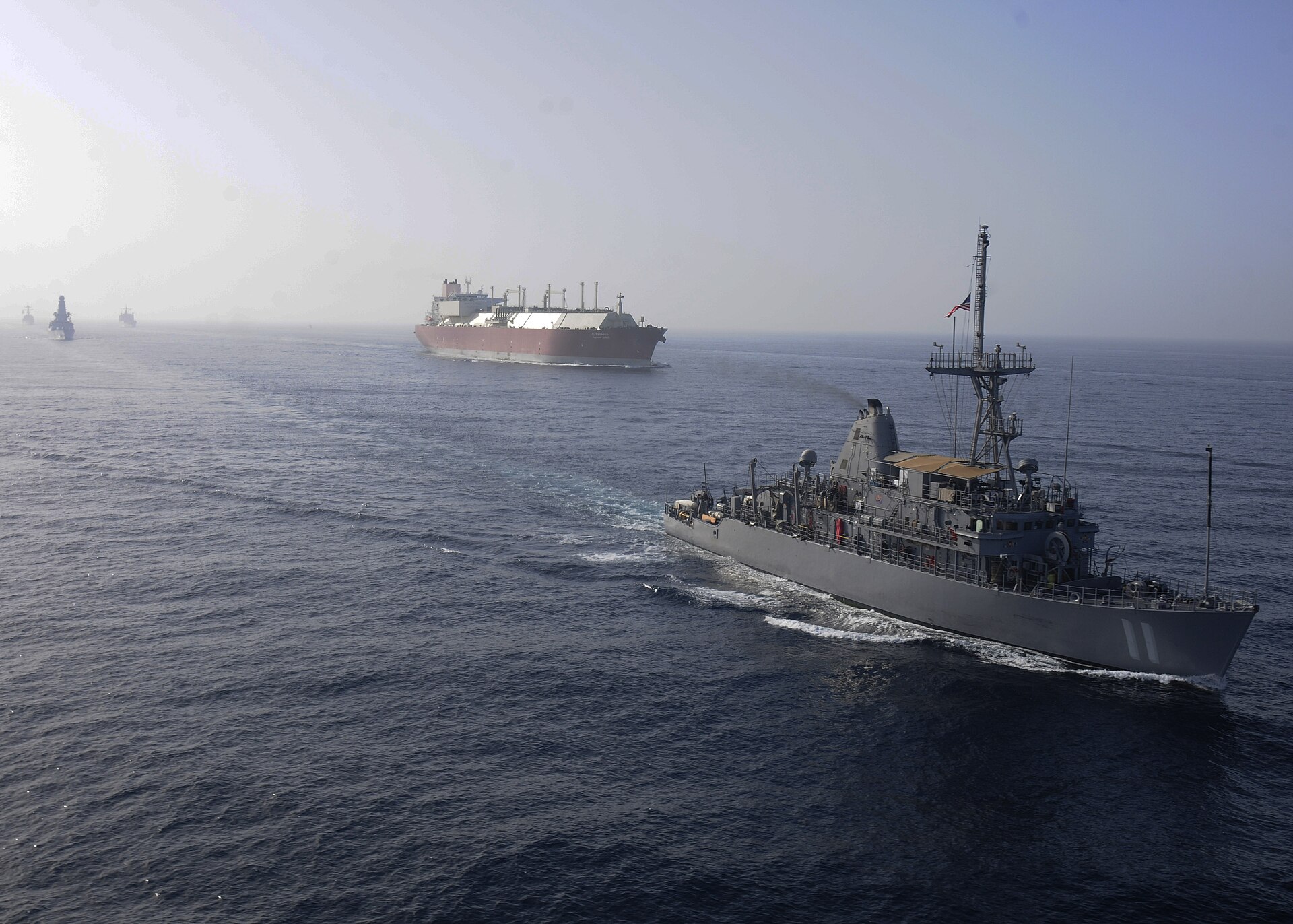
How Are Mine Claims Reshaping Insurance and Freight Costs?
The financial consequences of the mine campaign do not require independent confirmation — they arrive the moment the claim does. War-risk insurance for a single transit through the Strait of Hormuz was running at 6 to 10 percent of hull value by October 2026, according to Marsh and the Boston Report, up from approximately 0.25 percent before the conflict. A single supertanker voyage can now carry up to $20 million in war-risk insurance alone, according to the Financial Times. Before the Iran conflict, that figure would have been a rounding error on the voyage’s fuel bill.
Freight rates have surged in parallel. Aframax tanker rates hit a record $280,000 per day in October, according to Navilink Global — a figure driven by the combination of longer voyage times and the shrinking pool of vessels whose insurers will still underwrite a Gulf transit. Tankers avoiding Hormuz and rerouting via the Cape of Good Hope add 10 to 15 days per round trip, according to Dubai Cargos, which tightens the available fleet and pushes day rates higher even for ships that never enter the Gulf.
“This is not a sustainable new normal.”
Richard Meade, editor, Lloyd’s List, October 9, 2026 (USNI News)
The arithmetic is straightforward for a tanker operator calculating whether to transit Hormuz or take the long way round. A VLCC carrying 2 million barrels at $115 per barrel holds roughly $230 million worth of crude. War-risk insurance at 8 percent of a $100 million hull value adds $8 million per voyage; the Cape detour adds substantial additional fuel and charter costs. When Iran extended its tanker blockade to the Gulf of Oman on October 27, it eliminated the last route that avoided both Hormuz and the Cape, compressing every option into either a mined strait or a 15-day detour.
Oil Prices and the November 1 OPEC+ Meeting
Brent crude was trading in the $114 to $117 range on October 27 and 28, according to OilPrice.com — well above the $102.94 recorded on October 9 by CNBC, and reflecting the steady tightening of supply through a waterway that handled roughly one-fifth of global oil trade before the conflict. Each new IRGC mine claim feeds the same dynamic: restricted passage, fewer cargoes, and spot prices that climb on scarcity rather than demand.
OPEC+ meets on November 1 with Saudi Arabia’s quota set at 10.5 million barrels per day, according to OPEC’s October 4 press release. That number bears almost no relation to the kingdom’s actual export capacity. The IEA estimated Saudi crude supply at 5.97 million barrels per day in August, according to its September 11 report, and output has not recovered since — not because Saudi Arabia lacks the reserves, but because the export infrastructure through Hormuz is functionally closed and Houthi strikes have targeted the alternative pipeline route to the Red Sea.
The gap between quota and capacity creates a second-order problem for the cartel. If OPEC+ formally acknowledges that Saudi Arabia and other Gulf producers cannot deliver their quotas, it invites non-Gulf members — or non-OPEC producers such as the United States, Brazil, and Guyana — to fill the gap, eroding the market share that Saudi Arabia has spent decades defending. If it does not acknowledge the shortfall, the quota becomes a fiction that traders and hedge funds will arbitrage against, adding volatility to an already fragile market.
Three alleged mine strikes on October 29 sharpen that dilemma. Saudi Arabia cannot pump to quota when its tankers cannot sail, and the physical constraint is now harder to dress up in the language of “voluntary adjustments” that OPEC+ has relied on for months.
October’s Mine-Warfare Escalation
The October 29 claim does not stand alone. IRGC mine-warfare statements have arrived at an accelerating pace throughout the month, each one raising the stakes and none confirmed by Western maritime authorities. The following timeline, drawn from IRGC and Iranian military statements reported by international media, shows the pattern.
| Date | IRGC/Iranian Claim | Source |
|---|---|---|
| Oct 14 | Cargo ship reportedly sank after hitting a sea mine in Hormuz | Multiple sources (unconfirmed) |
| Oct 17-18 | Two supertankers caught fire after striking mines | Al Jazeera, Oct 18 |
| Oct 22 | Four tankers caught fire in western Hormuz | Kurdistan24, Oct 22 |
| Oct 24 | Two tankers struck mines in Hormuz | Africanews, Oct 24 |
| Oct 27 | One tanker hit mines east of Hormuz | Middle East Monitor, Oct 27 |
| Oct 29 | Three tankers hit mines on southern route | Arab News, Saudi Gazette, Xinhua, Oct 29 |
That tally amounts to at least 13 tankers allegedly struck by mines in two weeks, according to IRGC and Iranian military statements — a rate of nearly one per day, embedded within the broader pattern of at least 28 Hormuz-area attacks of all types that Lloyd’s List Intelligence had already documented by October 22. The consistent element across every mine incident is that the IRGC provides no identifying details — no ship names, no flag states, no photographs of damage — while UKMTO and CENTCOM either cannot confirm the claims or directly dispute them.
The pattern serves a strategic purpose regardless of its accuracy. Each unconfirmed claim adds a line to the risk calculus of every shipowner, insurer, and crude trader operating in the Gulf. A tanker operator does not need to know whether the IRGC’s October 29 statement is true to decide that $8 million in war-risk premiums and 15 extra days around the Cape of Good Hope are cheaper than the alternative. That is the leverage Iran extracts from a mine that may or may not exist — and with Brent above $114 and OPEC+ convening in 72 hours, the cost of that ambiguity is priced into every barrel leaving the Middle East.
Frequently Asked Questions
Have any crew members been rescued or reported injured?
UKMTO Warning 185-26 stated the crew’s status as “unknown” and advised vessels in the area to exercise caution. No search-and-rescue operation has been publicly announced by any naval authority as of October 29, and the IRGC’s statement said only that the vessels were “abandoned on the southern shores” of the strait without providing personnel details.
What is the “southern route” the IRGC calls unauthorised?
The southern traffic-separation scheme runs along the coast of Oman’s Musandam Peninsula and is the primary lane international shipping has used for decades. CENTCOM has been directing commercial vessels to use this route, while the IRGC classifies it as falling within Iran’s declared exclusion zone. Under the UN Convention on the Law of the Sea, transit passage through international straits such as Hormuz cannot legally be suspended by a bordering state.
Has Iran mined the Strait of Hormuz before?
During the 1980-1988 Iran-Iraq War, Iran laid mines across Gulf shipping lanes that struck several commercial tankers and the US guided-missile frigate USS Samuel B. Roberts in April 1988, triggering Operation Praying Mantis — the largest US naval surface engagement since the Second World War. Iran is assessed to maintain one of the largest mine inventories in the Middle East, including moored contact, bottom-influence, and limpet variants.
What happens to a tanker’s insurance if a mine claim is verified?
The London insurance market’s Joint War Committee has listed the Persian Gulf as a high-risk zone since early 2026, meaning standard hull policies exclude war-related losses. Owners must purchase separate war-risk cover, typically through Lloyd’s syndicates, at rates that have now reached 6 to 10 percent of hull value per transit. If an independent authority confirms a mine detonation, underwriters would likely revise premiums upward or withdraw cover for the route entirely.
The House of Saud Daily Briefing
Saudi Arabia's news in 3 minutes, every morning. Free. See today's issue