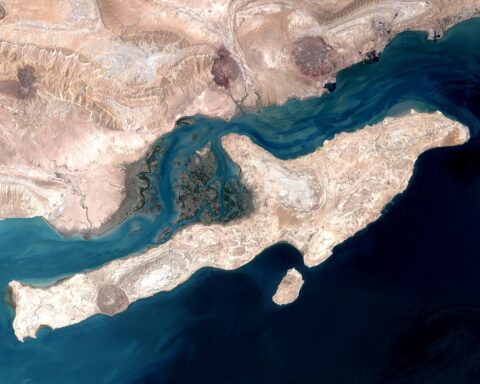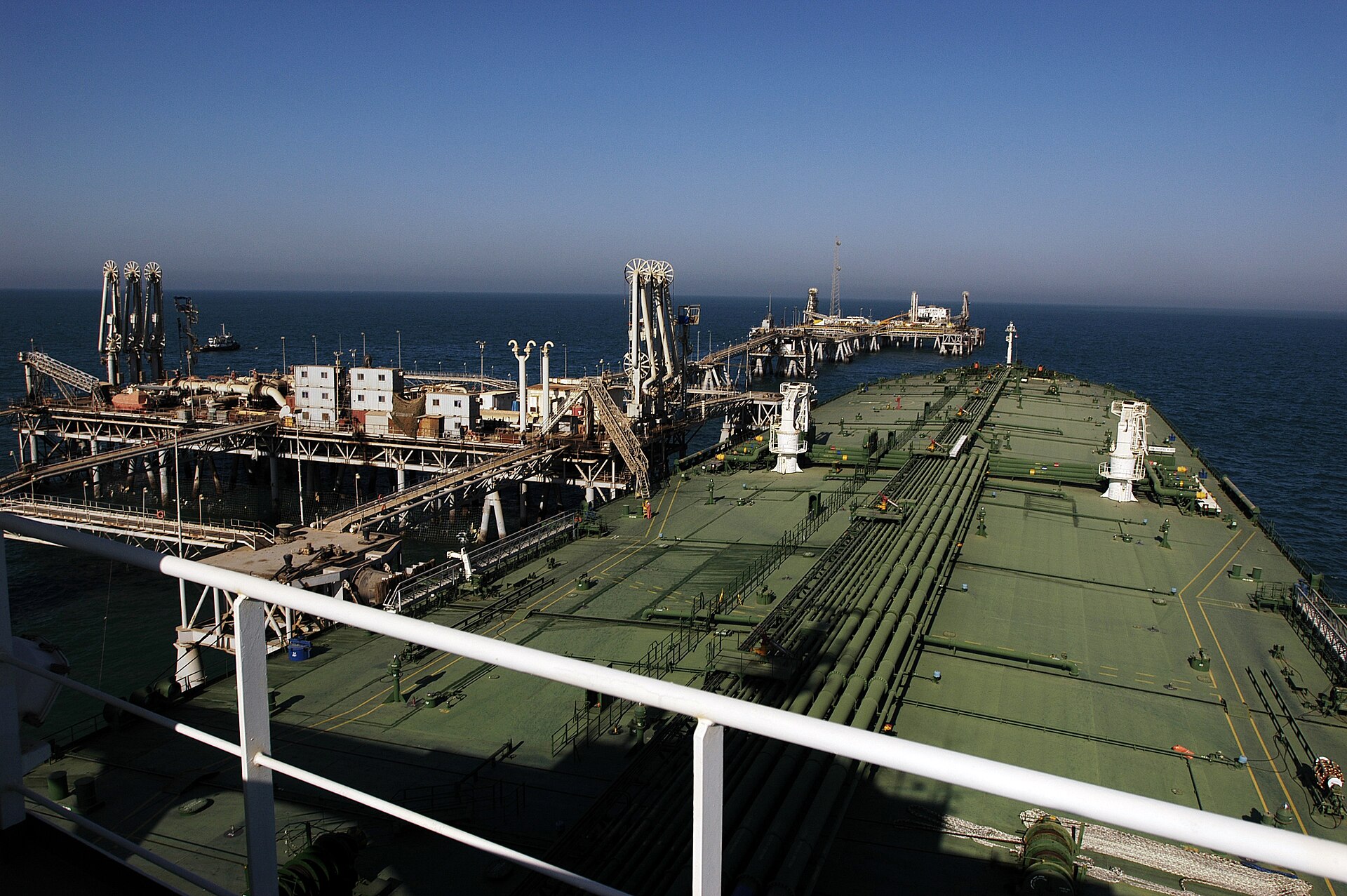

WASHINGTON — At 12:01 a.m. EDT on April 19, the most permissive sanctions waiver ever issued for Iranian crude oil ceases to exist, and the market that spent Thursday celebrating $90 Brent as though the war were winding down has not yet reckoned with what that means. OFAC General License U — a 30-day authorization that allowed anyone, including sanctioned shadow-fleet vessels, to offload up to 140 million barrels of Iranian oil with no reporting requirements, no escrow, no price cap, and no payment-channel restrictions — expires with no renewal, no extension, and no replacement mechanism. Treasury Secretary Scott Bessent confirmed the non-renewal on April 15-16. On April 18, his department quietly extended Russia’s equivalent waiver (GL 134A) for another 30 days. Iran was carved out. That asymmetry is the coercive architecture that $90 Brent has not priced. The same day GL U expired, Secretary Rubio placed a call to Saudi Foreign Minister Faisal — covering Hormuz, Lebanon ceasefire consolidation, and the four-crisis convergence hitting Riyadh simultaneously, but containing no language on the Iran nuclear track. That silence — and what it means for Saudi Arabia’s 123 Agreement window — is the subject of Iran’s Nuclear Clock and Saudi Arabia’s Closing Window.
n
n
n
n
The Middle East briefing 3,000+ readers start their day with.
One email. Every weekday morning. Free.
Table of Contents
n
n
n
- n
- What GL U Actually Authorized — and Why It Was Unprecedented
- Why Did Russia Get 30 More Days and Iran Got Nothing?
- The India Settlement: Yuan, Not Rupees, Under an American License
- How Much Iranian Oil Will China Actually Stop Buying?
- The $90 Brent Double Fiction
- What Does GL U Expiry Mean for Saudi Arabia’s Fiscal Position?
- Operation Economic Fury and the Secondary Sanctions Cliff
- The Revenue Math Iran Loses at Midnight
- What Replaces GL U? Nothing.
n
- n
n
n
n
n
n
n
n
n
n
n
n
n
n
n
n
n
n
n
n
n
n
n
n
n
n
n
n
n
n
n
n
n
n
n
What GL U Actually Authorized — and Why It Was Unprecedented
n
n
n
General License U, issued by OFAC on March 20, 2026, was not a targeted waiver or a narrow exemption of the kind Treasury has issued for decades to manage the plumbing of Iran sanctions. Baker McKenzie’s Global Sanctions Blog called it “exceptional” — “the first broad OFAC authorization for Iranian crude transactions” — and the characterization was, if anything, understated. The license authorized all transactions “ordinarily incident and necessary to the sale, delivery, or offloading” of Iranian-origin crude oil loaded on vessels on or before March 20, covering not just the sale itself but bunkering, crewing, vessel management, insurance, classification, salvage, and port services. It covered vessels already sanctioned under shadow-fleet designations. It even authorized U.S. entities to import Iranian crude where necessary to complete authorized transactions — a provision that would have been unthinkable under any prior Iran sanctions architecture, and one that Baker McKenzie flagged as extraordinary given decades of comprehensive trade prohibition.
n
n
n
The Foundation for Defense of Democracies published its assessment within 24 hours of issuance, noting that GL U “does not include any detailed reporting requirements on how the general license is utilized on either the buy- or sell-side of relevant transactions.” Bessent’s own framing on March 20 described it as a “narrowly tailored, short-term authorization permitting the sale of Iranian oil currently stranded at sea,” but the operational reality was anything but narrow: the license applied to roughly 140 million barrels by the administration’s own estimate (Goldman Sachs independently assessed 105 million barrels, a 35-million-barrel gap between government and independent accounting that no one has reconciled), and it imposed zero guardrails on payment routing, pricing, or end-user verification.
n
n
n
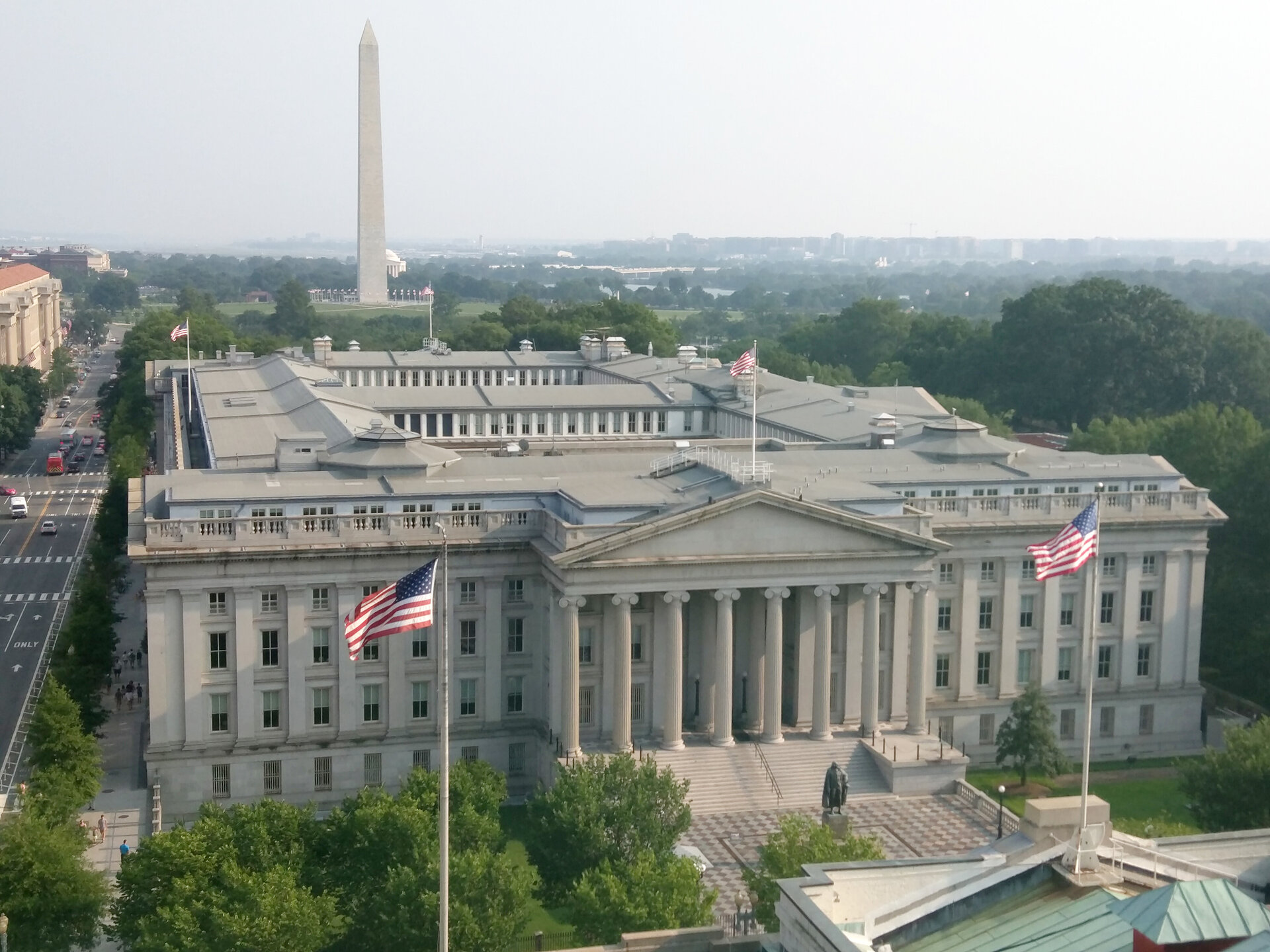
To understand how unusual this was, consider the historical alternative. Previous Iran oil waivers operated through the SRE (Significant Reduction Exemption) mechanism, which required the Secretary of State to certify that a specific country had “significantly reduced” its Iranian crude purchases before granting a country-level waiver. The process was bilateral, conditional, and subject to congressional oversight. GL U operated purely under Treasury’s discretionary authority, with no congressional mandate, no country-level conditionality, and — critically — no statutory basis requiring renewal. It was born as a 30-day instrument. It dies as one.
n
n
n
n
n
n
Why Did Russia Get 30 More Days and Iran Got Nothing?
n
n
n
On April 15-16, Bessent told Bloomberg and other outlets: “We will not be renewing the general license on Russian oil, and we will not be renewing the general license on Iranian oil.” The statement was unambiguous, covering both waivers in the same breath and with the same verb — “will not.” Russia’s equivalent license, GL 134A, had already expired on April 11. Iran’s GL U expires April 19. Both were, by the Treasury Secretary’s public statement, dead instruments.
n
n
n
Except on April 18 — one day before GL U’s expiry — Treasury quietly extended Russia’s oil waiver for another 30 days, according to AP reporting. Iran’s GL U received no extension, no modification, and no replacement. The asymmetry could not be sharper: the same Treasury Secretary who said “we will not be renewing” the Russian license renewed it within 48 hours, while the Iranian license he described in the same sentence proceeds to its hard cliff on schedule. If GL U were genuinely an energy-market management tool — a technical instrument to clear at-sea inventory and normalize crude flows — there would be no reason to treat the two waivers differently. Both covered oil already loaded and in transit. Both addressed shadow-fleet compliance gaps. Both expired within days of each other.
n
n
n
The differential treatment reveals GL U’s actual function: it was a coercive instrument from inception, a 30-day window that gave Iran’s customers just enough legal cover to offload existing inventory while simultaneously creating a hard deadline that could be weaponized — and has been. Russia’s extension signals that Moscow’s oil revenues remain, for now, tolerable to Washington’s strategic calculus. Iran’s non-extension signals the opposite. Roxanna Vigil, a former senior OFAC sanctions policy advisor now at the Council on Foreign Relations, identified the structural problem weeks ago: “The waivers have turned Iran and Russia from price-takers into price-setters and left global prices higher than before.” What she described was the paradox of a sanctions architecture that simultaneously punishes and enables — and the Russia-Iran asymmetry is its purest expression.
n
n
n
The India Settlement: Yuan, Not Rupees, Under an American License
n
n
n
The most consequential detail of GL U’s 30-day life may not be the barrels that moved but the currency they moved in. Indian Oil Corporation purchased 2 million barrels of Iranian crude aboard the VLCC Jaya, which discharged at Paradip. Reliance Industries also imported cargoes. Both transactions were legal under GL U. Both settled in Chinese yuan via ICICI Bank’s Shanghai branch — not in rupees, and not through UCO Bank, the state-owned Indian bank that historically handled India-Iran oil payments through a dedicated rupee-rial mechanism.
n
n
n
That mechanism — UCO Bank’s rupee-rial settlement channel — was the backbone of India’s Iran oil trade during the 2018-2019 sanctions period, handling roughly 45% of Iranian oil payment routing entirely outside the dollar system. It was clunky, slow, and limited, but it was deliberately structured to avoid both dollar exposure and yuan dependency. In 2026, under a U.S.-authorized license that removed the legal risk of dollar-system sanctions, Indian refiners chose to settle in yuan through a Chinese bank branch anyway. The structural implication is difficult to overstate: a U.S. sanctions waiver designed to normalize Iranian crude flows instead embedded the yuan at the center of India’s Iran trade architecture, creating a payment pathway that will outlast GL U itself and that has no reason to revert to rupees or dollars when the next waiver — if there is one — arrives.
n
n
n
n
n
The waivers have turned Iran and Russia from price-takers into price-setters and left global prices higher than before.
n
n
n
— Roxanna Vigil, International Affairs Fellow / former OFAC senior sanctions policy advisor, Council on Foreign Relationsn
n
n
n
n
n
Reuters reported that IOC paid approximately 95% of cargo value against the supplier’s “notice of readiness” — effectively a pre-delivery prepayment that sources described as “an unusual arrangement.” Under normal commercial terms, crude cargoes are settled after discharge, with letters of credit or trade-finance instruments bridging the gap. The 95% pre-payment structure suggests that even with GL U’s legal cover, arranging standard Iranian oil payment terms was so difficult — whether due to counterparty reluctance, banking compliance friction, or insurance complications — that the buyer accepted terms that shifted nearly all commercial risk onto its own balance sheet before the oil physically arrived. IOC subsequently told Bloomberg it does not plan further Iranian crude purchases, a statement that reads less like a policy decision and more like a description of how painful the first transaction turned out to be.
n
n
n
Reliance, for its part, sought Indian government approval to berth four tankers — the Kaviz, Lenore, Felicity, and Hedy — before the April 19 deadline, but rejected at least two cargoes (the Derya and the Lenore) citing “compliance requirements.” The rejections are telling: even India’s largest private refiner, with a compliance department sophisticated enough to navigate GL U’s broad authorization, found specific cargoes that failed its internal risk thresholds. Reliance’s public statement on the Derya — “RIL did not buy cargo in tanker Derya as it did not meet with the company’s compliance requirements” — is the corporate equivalent of a fire alarm pulled in a building whose landlord insists is perfectly safe.
n
n
n
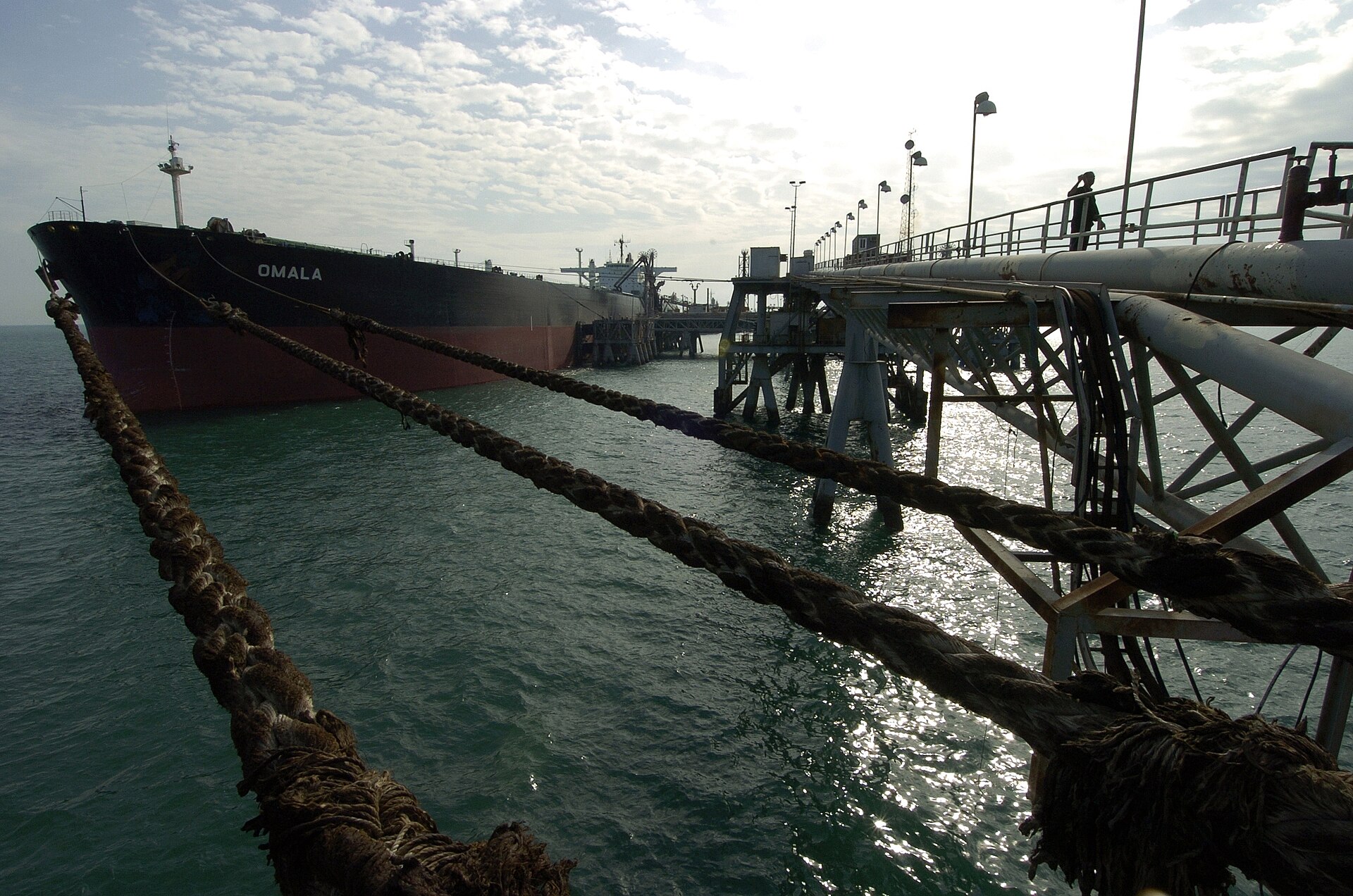
That institutional reluctance set the context for what followed. When India’s NSA Ajit Doval landed in Riyadh on April 19 — the same morning GL U expired — meeting three Saudi ministers in a single visit that covered energy, security, and bilateral trade, the pivot was structural, not symbolic. New Delhi was formalising the supply relationship that would replace the Iranian window Washington had opened and then closed.
n
n
n
n
n
n
How Much Iranian Oil Will China Actually Stop Buying?
n
n
n
The answer depends on which China you mean. Sinopec, Asia’s largest refiner and the closest thing China’s oil sector has to a state-directed institution, publicly declared it “basically won’t buy” Iranian crude even under GL U’s legal cover — a statement that is simultaneously a compliance signal to Washington and a competitive positioning move against smaller rivals who lack Sinopec’s ability to absorb sanctions risk. The major Chinese state refiners have largely followed suit, at least publicly, since Operation Economic Fury’s secondary sanctions letters landed on Chinese bank desks in mid-April.
n
n
n
Sinopec’s public exit from Iranian crude purchases did not preclude Beijing from pursuing a separate diplomatic track. On April 20, Xi Jinping told MBS directly that Hormuz “should maintain normal passage” — using the same UNCLOS transit passage language that Washington invokes while simultaneously signalling to the Trump administration ahead of a May summit that Beijing was prepared to publicly co-sign the navigation demand.
n
n
n
But the teapot refineries of Shandong province — independent, lightly regulated, and responsible for the bulk of China’s 1.4 million barrels per day of Iranian crude imports in 2025 — are the actual market. Those volumes had already dropped to 1.13-1.20 million bpd in January-February 2026 under pre-GL U enforcement pressure. Five Shandong teapots stopped buying Iranian crude entirely in April, according to Al Jazeera, “for fear of being next” on the sanctions designation list. The question is whether that fear survives GL U’s expiry and the associated loss of legal cover, or whether it dissipates once the immediate attention of Operation Economic Fury fades and the price discount on Iranian barrels (historically $6-8 below Brent) becomes too attractive for margin-starved independent refiners to resist.
n
n
n
China’s strategic petroleum reserves provide the buffer that makes this calculation less urgent than it would be for any other major importer: approximately 1.2 billion barrels, or roughly 109 days of seaborne import cover according to Al Jazeera’s assessment. GL U’s expiry tightens the future supply pipeline for Chinese refiners but does not create an immediate supply emergency. The teapots that have stopped buying can wait — and historically, they have waited out enforcement waves before, resuming purchases once Washington’s attention shifts to the next crisis. The structural question is whether Operation Economic Fury’s named-bank targeting (Treasury sent letters to two specific Chinese banks, plus UAE, Hong Kong, and Omani financial institutions) represents a durable enforcement architecture or a pre-midterm political gesture that the teapots can outlast.
n
n
n
n
| Metric | Figure | Source |
|---|---|---|
| 2025 average imports | 1.4M bpd | OilPrice.com |
| Jan-Feb 2026 imports | 1.13-1.20M bpd | Al Jazeera |
| Sinopec position | “Basically won’t buy” | OilPrice.com |
| Shandong teapots stopped (April) | 5 refineries | Al Jazeera |
| Chinese SPR buffer | ~1.2B barrels (~109 days) | Al Jazeera |
n
n
n
n
n
The $90 Brent Double Fiction
n
n
n
Brent crude settled at $90.38 on April 17, with WTI below $84, after an intraday slide that took Brent as low as $86.52 — a drop of 9-11% that traders and headline writers attributed to Iran’s “Hormuz open” declaration. The declaration, made as part of the Islamabad ceasefire framework, was a conditional, 10-day diplomatic gesture: Iran signaled willingness to reopen normal Strait of Hormuz transit for a limited period, contingent on ceasefire terms that remain disputed and that the IRGC — which controls the actual naval assets in the Strait — has not independently endorsed. Actual tanker traffic through Hormuz on the day of the declaration remained at approximately 5-6 cargo ships and a single crude tanker, according to vessel-tracking data. The gap between the price signal and the physical reality was as wide as it has been at any point in the war.
n
n
n
But the Hormuz fiction is only half the mispricing. The $90 Brent figure also implicitly assumes that GL U’s expiry is either already priced (because the at-sea inventory has largely cleared) or irrelevant (because the license was a one-time cleanup mechanism that the market had already moved past). Both assumptions are wrong. The 140 million barrels authorized under GL U — or 105 million by Goldman’s lower estimate — have not fully cleared. Vessels are still at sea, and the April 19 deadline creates a hard legal cliff for any transaction not yet completed: after midnight EDT, the insurance, crewing, bunkering, and port services required to offload those barrels lose their legal authorization, and any entity providing them faces sanctions exposure. Cargoes that are mid-transit, mid-discharge, or mid-payment at the moment of expiry enter a legal grey zone that GL U’s text does not address, because GL U was written as a 30-day instrument and contains no wind-down provision.
n
n
n
The double fiction, then, is this: $90 Brent is priced on a conditional Hormuz declaration that has not changed physical tanker flows AND on the assumption that GL U’s expiry removes zero barrels from the accessible market. When the license expires in hours and the remaining at-sea inventory becomes legally untouchable for any buyer with dollar-system exposure, the supply picture tightens in ways that the April 17 price does not reflect. The traders who sold Brent to $90 were pricing a ceasefire and a legal regime that, by tomorrow morning, no longer exists.
n
n
n
n
n
n
What Does GL U Expiry Mean for Saudi Arabia’s Fiscal Position?
n
n
n
Every dollar off Brent compounds a fiscal problem that was already existential before GL U existed. Saudi Arabia’s March production fell to 7.25 million bpd — a 30% drop from February’s 10.4 million bpd, the largest single-month production collapse in the kingdom’s modern history. The IEA called it “the largest disruption on record.” At $90 Brent, the kingdom is producing at war-reduced volumes and selling at a price that sits $18-21 below its PIF-inclusive fiscal break-even of $108-111 per barrel (Bloomberg Economics), and $6 below even the IMF’s more conservative $96 estimate. Goldman Sachs has already assessed the war-adjusted fiscal deficit at 6.6% of GDP — roughly $80-90 billion implied — against an official projection of 3.3%. Critically, these fiscal models are built on ICE Brent futures at $99, not on Dated Brent physical crude, which hit $148.87 on April 13 — a $49 spread that rewrites the entire break-even arithmetic depending on which price actually governs Aramco’s term contracts. What the fiscal models cannot capture is that Saudi Arabia’s Vision 2030 spending commitments were already being cut before the war — PIF’s domestic pivot, The Line suspension, and $41 billion in construction pullbacks all predate February 2026.
As Brent crossed $101.91 on April 22 — still $13 below the price needed to match pre-war daily revenue at current output — the full revenue arithmetic is examined in Saudi Oil Revenue Falls $93 Million a Day Below Pre-War Baseline Despite Brent Crossing $101.
n
n
n
GL U’s expiry, in isolation, should be bullish for Brent: it removes legal cover for the remaining at-sea Iranian supply and tightens the enforcement environment around Iran’s remaining export channels. A tighter Iranian supply picture, all else equal, pushes crude prices higher and benefits Saudi Arabia’s fiscal position. But the timing is perverse. GL U expires on the same night that the market has just priced a 9-11% Brent collapse based on the Hormuz declaration — meaning the supply-tightening signal of GL U’s death arrives into a market that has already decided the war premium is shrinking, not growing. The two signals cancel each other in the headline price, and Saudi fiscal arithmetic absorbs the net result.
n
n
n
Mohammed bin Salman’s exposure is compounded by the Aramco May OSP, which was set at a war-premium of +$19.50/bbl above benchmark at a time when Brent was above $109. With Brent now at $90, Asian buyers with term contracts are paying a premium set for a $109 market into a $90 market, creating a pricing dislocation that will force a sharp June OSP correction and that has already triggered buyer resistance across the Asian refining complex. The kingdom simultaneously loses on volume (7.25M bpd vs. pre-war levels), on price ($90 vs. $108-111 break-even), and on forward contract structure (May OSP misaligned by roughly $17). GL U’s expiry adds a fourth variable: the extent to which Iranian barrels removed from legal circulation redirect Asian buyers toward Saudi supply at a moment when Saudi supply is already constrained by war damage. With the ceasefire expiring April 22, Saudi Arabia now faces these fiscal pressures as one of three simultaneous exposure clocks converging on the same deadline.
n
n
n
n
| Metric | Figure | Source |
|---|---|---|
| March production | 7.25M bpd | IEA |
| February production | 10.4M bpd | IEA |
| Production drop | -30% (3.15M bpd) | IEA |
| PIF-inclusive break-even | $108-111/bbl | Bloomberg Economics |
| IMF break-even | ~$96/bbl | IMF |
| Current Brent | $90.38/bbl | CNBC, April 17 |
| Break-even gap | -$18 to -$21/bbl | Calculated |
| Goldman war-adjusted deficit | 6.6% GDP (~$80-90B) | Goldman Sachs |
| May OSP dislocation | ~$17 underwater | Bloomberg/Aramco |
| Asia exports decline | -38.6% | Kpler |
n
n
n
n
n
Operation Economic Fury and the Secondary Sanctions Cliff
n
n
n
GL U’s expiry does not arrive in a vacuum. It lands 48-72 hours after Treasury launched Operation Economic Fury — announced April 14-16 via press release SB0443 — which targeted the Shamkhani family oil network and, more consequentially, sent secondary sanctions warning letters to two named Chinese banks, plus financial institutions in the UAE, Hong Kong, and Oman. Bessent framed the operation as “the financial equivalent of what we saw in the kinetic activities,” a formulation that was clearly intended for the bank compliance officers who will decide, in the weeks after GL U expires, whether to continue processing payments for Iranian crude shipments that no longer have any legal cover. Those warning letters were converted from paper to physical enforcement on April 21–23, when US forces seized the sanctioned tankers Tifani and Majestic X in the Bay of Bengal and Indian Ocean — the first dark-fleet interdictions in Indo-Pacific waters under Hegseth’s declaration that the blockade is “growing and going global.”
n
n
n
n
n
If money is sitting in banks, the US is now willing to apply secondary sanctions — a very stern measure.
n
n
n
— Scott Bessent, US Treasury Secretary, WION News, April 16, 2026n
n
n
n
n
n
The sequencing matters. GL U’s 30-day window gave Iranian crude buyers a period of legal certainty — unusual, arguably unprecedented — during which transactions could be completed without sanctions risk. Operation Economic Fury’s secondary sanctions letters arrived in the final week of that window, signaling that the legal certainty was about to end and that the post-GL U enforcement environment would be materially harsher than the pre-GL U baseline. The letters to Chinese banks are the more consequential element because they target the payment infrastructure that the yuan-settlement pathway (the one Indian refiners chose under GL U) depends on: if Chinese banks with U.S. correspondent relationships restrict Iranian oil payment processing to avoid secondary sanctions, the yuan channel that IOC and Reliance pioneered under GL U becomes operationally difficult to sustain, even for teapot refineries with no direct dollar exposure.
n
n
n
Rep. George Latimer (D-NY) introduced a bipartisan bill on April 9 to nullify GL U — a move that was politically symbolic (GL U was already set to expire) but that signals the broader congressional appetite for Iran sanctions enforcement that the administration will need to navigate. The bill’s referral to both the House Foreign Affairs and Judiciary Committees suggests its sponsors see GL U not just as a foreign policy question but as a potential legal precedent: if Treasury can issue a broad, guardrail-free authorization for Iranian crude transactions by executive discretion, what limits exist on future waivers? The legislative interest in constraining that discretion will shape whatever post-GL U sanctions architecture the administration attempts to build. That architecture took its most consequential step on April 25, when Treasury designated Hengli Petrochemical — the first Fortune 500 Chinese company named under Economic Fury — alongside 40 vessels and $344 million in frozen crypto, in the largest single round of the campaign since its restart.
n
n
n
The Revenue Math Iran Loses at Midnight
n
n
n
The scale of what GL U authorized is easier to grasp in revenue terms than in barrel counts. At even a heavily discounted price — say $75-80 per barrel against the $90+ Brent benchmark, reflecting the shadow-fleet discount that Iranian crude typically carries — 140 million barrels represents $10.5-11.2 billion in gross revenue over a single 30-day window. At the Goldman Sachs estimate of 105 million barrels, the figure drops to $7.9-8.4 billion. Either way, GL U authorized a multi-billion-dollar, single-month revenue injection into an economy whose central bank has acknowledged 180% inflation and whose president has warned of economic “collapse in 3-4 weeks” — and it did so without a single reporting requirement, escrow mechanism, or payment-channel restriction that would have allowed the U.S. government to track where the money went.
n
n
n
That revenue calculus has a direct diplomatic corollary: the $20 billion in frozen Iranian assets under discussion as part of the current nuclear framework would represent a comparable single-shot injection into the same economy — and Washington’s readiness to pay that price to neutralize Iran’s HEU stockpile without a permanent enrichment ban is precisely what makes the US-Saudi 123 Agreement structurally untenable.
That framework is not being shaped in Washington alone. On April 24, China, Russia, and Iran held their third trilateral meeting with IAEA Director General Grossi in Vienna — timed two days before the next Muscat round — in a coordinated effort by Beijing and Moscow to pre-write nuclear terms before the US-Iran bilateral can close. The full dynamics of China and Russia’s coordinated IAEA strategy represent a structural constraint on Washington’s ability to deliver a deal on its own terms.
n
n
n
Iran’s total military budget is approximately $12.4 billion per year, funded substantially from oil revenue. A single month of GL U-authorized sales, at the administration’s own barrel estimate, would represent $10.5-11.2 billion in gross revenue — roughly 85-90% of that annual military budget in a single licensing window, with no mechanism for the U.S. government to verify whether any of it flowed toward the IRGC’s operational costs in the active war theater. The FDD’s characterization of GL U as “funding the enemy” was published on the day of issuance; the revenue math, now that the 30-day window is closing, vindicates the warning with uncomfortable precision.
n
n
n
What Iran loses at midnight is not just the revenue stream but the legal framework that made the revenue possible at above-shadow-market prices. Under GL U, Iranian crude could be sold through standard commercial channels with standard insurance, standard port services, and standard payment processing, which meant it commanded prices closer to benchmark than the $6-8 discount that shadow-fleet sales typically carry. Post-GL U, any Iranian crude still moving will revert to the shadow infrastructure: ship-to-ship transfers, AIS-dark transit, sanctioned intermediary chains, and the full compliance risk premium that kept Iranian crude at a discount for years before March 20. The margin compression alone — the return from GL U-era near-benchmark pricing to shadow-fleet discount pricing — represents a revenue loss of $630-1,120 million per month on remaining volumes, before any volume reduction from enforcement pressure.
n
n
n
What Replaces GL U? Nothing.
n
n
n
GL U has no successor instrument, no wind-down provision, and no statutory mechanism that requires Treasury to issue a replacement. The SRE framework that governed previous Iran oil waivers requires State Department action and country-level certification; Treasury has not initiated that process. The JCPOA’s sanctions relief provisions are irrelevant because the U.S. withdrew from the deal in 2018 and has not rejoined. The snap-back mechanism was triggered by the E3 in August 2025 and reimposed UN sanctions in September-October 2025, meaning the multilateral sanctions architecture is already at maximum pressure and cannot be further tightened through that channel. What remains after GL U expires is the pre-March 20 status quo: comprehensive U.S. sanctions on Iranian crude oil, enforced through OFAC’s designation authority, with secondary sanctions exposure for any non-U.S. entity that facilitates Iranian oil transactions. The collapse of every multilateral enforcement mechanism is the subject of the 2026 NPT Review Conference analysis opening today in New York: the snap-back is permanently spent, IAEA access is terminated, and UNSC referral is vetoed â three tools the treaty provided, all exhausted in sequence.
n
n
n
The Atlantic Council’s Maia Nikoladze and Daniel Fried published their assessment on April 8 — “Sanctions waivers on Russian and Iranian oil are set to expire. Here’s what Trump should do next” — and the institutional framing of that headline reveals the policy vacuum: the think-tank class is already asking what comes next, and the administration has not answered. Bessent’s Operation Economic Fury is an enforcement action, not a policy framework. The secondary sanctions letters to Chinese banks are a threat, not an architecture. And the Russia-Iran asymmetry — extending Moscow’s waiver while killing Tehran’s — is a signal, not a strategy. The market, the banks, and the refiners who must decide in the coming days and weeks whether to process, finance, or insure Iranian crude transactions have no forward guidance beyond “GL U is dead and we are watching.”
n
n
n
n
n
n
Iran’s Foreign Ministry spokesperson Esmaeil Baqaei called GL U’s expiry and Operation Economic Fury “nothing short of economic terrorism and state-sponsored extortion — actions that amount to crimes against humanity.” The language is predictable from Tehran’s diplomatic playbook, but Baqaei’s framing inadvertently captures a structural truth: GL U was an instrument of economic coercion, one that gave Iran’s customers a 30-day window of legal clarity precisely so that the window’s closure would function as a hard enforcement deadline. The question that $90 Brent has not answered — and that the market will confront starting tomorrow morning — is whether the deadline is credible. If Treasury enforces the post-GL U environment with the intensity that Operation Economic Fury promises, Iranian crude volumes will contract, shadow-fleet discounts will widen, and the supply tightening will eventually push Brent back above Saudi Arabia’s fiscal survival threshold. If enforcement fades — as it has after every previous Iran sanctions escalation since 2012 — then GL U will be remembered as a 30-day experiment in which the United States legally authorized the sale of its adversary’s oil, took no cut, imposed no conditions, embedded the yuan at the center of a major ally’s Iran trade architecture, and then closed the window with a press release.
n
n
n
Frequently Asked Questions
n
n
n
What happens to Iranian oil tankers still at sea when GL U expires?
n
n
n
Vessels carrying Iranian crude that have not completed offloading by 12:01 a.m. EDT April 19 lose their legal authorization for all ancillary services — including insurance, bunkering, port access, and crew management. GL U contains no wind-down clause or grace period. In practice, this means tankers mid-transit may face port refusals if destination terminals determine that accepting the cargo would constitute a sanctions violation. Lloyd’s of London and other P&I clubs will reassess coverage on an individual basis, and vessels that were operating under GL U’s explicit authorization of sanctioned shadow-fleet ships revert to their underlying sanctioned status immediately. Maritime lawyers expect a 72-96 hour period of acute legal uncertainty as compliance departments at ports, banks, and insurers make real-time determinations on mid-transit cargoes.
n
n
n
Could Treasury reissue GL U or a similar license after the April 19 expiry?
n
n
n
Legally, yes — OFAC has discretionary authority to issue general licenses without congressional approval or advance notice, and Treasury could issue a GL U-2 at any time. Politically, however, the Latimer bill (introduced April 9, bipartisan, referred to two committees) signals that congressional tolerance for broad Iran oil waivers is exhausted, and Bessent’s public non-renewal statement creates a credibility problem: reissuing a license he said would not be renewed would undermine the secondary sanctions threats that Operation Economic Fury depends on. The Russia asymmetry compounds this — Treasury extended Russia’s waiver despite the same non-renewal statement, which means Bessent has already used his credibility on one reversal and would be spending it again on a second.
n
n
n
Why did Indian refiners settle in yuan instead of using the UCO Bank rupee-rial channel?
n
n
n
UCO Bank’s rupee-rial settlement mechanism, which handled roughly 45% of India-Iran oil payments during the 2018-2019 sanctions period, was designed for a specific regulatory environment in which dollar-system exposure was the primary risk and rupee settlement offered a compliant alternative. In 2026, the yuan channel via ICICI Bank’s Shanghai branch offered two advantages UCO Bank could not match: faster settlement (Chinese correspondent banks process yuan transactions within 24-48 hours, compared to UCO Bank’s historically multi-week clearing cycle) and access to a deeper liquidity pool tied to the Chinese financial institutions that already dominate Iranian trade finance through Kunlun Bank and other channels. The shift also reflects Reliance and IOC’s commercial judgment that yuan settlement would face less post-GL U scrutiny than rupee settlement, given that India’s Reserve Bank has maintained a stricter compliance posture toward Iran-linked transactions than China’s PBOC.
n
n
n
What is the difference between GL U and the SRE waivers that existed under Obama and Trump’s first term?
n
n
n
SRE (Significant Reduction Exemption) waivers were country-specific, required Secretary of State certification that the recipient country had meaningfully reduced Iranian oil imports, and were issued under statutory authority (Section 1245 of the 2012 NDAA) that imposed congressional reporting requirements. GL U was transaction-specific, not country-specific — any entity worldwide could use it — and was issued solely under Treasury/OFAC’s regulatory discretion with no congressional mandate, no certification requirement, and no reporting obligations. SRE waivers typically ran for 180-day periods with explicit renewal mechanisms; GL U’s 30-day term with no renewal provision was deliberately designed to expire as a coercive deadline, not to provide ongoing market stability.
n
n
n
How does the Russia GL 134A extension affect oil market pricing?
n
n
n
Russia’s 30-day extension preserves the legal framework for approximately 3.5-4.2 million bpd of Russian crude exports that transit through sanction-affected channels (primarily Urals-grade crude shipped through the Baltic and Black Sea on shadow-fleet tankers). Without the extension, those barrels would have faced the same insurance, port-service, and payment-processing cliff that Iranian crude faces after GL U expires, potentially removing 3-4% of global supply from legally accessible channels simultaneously. By extending Russia’s waiver while killing Iran’s, Treasury avoided a double supply shock that would have sent Brent well above $100 and into Saudi Arabia’s fiscal comfort zone — instead creating a targeted supply squeeze on Iran alone that tightens one source of global crude while leaving the larger Russian flow intact. The pricing implication is that the post-GL U Brent equilibrium will reflect Iranian supply removal partially offset by continued Russian flow, landing somewhere between the $90 post-Hormuz level and the $109+ pre-declaration peak.
n
n
n
Korea’s experience under the same GL U framework mirrors the Indian exposure: Seoul’s 273 million barrel bypass package is 91 per cent Saudi crude rerouted through Yanbu, meaning GL U’s expiry does not resolve Korea’s Hormuz dependency — it merely reclassifies the routing while the underlying Saudi concentration risk remains unchanged. GL U’s expiry on April 19 coincided with a direct escalation the day before: the IRGC fired on Indian-flagged vessels in the strait — the VLCC Sanmar Herald and bulk carrier Jag Arnav — that were operating under IRGC-issued clearances, raising the compliance and operational risk calculus for every Indian refiner still moving Iranian crude through Hormuz.
n
n
n
With GL U expired and Brent climbing to $99.36 on IRGC tanker fire, the arithmetic of the $99 Brent fiscal paradox for Saudi Arabia shows that even a substantial price recovery cannot offset the 3.15 million bpd production deficit while the Yanbu loading ceiling holds.
n
That deficit compounds as of today: JPMorganshows that even a substantial price recovery cannot offset the 3.15 million bpd production deficit while the Yanbu loading ceiling holds.
n
#8217;s April 20 supply exhaustion date marks the moment when pre-blockade Hormuz crude physically clears the last refinery shows that even a substantial price recovery cannot offset the 3.15 million bpd production deficit while the Yanbu loading ceiling holds.
n
#8212; arriving simultaneously with GL Ushows that even a substantial price recovery cannot offset the 3.15 million bpd production deficit while the Yanbu loading ceiling holds.
n
#8217;s expiry to remove both the legal access pathway and the physical inventory buffer that have cushioned import-dependent economies since February 28.
n
The structural fiscal trap — why even a ceasefire and partial price recovery at $97 Brent cannot close Saudi Arabia’s $11–14 break-even gap — is examined in detail in The Peace Dividend Saudi Arabia Cannot Collect, which sets out the Morgan Stanley October production timeline and the Yanbu loading ceiling that mean the kingdom’s fiscal shortfall persists regardless of what happens at the negotiating table.
n
Trump’s own framing of oil at $200 without the ceasefire reveals which side of the price-suppression bargain America is on: the full arithmetic of who captures that $105-per-barrel surplus is laid out in Trump’s $200 Oil and the War America Considers Cheap.
n
The price-volume paradox this sanctions architecture creates for Aramco’s Q1 2026 earnings — where higher Brent inflates company profit even as reduced throughput hollows out state revenue — is analyzed in Aramco’s Q1 2026 War-Price Paradox: 57% Profit Surge, 30% Production Loss, and the IPO Architecture That Separates Them.
The first vessel seizure to follow GL U expiry in open ocean was the Majestic X on April 23 — the second VLCC seized by US forces in Indian Ocean waters, carrying two million barrels of Iranian crude bound for Zhoushan, stopped 2,000 miles from Hormuz and confirming that the post-GL U enforcement window extends well beyond the blockade zone.
The downstream consequence of that enforcement architecture — Iran’s Kharg Island storage reaching capacity as blocked exports back up — is documented in Iran’s Oil Storage Just Hit the Wall: with 31 million barrels of onshore storage now full, Tehran faces mandatory well shut-ins that could permanently destroy 300,000–500,000 bpd of production capacity regardless of how the sanctions regime is ultimately resolved.
The Russia asymmetry in the GL 134B extension — Iran carved out while Russian energy flows were preserved — has a direct physical-transit analogue. On April 25, Mordashov’s $500M superyacht Nord passed through Hormuz without IRGC interdiction, making visible the selective-exemption logic that runs parallel to the financial architecture documented here. How the Nord transit reveals the managed-passage layer beneath the dual blockade is examined in full.